


8 Genius Nursery Organization Hacks to Tame the Chaos
Welcome, parents, and let's be honest: that serene, Pinterest-perfect nursery you envisioned can quickly devolve into a chaotic landscape of diapers, half-used wipes, and mountains of tiny onesies. It’s a universal parenting truth. But what if a calm, functional space isn't just a fantasy? It's achievable. This isn't about creating a showroom; it's about designing a smart, intuitive environment that works for you, not against you, especially during those 3 AM feedings.
This guide dives deep into practical, game-changing nursery organization hacks that go far beyond the obvious. We're getting specific with zone-based strategies for every corner of the room, from the changing station to the play area. Tackling major storage areas is key, and for a comprehensive approach, consulting an ultimate guide to closet organization systems can provide foundational strategies for maximizing that critical space.
We’ll provide actionable, room-by-room solutions that save space, enhance safety, and genuinely simplify your daily routine. Forget the stress of searching for a lost pacifier in the dark. Get ready to transform your baby’s room from a source of clutter into a sanctuary of calm and efficiency.
1. Vertical Wall Storage Systems with Floating Shelves
When floor space is at a premium, one of the most effective nursery organization hacks is to look up. Vertical wall storage leverages unused wall real estate, turning blank spaces into functional, stylish displays. Floating shelves, in particular, offer a clean, minimalist aesthetic while providing crucial storage for books, stuffed animals, and decorative items without adding bulky furniture that crowds the room.
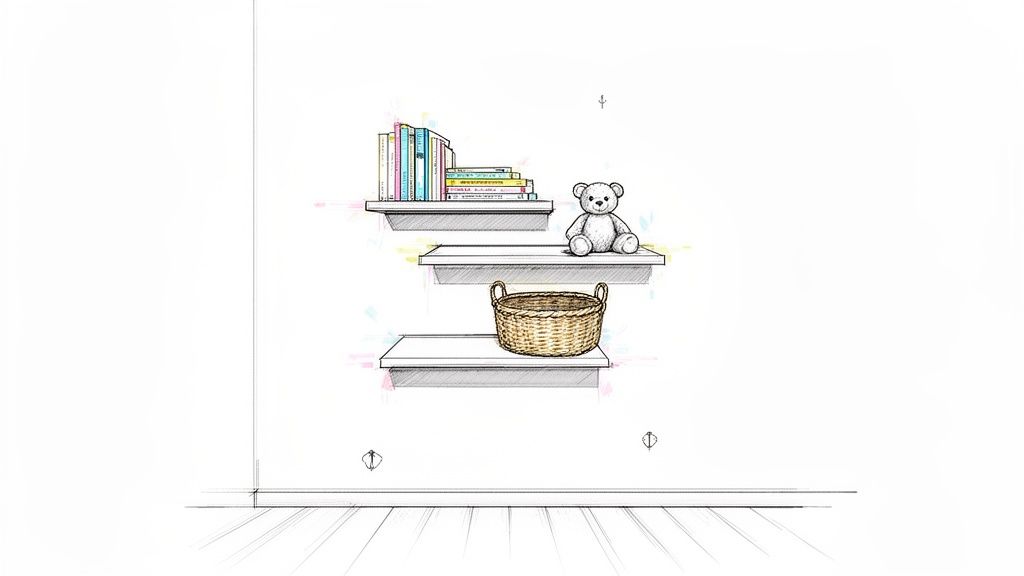
This approach is ideal for small nurseries or for parents who want to keep the floor clear for safe play and movement. By mounting shelves at varying heights, you can create a dynamic visual effect while categorizing items based on accessibility. Popular examples include the sleek IKEA Lack shelves for a modern look or more decorative systems from Pottery Barn Kids that add character to the space.
Actionable Tips for Implementation
To make the most of your vertical storage, focus on safety and practicality. Proper installation is non-negotiable; always use wall anchors appropriate for your wall type (drywall, plaster, etc.) and check the weight limits for each shelf.
- Safety First: Install shelves at least 48-60 inches high to ensure they are safely out of reach of a curious toddler who might try to climb.
- Contain the Clutter: Use decorative baskets or bins on the shelves to corral smaller items like pacifiers, socks, or small toys. This reduces visual clutter and makes it easier to find what you need.
- Zone Your Shelves: Reserve lower, yet still out-of-reach, shelves for frequently used items. For instance, a shelf above the changing table can hold diapers, wipes, and creams for quick access.
- Group and Organize: Arrange items by category. Dedicate one shelf to books, another to special keepsakes, and a third to small stuffed animals. This creates an organized look and simplifies restocking.
By thoughtfully implementing floating shelves, you transform your walls into an essential component of your nursery's storage system. For more ideas on how to organize your nursery, you can find a comprehensive guide on Hiccapop that explores various storage solutions.
2. Over-the-Door Organizers and Shoe Racks
One of the most underutilized storage spots in any room is the back of the door. This often-ignored vertical space is a goldmine for nursery organization hacks, especially in smaller rooms or rental homes where wall modifications aren't an option. Over-the-door organizers, particularly repurposed clear pocket shoe racks, transform this blank area into a powerful storage hub for countless baby essentials without taking up a single inch of floor space.
This method is perfect for parents needing a budget-friendly and installation-free solution. By using the back of a nursery or closet door, you can neatly store everything from socks, bibs, and mittens to diapering supplies and small toys. The clear pockets offer instant visibility, eliminating frantic searches for that one missing pacifier. Popular solutions from brands like The Container Store or simple, affordable options found on Amazon make this hack accessible to everyone.
Actionable Tips for Implementation
To maximize the effectiveness of an over-the-door organizer, think strategically about placement and categorization. The goal is to create a system that is both intuitive and efficient, making daily routines smoother.
- Prioritize Visibility: Choose an organizer with clear pockets. This simple feature allows you to see everything at a glance, saving you precious time when you need something urgently.
- Categorize and Conquer: Dedicate specific pockets or rows to different categories. Group all socks in one area, pacifiers in another, and small lotions or medicines in a third. Use a label maker for ultimate clarity.
- Think About Accessibility: Place frequently used items, like burp cloths or wipes, in the middle pockets that are at eye level and easy to reach. Reserve higher and lower pockets for less-used items or back-stock.
- Check Door Function: Before loading the organizer, ensure the door can still open and close smoothly without straining the hinges. Distribute weight evenly to prevent sagging or damage.
By repurposing a simple shoe rack, you create a versatile and efficient command center for your baby’s smallest, most-misplaced items. For more inspiration on using overlooked spaces, explore these nursery organization ideas from Hiccapop to discover other clever solutions.
3. Labeled Drawer Dividers and Clear Storage Bins
One of the most powerful nursery organization hacks involves bringing order to the chaos hidden inside dressers and closets. Labeled drawer dividers and clear storage bins create a systematic approach to managing the endless stream of tiny clothes, accessories, and supplies. This method transforms cluttered drawers into a perfectly organized grid, making it easy to see everything you own and grab exactly what you need in seconds.
Clear bins offer an immediate visual inventory, saving you from rummaging through opaque containers. When paired with labels, this system ensures every item has a designated home, a principle championed by organization experts like The Home Edit and Marie Kondo. This not only simplifies daily routines like dressing your baby but also makes it easier for partners, grandparents, or babysitters to find things without assistance. It’s an ideal solution for anyone wanting to maximize existing furniture space efficiently.
Actionable Tips for Implementation
To effectively implement this system, think in categories and prioritize accessibility. The goal is to create a sustainable organization method that adapts as your baby grows and their needs change.
- Categorize and Label Everything: Use clear labels for categories like "bodysuits," "pants," "socks," and "sleepers." For smaller items, use subcategories such as "hats," "mittens," and "bibs."
- Use Dividers Strategically: Adjustable drawer dividers are perfect for separating tiny items. Use them to create distinct sections for socks, diaper creams, and pacifiers to prevent them from becoming a jumbled mess.
- Prioritize Accessibility: Place frequently used items, like everyday bodysuits and pajamas, in the top drawers or front-most bins for easy access. Seasonal or less-used items can be stored in lower drawers or higher closet shelves.
- Rotate Seasonally: Use labeled clear bins to store out-of-season clothing. This keeps the main dresser free of clutter while making the seasonal switch-out process simple and quick. For specific advice on managing children's wardrobes, this guide on how to organizing kids' clothes in a closet offers practical systems that perfectly complement this method.
- Label for Visibility: When using bins, be sure to label both the front and side so you can identify the contents no matter how they are stacked or positioned on a shelf.
4. Tension Rods and Hanging Shelves for Underutilized Spaces
Some of the most valuable storage real estate in a nursery is often hidden in plain sight: the awkward nooks, closet interiors, and unused gaps between furniture. Tension rods and hanging shelves are brilliant nursery organization hacks that transform these underutilized spaces into highly functional storage zones without the need for drills or permanent fixtures. They are perfect for converting irregular layouts into practical, organized areas.
This approach is particularly effective in small or uniquely shaped nurseries where traditional furniture won't fit. A tension rod can instantly create a new hanging rail inside a closet for tiny outfits or crib sheets, while a hanging shelf system can add vertical storage above a changing table or in a tight corner. Popular solutions from brands like IKEA and The Container Store showcase how these simple tools can maximize every square inch.
Actionable Tips for Implementation
To effectively use tension rods and hanging shelves, focus on strategic placement and load-bearing common sense. While they are incredibly versatile, they are best suited for lightweight to medium-weight items.
- Measure Twice, Buy Once: Before purchasing, carefully measure the width of the space you intend to use. Tension rods come in adjustable sizes, so ensure your chosen spot falls within the rod's range.
- Vary the Heights: Install multiple rods at different heights within a closet to categorize items. For example, place one higher for out-of-season clothes and a lower one for everyday outfits or receiving blankets.
- Prevent Slipping: Use non-slip or velvet hangers to keep tiny clothes from sliding off the rod. Also, regularly check the rod's tightness to ensure it remains secure, especially as seasons and humidity change.
- Combine and Conquer: Pair a tension rod with a clear, hanging organizer. This creates instant cubbies for shoes, hats, or diapering supplies, making it easy to see and grab what you need.
5. Basket and Bin Rotation System with Clear Labeling
Babies grow at an astonishing rate, meaning that clothes, toys, and supplies quickly become outdated. A basket and bin rotation system is one of the most practical nursery organization hacks for managing this constant flux. This method involves using clearly labeled containers to store items that are not currently in use, keeping the nursery free from clutter while ensuring you have everything you need for the next stage.
This approach is perfect for parents who want to stay ahead of their baby’s needs without overwhelming the immediate living space. Instead of stuffing drawers with multiple clothing sizes, you keep only the current size accessible. Off-season clothes, toys for future developmental milestones, and bulk supplies like diapers can be neatly stored in a closet, garage, or attic, ready to be swapped in when needed. This strategy, often championed by professional organizers and minimalist parenting advocates, transforms potential chaos into a streamlined, predictable system.
Actionable Tips for Implementation
To create an effective rotation system, the key is consistency and clarity. Uniform, stackable bins are a great investment for a clean look and efficient use of storage space.
- Label Everything Clearly: Use large, easy-to-read labels on the outside of each bin. Specify contents by size (e.g., "Clothing 6-9 Months"), season ("Winter Gear"), or category ("Next Stage Toys").
- Create a Master Inventory: For extra organization, tape a detailed list of the contents inside the lid of each bin or take a quick photo with your phone for a digital reference. This saves you from having to dig through multiple boxes.
- Schedule Your Swaps: Set calendar reminders at the change of seasons or every three months to re-evaluate your baby’s clothing and toy needs. This proactive approach prevents you from being caught off guard by a sudden growth spurt.
- Store Properly: Keep storage bins in a clean, dry, and temperature-controlled area to protect the items inside from damage. Vacuum-sealed bags can be used within bins for extra protection for textiles.
By implementing a rotation system, you ensure the nursery remains a functional and serene space, equipped with only what you need at any given moment.
6. Wall-Mounted Changing Table with Integrated Storage
For nurseries where every square inch counts, a wall-mounted changing table with integrated storage is a game-changing organization hack. This clever solution combines the function of a changing station and a dresser into one sleek, floating unit, freeing up valuable floor space for play. By mounting directly to the wall, it eliminates the need for bulky, traditional furniture and creates an efficient, all-in-one hub for diapering duties.

This approach is perfect for small apartments, modern nursery designs, or anyone embracing a minimalist aesthetic. Brands like IKEA and Pottery Barn Kids offer innovative designs that fold up when not in use, further maximizing the room's footprint. The built-in compartments keep diapers, wipes, creams, and even a change of clothes organized and within immediate reach, streamlining the entire changing process.
Actionable Tips for Implementation
Proper installation and thoughtful organization are key to making this system work safely and effectively. Since the unit will bear your baby's weight, ensuring it is securely fastened to the wall is the most critical step.
- Secure Installation: Always anchor the unit directly into wall studs. Carefully measure your space and the height before drilling to ensure it's comfortable for the primary caregiver to use without stooping.
- Organize by Use: Arrange supplies logically. Keep daily essentials like diapers and wipes in the most accessible open cubbies. Less-used items, such as extra ointments or nail clippers, can go in higher or deeper compartments.
- Use Dividers and Bins: Prevent small items from getting lost in the back of shelves by using shallow baskets or drawer dividers. This keeps everything contained and visible at a glance.
- Add a Wipeable Surface: Protect the wood or finish by adding a wipeable changing pad or a laminated liner to the main surface. This makes cleaning up inevitable spills and messes quick and easy.
By adopting a wall-mounted station, you create a highly functional and compact changing zone. For more inspiration on setting up your space, explore these creative nursery storage solutions on Hiccapop.com to find what works best for your home.
7. Under-Bed Storage Solutions and Drawers
The space beneath the crib or toddler bed is often overlooked, yet it represents prime, untapped storage real estate. Under-bed storage solutions, such as low-profile rolling drawers or flat containers, transform this dead space into a discreet and highly functional organizational zone. This hack is a game-changer in smaller nurseries where every inch counts, allowing you to hide away essentials without taking up valuable floor or wall space.
This approach is perfect for storing items that you don't need daily but want to keep nearby, like backup diaper supplies, extra bedding, or seasonal clothing. By utilizing the area beneath the crib, you maintain a clean, uncluttered look while ensuring everything you might need is just a quick grab away. Popular options range from IKEA’s versatile under-bed boxes to specialized rolling drawers from The Container Store, making it easy to find a solution that fits your specific crib or bed frame.
Actionable Tips for Implementation
To effectively use under-bed storage, prioritize accessibility and proper item care. Before purchasing any containers, measure the clearance between your crib frame and the floor to ensure a good fit; you'll typically need at least 6 inches of height.
- Choose the Right Container: Use rolling drawers for items you access frequently, like extra crib sheets or sleep sacks. Opt for sealed, lidded containers for long-term storage of seasonal clothing or keepsakes to protect them from dust.
- Label Everything: Clearly label the front of each bin or drawer. When you’re dealing with a sleepy baby, you don't want to be pulling out multiple containers to find the right size pajamas.
- Protect from Moisture: For items stored long-term, consider adding moisture-absorbing packets inside sealed containers to prevent mildew, especially in humid climates.
- Organize by Category: Dedicate specific containers to different categories. One might hold backup diapering supplies, another could be for sentimental items, and a third for clothes the baby will grow into next season.
Implementing these under-bed nursery organization hacks allows you to maximize storage capacity while keeping the room tidy and spacious for play.
8. Pegboard and Wall-Mounted Accessories for Functional Nursery Walls
Pegboards offer one of the most versatile and adaptable nursery organization hacks, transforming empty walls into dynamic, functional storage centers. This system uses a perforated board with an array of hooks, shelves, and baskets that can be reconfigured endlessly. It’s a perfect solution for holding frequently-used items like hats, bibs, pacifier clips, and small toys, keeping them visible and within easy reach for parents.

This approach is ideal for parents who appreciate a system that evolves with their child. What starts as a station for swaddles and diapering supplies can later become a hub for art supplies or school essentials. Popularized by DIY influencers and seen in modern nursery designs, systems like the IKEA SKÅDIS series make this stylish and customizable solution accessible to everyone.
Actionable Tips for Implementation
To effectively integrate a pegboard system, focus on both aesthetics and long-term functionality. Customizing the pegboard itself can turn a utilitarian item into a beautiful design element that complements your nursery decor.
- Customize Your Board: Paint the pegboard to match your nursery’s color scheme. A coat of paint in a soft pastel or a bold accent color can make the system feel intentional and cohesive.
- Create Functional Zones: Group similar items together. Use small baskets for hair bows and socks, hooks for sweaters and hats, and small shelves for lotions and creams.
- Prioritize Safety: Ensure the pegboard is securely mounted to the wall, especially if it's above a changing table or crib. Check that all hooks and accessories are firmly in place to prevent them from becoming falling hazards.
- Think Long-Term: Arrange items with your child's growth in mind. Keep everyday essentials at an accessible height for you, but position decorative or less-used items higher up. As your child grows, you can adjust the layout to meet their changing needs.
Your Organized Oasis Awaits
Navigating the beautiful chaos of parenthood is a journey filled with tiny socks, endless diapers, and an ever-growing collection of toys. The nursery, your baby's first sanctuary, can quickly become the epicenter of this clutter. However, by implementing a few strategic nursery organization hacks, you can transform this space from a source of stress into a serene, functional oasis that supports you and your little one.
Throughout this guide, we've explored a variety of powerful, actionable solutions. We've seen how vertical space is your best friend, with floating shelves and pegboards turning blank walls into highly efficient storage zones. We tackled the hidden potential of often-neglected areas, using over-the-door organizers, under-bed drawers, and tension rods to create order where none existed before. The key takeaway is that every square inch of the nursery holds organizational potential; it just requires a bit of creativity to unlock it.
From Chaos to Calm: The Core Principles
The true value of these hacks lies not just in a tidier room, but in the peace of mind they create. An organized nursery means less time spent frantically searching for that last clean diaper or a specific pacifier during a 3 a.m. wake-up call. It means more mental energy is available for what truly matters: bonding, playing, and soaking in those precious early moments.
The most effective strategies share a common thread: visibility and accessibility.
- Labeled drawer dividers bring immediate order to chaotic clothing drawers.
- Clear storage bins allow you to see contents at a glance, eliminating guesswork.
- A basket rotation system keeps toy collections feeling fresh and manageable.
These aren't just one-time fixes; they are sustainable systems that grow with your child. The pegboard that holds diaper caddies today can display your toddler's artwork tomorrow. The baskets once used for swaddles can later house building blocks and stuffed animals.
Your Action Plan for an Organized Nursery
Feeling overwhelmed? Don't be. The secret to success is to start small. You don't need to implement every single one of these nursery organization hacks overnight. Pick one area that causes you the most daily frustration. Is it the changing station? The closet? The mountain of toys?
- Choose Your Battle: Select one hack that directly addresses your biggest organizational pain point.
- Gather Your Tools: Make a simple list of what you need, whether it's a few clear bins, an over-the-door organizer, or a label maker.
- Dedicate the Time: Block out 30-60 minutes to tackle just that one project. You’ll be amazed at the momentum a single small victory can generate.
By breaking the process down into manageable steps, you build confidence and create lasting change. Remember, the goal is not a picture-perfect, unlivable space. It's about creating a functional, peaceful environment that makes your life as a parent easier. You’ve got this.
Ready to take your organization to the next level? Many of the best-laid plans need smart, portable solutions, especially for life on the go. Discover how Hiccapop designs innovative baby products that make organization and travel simpler, so you can maintain that sense of calm and control no matter where you are. Explore our thoughtful solutions at Hiccapop today.