


Nursery Organization Ideas for a Calm and Functional Space
That nesting instinct is a powerful force, isn't it? When you're expecting, the urge to create a beautiful, perfect nursery is overwhelming. But trust me, a truly great space is more than just cute—it has to be functional. The best nursery organization ideas are the ones that build a calm, efficient environment where you can find exactly what you need, even when you're half-asleep at 3 AM.
Why a Functional Nursery Matters
Let’s be real: those first few months with a new baby are a beautiful, chaotic blur. A well-organized nursery isn't just nice to have; it’s a lifesaver. Knowing precisely where that last clean onesie or the diaper cream is brings a sense of calm and control that you just can't put a price on. This isn't about creating a room that looks like it's straight out of a magazine; it's about designing a practical workflow that genuinely supports you as a parent.
This guide is designed to give you real, actionable strategies that work for actual families. We'll dive into creating functional zones, taming closet clutter, and setting up a changing station that operates like a well-oiled machine. My goal is to help you build sustainable habits that keep the room tidy, so your nursery remains a serene and practical sanctuary for you and your baby.
The Growing Focus on Smart Organization
It’s clear that today’s parents are all-in on creating smart, organized spaces for their kids. You can see it in the market itself—the global nursery decor and furniture market has ballooned to $1.92 billion. This isn't just about paint colors; it’s driven by a real demand for multifunctional, space-saving furniture like cribs with built-in drawers and modular dressers.
To make sure your nursery is both calm and functional, it helps to pull in ideas from broader organizational strategies. You can find some fantastic expert tips on organizing small spaces effectively that translate perfectly to even the coziest of nurseries.
A thoughtfully organized nursery doesn't just look better—it feels better. It reduces parental stress by making daily routines smoother and more predictable, giving you more quality time to bond with your baby.
At the end of the day, the goal is to set up a system that just works without you having to think about it. That means less time hunting for a lost pacifier and more time soaking in all those precious, fleeting moments. Let’s dive into how to make that happen.
Establishing Your Nursery's Core Zones
Before you even think about buying a single storage bin, let's talk strategy. The real secret to a nursery that stays organized isn't about having the perfect containers; it's about creating distinct "zones" for all the activities you'll be doing. Think of it as designing a practical workflow for baby care, where everything has a logical, intuitive home.
This simple step saves you from those frantic moments—like searching for a burp cloth with one hand while holding a very fussy, very spitty baby in the other. When you group essential items right where you'll actually use them, you build a room that works for you, not against you.
The Four Key Nursery Zones
From my experience, most nurseries function best when broken down into four primary areas. Even if you're working with a small room, dedicating specific corners or even just sections of a wall to these activities will make a world of difference.
-
The Sleep Zone: This is your baby's sanctuary, centered around the crib. The goal here is calm and clutter-free. All you really need within arm's reach is a sound machine and maybe a small basket with a few extra pacifiers and sleep sacks for those middle-of-the-night needs.
-
The Changing Zone: Welcome to your command center. This area is typically anchored by a changing table or a dresser with a changing pad on top. The golden rule? Everything you need for a diaper change must be accessible with one hand. We're talking diapers, wipes, creams, and at least one backup outfit.
-
The Feeding Zone: You're going to spend countless hours in this cozy corner, so make it comfortable. Your glider or rocking chair is the centerpiece. Surround it with the essentials: burp cloths, nursing supplies, and maybe a small side table for your water bottle, a snack, and your phone.
-
The Play Zone: In the beginning, this might just be a soft rug with a play gym. But as your little one grows, this zone will expand. Think low, accessible bins for toys and sturdy, reachable shelves for books. The whole point is to encourage independent play and, eventually, an easy cleanup routine.
Visualize Your Workflow
Thinking in zones helps you organize with purpose. It’s less about just finding a spot for stuff and more about creating a system that flows naturally.
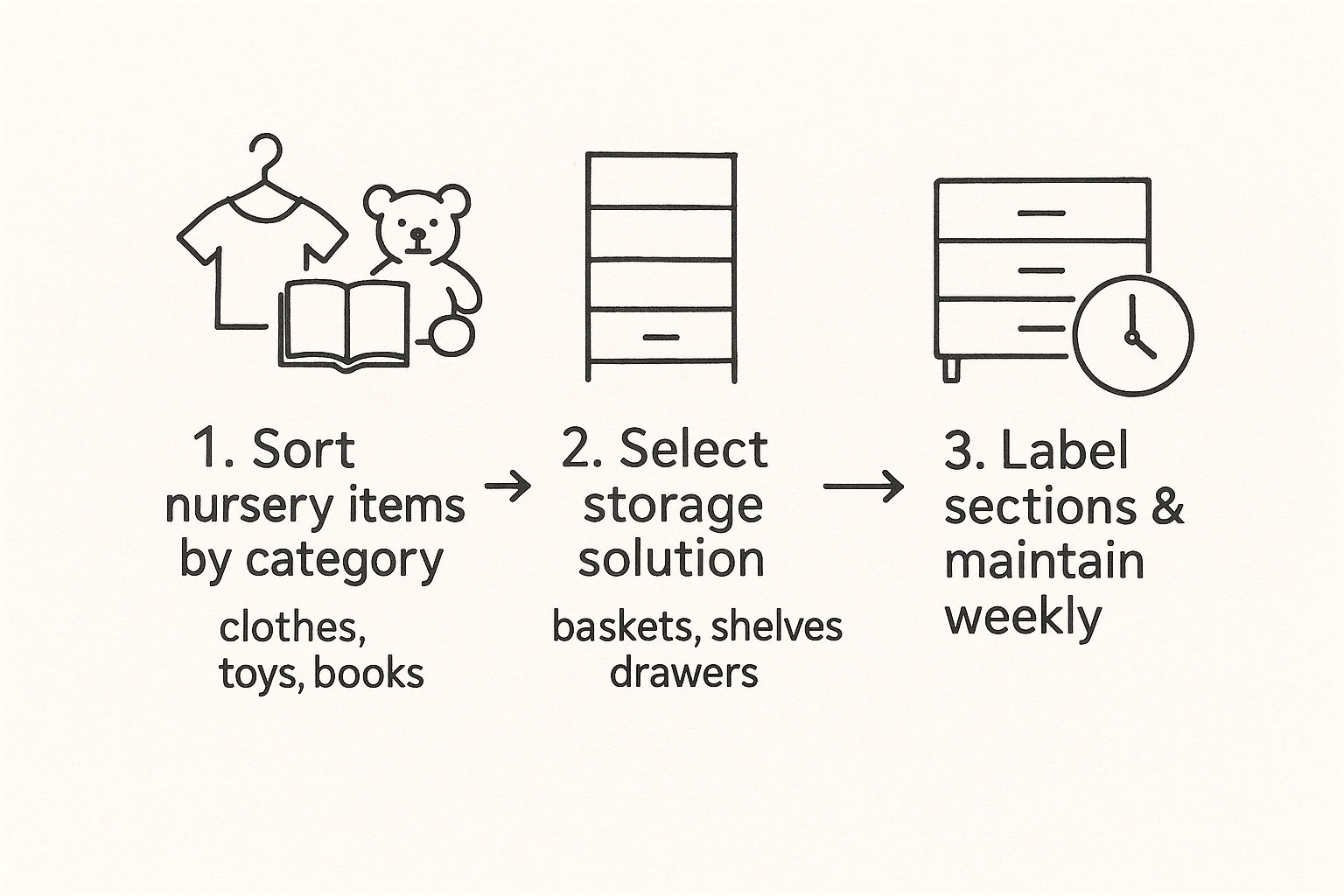
This process really boils down to a simple principle: first, you categorize everything you own, then you assign those items a home within their zone, and finally, you build a simple habit to maintain it all.
To help you get started, here’s a quick checklist to map out what you need and where it should live.
Nursery Zone Planning Checklist
This table breaks down the essentials for each functional zone in the nursery, helping you make sure everything has a designated and convenient home from day one.
| Zone | Primary Furniture | Essential Items to Keep Nearby | Organization Tip |
|---|---|---|---|
| Sleep | Crib or Bassinet | Sound machine, pacifiers, sleep sacks, monitor | Use a small basket or caddy on a nearby shelf to hold nighttime essentials so they don't clutter the crib area. |
| Changing | Changing Table or Dresser | Diapers, wipes, diaper cream, changing pad covers, backup outfits, diaper pail | Keep the top drawer of the dresser dedicated to diapering supplies. Use dividers to keep everything tidy. |
| Feeding | Glider or Rocking Chair | Burp cloths, nursing pillow, bibs, bottle warmer, nipple cream | A small rolling cart or a basket next to the chair is perfect for keeping all your feeding necessities together. |
| Play | Rug, Play Mat, Bookshelf | Age-appropriate toys, books, activity gym | Use low, open bins and forward-facing bookshelves so your child can see and access their own toys easily. |
With this plan in hand, you can confidently start arranging the room and selecting storage that truly fits your needs, not just your aesthetic.
Setting Up Your Zones for Success
Alright, let's put this into practice. The first thing you should do is place your main furniture pieces to anchor each zone. It makes sense to put the changing table near the closet for easy access to clothes, and you’ll probably want the feeding chair in a quiet corner, away from the hustle and bustle of the doorway.
Pro Tip: Before you fill the room, walk through your daily routines in the empty space. Seriously, pretend to change a diaper or get your baby dressed for bed. Where do your hands naturally go to reach for things? This little mental walkthrough is gold—it will reveal the most intuitive and practical layout for you.
Once the big furniture is set, you can start layering in the smart storage solutions. Think drawer dividers in the changing station, a little caddy next to the glider, and clearly labeled bins in the closet. Getting your zones established first makes every other organizational task that follows so much easier and more effective.
Making the Most of Your Nursery Closet Space
That tiny closet has a monumental task ahead of it. It’s expected to hold an ever-changing wardrobe of clothes, blankets, shoes, and a surprising amount of baby gear. Let's be honest, a single hanging rod and a high shelf just aren't going to cut it when you're dealing with miniature outfits that seem to multiply overnight. To truly get that closet under control, you have to think vertically and get a little creative.
Most closets are built for adult clothes, which leaves a ton of wasted dead air below those tiny baby rompers. The single best thing you can do is install a second hanging rod. It’s a simple, inexpensive change that instantly doubles your hanging space. You can use it to separate clothes by type or, my personal favorite, by size.
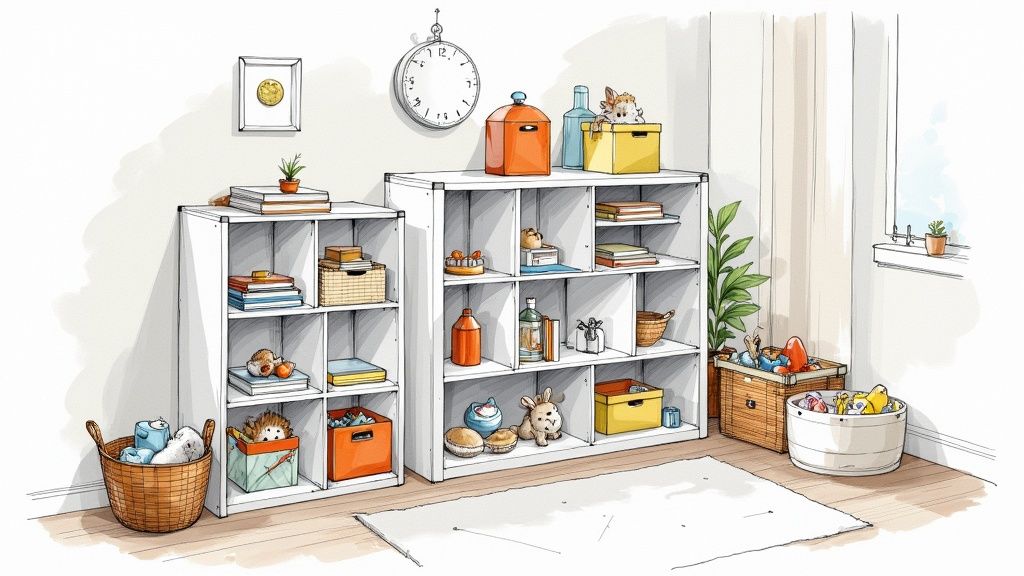
Think Beyond the Hanging Rod
Once you’ve maxed out your vertical space, it’s time to look at the rest of the closet. Fabric hanging organizers with cubbies are brilliant for things that don't need a hanger, like tiny shoes, hats, and swaddles. They hardly take up any rod space but give you a surprising amount of storage.
And whatever you do, don't forget the back of the door! An over-the-door organizer is a total game-changer for stashing bibs, burp cloths, or even a backup supply of diapers and wipes. This keeps the stuff you grab all the time visible and within easy reach, freeing up precious shelf or drawer space. It’s one of the most overlooked nursery organization ideas that makes a massive difference.
My Go-To Tip: Roll, don’t fold. When you’re putting onesies, pajamas, and other soft items into drawers or bins, rolling them tightly saves a ton of room. The best part? You can see everything at a glance, so you’re not rummaging through a pile to find that one specific outfit you’re looking for.
For even more grab-and-go efficiency, a hanging organizer designed for smaller essentials is a lifesaver. A great example is this versatile hiccapop nursery organizer. You can hang it on the closet door or the side of the changing table to keep all those little necessities perfectly contained.
Set Up a "Clothing Library" System
Babies grow so fast it’s almost unbelievable, which means you're constantly juggling multiple sizes of clothing at once. This is where the "clothing library" system becomes your best friend. Trust me, it beats digging through boxes in the attic every few months.
Here’s how to set it up:
- Grab Clear Bins: Get a set of clear storage bins and label them by size. Think "3-6 Months," "6-9 Months," and maybe a "Future Hand-Me-Downs" bin.
- Store Up High: Put the bins for the next sizes up on the top shelf of the closet. They're out of the way but still easy to grab when you need them.
- Designate an 'Outgrown' Bin: Keep one empty bin handy right inside the closet. As soon as you realize an outfit is too small, toss it straight in there. No second-guessing.
- Rotate and Restock: When the "outgrown" bin is full, sort through it, pack it away for the next baby or donation, and then bring down the next size up from your library.
This little system makes the constant cycle of baby clothes so much easier to manage. It saves a ton of time and stops your nursery from being overrun with outfits that don't even fit. By combining smart vertical storage, door organizers, and a clothing library, you can transform even the smallest closet into an organizational powerhouse.
Designing an Efficient Changing Station
The changing table is the command center of the nursery, and it needs to run with near-military precision. When you're in the middle of a diaper blowout, the last thing you want is to be fumbling around for wipes or cream. The real goal here is to set up a station where everything—and I mean everything—is accessible with one hand, because your other hand is, well, busy keeping a wiggly baby in place.
A slim rolling cart is a brilliant and surprisingly mobile solution for this. I've seen parents create dedicated tiers for specific tasks: the top for immediate needs like diapers and wipes, the middle for creams and lotions, and the bottom for grooming tools like nail clippers or that dreaded snot sucker. It’s one of the best nursery organization ideas out there simply because you can roll it wherever you need it.
Keep Essentials Within Arm's Reach
If you’re using a dresser as your changing table—a smart, long-term choice that grows with your child—then drawer dividers are your best friend. Seriously, they're the sworn enemy of jumbled messes and will save you from that frantic search for a tiny tube of diaper cream hiding under a stack of onesies. Dedicate that entire top drawer to changing essentials.
To keep the dresser surface itself clear for action, you need to think vertically.
- Wall-Mounted Shelves: A couple of simple floating shelves mounted right above the changing station are perfect. They can hold diaper caddies, wipe dispensers, and maybe a cute decorative item or two.
- Pegboard Power: A pegboard with small baskets and hooks is a game-changer. It's totally customizable and a stylish way to keep lotions, pacifiers, and backup outfits visible and off the changing pad.
This strategy keeps your most-used items in your line of sight, which is a genuine sanity-saver during those chaotic moments. For next-level convenience, a dedicated wipe warmer can make a world of difference, especially for those 3 AM changes when a cold wipe can jolt a sleepy baby wide awake. You can learn more about how a portable wipe warmer can streamline your setup and keep your little one a lot happier.
The key to an efficient changing station is minimizing movement. If you have to take more than one step to grab something, it’s too far away. Set it up so you can pivot, not travel.
Long-Term Storage Solutions
It's no surprise that the demand for functional nursery furniture is on the rise, as we all want smarter organization. In fact, the global market for nursery dressers was valued at a staggering $3.5 billion and is projected to climb to $5.8 billion by 2032. Why? Because these pieces are just so versatile. As companies like IKEA and Wayfair continue to expand their online presence, these clever storage solutions are more accessible than ever.
Ultimately, designing your changing station is all about creating a smooth, repeatable process. By using a smart combination of drawer dividers, vertical storage, and maybe a handy rolling cart, you can make diaper duty as quick and painless as it can possibly be.
Smart Storage for Toys and Books
As your baby grows, their collection of toys, books, and stuffed animals seems to multiply overnight. It feels like one minute you have a few cute rattles, and the next, your entire home has been completely taken over. Trust me, setting up a smart, accessible storage system now will save you a world of headaches later.
The secret is finding solutions that look good but work even better. Cube storage units paired with fabric bins are an absolute lifesaver for parents. They’re perfect for tucking away blocks, cars, and all those noisy electronic toys while still keeping them within reach for little hands. This kind of setup also makes cleanup feel less like a chore—everything has its own designated spot.
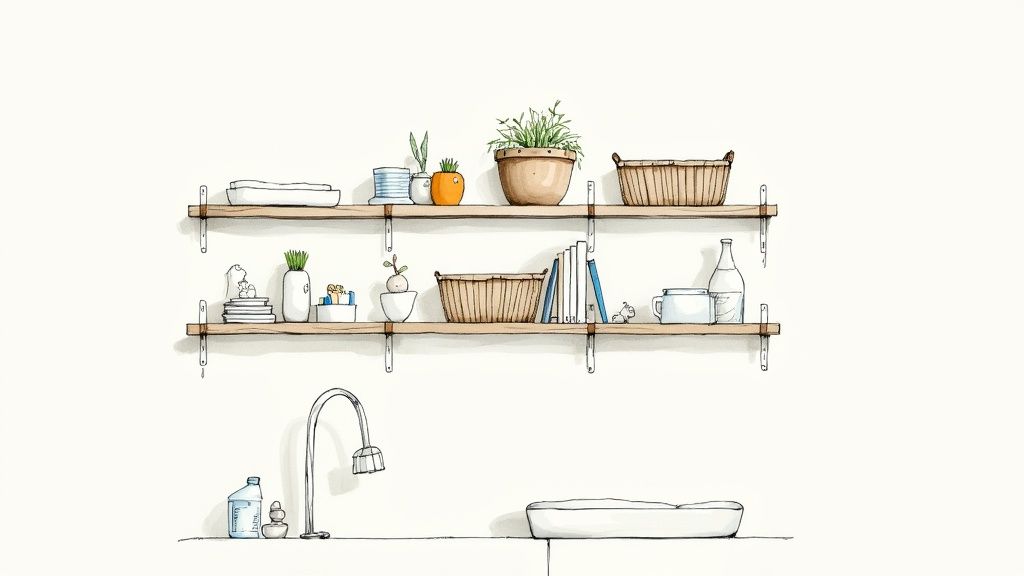
Displaying Books as Decor
Books can quickly turn into messy stacks in a corner, but they don't have to. Why not turn them into part of the decor? Floating picture ledges are a fantastic way to display their favorite stories with the covers facing out.
Not only does this get books off the floor, but it also makes it so much easier for your little one to spot their favorites and pick one out. It adds a wonderful pop of color and personality to the walls, proving that the best nursery organization ideas are the ones that are both functional and beautiful.
For a charming touch, you can also incorporate unique pieces like these whimsical natural apple storage baskets to keep smaller items tidy while adding to the room's aesthetic.
The Magic of Toy Rotation
One of the most effective strategies I’ve ever used for managing toy chaos is toy rotation. The idea is brilliantly simple: you only keep a small selection of toys out at any given time and store the rest out of sight. Then, every few weeks, you swap them.
Toy rotation is a game-changer. It not only cuts down on the visual clutter in your nursery but also reignites your child's interest in their toys. Familiar items feel new again, encouraging deeper, more focused play.
This simple method keeps your child more engaged with what’s available and prevents them from getting overwhelmed by having too many choices. To make it work, all you need is a good spot for the "off-duty" toys—clearly labeled bins tucked away in a closet or under the crib are perfect.
Here's a quick way to get started:
- Gather & Sort: Bring all the toys into one spot and group them into categories like building blocks, puzzles, dolls, and cars.
- Create "Play Sets": Divide the toys into 3-4 curated groups, putting each into its own storage bin.
- Rotate: Keep one bin out for playtime and store the others. Switch to a new bin every couple of weeks.
By putting a simple, easy-to-manage system in place, you’ll create a play area that’s fun for your child and a breeze for you to tidy. Building these habits early is a huge part of creating the perfect play environment for your baby or toddler and helps ensure the space remains a source of joy, not stress.
Maintaining Your Organized Nursery
So, you’ve zoned, sorted, and squeezed every last bit of potential out of your nursery space. Fantastic! But here’s the thing I’ve learned over the years: the most brilliant nursery organization ideas are only as good as your ability to keep up with them. A perfectly tidy room can slide back into chaos faster than you can say "diaper blowout."
The real secret to a consistently calm space isn't about marathon cleaning sessions. It’s all about weaving a few simple, sustainable habits into your daily and weekly rhythm. These small routines are what stop the clutter from ever getting a foothold.
https://www.youtube.com/embed/TEhOKfzFJnk
Think of these habits as your secret weapon. They’re tiny actions that add up, preserving the peaceful, functional retreat you worked so hard to create for you and your baby.
Live by the ‘One In, One Out’ Rule
If you adopt only one new habit, make it this one: the "one in, one out" rule. It’s incredibly simple but has a massive impact. Anytime a new outfit or toy comes into the nursery, an old one has to go—either into storage or into the donation bag.
This one little rule is a game-changer because it stops that slow, silent creep of stuff that eventually overwhelms even the best storage systems. It forces you to be mindful about what you keep and makes you regularly check in on what your little one is actually using and loving.
The Power of the 15-Minute Weekly Reset
Keeping the nursery tidy doesn't require hours of your precious time. All you really need is 15 minutes once a week to do a quick "reset." Seriously, that's it. Just put on some music, set a timer, and fly through the main clutter zones.
- Tidy up the surfaces: Drape that blanket back on the chair, put stray toys back in their bins, and restack the board books.
- Restock essentials: Quickly refill the diapers, wipes, and creams at the changing station so you're not caught empty-handed later.
- A quick wipe-down: Give the changing table and dresser a fast wipe to keep things feeling fresh.
This isn't deep cleaning; it's maintenance. This quick, focused burst of energy prevents little messes from turning into a weekend-long project that you dread.
Deal with Outgrown Clothes on the Spot
Don’t let those adorable but now-too-small onesies hang around in the dresser, taking up precious real estate. One of the best habits you can build is to deal with outgrown clothes the moment you spot them.
Keep a dedicated basket or bin in the closet labeled "Too Small." As soon as you wrestle your baby out of an outfit and realize it’s their last time wearing it, toss it straight into that bin. No hesitation.
Once the bin is full, it's time for it to move on. Pack it away for a future baby or bag it up for donation. This simple system keeps your drawers full of only what actually fits and makes moving up to the next size a breeze.
Final Thoughts: A Nursery That Grows with You
Creating an organized nursery is about so much more than having a place for everything. It's about setting up a space that reduces stress, simplifies your routines, and gives you more time to focus on what really matters: enjoying those precious early days with your new baby.
Remember, the goal isn't perfection; it's practicality. Start with clear zones, maximize your vertical space, and build a few simple habits to maintain your hard work. By thinking ahead, you can design a beautiful, serene, and functional room that will serve your family well for years to come.
What are your go-to nursery organization hacks? Share your best tips in the comments below—we'd love to hear them!
Ready to build a nursery that’s as functional as it is beautiful? The right tools make all the difference. Explore the full range of smart, parent-approved solutions from hiccapop and discover everything you need to create a calm, organized space for your little one. Visit hiccapop.com to get started.