


Nursery Storage Solutions That Actually Work
That beautiful, serene nursery you’ve been dreaming of? It’s completely within reach. The secret isn't just about picking the perfect paint color—it’s about having a solid plan. Smart nursery storage solutions are a new parent's best friend, turning potential chaos into a functional, peaceful space where everything has its place.
Creating a Calm Nursery Starts with a Plan
Before you buy a single bin or basket, take a moment to really understand the room you're working with. A little prep work now saves so many headaches later and ensures you’re buying storage that actually fits your space and your life. This isn't about creating a magazine-perfect room overnight; it's about building a practical system that makes those 3 AM wake-up calls just a little bit smoother.
Think of this as your strategic blueprint for an organized nursery, right from the start.
Audit Your Space and Take Measurements
First things first: grab a tape measure. Get to know the real dimensions of the nursery, because eyeballing it is a recipe for frustration. Measure the width, height, and depth of the closet, paying close attention to where the hanging rod and any built-in shelves are. This tells you exactly how much vertical and horizontal real estate you can actually use.
Next, measure the key wall spaces where you’re thinking of putting a dresser, a bookshelf, or other furniture. I always recommend jotting these dimensions down on a quick, simple sketch of the room. This little audit almost always reveals hidden opportunities, like that narrow wall that’s perfect for vertical shelving or an empty corner just begging for a toy chest.
A common mistake I see is parents buying storage furniture that’s either too bulky or too small for the room. It creates awkward layouts and wastes precious space. A quick five-minute measuring session can literally save you hours of hassle.
Map Out Your Core Storage Categories
With your room’s measurements in hand, it’s time to think about what you need to store. Baby stuff tends to fall into a few key categories, and the foundation of any great organization system is giving each one a designated "home."
Your main zones will probably look something like this:
-
Diapering Supplies: This is your command center. You’ll need instant access to diapers, wipes, creams, and a changing pad. The top of a dresser or a dedicated changing station is the classic, time-tested spot for this.
-
Clothing: Think beyond just one big drawer. You'll be dealing with tiny onesies, sleepers, pants, socks, and all those adorable special-occasion outfits. Plan on having space for folded items in drawers and hanging space in the closet for anything you want to keep wrinkle-free.
-
Toys and Books: Your newborn might not be reaching for building blocks just yet, but trust me, that collection will grow faster than you can imagine. Carve out a corner or a low shelf for toy baskets and a spot for their first little library.
-
Feeding Essentials: Whether it’s bottles and formula or bibs and burp cloths, keeping these items corralled together is a game-changer. A dedicated drawer or a caddy near your nursing chair makes feeding time so much calmer.
Planning a specific zone for each category creates an intuitive flow. You'll know exactly where to reach for what you need, even when you're half-asleep. This isn't just about being tidy; it’s about creating a system that truly supports you and your new baby.
Choosing Your Nursery Storage All-Stars
Now that you have a plan, it's time for the fun part: picking out the furniture and organizers that will make your vision a reality. Think of these pieces as the key players on your nursery organization team. The goal isn't just to solve today's clutter, but to build a flexible system that grows right along with your baby.
This is all about a simple, three-part approach to getting it right from the start.
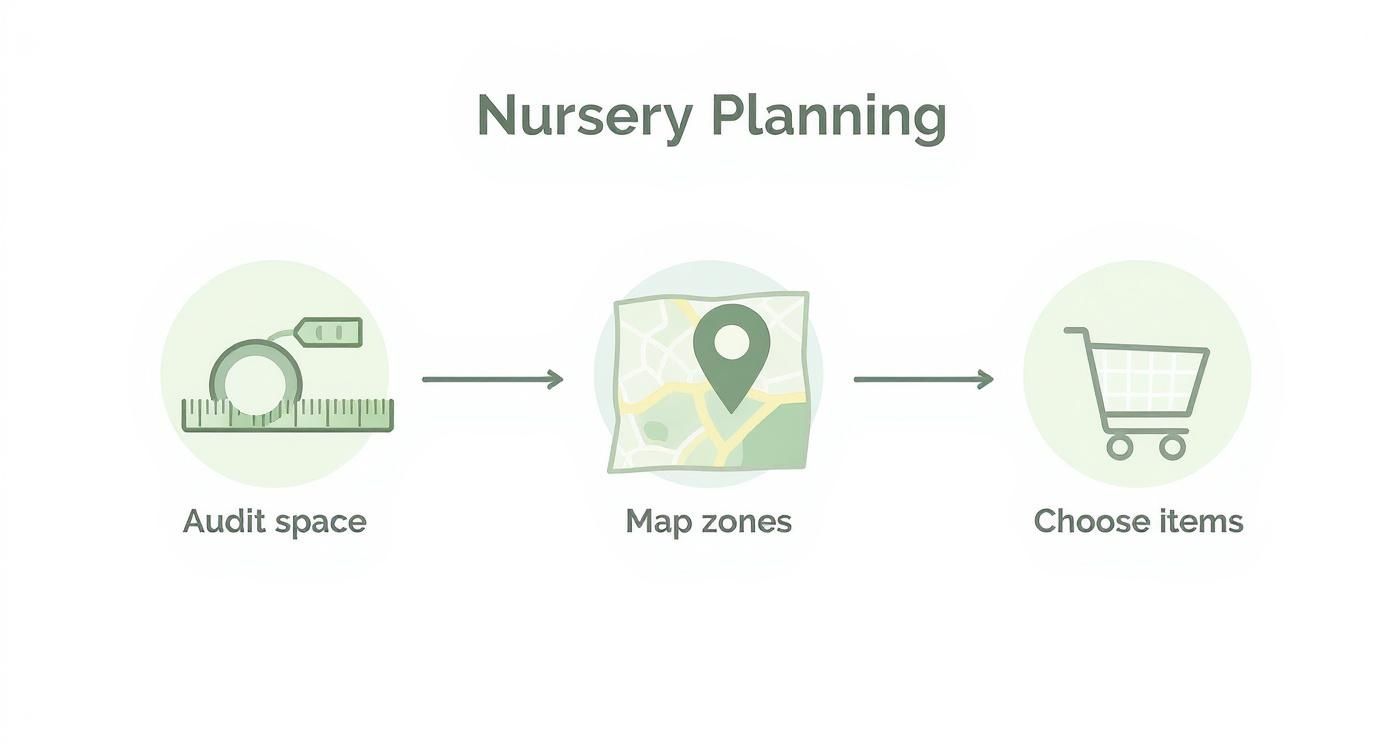
Following this process—auditing your space, mapping out zones, and then choosing your storage—prevents you from overbuying. It ensures every piece you bring in has a purpose, saving you both money and headaches down the road.
Laying the Foundation: Dressers and Shelving
Every great nursery starts with a couple of heavy hitters: a solid dresser and some good shelving.
A sturdy dresser is practically non-negotiable for most parents. It’s the perfect place to hide away mountains of tiny clothes. Better yet, pop a changing pad on top, and it doubles as a changing station. This is a classic parent hack for a reason—it saves you from buying another bulky piece of furniture you'll only use for a couple of years. If you're investing in a good one, it helps to know what to look for when buying chests, dressers, and cabinets to ensure it lasts.
Cube shelves are another fantastic workhorse because they're just so versatile. When your baby is little, they can hold labeled bins full of diapers, swaddles, and first toys. As your child gets older, those same shelves will be perfect for books, art supplies, and LEGOs. Their superpower is adaptability.
Nursery Storage Options at a Glance
Feeling overwhelmed by the options? Use this quick comparison to see which popular storage types might be the best fit for your space and organizational needs.
| Storage Type | Best For | Space Requirement | Pro Tip |
|---|---|---|---|
| Dresser with Changing Top | All-in-one clothes storage and changing station | Medium-High | Anchor it to the wall immediately. Safety first! |
| Cube Shelving | Storing toys, books, and supplies in bins | Medium | Get fabric bins with labels to keep things looking tidy and easy to find. |
| Hanging Closet Organizer | Maximizing closet space for clothes, shoes, bedding | Low (in closet) | Add a second tension rod below the main one to instantly double hanging space. |
| Wall-Mounted Shelves | Displaying books and decorative items | Low | Ledge-style shelves show off book covers, encouraging your little one to read. |
| Portable Diaper Caddy | Grab-and-go essentials for any room in the house | Very Low | Stock it with diapers, wipes, cream, and a spare onesie for middle-of-the-night changes. |
| Over-the-Door Organizer | Storing small items like socks, bows, and creams | Very Low | Choose one with clear pockets so you can see everything at a glance. |
Ultimately, a mix-and-match approach often works best. Combining one or two larger pieces with smaller, more targeted solutions gives you a truly functional and personalized system.
Think Vertically to Maximize Your Space
This is one of the most important strategies, especially if you're working with a smaller room. When floor space is precious, look up!
- Wall-Mounted Bookshelves: These are brilliant for creating a cozy reading nook without a bulky bookcase. Ledge-style shelves are my favorite because they display the covers, making it easy for little ones to point to the book they want for story time.
- Hanging Closet Organizers: Don't let a single inch of closet space go to waste. A simple fabric hanging organizer instantly creates cubbies for folded sweaters, shoes, or extra blankets.
- Over-the-Door Organizers: This might be my all-time favorite nursery hack. An organizer with clear pockets is a lifesaver for all those tiny things that get lost—socks, bibs, hair bows, and tubes of diaper cream.
By using your vertical space, you free up the floor for tummy time and play. It’s a simple shift in perspective that makes a cramped room feel so much bigger and more open.
The Finishing Touches: Targeted Problem-Solvers
Once your big furniture is in place, it’s time to bring in the specialists. These are the smaller organizers designed to solve very specific, everyday problems and keep essentials right where you need them.
A great diaper caddy is a perfect example. Instead of being tethered to the changing table, a portable caddy moves with you from the nursery to the living room couch. Everything you need—diapers, wipes, cream—is in one tidy, grab-and-go spot.
Along the same lines, a well-designed nursery organizer that hangs on the changing table or playard is a game-changer. It keeps all those must-haves organized and off precious surfaces.
And never underestimate the power of good old-fashioned baskets and bins. Soft fabric bins are perfect for corralling an ever-growing collection of stuffed animals, while sturdier baskets are great for blocks and board books. When you combine your foundational furniture with these smaller, targeted solutions, you create a complete system that truly works.
Safety First: Building a Secure and Organized Nursery
A beautifully organized nursery is a joy, but a safe one is everything. When you're picking out storage solutions, safety isn't just one more thing to consider—it should be the lens through which you see every single choice. From the paint on the shelves to where you place the dresser, every detail contributes to a secure space for your little one to grow and explore.
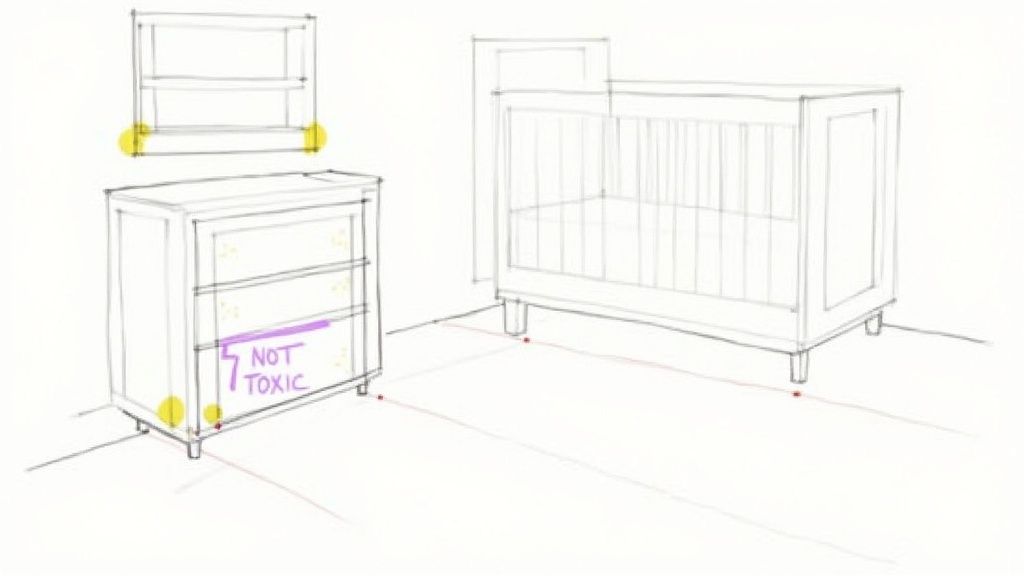
This goes way beyond basic baby-proofing. It's about thinking proactively, starting with the biggest items in the room. Let's walk through the key safety checks that will give you true peace of mind.
Anchor Heavy Furniture. Always.
This is the golden rule, the non-negotiable first step. Any piece of furniture that a curious toddler might see as a climbing gym—dressers, bookshelves, tall storage units—must be securely anchored to the wall. It’s a simple, five-minute task that prevents devastating tip-over accidents.
Most new furniture comes with an anti-tip kit. If you're using a hand-me-down piece or can't find the original hardware, you can grab an affordable anchoring kit at any hardware store. Don't put it off. Make it the very first thing you do after assembly.
Choose Non-Toxic and Low-VOC Materials
Babies explore the world with their hands and mouths, so the materials in their immediate environment really matter. When shopping for storage, look for items made from solid wood with non-toxic, water-based finishes.
Keep an eye out for products labeled as having low or zero Volatile Organic Compounds (VOCs). VOCs are chemicals that "off-gas" from paints, glues, and composite woods, and they can negatively affect the air quality in the room.
Pro Tip: Look for certifications like GREENGUARD Gold. This seal means a product has been rigorously tested for over 10,000 chemical emissions and meets some of the strictest standards out there, ensuring the air in your nursery is cleaner for tiny lungs.
Durability and Easy-to-Clean Surfaces
Spit-up, spills, and sticky fingers are a parenting guarantee. Your storage solutions need to be up to the challenge. Look for furniture and bins with smooth, durable surfaces you can wipe down in a second. This isn’t just about aesthetics; it’s about hygiene.
Parents are increasingly looking for practical, long-lasting options that can handle years of rough-and-tumble use. Sturdy materials also prevent chipping and breaking, which can create sharp edges or small pieces that become choking hazards.
Smart Furniture Placement and Design
Beyond anchoring, where you put your storage is a major safety factor. Here are a few practical tips to keep in mind as you map out the room:
- Keep Furniture Away from the Crib: Position dressers, shelves, and other furniture far enough away from the crib that a newly mobile baby can't use them as a launchpad to climb out.
- Check for Sharp Corners: Whenever possible, opt for furniture with rounded corners. If you fall in love with a piece that has sharp edges, just add some soft corner guards for extra protection.
- Mind the Cords and Wires: Keep items with long cords, like baby monitors or sound machines, well away from the crib. Use cord concealers to safely secure any wires running along the walls.
For a deeper dive into creating a secure space, you can check out our guide on the best baby safety products, which covers everything from outlet covers to cabinet locks.
Your Final Safety Check
Before you call the nursery "done," do one last walkthrough and ask these questions for each piece of storage:
- Is it anchored? Every tall or heavy item should be firmly secured to the wall.
- Is it made from safe materials? Double-check for non-toxic finishes and low-VOC certifications.
- Are there any hidden hazards? Look for sharp corners, small parts that could come loose, or dangling cords nearby.
- Is the placement safe? Make sure nothing is too close to the crib or blocking an exit.
By putting these safety principles first, you’ll create a nursery that isn’t just organized and beautiful, but is a truly secure haven for your baby.
Smart Storage Hacks for Small Nurseries
Working with a nursery that’s more "cozy" than "cavernous"? Don't sweat it. A compact space can be just as functional—and honestly, way more charming—with the right strategies. Making the most of a small room isn't about getting rid of stuff; it's about being clever with every single inch you have.
This is where you get to think like a puzzle master, turning tricky corners and blank walls into brilliant storage opportunities.
Go Vertical and Use Your Walls
When floor space is at a premium, the only way to go is up. Your walls are your biggest untapped resource, so let’s put them to work.
- Tall, Slim Bookshelves: A tall, narrow bookshelf gives you a surprising amount of storage without eating up precious floor space. Plus, it naturally draws the eye upward, which can make the whole room feel taller and less cluttered.
- Over-the-Door Organizers: These are the unsung heroes of small-space storage. An organizer with clear pockets hanging on the back of the nursery door is the perfect home for socks, bibs, lotions, and all those other tiny items that seem to multiply and create chaos in drawers.
- Floating Shelves and Ledges: Instead of a bulky bookcase, try installing a few rows of floating shelves for books and small toys. Ledge-style shelves are fantastic because they display book covers face-out, turning storytime favorites into a piece of rotating wall art.
Unlock Hidden Storage Spaces
Some of the best storage spots are hiding in plain sight. You just have to know where to look.
Under-the-crib storage is a total game-changer. Low-profile drawers or rolling bins that slide neatly underneath are perfect for stashing things you don’t need every single day, like extra bedding, bulk diaper supplies, or out-of-season clothes. It's such an easy way to reclaim a huge chunk of space that would otherwise just collect dust bunnies.
And don't forget about those awkward corners. A simple corner shelving unit can transform a tricky spot into a functional home for books, baskets, or a sound machine.
Every inch of your nursery is valuable real estate. By maximizing vertical space and using hidden areas, you can dramatically increase your storage capacity without making the room feel crowded.
For more comprehensive advice on choosing practical and stylish furniture solutions for small spaces, which is essential for optimizing a compact nursery, check out this guide.
Create Dedicated Zones
Even in the tiniest room, creating distinct "zones" helps the space feel more organized and surprisingly spacious. This isn't about putting up walls; it's about grouping related items together to create a logical flow for your daily routines.
Think about the three main activities in the nursery: sleeping, changing, and playing.
- The Changing Zone: Keep everything you need for diaper duty within arm's reach of the changing table. A small rolling cart is brilliant for this, holding diapers, wipes, and creams without taking up valuable surface space.
- The Sleep Zone: This area around the crib should be calm and clutter-free. Use a small wall shelf for the baby monitor and sound machine to keep surfaces clear.
- The Play Zone: Designate one corner for toys. A soft play mat on the floor with a couple of large, stylish baskets makes cleanup a breeze. The baskets themselves have become a huge part of modern nursery design.
As more people live in smaller urban spaces, the demand for smart, aesthetically pleasing organizers is only growing. By thoughtfully using vertical space, uncovering hidden spots, and creating logical zones, your small nursery won't just be organized—it will feel calm, functional, and perfectly designed for you and your baby.
Creating an Organization System That Lasts
Alright, you’ve secured the furniture and planned your zones. Now for the fun part: making it all work. The secret to an organization system that you’ll actually stick with isn’t about rigid rules or complicated flowcharts. It's about creating simple, intuitive habits that make tidying up feel like second nature, even when you're running on fumes.
The cornerstone of it all is the classic "like with like" principle. It sounds basic, but its power is in its simplicity. All your diapering supplies live together. All the feeding gear has its own spot.
This builds muscle memory. When you’re dealing with a sudden blowout at 2 a.m., you won’t have to think—you’ll just instinctively reach for the right drawer.
Tame the Chaos with Smart Dividers and Labels
Even the best-laid plans can fall apart inside a drawer. Bins and drawers quickly become a jumbled mess without a little help. This is where simple tools like drawer dividers and labels become your most valuable players, turning a chaotic pile into neatly organized compartments.
Drawer dividers are non-negotiable for those tiny baby clothes. Use them to carve out dedicated sections for bodysuits, pants, sleepers, and socks. No more digging through a mountain of fabric to find a single matching sock. If you really want to level up, try file-folding the clothes vertically within the dividers. It lets you see every single item at a glance.
Here’s a sanity-saving tip: Clear, labeled bins are a game-changer. Whether they're on a shelf or tucked in the closet, a simple label like "0-3 Month Sleepers" or "Bath Toys" eliminates all the guesswork. When you’re sleep-deprived, the last thing you want to do is play a guessing game with a stack of identical bins.
Build Habits That Keep Clutter Away
A great system is only as good as its upkeep. The trick is to build a few easy routines that stop clutter before it even starts.
One of the most effective habits you can adopt is the "one-in, one-out" rule for clothes. Every time you add a new outfit to the closet, an old one has to go. This becomes incredibly helpful as your baby flies through different sizes in those first couple of years.
Another fantastic practice is keeping an "outgrown" bin right there in the closet. The second you notice a onesie is getting a bit snug, toss it in. Once the bin is full, you can decide whether to store it, donate it, or pass it on. This tiny habit keeps outgrown clothes from clogging up the drawers you rely on every day.
For more inspiration on building these systems, our guide to baby nursery organization ideas offers a deeper dive into creating truly functional, stress-free spaces.
Creating Your Daily and Weekly Resets
Staying organized doesn't mean you have to schedule a massive clean-up every weekend. It's all about small, consistent actions that take just a few minutes.
- The 5-Minute Tidy-Up: Before you call it a day, spend just five minutes putting things back where they belong. Toss stray toys into their baskets, drop dirty clothes in the hamper, and restock the diaper caddy. This quick reset prevents tiny messes from snowballing.
- The Weekly Restock: Set aside 10-15 minutes once a week to top off your main stations. Refill the diapers and wipes, check your diaper cream supply, and make sure you have a fresh stack of burp cloths ready to go.
Think of these routines as a gift to your future self. By grouping similar items, using dividers and labels, and adopting a few simple habits, you’re doing more than just organizing a room. You’re building a system that gives you back time and mental energy—two things a new parent can never have enough of.
Your Essential Nursery Storage Checklist
Alright, you’ve got your plan, and now you’re ready to shop. Walking into a store (or scrolling endlessly online) can be overwhelming, so it helps to have a clear mental checklist. This isn't about finding the perfect item; it's about finding the right item for your family.
Focusing on a few key features will help you cut through the noise and choose pieces that will actually make your life easier—not just look good for a week.
Durability and Materials
This is where you think about long-term value. For furniture like dressers or bookshelves, look for solid wood or high-quality, sturdy composites. You want something that feels substantial, not wobbly.
For soft storage like bins and baskets, think about how they’ll be used. They'll get dragged, dropped, and maybe even chewed on. Thick felt, woven cotton rope, and durable, non-toxic plastics are all great options that can handle the reality of life with a little one.
Safety First, Always
This one is completely non-negotiable. Your peace of mind is priceless.
- Tip-Over Risk: Any furniture over 30 inches tall is a potential tipping hazard. Make sure it either comes with an anti-tip kit or you can easily anchor it to the wall yourself. Don’t skip this step!
- Safe Materials: Look for items with non-toxic, water-based finishes and low-VOC (Volatile Organic Compound) labels. This helps keep your nursery’s air clean and healthy. Certifications like GREENGUARD Gold are a fantastic indicator of a safe product.
- Kid-Friendly Design: Run your hand along the edges. Are there sharp corners? Rounded designs are always a safer bet. Also, check for any small, detachable parts that a curious baby could pull off and put in their mouth.
Versatility and Long-Term Use
The absolute best nursery storage is the kind that grows with your child. That simple, classic dresser? It’ll be just as useful in five years, long after you’ve packed away the changing pad.
Modular cube shelving is another champion here. It can go from holding diaper caddies and swaddles to corralling LEGOs and art supplies in a few short years. Before you buy, just ask yourself: “Will this still have a purpose when we're past the baby stage?”
Ease of Assembly and Maintenance
Let's be practical. You're about to have a baby—your time and energy are precious. Before buying furniture, skim the reviews to see what other parents say about assembly. If everyone says it’s a nightmare, maybe steer clear.
And don’t forget about cleaning! Can you toss those fabric bins in the washing machine? Is the shelf surface easy to wipe down after a spill? Choosing low-maintenance pieces will save you a surprising amount of time and frustration down the road.
To make it even easier, here's a quick checklist you can use when you're comparing different storage options.
Nursery Storage Shopping Checklist
Use this feature-by-feature checklist to evaluate potential storage solutions and make the best choice for your nursery.
| Feature to Consider | What to Look For | Why It Matters |
|---|---|---|
| Durability | Solid wood, sturdy composites, thick-gauge metal, reinforced seams on fabric bins. | It needs to withstand daily wear and tear from a growing child and last for years, not months. |
| Safety Certifications | GREENGUARD Gold, JPMA certification, low-VOC or zero-VOC finishes. | These certifications guarantee the product has been tested for harmful chemicals, ensuring healthier indoor air. |
| Physical Safety | Rounded corners, anti-tip hardware included, no small, detachable parts. | Prevents common accidents like bumps, furniture tip-overs, and choking hazards. |
| Washability | Machine-washable fabrics for bins and baskets, wipeable surfaces for furniture. | Messes are a given. Easy-to-clean items save you time and keep the nursery hygienic. |
| Versatility | Neutral designs, modular components, items that can serve multiple purposes over time. | A piece that can adapt from a nursery to a toddler room offers much better long-term value. |
| Ease of Assembly | Clear instructions, minimal parts, positive customer reviews regarding setup. | You have better things to do than spend hours struggling with a confusing assembly manual. |
Thinking through these points before you hit "add to cart" ensures you're investing in storage that is safe, practical, and truly built for the long haul.
Answering Your Top Nursery Storage Questions
Even the most well-thought-out plan hits a snag or two once you start setting things up. When you're in the thick of organizing a nursery, questions are bound to come up. Let's walk through some of the most common challenges parents run into and get you some quick, practical answers to fine-tune your space.
How Do I Best Organize a Small Nursery Closet?
When you’re dealing with a tiny closet, the name of the game is vertical space. Think up, not out. A fantastic first move is to install a second hanging rod below the one that's already there. Just like that, you've doubled your hanging room. I usually suggest using the top rod for clothes in bigger sizes or special occasion outfits, keeping the bottom rod free for everything your baby is wearing right now.
Next up, get a hanging shelf organizer. You know the ones—those fabric cubbies that hang right from the rod. They’re lifesavers for folded items like sweaters and pants, getting them off the floor where they'd just become a pile. And for the floor space you do have, grab some stackable bins for bulkier things like extra diapers and blankets.
The real secret weapon for a small closet? An over-the-door organizer. Find one with clear pockets. It’s the perfect home for all those tiny essentials that always go missing—socks, bibs, hats, you name it. This one trick frees up an incredible amount of drawer space.
What Are the Absolute Must-Have Storage Items?
If you're feeling overwhelmed and just want to know where to start, concentrate on three core pieces that will do most of the heavy lifting for you.
- A Dresser: Find one that can pull double duty as a changing table. This gives you essential concealed storage for clothes while keeping your whole diapering station neat and tidy.
- A Versatile Shelving Unit: Open shelving, like a simple cube unit, is perfect for things you need to grab in a hurry. Think books, toys, and swaddles tucked into easy-to-reach baskets.
- A Variety of Bins and Baskets: These are the true workhorses of any nursery storage solution. They are your catch-alls for everything else, from laundry and stuffed animals to all those tiny, miscellaneous items that don't have a home yet.
Honestly, with just these three items, you have a solid foundation for a super functional and organized nursery.
How Can I Choose Storage My Child Won't Outgrow in a Year?
The trick here is to think timeless and multi-functional. When you're buying the bigger, more expensive items, go for simple, sturdy pieces in neutral colors. They’ll transition seamlessly from a baby's room to a "big kid" room down the line. A classic white or natural wood dresser will serve your child for years, long after the changing pad has been packed away.
Modular cube storage is another brilliant long-term investment. As your child's needs change, you can rearrange the unit and just swap out the fabric bins for new ones. That toy chest you buy for their first birthday? It can easily become a reading nook bench or a spot to store extra blankets in a few years. My best advice is to steer clear of anything with overly juvenile themes and stick with classic designs that can adapt and grow with your child.
At Hiccapop, we're all about designing smart, practical products that make parenting just a little bit easier. Our nursery organizers and other baby essentials are built with the safety, durability, and versatility your family deserves. Take a look at our solutions at Hiccapop and create a nursery that’s as functional as it is beautiful. What's your can't-live-without nursery storage hack? Share it in the comments below