


7 Genius Baby Nursery Organization Ideas for a Calm Space
Welcoming a new baby is a joyous, yet overwhelming experience. As tiny clothes, diapers, and toys start to pile up, the serene sanctuary you envisioned can quickly feel chaotic. The key to maintaining peace isn't more space, it's smarter organization. Effective baby nursery organization ideas don't just create a tidy room; they build a functional, stress-free environment where you can focus on what truly matters: bonding with your little one. A well-organized nursery simplifies every task, from midnight diaper changes to early morning feedings, saving you precious time and energy.
This guide moves beyond generic advice to provide a strategic blueprint for transforming your nursery. We will explore seven actionable systems designed to conquer clutter and streamline your daily routines. You will learn how to implement practical solutions like closet divider systems, efficient diaper station caddies, and vertical wall storage to maximize every square inch of your space. We'll also cover under-crib storage, multi-functional furniture, and a simple toy rotation method to keep the room manageable as your baby grows. Prepare to turn potential chaos into a beautifully organized haven, making life with a newborn calmer and more enjoyable.
1. Closet Divider Systems with Size Labels
One of the most effective baby nursery organization ideas involves creating a structured system for the endless stream of tiny clothes. Babies grow astonishingly fast, and a closet divider system with clear size labels transforms a chaotic wardrobe into a manageable, easy-to-navigate space. This method uses physical dividers to partition closet rods and drawers, creating dedicated zones for clothes sorted by age (Newborn, 0-3 Months, 3-6 Months), season, or type.
The primary benefit is efficiency. During a late-night diaper change or a morning rush, you can instantly grab the correct size without rummaging through piles. This approach, popularized by organization experts like The Home Edit, prevents you from forgetting about outfits until your baby has already outgrown them.
How to Implement a Divider System
Implementing this system is straightforward and adaptable to any space.
- For Hanging Clothes: Use hanging closet dividers labeled with sizes. These simple tags slide onto the closet rod, creating visual separation between sections. You can buy pre-printed sets or create your own custom labels.
- For Dresser Drawers: Utilize adjustable drawer dividers, such as expandable bamboo models or fabric bins like the IKEA SKUBB series. Assign each compartment a specific category, like "0-3 Month Bodysuits" or "3-6 Month Sleepers."
Actionable Tips for Success
To maximize the effectiveness of your divider system, follow these practical tips:
- Label Everything: Use clear, forward-facing labels so you can see the sizes at a glance.
- Create a "Next Size Up" Zone: Keep the next size of clothing in an easily accessible spot. When you notice current clothes getting snug, you can quickly swap them out.
- Establish a "Too Small" Bin: Place a designated bin or basket in the closet. As soon as an item is outgrown, toss it in the bin immediately to prevent it from getting mixed back in with current sizes.
- Rotate Seasonally: Store out-of-season clothing in vacuum-sealed bags or bins in a less accessible area, like the top shelf of the closet or under the crib.
This video provides a great visual guide for setting up a divided and labeled baby closet.
By segmenting your baby’s wardrobe, you save time, reduce stress, and ensure every adorable outfit gets its moment to shine.
2. Diaper Station Caddy Organization
One of the most essential baby nursery organization ideas is creating a centralized diaper-changing station. A well-stocked caddy or organizer keeps all necessities within arm's reach, turning a potentially messy task into a quick and seamless operation. This system uses a mobile caddy or a fixed organizer to house diapers, wipes, creams, and other changing supplies, ensuring you never have to leave your baby unattended on the changing table.
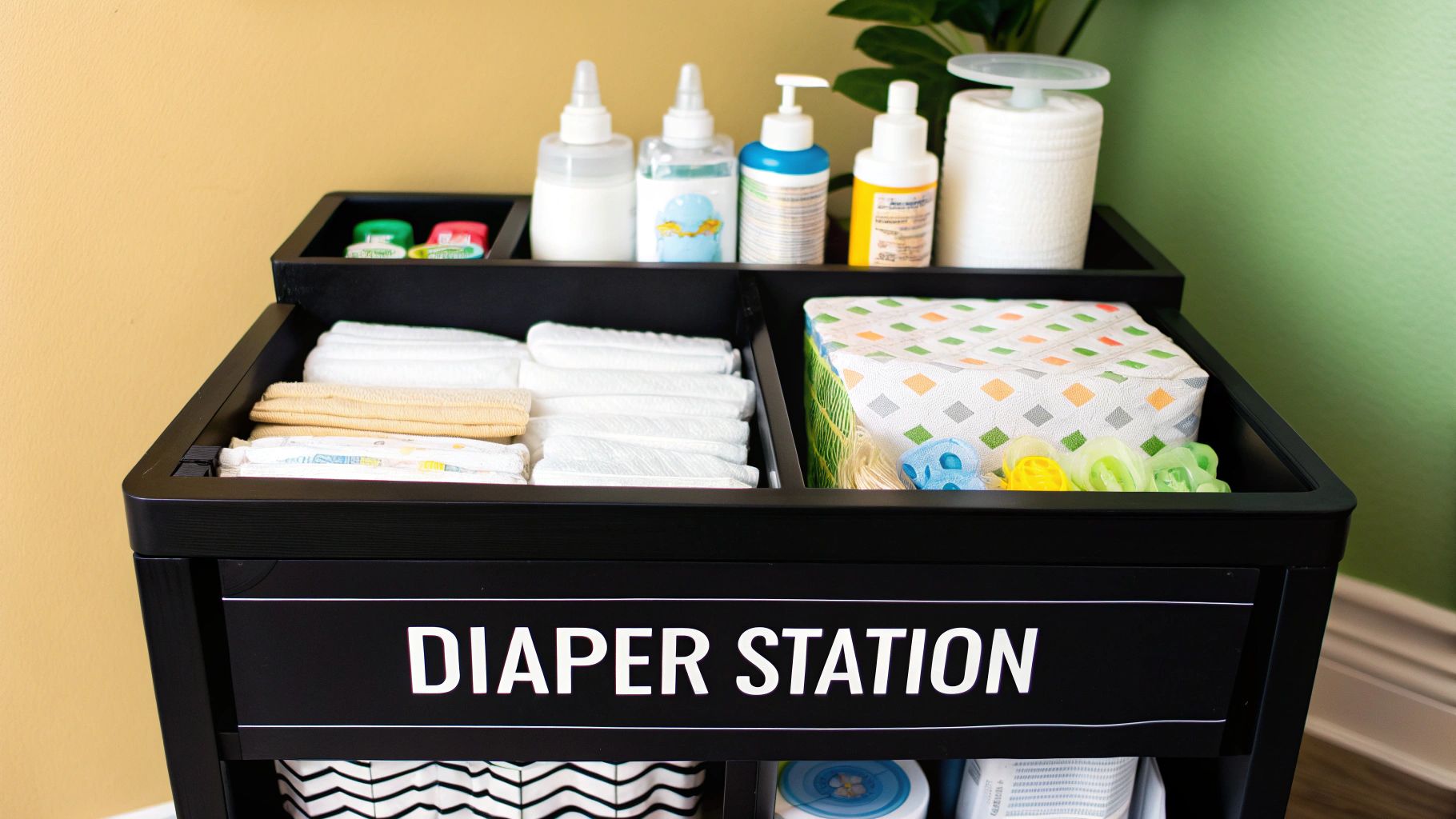
The primary advantage is safety and convenience. With everything consolidated, you can keep one hand on your baby at all times. This concept, heavily featured in Babylist registry recommendations and by brands like OXO Tot, streamlines your routine and reduces the stress of searching for supplies mid-change.
How to Implement a Diaper Station
Setting up an efficient diaper station is simple and can be adapted for any nursery layout.
- For Mobile Use: A portable caddy, like the mDesign plastic storage caddy with a handle, allows you to move your changing station from the nursery to the living room or any other area. This is perfect for larger homes or for parents who prefer flexibility.
- For Fixed Stations: A wall-mounted or changing-table-attached organizer keeps surfaces clear and essentials organized. Many of these, like the hiccapop Nursery Organizer, offer multiple pockets and shelves for diapers, wipes dispensers, and lotions.
Actionable Tips for Success
To get the most out of your diaper station, consider these practical tips:
- Stock Multiple Diaper Sizes: As your baby nears a size transition, keep a small stash of the next size up in the caddy to avoid being caught unprepared.
- Include Distractions: Keep a small toy, a pacifier, or a board book in a caddy pocket to entertain your baby during changes.
- Position a Disposal System: Place a diaper pail or a small trash can with a lid right next to the changing table for immediate and hygienic disposal.
- Maintain a Shopping List: Keep a small notepad or use a phone app to jot down items as they run low, ensuring you never run out of essentials like wipes or cream.
By creating an organized diapering hub, you can make the constant cycle of changes faster, safer, and far less chaotic.
3. Vertical Wall Storage Solutions
Another of the most impactful baby nursery organization ideas is to take advantage of vertical space. Wall-mounted storage solutions like floating shelves, hanging pockets, and decorative cubbies transform unused wall areas into functional, accessible storage. This approach, heavily influenced by space-saving Scandinavian and Montessori design principles, keeps floors clear and places essentials within easy reach.
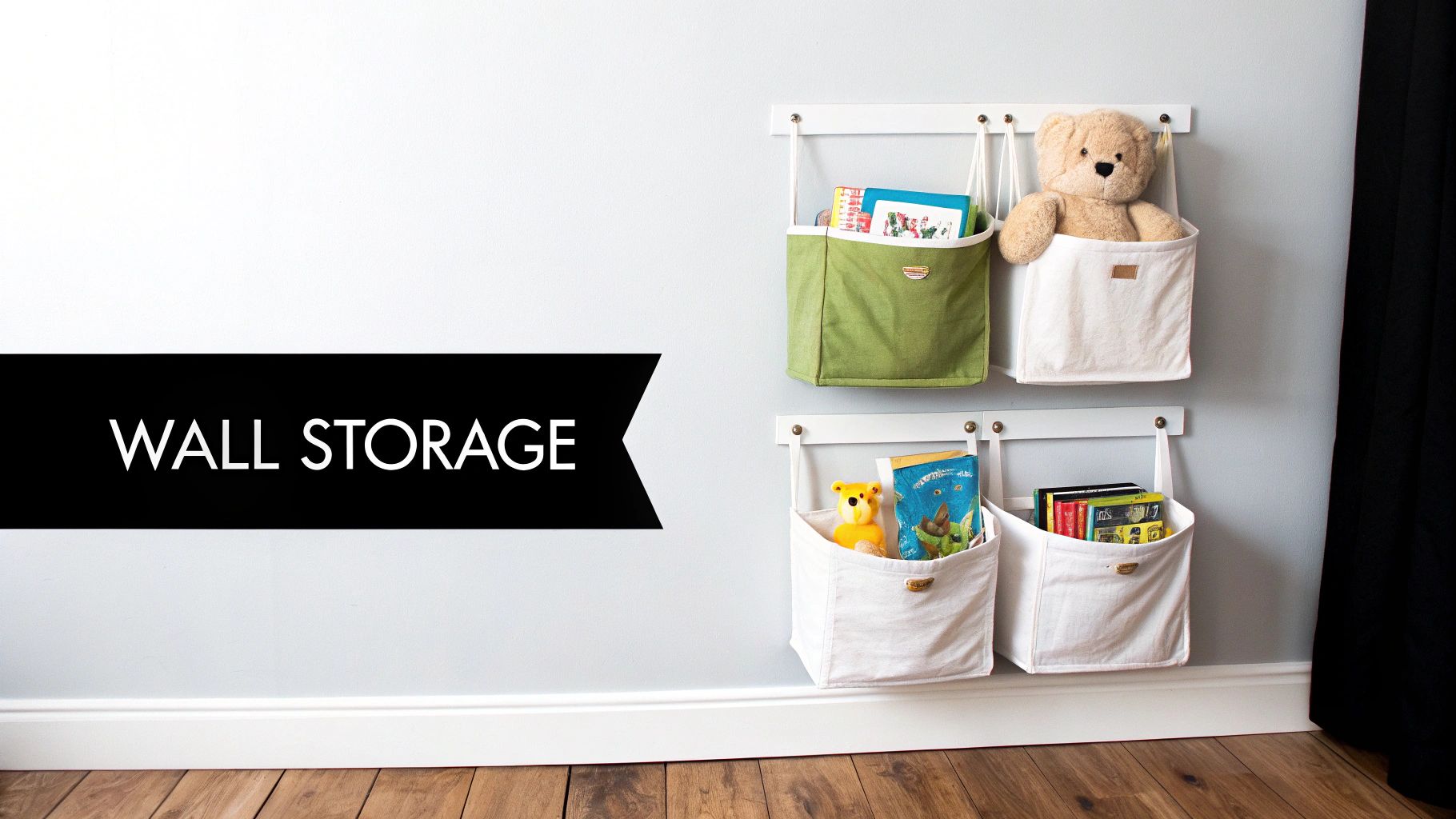
The key benefit is maximizing square footage, which is crucial in smaller nurseries. By moving items like books, toys, and supplies off the floor and onto the walls, you create a more open, organized, and safe environment. This strategy allows you to display cherished items while keeping clutter at bay.
How to Implement Vertical Storage
Implementing vertical storage is a versatile project that can be customized to your nursery’s theme and layout.
- Floating Shelves: Install a series of floating shelves to create a library wall for books or a display for special toys. Grouping them together creates a strong visual focal point.
- Wall Pockets and Baskets: Fabric or woven wall pockets are perfect for storing smaller items like pacifiers, teething toys, or hair accessories. They add texture and keep tiny essentials from getting lost.
- Mounted Cubbies and Hooks: Systems like the IKEA FLISAT wall storage or Pottery Barn Kids cubbies offer a combination of shelving, hooks, and rails. These are ideal for hanging towels, storing art supplies, or organizing daily necessities.
Actionable Tips for Success
To get the most out of your vertical storage, consider these practical tips:
- Anchor for Safety: Always secure heavy shelves and cubbies directly into wall studs. For lighter items, use appropriate drywall anchors to ensure everything is stable and safe.
- Plan for Reach: Place frequently used items, like diapers and wipes on lower shelves near the changing table, and decorative or less-used items higher up.
- Use Bins and Baskets: Contain small toys, art supplies, and other loose items in decorative baskets or bins on your shelves. This prevents them from falling and keeps the display looking tidy.
- Think Long-Term: Consider how the storage will be used as your child grows. A low-mounted bookshelf can become an art supply station for a toddler later on.
By utilizing your walls effectively, you can create a nursery that feels larger, stays organized, and beautifully showcases your baby’s favorite things.
4. Under-Crib Storage Maximization
One of the most resourceful baby nursery organization ideas is to utilize the often-wasted space beneath the crib. Maximizing under-crib storage turns this dead zone into a valuable real estate hub for bulky items, backup supplies, or out-of-season clothing. This method involves using rolling bins, shallow drawers, or fabric bags specifically designed to slide neatly under the crib, keeping essentials accessible but out of sight.
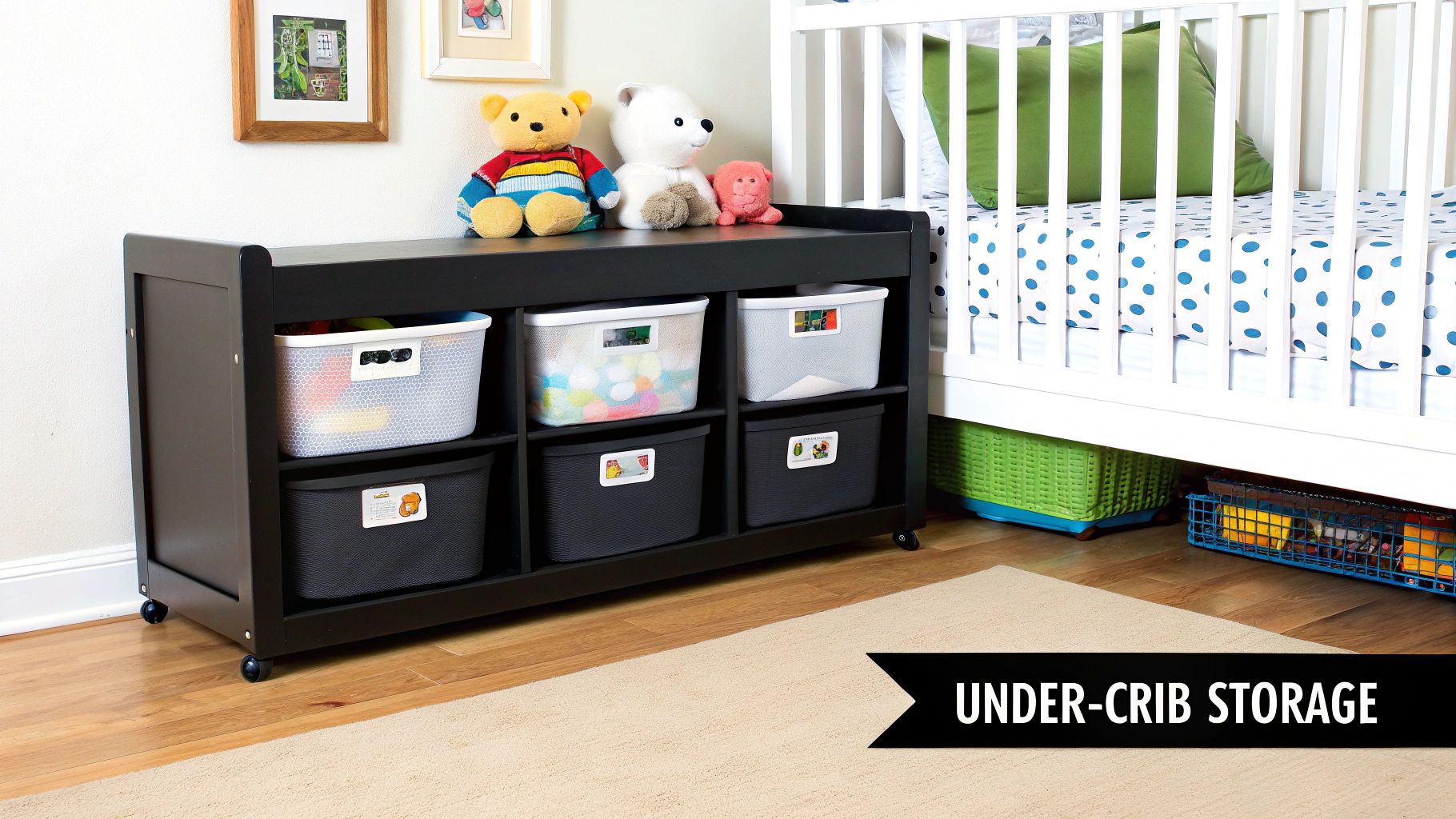
The key benefit is maximizing floor space, which is especially critical in smaller nurseries. Organization specialists for compact living spaces and shows like HGTV nursery makeovers frequently champion this strategy to create a functional room without clutter. It’s perfect for storing items you don’t need daily, such as extra diaper boxes, bulk wipe packages, or next-size-up clothing.
How to Implement Under-Crib Storage
Setting up an efficient under-crib system is simple and can be tailored to your specific needs and crib design.
- Rolling Bins: Use low-profile plastic storage boxes with wheels, like the IRIS under-bed series. The wheels make it easy to slide the containers in and out for quick access without scratching your floors.
- Fabric Organizers: Opt for soft, zippered canvas or fabric storage bags with handles. These are ideal for storing textiles like seasonal clothes, extra blankets, or crib bedding, as they protect items from dust.
- Custom Solutions: For a more integrated look, consider building or installing shallow, custom-fit drawers that match your crib's dimensions and style.
Actionable Tips for Success
To get the most out of your under-crib storage, apply these practical tips:
- Measure First: Before buying any containers, measure the clearance height and width under your crib to ensure a perfect fit.
- Label Everything: Use clear bins or attach large, easy-to-read labels to opaque containers. This prevents you from having to pull everything out just to find one item.
- Store Non-Daily Items: Reserve this space for backup supplies and less frequently used items. This keeps your daily-use products in more accessible locations like the changing table.
- Clean Regularly: The floor under a crib can collect dust. Pull the containers out every few weeks to vacuum and wipe them down, keeping your stored items fresh and clean.
This video from a professional organizer demonstrates how to effectively use under-bed (and under-crib) space for a tidy, functional nursery.
By transforming this overlooked area, you gain significant storage capacity, helping to maintain a serene and organized nursery environment.
5. Multi-Functional Furniture Organization
One of the smartest baby nursery organization ideas is to invest in furniture that does double duty. Multi-functional pieces combine essential nursery functions like sleeping or changing with built-in storage, maximizing every square inch of your space. This approach is perfect for smaller nurseries or for parents who prefer a minimalist aesthetic, reducing clutter by eliminating the need for separate storage units.
The core benefit of this strategy is its space-saving efficiency. A changing table with integrated shelves and drawers, like those from Delta Children, provides immediate access to diapers and wipes while keeping the room tidy. Similarly, a crib with under-drawer storage or a storage ottoman in the nursing corner can hold extra blankets and feeding supplies, keeping essentials close but out of sight. This concept has been popularized by modern nursery brands like Babyletto and West Elm Kids, which focus on stylish, practical designs.
How to Implement Multi-Functional Furniture
Integrating multi-purpose furniture into your nursery is about making strategic choices from the start.
- Changing Table and Dresser Combo: Opt for a wide, sturdy dresser that can double as a changing station by simply adding a secure changing pad on top. This piece serves its purpose during the diaper years and transitions into a standard dresser as your child grows.
- Storage Seating: Place a storage ottoman or a bench with hidden compartments near your glider. It provides a place to rest your feet during late-night feedings and discreetly stores nursing pillows, burp cloths, or toys.
Actionable Tips for Success
To get the most out of your multi-functional pieces, consider these practical tips:
- Prioritize Longevity: Choose furniture that will grow with your child. A convertible crib that becomes a toddler bed or a neutral-colored storage bench can be used for years to come.
- Ensure Easy Access: Make sure all storage components are easy to open and reach, even with one hand. Features like smooth-gliding drawers or soft-close hinges are both practical and safe.
- Use Drawer Dividers: Maximize the storage within your multi-functional dresser by using dividers to organize smaller items like socks, hats, and pacifiers.
- Think Vertically: Look for pieces that utilize vertical space, such as a changing table with a hutch or tall, narrow shelving units, to draw the eye upward and make the room feel larger. Learn more about how to select the best pieces by exploring these nursery essentials.
By choosing furniture that serves multiple purposes, you create a functional, organized, and stylish nursery that can adapt to your family's changing needs.
6. Toy Rotation and Storage System
Another powerful baby nursery organization idea is implementing a toy rotation system to manage the inevitable influx of playthings. This approach involves keeping a small, curated selection of toys accessible to your child while storing the rest out of sight. By periodically swapping the toys, you reduce clutter, keep playtime engaging, and make cleanup significantly easier for everyone.
The core benefit of this method, popularized by the Montessori education philosophy and minimalist parenting advocates, is its positive impact on child development. When presented with fewer options, children often engage in deeper, more creative play. It prevents overstimulation and makes each "new" rotated-in toy feel fresh and exciting, maximizing its developmental value.
How to Implement a Toy Rotation System
Setting up a toy rotation is less about buying new storage and more about strategically using what you have.
- Designate a Play Zone: Use low, open shelves, like a Montessori-style shelf, to display the current selection of toys. This allows your child to see their options and choose independently.
- Use Labeled Storage: Store the "out-of-rotation" toys in clear, labeled bins in a closet, under the bed, or in a storage ottoman. Label bins by category (e.g., "Building Blocks," "Puzzles," "Plush Toys") or by rotation week.
Actionable Tips for Success
To get the most out of your toy rotation system, consider these practical tips:
- Rotate on a Schedule: Swap toys weekly or bi-weekly to maintain novelty without being disruptive. Observe your child’s interest to find the right frequency.
- Keep it Simple: Start by having only 3-4 categories of toys out at once (e.g., one puzzle, one set of blocks, a few books, and one sensory toy).
- Establish the Habit Early: Introducing a rotation system when your baby is young helps build a foundation for an organized and intentional play environment.
- Declutter Regularly: As you rotate toys, take note of which ones are consistently ignored. Use this as an opportunity to donate items your child has outgrown or shows no interest in.
This video offers an excellent visual demonstration of how to set up and manage a functional toy rotation system.
By rotating toys, you create a more peaceful and engaging play area. To learn more about creating an effective nursery play space, you can explore these tips on what makes a great play space.
7. Label and Inventory Management System
One of the most foundational baby nursery organization ideas is to implement a comprehensive labeling system. This goes beyond simple tags; it’s about creating a visual language for your nursery that makes it easy for anyone, including sleep-deprived parents or visiting grandparents, to find what they need and put it back in the right place. This system uses pictures, text, or color-coding to clearly identify the contents of every bin, basket, and drawer.
The key benefit is eliminating the guesswork. When you need burp cloths, teething toys, or size 3 diapers in a hurry, you won't have to open multiple containers to find them. This method, often seen in preschool classrooms and championed by organizers like The Home Edit, creates an intuitive and self-sustaining system that keeps the nursery tidy with minimal effort.
How to Implement a Labeling System
Setting up an effective labeling system is simple and can be tailored to your specific needs and storage solutions.
- For Toy Bins: Use picture labels, especially for pre-readers. A picture of blocks on the block bin helps toddlers learn to clean up independently.
- For Supply Drawers: Use clear text labels for items like "Diapers," "Wipes," "Creams," and "First Aid." A label maker, like those from Brother, can create neat, uniform labels.
- For Clothing Storage: Combine text and color-coding. For example, use blue labels for 3-6 month clothes and green labels for 6-9 month clothes stored in bins.
Actionable Tips for Success
To ensure your labeling system is effective and long-lasting, consider these practical tips:
- Make Labels Durable: Laminate paper labels or use vinyl decals to protect them from spills and wear.
- Use Pictures and Words: Combining images with text helps everyone, from toddlers to adults, identify contents quickly.
- Keep a Master Inventory: For items stored away (like clothes in the next size up), keep a simple list on your phone or a clipboard in the closet detailing what is in each numbered bin.
- Place Labels at Eye Level: Ensure labels are clearly visible on the front of bins and drawers without needing to move them.
This video demonstrates how to create beautiful, functional labels for every part of the nursery.
By creating a clear and consistent labeling system, you turn chaos into order and make nursery management a seamless task for the whole family.
7 Baby Nursery Organization Ideas Comparison
| Organization Method | Implementation Complexity 🔄 | Resource Requirements ⚡ | Expected Outcomes 📊 | Ideal Use Cases 💡 | Key Advantages ⭐ |
|---|---|---|---|---|---|
| Closet Divider Systems with Size Labels | Medium - initial setup and regular updating | Moderate - dividers, labels, space | Time saved in dressing, better inventory management | Organizing baby clothes by size and season | Easy item location, helps caregivers, clear sections |
| Diaper Station Caddy Organization | Low - simple setup and maintenance | Low to Moderate - caddy, compartments | Faster access to supplies, reduced search time | Diaper changing areas needing quick supply access | Portable, keeps essentials reachable |
| Vertical Wall Storage Solutions | Medium - requires proper mounting and planning | Moderate - shelves, hooks, baskets | Maximized floor space, functional decor | Small nurseries needing space-saving and aesthetic storage | Space-efficient, decorative, adaptable |
| Under-Crib Storage Maximization | Low to Medium - depends on storage choice | Low - bins or drawers | Hidden storage for bulky/out-of-season items | Small nurseries with unused under-crib space | Utilizes wasted space, keeps clutter out of sight |
| Multi-Functional Furniture Organization | High - selecting and integrating dual-purpose pieces | High - specialized furniture | Reduced clutter, multi-use furniture | Small nurseries requiring furniture that saves space | Cost-effective, space-saving, cohesive design |
| Toy Rotation and Storage System | Medium - ongoing rotation and sorting required | Moderate - bins, shelves for rotation | Reduced clutter, sustained toy interest | Managing child's toy clutter and developmental needs | Maintains novelty, easier cleanup |
| Label and Inventory Management System | Medium - initial labeling and tracking setup | Low to Moderate - labels, tracking tools | Consistent organization, reduces over/under purchasing | Comprehensive nursery organization for all supplies/items | Universal usability, efficient item tracking |
Creating Your Perfectly Organized Nursery
Navigating the journey of parenthood is an adventure filled with joy, learning, and countless precious moments. Implementing a thoughtful organizational system in your baby's nursery is not just about creating a tidy room; it's about engineering a peaceful, functional, and supportive environment that allows you to focus on what truly matters: your little one. By embracing these baby nursery organization ideas, you are actively reducing daily friction, minimizing stress, and reclaiming valuable time that would otherwise be spent searching for a lost pacifier or a clean onesie.
Throughout this guide, we've explored a range of powerful strategies, from segmenting tiny clothes with closet dividers to establishing a mobile diaper caddy that follows you wherever you need it. We’ve seen how vertical wall space can become a powerhouse of storage and how the forgotten real estate under the crib can solve your clutter problems. Each idea, whether it’s choosing multi-functional furniture or implementing a strategic toy rotation, serves a single, crucial purpose: to simplify your routine and enhance your well-being.
Key Takeaways for Lasting Serenity
Remember that the ultimate goal is to build a system that works for your family. An organized nursery is a dynamic space, not a static showroom. It should be flexible enough to evolve as your baby transitions from a newborn to a curious toddler.
- Start Small, Win Big: You don't need to tackle every idea at once. Choose one or two strategies that address your most significant pain points, like setting up the diaper station or organizing the closet, and build from there.
- Consistency is Your Superpower: The true magic happens when you maintain the systems you create. Take five minutes each day to put items back in their designated homes. This small habit prevents chaos from creeping back in and makes a massive difference in the long run.
- Adapt and Evolve: As your child grows, their needs will change dramatically. The storage bins that once held burp cloths may soon hold building blocks. Regularly reassess your setup and don't hesitate to adjust your organizational methods to match your child's current developmental stage.
Your Path to a Peaceful Nursery
Mastering these baby nursery organization ideas is an investment in your own peace of mind. It transforms a potentially chaotic space into a sanctuary of calm, making late-night feedings, quick diaper changes, and morning routines feel more manageable and less overwhelming. You're not just organizing objects; you're creating a foundation for a more joyful, present, and less stressful parenting experience. This structured environment provides a predictable and calming atmosphere for your baby while giving you the confidence and clarity to navigate your day with ease. Embrace the process, celebrate the small victories, and enjoy the beautiful, functional space you've created for your family.
Ready to put these ideas into action? Discover thoughtfully designed products that make organization effortless at Hiccapop. From portable diaper caddies to smart storage solutions, our gear is created by parents, for parents, to help you build the functional and serene nursery you and your baby deserve. Explore our collection at hiccapop and take the first step toward a more organized life.
Article created using Outrank