


Newborn Schedule Sample Guide for Calm Days and Restful Nights
A newborn schedule sample is less of a rulebook and more of a friendly framework you can slide around as life happens. Think of 8–12 feeds, five naps, and wake windows that balance play and rest. Below, you’ll find a cue-based blueprint, tips for real-world tweaks, and age-based snapshots to guide you toward calmer days and more restful nights.
Flexible Cue-Based Schedule Snapshot
React to your baby’s hunger and sleep cues instead of rigid clock times. This visual overview highlights feeding, nap, and wake windows in bite-size pieces—perfect for on-the-go parents.
| Time Window | Activity | Quick Tip |
|---|---|---|
| 6:30–7:00 am | Wake & Feed | Look for rooting cues |
| 7:00–8:00 am | Nap | Dim room, play white noise |
| 8:00–10:00 am | Wake Time | Tummy time & snuggles |
| 10:00–10:30 am | Feed | Cluster feeds common |
Tiny shifts—10–15 minutes—let you dodge visitors or errands without derailing the day. A timer app and labeled alarms for “Feed” and “Nap” keep everyone on track. For more on feeding patterns, Discover more insights about feeding rhythms.
Understanding Key Newborn Rhythms
Newborns speak volumes through subtle signals. Tuning in early avoids overtired crying spells.
Hunger Cues
- Rooting or Lip Smacking Ready to eat
- Fussing or Squirming Offer the breast or bottle soon
Sleepy Cues
- Yawning & Eye Rubbing Nap time approaching
- Glazed Look Act fast to prevent meltdown
“Responding to cues rather than the clock fosters a calmer day.”
Learn more about ideal wake windows in Wake Windows By Age.
Building a Flexible Newborn Routine
Sketch feeds, naps, and diaper changes on paper or in an app. Share your log with partners or caregivers so everyone’s on the same page.
- Partner-Friendly Updates: Group chat or shared calendar
- Tummy Time Slots: Slot these into each wake window
- Sync With Chores: Align feeds with meal prep
Tracking & Tweaking
| Tracker Item | Tool | Note |
|---|---|---|
| Feeds | Baby Tracker App | Record breast or bottle |
| Naps | Analog Timer | Alerts for wake window |
| Diapers | Notebook | Wet vs dirty insights |
Review weekly: tweak by 5–10 minutes where needed. For gentle self-soothing, see our guide on teaching baby to self-soothe.
Feeding Guide For Breastfeeding And Bottle
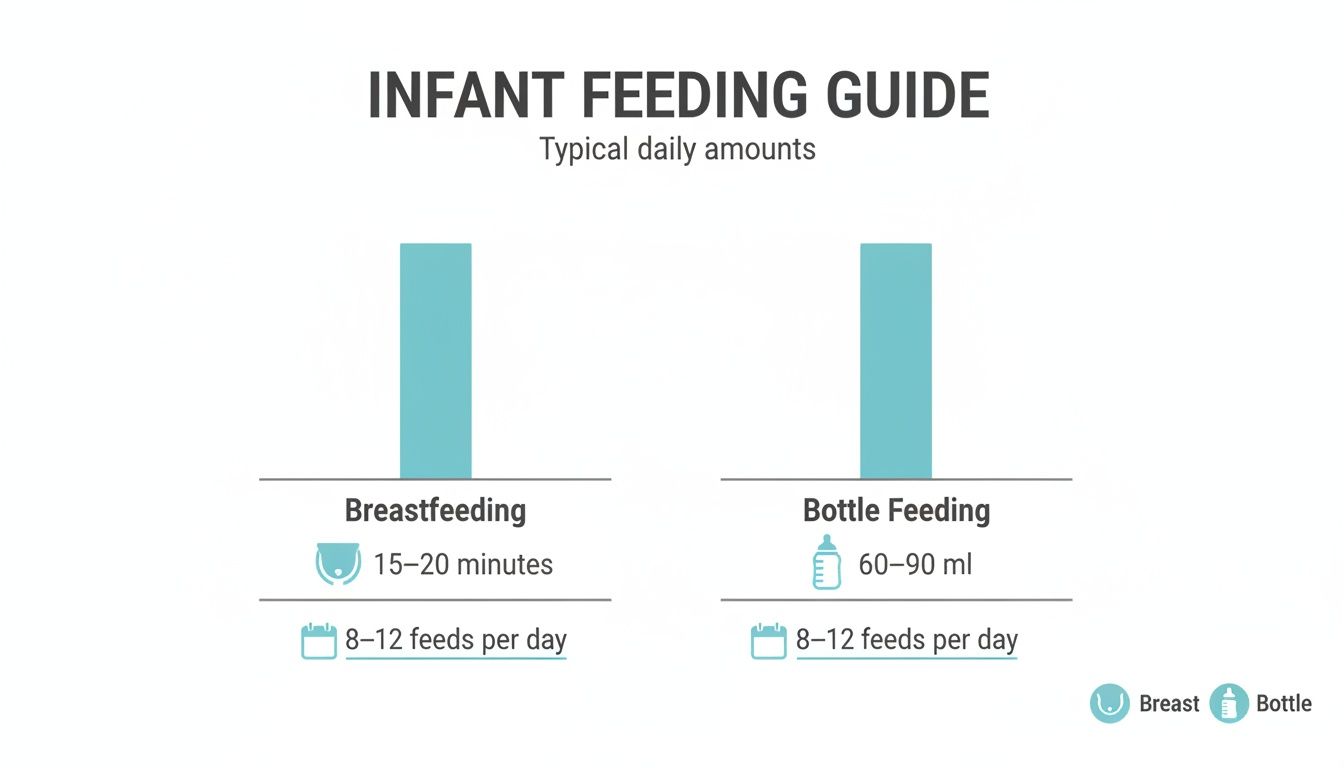
Whether nursing or bottle-feeding, aim for a cue-based plan of 8–12 sessions in 24 hours. Swift responses to early hunger cues keep feeds calm.
Breastfeeding
- Duration 15–20 minutes per side
- Tip Ensure a deep latch; break suction gently to reposition
Paced Bottle Feeding
- Volume 60–90 ml over 15–20 minutes
- Tip Slow sips prevent gulping
Cue-led schedules boost prolactin and weight gain (see Global Breastfeeding Scorecard). For paced-feeding benefits, read in this study.
Sample Schedules For Different Ages
Infants evolve fast. Below is an infographic and quick age-bracket chart.
| Age | Feeds/Day | Sleep Hours | Wake Window |
|---|---|---|---|
| 0–6 weeks | 8–12 | 14–17 | 35–60 min |
| 7–12 weeks | 7–10 | 13–15 | 60–90 min |
| 3–6 months | 5–8 | 12–15 | 90–120 min |
Use this as a springboard to tailor your own newborn routine.
Troubleshooting Common Schedule Hiccups
Even the best plans hit bumps. Here’s how to stay calm:
Growth Spurts
- Expect cluster feeding for 2–3 hours.
- Keep snacks, water, and pillows at arm’s reach.
Night Wakings
- Dim lights, speak softly, and use a lullaby.
- Offer a mini “top-off” feed 30 minutes before their usual wake time.
Travel & Time Changes
- Shift feeds/naps by 15 minutes every 12 hours.
- Use blackout shades and natural light cues.
For safe sleep tweaks, see Safe Sleep Environment Best Practices.
FAQ
What if my baby ignores the schedule?
Focus on flexible windows and respond to early hunger or sleepy cues. Log patterns and adjust.
How do I handle illness?
Offer comfort feeds, extra naps, and keep wake windows loose until energy returns.
Can I use this with premature babies?
Preemies need shorter wake times and smaller volumes—check with your pediatrician for corrected-age guidance.
Conclusion
Every baby moves to their own beat. By blending cue-based scheduling with small, weekly tweaks, you’ll discover a newborn schedule sample that grows with your child. Share your wins, questions, and favorite tips in the comments below—let’s build a supportive community together. Ready for calmer days and restful nights? Explore Hiccapop for gear and resources that support your journey.