


A Parent's Guide to Wake Windows by Age
For a newborn, the time they can happily stay awake is incredibly short—sometimes just 30-60 minutes. By toddlerhood, that stretches out to a much more manageable 4-6 hours. These "wake windows" are the secret to sidestepping an overtired baby and finally getting into a predictable rhythm.
What Are Wake Windows and Why Do They Matter?
If you've ever found yourself in a late-night panic, Googling "why won't my baby sleep," you've probably come across the term wake windows. Simply put, a wake window is just the length of time your little one can comfortably stay awake between sleeps. It kicks off the second their eyes open and ends the moment you put them back down to rest.
I like to think of it as a baby’s "awake battery." A newborn's battery is tiny and drains in a flash. A toddler's, on the other hand, can go for hours.
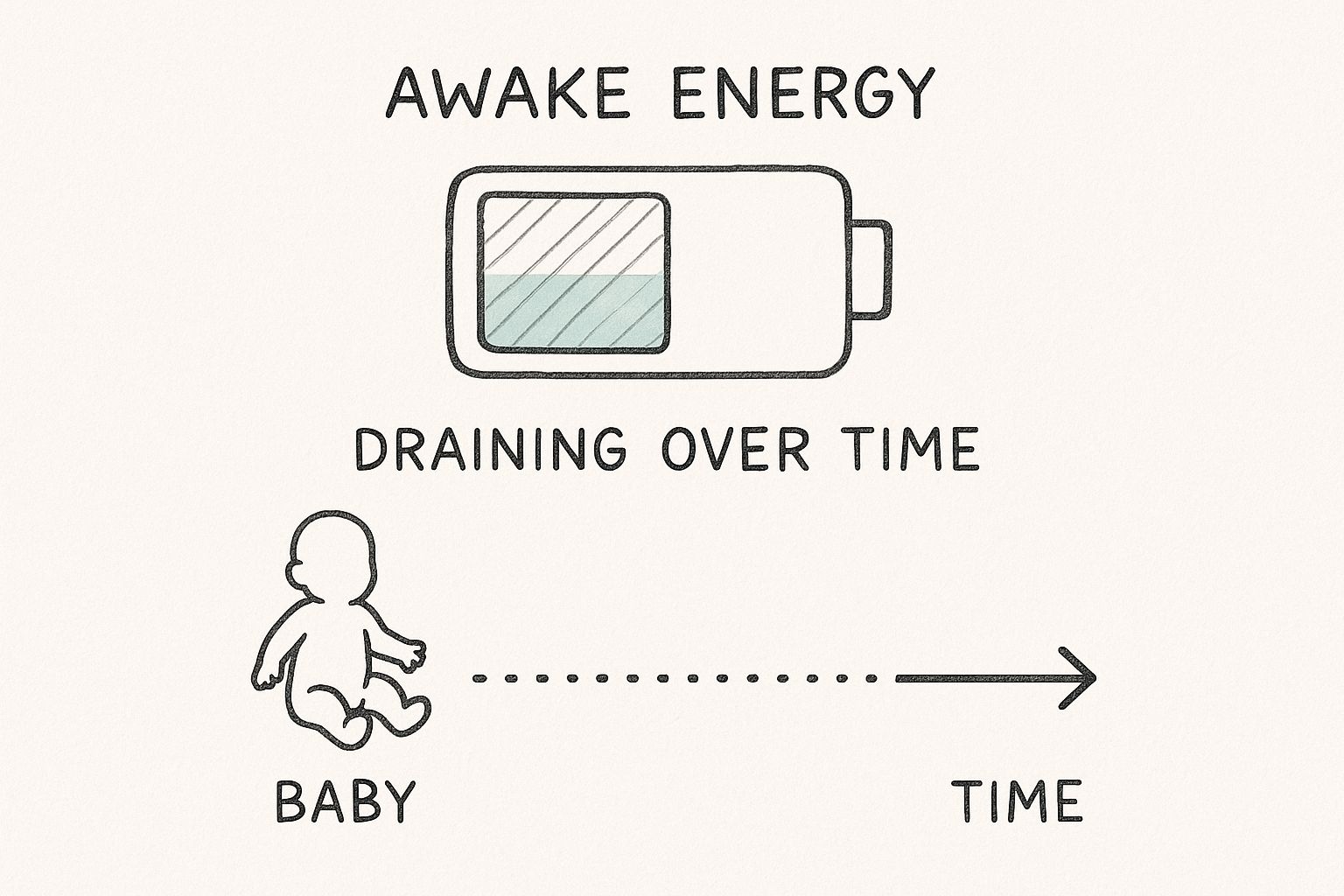
As you can see, keeping an eye on this "energy drain" is what helps you know they need to sleep before the overtired chaos begins.
Moving From Reactive to Proactive Parenting
This is where the magic happens. Understanding wake windows lets you shift from being reactive (waiting for the inevitable meltdown) to being proactive. Instead of just guessing when your baby might be tired, you have a solid, age-appropriate guideline to follow.
This simple change helps you hit that sweet spot for sleep—when they're tired enough to settle easily but not so exhausted that their body is swimming in cortisol, the stress hormone that makes sleep feel impossible.
The goal is to put your baby down for a nap or bedtime when they are drowsy but still awake. A well-timed wake window makes this possible, preventing the dreaded overtired state that leads to short naps and nighttime battles.
This isn't some new-age fad, either. The idea of tracking awake time to improve sleep has been a foundational piece of pediatric sleep advice since the early 2000s. It’s now standard practice for pediatricians and sleep consultants in the U.S., UK, and Canada. You can discover more insights about the history of wake windows and how they're used today.
The Benefits of Tracking Wake Windows
So, why all the fuss? Getting wake windows right really can bring a sense of order to your days and give you your sanity back. The biggest wins include:
- Fewer Overtired Meltdowns: When you put your baby down before they hit their breaking point, you sidestep that frantic, fussy crying that comes with being completely exhausted.
- Longer, More Restorative Naps: A baby who is perfectly timed for sleep is far more likely to connect their sleep cycles. This means you'll get longer naps instead of those frustrating 30-minute catnaps.
- Easier Bedtimes: When sleep pressure has built up just the right amount, your baby will fall asleep much more easily and with less protest at night.
- A More Predictable Daily Rhythm: It's not about a rigid, by-the-clock schedule. It's about having a rhythm that helps you anticipate your baby's needs and plan your day with a bit more confidence.
The Complete Wake Windows by Age Chart
Alright, let's get into the nitty-gritty of your baby's sleep schedule. While every baby is their own unique little person, there are some surprisingly reliable patterns that can guide you through each stage.
Think of this chart as your go-to cheat sheet. It’s designed to help you navigate everything from those sleepy newborn days to the "I must climb everything" toddler phase. Remember, these are starting points, not rigid rules. Your baby might naturally lean toward the shorter or longer end of these ranges, and that’s perfectly fine. The real goal is to become a sleep detective, using the clock as one tool and your baby’s cues as the other.
Newborns to Four Months: The Sleepy Potato Stage
In the very beginning, life is a beautiful, blurry cycle of eating, sleeping, and pooping. Your newborn’s "awake battery" is incredibly tiny—they just can't handle being up for very long. Trying to stretch them past their limit at this age almost always backfires into a screaming, overtired meltdown.
- 0-4 Weeks: Expect a wake window of just 30-60 minutes. This is often only enough time for a feeding, a diaper change, and a quick cuddle before they’re ready to go back down.
- 4-12 Weeks: You’ll start to see a bit more stamina as wake windows stretch to 60-90 minutes. They might enjoy some tummy time on the floor or a short walk before their next nap.
- 3-4 Months: Wake windows lengthen more noticeably to about 75-120 minutes. Their personality is starting to shine, and they're becoming much more engaged with the world.
During this stage, their internal body clock (the circadian rhythm) is still under construction. A little bit of natural light during their brief wake windows can be a game-changer. Even just a few minutes of daylight helps set that internal clock, which is why we put together a guide on how taking your newborn outside can lead to more sleep.
Five to Seven Months: The Explorer Emerges
Welcome to the next level of babyhood! Your little one is probably rolling, maybe sitting up, and is definitely more interested in their surroundings. All this new physical and mental activity means they can—and need to—stay awake for longer.
Their wake windows are now much more defined, typically ranging from 2 to 3 hours. At this age, most babies are taking three solid naps a day, though that last one is often just a short catnap to bridge the gap to bedtime.
This is a key transition period. As your baby's stamina grows, you’ll find that sticking to a newborn schedule makes them fight naps or take forever to fall asleep. Gently stretching their awake time is crucial for keeping their sleep on track.
Seven to Ten Months: The Mobile Maniac
Once your baby is crawling, pulling up, or cruising around the furniture, their energy output skyrockets. They are busy little bees, and their wake windows have to reflect that. The time a baby can stay happily awake increases quite a bit during this period.
For instance, babies from 7 to 10 months usually have wake windows between 2.5 to 4.5 hours. It's also very common for the wake window right before bedtime to be the longest of the day, which helps build up enough sleep pressure for a good, long night's rest. This is also the age when many babies drop from three naps down to two, a transition that requires you to gradually stretch all their wake windows.
Eleven to Fourteen Months: The Almost-Toddler
As your baby barrels toward their first birthday, their sleep patterns become much more predictable. Most little ones in this age range are solidly on a two-nap schedule, with significantly longer wake windows.
- Average Wake Window: Plan on them being awake for 3 to 4 hours at a time.
- Nap Schedule: The day is usually broken into three distinct wake windows: one before the morning nap, one between the two naps, and one leading up to bedtime.
This newfound consistency makes planning your days so much easier. You can schedule outings and activities with more confidence, knowing you have reliable chunks of awake time to work with.
Fourteen to Twenty-Four Months: The Toddler Transition
In the toddler years, the sleep evolution continues. The biggest change you’ll see is the eventual transition from two naps down to just one solid afternoon nap. This is a major shift that usually happens sometime after 14 months.
During this period, their wake windows will stretch all the way to 4 to 6 hours. Once they drop to one nap for good, you'll have a long wake window in the morning and another in the afternoon before bed. It’s a transition that can take a few weeks of adjustment, so be patient and flexible as you both figure out the new rhythm.
Putting Wake Windows Into Practice
So you’ve got the theory down, but what does this all actually look like on a typical Tuesday? It's one thing to know the numbers on a chart, but it’s a whole different ballgame trying to fit naps, feedings, and maybe even a trip to the grocery store into those windows.
Let's bridge that gap from paper to practice. Think of these schedules less as rigid rules and more as a flexible blueprint. Babies are gloriously unpredictable, after all. These examples are here to give you a framework—a starting point you can tweak to fit your own family's unique rhythm.
Sample Schedule For A 4-Month-Old
At four months, your baby is probably still taking four naps a day. Their wake windows are stretching, usually lasting somewhere between 75 and 120 minutes. The day is still very much a cycle of eat, play, sleep, repeat—and that's exactly what they need to avoid getting overtired.
Here’s a peek at how that might unfold:
- 7:00 AM: Wake for the day, feed, and kick off the first wake window.
- 8:15 AM: Down for Nap 1 (after a 75-minute wake window).
- 9:45 AM: Up from nap, time for another feed and some tummy time.
- 11:15 AM: Nap 2 begins (after a 90-minute wake window).
- 12:45 PM: Wake up, eat, and have some interactive playtime.
- 2:30 PM: Time for Nap 3 (after a 105-minute wake window).
- 3:30 PM: Up from a shorter nap, feed, and maybe do some sensory play.
- 5:15 PM: The final catnap of the day (Nap 4) to bridge the gap until bedtime (after a 105-minute wake window).
- 5:45 PM: Wake from the catnap.
- 7:30 PM: Start the bedtime routine, aiming for lights out around 7:45 PM (after a 120-minute wake window).
Did you notice how the wake windows get a little longer as the day goes on? That’s a common and helpful pattern. It helps build up just the right amount of sleep pressure for a longer, more restorative night's sleep.
Sample Schedule For An 8-Month-Old
By eight months, a big transition is usually happening: most babies are dropping from three naps down to two. This is a game-changer! Wake windows are significantly longer, now in the 2.5 to 3.5-hour range, giving you bigger chunks of time for activities and adventures.
A two-nap day could look a lot like this:
- 7:00 AM: Good morning! Time for a feed and some playtime to start the day.
- 9:45 AM: Nap 1 begins (after a 2.75-hour wake window).
- 11:15 AM: Wake up, have a feed or solids, maybe head out for a walk.
- 2:30 PM: Down for Nap 2 (after a 3.25-hour wake window).
- 4:00 PM: Up and at 'em! Time for a small snack and more play.
- 7:30 PM: Begin the wind-down routine for an 8:00 PM bedtime (after a 4-hour wake window).
The longest wake window of the day is almost always the one right before bed. This is key to making sure your baby is tired enough to sleep for a solid stretch overnight.
Sample Schedule For A 12-Month-Old
At the one-year mark, your little one is likely a two-nap pro with some serious stamina. Wake windows are now consistently between 3 and 4 hours long. This newfound predictability can make it so much easier to plan your days.
A day in the life of a one-year-old might go something like this:
- 6:30 AM: Wake up, followed by milk and breakfast.
- 9:45 AM: Nap 1 (after a 3.25-hour wake window).
- 10:45 AM: Up from nap, time for a snack and play.
- 2:15 PM: Nap 2 (after a 3.5-hour wake window).
- 3:15 PM: Wake up, have another snack, and get back to playing.
- 7:15 PM: Bedtime (after a 4-hour wake window).
As your baby grows into a toddler, this routine will keep evolving, eventually dropping to just one afternoon nap. For a look ahead at what's next, check out our guide with safe sleeping tips for toddlers.
How To Adapt When Things Go Wrong
Okay, but what happens when a nap gets cut short or the day goes completely off the rails? First thing: take a breath. A rough nap day doesn’t mean you’ve failed! Being flexible is the most important skill in your parenting toolbox.
Here are a few ways to roll with the punches:
- If a nap is too short: Resist the urge to stretch the next wake window to its maximum. An overtired baby is the number one cause of another short nap. The better move is to actually shorten the next wake window a bit to help them catch up.
- If you miss a wake window: You might notice your baby gets a "second wind" and seems wired. Don't fall for it! This is a classic sign they're already overtired. Your best bet is to shift into damage-control mode: create a calm, quiet space and start your wind-down routine right away.
- If you have to be out and about: Life happens, and sometimes a car seat or stroller nap is unavoidable. It may not be as restorative as a crib nap, but it’s always better than no nap at all. Just aim to get back on track with your usual routine for the next sleep.
Remember, wake windows are a tool to guide you, not a clock to chain you to. They’re meant to help you tune into your baby’s natural sleep rhythms and reduce your own stress—not add to it.
Decoding Your Baby's Unique Sleepy Cues
Think of wake window charts as your map, but your baby's unique sleepy cues are the real-time GPS. The charts give you a fantastic starting point, but learning to read your baby’s personal signals is what truly dials in their sleep. It’s not about choosing the clock or the baby; it’s about using both together to become a sleep detective.
Some days, your little one might happily play right up to the end of their suggested wake window. Other days, they might be ready for a nap much sooner, especially during a growth spurt or when they're busy mastering new skills. This is where your observation skills become a superpower.
Early Cues vs. Overtired Cues
When it comes to baby sleep, timing is everything. Catching those first subtle sleepy cues means you can put them down when they are perfectly primed for sleep—calm, drowsy, and ready to drift off easily.
If you wait until they're wailing and frantically rubbing their eyes, you’ve missed the ideal moment. Their body is now flooded with cortisol, a stress hormone that acts like a shot of adrenaline. This "second wind" makes settling down incredibly difficult, often leading to short naps and a lot of frustration for everyone involved.
It’s like catching a train. The early cues are the announcement that the train is boarding. You’ve got plenty of time to calmly get to the platform and find your seat. Overtired cues are the train pulling away from the station while you’re sprinting down the platform trying to jump on.
Learning Your Baby’s Language
So, what are you looking for? While every baby has their own special "tell," most share a common set of signals. Spotting these subtle signs is a total game-changer.
Here’s how to tell the difference between those gentle, early hints and the flashing red lights of an overtired baby:
-
Early Cues (The "I'm Getting Sleepy" Phase): These are easy to miss if you aren’t watching closely. Look for a far-off, glazed-over look in their eyes. They might become quieter, slow down their movements, or start pulling on their ears. A single yawn is a classic first sign.
-
Late Cues (The "I'm Overtired!" Meltdown): These are much harder to ignore. This is when you see frantic eye-rubbing, fussiness that quickly turns into full-blown crying, or an arched, stiff back. Paradoxically, they might even seem hyper and wired right before they crash.
Spotting the early signs allows you to begin your wind-down routine before the meltdown begins. This proactive approach helps your baby associate their crib with calm and rest, not stress and crying.
As your baby grows, their communication and physical abilities change rapidly. Understanding these shifts can provide valuable context for their sleep patterns. For a deeper look, our guide on the major baby milestones is a great resource.
From Subtle Signs to Overtired Cues
To help you become an expert cue-spotter, we've broken down the different stages of sleepiness. Learning to identify these will empower you to respond to your baby's needs right on time.
| Cue Category | Signs to Look For | What It Means |
|---|---|---|
| Early Sleepy Cues | Staring into space, a single yawn, becoming quiet, decreased activity, slight fussiness, red eyebrows. | "I'm starting to get tired. It's almost time to start winding down for my nap." |
| Active Sleepy Cues | Repeated yawning, rubbing eyes or ears, burying their face in your chest, increased fussiness. | "Okay, I'm definitely ready for sleep now. Please start my nap routine!" |
| Overtired Cues | Frantic crying, arching back, difficult to console, hyperactivity or a "second wind." | "I needed to sleep a while ago! I'm overwhelmed and struggling to calm down now." |
Becoming fluent in your baby's unique sleepy language takes a bit of practice, but it’s one of the most valuable parenting skills you can develop. When you combine these observations with an age-appropriate wake window, you create a powerful, flexible routine that truly sets your baby up for sleep success.
Troubleshooting Common Wake Window Challenges
So, you've memorized the charts, you're tracking the clock like a seasoned pro, and you're spotting those sleepy cues from a mile away. But sometimes, even when you do everything "right," baby sleep decides to go completely sideways. The first thing you need to know is this: you are not failing. Babies aren't little robots, and even the most perfect sleep plans require a healthy dose of real-life flexibility.
Think of this section as your practical, in-the-trenches troubleshooting guide. We’ll walk through the most common curveballs that wake windows can throw at you and give you simple, actionable ways to get back on track.
The Dreaded 30-Minute "Crap Nap"
Ah, the "crap nap." It's that frustratingly short snooze—maybe 30 or 40 minutes—that’s just long enough to mess up your next wake window but not nearly long enough to be truly restful. When your baby pops up from a nap like this, happy as a clam, it can throw your entire day into chaos.
This almost always happens when a baby doesn't connect their sleep cycles. More often than not, the culprit is that they were either slightly overtired or undertired when you put them down for the nap in the first place.
What to Do About It:
- Shrink the Next Wake Window: I know it feels backward, but this is the single best thing you can do. A baby who is already carrying some sleep debt from a short nap simply can't handle their usual full wake window. Cut the next one short by 15-30 minutes to help them catch up and stop a cycle of overtiredness before it starts.
- Attempt a "Nap Extension": If your little one wakes up fussy instead of happy, give them about 10 or 15 minutes. See what happens. Sometimes they just need a little space to fuss and drift back into that next sleep cycle on their own.
- Do an Environment Check: Did a dog bark outside? Is a sliver of bright light sneaking through the curtains? Double-check that their sleep space is consistently dark, quiet, and boring.
Your Baby Fights Sleep, Even When the Window Seems "Perfect"
This one is maddening. You've nailed the timing, your baby is yawning and rubbing their eyes, but the second their back hits the mattress, they're wide awake and fighting sleep with all their might. It’s enough to make you second-guess everything you thought you knew.
This is a classic sign that their wake window needs a small tweak. As babies grow and hit new developmental leaps, their stamina can change almost overnight.
A baby fighting sleep is usually trying to tell you one of two things: "I'm not tired enough yet!" (undertired) or "I'm so exhausted I literally cannot settle down!" (overtired). Your job is to become a detective and figure out which one it is.
What to Do About It:
- Experiment in 15-Minute Increments: For a few days, try stretching their wake window by 15 minutes. Maybe they just need a little more time to build up that sleep pressure. If that only makes the fight worse, switch gears and try shortening the window by 15 minutes instead.
- Take a Hard Look at Your Wind-Down Routine: A calming pre-sleep ritual is absolutely non-negotiable. If your routine involves bright lights or too much exciting play right before bed, your baby’s brain won’t have a chance to switch gears. Aim for a predictable, 10-20 minute routine in a dimly lit room to signal that sleep is coming.
Navigating Tricky Nap Transitions
Dropping a nap is a huge milestone, but man, it can completely wreak havoc on your schedule for a week or two. When your baby is in that in-between phase of going from three naps to two, or two down to one, you’re stuck. Some days they desperately need that extra nap, and other days they fight it tooth and nail.
The trick here is to gradually stretch the remaining wake windows to slowly absorb that extra awake time.
How to Manage the Transition:
- Stretch the Windows Slowly: Once you’re pretty sure it’s time to drop a nap, start by adding just 15-20 minutes to each of the wake windows that will remain. Hold steady with that for a few days before trying to stretch them any further.
- Make an Early Bedtime Your Best Friend: On days when that last nap just doesn't happen, moving bedtime up is your secret weapon. An earlier bedtime—even by 30-60 minutes—is a lifesaver that prevents your baby from becoming painfully overtired, which in turn protects that precious nighttime sleep.
- Be Patient (and Flexible): Remember, this transition phase is temporary. It’s okay if it’s messy for a little while. Don’t be afraid to offer a quick, late-afternoon catnap on a day when your baby is clearly struggling. It can easily take a couple of weeks for their internal clock to adjust to the new rhythm.
Answering Your Top Wake Window Questions
Even with the best charts and schedules, you're bound to have some questions pop up. When it comes to your baby's sleep, there's no such thing as a silly question! We've rounded up some of the most common ones we hear from parents just like you.
Let's clear up any lingering confusion so you can feel totally confident in your plan for better naps and nights.
When Does a Wake Window Actually Start?
This is a fantastic question, and it trips up so many parents! The wake window officially starts the moment you get your baby out of their crib—not when you first hear them stir or see their eyes open on the monitor.
They might spend a few minutes cooing or just looking around, and that's perfectly fine. Starting the clock only when you pick them up creates a clear, consistent starting line for every single awake period. This little rule of thumb keeps things simple and predictable, so you don't have to sprint to the nursery the second you hear a peep.
What if My Baby Seems Happy Past Their Wake Window?
Ah, the classic baby fake-out! It’s incredibly common for a baby to get a "second wind" when they become overtired. Instead of looking sleepy, they suddenly seem wired, energetic, and happy. This is actually a stress response where their body releases cortisol, the "awake" hormone, to fight off the fatigue.
While it looks like they're having a great time, this rush of cortisol can make it much, much harder for them to actually fall asleep and stay asleep later.
It's best to trust the clock and what you know about wake windows by age. Start your wind-down routine before the window is supposed to close, even if your baby isn't rubbing their eyes or yawning. Using the window as your guide is the best way to prevent them from hitting that tricky overtired state.
How Do I Adjust Wake Windows During a Nap Transition?
Nap transitions can feel like navigating a sleep minefield, but the trick is to go slow and steady. When it's time to drop a nap—say, going from three naps down to two—you'll need to gradually lengthen the remaining wake windows to make up for that extra awake time in the day.
The key is to do this bit by bit so you don't overwhelm their system.
- Add time slowly: Start by adding just 15-20 minutes to each of the wake windows that remain in the day.
- Observe and hold: Stick with this new schedule for three to four days to give your baby a chance to adjust and for you to see how they're handling it.
- Be patient: It can easily take a week or two for a new routine to feel completely normal.
Watch your baby's cues closely during this time. If they're really struggling, don't be afraid to pull back a little or offer an earlier bedtime to help them catch up on rest. Flexibility is your best friend here.
At Hiccapop, we're all about making parenting simpler and safer with products you can trust. From travel essentials to nursery must-haves, we design everything with your family's real-life needs in mind. Check out our collection of innovative baby and toddler gear at https://hiccapop.com.