


Choosing the Best Lightweight Stroller Travel System for Your Family
A lightweight stroller travel system is the ultimate parenting hack: a perfectly matched infant car seat and stroller designed to click together. The big win? Maximum convenience and portability. This genius combo lets you move a sleeping baby from the car to the stroller without that dreaded, nap-ending transfer. It's the all-in-one solution for savvy parents on the go.
Why a Lightweight Stroller System Is a Total Game Changer
Let's be real: traveling with a baby can feel like packing for a Mount Everest expedition. You're juggling a diaper bag that weighs more than a small dog, your own stuff, and a wriggly infant, all while trying to find your keys.
But what if one piece of gear could dial down the chaos?
Enter the lightweight stroller travel system. This isn't just a stroller that happens to come with a car seat; it's your secret weapon for smoother airport runs, calmer grocery trips, and seamless moves from your car to the curb. We’re talking about an integrated system that lets you transfer a snoozing baby without waking them—a priceless victory for any parent.
This is more than just a purchase; it's an investment in your sanity.
The Magic of Seamless Transitions
The true genius of a lightweight stroller travel system lies in its "click and go" functionality. Picture this: your baby finally drifts off in the car just as you pull up to your destination. With a standard setup, you'd face the dreaded unbuckle-and-lift maneuver, almost certainly breaking the spell of sleep.
With a travel system, you just unclip the entire infant car seat from its base, carry it to the stroller, and click it securely into place. The baby stays snug, asleep, and completely undisturbed. That simple action transforms stressful outings into breezy adventures.
More Than Just a Travel Hack
While the name screams "vacation," its real value shines in the daily grind. A great lightweight stroller travel system simplifies your routine in countless ways you might not even expect.
- Quick Errands: Popping into the post office or grabbing a coffee becomes a walk in the park. No more wrestling a baby out of their seat for a five-minute stop.
- Urban Living: Navigating city sidewalks, public transport, and tight apartment hallways is infinitely easier with a compact, light setup.
- Doctor’s Appointments: Effortlessly move your baby from the car to the waiting room without messing with their nap schedule.
It’s clear parents are catching on. The demand for these systems is growing fast, especially among millennial and urban families who prioritize convenience. The global market for lightweight travel strollers is estimated at USD 1.5 billion as of 2025 and is projected to grow 7% annually through 2033. This trend shows a major shift toward gear that perfectly balances safety with portability. You can discover more insights about the growing lightweight travel stroller market at Archive Market Research.
The ultimate goal is to reduce friction in your day. A lightweight travel system removes one of the biggest logistical hurdles of early parenthood—moving a baby from point A to point B without a meltdown (yours or theirs).
This isn't about owning another piece of baby gear. It’s about reclaiming a little bit of ease and freedom. It's about making the decision to leave the house feel less like a monumental task and more like a simple choice. By investing in a system that works with you, you're setting yourself up for more confident and enjoyable outings with your little one.
Key Features That Actually Matter on the Go
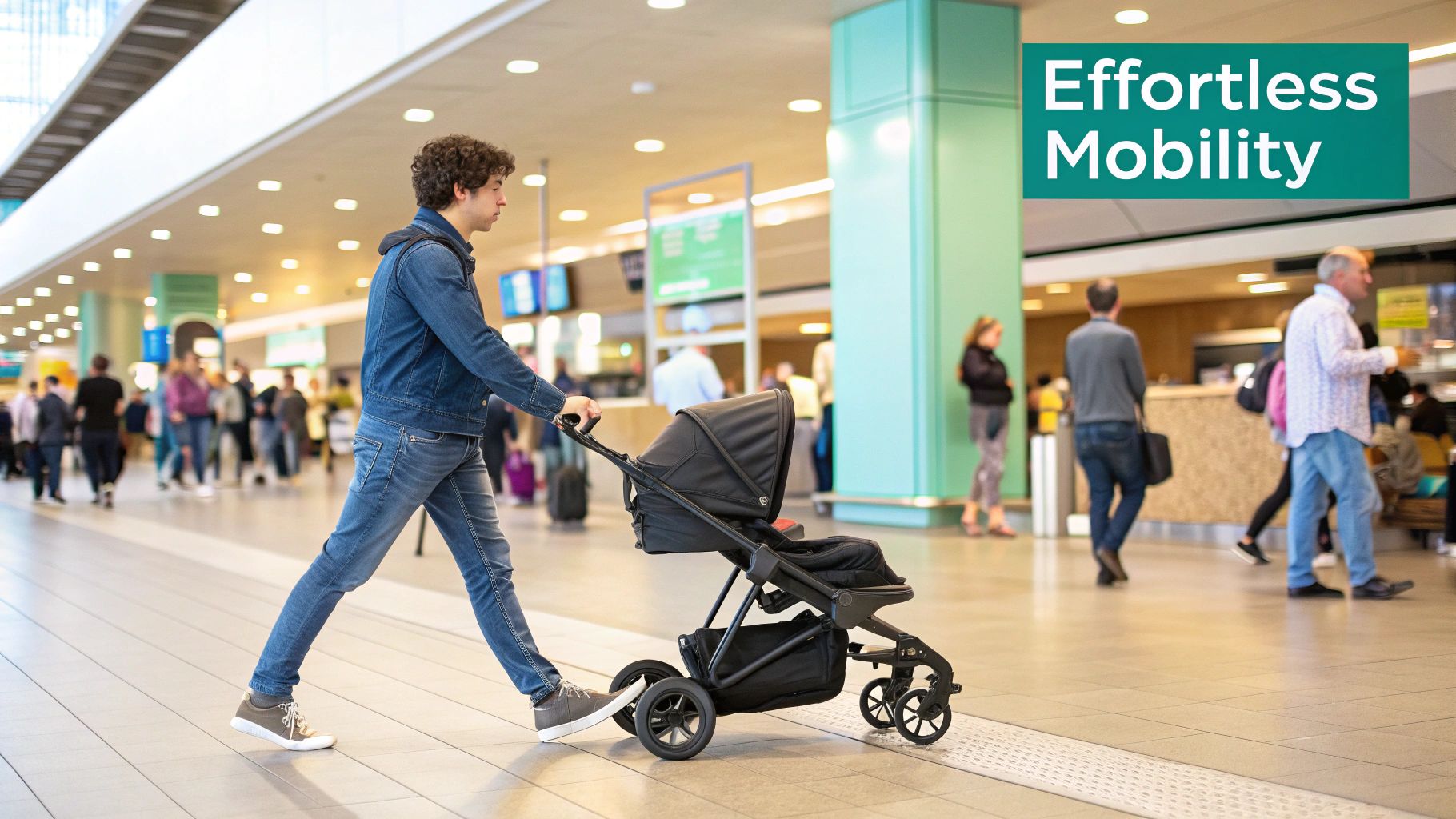
It’s so easy to get lost in a sea of features when you're shopping for baby gear. Every brand promises a life-changing experience, but which specs will you actually use when you're juggling a baby, a diaper bag, and your will to live?
Let's cut through the noise. When it comes to a lightweight stroller travel system, a few key features make a world of difference between a smooth outing and a chaotic one.
The Magic of the One-Hand Fold
Imagine this: you're holding your baby, it's starting to rain, and you need to collapse the stroller and get into the car now. This is where the one-hand fold becomes your superpower.
Seriously, it’s not just a nice-to-have; for many parents on the move, it’s a non-negotiable.
A true one-hand fold means you can collapse the entire thing in a single, fluid motion without putting your baby down. Look for models that are intuitive—no complicated sequence of moves required. Some strollers are praised for a fold so smooth it feels almost automatic.
Wheels and Suspension for a Smooth Ride
Not all wheels are created equal. The type of wheels and suspension on your stroller directly impacts how it handles different terrains. If you’re an urban explorer, you'll need something that can glide over bumpy city sidewalks without waking your precious cargo.
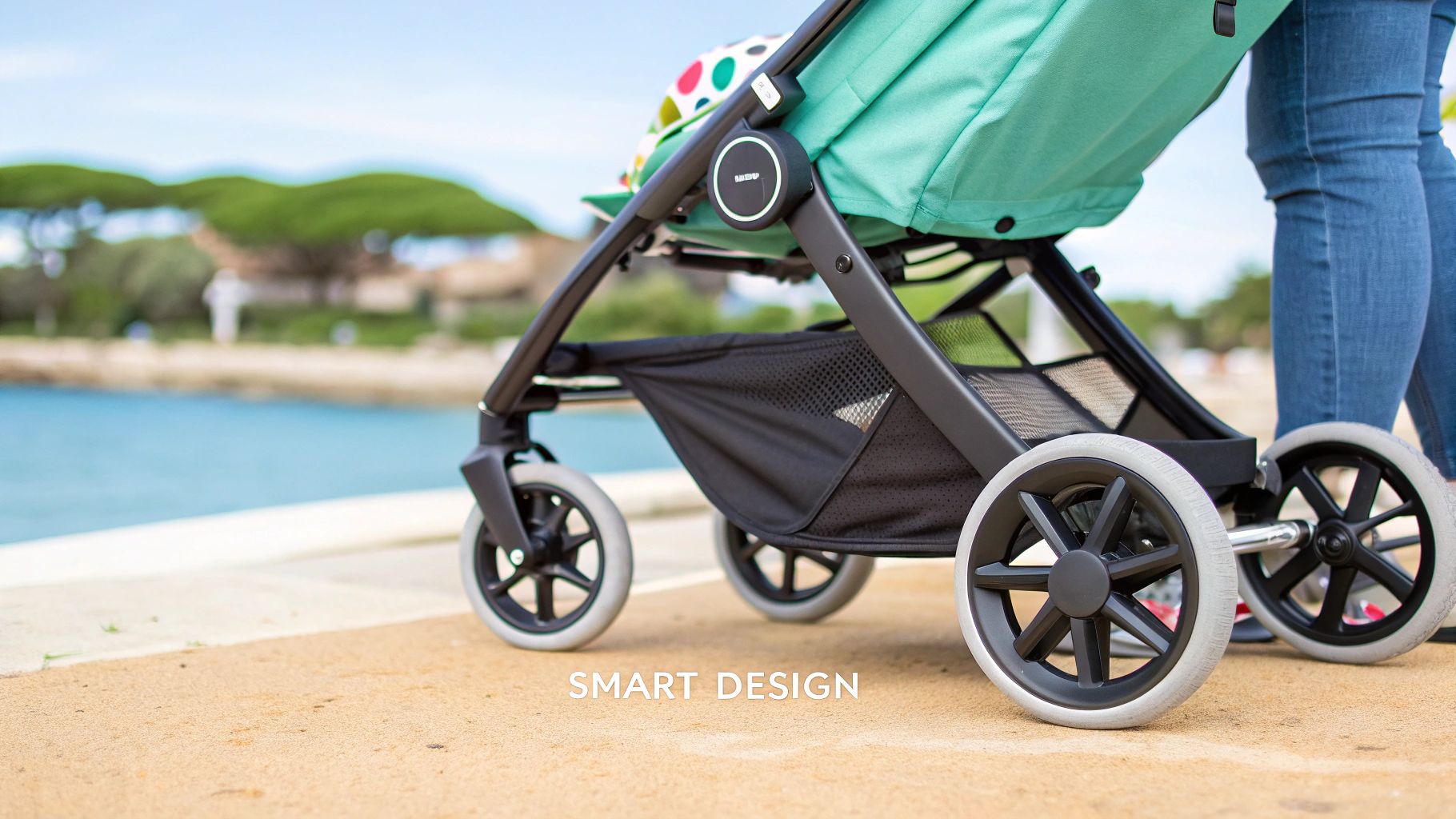
- Wheel Material: Rubber or foam-filled tires are your best bet. They offer a much smoother ride than hard plastic ones because they absorb more shock from uneven surfaces.
- Suspension: Look for strollers with all-wheel suspension. This feature acts like the shocks on a car, minimizing all those bumps and jolts along the way.
A smooth ride isn't just about the baby's comfort; it also makes the stroller way easier for you to push and maneuver, especially when you only have one hand free.
The Canopy: A Parent's Best Friend
A flimsy, tiny canopy is practically useless. A great canopy, on the other hand, is an absolute game-changer for protecting your baby from the sun, wind, and even light rain.
Look for a large, extendable canopy made from fabric with a UPF 50+ rating, which blocks over 98% of harmful UVA and UVB rays. Another fantastic feature is a "peek-a-boo" window, preferably with a silent magnetic closure. It lets you check on your sleeping baby without a rip of noisy velcro.
Storage That Actually Stores Something
Let's be real: babies come with a lot of stuff. A tiny storage basket that can barely fit a diaper bag is a major design flaw. When you’re checking out a lightweight stroller travel system, always peek underneath.
Ask yourself: Is the basket easily accessible even when the car seat is clicked in or the seat is fully reclined? Can it realistically hold your diaper bag, a few shopping bags, and maybe a stray toy? A generously sized, accessible basket will make every outing infinitely easier.
When you're trying to remember what to prioritize, this little cheat sheet can help you compare models at a glance.
Essential Lightweight Stroller Travel System Features
| Feature Category | What to Look For | Why It Matters for Travel |
|---|---|---|
| Fold Mechanism | A true one-hand, one-step fold that is intuitive and quick. | Lets you collapse the stroller while holding your baby, a must-have at airport security or getting into a car. |
| Weight & Frame | Lightweight aluminum frame, ideally under 20 lbs for the stroller. | Makes lifting it into a trunk, onto a bus, or carrying it up stairs much less of a workout. |
| Wheels & Suspension | All-wheel suspension with rubber or foam-filled tires. | Ensures a smooth ride over cobblestones, cracked sidewalks, or park paths, keeping baby asleep. |
| Canopy | Large, extendable canopy with UPF 50+ protection and a peek-a-boo window. | Provides crucial sun and weather protection on the go and lets you check on your child without disturbance. |
| Storage Basket | Generously sized basket that is easy to access from multiple angles. | Holds all the essentials (diaper bag, snacks, coats) without needing to hang bags off the handlebar. |
| Handlebar | Adjustable handlebar height. | Improves ergonomics and comfort for parents of different heights, saving your back on long walks. |
| Car Seat Compatibility | Clear "click-in" mechanism that feels secure and straightforward. | The core of the travel system; it should be fast and simple to transfer the car seat from base to stroller. |
Focusing on these practical, road-tested features will help you find a system that truly makes your life easier, not more complicated.
A well-designed travel system anticipates your needs. Features like an adjustable handlebar save your back on long walks, while a sturdy, lightweight aluminum frame makes lifting it in and out of the car less of a workout.
Choosing a travel system isn't just about the car seat or the stroller alone; it’s about how seamlessly they work together. If you're looking for more details on how these components integrate, our guide on car seat stroller systems offers a deeper dive into making the right connection for your family.
Ultimately, the best features are the ones that simplify your daily life. By focusing on these practical elements, you'll become a savvy shopper who can spot a genuinely great travel system that will serve your family well on any adventure.
Your Non-Negotiable Safety Checklist
When it comes to your baby, safety isn't just another feature—it's everything. While cool colors and extra cup holders are nice, true peace of mind comes from knowing your little one is secure.
This checklist cuts through the marketing fluff to focus on the absolute must-haves for any lightweight stroller travel system. Think of this as your personal safety audit, whether you’re clicking around online or doing a hands-on inspection in the store.
Look for the Seal of Approval
Before you even think about the fabric, look for the JPMA certification seal. The Juvenile Products Manufacturers Association (JPMA) runs a seriously tough testing program, and seeing their seal means the product meets or exceeds the latest safety standards.
This isn't just some sticker; it’s proof that the stroller and car seat have been put through their paces by a third party. It’s the fastest way to weed out any products that haven’t met a high safety benchmark.
The Five-Point Harness Is a Must
There's a reason the 5-point harness is the gold standard. It holds your baby securely at the shoulders, hips, and between the legs, which spreads out the force evenly if you have to stop suddenly.
When you're checking out a model, don't just glance at the harness. Get your hands on it.
- Tug the Straps: Do they feel thick and sturdy? Flimsy straps are a major red flag.
- Test the Buckle: Can you click it easily with one hand? It needs to be simple for you but tricky enough that a curious toddler can't spring themselves free.
- Check Adjustability: The harness should be a breeze to tighten and loosen. You need a snug fit every single time, whether your baby is bundled in a snowsuit or a light summer romper.
A harness that’s a pain to adjust is one that might not get adjusted right, and that’s a risk you don’t want to take.
Brakes, Frame, and Stability
A good stroller needs to stay put when you tell it to. The brakes are your first line of defense against a rogue stroller, especially on a hill.
Give the brakes a real test. Once they're engaged, try to push the stroller forward and back. It should lock tight with zero give. If you feel any wiggle or slide, it's time to look at another model. Some systems have a single bar that locks both back wheels at once, which is often much easier to engage than two separate foot pedals.
Next up, the frame. Give it a little shake. A well-built stroller should feel solid, not rickety. This is a huge deal for a lightweight stroller travel system, where manufacturers have to find that perfect balance between a light frame and solid construction.
A stroller's stability is its foundation. A solid frame and responsive brakes aren't luxury features; they are the core components that keep your child safe during everyday use.
Decoding Car Seat Safety Ratings
The infant car seat is arguably the single most important safety piece in the whole system. While all car seats sold in the U.S. have to meet federal safety standards, some brands go the extra mile.
Look for models that have undergone extra testing for side-impact protection. This feature adds special foam or air-filled cushions near the baby’s head to absorb energy in a side collision.
Also, check for features that help you get a secure installation every time. Things like bubble level indicators and simple LATCH connectors can make a massive difference in getting the car seat installed correctly—which is critical for it to work as designed in a crash. For a deep dive, the National Highway Traffic Safety Administration has a comprehensive overview of car seat safety that can help you make sense of it all.
How to Navigate Travel Like a Pro
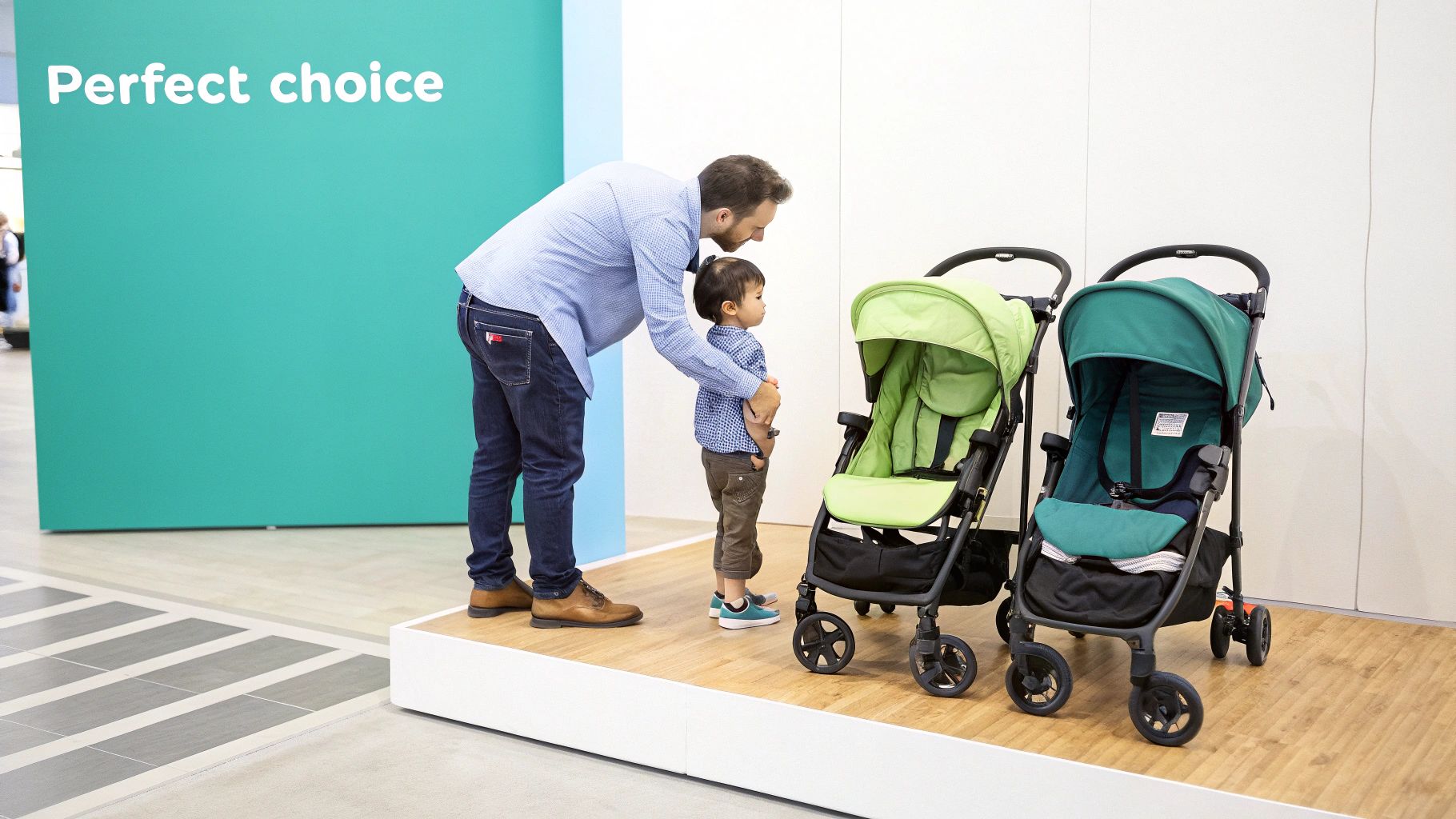
You’ve got the perfect lightweight stroller travel system, which means you’ve already won half the battle. But knowing how to actually use it in the wild—navigating airports, train stations, and packed city streets—is what separates the rookies from the seasoned pros.
Think of this as your playbook for mastering travel with your new gear. Let's turn potential chaos into a surprisingly smooth ride.
Conquering the Airport Gauntlet
The airport is the ultimate test for any travel system. Between check-in, security, and boarding, every step is a new challenge. The real key is having a game plan before you even pull out of the driveway.
Most airlines will let you check your stroller for free, either at the ticket counter or right at the gate. Always, always opt to gate-check. This lets you cruise through the terminal with your little one safely buckled in, keeping your hands free until the very last minute.
When you hit the security line, you'll need to fold the stroller and send it through the X-ray scanner. This is where a true one-hand fold proves its worth. Do a few practice runs at home so you can collapse it smoothly without breaking a sweat.
Protecting Your Investment on the Go
Let's be real: baggage handlers aren't always gentle. Your stroller is a valuable piece of gear, and a dedicated stroller travel bag is a non-negotiable for protecting it from scuffs, dirt, and damage.
Look for a padded bag, ideally one with sturdy handles or backpack straps to make carrying it easier. Some brands include a travel bag, but if yours doesn't, it’s an investment worth making. A small price to pay to ensure your ride arrives in one piece.
A good travel bag does more than just protect your stroller. It’s also a sneaky spot to stuff a few extra diapers or that bulky baby blanket if your carry-on is already bursting at the seams.
Mastering Public Transit
Once you land, your lightweight travel system is your best friend for exploring. But tackling buses, subways, and trains requires a slightly different strategy than the airport.
Before you even try to board, scout out the accessible entrance—it's usually marked with a wheelchair symbol. These areas often have more space and ramps or elevators, saving you from the dreaded stroller-wrestle up a flight of stairs.
Here are a few parent-tested tips for a smoother ride:
- Mind the Gap: That space between the platform and the train can be tricky. I find it’s often easiest to board backward, pulling the stroller in right behind you.
- Fold if Needed: During rush hour, a crowded bus or subway car can feel impossibly tight. If you can, fold your stroller and hold your baby to create a little more breathing room for everyone.
- Find the Sweet Spot: On buses, aim for the designated stroller or wheelchair area. On trains, the cars at either end are often way less crowded.
Pro Tips for Tricky Situations
Travel rarely goes exactly as planned. A delayed flight, a missed connection, or a sudden downpour can throw a wrench in the best-laid plans. This is where your lightweight stroller travel system can really save the day.
Stuck on a long layover? Your stroller instantly becomes a mobile nap station. Just find a quiet corner of the terminal, recline the seat, pull down the canopy, and let your little one get some rest. Having a familiar, comfortable space can make all the difference for a tired baby.
It’s also crucial to remember the car seat part of your system. For a deep dive into the rules and best practices for flying with this essential piece of gear, check out our guide on traveling with car seats. Understanding the airline policies ahead of time can save you from a major headache at the gate. Ultimately, the more you use your system, the more you'll learn its little quirks and advantages, turning you into a true travel pro.
Matching a Travel System to Your Real Life
The perfect lightweight stroller travel system isn't a one-size-fits-all solution you just pull off a shelf. The absolute best system is the one that clicks seamlessly into your family’s unique rhythm, not one that forces you to change it.
It’s a decision that goes way beyond brand names and colors. You have to get brutally honest about your daily life. Are you an urban parent who measures success by how well a stroller pivots in a tiny coffee shop? Or are you a suburban explorer who needs wheels that can handle a gravel path without waking the baby?
The Urban Dweller's Dilemma
If you live in a city, your world is full of obstacles: narrow apartment hallways, steep subway stairs, and grocery aisles that feel like a video game maze. For you, the most important features are all about being compact and nimble.
A true one-hand, compact fold is non-negotiable. It’s the difference between gracefully hopping on a bus and causing a five-person pileup. Weight is also a huge factor. A stroller that’s easy to haul up to your fourth-floor walk-up is worth its weight in gold.
Look for a system where the stroller frame is light but sturdy, and the overall footprint is small. You don’t need monster truck wheels; you need agile, responsive ones that can handle a tight turn without a second thought. For urban families, a sleek design isn't just about style—it's about survival.
The Suburban Explorer's Must-Haves
Now, let's shift gears to the suburban landscape. Here, your biggest challenge might not be a tight corner but a cracked sidewalk or a trip to the local farmer's market. Your car is likely your home base, so the ease of getting the system in and out of the trunk is paramount.
For this lifestyle, you'll want to prioritize a few different things:
- All-Terrain Wheels: You don't need a full-on jogging stroller, but wheels with better tread and some suspension will make navigating grassy parks and bumpy paths much smoother.
- A Massive Storage Basket: You're probably running bigger errands and need space for groceries, a diaper bag, and maybe a picnic blanket. A basket you can actually access easily is a game-changer.
- Durability Over Ultra-Light Weight: Since you’re not carrying it up and down stairs all day, you can afford a slightly heavier but more robust frame that can handle more wear and tear.
Thinking through these real-world scenarios is key. If you're planning lots of family outings and need more tips on logistics, our guide on how to travel with infants covers everything from packing lists to sleep schedules on the go.
Tackling the Budget Conversation
Let's talk about the elephant in the room: money. A lightweight stroller travel system is a significant investment, with prices ranging from a few hundred dollars to well over a thousand. It's easy to assume that more expensive always means better, but that's not the whole story.
The price often reflects brand recognition, material quality (think leather-wrapped handlebars vs. foam), and advanced engineering, like that super-smooth fold. A high-end model might feel like a Cadillac, but a mid-range option could have the exact features you actually need without the luxury price tag.
The smartest way to approach budget is to think about value, not just cost. Where is your money best spent? Investing in top-tier safety features and a durable frame will always be a better use of funds than paying extra for a trendy color.
The market for these convenient all-in-one solutions is booming. The travel system segment is projected to grow at a compound annual growth rate of 6.7% in the coming years, driven by parents with busy lifestyles who need gear that simplifies their day. This means more competition and more options at every price point, which is great news for families. You can learn more about the baby stroller market trends from Grand View Research.
To help you decide, let's break down how different systems might fit your life.
Lifestyle Match Travel System Comparison
This quick comparison is designed to help you connect your day-to-day reality with the features that will genuinely make your life easier.
| Lifestyle Profile | Top Priority Feature | Ideal System Type | Example Scenario |
|---|---|---|---|
| The City Slicker | Ultra-compact, one-hand fold and low weight. | A nimble stroller with a small footprint and swivel front wheels. | Navigating a crowded subway car during off-peak hours or folding it up to fit in a small cafe. |
| The Suburban Adventurer | Large storage basket and durable, all-terrain wheels. | A sturdier system with good suspension and an easily accessible basket. | Loading up after a big grocery run or taking a walk on a paved park trail. |
| The Frequent Flyer | Fits in an overhead bin and is easy to gate-check. | A certified carry-on stroller that is lightweight and comes with a travel bag. | Folding the stroller with one hand at the TSA checkpoint while holding the baby. |
| The Budget-Conscious Parent | Solid safety ratings and core functionality without the frills. | A reliable system from a trusted brand that focuses on the essentials. | Choosing a model with a great 5-point harness over one with a leather handlebar. |
Ultimately, finding the right lightweight stroller travel system comes down to self-awareness. By honestly assessing your daily routines, your environment, and your budget, you can filter out the noise and choose a system that feels like it was designed just for you.
Common Questions About Stroller Travel Systems
Feeling a bit overwhelmed by all the options? You're not alone. It’s completely normal to have a ton of questions when you’re trying to choose such an important piece of baby gear.
We've gathered the most common questions we hear from parents about a lightweight stroller travel system. Our goal is to give you clear, straightforward answers that cut through the noise.
Let's tackle those nagging concerns so you can feel totally confident in your final decision.
How long can my baby use the infant car seat?
This is probably the number one question parents ask, and for good reason—you want to get the most out of your investment. Most infant car seats are designed for babies from birth up to 22 to 35 pounds. Height matters, too, with a typical limit around 32 inches.
Always, always check the specific limits printed on the car seat's label or in the manual. Your baby will outgrow it by either weight or height, whichever comes first. A key safety rule: their head should always be at least one inch below the top of the car seat shell.
The stroller part of the system, however, will last much longer. Many can handle toddlers up to 50 pounds or more, giving you years of use.
Are travel systems compatible with all car seats?
In a word, no. A true "travel system" usually means a stroller and car seat from the same brand, made to click together perfectly right out of the box. It’s the simplest, most foolproof option.
But what if you love a car seat from one brand and a stroller from another? Many stroller manufacturers sell adapters that bridge this gap, letting you mix and match. Just be sure to check the stroller brand’s website for a car seat compatibility chart before you buy.
What is the difference between a travel stroller and a travel system?
This is a common point of confusion, and the terms get thrown around interchangeably. But they're not the same thing.
- Travel Stroller: This is just a lightweight, compact stroller built for being on the go. It may or may not be able to connect with a car seat.
- Travel System: This is the whole package—an integrated set that includes both the stroller and a matching infant car seat designed to click right into it.
A lightweight stroller travel system really does offer the best of both worlds: a compact, easy-to-haul stroller with the incredible convenience of a click-in car seat for those early months.
Your lifestyle dictates the best choice. A travel system offers unmatched convenience for the infant stage, while a standalone travel stroller might be perfect once your child outgrows their infant car seat.
The demand for these all-in-one solutions is growing fast. The entire baby stroller market is projected to grow from USD 3.219 billion in 2025 to USD 4.206 billion by 2030. This boom is driven by parents like you, looking for practical gear that simplifies life on the move. You can explore more baby stroller market analysis at Knowledge Sourcing Intelligence.
Can I take my stroller on an airplane?
Absolutely. Most airlines let you gate-check your stroller for free. This is a total lifesaver. You can use it to navigate the airport and keep your little one contained right up to the boarding gate.
Some of the ultra-compact travel strollers are even designed to fold up small enough to fit in the overhead bin. If this is a huge priority for you, always double-check the stroller's folded dimensions against your airline's carry-on size rules before you fly. A quick search of the airline’s policy online will save you a massive headache at the gate.
Choosing a lightweight stroller travel system is a big decision, but it doesn't have to be a stressful one. By focusing on your family’s real needs—your lifestyle, your budget, and your safety non-negotiables—you can find the perfect gear to make your adventures, big and small, so much easier.
Now it's your turn. Do you have a favorite travel system, or is there a feature you absolutely can't live without? Share your tips and experiences in the comments below! We’d love to hear what works for your family.