


Your Ultimate Guide to Traveling with Car Seats
Traveling with kids is an adventure. Traveling with their car seats? That can feel like a full-blown military operation. But trust me, a little prep work goes a long, long way. The secret to a smooth trip isn’t just what you pack, but how you prepare your most important piece of gear.
Think of this as setting up the pre-flight command center for your child's safety throne. Ready for takeoff?
Your Essential Pre-Travel Car Seat Checklist
Before you even think about your own luggage, let's get that car seat ready for its own little vacation. A successful trip often comes down to the small things you handle at home, long before you’re trying to navigate a chaotic airport with a toddler in tow. Getting your car seat ready isn't just for convenience; it's a critical safety step.
After all, the data is pretty clear: proper car seat use can slash the risk of fatal injury by up to 71% for infants and 54% for toddlers, according to the CDC. It’s why organizations like the National Highway Traffic Safety Administration (NHTSA) are so focused on parent education.
First Things First: The FAA Approval Sticker
If you're getting on a plane, this is completely non-negotiable. Somewhere on your car seat, you need to find a sticker that states in red letters: "This restraint is certified for use in motor vehicles and aircraft."
- Where to find it: Check the sides, back, or bottom of the plastic shell. It’s usually hanging out near other manufacturing labels.
- Why it matters: Without this sticker, an airline can legally refuse to let you use the seat on the plane. You’ll be forced to gate-check it, which is the last thing you want to deal with at the last minute.
Having the right gear from the very beginning makes everything simpler. As you pull together your travel list, it’s also a good time to double-check your other baby registry must-haves to make sure you're covered for every situation.
Clean, Measure, and Weigh
A clean car seat is a happy car seat—and a much, much more pleasant travel companion. Take the cover off and wash it according to the manufacturer’s instructions. While it’s off, grab a vacuum and get rid of all those fossilized snack crumbs. (Don’t worry, we’ve all been there.) This is also the perfect opportunity to check for any hidden cracks or damage.
Pro Tip: Before you put it all back together, take a quick moment to measure the seat's width and weigh it. Jot these numbers down in your phone. You’ll need them to confirm it will fit in the airplane seat and to check baggage weight limits if you end up having to check it. It’s a two-minute task that can save you a massive headache at the airport.
Navigating Airports and Airplanes Like a Pro
Let's be real: the airport can feel like the final boss of family travel. But with a solid game plan, you can get your car seat from the curb to the cabin without breaking a sweat (or a back). Your first big decision is whether to check your car seat or bring it on board.
The safest place for your child on an airplane is in their own FAA-approved car seat—not on your lap. The Federal Aviation Administration (FAA) strongly urges this because during unexpected turbulence, your arms just aren't strong enough to hold a child securely.
Bringing the car seat on board guarantees it arrives with you, undamaged, and ready for your rental car. Checking it with your luggage is a huge gamble. It can get lost, delayed, or damaged by rough handling, potentially compromising its safety features without any visible signs.
Getting Through The Terminal
Okay, so you’ve decided to bring it with you. Now what? How do you haul this bulky thing through a crowded airport while also managing a child, carry-ons, and your sanity? You have a few great options.
- Dedicated Car Seat Carts: These are small, wheeled dollies that you can strap the car seat onto. They basically turn your car seat into a stroller, which is an absolute lifesaver.
- Car Seat Travel Straps: These clever straps let you attach the car seat to your rolling carry-on suitcase, so you can pull everything together with one hand. Genius.
- Backpack-Style Carriers: Some travel bags come with padded shoulder straps, letting you wear the car seat like a giant backpack. This keeps both hands free for ticketing, security, and holding little hands.
If you’re traveling with a bigger crew and all their gear, looking into group airport minibus hire can save you a ton of logistical headaches getting to and from the airport.
Car Seat Travel Options On a Plane
Deciding whether to check or carry on your car seat is a big deal. Here's a quick breakdown to help you weigh the pros and cons of each approach.
| Method | Pros | Cons |
|---|---|---|
| Carry It On Board | Your child travels in the safest way possible. The seat arrives with you, undamaged. You can use it as a makeshift stroller with a cart. | You have to lug it through the airport. Installation on the plane can be tricky. You must purchase a seat for your child. |
| Check at the Gate | It's free. Less to carry through the terminal. Lower risk of damage than checking with baggage. | Still a risk of damage from handling. You have to carry your child through the airport. Your child travels as a lap infant. |
| Check with Luggage | Least amount of hassle in the airport. | Highest risk of being lost, delayed, or damaged. The damage might not be visible but could compromise safety. Your child travels as a lap infant. |
Ultimately, carrying the car seat on board is the FAA-recommended and safest option for your child.
Security Screening Simplified
The security line is often a major source of travel anxiety. Your car seat will need to go through the X-ray scanner, just like your other bags. If it's too big to fit, a TSA agent will need to inspect it by hand.
To make this painless, be ready to take your child out of the seat well before you get to the conveyor belt. Having the seat’s cover and straps clean and free of crumbs or toys will also speed up a manual inspection.
Installing Your Car Seat On The Plane
Once you're on board, the final step is installation. You'll almost always need to install the car seat in a window seat so it doesn't block another passenger's exit in an emergency.
Use the airplane's lap belt to secure the seat, routing it through the correct belt path (usually the rear-facing path for infants or forward-facing for toddlers). Pull the belt tight, then lock it by feeding the slack back into the buckle. If a flight attendant questions your FAA-approved seat, politely show them the sticker.
This might all seem like a lot, but this level of preparation is driven by a global focus on child safety. Government regulations are a key driver in the car seat market, which was valued at USD 5.71 billion in 2024, according to a report by Grand View Research. It’s this worldwide commitment that ensures your gear is built to protect.
With a little practice, you'll be installing that car seat at 30,000 feet like a seasoned pro, ready for your next adventure. And speaking of adventures, after mastering the airport, you'll be ready for anything—even a family trip to a national park. For a good laugh and some real-world tips, check out our guide on 99 things parents are guaranteed to do at a national park.
Mastering Car Seat Travel on the Road
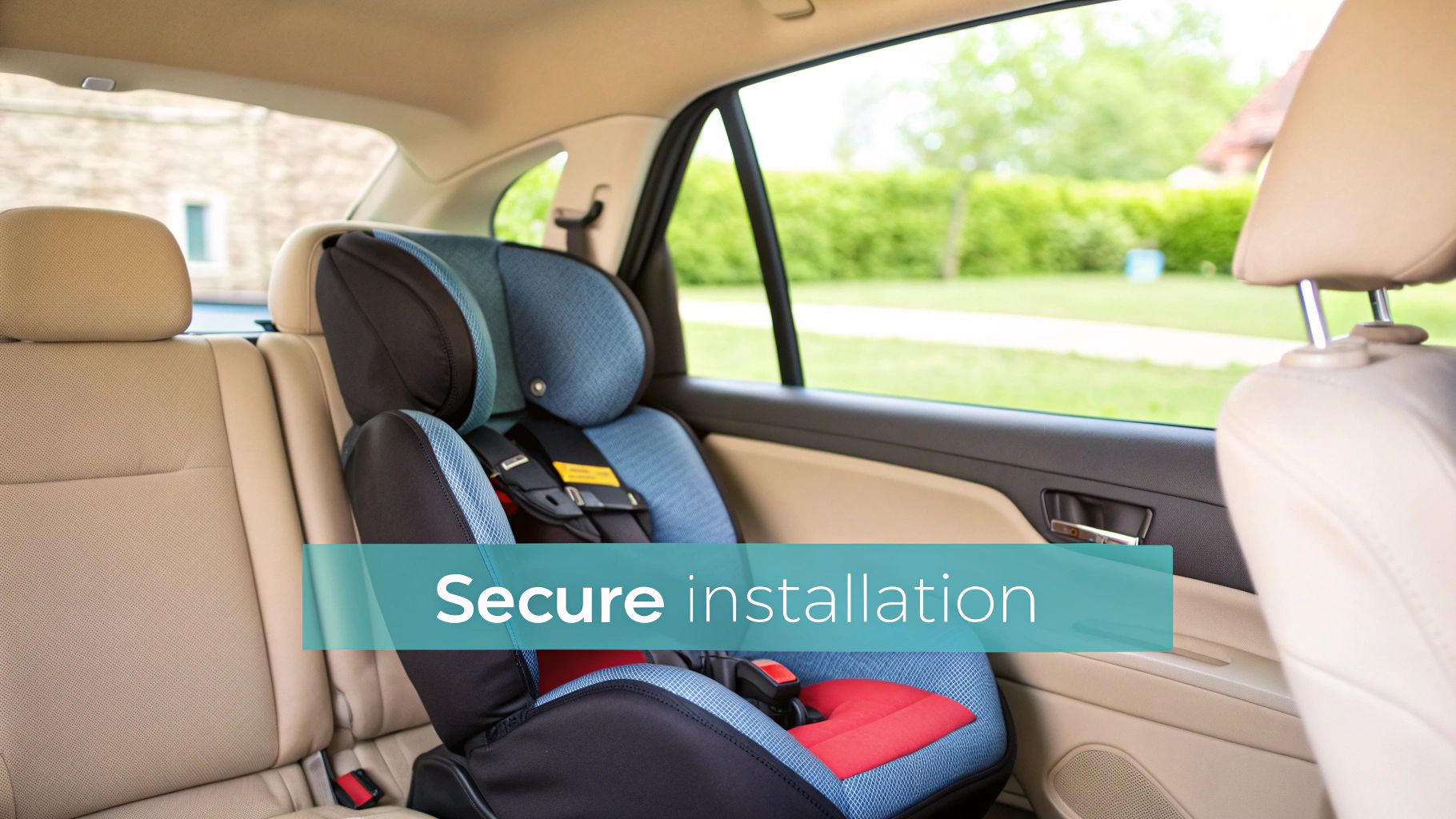
You’ve landed, grabbed your bags, and now comes the next big puzzle: getting your car seat installed in a totally unfamiliar car. Whether it's a rental, a grandparent’s sedan, or an Uber, getting this part right is everything for your peace of mind.
Modern car seats are lifesavers, engineered to protect our little ones from sudden stops or collisions. It's a huge industry, with major companies constantly innovating to make seats safer and easier for us to use.
Installing Your Seat in an Unfamiliar Car
You know every inch of your own car, but a rental is a different beast. The good news is that most modern cars have standardized safety features. Your goal is simple: get a rock-solid installation. That means the car seat moves less than one inch side-to-side or front-to-back when you tug it at the belt path.
You've got two main ways to do this:
- The LATCH System: Look for little symbols or tags on the vehicle's seat cushions. They point to the lower anchors, which are sturdy metal bars tucked deep in the crack of the seat.
- The Seat Belt: No LATCH? No problem. A seat belt install is just as safe when you do it right. Just thread the vehicle's belt through the correct path on the car seat and pull it tight.
When in doubt, pull out the manuals. The car seat manual and the vehicle's owner's manual are your ultimate guides for a secure fit. Don't guess.
The Great Rental Car Seat Debate
It sounds so tempting to just rent a car seat with your rental car and leave yours at home, right? But hold on. This convenience comes with some serious unknowns.
Rental car seats have a mysterious history. You have no way of knowing if it's expired, has been in an accident, is missing parts, or has been properly cleaned. For a daily fee, you're often paying for uncertainty.
Bringing your own seat is almost always the safer bet. You know its history, you know how to install it, and you know it fits your child perfectly. If you're worried about squeezing everyone in, think about renting a 7-seater car for your next family adventure to give yourselves some breathing room.
And once you're on the road, the car seat is just one piece of the puzzle. For more pro tips on keeping everyone happy during a long drive, our guide on The Ultimate Guide to Traveling with Young Children is packed with tried-and-true advice.
Packing and Protecting Your Car Seat for Travel
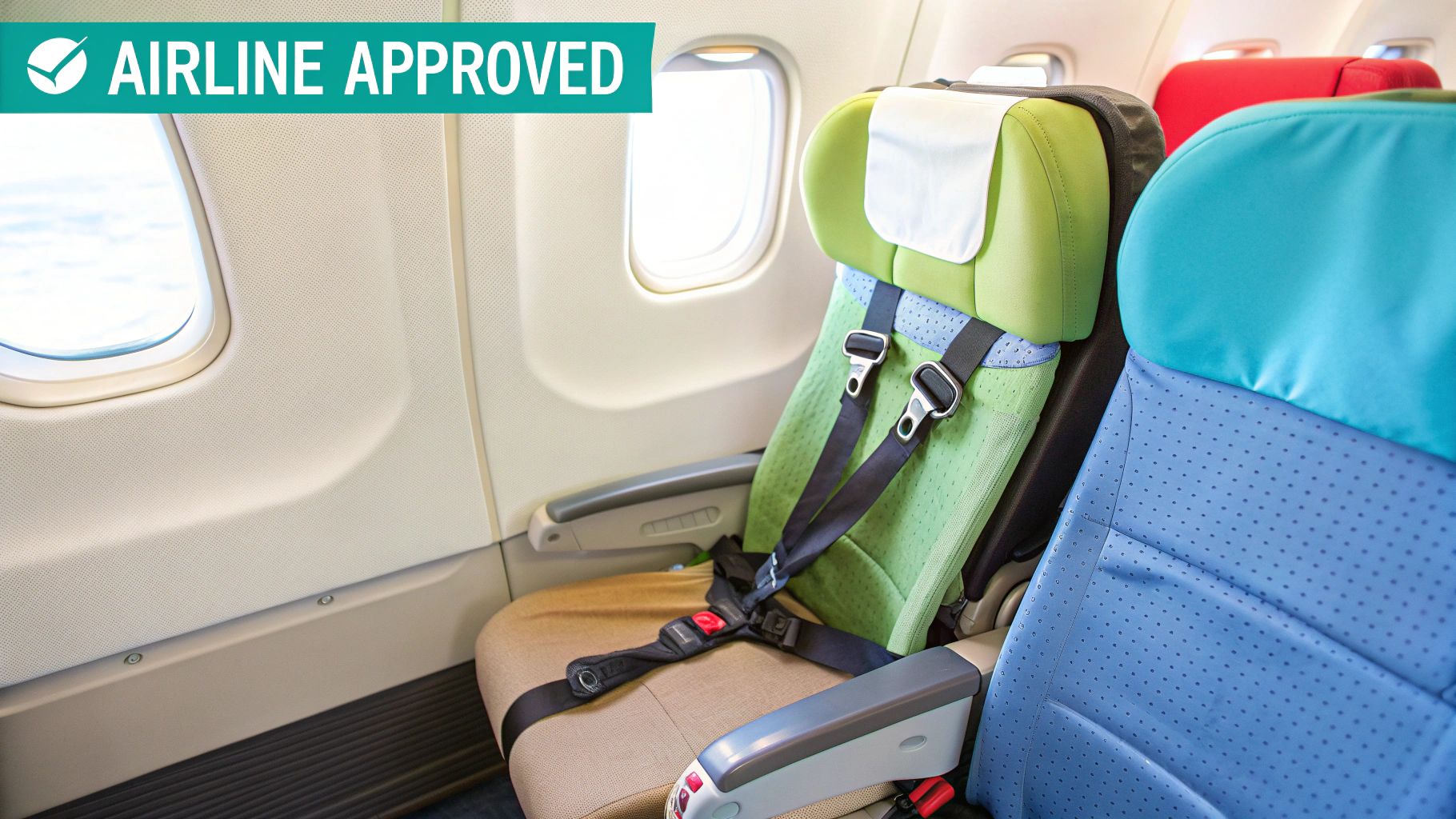
Your car seat is one of the most critical pieces of safety gear you own. Getting it to your destination in one piece is non-negotiable. You wouldn't just toss your laptop into the cargo hold without a case, and your child's car seat deserves that same level of care.
Think about it from the baggage handler's perspective: their job is about speed, not gentleness. Protecting your investment from drops, dirt, and damage is the only way to be sure it's safe to use when you land.
Choosing the Right Car Seat Travel Bag
Not all travel bags are created equal. The best one for your family really depends on your budget, how you plan to wrangle the seat through the airport, and how much protection you feel you need.
Here’s a look at the most common options you'll find:
- Simple Gate-Check Bags: These are those thin, brightly colored nylon sacks with a drawstring. They're cheap and do a great job of keeping the seat clean and free of scuffs. The major downside? They offer zero padding against impacts.
- Padded Travel Bags: This is a big step up in protection. These bags have a layer of foam padding to absorb some of the shock from being tossed around. Many also come with wheels or backpack straps, which is a game-changer for navigating the airport terminal.
- Hard-Sided Cases: While less common and definitely more expensive, these offer the ultimate in protection. They are bulky and heavy, but they're your best bet if you're checking a premium car seat and want maximum peace of mind.
Pro Tip: Your car seat travel bag is prime real estate. Use the empty space inside and around the car seat to pack diapers, wipes, blankets, or even your family’s bulky winter coats. It’s a genius way to free up suitcase space and dodge extra baggage fees.
Label Everything Clearly
No matter how you pack it, make sure your car seat is clearly labeled with your name, phone number, and destination address.
Luggage tags can get ripped off in the chaos of transit. For a little extra security, consider taping a piece of paper with your contact info directly onto the car seat's plastic shell, hidden underneath the fabric cover. This simple step can be the difference between a lost seat and a reunion at your destination.
What If I Don't Use a Bag?
Going bagless is a risky move, but if you find yourself in a pinch, there are a few things you can do to minimize potential problems. First, remove any detachable parts like cup holders or extra padding inserts and tuck them safely into your suitcase.
If you still have it, the car seat's original box is a surprisingly good option. Packing it with bubble wrap or even crumpled newspaper provides far more protection than a simple nylon bag. It’s clunky, for sure, but it's a solid defense against the rigors of baggage handling and helps ensure your seat arrives ready for a safe installation.
Alternatives and Lightweight Travel Car Seat Options
Let’s be honest: your everyday car seat—the one that weighs more than your toddler—is a beast. Lugging that thing through an airport or trying to cram it into a taxi can test the patience of even the most seasoned traveling parent. It’s just not practical for a multi-stop trip.
Thankfully, the market has exploded with lightweight, travel-friendly car seats and clever alternatives designed to save our backs and our sanity. For many families, investing in a secondary, travel-only car seat is one of the best decisions you'll ever make.
Ultra-Compact and Folding Car Seats
These are the real game-changers for family travel. Unlike their bulky cousins, travel car seats are designed with one thing in mind: portability. They’re significantly lighter, and many are engineered to fold down into a surprisingly small package.
Some forward-facing models can collapse to fit into an overhead bin on a plane. That’s huge. These options are perfect for families who fly often or find themselves hopping in and out of Ubers and taxis in urban destinations.
While they can come with a higher price tag, the convenience is often worth every penny, especially when you have more than one child to manage. Making travel simpler is always a win. For more ways to streamline your journey, check out our guide on The Ultimate Guide to Traveling with Young Children.
FAA-Approved Harness Systems for Flights
What if you don't actually need a car seat at your destination but still want your child safely secured on the plane? Enter the CARES (Child Aviation Restraint System) harness.
The CARES harness is the only FAA-approved harness-style device for air travel. It's a brilliant belt-and-buckle system that works with the airplane's lap belt to create a five-point harness, keeping your child secure during takeoff, landing, and turbulence.
It’s incredibly compact, weighing just one pound and fitting into a tiny pouch. This is an ideal solution for children who meet the weight requirements (typically 22-44 pounds) and are ready to sit in their own airplane seat.
Travel-Friendly Booster Seats
Once your child is old and big enough for a booster, your travel life gets even easier. Many high-back boosters are already quite lightweight, and some even come apart for easier packing.
For the ultimate in portability, though, nothing beats an inflatable booster seat. These genius little seats pack down to the size of a small book, making them perfect for stashing in a backpack. They are designed for older kids (usually 40-100 pounds) and provide the necessary belt-positioning safety for car travel without any of the bulk.
To help you figure out what's best for your family's next trip, here’s a quick breakdown of the most common options.
Travel Car Seat & Alternative Options Overview
| Option Type | Best For | Key Features | Considerations |
|---|---|---|---|
| Lightweight Car Seat | Families who need a full car seat for rental cars, taxis, or family vehicles. | Often lighter than standard seats; some fold compactly. Offers familiar installation. | Can still be bulky. May lack some of the premium features of an everyday seat. |
| CARES Harness | Airplane use only for kids who don't need a car seat at the destination. | Extremely light and compact (1 lb). FAA-approved. Frees up hands in the airport. | Not a car seat. Only for use on planes. Specific weight limits (22-44 lbs). |
| Inflatable Booster Seat | Older kids (40+ lbs) who need a belt-positioning booster in cars. | Ultra-portable, packs down small. Great for taxis and short trips. | Provides no side-impact protection. Only for kids mature enough for a booster. |
| RideSafer Travel Vest | Kids (3+ years, 30+ lbs) as a car seat alternative in vehicles. | Wearable vest that positions the seatbelt correctly. Very portable. | Higher learning curve. May not be legal in all jurisdictions (check local laws). |
Choosing the right gear really comes down to your child's age, your destination, and how you plan to get around. A lightweight seat might be perfect for a road trip, while a CARES harness and an inflatable booster combo could be the winning ticket for an international flight.
Common Questions About Traveling with Car Seats
Even the most seasoned traveling parent runs into questions. It’s totally normal. Let's tackle some of the most common head-scratchers so you can feel confident and prepared for whatever your journey throws at you.
Do I Have to Buy a Separate Plane Ticket for My Child to Use a Car Seat?
Yes. If you want a guaranteed spot for your car seat, you must buy your child their own ticket, no matter how old they are. The FAA strongly recommends this because it's simply the safest way for a child to fly.
You might get lucky on a half-empty flight and snag an open seat next to you for your lap infant, but that's a huge gamble. The only way to ensure your child travels in their FAA-approved car seat is to book them their own seat in advance.
Can I Use My European Car Seat in the United States or Vice-Versa?
This is a big one, and the answer is almost always no, you can't. Car seats are certified based on the specific safety standards of the country or region where they're sold. They aren't interchangeable.
- A car seat from Europe will have an ECE R44/R129 sticker.
- A U.S. car seat will have an FMVSS 213 sticker.
Using a non-certified car seat in a vehicle at your destination is usually illegal and, more importantly, can be unsafe. While some airlines might let you use a foreign-certified seat on the plane itself, you'll absolutely need a locally approved one for car travel once you land.
What Should I Do if My Car Seat Gets Damaged by the Airline?
If your car seat comes off the baggage carousel looking rough, you need to act immediately. Take pictures of the damage before you even leave the baggage claim area. Then, go straight to the airline's baggage office and file a damaged baggage report right then and there.
Crucial Takeaway: Most car seat manufacturers state that checking a car seat as luggage is the equivalent of a car crash—even if you can't see any damage. The internal structure could be compromised. This is the #1 reason safety experts and the FAA recommend bringing your car seat on board instead of checking it.
Are Backless Boosters Allowed on Airplanes?
Nope. Backless booster seats are not permitted for use on airplanes. The reason is simple: a booster seat needs both a lap and a shoulder belt to work correctly, and airplane seats only have a lap belt.
You’ll have to check your backless booster as luggage, ideally tucked inside a protective bag. Another option is to carry it on and store it in the overhead bin during the flight. That way, it's safe from damage and ready to go as soon as you get to your rental car.
Happy (and Safe) Travels!
Whew! That’s a lot, I know. But here’s the bottom line: traveling with a car seat doesn't have to be a nightmare. With a bit of planning and the right gear, you can get your most precious cargo from point A to point B safely and with your sanity intact. Focus on preparation, know your options, and don’t be afraid to invest in travel-specific gear that makes your life easier.
Now go book that trip!
What’s your go-to tip for traveling with car seats? Share your best travel hacks in the comments below
Article created using Outrank