


How to Travel with Infants Without Losing Your Mind
Taking your first trip with a baby can feel like planning a mission to Mars, but trust me, it’s not just survivable—it can be genuinely enjoyable. The secret isn't some magic formula or a suitcase full of unicorn dust. It’s simple: plan smart, pack efficiently, and stay flexible.
Forget the horror stories you've heard from that one cranky uncle. Traveling with your infant can be an incredible bonding experience, a chance to build memories before they can even walk. And we're going to show you how.
Your Guide to Actually Enjoying Travel with an Infant
The thought of packing up your entire nursery for a weekend getaway is enough to make any new parent break out in a cold sweat. It's a common fear that trips will transform from relaxing escapes into mobile chaos management, complete with public meltdowns and a soundtrack of screaming.
But what if the secret to a great trip isn’t having a "perfect" baby, but having a realistic, adaptable plan?
This guide is your sherpa for that logistical mountain. We’re here to cut through the anxiety with real-world advice that actually works. We'll skip the generic checklists and dive into the practical strategies that seasoned parents swear by—from navigating airport security with bottles of milk to keeping your sanity on a long-haul flight.
A New Way to See the World
Traveling with an infant completely changes your perspective, and honestly, it's for the better. You're forced to slow down, notice the smaller details, and connect with your destination on a much deeper level.
Instead of rushing through a dozen sights, you might spend an hour watching your baby giggle at street performers. It’s a different kind of travel, for sure, but it’s incredibly rewarding.
Traveling with a baby forces you to let go of expectations and embrace the present moment. It’s less about the itinerary and more about the shared experience.
This shift in mindset is crucial. Here’s what you can look forward to:
- Deeper Connections: You’ll likely interact more with locals. A cute baby is a universal icebreaker!
- Slower Pace: Forget jam-packed schedules. You’ll adopt a more relaxed rhythm, which often leads to discovering hidden gems you would have otherwise missed.
- New Memories: The first time your baby sees the ocean or feels snow is a priceless moment you'll cherish forever.
To help you get organized, we've broken down the key areas to focus on when you're getting ready for your trip.
Infant Travel at a Glance Key Focus Areas
This table gives you a quick snapshot of the essential components for planning a successful trip with your baby. Think of it as your high-level cheat sheet.
| Focus Area | Key Objective | Top Tip |
|---|---|---|
| Smart Planning | To minimize stress by anticipating needs and logistics. | Book flights during nap times and choose baby-friendly accommodations. |
| Efficient Packing | To have everything you need without overpacking. | Use packing cubes and create a dedicated, easy-access diaper bag. |
| On-the-Go Feeding | To ensure feeding is simple and stress-free. | Pre-measure formula and bring ready-to-feed options for convenience. |
| Sleep Management | To maintain routines and promote good sleep. | Pack familiar items like a sleep sack and a portable white noise machine. |
| Adaptability | To handle unexpected challenges with calm and confidence. | Build buffer time into your schedule and have a backup plan for activities. |
Getting these core elements right is the foundation for a smoother, more enjoyable adventure for everyone.
The goal is to turn potential chaos into cherished memories. For more inspiration on making any family outing enjoyable, you might explore guides on planning memorable family day trips.
Now, let's get you ready for your next adventure.
Building Your Pre-Trip Game Plan
The secret to a genuinely enjoyable trip with a baby isn't what you pack—it's the prep work you do weeks before you even pull out a suitcase. Think of yourself as the architect of this little adventure. A solid blueprint makes all the difference, turning potential chaos into calm.
This is where you handle the big stuff: picking a place that's actually baby-friendly (not just marketed that way), booking travel that works with your baby's schedule instead of against it, and getting all your essential documents in a row.
Choosing Your Destination Wisely
Let’s be honest: not all "family-friendly" destinations are created equal, especially when your family member measures their age in months. A resort with a fantastic kids' club for five-year-olds is completely useless to you. What you need are practical amenities and a laid-back vibe.
Get into the nitty-gritty. Are the streets stroller-friendly, or are you about to face a cobblestone nightmare? Is there a grocery store nearby for that inevitable late-night diaper run? These seemingly small details become huge wins when you're on the road.
Look for destinations with:
- Walkable areas: Places where you can stroll from your hotel to a park, cafe, or attraction without strapping into a car seat are a game-changer.
- Accessible healthcare: Just knowing a reliable clinic or hospital is nearby brings incredible peace of mind. You probably won't need it, but you'll be glad it's there.
- A relaxed culture: Find places where a little baby babble at dinner won't earn you death stares. It makes the entire experience so much more enjoyable.
And you're not alone. Family and multi-generational travel is booming. Surveys for 2025 show that most travelers plan at least two leisure trips, with many planning extended family getaways that include grandparents. For families with infants, this means booking flights and accommodations well in advance—often three months or more. Learn more about how travel trends are shifting toward family needs on sabre.com.
Booking Flights and Planning Road Trips
Once you've picked your spot, it’s time to lock in your travel. If you're flying, timing is everything. Booking a flight that lines up with your baby’s natural nap time is the holy grail. Even a short snooze can make a world of difference.
You'll also need to decide: lap infant or their own seat? A lap infant (under two) is cheaper, but buying them a seat lets you bring an FAA-approved car seat on board. This is what most safety experts recommend, and it gives your baby a familiar, secure spot to sleep.
Aisle seats are your best friend. They offer a quick escape route for bouncing a fussy baby in the galley or making a speedy trip to the tiny lavatory for a diaper change.
For road trips, the journey itself is part of the experience. Instead of a marathon drive, plan a route with plenty of stops. Look for parks, rest areas with green space, or even a quirky roadside attraction where your baby can get out, stretch their legs, and see something new.
And of course, double-check that your car seat is installed correctly and is comfortable for a long haul. A poorly positioned seat can make for one very unhappy little passenger. For a deeper dive into travel tactics, check out the ultimate guide to traveling with young children.
Doctor Visits and Essential Paperwork
This is the administrative part of the plan. It might feel tedious, but it’s completely non-negotiable.
Schedule a quick check-up with your pediatrician before you go. It's the perfect chance to get any necessary vaccinations, ask for advice on managing jet lag, and get a recommendation for an infant-safe fever reducer to pack in your first-aid kit.
Finally, get your documents in order. Depending on where you're headed, you might need:
- A birth certificate: Absolutely essential for proving your baby's age for lap infant policies on airlines.
- A passport: Required for all international travel, no matter how tiny your traveler is. Yes, even your newborn needs one!
- Health insurance cards: Keep them somewhere you can grab them easily.
Grab a folder or a dedicated pouch for these documents and keep it in your carry-on. Having everything organized and ready will give you one less thing to stress about when you're navigating an airport. With this game plan locked in, you’re ready to move on to the next challenge: packing.
Packing Smarter Not Heavier
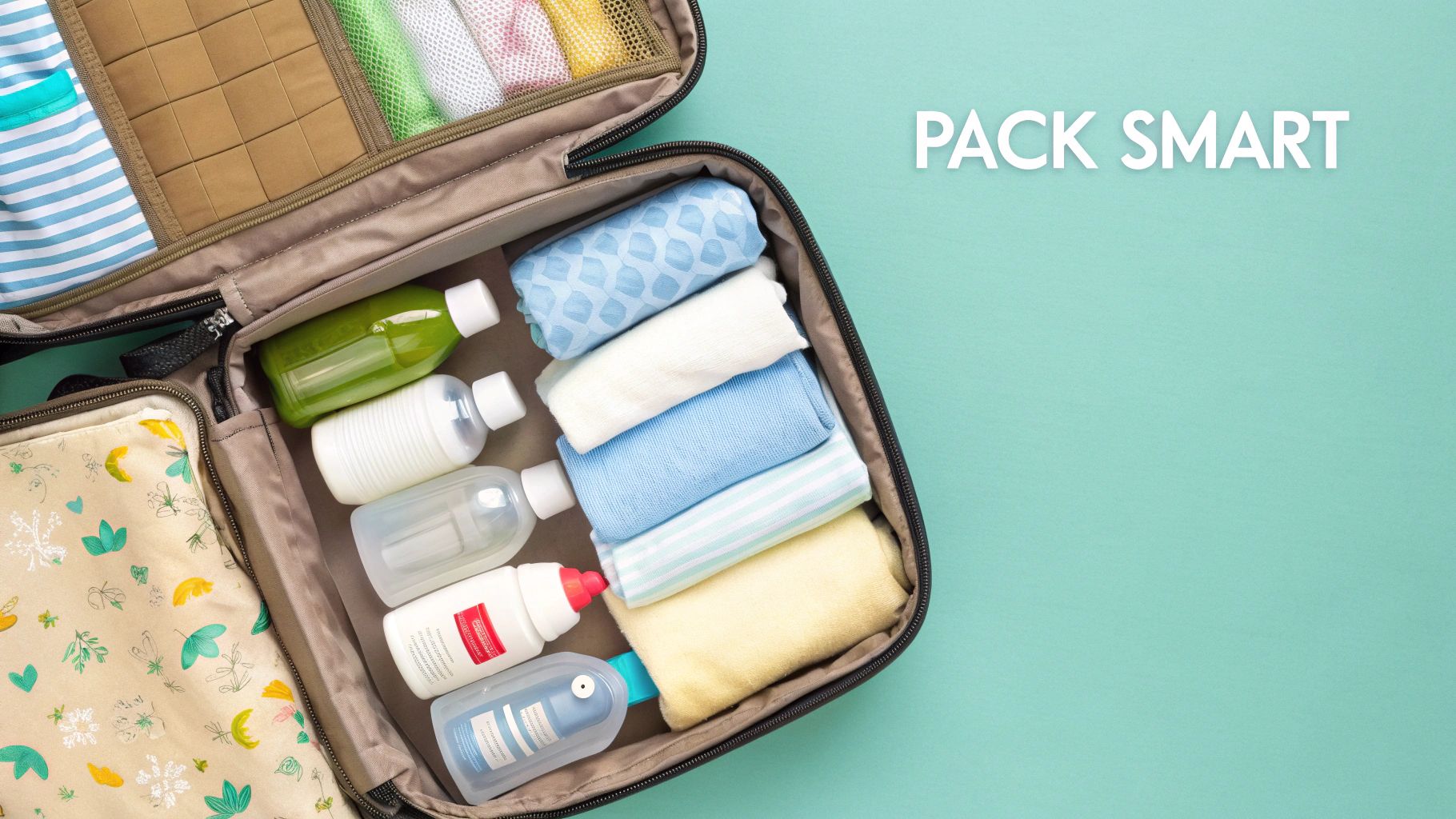 Let's be real: packing for a baby can feel like you're prepping for a month-long expedition, not a weekend getaway. Your pre-kid dreams of zipping through the airport with just a carry-on are officially over, buried under a mountain of diapers, wipes, and impossibly tiny outfits.
The great paradox of parenting is that the smallest humans require the most stuff. But that doesn't mean you have to be miserable lugging it all. A successful trip hinges on packing strategically, not just packing everything you own.
The goal is to create a system that’s organized, efficient, and gives you quick access to what you need, when you need it. This boils down to mastering two key domains: the diaper bag command center and the intelligently packed checked bag.
The Diaper Bag Command Center
Think of your diaper bag as mission control. It’s not just a purse; it's your lifeline during travel, holding everything you need to handle feedings, blowouts, and meltdowns with at least a little bit of grace.
Your mantra for the diaper bag should be simple: if I might need it in the next eight hours, it goes in here. Everything else can be tucked away in your checked luggage.
Here's how to build the perfect mobile command center:
- Diapers and Wipes: Pack more than you think you’ll need. A flight delay or an unexpected traffic jam can wipe out your supply fast. A good rule of thumb is one diaper for every hour of travel, plus a few extras for good measure.
- A Full Change of Clothes (for Everyone): Yes, everyone. Spit-up and diaper leaks have a way of hitting innocent bystanders. Pack a comfortable, lightweight change of clothes for your baby, yourself, and your partner. You'll thank me later.
- Feeding Supplies: Have your supplies ready to go, whether you're breastfeeding, pumping, or formula-feeding. This means bottles, pre-measured formula, or a nursing cover. Remember that breast milk, formula, and baby food are exempt from the usual liquid restrictions at airport security.
- Compact Entertainment: Don't weigh yourself down with bulky toys. A few small, novel items can work wonders. Think crinkle books, a new teether, or even just the plastic cup from the flight attendant.
This bag needs to stay with you at all times, organized enough that you can grab what you need without a frantic, one-handed search while holding a fussy baby.
Conquering the Checked Bag
Your checked luggage holds everything else, but it shouldn't be a chaotic free-for-all. The key to sanity when you arrive is organization, and this is where packing cubes become your absolute best friend.
Designate cubes for different categories: daily outfits, pajamas and sleep sacks, socks, and feeding gear. This system not only keeps things tidy but also makes it easy to find one specific item without unpacking your entire suitcase in a tiny hotel room.
By compartmentalizing with packing cubes, you’re not just organizing clothes; you’re creating a portable nursery drawer system. This simple trick can dramatically reduce stress and save you precious time at your destination.
When you pack, think in terms of complete outfits rather than individual items. Rolling clothes saves a surprising amount of space and helps prevent wrinkles. It also lets you see everything at a glance, so you're not digging for matching pants while your baby is more than ready for their next adventure.
The Great Gear Debate: To Bring or To Rent?
Now for the big one: what about bulky gear like car seats, strollers, and travel cribs? Lugging these through an airport can feel like an Olympic sport, but sometimes it’s worth the hassle.
The decision to bring, rent, or buy gear at your destination depends heavily on where you're going, how long you're staying, and your personal travel style. A great first step is checking your airline's policy—most let you check a car seat and stroller for free, which can make the choice much easier.
Deciding what to do with bulky items is a classic travel dilemma. Do you deal with the hassle of bringing your own for the sake of familiarity and safety, or do you take a chance on renting at your destination to travel lighter? This table breaks it down.
Travel Gear Decision Bring vs Rent
| Gear Item | Pros of Bringing | Cons of Bringing | When to Rent |
|---|---|---|---|
| Car Seat | Safety and Familiarity: You know its history and how to install it correctly. Baby is comfortable in their own seat. | Bulky and Heavy: A major hassle to carry through airports and transport. | Your rental car company offers one, you're using ride-shares sparingly, or a local baby gear rental service has high ratings. |
| Stroller | Convenience: Essential for navigating airports. Familiar to your baby and has the features you like. | Can Be Cumbersome: Gate-checking adds an extra step to boarding and deplaning. | Your destination is not very stroller-friendly (e.g., cobblestone streets), or you plan on babywearing most of the time. |
| Travel Crib | Consistent Sleep Environment: Creates a familiar space, which can help your baby sleep better in a new place. | Extra Baggage: Another large item to check and carry. | Your hotel or rental provides a safe, clean crib, or you can easily rent one from a reputable local company. |
For many families, a lightweight travel stroller and their own car seat are the non-negotiables. The peace of mind from a familiar car seat is hard to beat, and a good stroller makes getting around so much more manageable. For everything else, a quick search for local baby gear rental services can save you a world of hassle.
Navigating the Airport and Flying with Ease
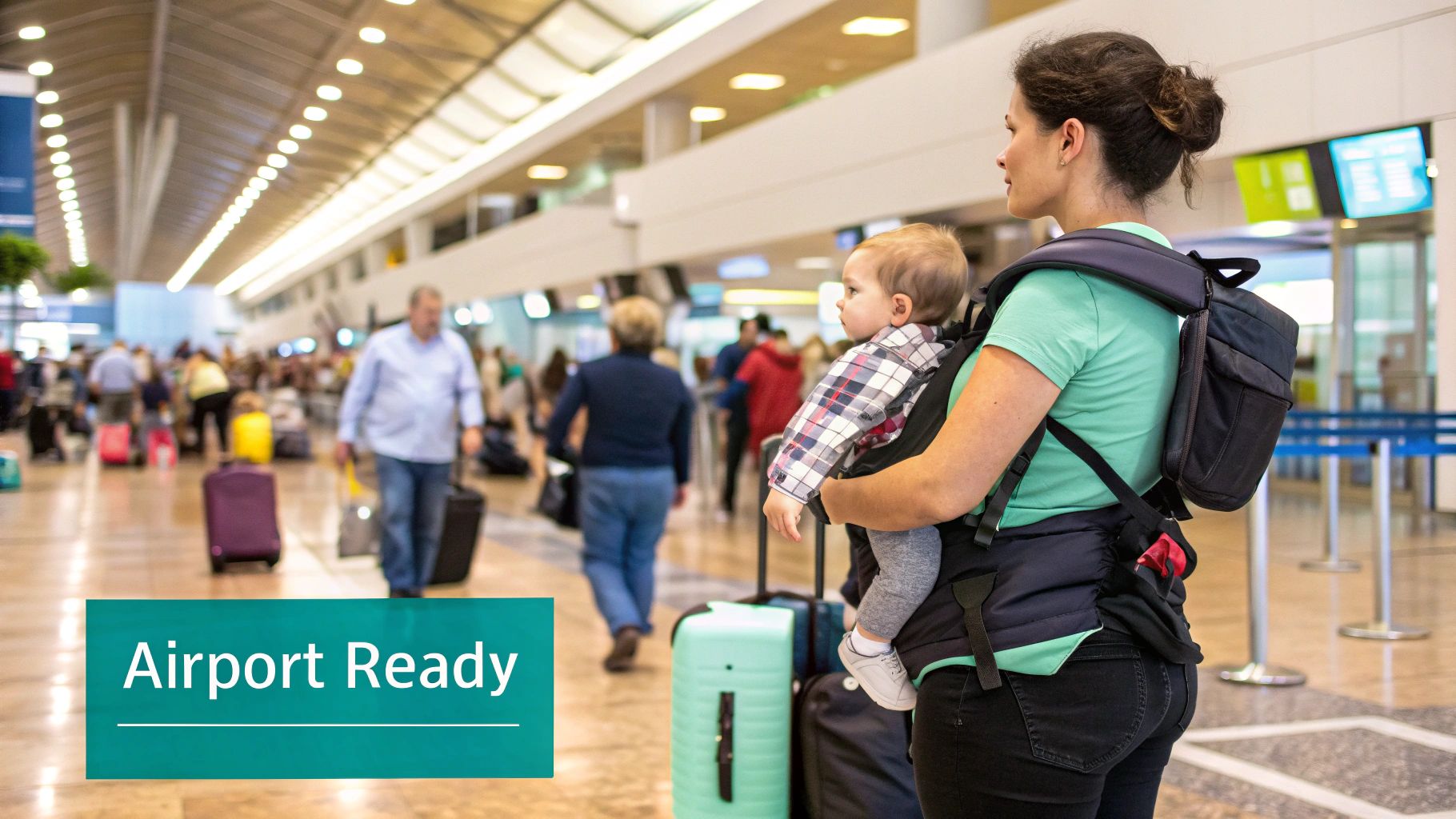
For a lot of parents, the airport feels like the final boss of travel anxiety. You've got the crowds, the confusing signs, and what feels like an entire nursery's worth of stuff. It can be a lot.
But with a solid game plan, you can turn that frantic dash into a smooth start to your vacation. It all begins with one simple rule: get there earlier than you think you need to. That extra time is the single best gift you can give your future, less-stressed self.
Mastering Airport Security with a Baby
Airport security with an infant is a different ballgame—but honestly, it's often easier. The TSA has specific rules in place that actually help parents, as long as you know what they are.
The big one? Breast milk, formula, and baby food are exempt from the usual 3.4-ounce liquid rule. You can bring these in "reasonable quantities," but you have to pull them out of your carry-on and let the TSA agent know you have them. They'll screen them separately.
To keep the line moving, here’s what I’ve learned:
- Babywear for the win. A soft carrier keeps your hands free for tickets and bags. You'll probably have to take your baby out to walk through the metal detector, but it's way easier than collapsing a stroller.
- Gate-check the big stuff. Most airlines will let you check your stroller and car seat at the gate for free. This is a game-changer. You get to use your stroller all the way through the airport and just leave it at the airplane door.
- Keep documents handy. Put your boarding passes and your baby's birth certificate (or passport for international trips) in an outside pocket where you can grab them fast.
It might seem intimidating, but TSA agents see families all day long and are usually pretty helpful.
Your In-Flight Survival Guide
Once you're on the plane, the real challenge begins. Your main job is keeping your baby comfortable, fed, and reasonably happy in a tiny, noisy tube. A little bit of prep makes all the difference.
The biggest hurdle for most babies is the ear pain from cabin pressure changes during takeoff and landing. This is where you get to be a hero.
The simple act of swallowing helps equalize the pressure in their tiny ears. Time a feeding—breast, bottle, or even just a pacifier—for ascent and descent. It's the oldest trick in the book because it works.
Diaper changes in a lavatory the size of a phone booth require some strategy. I always lay a portable changing pad on the closed toilet lid and have my wipes and a single diaper ready to go. Think of it as a quick, in-and-out mission.
As for entertainment, don't overthink it. For a baby, the novelty of a plastic cup or the crinkly safety card is often more interesting than any toy you brought.
Boarding and Arrival Strategies
How you get on the plane can really set the tone for the whole flight. Most airlines offer pre-boarding for families, but some experienced parents actually skip it.
Here’s the split boarding strategy:
- One parent boards early with the car seat, diaper bag, and all the gear.
- They get everything organized in the overhead bin and at the seat without a squirming baby in their arms.
- The other parent stays in the gate area with the baby, letting them get their wiggles out until the final boarding call.
This simple trick minimizes the time your little one has to be cooped up on the plane before you even take off. It can be a lifesaver.
When you land, don't rush. Let everyone else scramble to get off while you calmly gather your things. Your gate-checked stroller will be waiting for you right on the jet bridge, ready for the next part of your adventure. And for a truly seamless arrival, you can explore Top Dubai Airport Car Service Options to have a ride waiting for you.
Keeping Your Baby Safe and Healthy on the Go
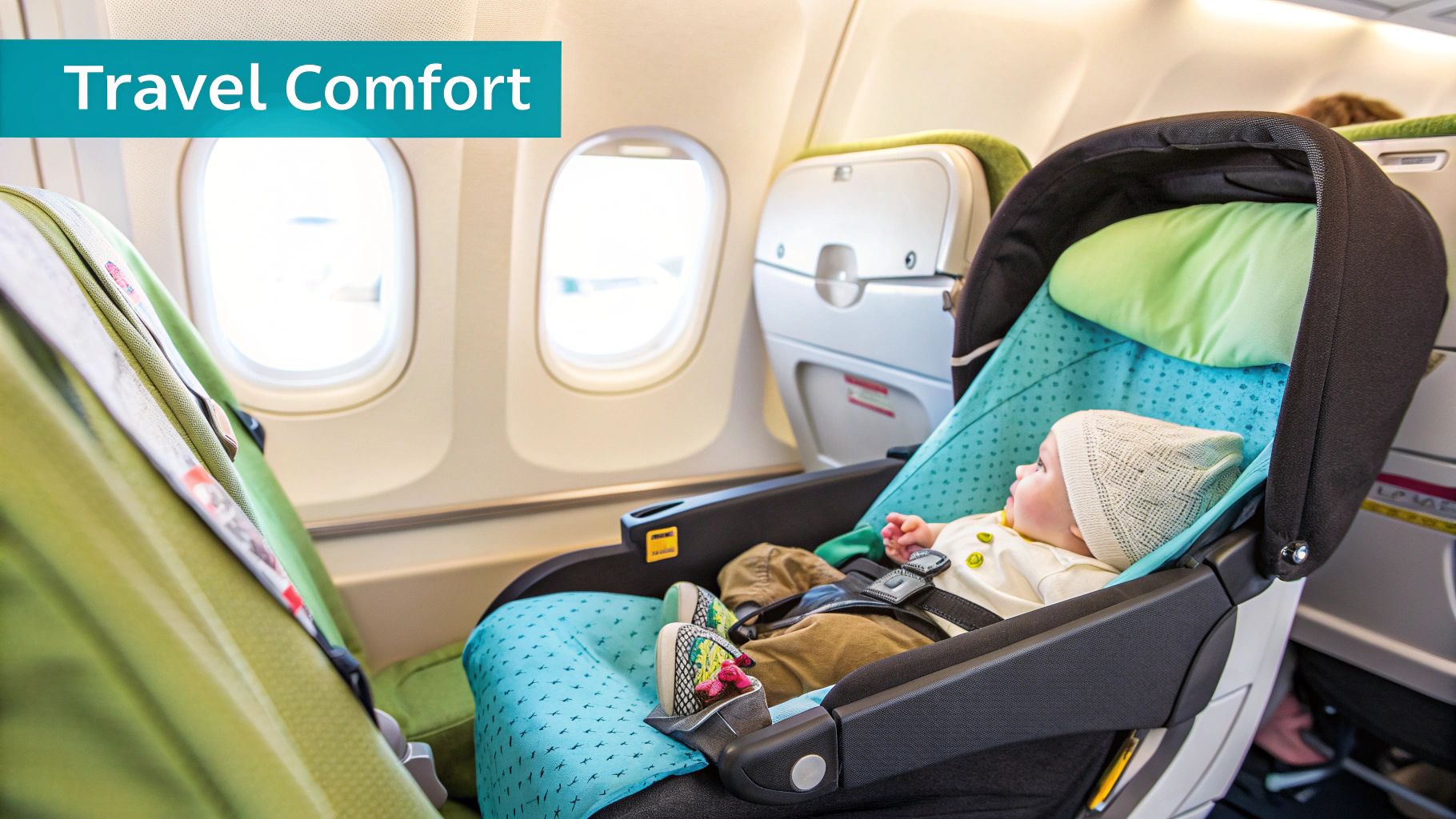
Exploring new places is incredible, but let's be real—your top priority is always your baby’s well-being. A new environment, different foods, and a wonky routine can introduce a few minor health and safety challenges.
The good news? Keeping your little one safe on the road is mostly about preparation and awareness, not about wrapping them in bubble wrap. With a few smart strategies, you can handle the small stuff and get back to making memories.
Safe Feeding on the Road
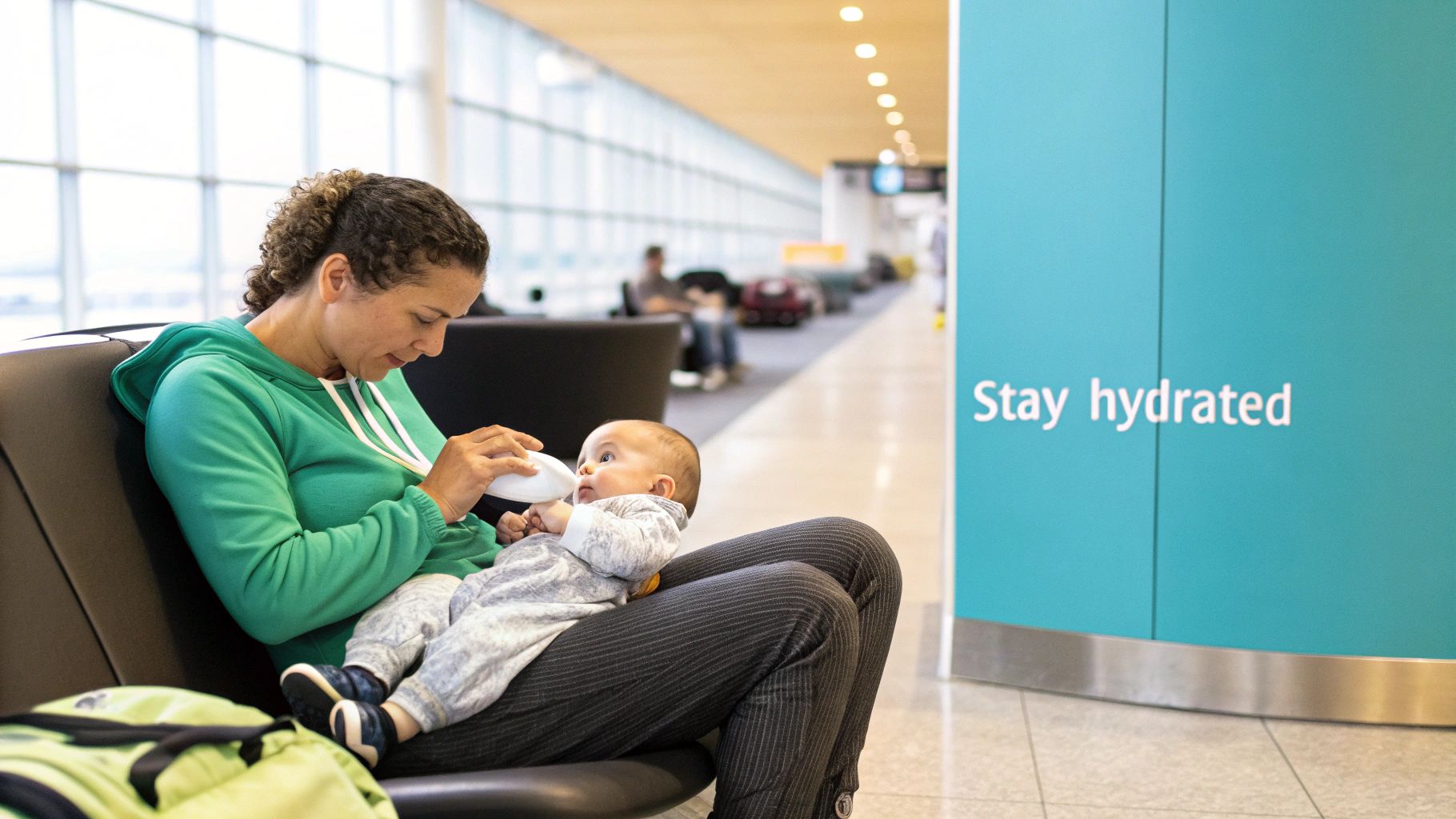
Feeding is a huge part of your baby’s day, and it takes a little extra thought when you're away from home. Whether you're dealing with formula, breast milk, or starting solids, consistency is your best friend.
One of the most common issues for little travelers is diarrhea, which can quickly lead to dehydration. To sidestep this, stick to safe food and water practices. Breastfeeding is naturally protective, but for formula-fed babies, it’s smart to bring your familiar brand from home and use bottled or purified water for mixing.
Packing your own trusted snacks also helps you avoid any tummy troubles from unfamiliar local foods. The CDC offers some great guidance on traveling safely with infants if you want to dive deeper.
Your Pint-Sized First-Aid Kit
You don’t need to pack an entire pharmacy, but a compact, infant-specific first-aid kit is non-negotiable. It’s all about peace of mind and being ready for a sudden fever or a scraped knee.
Think small and mighty. Your kit should be a curated collection of essentials, not a giant box.
Here are the must-haves for your baby’s travel kit:
- Fever Reducer: An infant-specific pain reliever like acetaminophen or ibuprofen (just be sure to check with your pediatrician for the correct dosage).
- Digital Thermometer: For quick and accurate temperature checks.
- Nasal Aspirator: A lifesaver for clearing stuffy noses, which are common with changes in air quality.
- Saline Nasal Drops: Helps relieve congestion and makes breathing easier.
- Antiseptic Wipes and Band-Aids: For cleaning up and covering minor cuts and scrapes.
- Diaper Rash Cream: A travel-sized tube is perfect for soothing irritated skin.
Store everything in a clear, zip-top bag. This makes it easy to find what you need in a hurry and helps you breeze through airport security if you pack it in your carry-on.
Baby-Proofing Any Room in Minutes
When you arrive at your hotel or rental, take five minutes to do a quick safety sweep. You're not aiming for Fort Knox—just covering the most obvious hazards at your baby’s level.
Get down on your hands and knees to see the world from their perspective. It’s the fastest way to spot things you'd otherwise miss.
- Cover electrical outlets. Simple outlet plugs are cheap, light, and easy to toss in your bag.
- Check for choking hazards. Scan the floor for small items like coins, bottle caps, or loose buttons that an adult might not even notice.
- Secure cords. Tuck away cords from lamps, blinds, and electronics that a curious baby could pull on or get tangled in.
This quick check is a simple routine that can prevent common accidents, letting everyone relax and settle into the new space safely. A little vigilance goes a long way.
Protecting Sleep Schedules Away from Home
A well-rested baby is a happy traveler, which is really just secret code for "happy parents." But the thought of wrangling naps and nighttime sleep in a new time zone or an unfamiliar room is enough to make anyone’s travel excitement fizzle out.
The secret isn’t trying to perfectly replicate your at-home routine—that’s just a recipe for frustration. Instead, aim for flexible adaptation. It’s all about blending your baby’s need for rest with the excitement of exploration by creating a cozy, sleep-friendly bubble, no matter where you are.
Creating a Familiar Sleep Oasis
Babies absolutely thrive on predictability, so your first goal is to make the new sleep space feel as much like home as possible. This is all about recreating the sensory cues they already associate with bedtime. It's less about the location and more about the experience.
A few portable items can completely transform a bright hotel room or a noisy rental into a serene sleep sanctuary.
Your travel sleep toolkit should definitely include:
- A travel white noise machine: This is non-negotiable. It drowns out unfamiliar sounds like hotel hallway chatter or street noise, signaling to your baby that it’s time to wind down.
- Portable blackout blinds: Sunlight streaming in at 5 AM is nobody’s friend. These suction-cup blinds create a dark, cave-like environment that encourages longer, more restorative sleep.
- Familiar scents and textures: Bring their sleep sack, an unwashed crib sheet, and that beloved lovey from home. These familiar smells are incredibly comforting in a new place.
Navigating Time Zone Changes
If you're crossing time zones, don't panic. You don’t need to overhaul their entire schedule in one fell swoop. The best approach is a gentle, gradual shift.
Start adjusting a few days before you leave by moving bedtime slightly earlier or later. Once you arrive, get outside in the natural daylight as much as you can. It works wonders for resetting their internal clock.
The most important thing is to follow your baby’s sleepy cues. If they’re exhausted, don’t force them to stay awake just to match the new clock. A well-timed nap is always better than an overtired meltdown.
Ensuring your baby sleeps soundly and safely is paramount, even when you're away. For a deeper dive, check out these essential safe sleep practices.
Your Infant Travel Questions Answered
Even with the perfect game plan, a few last-minute questions always seem to pop up. We get it. Here are some quick, clear answers to the most common things parents ask before that first big trip with their little one.
How Early Can a Baby Fly?
Most airlines will let newborns fly once they’re two weeks old. But before you book anything, it's always a good idea to get the green light from your pediatrician. They know your baby’s specific health needs and can give you advice that’s tailored just for you.
What Documents Do I Need?
If you’re flying domestically, you’ll want a copy of your baby's birth certificate on hand. This is how you prove their age for those lap infant policies.
For any international travel—even a quick hop across the border—your baby needs their own passport. No exceptions, no matter how tiny they are!
Do I Need to Buy a Separate Seat?
For kids under two, you have the option to fly with them as a "lap infant." On most domestic flights, this is either free or a small percentage of an adult fare. It's definitely the more budget-friendly choice.
However, many safety experts strongly recommend buying a separate seat and bringing an FAA-approved car seat on board.
This gives your baby the highest level of safety during turbulence and provides a familiar, secure spot for them to rest. Plus, it gives you your arms back—a small luxury that feels absolutely massive on a long flight.
How Do I Handle Diaper Changes on a Plane?
Airplane bathrooms are famously tiny, but you can absolutely manage a diaper change in there. The secret is all in the prep.
Before you leave your seat, put together a small "diaper kit" with just the essentials: one diaper, a travel pack of wipes, and a portable changing pad. Most airplane lavatories have a fold-down changing table right above the toilet. Having everything ready to go makes the whole process quick, efficient, and way less stressful. It's a tight squeeze, but it’s totally doable.
Article created using Outrank