


Your Guide to the Car Seat Stroller System That Just Clicks
Trying to choose baby gear can feel like you're assembling a puzzle with half the pieces missing. Let’s make one part of it incredibly simple. A car seat stroller system, often called a travel system, is your all-in-one ticket to easier outings with a newborn. It’s a genius combo where an infant car seat clicks right onto a matching stroller, letting you move a sleeping baby from the car to the sidewalk without ever unbuckling them. A true parenting win.
The Magic of the Click-and-Go Solution
Picture this: you've just spent 20 minutes driving around to get your fussy baby to finally fall asleep. You pull into the grocery store parking lot, peek in the rearview mirror, and see a peacefully snoozing infant. With a standard stroller, this is where the trouble begins—the dreaded transfer. You’d have to unbuckle, lift, and almost certainly wake your tiny, slumbering boss.
A car seat stroller system completely eliminates that drama. It’s built around one beautiful benefit: seamless transitions. The infant car seat, designed for your baby's first year or so, clicks out of its base in the car and snaps directly onto the stroller frame. That satisfying click is the sound of your errands getting infinitely easier.
This convenience is a huge reason these systems are so popular. The baby stroller market, which includes these clever setups, was valued at USD 2.63 billion in 2022. It's projected to climb to USD 4.22 billion by 2030, driven by modern parents who need practical, on-the-go solutions. You can dive deeper into these baby gear market trends to see just how much demand is growing.
Why This Convenience Is a Game-Changer
So, is a car seat stroller system really worth it? For most new parents, the answer is a resounding yes. The upfront investment often saves you stress, time, and even money in the long run.
Here’s a quick look at why so many parents choose a travel system for its convenience and long-term value.
| Benefit | Why It Matters for Parents |
|---|---|
| Preserves Precious Sleep | Not waking a sleeping baby is a superpower. It protects nap schedules and your sanity. |
| Unmatched Convenience | From quick errands to airport travel, moving the car seat to the stroller simplifies every outing. |
| Cost-Effective | Buying the car seat and stroller together is almost always cheaper than buying them separately. |
| Guaranteed Compatibility | No guesswork. You know from day one that your gear works together perfectly and safely. |
Let's break down those core advantages a bit more.
- Protect That Nap: This is the headline benefit. Being able to keep your baby asleep is a superpower for new parents. Seriously, it's a gift from the parenting gods.
- Make Life Easier: From quick trips to the store to navigating airports, the ability to move the car seat directly to the stroller just simplifies everything.
- Save You Money: Buying the car seat and stroller together as a system is almost always cheaper than purchasing them separately. You're getting two essential pieces of gear in one coordinated package.
- No Guesswork: You know from day one that your car seat and stroller are designed to work together perfectly. No adapters, no compatibility charts, no stress.
In the end, a travel system isn't just a piece of baby equipment; it's a strategy. It's a way to reclaim a little freedom and make the logistics of parenting a newborn feel less like a monumental task and more like a manageable adventure. For parents who are often in and out of the car, it's not just a nice-to-have—it's an essential tool for daily life.
Understanding the Two Key Components
A great car seat stroller system is like a perfect band—each member is a star on their own, but together, they create something truly special. To really appreciate that harmony, you have to get to know the two key players: the infant car seat and the stroller. Let’s pull back the curtain on each one.
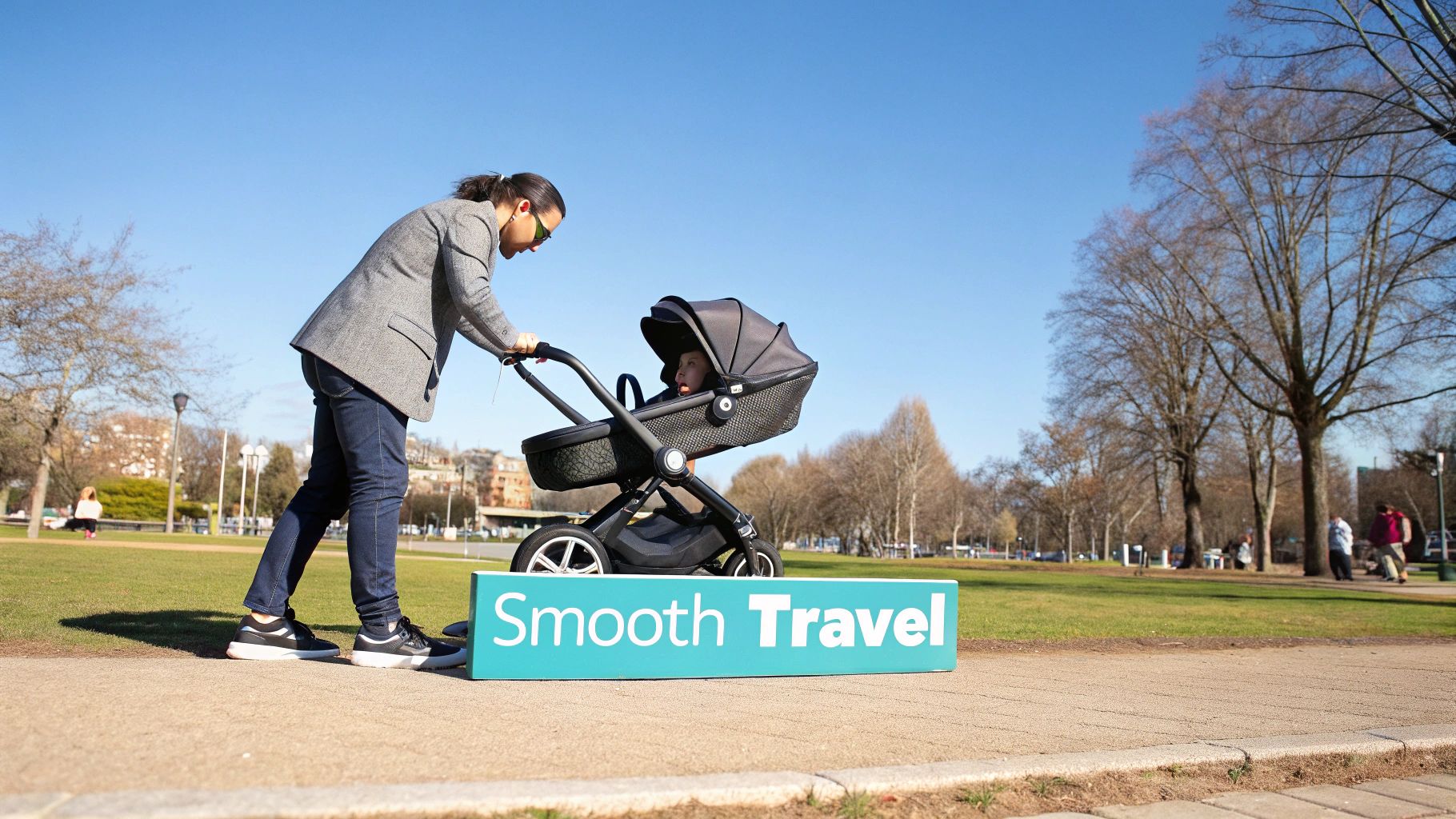
The Infant Car Seat: Your Baby's First Ride
First up is the infant car seat. Think of this as your baby’s secure, portable cocoon for their first year or so of life. It’s a rear-facing-only seat specifically engineered to protect the most fragile passengers. This isn't the bulky convertible seat you’ll use later; it’s a lightweight, specialized piece of gear designed just for newborns and small infants.
Its most brilliant feature is the two-part design. The car seat itself is the carrier, complete with a handle, canopy, and five-point harness. Then there's the car seat base, which stays installed in your vehicle. This base is the secret to the system's magic—you simply click the carrier in and out without ever having to fuss with seatbelt installation on every single trip.
When you're looking at an infant car seat, focus on these things:
- Safety Ratings: Check for excellent crash test performance from reputable sources. This is your number one priority.
- Weight and Height Limits: Make sure it will accommodate your baby from their first ride home until they're ready for the next stage.
- Ease of Installation: A base that is simple to install correctly—using either LATCH or the car's seatbelt—is absolutely non-negotiable.
The Stroller: The Long-Term Workhorse
Next, we have the stroller. If the car seat is the short-term specialist, the stroller is the long-term workhorse that will serve your family for years. It's the frame that the infant seat clicks into, but it also has its own toddler seat for when your little one outgrows the carrier.
Strollers in travel systems come in a few different flavors, and each one is suited to a different lifestyle. Knowing the lingo helps you pick the right one for your daily grind.
A huge advantage of buying a complete car seat stroller system is guaranteed compatibility. You get to skip the headache of researching adapters or worrying if your chosen car seat will safely connect to your stroller. It’s a pre-packaged solution designed to work together seamlessly from day one.
Decoding Stroller Features
When you're comparing systems, the stroller is often where you'll see the biggest differences. The marketing terms can be confusing, but they translate into real-world benefits (or big-time annoyances).
Here’s what you actually need to pay attention to:
- One-Hand Fold: This sounds like a minor perk until you're holding a baby in one arm and trying to collapse a stroller with the other. Trust me, it’s a feature you'll appreciate every single day.
- Wheel Material and Suspension: Plastic wheels are fine for smooth mall floors, but rubber or foam-filled tires with suspension give you a much smoother ride over bumpy sidewalks and park trails. Think of it as the difference between a go-kart and a luxury sedan for your baby.
- Storage Basket Size: Never, ever underestimate the importance of a massive storage basket. It will become your mobile command center, holding everything from diaper bags and groceries to that impulse-buy houseplant.
By looking at both the infant car seat and the stroller as individual pieces of gear, you can make a much smarter decision. You’re not just buying a convenient package; you're investing in two critical items that need to perform well on their own. This dual-focus approach ensures you get a system that keeps your baby safe in the car and comfortable on the go, providing value long after the infant seat is packed away.
The Real-World Perks of a Seamless System
Beyond the technical specs and safety ratings, the true magic of a car seat stroller system isn't in the features list—it's in those small, everyday parenting moments. It’s about turning potentially stressful outings into smooth, manageable adventures.
These systems are designed around one core principle: making your life easier, one click at a time.
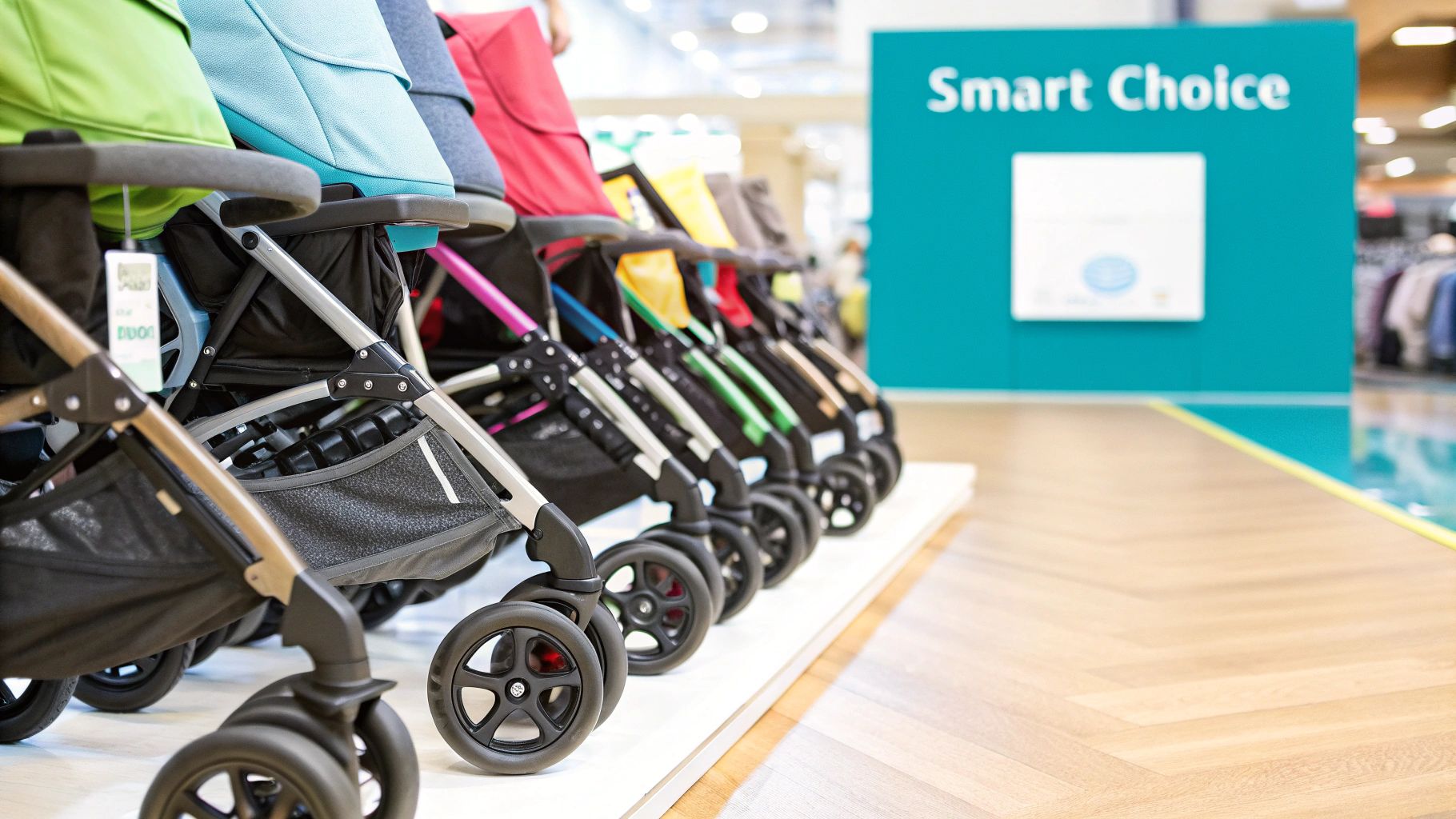
Picture this: your baby finally drifts off to sleep in the car on the way home. It’s a small victory, but a victory nonetheless. But then you remember you desperately need to pick up milk. With a traditional setup, you’d face the dreaded "car seat transfer"—a high-stakes operation that almost always ends with a woken, crying baby.
A travel system transforms this moment. You simply unclick the infant carrier from its base, snap it onto the stroller frame, and roll into the store. Your baby stays asleep, your errands get done, and your sanity remains intact.
More Than Just a Nap Saver
While preserving sleep is a huge win, the benefits of a seamless system go much deeper. It’s about reducing the overall friction of just leaving the house with a newborn.
- Less Physical Strain: Constantly lifting and carrying a heavy infant car seat takes a toll. Clicking it onto a stroller frame saves your back, shoulders, and arms, especially on longer outings like a trip to the zoo or a day of shopping.
- Making Travel Tolerable: Navigating a busy airport is challenging enough. A car seat stroller system is a game-changer, letting you wheel your baby comfortably right up to the gate. This keeps them secure and frees up your hands for luggage and tickets. For more tips, check out our guide on the essentials of traveling with car seats.
- A Smoother Daily Rhythm: Every outing feels less like a major production. Doctor’s appointments, coffee runs, and park visits become simple click-and-go events, encouraging you to get out and about more often.
A Smart Investment for Savvy Parents
It’s easy to focus on the convenience, but there’s a strong financial argument here, too. Bundling your infant car seat and stroller into one purchase is almost always more budget-friendly than buying these two essential items separately. You get guaranteed compatibility without the extra cost of adapters.
The global baby travel system market was recently valued at USD 2.89 Billion, a testament to how many parents see this as a smart, practical investment. This market thrives because it offers a real solution to a universal parenting challenge: moving a baby between the car and the world without disruption.
The real value of a car seat stroller system isn't just in the gear itself, but in the moments it saves. It gives you back precious minutes, preserves hard-won naps, and removes a layer of logistical stress from your day, allowing you to focus more on enjoying time with your new baby.
How to Choose Your Perfect Travel System
Alright, let's find "the one." Picking a car seat stroller system can feel like a high-stakes matchmaking game, but I promise, with the right approach, you can find the perfect partner for your family's adventures.
Forget the pretty colors and fancy marketing for a second. We're going to focus on what actually matters for your day-to-day life.
Think of yourself as a detective. Your mission is to figure out which system truly fits your lifestyle, not just the one that looks good in the store. Are you navigating narrow city grocery aisles or strolling through wide-open suburban parks? The answer dramatically changes what you’ll need.
Consider Your Daily Terrain
Your environment is probably the single biggest factor in choosing the right travel system. A stroller that’s a dream on smooth mall floors can be a total nightmare on cracked sidewalks or grassy fields. It’s all about matching the machine to the mission.
Let’s get specific. If you're a city dweller, you'll want a system that is lightweight with a narrow frame. A one-hand fold isn't a luxury; it's a necessity when you're trying to collapse the stroller while holding a baby and hopping on a bus.
On the other hand, if you live in the suburbs with plenty of space, a larger, more robust stroller with bigger wheels and better suspension might be your best friend. It’ll give your little one a much smoother ride over uneven terrain, making those long walks around the neighborhood way more pleasant.
Key Features to Put on Your Checklist
Once you've nailed down your lifestyle, it's time to get into the nitty-gritty features. When you're comparing models, use this checklist to make sure you're evaluating what truly counts.
- Stroller Weight and Fold Mechanism: Can you realistically lift it into your car trunk? Can you fold it with one hand while holding your baby? Seriously, practice this in the store—it’s a total deal-breaker.
- Wheel Type and Suspension: Small, plastic wheels are fine for indoor use. For just about anything else, look for rubber or foam-filled tires and some form of suspension to absorb the bumps.
- Storage Basket Size: Do not underestimate the need for a massive storage basket. It will hold your diaper bag, groceries, and probably a few stray toys. A tiny basket is a constant source of frustration.
- Canopy Coverage: A large, extendable canopy with UPF protection is crucial for shielding your baby from sun, wind, and nosy strangers. A peek-a-boo window is a great bonus so you can check on them without breaking your stride.
- Car Seat Safety and Installation: All car seats sold in the U.S. must meet federal safety standards, but some go above and beyond. Look for features like side-impact protection and an easy-to-use installation system (whether LATCH or seatbelt).
Frequent flyers have their own set of needs. For you, a lightweight frame and a compact fold are absolutely non-negotiable for gate-checking. For expert advice on this, you might be interested in our guide on how to travel with infants, which is packed with tips for making airport navigation a breeze.
To help you connect the dots, here’s a quick guide to matching features with different lifestyles.
Matching Travel System Features to Your Lifestyle
Use this table to pinpoint the features that matter most for your family's daily life, whether you're a city dweller, a suburban explorer, or a frequent traveler.
| Lifestyle | Key Stroller Features | Key Car Seat Features |
|---|---|---|
| City Dweller | Lightweight, narrow frame, one-hand compact fold, small swivel wheels for maneuverability. | Lightweight infant carrier for carrying up stairs, European belt path for rideshares. |
| Suburban Explorer | All-terrain wheels, excellent suspension, large storage basket, parent console for drinks/keys. | Easy click-in base for the car, extra safety features like a load leg or anti-rebound bar. |
| Frequent Traveler | Ultra-lightweight frame, super-compact fold (fits in overhead bin), FAA-approved car seat. | A car seat that installs easily without the base (using the vehicle's seat belt). |
This isn't about finding a system with every feature, but the one with the right features for the life you actually live.
The In-Store Test Drive
Reading reviews is great, but nothing—and I mean nothing—beats a hands-on "test drive." Go to a store and physically interact with the models you’re considering. Push them around, fold and unfold them, and click the car seat in and out of both the base and the stroller.
Pay attention to the little things. Is the handlebar height comfortable for you and your partner? Is the parent console actually useful, or just flimsy plastic? These details make a huge difference in your daily experience.
Imagine you're loading it into your car or trying to navigate a crowded cafe. Does it feel intuitive and easy to manage, or clunky and frustrating? This tactile experience is often the final piece of the puzzle, helping you choose a travel system that you’ll genuinely love using every single day.
Mastering Car Seat Safety and Installation
You've found the perfect car seat stroller system—congratulations! Now comes the part that really matters: getting it installed correctly. A top-rated car seat is only as safe as its installation, and getting it right is the ultimate peace of mind.
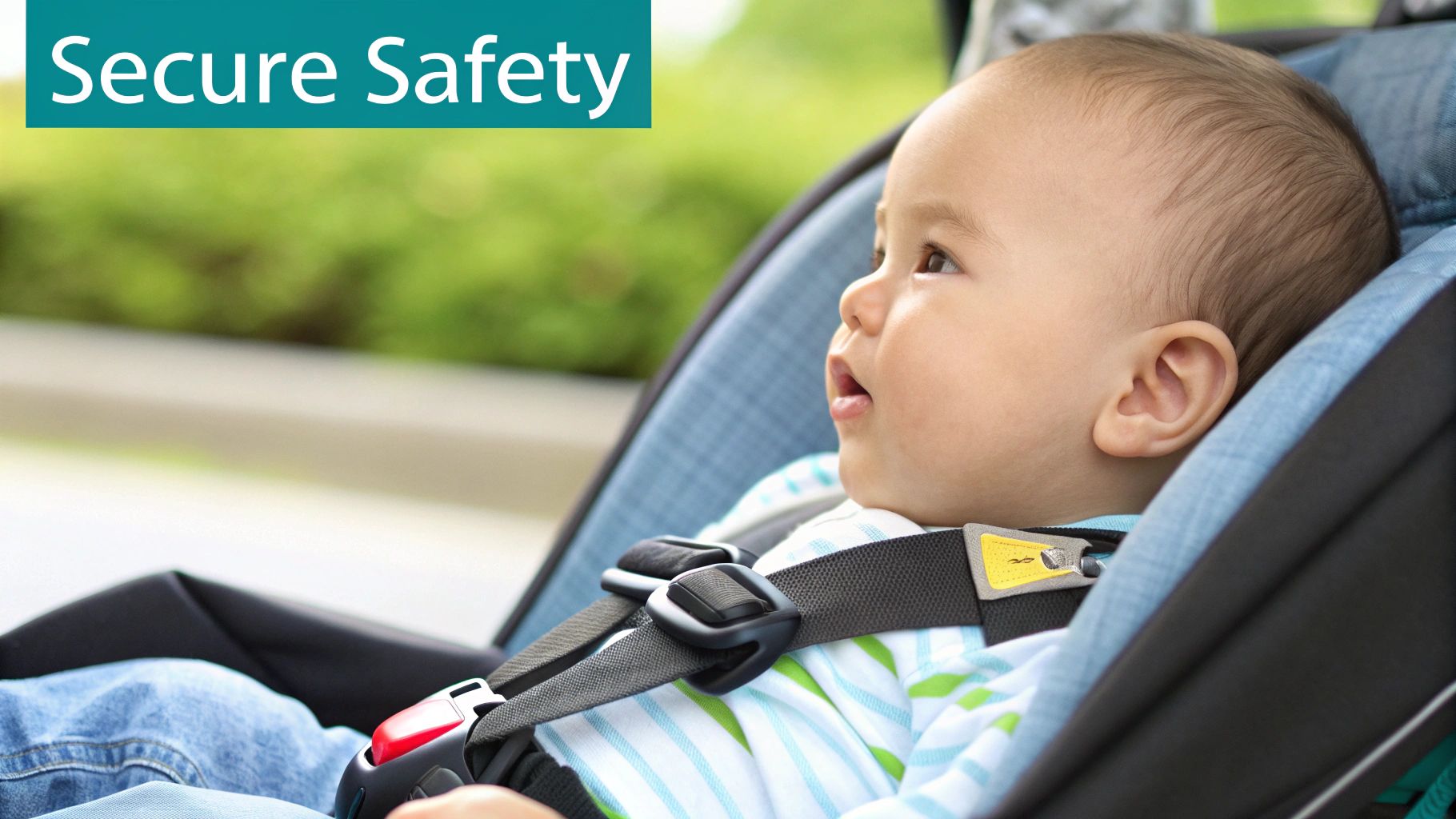
Think of this as your safety playbook. We're going to cut through the confusion and give you the clear, straightforward steps you need to protect your most precious cargo on every single trip.
Installing the Car Seat Base
The base is the heart of your infant car seat's safety in the vehicle. It stays in the car, which is what allows you to click the carrier in and out with such amazing ease. Most modern cars and seats give you two ways to do this: the LATCH system or your car's seat belt.
It’s a common misconception that one is automatically safer than the other. The safest installation is the one you can do correctly and confidently every single time. And here's a big rule: never use both at the same time unless your car seat manual specifically says it's okay.
Here’s a quick breakdown of your options:
- The LATCH System: This stands for Lower Anchors and Tethers for Children. It uses built-in metal anchors in your car's back seat. You just click the connectors from the car seat base right onto the anchors. Easy peasy.
- The Vehicle Seat Belt: This classic method involves threading your car’s seat belt through a specific path on the car seat base and locking it down nice and tight.
No matter which way you go, the goal is the same: the base should not move more than one inch side-to-side or front-to-back when you tug on it at the belt path. This is the famous "one-inch rule," and it's your go-to test for a secure fit.
Crucial Safety Best Practices
Getting the base tight is just the beginning. Proper car seat safety means running through a few more critical checks every time you head out. These habits aren't optional—they're what keep your baby truly secure.
A correctly installed car seat is paramount, but once your child graduates to a larger seat, the rules still apply. For those planning future adventures, our article on choosing a convertible car seat for travel can help you find a seat that’s both safe and easy to install on the go.
Here's a powerful reality check: A study by the National Highway Traffic Safety Administration (NHTSA) found that 46% of car seats are misused in a way that could reduce their effectiveness. Taking a few extra minutes to double-check your work is one of the most important things you can do as a parent.
The Harness Check and Audible Click
Once the base is secure, it's time to focus on how your baby fits inside the carrier. That five-point harness is their internal safety system, and it needs to be positioned perfectly.
Harness Positioning:
- Shoulder Straps: For a rear-facing infant seat, the shoulder straps must come from slots that are at or slightly below your baby’s shoulders.
- Chest Clip: This is a big one. The chest clip should be positioned at armpit level. This is what keeps the shoulder straps properly placed on your baby’s shoulders in a crash.
- The Pinch Test: After buckling your baby in, try to pinch a horizontal fold of the harness strap at their collarbone. If you can pinch any extra webbing, the harness is too loose. Tighten it up until the strap lies flat and you can't pinch a thing.
Finally, always, always listen for that satisfying, audible "click" when you connect the infant carrier to the base in your car or to the stroller frame. That sound is your confirmation that the seat is locked in securely and ready for action. Don't just assume it’s connected—listen for the click and give it a firm tug to be absolutely certain.
Beyond the Basics: Joggers, Modular Systems, and Custom Setups
Alright, once you've gotten the hang of a standard car seat stroller system, you’ll find there’s a whole other world of options out there. These are the specialized setups designed for very specific lifestyles, offering more flexibility and performance so you can build something that truly fits your family.
Think of a standard travel system like a reliable family sedan—it’s practical, safe, and gets the job done beautifully. But sometimes, you need an off-road SUV for trail runs or a custom-built ride with all the bells and whistles. That’s exactly where joggers, modular systems, and mix-and-match setups come in.
Jogging Strollers for Active Parents
For parents who can't imagine giving up their morning run, a jogging stroller is non-negotiable. These are high-performance machines, engineered from the ground up for speed and stability, whether you're on pavement or a gravel path.
So, what makes them different? It all comes down to the design:
- Three-Wheel Design: This setup gives them incredible maneuverability, making tight turns and quick pivots a breeze.
- Air-Filled Tires: Just like a bicycle, these big tires and suspension systems soak up bumps, giving your little one a buttery-smooth ride.
- Locking Front Wheel: This is the most important safety feature for running. You lock the front wheel in a fixed position to keep the stroller from swiveling and tipping over at higher speeds.
A jogging stroller is purpose-built for getting active. While it works just fine for everyday walks, its real magic is unleashed when you’re on the move. Just remember, most experts suggest waiting until your baby is at least six to eight months old and has solid head control before you start jogging with them.
Modular Systems: The Transformers of the Stroller World
Next up are modular strollers, the true chameleons of the baby gear universe. With a modular car seat stroller system, the seat isn’t permanently attached to the frame. You can pop it off, flip its direction, or swap it out for a different attachment entirely.
This kind of versatility is a huge reason why the multifunctional baby stroller market was recently valued at around $695 million. Parents want gear that grows with their child, and modular systems deliver. You can learn more about the growth of the multifunctional stroller market and what's next for these innovative designs.
With a modular stroller, you can:
- Face Your Baby Towards You: This is perfect for bonding and keeping a close eye on your infant during those first few months.
- Face Your Baby Outwards: As they get older and more curious, you can flip the seat around so they can take in all the sights and sounds of the world.
- Attach a Bassinet: Many modular systems offer a separate bassinet attachment, creating a completely flat and safe sleeping space for newborns on the go.
The Mix-and-Match Strategy: Building Your Own
Finally, there’s the "mix-and-match" or "à la carte" approach. This is for the parent who wants to pair their absolute favorite car seat from one brand with their dream stroller from another. This is all made possible by using car seat adapters.
The biggest draw here is ultimate customization—you’re not stuck with the stroller that comes packaged with your car seat. This route does require a bit more research to make sure the adapter is compatible and safe. It can also add to the overall cost, but for many parents, creating that perfect custom car seat stroller system is well worth the extra effort.
Your Car Seat Stroller System Questions Answered
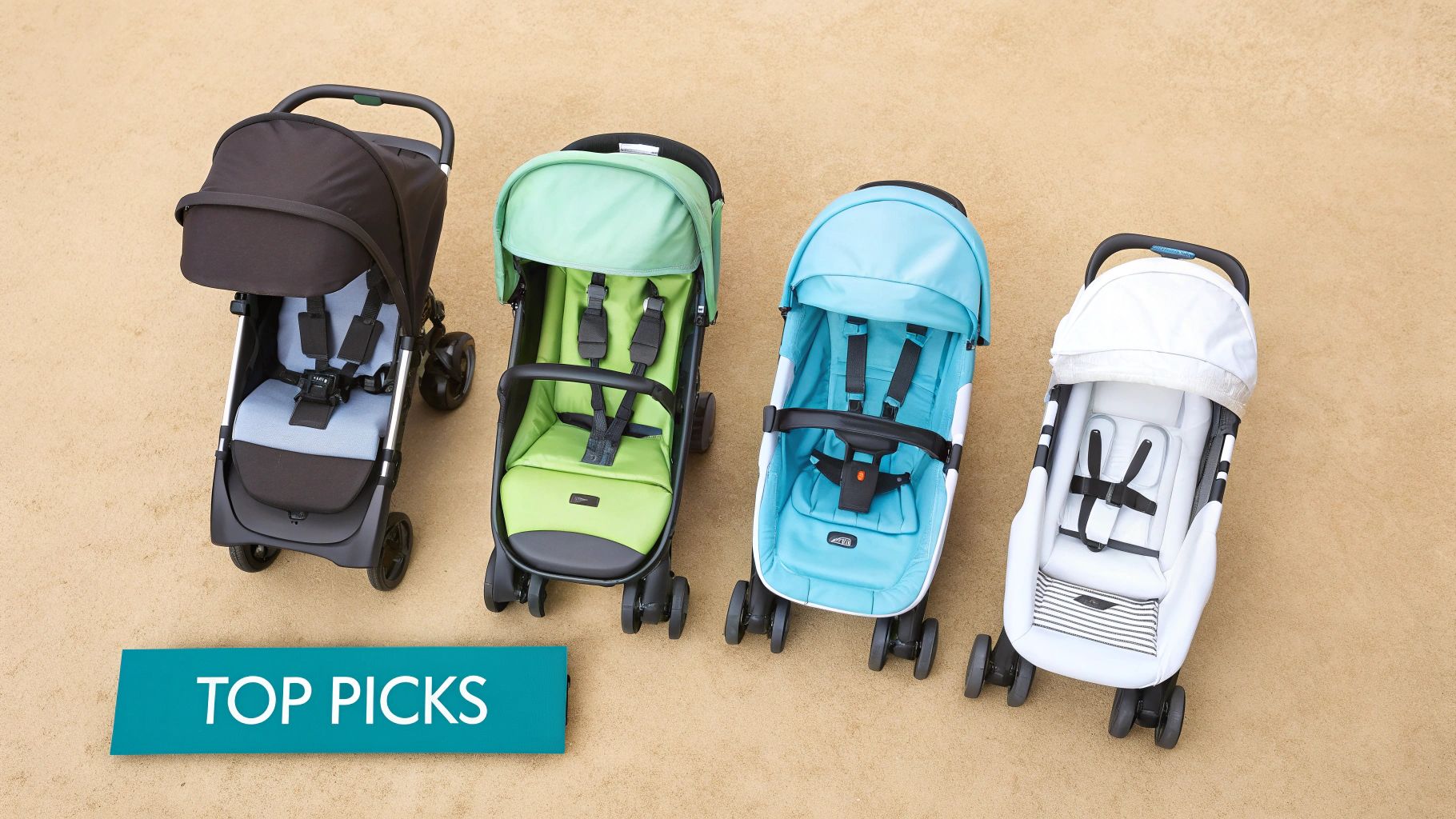
You’ve done the research and picked your system. Awesome! But even after you feel like you've made the big decisions, a few final questions can pop up. Let’s tackle the most common ones we hear from parents, so you can head out on that first adventure with total confidence.
How long can my baby safely stay in an infant car seat?
This is a big one, and it's a question every new parent asks. While that click-in convenience is a game-changer, infant car seats aren't meant for marathon snoozes.
The gold standard here is the "two-hour rule." Experts agree you should limit your baby's time in the car seat to a maximum of two hours within any 24-hour period.
Why? The semi-reclined position is great for the car, but it can put a little pressure on a baby's developing spine and even affect their breathing if they're left in it for too long. If you're on a long road trip, just plan to stop every 90 minutes to two hours. It's the perfect excuse to get your baby out for a cuddle and a good stretch on a flat surface.
Are travel systems approved for air travel?
Yes, but it's the infant car seat that gets the green light, not the stroller. Most infant car seats are FAA-approved. You can double-check by looking for a sticker somewhere on the seat that says, "This restraint is certified for use in motor vehicles and aircraft."
The stroller frame, on the other hand, will have to be checked. Most parents prefer to "gate-check" it right before boarding—this lets you wheel your little one all the way through the airport instead of juggling them at the ticket counter. There are some great guides out there on navigating airports with strollers that can make your first trip a breeze.
Pro Tip: If you're going to gate-check your gear, grab a durable travel bag for it. It's a small investment that protects your stroller and car seat from the inevitable scuffs, dirt, and bumps that happen during airline handling.
What is the best way to clean my car seat and stroller?
Life with a baby is messy. Spills, spit-up, and snack crumbs are just part of the deal. Luckily, most systems are designed for easy cleanup.
For the plastic and metal frame, a simple wipe-down with a damp cloth and a little mild soap is all you need. The fabric parts, like the seat cover and harness pads, can usually be tossed in the washing machine on a gentle cycle.
But always, always check your user manual first. Cleaning instructions can be surprisingly specific. One universal rule: never use harsh chemicals or bleach on the harness straps. It can actually weaken the fibers that are designed to keep your baby safe. Let everything air dry completely before you put it all back together.
Choosing the right car seat stroller system is one of the first big decisions you'll make, and it’s one that can genuinely make your day-to-day life easier. By focusing on your lifestyle, prioritizing safety, and doing a little hands-on research, you can find the perfect setup that clicks—both literally and figuratively.
What feature is an absolute must-have in your travel system? Share your thoughts in the comments below