


How to Set Up a Nursery Your Baby Will Love
Setting up a nursery really comes down to a simple, three-part plan: Choose the room, measure your space, and sketch a layout. Nailing this foundational step makes every other choice—from furniture to decor—fall into place, creating a safe, functional, and loving environment for your baby.
Creating Your Nursery Blueprint: From Layout to Flow
Welcome to one of the most exciting parts of preparing for your new arrival! Before you get lost in paint swatches and adorable decor, let's build a solid foundation. This is your chance to strategically turn an empty room into a space that actually works for you during those 3 a.m. wake-up calls.
Think of this process as creating the nursery's skeleton. A strong framework makes adding all the personality and style so much easier down the road.
Start With The Space
First things first: pick the best room for the job. Ideally, it’s a room close to your own bedroom, making those nighttime trips back and forth a little less painful. Pay attention to things like natural light, how quiet the room is, and its ventilation.
Once you’ve claimed your spot, grab a tape measure. You'll want to get the exact dimensions of the room, being sure to note where the windows, doors, and closets are. This feels like a small detail, but trust me, it’s critical for avoiding the headache of a dresser that won't fit or a layout that feels totally cramped. As you get started, a good first baby nesting checklist can be a lifesaver for keeping everything organized.
This initial blueprint process really is that simple.
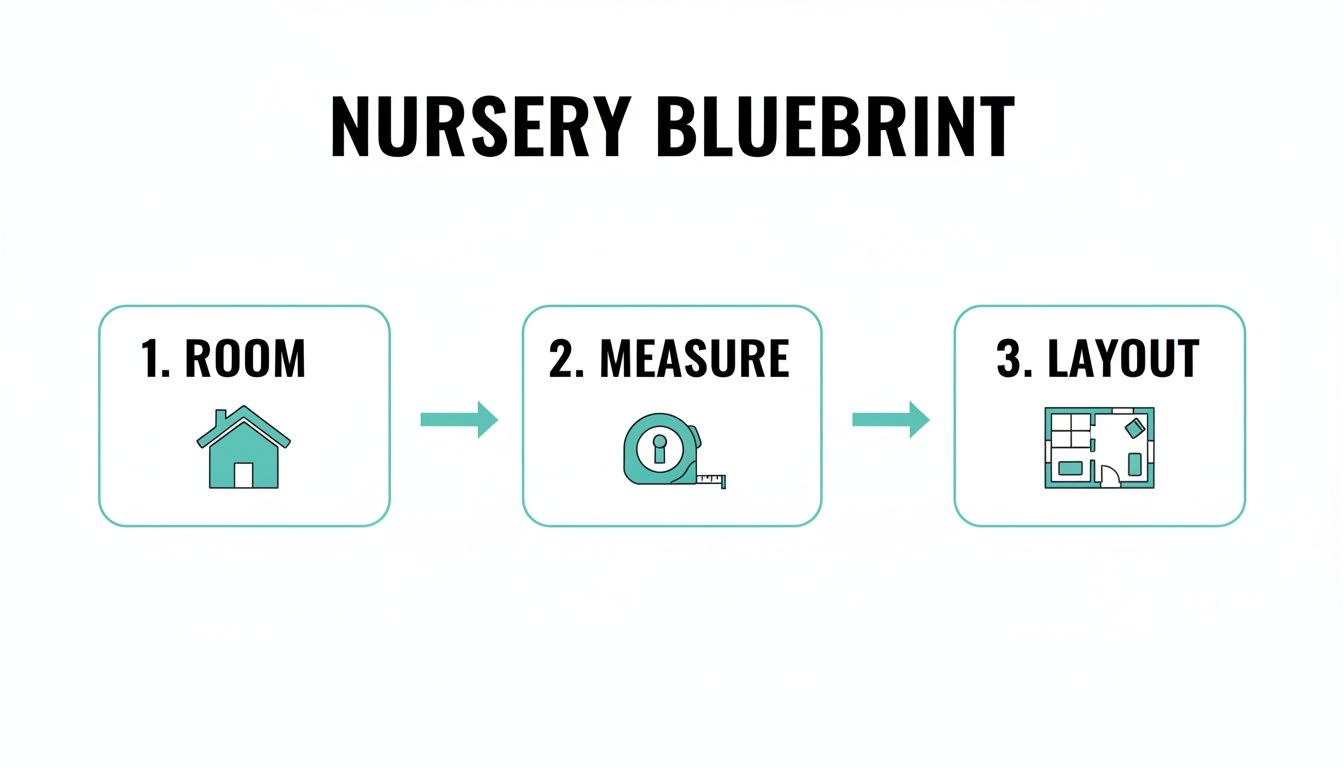
Following a logical flow like this prevents that feeling of being overwhelmed and helps you build a practical foundation for your nursery design.
Sketching a Functional Layout
Now for the fun part: mapping out where your big furniture pieces will live. The single most important safety rule here is to place the crib away from windows, blinds, and any cords. This is a key recommendation from the American Academy of Pediatrics to reduce serious safety risks.
Not sure when to pull the trigger on these big purchases? We've got you covered with our guide on when to buy nursery furniture.
When you’re planning, keep in mind that every inch counts. This is especially true when you consider that a significant number of new parents live in smaller homes or urban apartments where space is at a premium. Multifunctional pieces aren't just a nice-to-have; they're a game-changer.
Create "zones" for sleeping, changing, and feeding. Placing the changing table near the closet and the rocking chair in a quiet corner creates an intuitive flow that you'll appreciate during those hazy newborn days.
The Unskippable Nursery Safety Checklist
Nothing gives a new parent more peace of mind than knowing their baby's room is truly safe. And while you’ve probably got outlet covers on your shopping list, creating a genuinely secure space goes way beyond the basics. It’s about looking at the room through a different lens—your baby's—to spot and fix potential hazards before they ever become a problem.
Let’s turn your beautiful nursery into a certified safe zone.
We're going to move past the obvious and focus on the less-talked-about details that are just as crucial for your baby's well-being. This is your all-in-one guide to babyproofing like an expert.
Anchors, Cords, and Clear Air
First things first: anchor your heavy furniture. It’s a step you absolutely cannot skip. Once your little one starts pulling themselves up, dressers, changing tables, and bookshelves become serious tipping hazards. Always use the anti-tip kits that come with new furniture. If you bought second-hand, you can grab a kit from any hardware store. It's a small task that can literally save a life.
Next, take a hard look at your windows. The dangling cords on blinds and shades are a well-known strangulation risk, but many parents overlook them. The safest and simplest solution is to install cordless window coverings right from the start.
Finally, think about the air quality in the room. A fresh coat of paint looks great, but it can release volatile organic compounds (VOCs). When you're picking out colors, look for "no-VOC" or "low-VOC" paint formulas. After painting, open the windows and let the room air out for several days before your baby starts sleeping in there.
Choosing the right products and arranging them thoughtfully is key. Safety is a serious business.
Crib and Mattress Safety Standards
The crib is the heart of the nursery, and its safety is absolutely non-negotiable. Always make sure you're using a crib that meets the latest standards from the U.S. Consumer Product Safety Commission (CPSC). That means no drop-side rails and slats that are no more than 2 ⅜ inches apart—roughly the width of a can of soda.
The mattress is equally important. It needs to be firm, flat, and fit snugly inside the crib frame. You shouldn't be able to fit more than two fingers between the mattress and the side of the crib. Any gap poses a serious entrapment risk.
For a deeper dive, check out our complete guide to creating a safe sleep environment for infants.
When it comes to the crib itself, remember the "bare is best" rule:
- No soft bedding: This includes pillows, bumpers, quilts, and heavy blankets. They are all suffocation hazards.
- No toys: Keep stuffed animals and other soft toys out of the crib when your baby is sleeping.
- Positioning: Always, always place your baby on their back to sleep.
Final Safety Walkthrough
Before your baby makes their grand debut, do one last sweep of the room. This time, get down on their level. Crawl around on your hands and knees to see what they see. You’ll be amazed at the potential hazards you spot from this new perspective, like small choking hazards on the floor or a loose electrical wire you missed.
Here’s a quick final checklist to run through:
- Install working smoke and carbon monoxide detectors in or just outside the nursery. Test them regularly.
- Tuck all electrical cords safely behind furniture or use cord covers to secure them to the wall.
- Place a soft rug on the floor. It won't prevent every tumble, but it can cushion the landing as your baby learns to move.
- Store all lotions, creams, and medicines in a high, locked cabinet, far out of reach.
By tackling these critical safety points, you can finally relax. You’ve built a beautiful, secure, and loving space for the newest member of your family.
Smart Storage Solutions For A Clutter-Free Space
Babies may be tiny, but the mountain of gear they come with is anything but. From diapers and wipes to an endless cycle of adorable outfits they'll outgrow in a flash, staying organized is the key to keeping your sanity. Trust me, smart storage isn't about having a huge room; it's about making every inch you have count.
Let's transform that potential chaos into a calm, functional space.
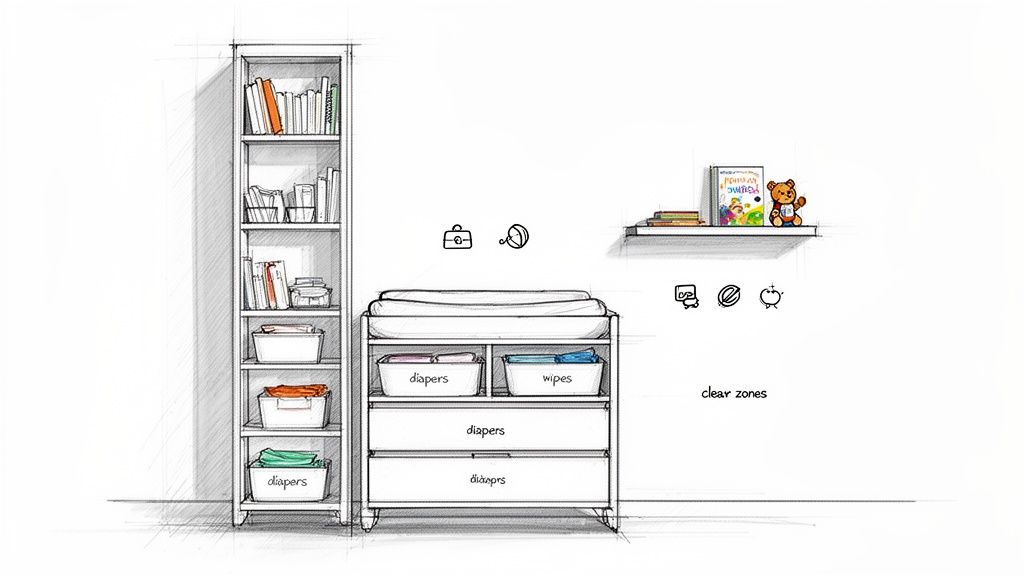
The secret is to think vertically and choose pieces that can pull double duty. When floor space is at a premium, your walls are your new best friend.
Maximize Vertical and Wall Space
Don't forget to look up! Using your vertical space not only provides a home for books, toys, and keepsakes but also draws the eye upward, which can make a small room feel much bigger.
- Tall, Slim Bookshelves: A narrow, vertical bookshelf, securely anchored to the wall, is a fantastic addition. I like to use the lower shelves for baskets of toys that your little one can eventually reach themselves and the higher shelves for decor or items you need to keep out of tiny hands.
- Floating Shelves: These are perfect for adding personality without taking up any floor real estate. You can arrange them above a dresser or create a sweet reading nook to display special books, framed photos, or cute stuffed animals.
- Hanging Organizers: Clever products like Hiccapop's nursery organizers create designated spots for all those little essentials. Hang one on the back of the door or inside the closet to neatly store shoes, hats, and small supplies.
Using your vertical space is one of the best first steps in nursery organization. We explore more specific ideas in our guide to nursery storage solutions.
The Power of Multi-Functional Furniture
In a nursery, you want every piece of furniture to work hard for you. Choosing items that serve more than one purpose is a total game-changer, especially when you're tight on space. The classic example is a dresser with a secure changing pad on top—it combines clothing storage and a diapering station into a single footprint.
Pro-Tip: Keep an eye out for cribs that have built-in drawers underneath. This is prime, often-overlooked real estate perfect for stashing extra crib sheets, sleep sacks, and blankets. It keeps them clean, dust-free, and right where you need them for those 2 a.m. bedding changes.
Conquer the Closet and Dresser Chaos
The closet can easily become a black hole for baby gear if you're not careful. To prevent this, get a set of closet dividers and label them by size: Newborn, 0-3 Months, 3-6 Months, and so on. This simple trick makes it so much easier to see what you have at a glance and grab the next size up when it feels like your baby grew an inch overnight.
Inside the dresser drawers, dividers are your best weapon against the jumble of tiny socks, onesies, and bibs. I swear by rolling clothes instead of folding them; you can fit more in and see everything at once. Baskets on open shelves are also great for wrangling smaller groups of items like diaper creams, pacifiers, and grooming tools. When everything has a dedicated home, cleanup becomes a quick, thoughtless task.
Designing A Soothing And Sensory-Friendly Room
Now for the really fun part: turning that empty room into a beautiful, calming retreat for you and your baby. This is all about creating the perfect ambiance—a peaceful haven that supports rest and gentle sensory development. Forget chasing trends; the goal here is to craft a space that just feels good.
Remember, you'll be spending countless hours in this room, too. A space that soothes your baby should also be a relaxing place for you.
Choose A Calming Color Palette
Color has a massive, often subconscious, impact on our mood. While those bright, primary colors seem like a classic choice for a kid's room, a nursery really benefits from a more muted, tranquil palette. A baby's developing senses can easily get overstimulated, and soft, gentle hues help keep things serene.
Look to nature for inspiration. Think about colors like:
- Soft blues and greens: These are known for their calming effect and can make a room feel incredibly peaceful.
- Warm neutrals: You can't go wrong with beige, soft gray, or warm whites. They create a cozy, inviting atmosphere that feels like a warm hug.
- Muted pinks and peaches: These shades can feel nurturing and gentle without being overwhelming.
You can always bring in pops of brighter color with smaller things like artwork, a mobile, or a few fun toys. This gives your baby something interesting to focus on during playtime without making the whole room feel chaotic. For some great visual ideas, check out these 10 nursery wall decor ideas.
Layer Your Lighting For Ambiance And Function
A single, harsh overhead light is a nursery's worst enemy. The secret is layered lighting. This approach gives you the flexibility to adjust the brightness and mood for everything from bright-eyed playtime to those hazy, middle-of-the-night feedings.
Start with your main ceiling light, but put it on a dimmer switch. This is an absolute must-have. A dimmer allows you to gradually wake your baby or gently wind down for the night. Next, add a soft table lamp near your rocking chair or glider. It provides just enough focused light for feeding or reading a bedtime story without flooding the entire room with light.
And don't forget a gentle nightlight. It casts a subtle glow that makes it so much easier—and safer—to navigate the room in the dark without disturbing a sleeping baby.
Create A Sensory-Friendly Haven
A truly soothing nursery is one that engages the senses in a gentle way. Think about textures, sounds, and even the air your baby breathes. Start with soft textiles. A plush rug on the floor makes tummy time much more comfortable, and good blackout curtains are a total game-changer for naptime. Seriously, they're essential for promoting better sleep.
Sound is another huge piece of the puzzle. A white noise machine can work wonders by masking all those sudden household sounds—the dog barking, a dish dropping—that can startle a baby awake. The consistent, gentle hum is also very comforting, as it mimics the sounds they heard in the womb.
Bringing a bit of nature into the room can also create a wonderfully tranquil vibe. A non-toxic houseplant, like a spider plant or a snake plant, not only adds a touch of green but can help purify the air, too.
Your 3 A.M. Lifelines: Diaper and Feeding Stations
Let’s be honest, when it’s 3 a.m. and your baby is crying, the last thing you want to do is hunt for diaper cream. This is where a little prep work goes a long way. Setting up dedicated diaper and feeding stations isn't just about being organized; it’s about making those middle-of-the-night routines as smooth and stress-free as possible. Think of them as your mission control centers, prepped and ready for action.
Having these zones dialed in means less fumbling in the dark and more calm, comfortable moments with your little one.
The Diaper Changing Command Center
The golden rule for your diaper station is to have absolutely everything you need within arm's reach. You always want to keep one hand safely on your baby, so quick, one-handed access to supplies is non-negotiable.
A great way to do this is by using a sturdy dresser with a contoured changing pad on top. It’s a fantastic space-saver and keeps storage right where you need it.
In the top drawer or in baskets right on the dresser, make sure you have:
- Diapers: A healthy stack of the right size, ready to grab.
- Wipes: Keep them in a pop-top dispenser or a container you can open with one hand.
- Diaper Cream: Right next to the wipes. No searching required.
- Diaper Pail: A hands-free pail right next to the dresser is a game-changer for tossing dirty diapers without a fuss.
This kind of setup means you never have to turn away from your baby, not even for a second.
My Favorite Trick: Stash a small, captivating toy at the changing station. A soft rattle or a crinkly book can be a lifesaver when you’re trying to change a particularly wiggly baby. It’s amazing how a little distraction can make the process go from a wrestling match to a quick and easy change.
Creating a Cozy Feeding Nook
This spot will be your sanctuary. You're going to spend countless hours here, day and night, so it should be a place you truly love to be. Comfort is key—for both of you.
The heart of your feeding nook is a comfortable chair. A glider or rocker is a classic for a reason; that gentle, rhythmic motion is pure magic for soothing a fussy baby (and a tired parent).
Next to your chair, a small side table is your best friend. Seriously, you'll wonder how you ever lived without it. Use it to keep your essentials close by:
- For you: A big water bottle, some easy-to-eat snacks, your phone, and a book.
- For baby: A stack of clean burp cloths and a nursing pillow, if you’re using one.
Having everything right there means you won’t have to get up and risk waking a sleepy, milk-drunk baby. It’s all about creating a peaceful little bubble where you can relax and soak in those precious bonding moments.
Your Nursery Is Ready—And So Are You
You've planned the layout, aced the safety check, and designed a space that’s as functional as it is beautiful. Setting up a nursery is a true act of love, and every choice you've made brings you one step closer to meeting your little one. Remember, the goal isn't a picture-perfect room from a magazine; it's a safe, comforting, and loving haven where you and your baby can begin your journey together. You've prepared the space, and now all that's left is to fill it with cuddles, lullabies, and unforgettable moments. You've got this.
We'd love to see what you've created! Share a photo of your Hiccapop-ready nursery in the comments below.
At Hiccapop, we believe a well-planned nursery creates a foundation for peaceful parenting. Our nursery organizers, safe sleep products, and travel essentials are designed to make your life easier so you can focus on what truly matters. Explore our collection to find the perfect solutions for your new space.