


When to Buy Nursery Furniture: A Stress-Free Timeline for Parents
Figuring out when to buy nursery furniture is one of the most exciting—and let's be real, slightly daunting—milestones of pregnancy. So, what's the magic number? For most parents-to-be, the sweet spot for making those big purchases is between 18 and 24 weeks into the pregnancy.
This timeframe gives you plenty of breathing room for shipping, assembly, and all the little details, without the pressure of a fast-approaching due date. Let's break down how to tackle this fun project without the stress.
The Perfect Window for Nursery Shopping
Welcome to one of the best parts of nesting: creating a cozy, safe space for your little one. It’s easy to see this as just another item on a massive to-do list, but getting the timing right can make it a genuinely joyful experience.
Hitting that 18-to-24-week mark really is the golden window. You're usually over the worst of the first-trimester exhaustion but still have the energy to shop, plan, and put things together.
This period gives you a much-needed buffer for a few practical reasons:
- Shipping & Delivery: You'd be surprised how long some of the most popular furniture pieces take to arrive. Lead times can stretch for weeks, and that's before factoring in the almost-inevitable shipping delays. Ordering early means everything will be there with time to spare.
- Assembly Time: Don't underestimate this! That "easy-to-assemble" crib can quickly turn into an all-day affair involving tiny hex keys and confusing diagrams. You'll be glad you tackled it well before the third trimester hits and your energy levels take a nosedive.
- Product Availability: The most sought-after cribs, gliders, and dressers have a habit of going out of stock. Shopping during the second trimester gives you a much better shot at getting the items you really want.
- Creating a Safe Space: Assembling furniture early also allows it to "off-gas." This simply means any faint smells from paints, glues, and manufacturing processes have plenty of time to air out, leaving the nursery fresh and clean for your baby.
The baby furniture industry is booming. The global market is expected to grow from USD 38.6 billion to a whopping USD 68.5 billion by 2034. Cribs are the star of the show, making up over 32% of that market, which shows how much parents prioritize this cornerstone purchase. A little advance planning helps you pick the safest, best options without feeling rushed. You can dive deeper into these baby furniture market trends if you're a data nerd like me.
A Trimester-by-Trimester Nursery Plan
Trying to tackle the entire nursery in one weekend is a recipe for overwhelm. Breaking the process down by trimester turns a massive project into a series of smaller, more exciting milestones. This way, you can actually enjoy the journey without that last-minute panic.
To give you a better idea of the flow, here’s a simple timeline that maps out each phase of putting together your perfect nursery.
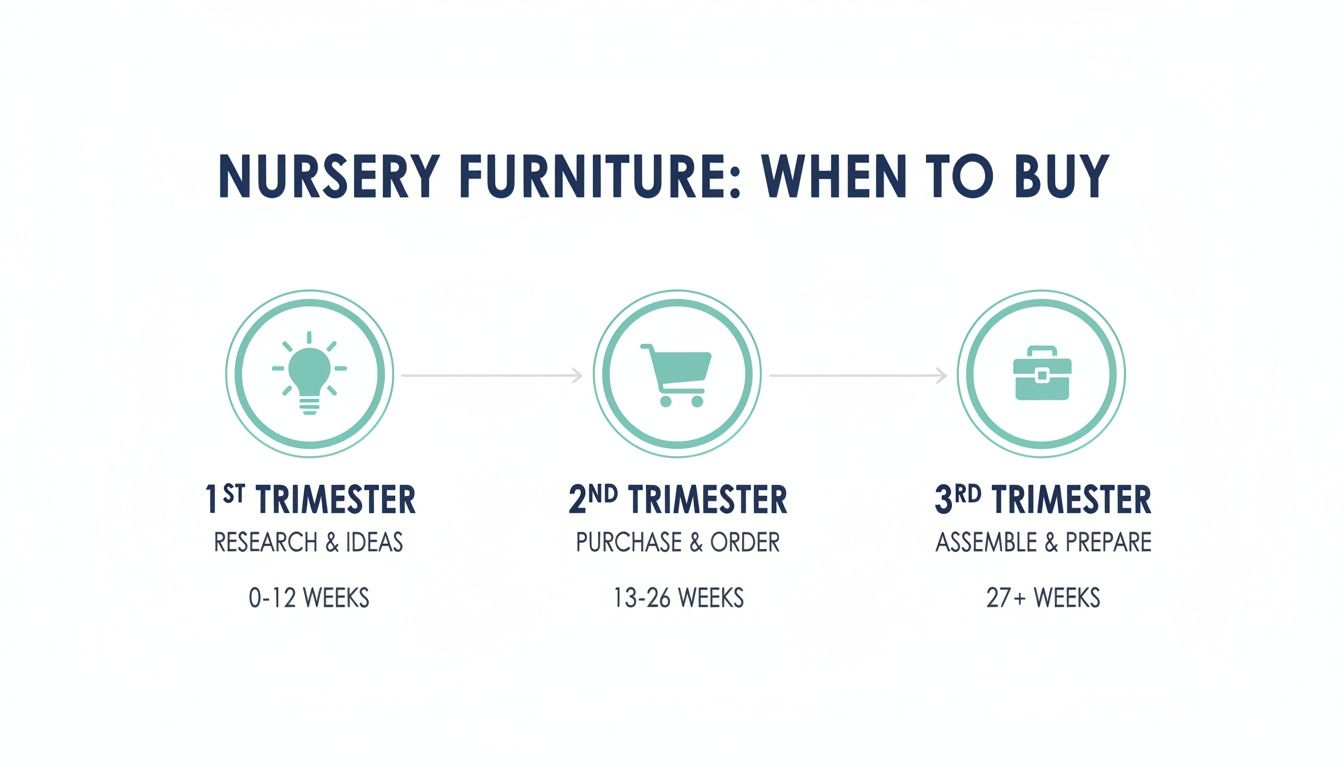
As you can see, it’s a natural progression: you dream and research in the first trimester, start buying in the second, and build everything out in the third. It’s a completely manageable, stress-free path to a finished nursery.
First Trimester (Weeks 1-12): The Dream and Discover Phase
Think of the first trimester as your "Dream and Discover" stage. There's absolutely no pressure to buy anything yet. Your only job right now is to soak up inspiration and get a feel for what you truly want.
This is the time for all the fun, low-stakes stuff:
- Start a Mood Board: Go down the Pinterest rabbit hole! Pin every nursery theme, color scheme, and furniture style that catches your eye. No judgment here.
- Find Your Vibe: Are you leaning towards a clean, modern look, or is a cozy, traditional space more your style?
- Measure Everything: Grab a tape measure and get the exact dimensions of the room. Knowing your space is critical before you fall in love with a giant armoire that won't fit through the door.
Enjoy this purely creative phase. It sets the foundation for every decision you'll make down the road.
Second Trimester (Weeks 13-26): Time for Action and Acquisition
Welcome to the sweet spot for nursery shopping. The second trimester is your "Action and Acquisition" window. This is when you’ll take all those dreamy ideas and start turning them into reality by purchasing the major furniture pieces.
Now is the time to finalize and order your big three:
- The Crib: The absolute centerpiece of the room.
- The Changing Table or Dresser: A hardworking piece that will hold endless tiny clothes and diapers.
- The Glider or Rocking Chair: Trust me, this will be your best friend for late-night feedings and sleepy cuddles.
Pro Tip: Don't put off ordering these key items. Many of the most popular furniture brands have lead times of 8-12 weeks—sometimes even longer. Ordering now means everything will arrive with plenty of time for assembly and off-gassing before your little one makes their debut.
Third Trimester (Weeks 27-40): Assemble and Arrange
Once you hit the third trimester, your big furniture deliveries should start rolling in. The focus now shifts to "Assembly and Arrangement." This is where the room finally starts to look and feel like a real nursery.
Your main goals are to get the furniture built, figure out the best layout, and add all those final, loving touches. It's also a great time to tackle other nesting tasks; for a full rundown, check out our guide on how to prepare for a new baby.
Try to get the heavy lifting done early in this trimester. As you get closer to your due date, your energy levels will naturally dip, and you’ll be so glad to have this major project already checked off your list. That leaves you with more time to relax, nest, and focus on yourself.
Building Your Essential Nursery Checklist
Feeling a little dizzy scrolling through endless lists of "must-have" baby items? It’s completely normal to feel overwhelmed. Let's cut through the noise and create a practical checklist that separates the absolute essentials from the nice-to-haves. This way, you can focus your energy and budget on what truly matters for your baby's safety and your own comfort.
The Absolute Must-Haves
Think of these as the non-negotiables—the core pieces that create a functional and safe nursery. You'll be using these items every single day, so it pays to choose them wisely.
- A Certified-Safe Crib: This is the centerpiece of the nursery and your most important purchase. Always look for JPMA (Juvenile Products Manufacturers Association) certification to ensure it meets the latest safety standards. Pro tip: consider a convertible model that transforms into a toddler bed. It costs a bit more upfront but saves you from buying another bed in just a couple of years.
- A Sturdy Changing Station: You don't necessarily need a dedicated changing table. A long, low dresser with a secure changing pad on top is a brilliant, long-term solution that provides tons of storage. Just make sure whatever you choose is at a comfortable height to save your back during those countless diaper changes.
- A Comfortable Glider or Rocker: Welcome to your new command center. This chair will be your go-to spot for late-night feedings, soothing a fussy baby, and reading bedtime stories. Trust me, you'll be spending a lot of time here, so look for one with great lumbar support and padded armrests.
The Nice-to-Haves
Once the essentials are squared away, you can start thinking about the items that add convenience, organization, and a little extra charm. These are wonderful additions, but they aren't critical to have from day one.
Your nursery checklist will likely grow as you finalize your plans. For a complete list of items beyond furniture, explore our comprehensive guide to baby registry must-haves to ensure you're fully prepared.
Here are a few popular "nice-to-have" items to consider:
- A Bookshelf: While not essential at first, a small bookshelf is fantastic for encouraging early reading habits and keeping all those cute board books from ending up in a pile on the floor.
- A Diaper Pail: A specialized diaper pail can be a real game-changer for containing odors. That said, a regular trash can with a tight lid that you empty frequently can also get the job done.
- A Small Side Table: Placing a little table next to your glider is one of those small things that makes a huge difference. It’s the perfect spot for your water bottle, phone, a book, or a much-needed (and probably lukewarm) cup of coffee.
To help you visualize the difference and prioritize your shopping, here’s a quick breakdown.
Nursery Checklist Must-Haves vs Nice-to-Haves
| Furniture Item | Category | Key Features to Consider |
|---|---|---|
| Crib | Must-Have | JPMA certified, convertible design, adjustable mattress height |
| Changing Station | Must-Have | Sturdy base, comfortable height, guardrails or secure pad |
| Glider or Rocker | Must-Have | Excellent lumbar support, padded armrests, smooth gliding motion |
| Bookshelf | Nice-to-Have | Wall-anchored for safety, appropriate size for the room |
| Diaper Pail | Nice-to-Have | Odor control mechanism, hands-free operation |
| Side Table | Nice-to-Have | Stable base, correct height for your glider or rocker |
By focusing on the must-haves first, you can build a beautiful and practical nursery without breaking the bank. Once those are in place, you can layer in the extras that fit your space and lifestyle.
Navigating Delivery Times and Assembly
Here’s a little secret every seasoned parent knows: clicking "buy" on your nursery furniture is only the beginning. The real adventure starts with delivery and assembly, and a little forethought here can save you a world of stress later. The last thing you want is a beautiful, flat-packed crib sitting in boxes when your baby decides to make an early debut.
It's a shock to many first-time parents, but furniture lead times can be surprisingly long, often stretching anywhere from 4 to 16 weeks. This is especially true for popular, semi-custom, or higher-end pieces. This is exactly why getting those big-ticket items ordered in the second trimester is a golden rule—it builds in a comfortable cushion for manufacturing, shipping, and any of those pesky, unforeseen delays. Always, always check the estimated shipping window before you commit.
Prepare for Furniture Delivery
It's not just the standard wait time you need to think about. Outside factors can throw a wrench in the works. For example, keep an eye on new US safety regulations for cribs. These updates, while fantastic for safety, can sometimes cause temporary supply chain hiccups as manufacturers adapt. Planning your major purchases around mid-2025 could be a smart move to get compliant furniture before any potential shortages or price bumps, especially in North America, which accounts for a massive 38.5% of the global baby furniture market.
When that glorious delivery day finally arrives, your job isn't over. A couple of quick checks can make everything that follows much smoother:
- Inspect Boxes Immediately: Give every box a once-over for dents, rips, or any other signs of rough handling before the delivery driver leaves.
- Do a Parts Inventory: As soon as you can, open everything up and tick off each item against the parts list in the manual. Discovering a missing bag of screws now is an inconvenience; discovering it at 10 p.m. on assembly night is a full-blown crisis.
Conquer Assembly Day
Ah, assembly day. For many expecting parents, it's a true rite of passage. With a bit of prep, you can make it a fun nesting project instead of a source of frustration.
First things first, get your tools ready. Sure, that tiny Allen wrench they include is a nice thought, but a real screwdriver, a rubber mallet, and a power drill with the right bits will be your best friends. And please, do yourself a huge favor: read the instructions all the way through before you even touch the first screw.
Assembly Pro Tip: Here's a trick I learned the hard way. Don't fully tighten any of the bolts until the entire piece is put together. Leaving them just a little loose gives you the wiggle room you need to get all the parts to line up perfectly. Once it's all aligned, you can go back and tighten everything for a rock-solid finish.
If the idea of wrestling with confusing diagrams and a million tiny parts makes you break out in a cold sweat, there's no shame in calling in the pros. For parents who are short on time or just not mechanically inclined, hiring professional furniture assembly services is a fantastic option. Your time and sanity are worth it.
How to Budget and Find the Best Deals
Let's be honest: creating that dream nursery can feel a little intimidating for your wallet. But it absolutely doesn't have to be. With some smart planning and a bit of bargain-hunting savvy, you can pull together a beautiful, safe space for your baby without the financial headache. It all comes down to setting a realistic budget and knowing where to look for great deals.
First, let's talk numbers. A full nursery setup can run anywhere from $1,500 to over $4,000, which is a pretty wide range. The best approach is to figure out where you want to splurge and where you can save. For example, investing in a top-notch, dual-firmness crib mattress is a great place to put your money—it’s a matter of safety and it will last for years. On the other hand, you can easily save by skipping a dedicated changing table and just adding a secure changing pad to a sturdy dresser you already love.
Finding the Best Time to Shop
When it comes to saving money, timing is everything. You can score some serious discounts on big-ticket items if you know when to pounce.
- Major Holiday Sales: Black Friday, Cyber Monday, and President's Day are your best friends here. Retailers roll out huge markdowns on furniture sets, making it the perfect time to grab that crib or glider you’ve been eyeing.
- Post-Holiday Clearances: January and July are also gold mines. Stores are trying to clear out last season's inventory to make room for new designs, which means you can find amazing deals if you're not set on the latest model.
- Brand-Specific Events: Don't forget to check for annual sales directly from your favorite baby brands. These often pop up in the spring or fall and can sometimes beat the prices you’ll find at big-box stores.
Insider Tip: Don't just sit back and wait for the big sales to arrive. Get on the email lists for brands like Graco, Delta Children, and Pottery Barn Kids. They often send out exclusive coupons and give subscribers early access to sales you won't see advertised anywhere else.
Smart Strategies for Savvy Shoppers
Timing your shopping is a great start, but there are other clever ways to make your budget work harder. Thinking a little differently can unlock some of the best savings. For instance, never be afraid to ask about "open-box" items or floor models. These pieces are usually in perfect shape but come with a steep discount just because the box is dinged or they've been on display.
It's also interesting to see the bigger picture. The global kids' furniture market is expected to grow to a massive USD 55.1 billion by 2035. Things happening on a global scale, like manufacturing booms, can actually affect inventory and pricing right here at home. You can dig deeper into how the global kids' furniture market influences what you pay. By pairing a clear budget with these strategic shopping tips, you can create a nursery that feels like a million bucks—without actually spending it.
Adding the Final Touches to Your Nursery
With all the big furniture in place and assembled, you're on the home stretch. Now it's time for the really fun part: infusing the room with personality and transforming it from a space with furniture into a warm, welcoming haven for your new baby. This is where you add the details that make the nursery feel like home.
Smart Layout and Organization
First things first, let's get the layout right. A well-planned room isn't just about looking good; it's about creating a space that's easy to move around in and, most importantly, safe for your baby.
One of the most critical safety rules is to position the crib away from any windows, blinds, or dangling cords. This simple act drastically reduces potential hazards, giving you invaluable peace of mind when your little one is sleeping.
Once your crib, changing table, and rocker are in their spots, it's time to tackle organization. Think about how you can make life easier during those middle-of-the-night wake-up calls. Drawer dividers are a lifesaver for keeping tiny socks and onesies from becoming a jumbled mess. Labeled storage bins are perfect for stashing toys, extra diapers, and supplies.
For more brilliant tips on keeping everything in its place, check out our nursery organization ideas. Trust me, a little organization goes a long way when you're fumbling around in the dark at 3 a.m.
Adding Personality and Comfort
Okay, now you can really let your creativity shine. This is where you layer in the cozy textures, soft lighting, and personal touches that create a soothing, happy atmosphere for you and your baby.
Here are a few ideas to get you started:
- Wall Decor: Hang some charming art prints, apply whimsical removable decals, or place a sweet, mesmerizing mobile above the crib.
- Textiles: A soft, plush rug is perfect for making tummy time more comfortable on the floor. And don't forget blackout curtains—they are an absolute game-changer for encouraging longer, more restful sleep.
- Lighting: A gentle glow is far better than harsh overhead lights for late-night feedings. Installing a dimmer switch or adding a soft lamp creates a calming ambiance that helps keep the baby (and you!) relaxed.
Window treatments are a surprisingly important detail. They control light, add to the decor, and are a key safety consideration. For a complete look at your options, take a peek at the ultimate guide to window treatments for nurseries. Every final detail you add helps build that perfect, comforting sanctuary.
Your Top Nursery Furniture Questions Answered
Diving into the world of nursery furniture can feel like learning a new language. Let's tackle some of the most common questions we hear from expecting parents to help you feel more confident in your choices.
Does All My Nursery Furniture Have to Match?
Absolutely not! While furniture "collections" make it easy to buy everything at once for a perfectly coordinated look, there's no rule that says you have to. In fact, mixing and matching pieces can create a nursery that feels more unique and personal to you.
The real priority is safety and function. As long as your crib meets all the current safety standards and the dresser is the right height, don't worry if they aren't from the same brand. Focus on creating a cohesive feel through a shared color scheme or style—like modern, traditional, or bohemian—rather than a perfect match.
Is It Okay to Buy Used Nursery Furniture?
This is a great question, and the answer is a firm "it depends." Some items are perfectly fine to buy second-hand. A solid wood dresser, a bookshelf, or a gently-used glider can be fantastic, budget-friendly finds, provided you give them a thorough inspection for stability and any signs of damage.
However, there are two items you should always buy new: the crib and the car seat. Safety regulations for these essentials change all the time. A used crib could have been part of a recall, have structural wear you can't see, or feature outdated (and now unsafe) designs like drop-sides. It's a risk that's just not worth taking.
What's the Real Difference Between a Bassinet and a Crib?
Think of it this way: a bassinet is like a cozy little starter apartment for your newborn. It’s small, portable, and perfect for keeping right by your bedside for those first few months of frequent night-time feedings.
A crib is the long-term family home. It's a larger, sturdier, and more permanent sleep space where your baby will sleep safely once they've outgrown the bassinet, usually until they're ready for a toddler bed. While a bassinet is a convenient "nice-to-have," a certified-safe crib is a non-negotiable "must-have."
Remember, there's no single "right" way to create a nursery. The best timeline is the one that works for you and your family. By starting early and breaking it down into manageable steps, you can create a beautiful, safe space for your baby without the last-minute stress.
Have you started your nursery planning yet? Share your favorite nursery themes or best shopping finds in the comments below—we’d love to hear them