


How to Prepare for a New Baby: Your Trimester-by-Trimester Guide
Getting ready for a baby is a marathon, not a sprint. The best way to tackle it is to break the journey down into manageable chunks: the trimesters. In the first trimester, you’ll focus on foundational health choices. The second is perfect for bigger projects like the nursery. Finally, the third trimester is all about logistics—packing the hospital bag and installing that car seat.
Your Pregnancy Roadmap: Navigating Each Trimester
Welcome to the biggest project you'll ever manage: preparing for your tiny, demanding, and utterly adorable new boss. If you're feeling a little overwhelmed, you're not alone. The secret is to stop looking at the entire nine-month mountain and start focusing on the path right in front of you.
Breaking down your to-do list by trimester turns a monumental task into a series of achievable goals. This approach also syncs up with your energy levels, which will definitely fluctuate. What you can handle at eight weeks is very different from what you'll feel up for at thirty-eight.
Let's walk through it together, stage by stage.
The First Trimester: Laying the Foundation
The first twelve weeks are all about setting the stage for a healthy pregnancy. You might be battling morning sickness and serious fatigue, so the key here is to focus on the essentials without overdoing it. Think of this as the quiet, behind-the-scenes planning phase.
Your main goals are all about health and making some big decisions early on.
- Choose Your Healthcare Provider: Will you go with an OB-GYN or a midwife? It's time to research options covered by your insurance and get that first prenatal visit on the calendar.
- Understand Prenatal Screenings: Your provider will go over various tests for you and the baby. Don't be afraid to ask questions until you feel confident in the choices you're making for your family.
- Start a Prenatal Vitamin: If you haven't already, now's the time. A good prenatal with folic acid is crucial for your baby's early development.
- Review Your Finances: Take a good, hard look at your budget. It's also smart to dig into your health insurance policy to understand exactly what's covered for prenatal care, delivery, and postpartum support.
The Second Trimester: The Honeymoon Phase of Prep
Often called the "honeymoon phase," the second trimester (weeks 13-27) usually brings a welcome surge of energy as the nausea subsides. Now is the perfect time to harness that newfound vitality and tackle the bigger, more hands-on projects. This is when things start to feel really real—in the best way possible!
You can finally dive into the fun stuff, like designing the nursery and shopping for those impossibly tiny outfits. This is also the ideal window to handle tasks that require a lot of research, before you get too big and tired to think straight.
This visual timeline breaks down the key focus areas for each trimester, from hearing the first heartbeat to packing your hospital bag.
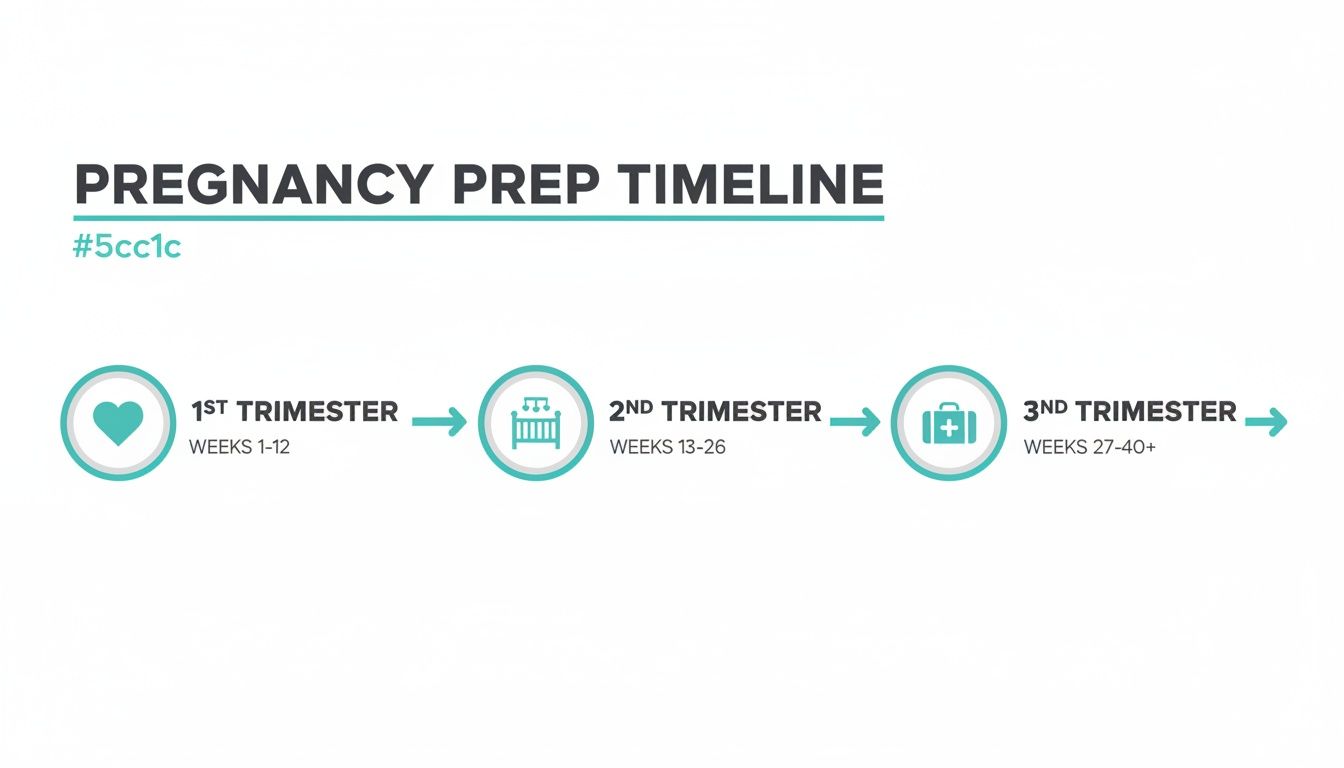
Seeing the journey mapped out like this helps turn that long list of to-dos into a clear, achievable plan.
The Third Trimester: The Final Countdown
As you enter the home stretch (week 28 to birth), your focus will naturally shift from long-term planning to immediate, practical preparations. Your energy might start to dip again, but that "nesting" instinct can kick in with a vengeance. This phase is all about logistics—getting everything in place for the big day and those first few weeks at home.
Prioritizing your health and the baby's is more critical than ever. Newborns are incredibly vulnerable; tragically, 2.3 million newborns died worldwide in 2022, which accounted for 47% of all deaths for children under five. The World Health Organization stresses that having skilled care at birth and attending prenatal visits in the last trimester can dramatically reduce these risks. It's so important to understand the latest findings on maternal and infant health as you head toward delivery.
Key Takeaway: Don't put off the critical final steps. Getting your car seat installed correctly and your hospital bag packed by 36 weeks will give you peace of mind, just in case your little one decides to make an early debut.
To help you stay on track, here is a quick summary of the essential tasks for each stage of your pregnancy.
Trimester-by-Trimester Preparation at a Glance
A summary of the essential tasks and focus areas for each stage of pregnancy to keep you organized.
| Trimester | Key Medical Tasks | Primary Planning Focus | Emotional & Physical Prep |
|---|---|---|---|
| First (Weeks 1-12) | Choose OB-GYN/midwife, first prenatal visit, discuss screening tests, start prenatal vitamins. | Review finances & insurance, share the news with family, begin thinking about childcare needs. | Rest! Manage nausea, focus on gentle movement, start a pregnancy journal. |
| Second (Weeks 13-27) | Anatomy scan (around 20 weeks), glucose screening test, regular check-ups. | Create baby registry, design and set up nursery, research and take childbirth classes. | Feel baby's first kicks, enjoy increased energy, plan a babymoon. |
| Third (Weeks 28-Birth) | More frequent check-ups (every 2 weeks, then weekly), Group B Strep test. | Finalize birth plan, pack hospital bag, install car seat, prep freezer meals. | Practice relaxation techniques, monitor baby's movements, get as much sleep as you can. |
Having a clear roadmap like this helps you focus on what's most important right now, so you can feel prepared and confident as you get closer to meeting your baby.
Creating a Safe and Cozy Nest for Your Baby
As you start getting into the more hands-on parts of baby prep, your focus will naturally shift to creating a space for your little one. Designing the nursery is easily one of the most exciting parts of the journey, but it's about so much more than just picking a cute theme. The real goal here is to build a safe, functional, and comforting environment for your new arrival.
Before you find yourself lost in a sea of paint swatches and adorable wall decals, let's start with the single most important part of any nursery: the sleep space. A safe place for your baby to sleep is completely non-negotiable—it's the foundation of a well-prepared nest.
The ABCs of Safe Sleep
The American Academy of Pediatrics (AAP) has very clear guidelines designed to reduce the risk of Sudden Infant Death Syndrome (SIDS) and other sleep-related infant deaths. The easiest way to remember the basics is with a simple acronym: A-B-C.
-
A is for Alone. Your baby should always be in their own separate sleep space, like a crib, bassinet, or play yard. While you might see gorgeous nursery photos on social media filled with plush toys, fluffy blankets, and pillows, these items are serious suffocation risks. A bare crib is the safest crib.
-
B is for on their Back. Always place your baby on their back for every sleep, whether it’s for a quick nap or for the night. Even if they can roll over on their own, you should still put them down on their back to start.
-
C is for in a Crib. The sleep space needs a firm, flat mattress with a tightly fitted sheet—and that’s it. You’ll want to avoid any soft bedding, crib bumpers, or sleep positioners.
The AAP has found that following these safe sleep recommendations can significantly lower the risk of SIDS. They also recommend that the safest place for your baby to sleep is in your room—but on a separate surface designed for infants—for at least the first six months.
Once you have the safe sleep essentials locked down, you can start building out the rest of the room. Keeping things organized and functional will make those 3 a.m. diaper changes so much smoother. For some practical tips that will save you time and stress, check out our detailed guide on how to organize a nursery.
Cutting Through the Baby Gear Clutter
The baby gear market is massive, and honestly, it can feel pretty overwhelming. It's easy to get sucked in and think you need every gadget and gizmo out there, but you really don't. The secret to preparing for a baby without going broke is to focus on the true essentials—the items you'll absolutely need from day one.
Here are the non-negotiables:
-
A Properly Installed Car Seat: You literally cannot leave the hospital without one. Make sure it's a new, unexpired car seat that meets current safety standards. We highly recommend having it inspected by a certified Child Passenger Safety Technician (CPST) to be certain it's installed correctly.
-
Essential Feeding Supplies: Whether you plan to breastfeed, formula-feed, or do a combination, you'll need some basics ready to go. This could be bottles, a breast pump, formula, plenty of burp cloths, and a comfortable chair for you.
-
Diapering Station: This doesn't have to be a fancy changing table. A simple dresser with a changing pad secured on top works perfectly. Just be sure to stock it with diapers, wipes, and diaper cream so everything is within arm's reach when you need it.
To Buy New, Borrow, or Skip?
Here's the thing: not everything needs to be brand new. Knowing where to save and where it's worth it to splurge is a game-changer for your budget.
| Category | Our Recommendation | Why It Matters |
|---|---|---|
| Buy New | Car Seat, Crib & Mattress | Safety is everything here. Older items may not meet current safety standards, could have been in an accident (car seats), or may have unseen wear and tear. |
| Borrow or Buy Secondhand | Baby Clothes, Bouncers, Swings, Toys | Babies outgrow these things incredibly fast. As long as they're clean and in good shape, borrowing or buying used is a smart, sustainable choice. |
| Probably Skip | Wipe Warmers, Diaper Genies, Fancy Gadgets | So many "must-have" items are more about convenience than true necessity. You can always buy them later if you find you really need them, but it’s wise to start simple. |
By prioritizing safety and function over fleeting trends, you can create a warm, welcoming space for your baby without all the clutter or financial stress. This practical approach to setting up your nest ensures you have everything you actually need and nothing you don't.
Getting Your Finances Ready for a Growing Family
A new baby brings endless joy, priceless cuddles, and… a whole new set of bills. Let's be real: preparing for a baby isn't just about stocking up on onesies. It's also about getting your finances in order. Tackling this now is one of the biggest gifts you can give your future, less-sleep-deprived self.
Think of it as financial nesting. When you have a solid plan in place, you can shift your focus from money worries to soaking up every precious newborn moment.
Crafting a Realistic Baby Budget
First things first, let's map out what this new adventure will actually cost. Baby expenses fall into two main buckets: the big one-time purchases and the ongoing, recurring costs that can really sneak up on you.
One-Time Costs:
- Nursery Furniture: Crib, mattress, changing table or pad.
- Big Gear: Stroller, car seat, baby carrier.
- Feeding Equipment: High chair, bottles, breast pump.
Recurring Costs:
- Diapers and Wipes: And trust me, there will be so. many. diapers.
- Formula: A major expense if you're not exclusively breastfeeding.
- Childcare: This is often the single biggest recurring cost for working parents.
- Clothing: They grow out of everything in the blink of an eye.
The USDA reports that families can expect to spend over $17,000 on child-related expenses in their baby's first year alone. That covers essentials like diapers (you'll need around 2,500, costing $800+) and formula (another $1,500+). Without a clear plan, it's easy to overspend, so using a baby registry is a great way to stay focused on the must-haves.
Reviewing Your Insurance and Legal Ducks
With a new family member on the way, it's time to take a hard look at your safety nets. Your insurance policies and legal documents are about to become much more important.
Start by calling your health insurance provider. Get clear answers to these specific questions:
- What are my copays and deductible for prenatal care, delivery (both vaginal and C-section), and any hospital stays?
- How do I add my newborn to my policy, and what is the deadline to do so? (This is critical—miss it and you could face huge bills.)
- What pediatric and specialist visits are covered for the baby's first year?
Pro Tip: Don't stop at health insurance. This is the perfect time to explore life insurance or increase your existing coverage. It provides a crucial financial backstop for your family's future, ensuring they're protected no matter what.
As you get your finances in order, it's a good idea to create a complete guide to your family care plan. This process helps you think through all the health and financial what-ifs, creating a much more secure foundation for everyone.
Planning for the Bigger Picture
It might feel a little surreal to think about college when you haven't even met your baby yet, but planning for the long term now can make a huge difference down the road. Small, consistent contributions can grow into a significant sum over 18 years.
Here are a few future-focused financial moves to put on your list:
- Update Your Will: If you don't have one, get one. If you do, update it to name a legal guardian for your child. This is a non-negotiable step to ensure your child will be cared for by someone you trust.
- Check Beneficiaries: Take a few minutes to review the beneficiaries on your retirement accounts, life insurance policies, and other financial accounts. Add your new child.
- Open a Savings Account: Look into options like a 529 college savings plan. These accounts offer tax advantages and are specifically designed for education expenses. Even starting with a small monthly contribution can build a strong foundation for their future.
Building this financial framework might not be as fun as picking out nursery decor, but the peace of mind it provides is invaluable. It clears the path for you to enjoy the journey of parenthood with one less thing to worry about.
Preparing Your Mind, Body, and Relationship
The nursery is picture-perfect, the car seat is installed, and you’ve got a handle on the finances. But in the whirlwind of practical prep, it's so easy to overlook the most important project of all: you. Getting ready mentally, physically, and as a couple is the real foundation for welcoming a new baby.
This isn't about achieving some state of perfect zen before the beautiful chaos hits. It’s about building resilience, opening lines of communication, and giving yourself the same care and attention you're already planning to give your little one.
Building Your Village Before You Need It
You've heard the old saying, "It takes a village to raise a child," and it has never been more true. In the sleep-deprived blur of newborn life, a strong support system isn't a luxury; it's an absolute necessity. The time to assemble your team is now, before you’re too tired to even think about asking for help.
Building your support system is one of the most crucial things you can do. Research indicates that social support can significantly reduce the risk of postpartum depression, a condition that affects up to 1 in 7 new mothers. Having a network in place makes it easier to navigate the challenges of the fourth trimester.
So, who is in your village? Think about it in terms of roles:
- The Practical Helper: This is the friend who will drop off a meal, walk the dog, or run to the store for diapers without you even having to ask.
- The Emotional Supporter: This is the person you can call in tears at 3 a.m. who won't judge—they'll just listen and tell you you're doing a great job.
- The Veteran Parent: This is the friend or family member who has been through it. They can offer that crucial been-there-done-that advice (and gently remind you that this phase, too, shall pass).
Jot down a list of these people now. Better yet, have a real conversation with them about how they might be able to help. Something as simple as setting up a meal train or a schedule for visitors can take a ton of pressure off later.
Prioritizing Your Mental and Physical Health
Pregnancy and the postpartum period are a massive physical and hormonal marathon. Taking care of your body and mind isn't selfish—it's essential prep work. Your well-being is directly tied to your baby's, so it absolutely needs to be a top priority.
It’s so important to understand the signs of perinatal mood and anxiety disorders (PMADs), which can show up during pregnancy or after birth. This isn't just the "baby blues"; we're talking about persistent sadness, anxiety, intrusive thoughts, or overwhelming irritability. Knowing the symptoms is the first step to getting help. If you're concerned, don't hesitate to speak with your healthcare provider.
On the physical side, planning for your own recovery is just as important as creating a birth plan.
Key Takeaway: Your postpartum recovery deserves just as much attention as your baby. You cannot pour from an empty cup. Stocking up on your own recovery supplies is a non-negotiable act of self-care.
Set up a little postpartum care station for yourself in the bathroom with everything you’ll need. And please, don't forget the freezer! Prepping a stash of easy, nourishing meals is one of the kindest things you can possibly do for your future self.
Strengthening Your Partnership for the Road Ahead
Your relationship with your partner is about to undergo one of the biggest shifts it will ever experience. A tiny human who requires around-the-clock care has a way of doing that. The secret to navigating this new dynamic is getting proactive with your communication and teamwork.
Don't wait until you're in the thick of it to discuss the big stuff. Have conversations now about how you'll divide and conquer. Who's on night duty? Who’s the designated diaper guru? How will you make sure you both get a real break?
Here are a few conversation starters to get you going:
- What are our biggest fears about this transition?
- How will we handle disagreements when we’re both completely exhausted?
- How can we make sure we still connect as a couple, even if it's just for five minutes a day?
Putting in this work now builds a stronger, more resilient foundation for your new life as a family. It’s all about being a team, sharing the load, and remembering that you’re in this beautiful, messy, wonderful adventure together.
The Final Countdown to Your Baby's Arrival
As your due date gets closer, you might feel that famous "nesting" instinct kick in. It's totally normal. This is the perfect time to switch gears from big-picture planning to the nitty-gritty details of birth and those first few wild, wonderful weeks at home.
Think of this as your go-time playbook. A little bit of prep now will make the transition into parenthood feel so much smoother.
The first, most crucial task? Get that hospital bag packed and waiting by the door. Trust me, you'll be glad you did when you aren't scrambling to find a phone charger between contractions.
Packing Your Go-Bag Like a Pro
Packing for the hospital isn't just about tossing a few things in a duffel bag. It's about bringing along a curated little kit of comforts that will make your stay so much better. For a really deep dive into every last thing you might want, our complete hospital bag checklist has you covered.
But let's start with a high-level look at the essentials for you, the baby, and your partner.
Essential Hospital Bag Checklist
Having a well-organized bag can bring a huge sense of calm. Here's a quick-glance table to make sure you've got the basics covered for everyone.
| Category | Items for Mom | Items for Baby | Items for Partner |
|---|---|---|---|
| Documents | Your ID, insurance card, and a few copies of your birth plan | Your pediatrician's contact information | A list of people to call or text with the good news |
| Comfort | Comfy PJs or a robe, cozy socks, and definitely lip balm | A special going-home outfit and a soft swaddle blanket | A change of clothes and maybe their own pillow from home |
| Toiletries | Toothbrush, hair ties, and any travel-size basics you can't live without | N/A (the hospital provides all the essentials) | Toothbrush, deodorant, and any personal items |
| Extras | An extra-long phone charger, your favorite snacks, headphones | The infant car seat, properly installed in your car! | Their own snacks, a reusable water bottle, and a charger |
Aim to have this bag packed and ready by 36 weeks. Just knowing it's there will give you incredible peace of mind as you wait for the big day.
Crafting a Flexible Birth Plan
A birth plan is a fantastic tool for thinking through your preferences for labor and delivery. It's a great way to open up a conversation and communicate your wishes to your doctors, midwives, and doula.
But here’s the most important thing to remember: the key word is flexible.
Birth is wonderfully unpredictable, and the ultimate goal is always a healthy baby and a healthy mom. Think of your plan as a guide, not a rigid set of rules.
Here are a few things to consider including:
- Pain Management: Are you hoping to get an epidural right away, or do you want to try other methods like a birthing ball or hydrotherapy first?
- Labor Environment: What helps you relax? Maybe it’s dim lighting, a specific music playlist, or just the freedom to walk around the room.
- Support People: Who do you want in the room with you during labor and delivery?
- Post-Delivery Care: Do you want immediate skin-to-skin contact? Are there any newborn procedures you’d prefer to delay for a bit?
Talk through all of these points with your provider well before your due date. This helps get everyone on the same page and ensures your expectations are realistic for your specific situation.
Prepping for Your First Days at Home
The prep work doesn't stop once you've left the hospital. Those first few days and weeks at home are a massive adjustment, and setting yourself up for success beforehand will make all the difference. As you get into this final stage, checking out a comprehensive guide to preparing for a newborn can be a lifesaver, ensuring you've covered all your bases.
One of the best pieces of advice I can give is to create "stations" around your home.
Key Insight: Don't try to keep everything in the nursery. Having mini-stations for diapering, feeding, and your own recovery in the main living areas will save you countless steps and a lot of precious energy.
Your Postpartum Care Station:
Set up a small basket in your main bathroom with everything you need for your recovery. This means pads, a peri bottle, pain relief spray, and comfortable underwear. Don't make yourself go searching for these essentials when you're sore and exhausted.
The Feeding Nook:
Whether you're planning to breastfeed or bottle-feed, carve out a cozy spot with everything within arm's reach. Stock a small table or rolling cart with burp cloths, snacks for you, a giant water bottle, your phone charger, and any feeding supplies like nipple cream or bottles.
Diaper Duty Central:
This one's a game-changer. Keep a small, portable caddy stocked with diapers, wipes, and diaper cream on each level of your home. This simple trick means you won't have to trudge up to the nursery for every single change. A little bit of smart planning now will make your transition into parenthood feel much calmer and more confident.
Common Questions About Preparing for a New Baby
Even with the most detailed checklists, you're bound to have questions pop up. That’s just part of the process when you're figuring out how to prepare for a new baby. It’s completely normal.
Let's dive into some of the most common things expecting parents worry about. Getting solid, straightforward answers can make a world of difference, helping you handle those final details with more confidence and less stress.
When Is the Best Time to Start Buying Baby Stuff?
Most parents find the sweet spot for starting to shop is during the second trimester. By then, the risk of miscarriage has dropped significantly, and you'll probably have a bit more energy than you did in those first few months. Spreading out the purchases also helps soften the blow to your budget.
Key Takeaway: Try to have all the absolute essentials—like the car seat, a safe place for the baby to sleep, and your basic feeding supplies—bought and ready by week 36. That way, you’re not scrambling if your little one decides to arrive ahead of schedule.
How Many Newborn Clothes Do I Actually Need?
It is so easy to go overboard buying tiny, adorable newborn-sized clothes. But trust me, babies grow astonishingly fast. You really don't need an entire dresser full of outfits for the first month.
A good, practical starting point is:
- 5-7 one-piece sleepers: The zip-up kind will become your best friend during those 3 a.m. diaper changes.
- 5-7 bodysuits (onesies): These are the workhorses of a baby’s wardrobe—perfect for layering or just wearing on their own when it’s warm.
- A few pairs of pants, socks, and hats: Keep it simple and functional.
Don't forget, friends and family love to gift baby clothes, and you'll be doing laundry more often than you can probably imagine right now. It’s much smarter to start small.
What Should I Do to Prepare My Pet for the New Baby?
Bringing a baby home to a house with a furry friend requires a little planning. The trick is to start early and introduce changes gradually so your pet isn't overwhelmed.
A few weeks before your due date, start getting your pet used to baby sounds and smells. You can play recordings of a baby crying at a low volume and let them sniff a blanket with a dab of baby lotion on it. Also, if the nursery is currently their favorite hangout spot, it's a good idea to start gently limiting their access to that room.
That first introduction is a big moment. Have your partner go in and greet your pet first, while you wait outside with the baby. This lets your pet get their big, happy wiggles out before the main event. A slow, calm, and steady approach is the best way to help everyone adjust and build a peaceful home.
Preparing for a new baby is a huge, exciting, and sometimes overwhelming process. By breaking it down trimester by trimester and focusing on practical steps, you can feel confident and ready for the amazing journey ahead. What's the one piece of advice you've received that's been a game-changer for you? Share it in the comments below—we’d love to hear it!
At Hiccapop, we get it—preparing for a baby is a journey filled with questions and a whole lot of love. We're here to offer the smart, safe, and practical solutions you need, from nursery must-haves to on-the-go gear, so you can focus on the incredible adventure ahead. Take a look at our innovative products designed for modern parents at https://hiccapop.com.