


The Best Way to Organize Baby Clothes and Finally Conquer the Chaos
That ever-growing mountain of tiny clothes? It’s more than just a laundry problem—it’s a time thief, and for new parents, time is everything. The best way to organize baby clothes isn't about creating a picture-perfect closet. It's about building a simple, sustainable system that actually works for your real life.
This means sorting by size and season, using storage that makes sense for your space, and having a plan to rotate clothes as your baby grows. Think of it less as a one-time cleaning project and more as creating a stress-free wardrobe that saves you time, money, and your sanity.
Why a Smart System Beats a Perfect Closet
Let's get real for a second. Between diaper changes and 3 AM feedings, the last thing on your mind is a perfectly curated, color-coded closet. The goal here isn't an Instagram-perfect nursery; it's a functional space that makes your day-to-day life a little bit easier. A solid organization plan gives you back precious minutes and, just as importantly, mental energy.
It’s no surprise parents feel overwhelmed. The global baby apparel market is projected to hit a staggering USD 227 billion in 2024. That flood of cute outfits means the average newborn can outgrow 15-20 pieces of clothing in the first month alone. This leads to the kind of clutter that adds stress for 68% of new parents.
The Real Benefits of Getting Organized
Putting a system in place for all those tiny garments does way more than just clear up a messy corner. Honestly, it’s a form of self-care for exhausted parents.
- Saves Precious Time: You’ll never again have to frantically dig for a specific onesie while your baby is getting fussy on the changing table.
- Reduces Stress: Knowing exactly where everything is brings a much-needed sense of calm to an otherwise chaotic (but wonderful!) time.
- Saves Money: You won't accidentally re-buy items you already have but couldn't find. Plus, you’ll know exactly when it’s time to pull out the next size up from storage.
- Makes Laundry Less of a Chore: When every item has a home, putting away clean clothes becomes a quick, almost mindless task instead of a dreaded project.
If you’re looking for strategies that grow with your child, this realistic guide on how to organize kids' clothes offers some great, adaptable tips.
Ultimately, a good system isn't just about the clothes; it's about making your daily routines smoother. And if you want to expand this newfound calm to the rest of the room, we have a bunch of other essential baby nursery organization ideas to help you create a truly functional space.
Before we dive into the nitty-gritty, let's break down the core philosophy behind a manageable system. I like to think of it as four key pillars that support everything else.
The Four Pillars of Baby Clothes Organization
| Pillar | Why It Matters | Quick Tip |
|---|---|---|
| Sort & Declutter | Creates a clean slate and ensures you only keep what's useful. | Sort by size first, then by season. Anything that doesn't fit goes out immediately. |
| Strategic Storage | Makes the most of your space, whether it's a big closet or a small dresser. | Use drawer dividers and closet organizers to categorize and contain everything. |
| Label Everything | Eliminates guesswork and helps anyone (partners, grandparents) find what they need. | Use simple, clear labels on bins, drawers, and hangers. "0-3 Months" is perfect. |
| Rotate & Maintain | Keeps the system functional as your baby grows at lightning speed. | Set a calendar reminder every 2-3 months to swap out sizes and reassess. |
Mastering these four concepts is the secret to getting organized and, more importantly, staying organized. Now, let’s get started.
The Great Sort-Out: A Decluttering Method That Works
Before you can even dream of neatly folded stacks and labeled bins, you’ve got to face the mountain of tiny clothes. The secret to organizing baby clothes doesn't start with folding—it starts with a decisive, guilt-free sorting session. Let's turn that overwhelming pile into manageable categories right on your floor.
Find a big, clear space to work. Grab some painter's tape or even just sticky notes and label four distinct zones on the floor: Keep, Store, Donate, and Hand-Me-Down. This simple visual guide is your new best friend; it keeps you focused and stops everything from blending back into one giant, confusing heap.
First, Sort by Size, Then by Type
I can't stress this enough: sort everything by size first. Don't get sidetracked by seasons or styles just yet. Make a pile for Newborn, another for 0-3 months, 3-6 months, and so on. This immediately breaks the massive task into smaller, less intimidating goals. A huge pile of "baby clothes" feels impossible, but a "3-6 month" pile? Totally doable.
Once you have your size stacks, then you can divide and conquer. Take that 3-6 month pile and separate it into logical groups:
- Onesies & Bodysuits: The daily workhorses of your baby’s wardrobe.
- Sleepers & Pajamas: Keep the day and night stuff separate.
- Pants & Bottoms: Makes it easy to grab and pair.
- Tops & Sweaters: For layering up on cooler days.
- Special Outfits: Think dresses, holiday gear, and anything a bit too fancy for everyday spit-up.
This layered approach stops you from getting bogged down in tiny decisions. Your only job at the beginning is to match the size on the tag to the right pile. Easy.
This simple workflow is all about creating a system you can actually stick with. It’s a clear, three-step cycle that makes ongoing management a breeze.
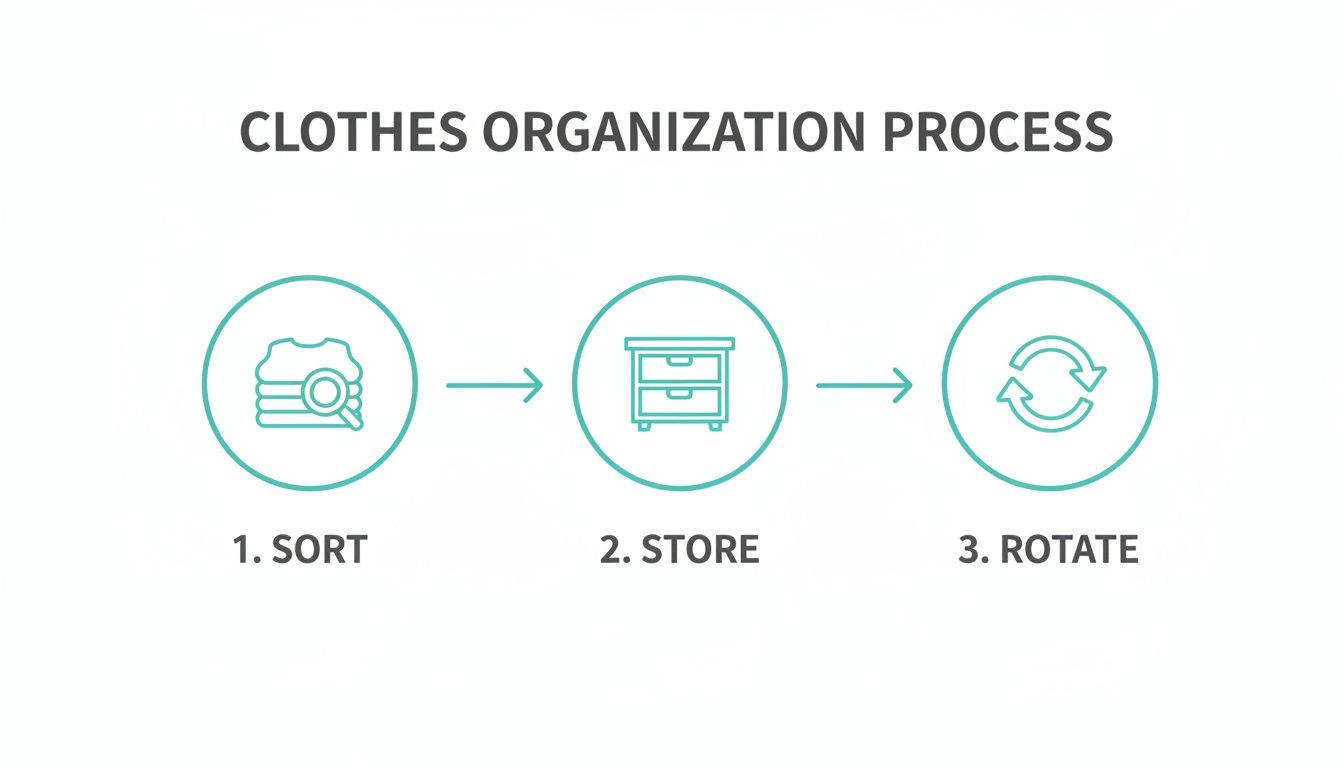
As you can see, the key is a continuous cycle: sort what you have now, store what you’ll need soon, and rotate everything as your baby grows.
What About Those Sentimental Items?
We all have them. The impossibly tiny coming-home outfit, the first holiday sweater, that handmade bonnet from Grandma. These pieces are pure memory, but they can quickly clog up precious drawer space you need for everyday essentials.
My advice? Create a dedicated, separate home for these keepsakes. A beautiful memory box or a specially marked bin tucked away in a closet works perfectly. This honors their importance without wrecking the functional system you just built.
By giving sentimental items their own special place, you can cherish them without letting them get in the way of the clothes your baby is actually wearing right now. It’s all about creating a practical, curated wardrobe that serves your current needs while safely preserving those precious memories for later.
Choosing Your Storage Solutions for Dressers and Closets
Alright, you’ve conquered the great sort-out, and now it's time for the fun part: giving every tiny item a home. This is where your nursery transforms from a collection of cute things into a truly functional space.
Getting your storage strategy right for dressers and closets is the secret to turning chaos into calm. You're creating intuitive zones that anyone—your partner, a grandparent, or a babysitter—can navigate with ease.
Disorganization is more than just messy; it’s a time thief. With parents in the US buying 50-60 new clothing items for their baby each year, a lack of system means 20-30% of those cute outfits can go completely unused, simply because they get lost in the shuffle. It's no wonder that 72% of caregivers prefer vertical storage and labeled bins for their efficiency.
Making the Most of Dresser Drawers
Think of your dresser as prime real estate for daily essentials. This is where you’ll store the clothes you reach for multiple times a day, so accessibility is everything. The goal? To see everything at a glance without having to dig.
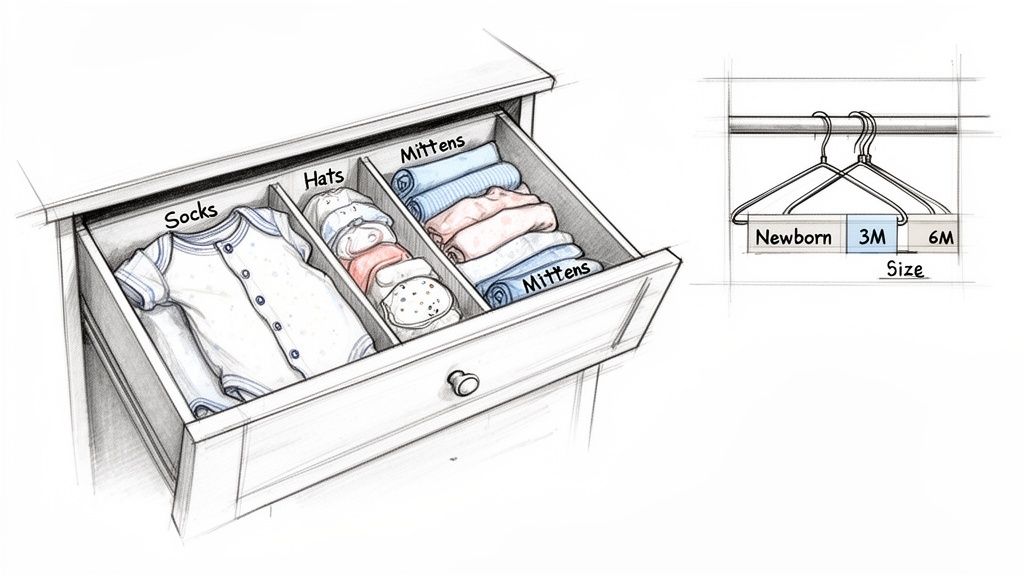
Here's how to make it happen:
- Embrace File Folding: Instead of stacking onesies and sleepers, fold them into neat little rectangles and "file" them vertically in the drawer. It’s like a filing cabinet for clothes, letting you see every single item at once.
- Dividers Are Your Best Friend: Drawer dividers are non-negotiable for tiny baby items. Use them to create dedicated compartments for socks, mittens, hats, and bibs. No more single socks lost to the laundry abyss!
- Assign a Drawer for Everything: Give each drawer a specific job. Maybe the top drawer is for diapers and wipes, the middle for current-size onesies and sleepers, and the bottom for pants and extra layers. Find more ideas to maximize your space in our guide on nursery storage solutions.
Pro Tip: Roll, don't fold, your baby's pajamas and sleepers. They fit perfectly into drawer dividers, stay wrinkle-free, and are incredibly easy to grab during those bleary-eyed 3 AM changes.
Optimizing Your Closet Space
The closet is perfect for items you don't need every second, like special occasion outfits, bulky outerwear, and the next size up. With a few smart tools, you can maximize every inch of vertical and horizontal space.
Slim, velvet hangers are a great start; they save a surprising amount of space and prevent tiny clothes from slipping off. But the real game-changer is creating a visual roadmap of your baby's wardrobe.
Use closet rod dividers labeled with sizes: Newborn, 0-3M, 3-6M, and so on. This simple visual cue instantly shows you what fits now and what’s coming next, preventing you from forgetting about adorable outfits until they’re too small. For a truly next-level nursery, looking into specialized walk-in closet organization systems can make a world of difference.
Storage Solution Smackdown: Dresser vs. Closet
Deciding what goes where can feel like a puzzle. Both dressers and closets have their strengths, and using them together is the key to an efficient system. This table breaks down where different items are happiest.
| Item Type | Best for Dresser Drawers | Best for Closet Hanging |
|---|---|---|
| Daily Wear | Onesies, sleepers, pajamas, leggings, t-shirts | - |
| Small Items | Socks, mittens, hats, bibs, burp cloths | - |
| Outerwear | Sweaters, hoodies (if drawer space allows) | Jackets, coats, snowsuits |
| Special Occasions | - | Dresses, suits, delicate items |
| Future Sizes | Folded and stored in bins (if closet is full) | Next-size-up outfits, organized by size |
| Bulky Items | Blankets, swaddles, sleep sacks | - |
Ultimately, a well-organized closet handles the bigger picture—special items and future sizes—while the dresser manages the day-to-day grind. This one-two punch keeps everything in its place and your sanity intact.
Mastering the Rotation System to Stay Ahead of Growth Spurts
Babies grow so fast it can feel like you’re constantly swapping out their entire wardrobe. One day a sleeper fits perfectly, and the next, their toes are scrunched up. The secret to managing this is a proactive rotation system that keeps you from getting caught off guard by a sudden growth spurt.
This isn't just about storage; it's about anticipating what's next. A good system turns a potential late-night panic for a bigger onesie into a smooth, effortless transition. All it takes are two simple, yet essential, bins.
Create the 'Too Small' Bin
First things first, you need a designated spot for clothes your baby has just outgrown. I recommend placing a dedicated basket or bin—your 'Too Small' bin—somewhere convenient in the nursery, like the bottom of the closet or in a nearby corner.
The rule is simple: the moment you realize an item is getting snug, toss it directly into this bin. Don't put it back in the drawer. Don't let it get mixed in with the laundry only to be put away again by mistake. This one tiny habit saves you from constantly sorting through clothes that no longer fit.
Once the bin is full, then you can deal with it. Go through and decide what to store for a future baby, what to hand down to a friend, and what to donate. Batching the task like this saves you from making constant, tiny decisions every single day.
Prepare the 'Up Next' Bin
Just as important is the 'Up Next' bin. This is where you’ll keep the next size up, all washed, folded, and ready to go. The key is having everything prepped ahead of time.
When you start noticing that the current size is getting tight, you can just pull out this bin and seamlessly swap the new clothes into the dresser and closet. No frantic, middle-of-the-night laundry sessions required. Trust me, this bin is your secret weapon for staying one step ahead.
By keeping the next size of clothes washed and ready, you eliminate the stress of a sudden growth spurt. It transforms a potential crisis into a simple swap, ensuring your baby is always comfortable and your system remains efficient.
Long-Term Storage for Future Sizes
For clothes you won't need for several months or even a year—like hand-me-downs or off-season outfits—proper storage is critical. You want to protect them from moisture, pests, and dust.
- Vacuum-Sealed Bags: These are a game-changer for bulky items like winter coats and sweaters. They compress everything down and save a massive amount of space.
- Weathertight Bins: After sealing clothes in bags, I always place them inside sturdy, weathertight plastic bins. Steer clear of cardboard boxes, which can attract pests and get ruined by moisture.
- Clear Labeling: Be specific! Label each bin on multiple sides with the size and season (e.g., "12-18M Winter"). This makes finding exactly what you need later a total breeze. You can find more ideas for setting up your nursery in our guide to the essential baby items list.
This simple two-bin system, combined with smart long-term storage, ensures your organization method grows right alongside your baby, keeping the chaos to a minimum.
Daily Habits to Keep the Clothing Chaos at Bay
Let's be real—a perfectly organized system is great, but it's only as good as your ability to maintain it. As a tired parent, the last thing you need is a complicated upkeep routine. The secret is building a few simple habits that stop the chaos from creeping back in before it even starts.
These aren't big, time-consuming chores. Think of them as quick, almost automatic actions that keep things in order with just a few minutes of effort each day. They're small investments that will pay you back in saved time and a whole lot less stress.
The sheer volume of baby clothes can make anyone feel overwhelmed. With 140 million babies born globally each year, those tiny wardrobes expand fast. A single infant might need 7-10 outfit changes a day, which can easily add up to over 300 loads of laundry a year. That constant cycle can lead to disorganized spaces that increase stress for 55% of families. But here's the good news: parents who stick to a system can save up to 30% by not having to repurchase items they thought they lost.
The Power of Labeling Everything
Your best friend in the fight against clutter is a simple label. When you're running on three hours of sleep, you don't want to be guessing which drawer holds the 3-6 month sleepers. Make it painfully obvious for yourself, your partner, and any grandparent who comes to help.
You don't need a fancy label maker, though they can be fun. A roll of masking tape and a marker get the job done just as well. Just stick a label on the front of each dresser drawer or the outside of every storage bin so you know exactly what’s inside with a quick glance.
Adopt the One-Touch Laundry Rule
This is a game-changer. The "one-touch" rule is simple: once clean laundry comes out of the dryer, you touch it only one more time—to put it away in its proper spot. That's it. No more letting clean clothes live in the laundry basket for three days.
A small load of baby clothes takes less than five minutes to fold and put away. But letting it pile up turns it into a dreaded 30-minute chore you’ll keep putting off.
Create a Stain Station
Spit-up, blowouts, and a whole rainbow of food messes are just part of the deal. Instead of letting a stained onesie get buried in the hamper where the stain will set for good, create a small, accessible spot to deal with it right away.
- Keep a small basin or bucket in the nursery or laundry room.
- Toss stained items in there immediately with a little bit of your favorite stain remover.
- This little habit prevents outfits from being ruined and saves you from frantic scrubbing later.
By building these tiny routines—labeling, one-touch laundry, and a stain station—you're not just organizing for today. You’re creating a system that practically runs itself, which is the best way to organize baby clothes for the long haul.
Your Questions Answered: Baby Clothes FAQs
Even with a great system, you're bound to have questions. That’s perfectly okay! You're learning to navigate a whole new world of tiny socks and even tinier hangers. Here are a few common questions I hear from parents all the time.
How many clothes do I really need for a newborn?
The honest answer? Probably less than you think. It's so easy to get carried away buying every adorable outfit you see, but newborns grow at lightning speed, often outgrowing clothes in just a few weeks. Prioritizing practicality will save you from a lot of clutter and wasted money.
Here's a good baseline for the newborn size:
- 7-10 onesies or bodysuits: These will be your daily go-to items.
- 5-7 sleepers: Trust me, zippers are a lifesaver during those 3 a.m. diaper changes.
- A few pairs of pants or leggings: Perfect for mixing and matching with bodysuits.
- Lots of socks: Because one always, always seems to vanish.
The real secret isn't having a massive wardrobe; it's having a reliable laundry routine. A solid rotation of essential, comfy pieces is far more useful than a drawer overflowing with outfits your baby wore just once.
What's the best way to store hand-me-downs?
When you're storing clothes for the long haul, your biggest enemies are moisture, pests, and dust. Protecting those future treasures is actually pretty straightforward with the right approach.
First things first: wash and thoroughly dry every single item. Any leftover dampness is just asking for mildew.
Once everything is clean and dry, sort by size and season. I'm a huge fan of vacuum-sealed bags because they save an incredible amount of space. Pack those bags into weathertight plastic bins—skip the cardboard, as it can attract pests and absorb moisture from the air. Label each bin clearly on a few different sides (e.g., "Girl - 9-12M - Summer") and stash it somewhere cool and dry. A closet or under a bed is perfect; a damp basement or a hot attic is not.
Should I wash new baby clothes before organizing them?
Yes! One hundred percent, yes. Think of this as a non-negotiable rule for your baby’s comfort and safety. New clothes often have chemicals and finishing agents from the factory that can really irritate a baby's delicate skin.
Washing everything in a gentle, fragrance-free baby detergent gets rid of those potential irritants, plus any germs picked up in the store or during shipping. It also pre-shrinks the fabric, so you'll know how an outfit really fits after that first wash. My rule of thumb has always been simple: nothing goes into the nursery drawers or closet until it’s been through the wash.
Say Goodbye to Clothing Chaos for Good
Organizing baby clothes doesn't have to be another overwhelming task on your endless to-do list. By focusing on a simple, functional system—sort, store, and rotate—you can reclaim your time and reduce daily stress. Remember, the goal isn’t a flawless closet; it’s a sustainable routine that gives you more mental space to enjoy those precious moments with your little one.
With these tips, you're not just tidying up a dresser; you're creating a calm, manageable environment that supports your family. You’ve got this!
What's your biggest baby clothes organization challenge? Share your tips or questions in the comments below—we’d love to help!
Keeping your baby's world organized and safe is at the heart of what we do at Hiccapop®. From nursery organizers to travel essentials, our products are designed by parents, for parents, to make life a little bit easier.