


Your Essential Baby Items List for New Parents
Getting ready for a new baby can feel like you're preparing for a mission to Mars, but it doesn't have to be that complicated. Your essential baby items list really just comes down to five main areas: Nursery, Feeding, Diapering, Health & Safety, and Travel. If you focus on getting these things sorted for the first three months, you'll be more than prepared and can avoid drowning in a sea of trendy gadgets you might never use.
Building Your Essential Baby Items List
Welcome to the wild and wonderful world of preparing for a baby! If you’ve ever walked into a baby store and felt your brain short-circuit from the sheer number of options, you're not alone. It's completely normal to feel overwhelmed.
But here’s a little secret from those of us who have been there: you don’t need it all right away. The trick is to build a solid foundation of must-have items that will see you through those first chaotic, beautiful months. This way, you can buy other things later on, once you actually figure out what you need.
Focusing On The Core Categories
Think of this checklist as your newborn survival kit, not a license for an unlimited shopping spree. By sticking to the absolute basics, you’ll create a safe and comfortable world for your new arrival without the clutter. We’ve organized everything into a few simple categories to keep things manageable.
- Nursery & Sleep: This is all about where your baby will sleep. From the crib and mattress to blackout curtains, a safe sleep space is your #1 priority.
- Feeding: Whether you’re planning to breastfeed, bottle-feed, or do a mix of both, having the right gear ready makes those 2 a.m. feedings go a lot more smoothly.
- Diapering & Bathing: Let's talk hygiene. A well-stocked changing station and a few simple bath essentials are completely non-negotiable.
- Health & Safety: Things like a good thermometer and some basic baby-proofing supplies will give you invaluable peace of mind.
- Travel & Gear: A properly installed car seat and a practical diaper bag are your keys to freedom. They make getting out of the house with a newborn possible.
And as you start stocking up on adorable onesies and tiny socks, don’t forget they need special care. This guide on the dos and don'ts of washing baby clothes is a lifesaver for keeping everything soft and clean for your baby's sensitive skin.
To simplify things even further, this visual breaks down what a truly functional nursery looks like.
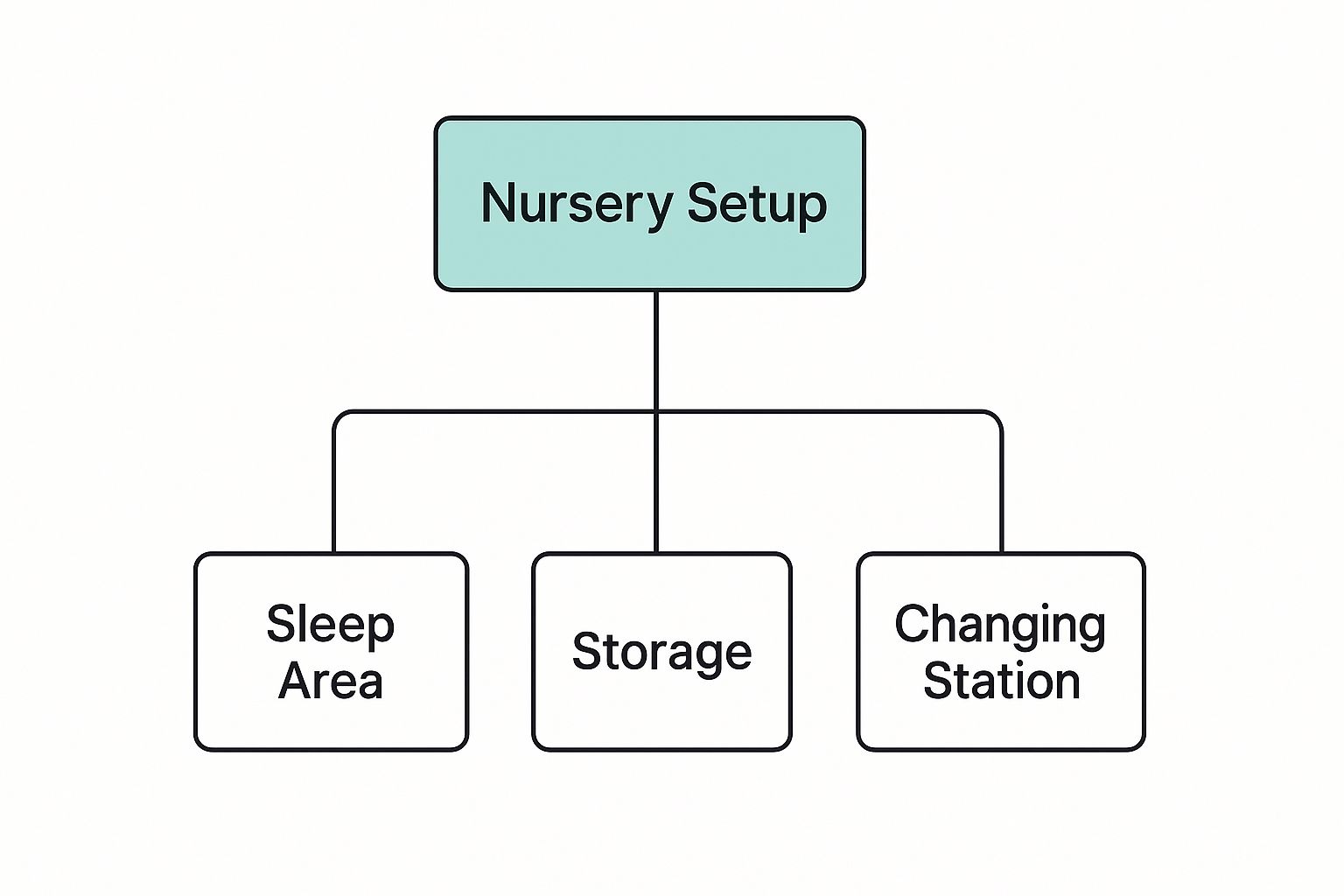
As you can see, it really boils down to three key zones: a safe place for sleep, a streamlined changing station, and smart storage. Get those three things right, and you'll have a calm, organized space for you and your little one.
For a quick reference, we’ve put together a table summarizing the absolute must-haves for those crucial first three months.
Quick-Glance Essential Baby Items Checklist
| Category | Must-Have Items | Why It Is Essential |
|---|---|---|
| Nursery & Sleep | Crib or bassinet, firm mattress, fitted sheets | Provides a safe and AAP-approved sleep environment, which is critical for SIDS prevention. |
| Feeding | Bottles, nipples, formula or breast pump, nursing pillow | Ensures your baby can be fed consistently and comfortably, day or night. |
| Diapering | Diapers (newborn size), wipes, changing pad, diaper cream | Keeps your baby clean, dry, and comfortable, preventing diaper rash and irritation. |
| Health & Safety | Digital thermometer, nasal aspirator, infant nail clippers | Allows you to monitor your baby's health and handle minor issues like stuffy noses safely. |
| Travel & Gear | Infant car seat, stroller or baby carrier, diaper bag | Essential for safe transportation from day one and for getting out and about with your baby. |
Focusing on these core items first will ensure you're ready for your baby's arrival without unnecessary stress or expense. You can always add more specialized items as you get to know your little one's specific needs.
Setting Up a Safe and Serene Nursery
Your baby's nursery is so much more than just a room; it’s their first little corner of the world. The goal is to create a space that’s both a peaceful sanctuary and a fortress of safety. Let’s be real, you're going to spend a lot of time in here, so making it functional and calming is a win for everyone.
The absolute centerpiece, where your baby will (hopefully) spend hours of quiet slumber, is the crib. This is one area where you simply can't cut corners. A new, safety-certified crib is a non-negotiable part of your must-have list.
When you're shopping, keep an eye out for certifications from groups like the JPMA (Juvenile Products Manufacturers Association). This is your assurance that it meets current safety standards. You’ll want to pair it with a firm, flat mattress that fits snugly inside the crib frame—if you can fit more than two fingers between the mattress and the crib side, it’s not a safe fit.
The Safe Sleep Foundation
The American Academy of Pediatrics (AAP) provides clear, life-saving guidelines to reduce the risk of SIDS (Sudden Infant Death Syndrome). The easiest way to remember them is the "ABCs of Safe Sleep": Alone, on their Back, in a Crib.
- Alone: This means no blankets, pillows, bumpers, or adorable stuffed animals in the crib. These items, while cute, pose a suffocation risk. A simple fitted sheet is all you need on the mattress.
- On Their Back: Always, always, always place your baby on their back to sleep, for every nap and every night.
- In a Crib: The baby should have their own separate sleep space, like a crib, bassinet, or pack 'n play. The AAP recommends keeping this sleep space in the parents' room for at least the first six months.
It might feel a little stark to have such a bare crib, but trust me, this minimalist approach is the gold standard for safety. If you're worried about keeping your baby warm, a swaddle or a wearable sleep sack is a fantastic and perfectly safe alternative to a blanket.
Beyond the Crib: Practical Nursery Must-Haves
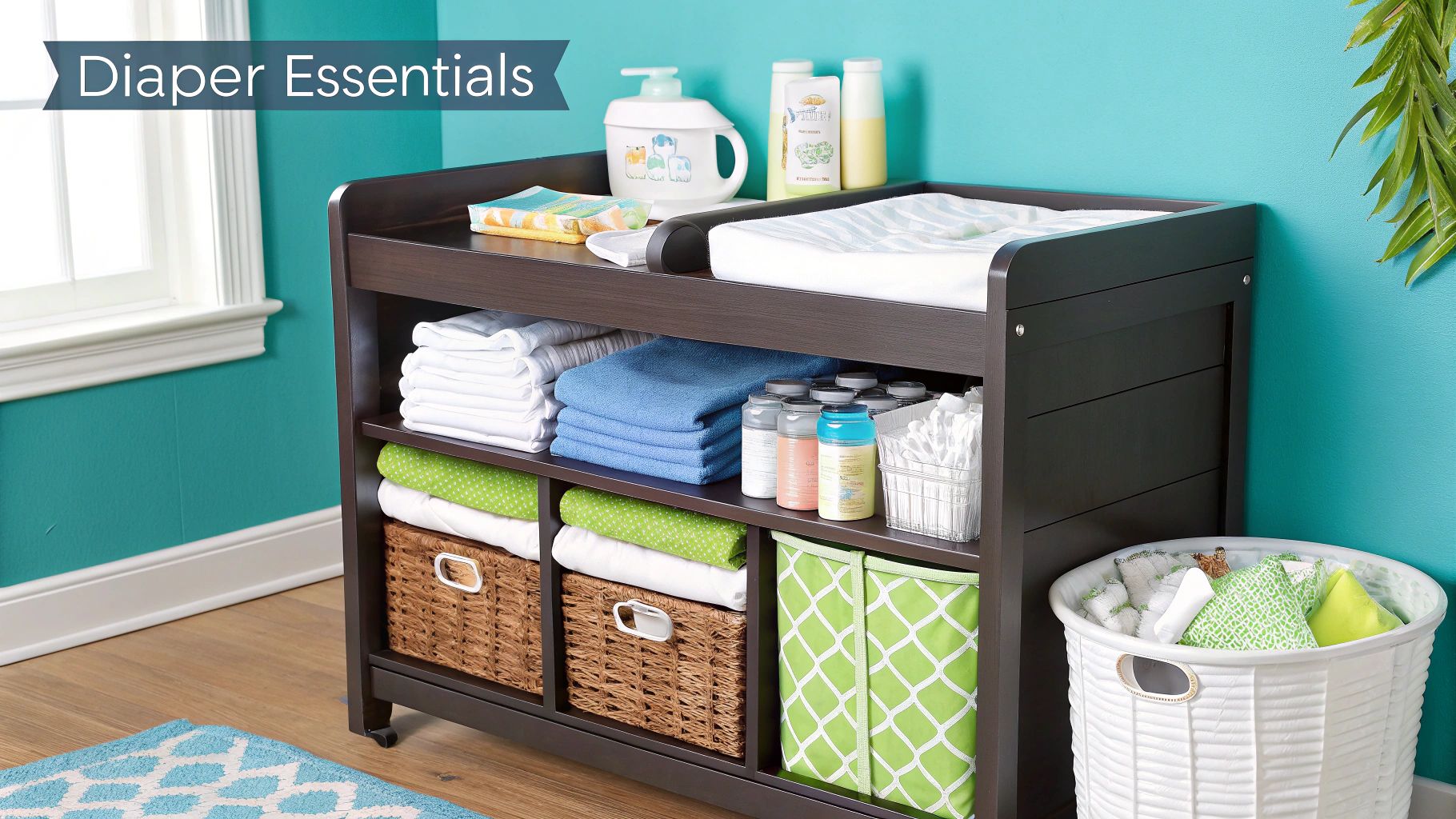
Once the sleep setup is handled, let's talk about the gear that turns the nursery into a functional command center for parenting. A dedicated changing station is an absolute back-saver. You don’t need to buy a specific, single-purpose changing table; a sturdy dresser topped with a contoured changing pad works perfectly.
This two-in-one strategy saves space and grows right along with your child. The key is to have all your supplies—diapers, wipes, cream, a spare outfit—within arm's reach.
Next up: a comfortable chair. A glider or rocker is a true lifesaver for those 3 a.m. feedings, for soothing a fussy baby, or just for enjoying some quiet cuddles. Try to place it in a cozy corner with a small side table for your water bottle, phone, and maybe a book for you.
Creating a Soothing Atmosphere
A calm, serene nursery environment can make a huge difference in encouraging better sleep for the whole family. Blackout curtains are your new best friend. They signal to your baby that it’s time to rest, even when the sun is still shining, making them a game-changer for daytime naps.
A white noise machine can also work wonders. It helps by mimicking the comforting, constant sounds of the womb while also drowning out disruptive household noises, like the dog barking or the doorbell ringing.
Finally, it pays to think about the future. While you’re setting up for a newborn, you can easily incorporate items that will grow with them. Using a dresser as a changing station is a great start. As your baby gets mobile and starts exploring, you'll need to make sure the entire room is safe. This comprehensive childproofing guide is a great resource for helping you secure furniture, cover outlets, and create a truly secure space for your little one to grow.
Mastering Feeding Time With Less Stress
Whether you’re planning on breastfeeding, formula-feeding, or a little of both, there's one undeniable truth: a newborn's tummy calls the shots. Feeding a baby is a round-the-clock commitment, and being prepared can transform a stressful marathon into a series of quiet, bonding moments.
Having the right gear on hand is your first line of defense against those 3 a.m. meltdowns—both the baby’s and yours! The good news? You don't need a kitchen packed with fancy gadgets. The real goal is to build a simple, effective toolkit that supports your feeding journey, whatever that may look like.
Essentials For Breastfeeding Mothers
If you plan to breastfeed, think of this gear as your personal support system. These items are designed to make nursing more comfortable for you and ensure your baby is fed and happy, even when you can't be there.
- A Quality Breast Pump: This is an absolute must-have. Before you buy one, check with your insurance provider, as many will cover the cost of a personal pump. A good double electric pump is a workhorse for building up a milk stash, while a simple manual pump is perfect for occasional use or travel.
- Milk Storage Bags or Bottles: You'll need a way to safely store all that liquid gold. These are specifically designed for freezing breast milk. Pro tip: always label them with the date before they go into the freezer!
- Nursing Pillow: This is so much more than just a pillow—it’s a back-saver. It lifts your baby to a comfortable height, which keeps you from hunching over and straining your back, neck, and arms during those long feeding sessions.
- Comfortable Nursing Bras: Trust me, you’ll be living in these. Invest in a few that are both supportive and comfortable. Easy-access clips make feedings quicker and far less awkward, especially when you’re out of the house.
Must-Haves For Formula Feeding
For parents who choose formula, the game is all about safe preparation and streamlined feeding. The right bottles and cleaning gear can make a massive difference in your day-to-day routine.
When it comes to choosing bottles, it’s often the baby who makes the final call. It's a smart move to buy just one or two of a few different brands to see which nipple shape and flow your little one prefers before you commit to a full set.
Here are the key items for your formula-feeding setup:
- Bottles and Nipples: To get started, you’ll want about 4-6 bottles. Look for ones with anti-colic features—they’re designed to reduce the amount of air your baby swallows, which can help with gas and general fussiness.
- Formula: This can sometimes involve a bit of trial and error. It’s always best to talk with your pediatrician about which type is best for your baby, whether it's a standard cow's milk-based formula, soy, or a sensitive-stomach option.
- Bottle Sterilizer or Large Pot: You'll need to sterilize all your new bottles before their first use. A dedicated sterilizer is super convenient, but simply boiling them in a large pot of water for five minutes does the job perfectly well.
- Bottle-Drying Rack: A simple rack keeps all your clean bottles, nipples, and rings organized and off the counter while they air dry.
Ultimately, every family's feeding journey is unique. For a deeper look at the pros and cons of different methods, our guide on feeding choices like breastfeeding, formula, and combo-feeding can help you feel confident in your decision. Having the right tools on hand from day one ensures you're ready for anything.
Diaper Duty and Bathtime: The Real Deal
Let's talk about the less-than-glamorous side of parenting: diaper changes and bath time. These moments might not make the highlight reel, but they are where so much of the day-to-day care happens. Getting these routines down to a science can turn what feels like a messy chore into a surprisingly sweet bonding moment.
Think of your changing table as your command center. Having everything you need within arm's reach isn't just about convenience—it's a critical safety measure, since you can never, ever leave your baby unattended, not even for a second.
Conquering Diaper Changes
First things first, you'll face the classic diaper debate: cloth or disposable? Disposables are the champs of convenience, no question. But modern cloth diapers are way more user-friendly than they used to be, plus they're easier on the planet and your wallet in the long run. There’s no right or wrong answer here; it’s all about what works for your family. Whatever you decide, grab a few packs in newborn size to get started.
Here’s what you absolutely need at your changing station:
- Diapers: Start with a couple of small packs of newborn diapers. You'll be shocked at how fast your baby sizes up.
- Wipes: Stick with unscented wipes made for sensitive skin. A baby's bottom is incredibly delicate.
- Diaper Cream: A solid barrier cream is your number one defense against the dreaded diaper rash.
- A Diaper Pail: Trust me, this is more than just a glorified trash can. A good one locks away odors, which is a total game-changer for your nursery's air quality.
A well-stocked, organized changing station is a new parent’s superpower. You can use a dedicated table or just secure a changing pad onto a sturdy, low dresser. The golden rule is to have every single thing you need within arm's reach before the first snap is undone.
Parents today are more thoughtful than ever about the products they use, and the market reflects that. The baby care industry is expected to soar to USD 202.859 billion by 2030, driven by families looking for safe, gentle, and sustainable options. You can read more about the trends shaping the baby care products market to see how much the focus has shifted toward what’s best for both babies and the environment.
Making a Splash at Bathtime
Bathtime can be such a calming, beautiful ritual for you and your baby, but a slippery, wriggly newborn requires your full attention. The right gear makes all the difference, transforming a potentially stressful task into a safe and enjoyable splash session. You don’t need a ton of fancy products—just the basics.
A dedicated baby bathtub is a must. It’s designed to support your little one and keep them safely contained. Many models fit right into your sink or a standard tub, which will definitely save your back.
Here's your bathtime checklist:
| Item | Why It Is Essential |
|---|---|
| Baby Bathtub | Provides a secure, size-appropriate space for bathing, offering crucial support for a baby who can't yet sit up independently. |
| Gentle Soap | Baby's skin is extremely sensitive, so a tear-free, fragrance-free wash is necessary to prevent irritation and dryness. |
| Soft Washcloths | Perfect for gently cleaning delicate areas. You’ll want several on hand for both washing and rinsing. |
| Hooded Towel | Not just adorable—the hood helps keep your baby's head warm and cozy immediately after the bath, preventing them from getting cold. |
Rounding Out Your Health Toolkit
Beyond the daily diaper and bath routines, you'll need a few other small but essential items for your baby's health and grooming. Having these on hand means you’ll be prepared for everything from those razor-sharp baby fingernails to the first time they feel a little warm.
A reliable digital thermometer is non-negotiable for getting a quick and accurate temperature reading. For grooming, a pair of infant nail clippers or a gentle file is key to preventing your baby from scratching their own face. And a soft-bristled brush is perfect for tackling cradle cap or just smoothing their fuzzy hair. These little tools complete your health and hygiene arsenal, so you're ready for anything.
Getting Around With Your Baby
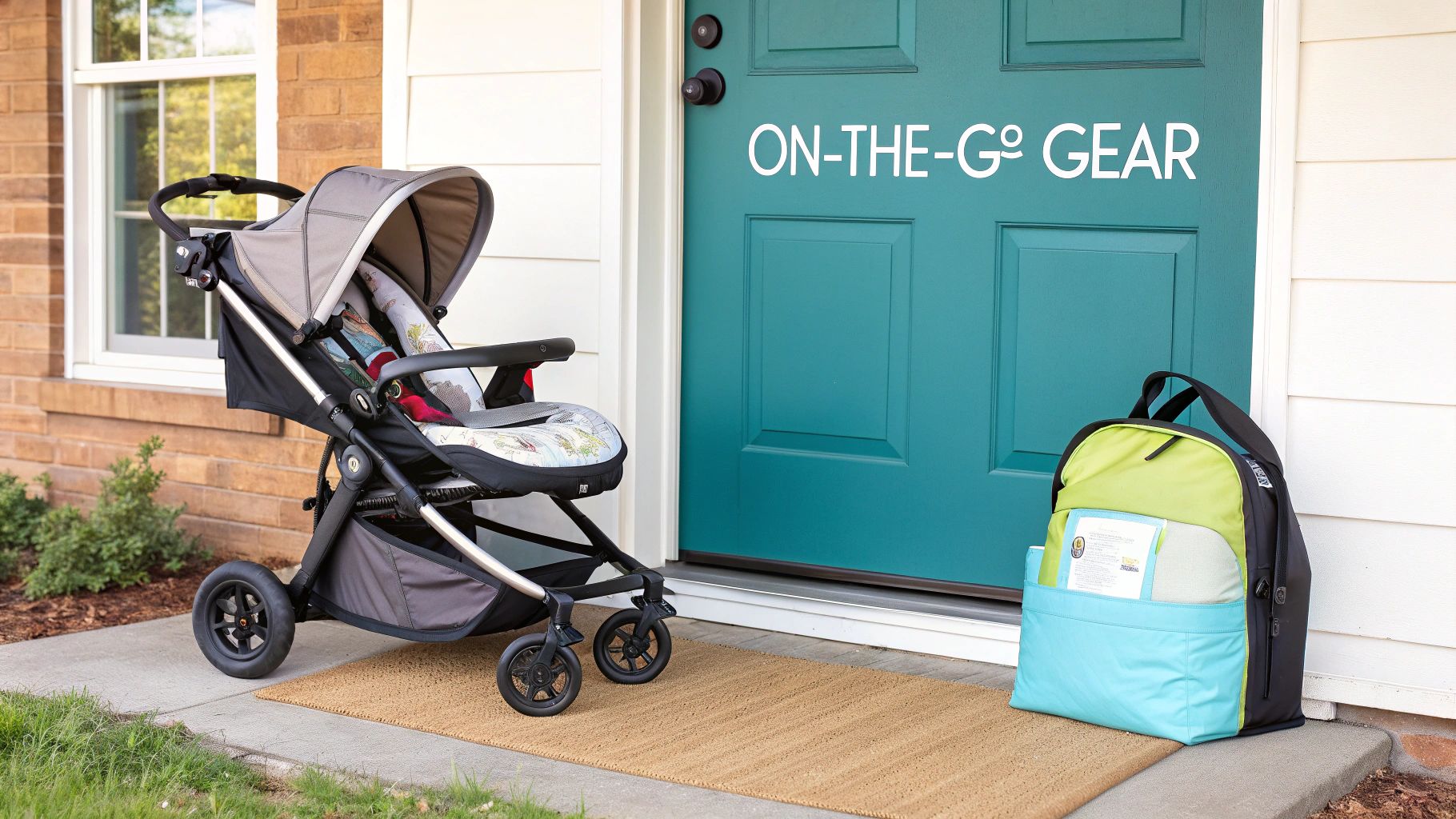
Leaving the house with a newborn can feel like mobilizing a small army. Seriously, the simple act of going to the grocery store can suddenly feel like a monumental expedition. But here's the good news: with the right gear, you’ll be out and about like a seasoned pro in no time.
Your must-have list for travel isn't about collecting every gadget under the sun. It's about finding a few key pieces that make getting from point A to point B safe, simple, and (mostly) stress-free. Let’s break down the essentials that will give you the freedom to explore the world with your new sidekick.
The All-Important Infant Car Seat
This is, without a doubt, the most important piece of travel gear you will buy. In fact, you literally can't leave the hospital without one. An infant car seat is a complete non-negotiable for safety, designed specifically to protect your tiny passenger in their first year.
When you start shopping, you'll generally find two main options:
- Infant-Only Car Seats: These are rear-facing only and come with a super convenient, detachable base that stays in your car. This setup is a lifesaver, allowing you to click the carrier in and out without waking a sleeping baby.
- Convertible Car Seats: These are the bigger, bulkier seats that can be used from birth (always rear-facing) and later "convert" to forward-facing as your child grows. While they're a great long-term investment, they aren't portable like an infant carrier.
Getting the installation right is everything. According to the CDC, car seats reduce the risk of injury in a crash by 71%–82% for children—but only when they’re used correctly. Don't be shy about getting it checked! Many local fire departments or police stations have certified technicians who will inspect your installation for free.
Strollers and Travel Systems
Think of a stroller as your baby's first set of wheels. It’s your ticket to walks in the park, trips to the mall, and navigating busy sidewalks. The options can seem endless, from lightweight umbrella strollers perfect for quick errands to robust jogging strollers built for more active families.
A popular choice for new parents is a travel system, which is just an infant car seat and a compatible stroller sold together as a set. The car seat clicks directly onto the stroller, making the car-to-stroller transition completely seamless. Trust me, that convenience is a sanity-saver, especially during those early months when your baby is sleeping constantly.
Choosing a stroller is really about matching it to your lifestyle. Do you live in a city with smooth sidewalks or a rural area with bumpy paths? Do you need something that folds up easily for public transport? Answering these questions will help you find the perfect fit for your family's adventures.
Packing the Ultimate Diaper Bag
Your diaper bag is your mobile command center—your Mary Poppins bag of parenting. A well-packed bag gives you the confidence to handle anything that comes your way, from a sudden blowout to an unexpected hunger strike.
For a deeper dive into managing trips with your little one, our guide on how to travel with infants has tons of extra tips. Here’s a quick rundown of what should always be in your bag:
| Item | Why You Need It |
|---|---|
| Diapers and Wipes | The obvious essentials. Pack more than you think you'll need—always. |
| Portable Changing Mat | Provides a clean, soft surface for diaper changes on the go. |
| Spare Outfits | For both baby and you. Spit-up and blowouts happen to everyone. |
| Feeding Supplies | Bottles with formula or breast milk, plus burp cloths. |
| Pacifiers and Toys | A few small distractions can work wonders for a fussy baby. |
With these key travel items, you’ll be ready to embrace every new adventure with your baby.
Nice-To-Have Items That Make Life Easier
Alright, you’ve secured all the absolute must-haves. Now we can get to the fun part: the "nice-to-have" baby gear. These aren't the items you need to survive, but trust me, they are the sanity-savers and convenience-creators that can make the day-to-day reality of parenthood feel a whole lot smoother.
Think of these products as your personal support crew. They're the extra set of hands you wish you had, designed to soothe your baby, keep them entertained, and give you a few precious moments back for yourself. While you can definitely get by without them, countless parents will tell you these extras were worth every penny.
Gadgets That Soothe and Simplify
Let's be honest, some of the best gear out there is designed to do one thing: make your baby happy. Because when your baby is happy and relaxed, so are you. These are the go-to tools for turning a fussy afternoon into a peaceful one or helping everyone clock a little more sleep.
A white noise machine is a classic for a reason. That gentle, constant hum is incredibly comforting to a newborn because it mimics the sounds they heard in the womb. It’s also fantastic for drowning out the doorbell or a barking dog. Another lifesaver is a good baby swing or bouncer. It gives you a safe, cozy spot to put your little one down so you can finally make that cup of coffee or just sit for a minute.
Here are a few other game-changers to think about:
- Baby Carrier or Wrap: This is your ticket to hands-free living. You get all the bonding and closeness your baby craves while being able to knock out chores or just walk around the block.
- Pacifiers: They’re a bit of a gamble—some babies take to them, others couldn't care less. But if your baby is a fan, a pacifier can be an instant soother.
- Video Baby Monitor: Sure, an audio monitor gets the job done. But a video monitor gives you that extra layer of peace of mind, letting you peek in on your sleeping baby without creaking the door open and risking it all.
Tools for Play and Development
Beyond just calming your baby down, some of the best extras are the ones that help them learn and grow through play. These items create a safe, stimulating space for your little one to start exploring the world and their own amazing abilities.
A play mat or activity gym is the perfect first playground. It offers a soft, clean spot for tummy time—which is so important for building the neck and core muscles they'll need for sitting and crawling. Most are decked out with dangling toys, mirrors, and different textures that encourage them to reach, grab, and figure things out.
These aren't just toys; they are developmental tools disguised as fun. They make tummy time more engaging and give you a designated safe space for your baby to wiggle and learn on the floor.
There's a reason the market for these kinds of items is exploding. The global baby products market was valued at about USD 320.65 billion in 2023 and is on track to hit USD 475.15 billion by 2030. That boom is driven by parents like us looking for quality products that genuinely add convenience to our lives. You can read more about the expanding baby products market to see how things are evolving.
Ultimately, choosing which "nice-to-haves" are right for your family will come down to your lifestyle, your budget, and what your baby seems to enjoy most.
A Few Common Questions We Hear From Parents
Stepping into the world of baby gear can feel like learning a whole new language. You're suddenly faced with a massive essential baby items list, and it’s completely normal to have a ton of questions. We get it. Let’s clear up some of the most common ones we hear from parents-to-be.
How Many Baby Clothes Do I Actually Need?
This is the big one, isn't it? The honest answer is probably less than you think. Babies grow at a mind-boggling pace, so you don't want to overdo it.
A great starting point is about 7-10 onesies or sleepers in both newborn and 0-3 month sizes. Trust us, you’ll probably receive a small mountain of adorable outfits from friends and family anyway. Stick to the practical stuff—soft fabrics, simple snaps, and easy-access zippers will be your best friends during late-night changes.
What Can I Safely Buy Secondhand?
Scoring secondhand deals is a fantastic way to save a lot of money and be a little more eco-friendly. Gently used baby clothes, sturdy high chairs, bouncers, and play gyms are usually great finds. You can get some amazing, high-end gear for a fraction of its original price.
But there are a couple of hard-and-fast rules here. Always buy these two items new:
- Car Seats: This is non-negotiable. Safety standards for car seats are always evolving, and plastics can degrade over time. More importantly, you can never truly know if a used seat has been in an accident, which could compromise its integrity.
- Crib Mattresses: For safety and hygiene, you want a brand-new, firm mattress. This guarantees a clean, supportive surface and a perfect, snug fit inside the crib frame.
When Is a Good Time to Start Shopping for Baby Stuff?
Most parents find that the second trimester is the perfect time to start tackling that shopping list. The morning sickness has (hopefully) faded, you've had time to do some research, and you can start putting together a baby registry.
Starting around this time gives you a nice, long runway. You can leisurely hunt for deals, assemble furniture without feeling rushed, and get all those tiny clothes washed and put away. It's all about making the process feel prepared and exciting, not stressful and last-minute.
Are Things Like Wipe and Bottle Warmers Really Necessary?
Ah, the great debate over the gadgets. While things like wipe warmers and bottle warmers aren't on the "must-have" list, some parents absolutely love them. A warm wipe can make a 3 a.m. diaper change a little less startling for a newborn, and a bottle warmer gets milk to the right temperature in a flash.
Our take? These fall squarely into the "nice-to-have" category. You can definitely wait and see. If you find yourself struggling with a screaming baby and a cold wipe a few weeks in, you can always grab one then.
At hiccapop, our whole mission is to design smart, dependable products that take a little bit of stress out of parenting. From creating safe sleep environments to making travel with kids simpler, we’re here to support you. See our full collection of parent-approved essentials over at hiccapop.com.