


The Ultimate Guide to Finding the Best Non Toxic Crib Mattress
When you're searching for the best non toxic crib mattress, you're really looking for one made from natural, breathable materials like organic cotton, wool, or latex. The key is to find a mattress that's been verified by respected third-party certifications, such as GOTS and Greengard Gold, which guarantee it's free from harmful chemicals. These mattresses put your baby's health first by getting rid of nasty stuff like VOC off-gassing, chemical flame retardants, and plastics like PVC.
Creating a Safe Sleep Sanctuary for Your Baby
Getting the nursery ready is easily one of the most exciting parts of waiting for your baby to arrive. You spend hours picking out the perfect crib, finding the softest sheets, and dreaming of your little one sleeping peacefully. But when it comes to the crib mattress—the very foundation of where they'll spend so much time—things can get complicated, and fast.
You've likely come across terms like "non-toxic," "organic," and "eco-friendly" thrown around, but it's hard to know what they actually mean. The concern is real: conventional mattresses can be a surprising source of hidden chemicals, and a baby's tiny, developing body is particularly vulnerable to them.
Why a Non-Toxic Mattress Matters
Babies can spend up to 16 hours a day sleeping. That’s a massive amount of time in direct, close contact with their mattress, breathing in whatever might be off-gassing from its materials.
What’s really inside a typical crib mattress? The numbers are pretty startling. One comprehensive analysis found that a shocking 85% of crib mattresses sold worldwide contain at least one concerning chemical, like flame retardants, phthalates, or formaldehyde.
This isn’t about causing alarm; it's about empowering you to make a confident choice. Once you understand what to look for, a task that felt overwhelming becomes a simple, clear decision for your family's peace of mind.
Building Your Nursery From the Ground Up
A truly safe nursery is about more than just the mattress. It’s about creating a healthy environment from the ground up, where every single element contributes to your baby’s well-being.
Think about these key pieces of the puzzle:
- Air Quality: A non-toxic mattress is a huge win for indoor air quality because it doesn't release volatile organic compounds (VOCs).
- Material Safety: Sticking to natural, certified materials helps lower the risk of skin irritation and allergic reactions.
- Overall Home Safety: A safe nursery is just one part of a bigger picture. That same focus on safety needs to extend throughout your home. Our guide on how to childproof your home can help you cover all the bases.
- Moisture Control: Keeping the sleep space dry and healthy is critical. This means taking proactive steps, like understanding the best ways of preventing mold in mattresses.
Think of choosing the best non toxic crib mattress as laying the cornerstone for a healthy nursery. By the time you finish this guide, you’ll have everything you need to create a safe, peaceful space where both you and your baby can finally rest easy.
What to Avoid: A Parent's Guide to Mattress Chemicals
To really understand what makes a non-toxic crib mattress special, you first have to know what you're trying to avoid. The world of mattress chemicals can sound intimidating, full of strange acronyms and long scientific names. But don't worry—it’s much simpler than it seems.
Think of it like reading a food label. You've learned to scan for things like high-fructose corn syrup or artificial dyes. We're going to do the exact same thing for your baby's mattress, giving you the confidence to spot the ingredients you'd rather do without.
The "Big Four" to Keep Out of the Crib
Let's cut through the noise and focus on the most common chemicals you'll find in conventional crib mattresses. Getting familiar with these will make you a pro at reading labels and comparing options.
-
Volatile Organic Compounds (VOCs): This is just a catch-all term for chemicals that easily turn into gases at room temperature, releasing them into the air. In mattresses, the number one source is polyurethane foam, a petroleum-based material that gives many mattresses their cushiony feel. VOCs are what cause that distinct "new mattress smell."
-
Chemical Flame Retardants: For years, mattress companies met federal flammability standards by dousing their materials in powerful chemicals. While some of the worst offenders are no longer used, they've often just been swapped for other, lesser-known chemicals. Many have been linked to developmental issues in children.
-
Formaldehyde: This chemical is a known irritant and often lurks in the industrial-strength glues used to hold mattress layers together. The more layers and adhesives a mattress has, the higher the potential for formaldehyde off-gassing.
-
Phthalates (THAL-ates): These are plastic-softening chemicals. You’ll typically find them in the vinyl (PVC) waterproof covers that are common on conventional crib mattresses. They make the plastic flexible instead of hard and brittle.
Understanding the role of specific compounds is crucial. For instance, phthalates are a chemical concern that extends beyond mattresses, as explained in this helpful guide to phthalate-free fragrance, underscoring the benefits of a healthier home environment.
VOCs and That "New Mattress Smell"
The core of most standard crib mattresses is polyurethane foam. It’s cheap to produce and lightweight, but it comes with a downside: it can release VOCs like benzene and toluene directly into your baby's nursery.
This is especially concerning because babies' lungs are still developing, and they breathe much more rapidly relative to their body size than adults do. This means they get a bigger dose of whatever is in the air. Opting for a mattress made from natural materials like organic cotton, wool, or natural latex is the simplest way to remove this major source of VOCs from their sleep space.
A Closer Look at Flame Retardants
Not too long ago, chemicals like polybrominated diphenyl ethers (PBDEs) were the go-to solution for meeting fire safety laws. We now know a lot more about their potential health risks. Even though many of the most toxic ones have been phased out, the replacements are often other chemical cocktails with their own set of unknowns.
The good news is that we don't need these chemicals at all. Smart, natural materials can pass the very same flammability tests without any additives. Wool, for example, is naturally flame-resistant thanks to its high moisture and protein content. It acts as an incredible—and completely safe—flame barrier.
When you're shopping, look for a clear statement that the mattress is made without any chemical flame retardants. Instead, they should be using a natural barrier like wool or an innovative, non-toxic fabric made from silica.
The Problem with Waterproofing
A waterproof surface is an absolute must-have for any crib mattress, but how it's waterproofed makes all the difference. The industry standard is a sheet of vinyl (PVC), which almost always contains phthalates to keep it soft.
The trouble with phthalates is that they don’t stay put. They can gradually leach out of the vinyl over time, ending up in the dust and air your baby breathes.
Thankfully, there are much safer and equally effective ways to keep a mattress dry. The best non-toxic mattresses use food-grade polyethylene—a simple, stable plastic—for their waterproof layer. Another great option is a mattress with a very densely woven organic cotton cover, which naturally repels liquid without any chemicals.
Choosing Safe and Natural Mattress Materials
Now that we’ve covered what to avoid, let's get to the good stuff—the safe, natural materials that make up the best non-toxic crib mattresses. I like to think of this like choosing ingredients for a healthy, nourishing meal for your baby. Instead of mystery chemicals and synthetic foams, we're focusing on wholesome, breathable materials that support a safe sleep environment.
This isn't just about being "natural" for the sake of it. Each of these materials brings unique benefits to the nursery. From temperature regulation to firm support, nature has provided some pretty amazing options that often outperform their synthetic counterparts. Let's break down the building blocks of a truly exceptional crib mattress.
Comparing Non-Toxic Crib Mattress Materials
When you're comparing mattresses, it helps to have a quick snapshot of the most common materials. Think of this table as a cheat sheet to understand what each one brings to the table, from its core benefit to things you'll want to keep in mind.
| Material | Primary Benefit | Firmness | Key Consideration |
|---|---|---|---|
| Organic Cotton | Soft, breathable, and hypoallergenic | Soft (used in covers/fill) | Look for GOTS certification to ensure purity. |
| Natural Wool | Natural flame retardant and temperature regulating | Soft/Medium | An amazing chemical-free fire barrier. |
| Natural Latex | Durable, responsive, and pressure-relieving | Medium-Firm | Must be GOLS-certified natural latex, not synthetic. |
| Coconut Coir | Ultra-firm, durable, and extremely breathable | Extra-Firm | Often bonded with latex to create a supportive core. |
| Steel Innersprings | Traditional, robust, and long-lasting support | Firm/Extra-Firm | The coil count and steel gauge determine the quality. |
Ultimately, the best mattresses often use a combination of these materials, layering them to create a sleep surface that is safe, supportive, and comfortable.
Organic Cotton: The Breathable Foundation
When it comes to softness against a baby's delicate skin, nothing really beats organic cotton. It’s the go-to material for both the cover and the inner comfort layers of many top-tier non-toxic mattresses, and for very good reason.
Unlike conventional cotton, which is one of the most heavily pesticide-sprayed crops in the world, organic cotton is grown without any of that nasty stuff. That means no lingering chemical residues are making their way into your baby's crib. Plus, its natural fibers allow for fantastic airflow, which helps wick away moisture and regulate your baby's temperature, keeping them comfortable all night long.
Natural Wool: Nature’s Smart Fiber
If there were a superstar material in the non-toxic mattress world, my vote would go to wool. This natural fiber is a true powerhouse, making it an ideal component for a baby's sleep environment.
Here’s why wool is so incredible:
- Natural Flame Retardant: Wool is inherently flame-resistant because of its high moisture and protein content. This lets mattress makers meet strict federal flammability standards without a single drop of chemical flame retardants.
- Temperature Regulation: Its fibers create tiny air pockets that act as natural insulators. This helps keep your baby warm in the winter and cool in the summer—it's like a tiny personal thermostat.
- Moisture Wicking: Wool can absorb up to 30% of its weight in moisture without feeling damp, pulling sweat away from your baby's body to keep them dry.
One of the smartest choices you can make is selecting a mattress that uses wool as its natural fire barrier. It's an effective, safe, and completely chemical-free solution that has been used for centuries.
Natural Latex: Durable and Hypoallergenic Support
When you need firm, responsive support without resorting to polyurethane foam, natural latex is the answer. Sourced from the sap of rubber trees, GOLS (Global Organic Latex Standard) certified latex is a durable, long-lasting material that provides excellent support for a growing baby.
It’s also naturally resistant to mold, mildew, and dust mites, making it a fantastic hypoallergenic choice. Just make sure the label specifies natural latex, as synthetic and blended versions can contain the very petroleum-based chemicals and VOCs we’re trying to avoid.
Coconut Coir and Innersprings: The Firm Core
A firm core is absolutely non-negotiable for infant safety. Two of the best options for achieving this are coconut coir and steel innersprings.
Coconut coir, made from coconut husks bonded with natural latex, creates an incredibly firm, durable, and highly breathable core. This promotes excellent air circulation throughout the mattress, which is a huge plus.
Steel innersprings are the more traditional choice, and they're fantastic for offering robust, long-lasting support. A quality innerspring mattress creates a responsive surface that won't sag over time. Many of the best organic crib mattresses use either innersprings or a combination of coir and latex to provide that essential, infant-safe firmness.
As parents become more aware of these materials, the demand is really taking off. The organic crib mattress market is projected to grow at a rate of 8.2% annually and is expected to reach over USD 1.2 billion by 2033. This growth shows a clear shift toward healthier, safer choices for our little ones. By understanding these core components, you're well on your way to picking a mattress that's not just safe, but truly beneficial for your baby's sleep.
How to Read Safety Certifications Like a Pro
Trying to choose a crib mattress can feel like you're suddenly studying for a chemistry test you didn't know you had. You'll see words like "natural," "green," and "eco-friendly" everywhere, but most of these are just marketing buzzwords without any real, regulated meaning.
So, how do you cut through the noise and find a mattress that’s genuinely safe? You look for third-party certifications.
Think of these certifications as a trustworthy expert who has already done all the vetting for you. They are your proof that an independent organization has put the mattress through rigorous testing for chemical emissions, material purity, and overall safety.
The Gold Standard for Organics: GOTS and GOLS
When you see the word "organic" on a mattress, your next move should be to hunt for the GOTS and GOLS logos. These aren't easy to get—they are the most respected global standards for organic materials.
-
GOTS (Global Organic Textile Standard): This one’s for textiles like cotton and wool. GOTS certification means the fibers were grown without pesticides and that the entire production process—from harvesting and spinning to the final fabric—is free of toxic chemicals, dyes, or bleaches. It’s the ultimate farm-to-factory seal of approval.
-
GOLS (Global Organic Latex Standard): This is the GOTS equivalent for natural latex foam. It guarantees the latex was sourced from organically grown rubber trees and processed without nasty synthetic additives.
If you see these seals, you know you’re getting a product that is truly organic from the ground up, not just a conventional mattress with a thin "organic cotton cover" stretched over it.
Certifications for Chemical Safety and Emissions
Beyond the raw materials, you need to know what the finished mattress might be releasing into your nursery's air. This is where certifications for chemical safety and emissions become your best friend.
This infographic gives you a great visual breakdown of how different materials fit into the non-toxic puzzle.
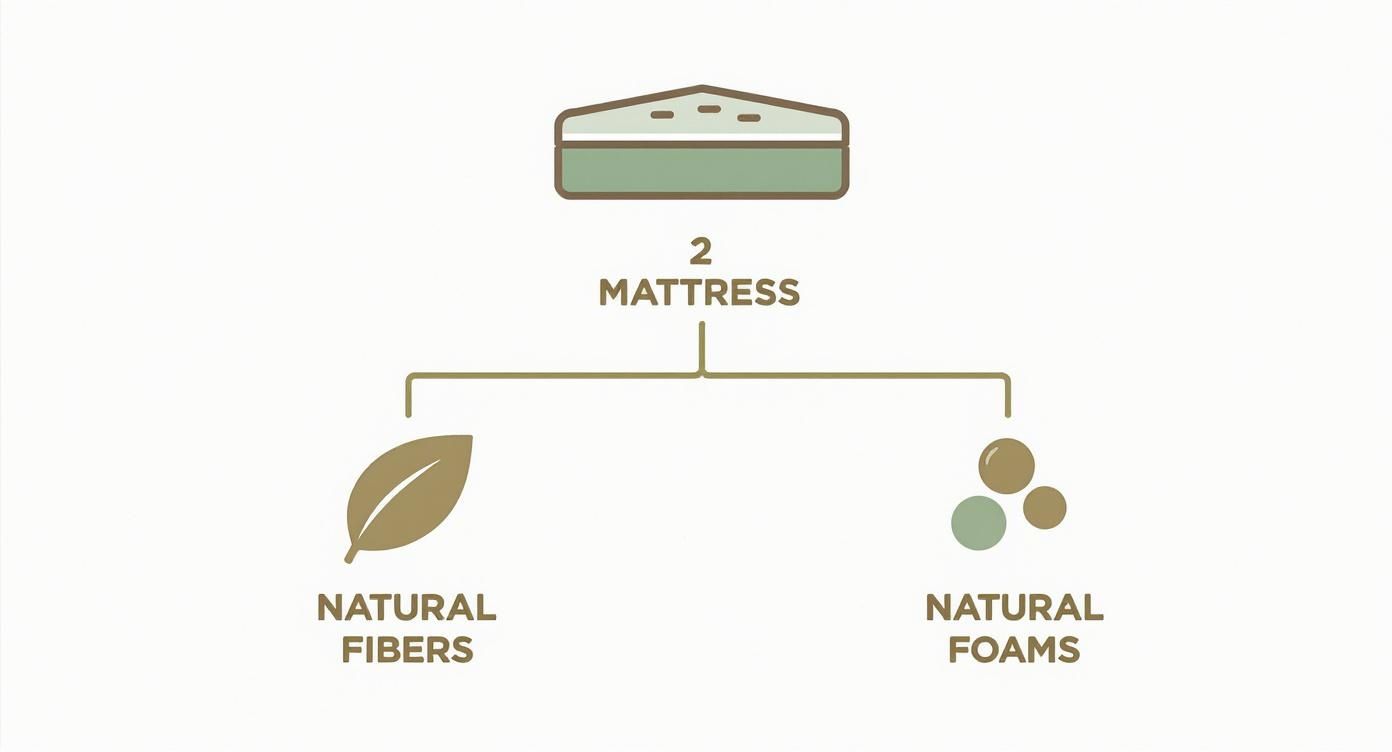
As the diagram shows, you can get to a safe, natural mattress through either fibers or foams. The key is knowing which certifications verify their purity.
The Greengard Gold certification is probably the most important seal to find when looking for the best non toxic crib mattress. It tests the entire mattress for off-gassing from over 10,000 different chemicals and volatile organic compounds (VOCs). The "Gold" standard is even stricter, setting lower emission limits specifically for products used by vulnerable people, like babies. A Greengard Gold logo is your best guarantee of clean nursery air.
Another crucial one is Oeko-Tex Standard 100. This certification focuses on textile safety, testing every single component—from the cover's fabric and thread right down to the zipper—for a long list of harmful substances. It confirms that everything your baby touches is safe for their skin.
This focus on certified products isn't just a niche concern; it's a worldwide shift. Driven by tougher safety rules and growing parent awareness, the crib mattress market has seen a huge swing toward verified non-toxic options.
Understanding Foam Certifications
If the mattress you’re considering has foam—even a plant-based one—it's vital to check for the right certification.
CertiPUR-US is a common certification for polyurethane foams (the kind you find in memory foam). It’s a good starting point, as it ensures the foam is made without ozone depleters, certain flame retardants, heavy metals, or formaldehyde. But here's the catch: it doesn't mean the mattress is natural or organic. A CertiPUR-US mattress is still typically made from petroleum.
It helps to think of it this way: CertiPUR-US is the "better" choice compared to uncertified foam, but certifications like GOLS (for natural latex) and GOTS (for organic fiber fills) are the "best" choices for a truly non-toxic, natural mattress. Once you learn to spot these key logos, you can confidently sidestep the greenwashing and choose a mattress that truly supports a healthy start for your baby.
More Than Just Materials: Other Key Features to Look For
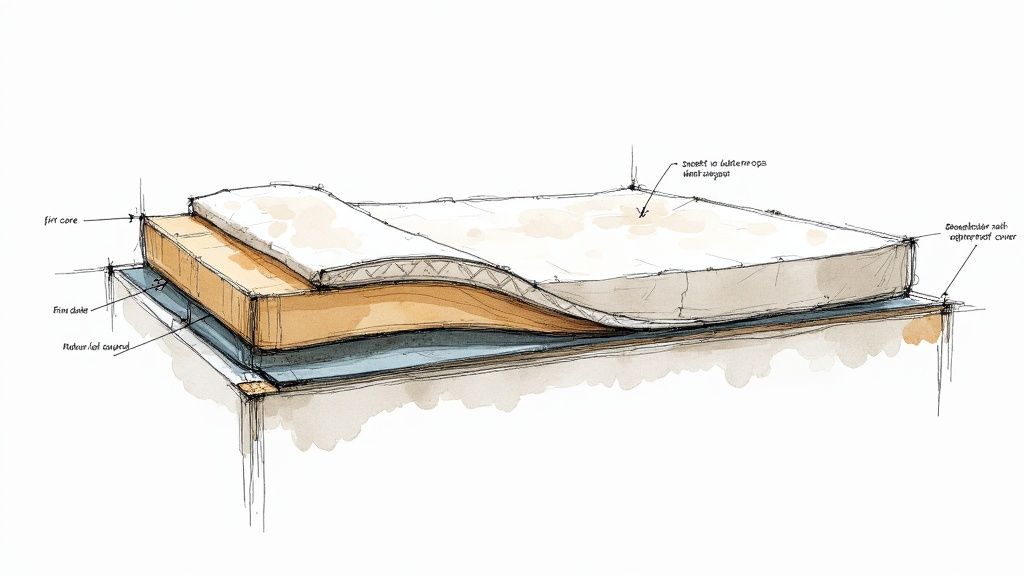
Choosing a mattress with a safe, natural core is a huge win. But what makes a great non-toxic crib mattress truly stand out isn't just what's on the inside. A few other critical features work together to make it practical, durable, and as safe as possible for your little one.
Think of it like building a house. The foundation (your core materials) is non-negotiable, but you also need a solid frame, a good roof, and features that can adapt as your family grows. Let's dig into the other make-or-break features that separate a good mattress from the best non toxic crib mattress.
Firmness and Fit: The Safety Power Couple
Before we get into anything else, we have to talk about firmness and fit. These two aren't just nice-to-haves; they are the absolute cornerstones of a safe sleep environment for your baby, heavily guided by the Consumer Product Safety Commission (CPSC).
A crib mattress needs to be very firm. It might feel uncomfortably hard to you, but for a baby, it's a critical safety feature. A soft surface can easily conform to a baby's face if they roll over, which tragically increases the risk of suffocation. A firm, flat surface gives them the support they need without that hazard.
Just as important is how the mattress fits inside the crib. There should be no gaps—none—between the edge of the mattress and the crib frame. The classic test is simple: if you can squeeze more than two fingers between the mattress and the crib, it's too small and creates a dangerous entrapment risk.
When your new mattress arrives, the very first thing you should do is unbox it and place it inside the crib. Shove it to one side and check the gap on the other. It's a five-second reality check that delivers some serious peace of mind.
Smart, Safe Waterproofing
Let's be real: accidents are a given. Diaper blowouts, spit-up, and mystery spills are part of the deal, making a waterproof surface an absolute necessity. But this is exactly where many conventional mattresses go wrong, using materials like vinyl (PVC) and phthalates to keep things dry.
So, how do the best non-toxic mattresses handle this? They rely on smarter, safer materials.
- Food-Grade Polyethylene: This is a simple, non-toxic plastic that creates an excellent waterproof barrier without any nasty chemicals. Many top-tier brands even use a version derived from non-GMO sugarcane, making it a more sustainable option.
- Densely Woven Organic Cotton & Wool: Some mattresses use a clever combo of super-dense organic cotton fabric, which naturally repels water, backed by a layer of wool. Wool is amazing—it can absorb a lot of moisture before it even starts to feel damp, buying you precious time to clean up messes.
A wipe-clean waterproof surface makes your life so much easier. More importantly, it keeps liquids from seeping into the core of the mattress, which is the key to preventing mold and bacteria from setting up shop.
Breathability for Cool, Comfortable Sleep
Ever wake up in a sweat? Babies are even more sensitive to getting hot because their tiny bodies haven't yet mastered regulating their own temperature. A breathable mattress is a game-changer for keeping them comfortable, which usually means everyone gets more sleep.
Breathability isn't just marketing fluff; it's about how well air can actually move through the mattress. Materials like innersprings, coconut coir, and wool are naturally great at promoting airflow. Some of the most innovative designs even add a 3D mesh layer that creates a cushion of air right underneath your baby for maximum circulation.
All that airflow helps whisk away heat and moisture, keeping your baby from getting clammy and helping them stay cool and dry all night long.
The Long-Term Win: A Dual-Sided Design
Finally, let's talk value. A dual-sided, or "2-stage," mattress is one of the smartest investments you can make, because it's designed to grow with your child from a tiny newborn all the way through their toddler years.
Here’s the breakdown:
- Infant Side: This side is extra-firm, giving you that rock-solid, flat surface that's safest for infants.
- Toddler Side: Once your child is older and has better head control, you flip the mattress over. The toddler side usually has a slightly softer feel, maybe with a comfort layer of natural latex or plush cotton, to provide a bit more cushion for a growing body.
Going with a dual-sided mattress means you get years of use from a single purchase, ensuring you always have a safe and comfortable sleep surface for every stage of their early life.
Your Checklist for Choosing the Right Mattress
Alright, we've waded through the world of materials, confusing chemicals, and official-sounding certifications. Now it’s time to boil it all down into a simple, practical checklist you can actually use while you shop.
Think of this as your quick-reference guide. It’s not about remembering every single detail, but about having the most important points top of mind so you can confidently pick the best non toxic crib mattress for your little one.
The Non-Negotiable Safety Checks
Before you even glance at a label or price tag, these two safety checks are absolute musts. Get these right first.
- Confirm Unwavering Firmness: A safe infant mattress should feel very firm to the touch. It's not supposed to be comfortable for an adult—that firm, flat surface is precisely what babies need for safe sleep.
- Ensure a Snug Fit: Once you have the mattress, put it inside the crib. You should not be able to fit more than two fingers between the edge of the mattress and the crib frame. Any gap larger than that is a serious safety hazard.
Your Material and Certification Cheat Sheet
With the fundamental safety points covered, you can now focus on what the mattress is actually made of. This is where you become a savvy label-reader.
- Look for Trusted Certifications First: Don’t fall for vague marketing terms like "eco-friendly" or "all-natural." Your real proof comes from third-party certifications. Keep an eye out for GOTS (for textiles), GOLS (for latex), and especially Greengard Gold seals, which confirm low chemical emissions.
- Know Your Safe Materials: You'll want to see ingredients like organic cotton, natural wool (which doubles as a fantastic natural flame retardant), natural latex, or coconut coir. These are the building blocks of a truly non-toxic mattress. We explore these options in more detail in our guide to the best crib mattresses for newborns.
- Verify the Waterproofing: A waterproof cover is a non-negotiable for cleanups. Just make sure it’s made from a safe material, like food-grade polyethylene, and not vinyl or PVC, which can contain phthalates.
Following this simple checklist transforms you from a worried shopper into an informed parent. You now have everything you need to choose a mattress that will provide a safe, healthy, and restful foundation for your baby's nursery.
A Few Common Questions Answered
When you're diving into the world of non-toxic baby gear, a few questions always seem to pop up. Let's tackle the most common ones so you can feel totally confident as you choose the right mattress for your little one.
Is It Really Worth Paying More for an Organic Crib Mattress?
It's true, a certified organic or non-toxic crib mattress often has a higher price tag. But what you're really buying is peace of mind. It’s an investment in knowing your baby isn't breathing in potentially harmful chemicals during those crucial early years of development.
Think of it this way: these mattresses are built to last. They use high-quality, incredibly durable materials like natural latex and wool. Many are even dual-sided, designed to grow with your child from the firm infant stage to the slightly softer toddler years, so you get a lot more mileage out of that initial investment.
What's the Difference Between "Non-Toxic" and "Organic"?
This is a fantastic question, and it's where a lot of the confusion comes from. The easiest way to remember it is that 'organic' is a specific, certified form of 'non-toxic.'
Here's a simple breakdown:
- A non-toxic mattress is made without a known list of harmful stuff—think VOCs, phthalates, or chemical flame retardants. The materials themselves, however, might not come from certified organic sources.
- An organic mattress has to jump through a lot more hoops. To earn a certification like GOTS or GOLS, every material (like cotton or latex) must be proven to be grown and processed without any synthetic pesticides, fertilizers, or other toxic chemicals from start to finish.
So, while every certified organic mattress is non-toxic by default, not every mattress labeled "non-toxic" is certified organic.
How Do I Clean a Natural Crib Mattress?
Your first step should always be to check the care tag from the manufacturer, since natural materials like wool and latex can have specific cleaning needs. For the most part, you can spot-clean small messes using a simple mix of mild soap and water.
Honestly, the best defense is a good offense. Get a high-quality, non-toxic waterproof mattress protector on that mattress from the very beginning. It's the single best thing you can do to stop liquids from ever soaking into the core, which makes cleanups a non-issue and prevents stains or mold from ruining your investment.
Choosing the best non toxic crib mattress is one of the most impactful decisions you'll make for your baby's nursery. It's about more than just a place to sleep—it's about creating a safe, clean, and healthy environment where your little one can truly thrive. By focusing on certified materials and prioritizing safety features like firmness and fit, you can feel confident in your choice.
Here at Hiccapop, we're all about making safe, healthy sleep simple for parents. Our products are designed with the highest safety standards and your peace of mind as our top priorities. Check out our collection to build the perfect, healthy foundation for your baby's nursery.