


Finding the Best Organic Crib Mattresses
Choosing your baby's first mattress is a pretty big deal. When you start Googling "best organic crib mattresses," you're suddenly drowning in a sea of information. So, what's the simple answer? The best choice is a mattress that brings together verified non-toxic materials, a firm sleep surface for safety, and trusted certifications like GOTS and GREENGUARD Gold. These are the hallmarks of a truly safe and healthy nursery.
Your Guide to Finding the Perfect Organic Crib Mattress
Welcome! If you're diving into the world of organic crib mattresses, you've come to the right place. Deciding where your little one will spend up to 70% of their first year can feel like a monumental task, but it doesn't have to be. My goal here is to cut through the marketing jargon and give you the real-world info you need to choose with confidence.
So, what does "organic" actually mean when we're talking about a crib mattress? It’s so much more than a trendy label. It’s a promise of purity—a commitment to using materials free from the harsh chemicals, synthetic foams, and questionable flame retardants that sneak into many conventional mattresses. If you want to dig a bit deeper into why this is so critical for newborns, our guide to the best crib mattresses for newborns is a great place to start.
Why an Organic Crib Mattress Is a Healthier Choice
When we're prepping a nursery, it's easy to get caught up in picking out the perfect paint color or a top-notch air purifier. But what about the single surface where your baby will spend up to 16-18 hours a day? The crib mattress is ground zero for a healthy nursery, and going organic is about so much more than a trendy label.
Let’s talk about what’s inside a standard crib mattress. Many are made with polyurethane foam, vinyl covers for waterproofing, and a host of synthetic glues. These materials often release Volatile Organic Compounds (VOCs) into the air—a process known as off-gassing. You know that “new mattress smell”? It's a similar idea, but it's happening right where your baby sleeps, potentially impacting the air they breathe all night long.
Reducing Chemical Exposure in the Nursery
A baby's body isn't just a mini-adult version; their systems are still under construction. Because their respiratory and immune systems are developing, they're far more susceptible to airborne chemicals and irritants. Choosing an organic crib mattress is one of the most direct and impactful ways to cut down their daily chemical load.
One of the biggest culprits in conventional mattresses is the use of chemical flame retardants. Fire safety is non-negotiable, of course. But many organic mattresses meet the same federal flammability standards by using smart, natural materials like wool, which is inherently flame-resistant. Just by making that one switch, you’ve eliminated a major source of chemical exposure.
An organic mattress creates a cleaner, healthier foundation for sleep by minimizing your baby’s contact with synthetic materials and chemicals. It’s about building a nursery environment that supports their well-being from the ground up.
The Impact on Air Quality and Allergies
Beyond the flame retardants, common materials like vinyl (for waterproofing) and certain plastics have been linked to skin irritation and allergic reactions. An organic mattress flips the script. By using materials like certified organic cotton and wool, you get a surface that is naturally hypoallergenic and much more breathable. For little ones with sensitive skin or a predisposition to allergies, this can make a world of difference.
Thankfully, the crib mattress market is getting safer as parents demand better options. This push has led to stricter regulations from bodies like the U.S. Consumer Product Safety Commission (CPSC), which now has tighter controls on everything from mattress firmness to the specific chemicals allowed.
Creating a truly healthy nursery doesn't have to stop at the mattress. To learn more, check out this ultimate guide to non-toxic bedding. At the end of the day, choosing organic is an investment in your peace of mind, knowing you’ve created the purest, safest sleep space possible for your new arrival.
Decoding the Labels on Organic Crib Mattresses
Stepping into the world of organic crib mattresses can feel like trying to read a secret code. You're immediately hit with a dizzying alphabet soup of acronyms—GOTS, GREENGUARD Gold, Made Safe—plastered on every product tag. But what do these labels actually mean for your baby's health and safety?
Let's cut through the noise.
Think of these certifications as a trusted report card for your baby’s mattress. They’re issued by independent, third-party organizations that have no skin in the game other than verifying a product’s claims. They test for everything from chemical emissions to the integrity of the organic materials, giving you peace of mind that the mattress you bring home is genuinely clean and non-toxic.
Understanding the Key Players in Certification
Not all certifications are created equal. Each one focuses on a different piece of the safety puzzle. Some are laser-focused on the purity of the textiles, while others are all about the air quality in your nursery. Knowing the difference helps you see past clever marketing and choose a mattress that truly meets your standards.
Here’s a breakdown of the big three you'll encounter:
-
GOTS (Global Organic Textile Standard): This is the top dog for textiles. A GOTS label guarantees that at least 95% of the materials (like the cotton or wool) are certified organic. It also means the entire supply chain—from harvesting to manufacturing—follows strict ecological and social rules. No toxic chemicals, and workers are treated fairly.
-
GREENGUARD Gold: This one is all about clean air. Products with this seal are tested for over 10,000 different chemicals and VOCs (Volatile Organic Compounds) to ensure the mattress has extremely low emissions. A GREENGUARD Gold certification means the mattress contributes to healthier indoor air, which is absolutely critical for a baby’s developing respiratory system.
-
Made Safe: Think of this as the most comprehensive health and safety screening out there. A product with the Made Safe seal has been checked for over 6,500 substances known or suspected to harm human health, animals, or ecosystems. It’s a powerful guarantee that the mattress is free from a massive list of nasty chemicals.
As you can see, they work together. GOTS confirms the materials are organic, GREENGUARD Gold ensures the air stays clean, and Made Safe provides that top-to-bottom safety check.
Why These Labels Matter So Much
So, why bother memorizing all these acronyms? Because a product simply labeled "organic" or "natural" might not be what it seems. These terms are largely unregulated in the mattress world, which means companies can use them without much oversight.
Certifications are your proof. They are the only way to be certain that a mattress has been independently verified to be free from harmful chemicals, made with genuinely organic materials, and safe for your baby’s sleep environment.
Looking for certifications like GOTS is a reliable shortcut to confirming a product's claims. If you want to dig a little deeper, a good buyer's guide can be a huge help in understanding GOTS certification and organic cotton sheets. By prioritizing mattresses with these seals, you’re not just buying a product; you’re investing in a verified promise of safety and quality for your little one.
A Look at the Most Common Organic Materials
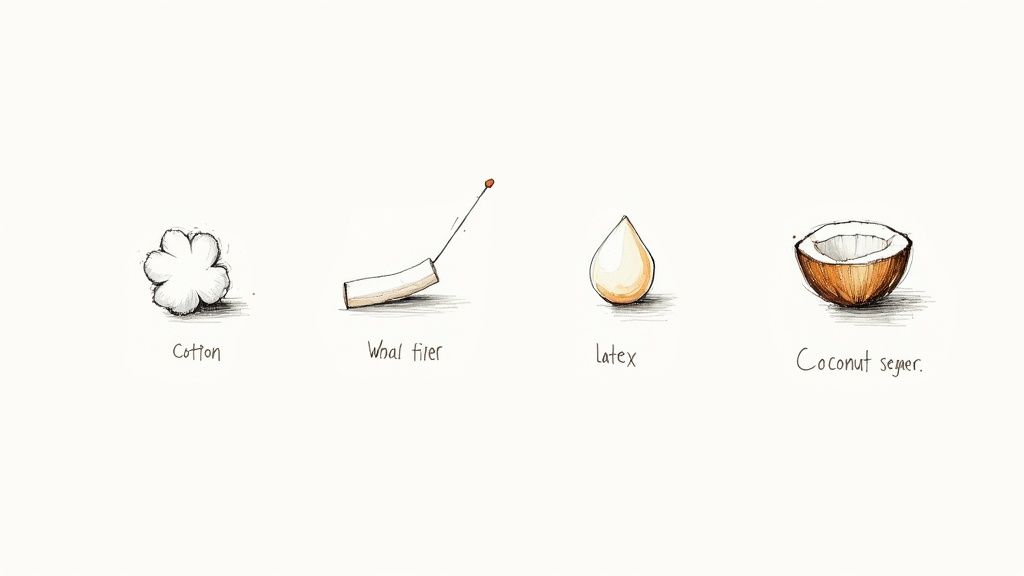
So, what are these organic crib mattresses actually made of? When you get down to it, you’ll find a handful of natural, powerhouse materials doing all the work to keep your baby safe and sound. Knowing what they are and the role each one plays is the secret to picking the right mattress for your little one.
Let’s break down the core components. Each material brings a unique benefit to the mattress, from incredible breathability to that all-important firm support.
Organic Cotton: The Breathable Staple
You'll find organic cotton in almost every top-tier natural mattress, and for good reason. It’s wonderfully breathable, soft to the touch, and perfect for a baby’s delicate skin. Unlike conventional cotton, which can be saturated with pesticides, certified organic cotton is clean from the moment it's grown. This purity makes it a naturally hypoallergenic option, minimizing the risk of irritation and keeping the sleep surface fresh.
Organic Wool: The Natural Protector
Wool is truly nature's overachiever. Its most vital role in a crib mattress is as a natural flame retardant. Because wool is inherently resistant to flames, mattresses can pass strict federal fire safety tests without resorting to harsh chemical sprays. But it doesn't stop there. Wool is also a master at regulating temperature and wicking away moisture. It helps keep your baby from getting too hot in the summer or too cold in the winter, which means more comfortable, consistent sleep all year long.
Natural Latex: The Supportive Core
When you see natural latex on the label, think durable, responsive support. This material is tapped from rubber trees, and GOLS (Global Organic Latex Standard) certified latex creates a firm but comfortable foundation that won't sag or develop indentations over time. It’s also naturally resistant to dust mites and mold, which is another big win for creating a hygienic sleep space. This is the stuff that provides the ideal firmness for infants while being resilient enough to last straight through the toddler years.
Coconut Coir: The Firm Foundation
For an exceptionally firm and breathable core, many brands look to coconut coir. This ingenious material is made from coconut husks that are bound together, usually with a bit of natural latex. The end result is a porous, almost spring-like pad that offers incredible air circulation and the rock-solid support that experts recommend for safe infant sleep. It’s a beautifully simple, effective, and sustainable solution.
The shift toward these healthier materials is making waves across the entire nursery industry. The baby mattress market is expected to more than double from USD 1.16 billion in 2024 to USD 2.3 billion by 2035, according to a report from Market Research Future. It’s clear that organic options are at the forefront of this growth as more parents demand a non-toxic sleep environment for their children.
Essential Features Beyond Just Materials
While pure, organic materials are the foundation of a great mattress, a few other key features are what truly separate a good choice from the perfect one. These are the practical details that boost safety, make your life easier, and ensure your investment lasts from those first newborn nights all the way through the toddler years.
Let's start with the most important one: firmness. This isn't just about comfort; it's a non-negotiable safety standard. The American Academy of Pediatrics is very clear on this, recommending a firm, flat sleep surface to significantly reduce the risk of SIDS. A mattress that's too soft can actually conform to a baby's head, which creates a dangerous suffocation hazard.
How to Test for Proper Firmness
There's a simple trick I always recommend to parents. Just press your hand firmly down in the middle of the mattress and then pull it away. You want to see the surface snap right back into place, leaving almost no imprint. If it holds the shape of your hand for more than a second, it’s probably too soft for an infant.
The Smart Design of a Dual-Sided Mattress
Here’s a feature that offers fantastic long-term value: the dual-sided or 2-stage mattress. These are brilliantly designed with an extra-firm side for infants and a slightly cushier, more comfortable side for toddlers, who don't face the same SIDS risks. When the time is right, all you have to do is flip it over. This simple feature extends the mattress's life and saves you from having to buy a new one, giving you years of use from a single purchase.
Keeping It Clean with Non-Toxic Waterproofing
Let's be real—accidents are going to happen. A waterproof surface is essential for protecting the mattress core from diaper leaks and spit-up. Without it, you're opening the door to mold, mildew, and bacteria growth.
But not all waterproofing is created equal. The best organic options avoid vinyl (PVC) and its questionable chemicals, using much safer alternatives instead.
- Food-Grade Polyethylene (PE): This is a popular and safe choice. It's a non-toxic plastic that creates an excellent barrier without any of the harmful additives found in vinyl.
- Organic Wool: Nature's own water-repellent! The natural lanolin in wool makes liquids bead up, buying you precious time to clean spills before they can soak through.
Pro Tip: I always tell parents to double up. Get a high-quality organic waterproof protector to go over the mattress. It’s your best defense against major messes and makes those middle-of-the-night cleanups so much faster.
Finally, don't forget the little things that make a big difference. Look for reinforced edge support so the sides don't sag when your toddler starts pulling themselves up on the rails. A mattress under 20 lbs. will be a lifesaver for your back during sheet changes. And most importantly, check the fit. There should be no more than two fingers of space between the mattress and the crib frame for a safe, snug fit.
If you're also thinking about portable options, understanding what a pack n play mattress is can be helpful, as the same principles of fit and firmness apply.
Caring for Your Organic Crib Mattress
So, you’ve picked out the perfect organic crib mattress—a fantastic investment in your baby's safe and healthy sleep. But how do you keep it that way? Taking care of your mattress is less about heavy-duty cleaning and more about simple, consistent habits that protect it for the long haul.
The good news? Keeping it clean and fresh is surprisingly straightforward.
Your Best Friend: The Waterproof Protector
Before you even think about sheets, get yourself a high-quality organic waterproof protector. This is not optional—it's essential. Even though the mattress is made of natural, resilient materials, it's not invincible against diaper leaks, spit-up, and all the other messes that are part of life with a baby.
A good protector is the first line of defense. It stops liquids from ever reaching the mattress core, which is absolutely critical for preventing mold, mildew, and bacteria from growing inside. It also makes those 2 a.m. cleanups much, much easier.
Handling Everyday Messes and Routine Care
Accidents are going to happen. The key is to act fast.
- Small Spills: Don't scrub! The moment you see a wet spot, blot it gently with a clean, dry cloth. Rubbing just pushes the moisture deeper into the fabric.
- Deeper Cleaning: For stickier situations, a simple solution of equal parts white vinegar and water works wonders. Lightly spritz the spot, blot it clean, and then let it air dry completely. The most important thing is to never soak the mattress.
- Regular Freshening: About once a month, take all the bedding off and just let the mattress breathe for a few hours. A bit of fresh air works wonders to keep it from getting stuffy.
- Rotate, Rotate, Rotate: Every time you change the sheets, give the mattress a 180-degree spin (head-to-toe). This simple step helps it wear evenly, maintaining that firm, flat surface your baby needs. For more specific cleaning tips, our guide on playard and playpad care instructions has some great pointers.
As more parents become aware of the benefits of chemical-free sleep, the demand for organic mattresses is skyrocketing. This shift toward healthier, sustainable choices is great news for families everywhere. You can learn more about the growing crib mattress market on dataintelo.com.
Your Questions on Organic Crib Mattresses, Answered
We’ve covered a lot of ground, but it's totally normal if you still have a few questions bouncing around. When you're picking out something as important as your baby's mattress, you want to be crystal clear on the details. Let's tackle some of the most common things parents ask when they're on the hunt for the perfect organic crib mattress.
Is the Higher Price for Organic Mattresses Really Worth It?
This is the big one, isn't it? Is that higher price tag truly justified? In our experience, the answer is a resounding yes, and it boils down to a few key things. First and foremost, you're investing in your baby's long-term health benefits by drastically cutting down their daily exposure to synthetic chemicals and those nasty VOCs. On top of that, the high-quality, natural materials used—think organic wool and latex—are just built to last. They’re incredibly durable and resist sagging far better than conventional foam mattresses, meaning you'll get years of use, likely straight through the toddler bed phase. At the end of the day, that extra cost is buying you verifiable peace of mind.
Do I Still Need a Waterproof Protector?
Yes, absolutely. Consider this one non-negotiable. Even though the mattress is made from pure, organic materials, it's not invincible against diaper leaks or spit-up. Moisture is the ultimate enemy of any mattress because it creates a breeding ground for bacteria, mold, and mildew. A good non-toxic, breathable waterproof protector acts as an essential shield. It keeps the mattress clean and hygienic without trapping heat or adding back the very chemicals you sought to avoid, protecting your investment for the long haul.
What’s the Difference Between "Natural" and "Certified Organic"?
This is a really important distinction, and it’s one where marketing can easily lead you astray. "Natural" is a term that isn't regulated, so it can mean just about anything. A mattress might have a "natural" cotton cover but be filled with synthetic foams, chemical adhesives, and flame retardants. "Certified organic," on the other hand, is a guarantee. When you see a label like GOTS or GOLS, it means a legitimate third-party organization has inspected and verified everything—from the farm where the materials were grown to the factory where the mattress was made. Certification is your proof that it’s the real deal.
Choosing the right organic crib mattress is a huge step toward creating a safe, pure, and healthy nursery for your little one. It's an investment in peace of mind and clean air where it matters most. We hope this guide has made your decision a little easier and a lot less overwhelming.
What’s the most important factor for you when choosing a crib mattress? Let us know in the comments below!
At Hiccapop, we believe every child deserves the safest start. Explore our innovative and parent-approved baby products designed to make your life easier and your baby's world safer.