


A Parent's Guide to the Best Crib Mattresses for Newborns
When you're looking for the best crib mattress for a newborn, it really boils down to three absolute must-haves: extreme firmness, a snug fit inside the crib, and trusted safety certifications. The mattresses that nail these fundamentals are the ones that create the safest sleep space. You'll often find that the top contenders also have dual-sided designs for longevity and are made from non-toxic, breathable materials.
Choosing Your Newborn's First Crib Mattress
So, you're on the great mattress hunt. Picking your baby's very first sleep surface feels like a monumental decision, and let's be real, the flood of options can be overwhelming. Let's cut through the noise and focus on what truly counts.
Your newborn is going to spend up to 16-18 hours a day sleeping, which makes their mattress one of the most critical pieces of gear you'll buy. The goal here isn't cushy comfort—it's uncompromising safety. A firm, flat surface is non-negotiable for reducing the risk of Sudden Infant Death Syndrome (SIDS) and ensuring your little one has a secure place to rest. If you want to get a broader perspective, this guide on how to choose a new mattress offers some great foundational knowledge.
The Core Essentials of a Safe Crib Mattress
Before we dive into different materials and fancy features, let's lock down the basics. Any mattress you even consider has to meet these fundamental safety standards that pediatric experts stand by. Think of this as your essential checklist for sleeping soundly yourself.
This intense focus on safety has driven huge market growth. The global crib mattress market hit around USD 1.5 billion in 2024 and is expected to more than double to an estimated USD 3.2 billion by 2033. This surge is all thanks to parents prioritizing child safety and public health campaigns hammering home the message of secure sleep.
To make things a bit easier, I've put together a table that summarizes the absolute essentials. Keep these points in mind as you shop, and you'll be on the right track.
Newborn Crib Mattress Essentials At A Glance
| Essential Feature | Why It's Critical for Newborns | What to Look For |
|---|---|---|
| Ultra-Firm Surface | Prevents suffocation risk and supports proper spinal development. Soft surfaces can conform to a baby's face, obstructing airways. | The mattress should not sag or indent under your baby's weight. When you press on it, it should snap back quickly. |
| Snug Fit in Crib | Eliminates dangerous gaps between the mattress and crib frame where a baby could become trapped. | Check for no more than a two-finger gap (less than one inch) between the mattress edge and the crib side. |
| Safety Certifications | Ensures the mattress is free from harmful chemicals, VOCs, and flame retardants, promoting healthy indoor air quality. | Look for labels like GREENGUARD Gold, CertiPUR-US®, and GOTS (for organic options). |
| Waterproof Cover | Protects the mattress core from leaks, which can lead to bacteria, mold, and mildew growth. | A durable, easy-to-clean, and non-crinkly waterproof barrier is ideal. |
This table is your cheat sheet—it highlights the non-negotiables that form the foundation of a safe and healthy sleep environment for your newborn.
What's Really Inside a Crib Mattress?
Alright, let's pull back the cover and get into what makes a great crib mattress. It might just look like a small, firm rectangle, but the materials and how it's built are what separate a safe, durable mattress from one that won't hold up. Getting a handle on these differences is the first step to making a choice you can really feel good about.
At the most basic level, you'll find three main types on the market: foam, innerspring, and the increasingly popular hybrid models. Each one has its own feel and a different set of pros and cons. There's no single "best" option—just the one that’s right for your family.
Innerspring: The Traditional Workhorse
Innerspring mattresses have been the go-to choice for generations, and for good reason. They are known for their incredible durability and the rock-solid support they offer. The core is built from interconnected steel coils, which create that ultra-firm surface newborns need for safe sleep.
When you're comparing different innerspring models, two specs matter most: coil count and steel gauge.
- Coil Count: This is simply how many coils are packed inside. A higher count—think 150 coils or more—gives you more points of support. This results in a firmer, more even surface that’s much less likely to sag over time.
- Steel Gauge: This number tells you how thick the steel wire is. Here’s the trick: a lower gauge number means thicker, stronger steel. For maximum durability and firmness, you’ll want to look for a gauge of 15.5 or lower.
A well-made innerspring mattress with a high coil count and low-gauge steel is a true workhorse. It can easily last from the day you bring your baby home all the way through the toddler years without losing its shape.
Foam: Lightweight and High-Tech
Foam mattresses have surged in popularity because they’re often lighter, more affordable, and can provide excellent firmness without any coils. If you're leaning toward foam, the most important thing to look for is density. You want a high-density polyurethane foam core to provide that safe, firm support your baby needs.
Expert Tip: Steer clear of anything that feels plush or soft, like the memory foam in adult mattresses. These can pose a suffocation risk for infants. The goal is a surface that is firm, flat, and doesn't conform to your baby’s head or body.
With foam, what's not in it is just as important as what is. I always recommend looking for certifications like CertiPUR-US®, which guarantees the foam was made without harmful chemicals like formaldehyde, heavy metals, or certain flame retardants. This is a big deal for ensuring cleaner, healthier air in the nursery.
Natural and Organic Materials: The Eco-Conscious Choice
For parents focused on creating a green, non-toxic nursery, mattresses made from natural and organic materials are a fantastic option. These models often rely on components like organic cotton, wool, coconut coir, and natural latex to build a safe, breathable sleep surface.
- Organic Cotton: Offers a soft, chemical-free cover that's gentle on a baby’s sensitive skin.
- Wool: This is a brilliant natural flame retardant, which means manufacturers don't have to use chemical alternatives. It's also great at regulating temperature.
- Coconut Coir: Made from coconut husks, this material creates an incredibly firm and durable core. It's often infused with natural latex for a supportive, breathable foundation.
This push for premium, health-conscious materials isn't just a niche trend. Globally, parents are becoming more aware of child safety standards. For instance, a market research report on baby cribs notes that rising awareness in the Asia-Pacific region has led to more demand for innovative mattresses using organic cotton and anti-microbial foams to reduce allergy risks. As parents everywhere become more informed, companies are finally responding with safer, more thoughtfully designed products.
Ultimately, whether you land on a sturdy innerspring, a lightweight foam, or an organic model, remember that what's inside directly impacts safety, breathability, and how long the mattress will last. Knowing the difference helps you look past the marketing hype and choose the best foundation for your baby’s sleep.
Decoding Key Safety Certifications
As you shop for crib mattresses, you’ll be hit with a dizzying array of official-looking logos and acronyms. It’s easy to feel overwhelmed, but understanding these labels is the best way to see past marketing claims and find a genuinely safe, non-toxic mattress.
Think of them as independent, third-party verification. These certifications prove that a product has been rigorously tested for harmful chemicals and materials. For a newborn spending so much of their early life breathing mere inches from their mattress, this is a critical piece of the puzzle for a healthy nursery.
Let’s get into what the most important ones really mean.
GREENGUARD Gold: The Gold Standard for Air Quality
If you remember just one certification, make it this one. GREENGUARD Gold is a strict, third-party standard focused on low chemical emissions. To earn this seal, a product must be screened for over 10,000 volatile organic compounds (VOCs) and other pollutants.
A GREENGUARD Gold certified mattress helps create cleaner indoor air by ensuring minimal off-gassing from its materials. It’s a huge reassurance, especially considering how much time babies spend sleeping.
This certification is more stringent for children's products than the standard GREENGUARD label. It's specifically designed to account for the heightened sensitivity of little ones, which is exactly what you want.
CertiPUR-US®: Your Assurance for Foam Mattresses
If you’re leaning toward a mattress with a foam core, the CertiPUR-US® seal is a must-have. This program ensures the polyurethane foam inside is made without a specific list of harmful substances.
Essentially, CertiPUR-US® certified foams are made without:
- Ozone depleters
- PBDEs, TDCPP, or TCEP flame retardants
- Mercury, lead, and other heavy metals
- Formaldehyde
- Phthalates regulated by the Consumer Product Safety Commission (CPSC)
It also means the foam has low VOC emissions (less than 0.5 parts per million), directly contributing to better indoor air quality. It's a clear signal that the foam components are safe for your baby.
GOTS: The Leader in Organic Integrity
For parents committed to an organic mattress, the Global Organic Textile Standard (GOTS) is the top certification to look for. This isn't just about the final product; it guarantees organic integrity from the farm to the factory.
A GOTS certification means the mattress is made with at least 95% certified organic fibers. It also bans polyurethane foam and harmful chemicals like formaldehyde and phthalates throughout the entire manufacturing chain. It's the most comprehensive way to verify a product is truly organic.
CPSC Safety Standards: The Mandatory Baseline
It’s good to know that every crib mattress sold in the U.S. must meet federal safety standards from the Consumer Product Safety Commission (CPSC). These rules cover non-negotiables like mattress size (for a snug crib fit), firmness, and flammability resistance without the use of dangerous chemicals.
This is the bare minimum. The voluntary certifications—GREENGUARD Gold, CertiPUR-US®, and GOTS—go far beyond these basic requirements. By looking for these additional labels, you can confidently choose one of the best and safest crib mattresses for your newborn, not just one that meets the minimum legal standard.
Thinking About Long-Term Value? Consider a Dual-Sided Mattress
A crib mattress isn't just a soft spot for your baby to land; it's an investment you hope will last through the toddler years. The smartest way to get that long-term use is by choosing a dual-sided, or 2-stage, mattress. It's an ingenious design that adapts as your child grows.
These convertible mattresses feature two distinct sides. One side is exceptionally firm, providing the safe, flat surface pediatricians recommend for newborns. The other side is a bit softer—but still firm and supportive—to give a growing toddler the comfort they need.
This isn’t just a clever marketing feature; it's a practical way to get more mileage from a single purchase. You start with the perfect sleep surface for an infant and, with a simple flip, have a mattress ready for the toddler years. That means no need to go mattress shopping again when it's time to convert the crib to a toddler bed.
The Newborn Side: The Foundation of Safe Sleep
For that entire first year, mattress firmness is non-negotiable. Newborns simply don't have the strength or motor control to reposition themselves if their face presses into a soft surface. An ultra-firm mattress is a key factor in reducing the risk of SIDS and suffocation.
The newborn side of a 2-stage mattress is engineered specifically for this crucial period. It offers a rock-solid foundation that won't sag, supporting proper skeletal alignment and giving you peace of mind that your baby is on the safest possible surface.
When Is It Time to Flip to the Toddler Side?
So, when do you make the big flip? Most parents transition from the infant to the toddler side right around the 12-month mark. But this isn't a strict deadline; it's really about your child's physical development.
It's probably time to consider flipping the mattress when your little one:
- Can roll over easily and confidently in both directions.
- Pulls themselves up to a standing position in the crib.
- Has strong, consistent head and neck control.
Once your child is more mobile, the slightly more forgiving toddler side provides a touch more cushiness for a good night's sleep without sacrificing the essential support their growing body needs. For a toddler who's starting to have opinions, that little bit of extra comfort can make all the difference.
The Cost-Benefit Breakdown: A dual-sided mattress might cost a little more upfront than a standard one. But when you realize you won't have to buy a whole new toddler mattress in a year or two, it almost always comes out as the more budget-friendly option over its three-to-four-year lifespan.
Is a Dual-Sided Mattress Right for Your Family?
Deciding on a 2-stage mattress really comes down to balancing the initial cost with long-term convenience. For most families, it’s a clear win. You streamline your baby gear, save money down the road, and ensure your child has the right sleep surface for each stage of their early years.
If you're looking for a product that delivers on both safety and longevity, exploring a dual-sided crib mattress for babies and toddlers is a fantastic starting point. It’s a practical investment that takes your child from their first night home all the way through their toddler adventures.
Comparing The Top Crib Mattress Models
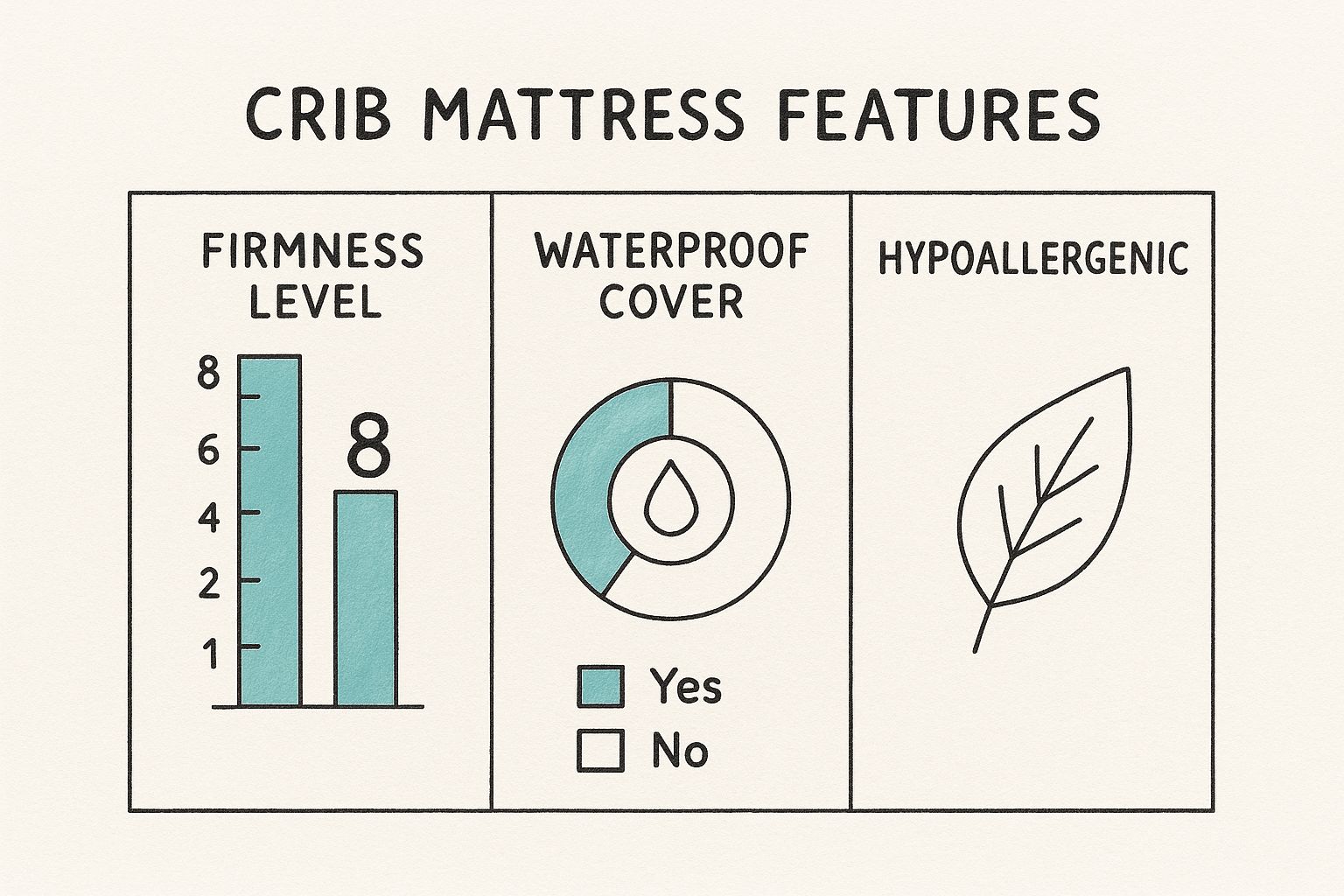
Now for the fun part—putting the top crib mattresses side-by-side to see how they really stack up. Forget generic pro/con lists. We’re digging into the nuanced differences that actually matter when you’re wrestling with a fitted sheet at 3 a.m. or deciding if a fancy feature is worth the extra cash.
Choosing the best crib mattress for a newborn isn't about finding a single "winner." It's about finding the perfect match for your family's specific needs, budget, and lifestyle. Let's compare some of the leading models based on what parents like you care about most.
Scenario 1: The 3 A.M. Diaper Disaster
Picture this: it’s the middle of the night, there’s been a major leak, and you need to get the crib sheet changed with as little fuss as possible. In this moment, a lightweight and easy-to-clean mattress is your absolute best friend. This is where a foam mattress really shines. Weighing just over 7 pounds, it’s a breeze to lift with one hand while you pull a clean sheet on with the other. Plus, a removable, machine-washable waterproof cover is a game-changer for handling messes quickly. Compare that to a heavy-duty innerspring model, which can weigh over 20 pounds. That extra weight can make changing sheets a genuine workout—especially for parents recovering from childbirth.
Scenario 2: The Peace-of-Mind Seeker
For parents who put maximum airflow at the top of their list—especially once their baby starts rolling over—a breathable mattress is a top contender. These are engineered to let air pass directly through the core, which can offer incredible peace of mind. The Newton Baby Crib Mattress is famous for its innovative Wovenaire® core, which is 90% air by volume. You can literally press your face into it and still breathe easily. This unique design not only helps reduce the risk of suffocation but also prevents overheating by letting body heat dissipate. Of course, this advanced technology comes with a premium price tag.
Scenario 3: The Eco-Conscious Family
For families committed to building a non-toxic, organic nursery, material sourcing is everything. This is where mattresses made with materials like organic cotton, coconut coir, and natural latex truly excel. Some models use a core of organic coconut coir bonded with natural latex for firmness, organic wool as a natural fire barrier, and a soft, eucalyptus-infused cover. They eliminate worries about synthetic chemicals and off-gassing. On the other hand, a high-quality CertiPUR-US® certified foam mattress provides a non-toxic sleep surface without the premium cost of fully organic materials. It’s an excellent middle ground, offering peace of mind about harmful chemicals while remaining more accessible. If you’re also looking for something for a smaller space or travel, you might be interested in a dual-sided pack n play mattress for babies and toddlers that offers similar versatility.
Your Crib Mattress Questions, Answered
Even after narrowing down the options, you probably still have a few lingering questions. That's completely normal. Let's walk through some of the most common queries I hear from parents to make sure you feel great about your decision.
How Firm Does It Really Need to Be?
The short answer? Very, very firm. Think firmer than what you'd find comfortable. The American Academy of Pediatrics is clear on this: a newborn’s sleep surface must be firm and flat, showing no indentation when your baby is on it.
A simple way to check is to press down firmly in the center and along the edges. If your hand leaves a noticeable, lasting impression, the mattress is too soft. This isn’t about comfort; it's a non-negotiable safety feature that helps reduce the risk of SIDS and suffocation by ensuring your baby can't sink into the surface.
Is It Okay to Use a Second-Hand Mattress?
I get this question a lot, and while recycling baby gear is fantastic, the crib mattress is one item you should always buy new. It's just not worth the risk.
An older mattress can break down, losing the critical firmness your baby needs. It might not meet current safety regulations, and worse, it could be hiding mold, mildew, or bacteria from its previous life. A fresh, certified mattress is the only way to guarantee a safe, hygienic foundation for sleep.
How Do I Make Sure the Mattress Fits?
A snug fit is non-negotiable. You should have no more than two fingers of space between the mattress edge and the crib frame. Gaps larger than this are a serious entrapment risk.
Before you even click "buy," measure the inside of your crib. Compare those dimensions to the mattress specs to ensure a perfect, gap-free fit.
This two-finger rule is a universal safety standard, whether you're outfitting a full-sized crib or a portable playard. If you're also looking for a travel sleep solution, our guide on what is a pack n play mattress digs into those specific safety requirements.
Our Final Thoughts
Alright, we've gone deep into certifications, materials, and features. Now it's time to land the plane and make a decision. Choosing the best crib mattress really comes down to what makes the most sense for your family, your budget, and your peace of mind.
The one thing you absolutely can't compromise on is firmness. For a newborn, a firm, flat surface is the cornerstone of safe sleep. After that, look for those key certifications like GREENGUARD Gold or CertiPUR-US®. They're your best bet for ensuring the mattress doesn't bring unwanted chemicals into the nursery.
The perfect mattress is simply one that checks all the safety boxes, doesn't break the bank, and makes your life just a little bit easier. When the mattress is safe, everyone sleeps better. Ultimately, your job is to find a mattress that provides a secure foundation so you can worry about everything else that comes with a new baby. Keep your focus on that non-negotiable firmness, look for trusted certifications, and pick the practical features that will genuinely help you. Do that, and you'll have made a great choice for your little one's restful start.
What feature is most important to you in a crib mattress? Drop a comment below—we'd love to hear your thoughts