


How to Childproof Your Home for Total Peace of Mind
When you're getting ready for a baby, childproofing might seem like a distant task on a never-ending to-do list. But once your little one starts to roll, crawl, and explore, your home suddenly looks like an American Ninja Warrior course. Every corner, cord, and cabinet becomes a new adventure—and a potential hazard.
Learning how to childproof your home isn't about wrapping your world in bubble wrap or sacrificing your style. It's about creating a safe space for your child to be curious and for you to breathe a little easier, maybe even sip a hot coffee for once.
Your New Superpower: Seeing the World Like a Child
The moment your baby becomes mobile is a true game-changer. That cozy living room? It’s now an obstacle course. This isn't about making your home boring; it’s about making it a secure haven where your child can explore without you having a mini heart attack every five minutes.
Think of childproofing as an evolving conversation with your growing child. What works for a six-month-old just starting to sit up won't be enough for a determined toddler who’s just discovered they can climb. This guide is your room-by-room playbook to stay one step ahead.
Get on Their Level—Literally
The best piece of advice I ever got was to get down on my hands and knees and crawl through my own house. It sounds silly, but it’s a total game-changer. What do you see from down there?
- That long, dangling lamp cord looks pretty tempting, doesn't it?
- What about the dust bunnies and that lost button under the couch? Yum.
- The sharp corner of the coffee table is right at eye level. Ouch.
- Those shiny cabinet pulls look like the perfect thing to grab onto.
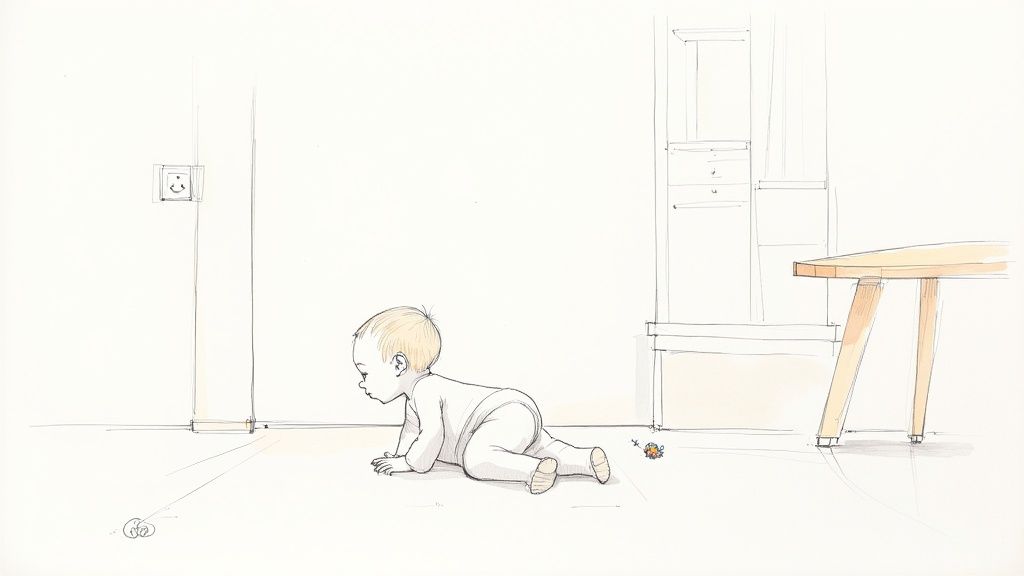
This simple shift in perspective reveals dangers you'd completely miss from five feet up. It helps turn the vague idea of "making things safe" into a concrete to-do list. A well-organized space is often a safer one, too. For tips on setting up a secure and functional room, check out our guide on nursery organization ideas.
The goal isn’t to prevent every single bump or scrape—those are just part of growing up. The real mission is to head off the serious accidents that can happen in the blink of an eye.
Tackle the Big Risks First
You don't have to get everything done in a single weekend. The key is to start with the "big rocks"—the things that pose the greatest and most immediate danger. This means anchoring heavy furniture like dressers and TVs, covering every unused electrical outlet, and getting gates up at the top and bottom of stairs.
The statistics are pretty sobering. A 2023 report showed that a staggering 55% of household injuries to children were preventable with better safety measures in place. With 81% of parents agreeing that childproofing is extremely important, it's clearly a major focus for families everywhere. You can dive deeper into the home childproofing report to understand the most common risks.
By focusing on the most critical areas first, you create a solid foundation of safety. This buys you valuable peace of mind while you work your way through the rest of the house, room by room.
Top Childproofing Priorities At a Glance
This table breaks down the most critical childproofing tasks, helping you prioritize the actions that make the biggest safety impact right away.
| Hazard Type | Key Action Items | Why It's a Priority |
|---|---|---|
| Furniture Tip-Overs | Anchor dressers, bookshelves, and TVs to the wall with anti-tip kits. | Heavy furniture can cause serious or fatal injuries if it falls on a child. |
| Electrical Shocks | Use outlet covers or tamper-resistant outlets. Secure all loose cords. | Prevents children from inserting objects into outlets, avoiding burns and electrocution. |
| Falls | Install hardware-mounted safety gates at the top and bottom of stairs. | Stairways are one of the most common locations for serious falls in the home. |
| Poisons & Chemicals | Lock all cabinets with cleaning supplies, medications, and chemicals. | Children are naturally curious and may ingest toxic substances before you can intervene. |
| Choking Hazards | Regularly scan floors and low surfaces for small items (coins, toys, etc.). | Small objects can easily be swallowed, posing a serious choking risk. |
Start with these five areas, and you'll have made a huge leap toward creating a safer environment for your little explorer.
Securing Your Family's Core Living Spaces
The living room and the nursery are where your family truly lives. They're the heart of the home, where your little one will spend a huge chunk of their time, both awake and asleep. To us, these rooms are cozy and familiar, but for a curious baby just starting to move, they’re an exciting new world to explore. Let's get beyond just plugging outlets and make these spaces genuinely safe.
From Living Room to Safe Play Zone
Once your baby is on the move, the living room becomes their primary playground. This is where you’ll want to get down on your hands and knees to see the world from their perspective—you'll be amazed at what you discover.
The single most important step is anchoring your furniture. Dressers, bookcases, and TV stands can tip over in an instant if a child tries to climb them. It's a terrifying thought, but according to the CPSC, a child is sent to the emergency room every 60 minutes due to a furniture or TV tip-over. Use anti-tip straps or brackets to secure every large piece of furniture to the wall. Seriously, don't skip this.
Next, tackle those sharp corners. The hard edges of coffee tables, entertainment centers, and fireplace hearths are right at head-level for a wobbly toddler. Soft corner guards are an easy fix for these common bump and bruise culprits. You can find a wide variety of the best baby safety products online to match your home's decor.
Creating the Safest Sleep Environment in the Nursery
The nursery needs to be a sanctuary, especially when your baby is sleeping. The American Academy of Pediatrics (AAP) has life-saving safe sleep guidelines designed to reduce the risk of Sudden Infant Death Syndrome (SIDS) and other sleep-related tragedies.
The core principle is "Back to Sleep, Alone, in a Crib." This means your baby should always be placed on their back for every sleep, with nothing else in the crib.
-
A Bare Crib is Best: This is the golden rule. The crib should have a firm mattress with a tightly fitted sheet, and that's it. No bumpers, no pillows, no stuffed animals, and absolutely no loose blankets. As adorable as they look, these items are major suffocation hazards.
-
Cordless is Critical: Dangling cords from window blinds present a serious strangulation risk. The best solution is to install cordless blinds or shades. If that’s not an option right now, ensure all cords are tied up high and are completely inaccessible.
-
Strategic Furniture Placement: Position the crib away from windows, heaters, lamps, and wall hangings. A curious baby has a surprisingly long reach and can pull things into the crib that pose a danger.
The safest crib is an empty one. It might feel a little stark at first, but a clear sleep space is the best way to ensure your baby breathes easy all night long.
By thoughtfully working through these areas in your living room and nursery, you're doing more than just checking items off a list. You're creating a secure foundation that gives your child the freedom to explore and gives you the peace of mind to enjoy every moment of their discovery.
Tackling the Kitchen and Bathroom: Your High-Alert Zones
The kitchen and bathroom are command central for a busy home, but for a curious child, they're filled with potential hazards. Hot surfaces, sharp objects, chemicals, and water create a perfect storm of risks. Let's walk through how to systematically make these high-traffic areas safe for your little explorer.
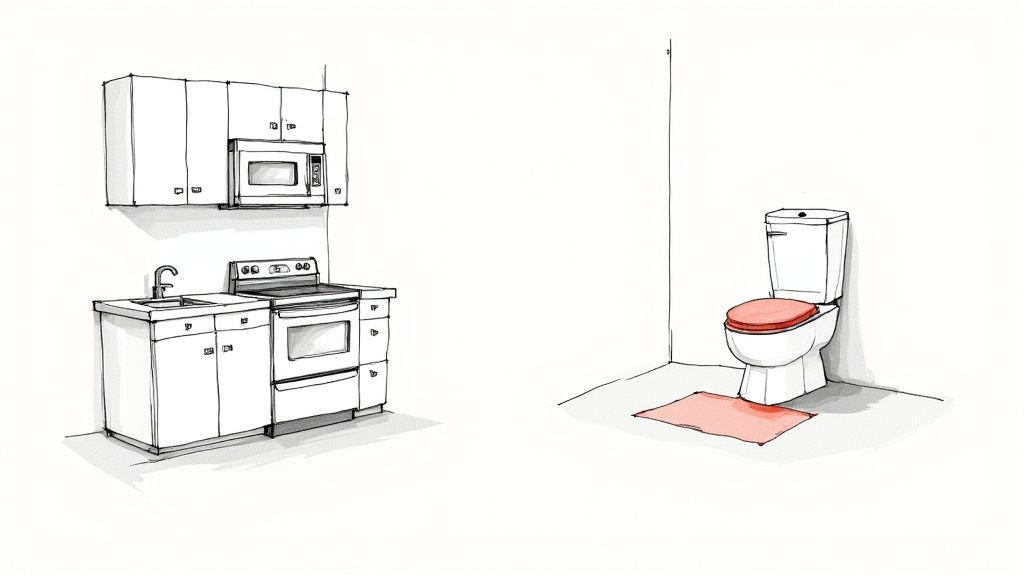
Locking Down the Kitchen
The kitchen is where the family gathers, so you want to make it welcoming, not a fortress of "no." The key is to secure the hazards so your little one can safely be near you while you cook.
Your first move should be to secure every single cabinet and drawer they can reach. Pay special attention to the ones storing cleaning supplies, knives, glassware, and heavy pots. I'm a big fan of magnetic locks; they’re completely hidden inside the cabinet, so they don’t ruin your kitchen’s look, and toddlers can't defeat them.
Next up, the stove. This is a big one. Stove knob covers are essential for stopping little hands from turning on burners, and an oven door lock prevents them from opening a dangerously hot oven. Get into the habit of turning pot and pan handles toward the back of the stove—it's a simple, free change that prevents a grab-and-pull disaster.
Create a Kitchen 'Yes Space'
Tired of saying "no" all the time? Try creating a "yes space." Designate one low, easily accessible cabinet or drawer just for your child.
Fill it with safe, fun items like plastic bowls, measuring cups, and wooden spoons. This gives them their own special spot to explore, redirecting that natural curiosity away from dangerous areas. It keeps them happily and safely occupied while you get dinner on the table.
Mastering Bathroom Safety
The bathroom is unique because it combines water hazards with chemical risks, demanding a robust safety strategy.
Let's start with the water. A toilet lid lock is a non-negotiable. It prevents a top-heavy toddler from falling in and stops them from turning the toilet bowl into a splash zone for toys. In the tub, use a non-slip mat to prevent falls and a soft, cushioned faucet cover to protect against painful head bumps during bath time.
One of the most critical safety steps you can take has nothing to do with gadgets. Set your water heater to 120°F (49°C) or lower. It's a simple adjustment that can prevent devastating scald burns, which can happen in mere seconds at higher temperatures.
Just as important is securing all medications and toiletries. This isn’t just about prescription drugs; it includes vitamins, mouthwash, makeup, and lotions. All of it needs to be stored high up, ideally in a locked medicine cabinet. Remember, child-resistant caps are not truly childproof.
The data proves these small efforts make a huge difference. Thanks to widespread safety measures like securing medicines and toxic substances, deaths from unintentional injuries for children under 19 fell by about 60% between 1987 and 2013. You can read more about these encouraging child safety findings.
Essential Safety Products for Kitchen and Bath
Picking the right childproofing gear can feel like a chore. To simplify things, here's a breakdown of the most common and effective products to help you choose what you really need.
| Product | Primary Use | Installation Type (Adhesive, Screw-in) | Best For |
|---|---|---|---|
| Magnetic Cabinet Locks | Securing cabinets and drawers from the inside, making them invisible from the outside. | Adhesive or Screw-in | Protecting kids from chemicals, knives, or breakables without altering your kitchen's look. |
| Stove Knob Covers | Preventing a child from turning on stove burners. | Snap-on (No tools) | Homes with gas or electric stoves where knobs are accessible from the front. |
| Toilet Lid Lock | Keeping the toilet lid securely closed to prevent drowning or "science experiments." | Adhesive | Every bathroom in a home with a mobile baby or toddler. It's a critical safety device. |
| Faucet Cover | Cushioning the hard metal faucet in the bathtub to prevent head injuries. | Slips over faucet | Bath time safety, especially for babies learning to sit up and toddlers who move around a lot. |
Think of these products as your first line of defense. Investing in a few key items provides a massive boost in safety and gives you invaluable peace of mind.
Spotting the Hidden Household Hazards
You’ve tackled the big stuff—the furniture is anchored and the cabinets are locked. Good job. But now it’s time to get on your hands and knees and see the world from a crawler’s-eye view. This is where you’ll find the hidden dangers, the ones that are so easy for us adults to overlook but look like a fascinating new toy to a curious baby.
Learning to childproof is really about learning to anticipate. You have to start thinking like a tiny, determined, and surprisingly clever explorer who sees every object as something to be touched, tasted, or pulled.
Mastering the Stairway Challenge
Stairs represent a huge developmental milestone for a mobile baby, but they're also one of the biggest fall risks in any home. When it comes to stairway safety, I can't stress this enough: you must use hardware-mounted baby gates at both the top and bottom of the stairs.
Pressure-mounted gates are fine for separating rooms on the same level, but they are a disaster waiting to happen at the top of a staircase. All it takes is one good push from a determined toddler, and the gate—and your child—can go tumbling down. Hardware-mounted gates screw directly into the wall or banister, creating a solid barrier that isn't going anywhere. It’s a small weekend project that buys you priceless peace of mind.
For a complete walkthrough, our guide on how to baby proof stairs covers everything you need to know, from choosing the right gate to installing it correctly.
Beyond the Basic Outlet Cover
So, you've plugged all the empty outlets with those little plastic covers. That’s a great start, but what about the power strips? The ones tucked behind the TV console or under your desk are a magnet for little hands, complete with blinking lights and a spaghetti-like tangle of cords to pull.
- Power Strip Covers: Get a box-style cover. These contraptions enclose the entire power strip, stopping your child from yanking out plugs or poking tiny fingers into the sockets.
- Smart Cord Management: Don't just leave cords snaking along the baseboards. Bundle them up with cord organizers or run them through a concealer that sticks to the wall. Out of sight, out of mind (and out of mouth).
Unseen Poisoning and Choking Risks
When we think about poisoning risks, our minds usually go straight to the cleaning supplies under the sink. But some of the most common threats are everyday items scattered around your house that you'd never think twice about.
It's easy to overlook what's normal to us but dangerously enticing to a child. The shiny wrapper on a cough drop, the bright green leaves of a houseplant, or the small, metallic glint of a button battery can all pose a serious threat.
Keep an eye out for these often-missed dangers:
- Houseplants: Many popular houseplants, like philodendrons and pothos, are toxic if eaten. It's best to move all your plants onto high shelves or into hanging baskets well out of reach.
- Button Batteries: These tiny batteries are in everything from TV remotes and key fobs to musical greeting cards. If swallowed, they can cause catastrophic internal burns in as little as two hours. Use strong tape to secure any battery compartments that don't have a screw closure.
- A Guest's Purse: A visitor’s handbag is a treasure trove of potential hazards—medications, coins, hand sanitizer, cosmetics, you name it. When guests come over, politely ask them to place their purses on a high counter or in a closed-off room.
Creating No-Go Zones
Let's be realistic: some areas of the house are just not meant for tiny explorers. The garage, with its tools and chemicals, a dusty basement, or a home office full of important papers and wires are all places you need to make completely off-limits. Simple doorknob covers or high-up slide locks are perfect for creating these clear, non-negotiable boundaries.
Finally, think about the less obvious chemical exposures. If you're planning on getting new floors or refinishing your current ones, take a moment to look into safer options. Doing a little research and understanding low VOC finishes for flooring can make a big difference in your home's air quality. Every small choice you make helps build a safer, healthier environment for your little one to grow up in.
Adapting Your Strategy as Your Child Grows
Childproofing isn't a "one and done" project. Just when you think you have every corner secured, your little one develops a new skill that sends you right back to the drawing board. What kept a stationary infant safe is no match for a determined crawler, and a crawler’s safety net won’t hold back a toddler who has just discovered the joy of climbing.
To do this right, you have to treat childproofing as a living, breathing process. It's a marathon, not a sprint, and your game plan has to evolve right alongside your child. The trick is learning to anticipate their next move and adjusting your safety measures before they put their new abilities to the test.
From Floor Level to Counter Surfer
The journey always begins on the floor. For infants and new crawlers, their entire world exists at eye level. This is the stage for outlet covers, securing low cabinets, and obsessively scanning for any small objects left lying around. Your whole focus is on what they can grab and put in their mouth from a sitting or crawling position.
But then, they start pulling up. All of a sudden, the coffee table isn't just furniture; it's a cruising lane, and everything on it is fair game. Soon, they're walking, then running, and their reach extends higher and higher. Doorknobs that were once out of sight become a fascinating challenge, opening up less-safe areas like the bathroom or basement.
This constant shift in risk is why doing regular safety checks is so critical. A survey from the National Institutes of Health (NIH) highlighted this, finding that 42.3% of parents ramped up their childproofing efforts during the extended time at home in the COVID-19 pandemic. This was especially true for parents of younger kids, proving that a child's developmental stage is a major trigger for re-evaluating home safety.
Your safety focus has to shift upward as your child gets taller and more mobile. New dangers pop up at every stage.
The Climber and the Problem-Solver
Just when you think you’ve got everything at toddler height locked down, the climbing phase begins. That little chair you thought was harmless is now a step stool to the kitchen counter. The dresser in their room isn't just for clothes anymore—it’s their personal Mount Everest. This is when anchoring furniture to the wall becomes an absolute, non-negotiable lifesaver.
As they move into the preschool years, their physical skills are matched by a growing intellect. They can now figure out simple puzzles, which means they can often defeat the very safety latches you installed last year. It's a classic parenting moment: watching with a mix of pride and panic as your three-year-old calmly dismantles a "childproof" lock.
This is your cue to upgrade to more complex locking mechanisms, like magnetic locks that are invisible and require a special key. It's also time to double down on teaching safety rules. The best defense is a combination of physical barriers and clear, consistent communication about what is and isn't safe.
As your little one gets older, their endless curiosity and mobility demand that you continuously adapt. For more ideas on evolving your approach, check out these strategies for navigating the toddler years with an active baby.
My best advice? Set a recurring reminder on your calendar to do a home safety sweep every three to six months, or whenever your child masters a new skill. Staying vigilant is the key to keeping your home a safe space for every amazing stage of their journey.
Your Top Childproofing Questions Answered
Even with the best checklist in hand, you're going to have questions as you start making your home safer. That's perfectly normal. Let's tackle some of the most common ones I hear from parents.
When should I really start this?
Honestly, the best time is before your baby is even mobile. I know it sounds crazy early, but starting during your second trimester is a game-changer. It gives you plenty of time to research, buy, and install everything without the sudden panic of a newly crawling infant.
Try to get the big stuff done first. You'll want to have all your heavy furniture anchored and stair gates installed long before your little one hits that four- to six-month mark. Then you can layer in things like cabinet locks and outlet covers right as they start getting curious and grabby.
My best advice? Starting early turns a massive, overwhelming project into a series of small, manageable tasks. It's a huge favor to your future, sleep-deprived self.
The big debate: Adhesive vs. screw-in safety gear?
This is a classic question, and the answer isn't black and white. Both have their place. It’s all about using the right tool for the job.
-
Adhesive-Mounted Products: These are a lifesaver for renters or for surfaces you'd rather not drill into, like a nice piece of furniture. They’re super easy to pop on and usually come off cleanly. The catch? A really determined toddler might eventually pry them loose. They're great for lower-risk spots, like keeping the toilet lid down or securing a drawer with non-hazardous items.
-
Hardware-Mounted (Screw-In) Products: When it comes to serious safety, screw-in hardware is non-negotiable. I'm talking specifically about furniture anti-tip straps and safety gates at the top of a staircase. The holding power you get from screws is something an adhesive strip just can't match. If a product failing could lead to a serious fall or injury, always, always choose the hardware-mounted version.
How can I do this without breaking the bank?
Great childproofing is about being resourceful, not just buying every gadget on the shelf. Some of the most effective safety measures are completely free—they're all about creating new habits.
Start with simple behavioral changes. Get everyone in the habit of keeping bathroom doors closed. Move all the cleaning chemicals from under the sink to a locked closet or a high shelf. And when you're cooking, always turn pot handles toward the back of the stove. These things cost nothing.
When you do need to buy products, focus on the high-risk areas first with low-cost solutions. A big pack of simple plastic outlet covers is cheap and solves a huge hazard. For cabinets, you can get by for a while by looping heavy-duty rubber bands or hair ties around the knobs. The goal is a safe space, not a showroom of expensive gear.
My toddler figured out the "childproof" locks. What now?
First off, take a deep breath. And maybe marvel for a second that you're raising a tiny mastermind! When your little one bypasses your first line of defense, it just means it's time to upgrade your strategy.
The key is to switch to a different type of lock, not just a stronger version of the same one. If they've figured out how the simple slide latches work, try a magnetic lock. These are totally hidden from the outside and need a special "key" to open. Toddlers learn through repetition, so introducing a completely new mechanism stumps them all over again.
This is also a great time to start teaching simple boundaries. The physical lock is your backup, but your guidance is the main tool. Every time they head for that off-limits drawer, gently redirect them and say, "Nope, that's not for you. That's a 'no thank you' spot." A truly safe home uses a combination of smart products and patient teaching.
Childproofing is a journey, not a destination. By staying one step ahead and adapting as your child grows, you create a home where they are free to explore and you are free to enjoy watching them learn. What's your best childproofing hack or the one thing you wish you'd known sooner? Share your tips in the comments below!
At Hiccapop, we believe that creating a safe home shouldn't be complicated. Our thoughtfully designed products, from inflatable bed rails to portable booster seats, are made to give you peace of mind as your child grows and explores. Explore our full range of parent-approved safety solutions at https://hiccapop.com.