


When Do Toddlers Stop Napping? A Parent's Complete Guide
For parents, the toddler nap is that golden, quiet sliver of the day—a sacred time for productivity or maybe just a few moments of blissful silence. It’s a chance to hear yourself think. But then one day, that reliable midday snooze starts to fizzle out, leaving you wondering, "Is this it? Are naps over?"
Don't panic. The end of naps is a major milestone, but it's a gradual one. Most toddlers stop napping sometime between the ages of 3 and 5, but this isn't a hard-and-fast rule. The transition is a unique process for every child. So, if your little one’s nap schedule looks completely different from their friends', that's perfectly normal.
When Do Toddlers Really Stop Napping?
Think of your toddler's energy level like a phone battery that's slowly getting better at holding a charge. In the beginning, it needs frequent top-ups to make it through the day. As they grow and their brain matures, that internal "battery" gets stronger and can last the whole day without needing a midday recharge.
This change doesn’t happen overnight. It’s a slow, often unpredictable, journey filled with nap strikes, short naps, and days where you're just not sure what to expect.
The Typical Nap Transition Timeline
While every child follows their own developmental path, research gives us a pretty clear picture of the general timeline.
A comprehensive 2022 review published in Sleep Medicine Reviews found that less than 2.5% of children are done with naps before age 2. Even by age 3, about two-thirds of children still benefit from that afternoon rest. By the time they hit age 5, 94% of children have officially retired from napping for good.
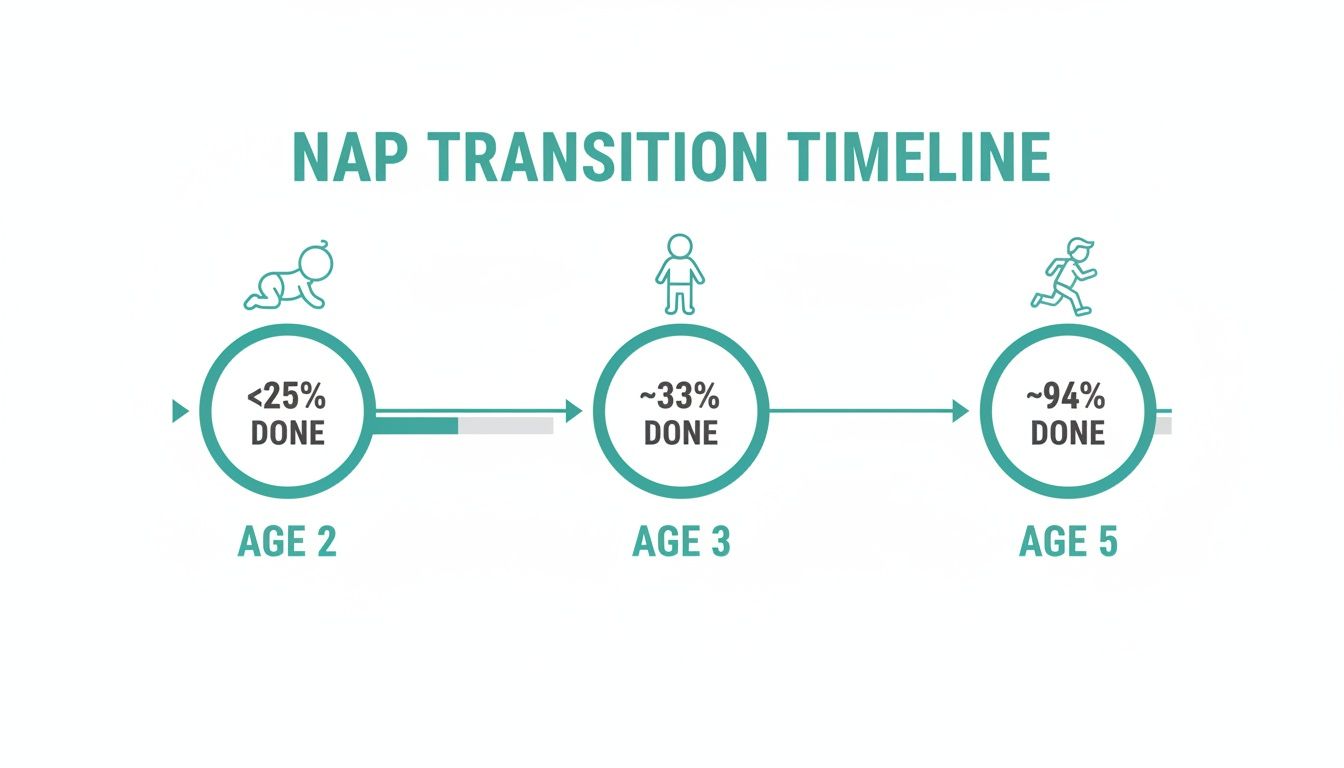
The key takeaway? Dropping naps before age 3 is quite rare, and it's completely normal for preschoolers to still need them. Patience is your best friend during this phase.
To give you a better idea of what to expect, here’s a quick breakdown of typical napping patterns by age.
Toddler Nap Transition Quick Guide By Age
This table offers a snapshot of napping behaviors at different ages, helping you see where your child fits in the typical developmental timeline.
| Age | Percentage Still Napping | Typical Nap Duration (for nappers) | Common Behaviors |
|---|---|---|---|
| 2 | ~95% | 1-2.5 hours | Most 2-year-olds are solid nappers, but you might see early signs of nap resistance starting to crop up. |
| 3 | ~63% | 1-2 hours | This is a major transition age. Naps may become shorter, less frequent, or take longer to start. |
| 4 | ~33% | 1-1.5 hours | Many 4-year-olds have dropped the nap but may still need one on extra-busy days to avoid becoming overtired. |
| 5 | ~6% | Variable (short) | Napping is rare. Most 5-year-olds have transitioned to "quiet time" and get all their sleep at night. |
Remember, these are just averages. Your child might follow this pattern exactly or forge their own path, and either way is okay.
Of course, before you get to the "no nap" stage, you have to get through the two-to-one nap transition. If you're still in that phase, our guide on making a smooth transition to one nap can help. For older toddlers, the next step is moving toward quiet time instead of a full-blown nap—a shift that requires consistency and a bit of creativity.
Why Your Toddler Is Suddenly Done With Naps
If your once-predictable napper is now staging a full-blown protest every afternoon, you're not alone. This isn't just a random act of toddler defiance; it's a major developmental milestone driven by significant changes happening inside their growing brain. The main reason is a process called sleep consolidation.
Think of your toddler's brain like a bustling library, constantly taking in new books (which are memories and experiences). In the early years, the librarian needed frequent breaks throughout the day to sort and shelve all that new information. Those breaks were naps.
As your child gets older, that little "librarian" gets way more efficient. They can now manage a full day of incoming books before needing one long, consolidated shift overnight to organize everything. That's sleep consolidation in a nutshell—their sleep is shifting away from the daytime and concentrating into one solid block at night.
The Science Behind Shifting Sleep Needs
This whole transition is guided by two key biological forces: sleep pressure and a maturing circadian rhythm.
Sleep pressure is that undeniable urge to sleep that builds the longer we stay awake. Toddlers build this pressure much faster than adults, which is why they used to crash so easily. But as they grow, they can stay awake comfortably for much longer stretches.
At the same time, their internal body clock (the circadian rhythm) gets stronger and more locked into a day-night cycle. A mature circadian rhythm sends powerful signals to be awake during the day and asleep at night.
For some kids, this maturing clock makes a midday nap feel like trying to force sleep at noon. Their body is practically screaming, "It's daytime!" This is what causes that classic nap resistance and, if they do fall asleep, can push their bedtime later and later into the evening.
It becomes a tricky balancing act. That afternoon nap might relieve just a little too much sleep pressure, making it impossible for them to feel tired at a reasonable bedtime. This is often the very first sign that their overall sleep needs are changing and the nap is on its way out.
How Their Total Sleep Changes
As toddlers start dropping their nap, their total sleep in a 24-hour period naturally goes down a bit. But you’d be surprised how long that daytime sleep still plays a role, even as it gets shorter.
Research shows the average nap length shrinks from about 1.9 hours for 2-year-olds down to 1.5 hours for 4-year-olds who are still napping. During this same period, the recommended total sleep for this age group is around 10–13 hours, with more and more of that time happening overnight. You can dive deeper into these sleep duration findings to see how your child’s patterns compare.
This gradual shift is a clear signal that their sleep architecture is maturing, getting them ready for a future with no naps at all.
8 Clear Signs Your Toddler Is Ready to Drop Naps
Figuring out if your toddler is actually done with naps or just staging a temporary protest can feel like a guessing game. Is this a "nap strike," or are they genuinely ready to power through the day? The real answer is found in consistent patterns, not just one tricky afternoon.
If you've been nodding along to several of these signs for a week or two, you’re probably looking at a real developmental shift.
1. They Fight Naps Like a Pro
This is the most obvious red flag. Nap time used to be a simple routine, but now it's a full-blown battle. If your little one consistently takes more than 30 minutes to settle down—or just doesn't fall asleep at all—they may not be building up enough sleep pressure to feel tired. Instead of snoozing, they're singing, chatting with their stuffed animals, or practicing acrobatics in their crib. This isn’t a one-off fluke; it's a recurring theme where you're losing the nap-time battle day after day.
2. Bedtime Becomes a Late-Night Party
A nap that's too long or too late can completely sabotage bedtime. If your toddler takes a solid nap and then is still bouncing off the walls an hour past their usual bedtime, their daytime sleep is likely stealing from their nighttime sleep. You'll notice they're perfectly happy playing or babbling in their crib long after you’ve said goodnight. This is a classic sign that their sleep needs are shifting and consolidating into one long overnight stretch.
3. Night Wakings and Early Mornings Make a Comeback
Just when you thought you'd left them behind, are middle-of-the-night wakeups or pre-dawn starts creeping back in? That afternoon nap might be the culprit. When a child gets more sleep during the day than their body actually needs, it can lead to shorter, more broken sleep at night. They're essentially filling up their 24-hour sleep "tank" too early, causing them to wake up before the sun.
4. They’re Cheerful on No-Nap Days
Here’s the real test. Your toddler misses a nap—maybe you were out running errands or had a playdate that ran long—but they make it through the afternoon without a major meltdown. If they're still relatively happy and energetic, it's a huge sign their stamina has increased. A truly nap-ready toddler can make it to an earlier bedtime without turning into a cranky, overtired mess. They might be a little tired, but they aren't emotionally falling apart by dinnertime. Pay close attention to their mood on these "oops, no nap" days. A little end-of-day fussiness is one thing, but if they’re generally content, they're probably ready to make the change.
5. You See a Consistent Pattern
One refused nap is just a blip on the radar. But if your child is fighting their nap most days for at least two consecutive weeks, you're looking at a genuine developmental shift. Consistency is everything when it comes to decoding your toddler's sleep cues. Try keeping a quick log of their nap resistance and mood. Seeing the trend written down can give you the confidence to start phasing out the nap and moving toward a new routine.
How to Manage the No-Nap Transition Without Meltdowns
Once you've spotted the signs that your toddler is ready to say goodbye to naps, it’s time to come up with a game plan. The goal here isn't to just rip off the bandage and go cold turkey; that's a recipe for meltdowns. Instead, think of it as a gentle, phased transition that keeps everyone sane. This process is definitely a marathon, not a sprint, so patience and consistency are your best friends.
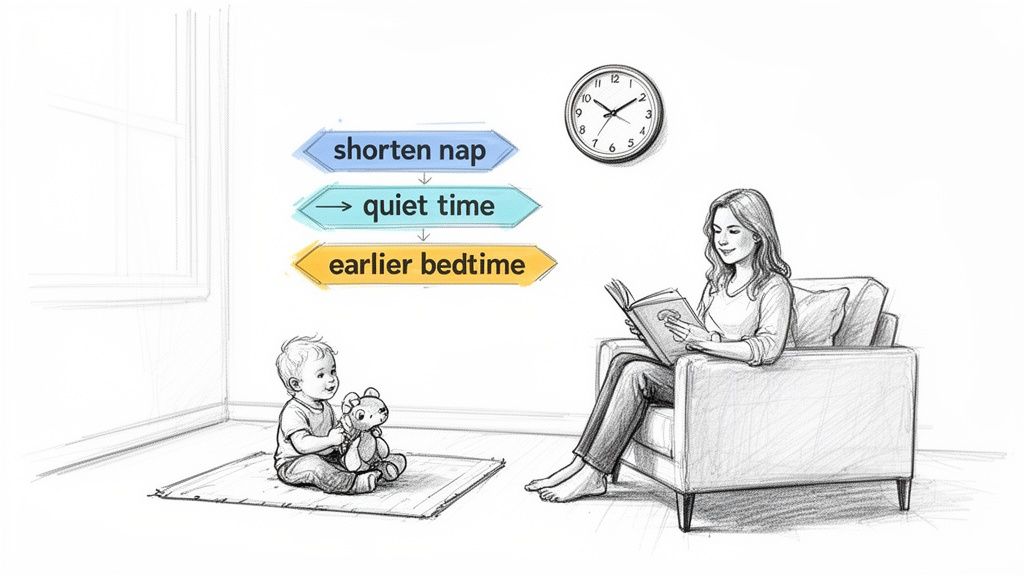
The playbook is pretty straightforward: shorten the nap, bring in "quiet time" as its replacement, and then shift bedtime earlier to make up for the lost daytime sleep. You’re essentially weaning them off the nap, not cutting them off completely.
Phase 1: Shorten the Nap
Before you drop the nap entirely, just try capping it. If your little one usually snoozes for a solid two hours, try waking them up after 90 minutes. If you’re still facing bedtime battles with that, you can trim it down again to 60 minutes. This simple adjustment can often solve the bedtime resistance while still giving your child that restorative break they need to make it through the rest of the afternoon without a meltdown. Give this a shot for a week or two and just watch how they handle it.
Phase 2: Introduce Quiet Time
If shortening the nap doesn't do the trick—or if your toddler just flat-out starts refusing the shorter nap—it’s time to introduce quiet time. This isn't a punishment at all; it's a structured, restful period that slides right into the nap's old time slot. Quiet time is a game-changer. It provides a necessary midday brain break for your toddler and preserves that precious slice of sanity for you. Even if they don't sleep, this downtime is crucial for preventing overstimulation.
Here's how to make it work:
- Create a Calm Space: The room should be quiet, dimly lit, and completely safe for them to play in by themselves.
- Use a Timer: A simple visual timer or an OK-to-wake clock is fantastic for helping your child understand when quiet time is over. Start with just 15-20 minutes and slowly work your way up to a full 60-90 minutes.
- Offer Low-Key Activities: Set out a small, curated selection of calm activities, like books, puzzles, or blocks. It helps to keep these as special "quiet time only" toys to make them more appealing.
To help your child burn off some of that new, nap-free energy, providing energetic play options like toddler bounce houses can work wonders. A good run-around helps them get their wiggles out before it's time to settle down for their rest period.
Phase 3: Adjust Bedtime Earlier
This is the most critical—and most often forgotten—step in the whole process. When your toddler drops their nap, they are losing 1-2 hours of sleep from their daily total. To avoid an overtired, cranky mess by dinnertime, you have to move bedtime earlier.
For instance, if your child used to wake from their nap at 3:00 PM for a 7:30 PM bedtime, their new nap-free bedtime might need to be as early as 6:30 PM. This shift makes up for the lost sleep and ensures they still get the 10-13 total hours their growing bodies need.
To help you visualize what this looks like day-to-day, here are some sample schedules showing how a child's routine might change as you move through these phases.
Sample Schedules for Transitioning From Naps to Quiet Time
| Time of Day | Phase 1: Shortening The Nap | Phase 2: Introducing Quiet Time | Phase 3: No Nap |
|---|---|---|---|
| 7:00 AM | Wake Up | Wake Up | Wake Up |
| 12:30 PM | Lunch | Lunch | Lunch |
| 1:00 PM | Nap (capped at 60-90 mins) | Quiet Time (start with 20 mins, build to 60) | Free Play / Outing |
| 2:30 PM | Wake Up from Nap | ||
| 5:30 PM | Dinner | Dinner | Dinner |
| 7:00 PM | Bedtime Routine Begins | Bedtime Routine Begins | Bedtime Routine Begins |
| 7:30 PM | Bedtime | Bedtime (may need to move earlier) | NEW BEDTIME: 6:30 PM |
Remember, these are just templates. The key is to watch your child's cues and adjust the schedule to fit their unique needs.
This transition can be tricky, and if you feel like you’re hitting a wall, it might be helpful to look into other strategies. You can find more structured guidance in our article on various toddler sleep training methods. Ultimately, staying flexible and responsive to your child is what will get you both through this milestone successfully.
Solving Common Nap Transition Problems
Let’s be honest: the road to dropping naps is almost never a straight line. Just when you think your toddler has it all figured out, they throw a curveball that leaves everyone exhausted. Don't worry, though. These bumps in the road are completely normal, and having a few tricks up your sleeve can make all the difference.
One of the biggest hurdles you'll face is the dreaded "afternoon crankies." Your little one skips their nap but just can't quite make it to bedtime without a full-blown meltdown. This is a classic sign their sleep stamina is still developing.
Dealing With Afternoon Meltdowns
When that late-afternoon slump hits hard, the key is to be proactive, not reactive. You're not trying to force sleep, but you do need to help them reset and recharge without it.
A few simple strategies can work wonders:
- Offer a Power-Up Snack: A small, healthy snack that combines a complex carb and a protein—think apple slices with peanut butter or a few crackers with cheese—can do wonders for stabilizing their blood sugar and mood.
- Change the Scenery: Feeling cooped up? Head outside for just ten minutes. A little fresh air and a change of pace can be the perfect reset to shake off the grumpies.
- Embrace Water Play: Never underestimate the power of water. A quick, fun bath or even just a few minutes of splashing in the sink can have an almost magical effect on a cranky toddler.
The goal here is simply to bridge the gap between their old nap time and their new, earlier bedtime without letting them get overtired.
The Accidental Car Nap Catastrophe
It’s a scenario every parent knows well. You're driving home from an errand, glance in the rearview mirror, and there they are: sound asleep just an hour before dinner. That unplanned 15-minute car nap can feel like a disaster, often packing just enough punch to completely derail bedtime.
When this happens, flexibility is your best friend. You can't undo the nap, but you can adjust your evening plan. Try pushing bedtime back by 30-60 minutes to give their sleep pressure a chance to rebuild. It might mean a slightly later night, but it’s a whole lot better than a two-hour battle with a toddler who is suddenly wide awake.
For more ideas on keeping things calm even on tricky days, check out our guide to safe sleeping tips for toddlers.
This transition period is famously unpredictable. Real-world survey data from parents shows just how much the timing of nap loss can vary. In one large analysis, about 30% of children aged 4–5 years were still taking one nap a day. This variability is why it’s so important to expect a non-linear process and be prepared to adapt.
Navigating This Milestone With Confidence
Even with the best plan, you're bound to hit a few "what if" moments when your toddler starts giving up their nap. Here are some real-world answers to the questions that come up most often.
What if my toddler is a wreck without their nap?
You know the look: it’s 4 PM, and your child has dissolved into a cranky, emotional puddle. This is a tell-tale sign that their little body just isn’t quite ready to power through a whole day without a reset. If this is happening consistently, don't force the nap-free day. Instead, pull back a bit. Try offering a shorter nap or stick with a dedicated quiet time in their room. On those no-nap days, an early bedtime is your best friend—and yes, that might mean a 6:00 PM tuck-in. This helps them catch up on sleep and stops that overtired cycle before it really gets going.
How do I handle daycare nap policies?
This is a classic dilemma. Many daycares require a rest period for all children, which can throw a wrench in your plans if your toddler has already moved on from naps at home. You end up with one of two problems: a child who fights sleep at school and is exhausted by pickup, or one who finally crashes for a late nap and then won’t go to bed until 9 PM. The key is to team up with the teachers. Have an open conversation. Explain what's happening at home and ask if they can be flexible. Often, a good compromise is having your child rest quietly on their cot for a short period before being allowed to look at books or do a puzzle. This respects the classroom rules without derailing your entire evening.
Can my toddler go back to napping after they’ve stopped?
Yes, and they probably will! This transition is almost never a straight line from napping to not napping. It's completely normal for a child who has been happily nap-free for weeks to suddenly need to conk out in the middle of the afternoon. Think about all the things that can wear a toddler out: a growth spurt, a jam-packed weekend, travel, or a looming cold. Their sleep needs can change day to day. Don’t see it as a setback; see it as your child’s body telling you what it needs. On those days, let them sleep. The most important thing you can do is stay flexible.
The end of naps can feel like the end of an era (and the end of your free time). But it’s also a sign of your child's amazing growth and development. By watching their cues, staying flexible, and embracing "quiet time" as your new best friend, you can guide them through this transition with fewer meltdowns and more confidence.
No matter where you are in this journey, having the right gear can be a lifesaver. Whether you’re setting up a cozy quiet time corner at home or trying to keep sleep on track while traveling, Hiccapop’s safe and portable toddler products give you the consistency your family can count on. Explore our solutions to support your child's sleep, wherever life takes you.
What has been the biggest challenge for you during the nap transition? Share your stories in the comments below—we’d love to hear them