


8 Effective Toddler Sleep Training Methods for 2025
Welcome to the toddler years, where boundless energy meets immovable opinions, especially at bedtime. If you're wrestling with a nightly sleep protest that rivals a Broadway drama, you're not alone. The good news is that peaceful nights are not a distant dream. Choosing the right approach from the many available toddler sleep training methods can feel overwhelming, but it's the key to unlocking consistent, restorative sleep for everyone in the family.
This guide is your roadmap. We'll break down eight distinct, expert-backed methods in detail, moving beyond generic advice to give you the actionable steps, realistic pros and cons, and insider tips you need. While these strategies are powerful, remember that sleep is just one piece of the puzzle. Beyond specific sleep methods, families often benefit from comprehensive general parenting guidance to navigate the many stages of child development.
Whether you're looking for a gentle, hands-on technique or a more direct approach, we’ll help you find the strategy that aligns with your parenting philosophy and your toddler's unique personality. Let's explore the options to get that little dynamo, and you, the sleep you both deserve.
1. Ferber Method (Graduated Extinction)
Developed by pediatrician Dr. Richard Ferber in his book Solve Your Child's Sleep Problems, the Ferber method is one of the most well-known toddler sleep training methods. Often called "graduated extinction" or "controlled crying," this approach is designed to teach a toddler how to self-soothe and fall asleep independently. The core principle involves putting your child to bed while they are drowsy but still awake and then allowing them to cry for progressively longer intervals before you return for a brief check-in.
The check-ins are not for picking up or feeding your toddler but for reassuring them (and you) that you are nearby and they are safe. This structured system helps them learn that crying doesn't automatically result in being taken out of their crib, encouraging them to find their own comfort strategies.
How It Works in Practice
The Ferber method relies on a specific schedule of timed intervals. While Dr. Ferber provides charts, you can adapt them to your comfort level. A common starting point might look like this:
- Night 1: Check in after 3 minutes, then 5 minutes, then 10 minutes for all subsequent checks.
- Night 2: Increase the initial interval to 5 minutes, then 10, then 12.
- Night 3 and beyond: Continue gradually increasing the time between your brief, reassuring visits.
Key Insight: The goal of the check-in is reassurance, not intervention. Keep it short (under a minute), use a calm and quiet voice, and avoid turning on bright lights or picking your toddler up.
Practical Tips for Success
- Establish a Solid Bedtime Routine: A consistent, calming routine signals to your toddler that sleep is coming. This could include a bath, reading a book, and a final cuddle.
- Be a United Front: It's crucial that all caregivers are on the same page and fully committed. Inconsistency can confuse your toddler and undermine your progress.
- Track Your Progress: Jot down the times and crying duration each night. Seeing the gradual improvement on paper can be a powerful motivator during challenging moments.
- Choose Your Timing Wisely: Start on a weekend or a time when you don't have early commitments, allowing you to manage potential sleep deprivation. Ensure your toddler is healthy and not teething or ill before you begin.
2. Extinction Method (Cry It Out)
The Extinction method, more commonly known as "Cry It Out" (CIO), is one of the most debated yet effective toddler sleep training methods. This approach is based on the behavioral principle that if a behavior (crying) is not reinforced (by parental intervention), it will eventually cease. The core idea is to put your toddler to bed, say goodnight, leave the room, and not return until morning, regardless of crying.
This method teaches a child to self-soothe and fall asleep entirely on their own, without any external help. While emotionally challenging for parents, it can often lead to rapid results, making it a choice for families experiencing severe sleep deprivation who need a quick and decisive intervention.
How It Works in Practice
Unlike graduated methods, the Extinction method has one primary step after the bedtime routine is complete:
- Place your toddler in their crib or bed while they are drowsy but awake, say your goodnights, and leave the room.
- Do not return to the room until their scheduled wake-up time in the morning, unless you have a serious concern for their safety.
This clear boundary means the toddler learns that crying will not result in a parental visit, which compels them to find their own ways to settle down and fall asleep.
Key Insight: The success of this method hinges entirely on consistency. Returning to the room even once can teach your toddler that crying for a very long time eventually works, potentially making the process much harder.
Practical Tips for Success
- Ensure the Environment is Safe: Before starting, double-check that the crib is free of toys, loose blankets, or bumpers. Knowing your toddler is in a completely safe space can ease your anxiety.
- Use a Monitor: A video monitor allows you to ensure your child is safe without having to enter the room. This provides peace of mind while maintaining the method's boundaries.
- Prepare for the "Extinction Burst": It's common for crying to get worse before it gets better. This "extinction burst" is often a sign that the method is working, so stay the course.
- Have a Support System: This method is emotionally taxing. Lean on your partner, a friend, or a family member for support to help you remain consistent and manage your own stress.
3. Gentler Extinction (Camp Out/Chair Method)
For parents looking for a middle ground between cry-it-out and no-tears approaches, the Camp Out or Chair Method offers a gradual, reassuring presence. Popularized by sleep experts and attachment-focused pediatricians like Dr. Jay Gordon, this is one of the gentler toddler sleep training methods. It allows you to stay in the room with your child as they learn to fall asleep independently, slowly fading your presence over several nights or weeks.
The core idea is to provide silent comfort without direct intervention. Your toddler knows you are there, which can reduce their anxiety, but they are still doing the hard work of self-soothing. This method acknowledges a toddler’s need for security while gently encouraging their independence at bedtime.
How It Works in Practice
The Chair Method is a systematic process of moving your physical presence out of your toddler's room. You begin by sitting in a chair right next to their crib or bed until they fall asleep.
- Nights 1-3: Sit in a chair directly beside the crib, offering occasional verbal reassurance but no physical contact.
- Nights 4-6: Move the chair a few feet away toward the middle of the room.
- Nights 7-10: Move the chair to the doorway of the room.
- Nights 11 and beyond: Move the chair just outside the door, then eventually remove it altogether once your toddler is falling asleep without your presence.
Key Insight: Consistency is your most powerful tool. The goal is to be a boring, silent, and reassuring presence. Avoid engaging in conversation, making eye contact, or picking your toddler up, as this can reinforce their protest.
Practical Tips for Success
- Set Clear "Rules": Before you start, decide on the rules for yourself. For example, no talking, no touching, and minimal eye contact. This helps your toddler understand the new expectation.
- Bring a Distraction: To help you stay calm and detached, bring a book or your phone (with the screen dimmed) to keep you occupied while you sit.
- Prepare Your Toddler: Talk to your toddler about the new bedtime plan during the day. A simple explanation like, "Mommy/Daddy is going to sit in this chair while you learn to fall asleep in your big-kid bed," can help set expectations.
- Celebrate Small Victories: This method can be slow. Acknowledge and celebrate small wins, like your toddler falling asleep five minutes faster than the night before, to stay motivated.
4. Pick-Up/Put-Down Method
Popularized by Tracy Hogg in her book Secrets of the Baby Whisperer, the Pick-Up/Put-Down method is a gentle, hands-on approach to toddler sleep training. It strikes a balance between providing comfort and fostering independence. The core idea is to put your toddler to bed awake, and if they cry, you pick them up for a brief cuddle to calm them down. Once they are calm, you put them back into their crib while they are still awake.
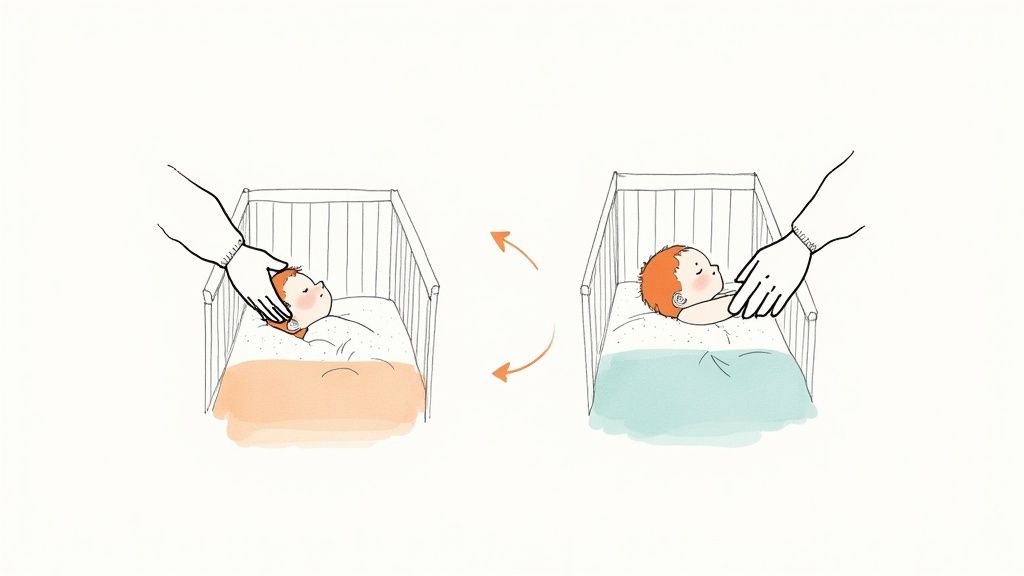
This cycle is repeated as many times as necessary until your toddler falls asleep in their own space. The constant, loving reassurance helps them understand that you are there for them, but that their crib is their designated place for sleep. It’s a method that avoids leaving a child to cry alone but still encourages self-soothing skills.
How It Works in Practice
Unlike timed-interval methods, the Pick-Up/Put-Down method is entirely responsive to your child’s needs. Your action is triggered by their crying. The process is simple but requires significant patience and physical endurance.
- Step 1: Place your drowsy but awake toddler in their crib after your bedtime routine.
- Step 2: If they begin to cry, wait just a moment to see if they will settle.
- Step 3: If the crying continues, pick them up and comfort them with a calm voice and gentle pats until they stop crying.
- Step 4: Immediately lay them back down in their crib, even if you suspect they will start crying again. Repeat this process until they fall asleep.
Key Insight: The goal is to calm, not to soothe to sleep. Your toddler should go into the crib awake every single time. This consistency is what teaches them to connect the final step of falling asleep with their own bed.
Practical Tips for Success
- Prepare for a Marathon: The first few nights can be incredibly demanding, sometimes involving over 100 pick-ups. Be mentally and physically prepared for a long night.
- Team Up with a Partner: If possible, take shifts with another caregiver. This prevents burnout and helps maintain the calm, patient demeanor your toddler needs from you.
- Stay Calm and Consistent: Your toddler will feed off your energy. Keep your voice low and your actions gentle and repetitive. Avoid showing frustration, as this can escalate the situation.
- Track Your Progress: Keep a log of how many pick-ups are needed each night. Seeing the number gradually decrease over a week can provide the motivation to keep going when you feel exhausted.
5. Bedtime Fading (Sleep Restriction)
Bedtime Fading is a gentle, behavioral-based toddler sleep training method that works with your child's natural sleep rhythm rather than against it. Instead of focusing on crying, this approach, rooted in sleep medicine, aims to reduce the time your toddler spends awake and fighting sleep in their crib. The core principle is to temporarily set their bedtime to the time they actually fall asleep, which increases their "sleep pressure" and helps them doze off quickly and independently.
Once your toddler consistently falls asleep within about 15 minutes of being put down, you gradually move their bedtime earlier in small increments until you reach your desired time. This method is particularly effective for toddlers who exhibit significant bedtime resistance, such as playing, singing, or crying for hours after being put to bed.
How It Works in Practice
Bedtime Fading requires careful observation and patience. You'll need to identify your toddler’s "sleep onset" time, which is the time they actually fall asleep, not just when you put them to bed.
- Step 1: For a few nights, track the time your toddler finally drifts off. If you put them to bed at 7:30 PM but they don't fall asleep until 9:00 PM, their temporary new bedtime becomes 9:00 PM.
- Step 2: Start your bedtime routine so it ends at this new, later bedtime. Your toddler, now with higher sleep pressure, should fall asleep much faster.
- Step 3: After a few successful nights of them falling asleep quickly, start moving bedtime earlier by 15-minute increments every few days.
- Step 4: Continue this gradual shift until you've reached your ideal, age-appropriate bedtime.
Key Insight: This method builds a positive association with bedtime. By putting your toddler to bed when they are truly ready for sleep, you reduce frustration for both of you and empower them to fall asleep on their own.
Practical Tips for Success
- Keep a Detailed Sleep Log: Accurate tracking is non-negotiable. Note when you put your toddler down and when they actually fall asleep. This data will guide your entire process.
- Maintain a Consistent Wake Time: A fixed wake-up time, even on weekends, is crucial for regulating your toddler’s internal clock and building predictable sleep pressure. Understanding appropriate wake windows by age can also be a game-changer.
- Be Patient with the Process: Moving the bedtime earlier should be slow and steady. Rushing it can bring back bedtime battles, so stick to 15-minute shifts every two or three nights.
- Use Light to Your Advantage: Expose your toddler to bright, natural light soon after they wake up in the morning. This helps anchor their circadian rhythm and reinforces the sleep-wake cycle.
6. Two-Step Method (Lady and the Tramp)
The Two-Step Method is a flexible, hybrid approach for families who find that a single sleep training philosophy doesn't quite fit their toddler's temperament. This method combines a gentle, high-presence initial phase with a more hands-off, independence-building second phase. The goal is to first make your toddler feel secure and comfortable with their sleep space and routine before asking them to learn self-soothing skills.
This adaptable strategy is excellent for toddlers who are particularly anxious, have separation anxiety, or are navigating a major change like transitioning from a crib to a bed. It allows you to build a foundation of trust before introducing more challenging sleep expectations, making it one of the more compassionate toddler sleep training methods.
How It Works in Practice
The method unfolds in two distinct phases, with the transition between them being led by your child's progress.
- Phase 1: Build Comfort and Security. In this stage, you use a hands-on method to help your child accept their bedtime routine and sleep space without fear. Examples include using the Chair Method (sitting by their bed until they fall asleep) or the Pick-Up/Put-Down method for younger toddlers. You stay with them until they are calm and sleepy.
- Phase 2: Encourage Independence. Once your toddler consistently goes to bed without significant protest and feels safe in their room, you begin to pull back. You might transition from the Chair Method to a graduated extinction approach like Ferber, or from co-sleeping to Bedtime Fading, where you gradually push bedtime later to reduce sleep latency.
Key Insight: The success of this method hinges on knowing when to move to the next phase. The goal of Phase 1 is achieved when bedtime is no longer a battle, even if your presence is still required for sleep.
Practical Tips for Success
- Define Phase Completion: Before you start, decide on the specific criteria for moving from Phase 1 to Phase 2. This could be "three consecutive nights with less than five minutes of crying" or "a full week of accepting the bedtime routine calmly."
- Communicate the Plan: Ensure all caregivers understand the goals of each phase and the criteria for transitioning. Consistency is vital for this hybrid approach to work effectively.
- Document Everything: Keep a sleep log to track your toddler's reactions, crying times, and overall mood. This data will help you objectively identify the optimal time to move to Phase 2.
- Don't Be Afraid to Regress: If your toddler gets sick or has a major developmental leap and struggles with Phase 2, it's perfectly fine to temporarily return to the more supportive methods of Phase 1 until they are ready again.
7. Positive Routines & Conditioning (Operant Conditioning)
Rooted in behavioral psychology, this approach is one of the gentler toddler sleep training methods, focusing on building positive associations with bedtime. Rather than addressing crying directly, it proactively shapes behavior by creating a predictable and rewarding bedtime environment. The core principle is operant conditioning: you reinforce the desired behavior (like staying in bed quietly) with positive outcomes, making your toddler more likely to repeat it. It conditions them to see their bed as a peaceful, safe space.
This method is less about a rigid schedule of parental absence and more about consistency and encouragement. By pairing a soothing routine with rewards for cooperation, you are not just managing bedtime struggles; you are teaching your toddler valuable self-regulation skills and a sense of accomplishment around sleep. It shifts the dynamic from a battle of wills to a cooperative, positive experience.
How It Works in Practice
The power of this method lies in its consistency and positive reinforcement. Instead of timed check-ins, you focus on rewarding the small successes leading up to and including a peaceful night.
- Establish a Strong Routine: Create a sequence of 3-4 calming activities, like a bath, putting on pajamas, brushing teeth, and reading a book.
- Introduce a Reward System: For toddlers, a sticker chart is highly effective. They get a sticker each morning for staying in their bed all night. After earning a certain number of stickers, they receive a small, pre-determined prize.
- Transfer Responsibility: Empower your toddler by letting them make small choices within the routine, such as picking their pajamas or choosing the bedtime story.
Key Insight: The focus is on what your child is doing right, not what they are doing wrong. Immediate praise for getting into bed nicely or lying down quietly is just as important as the morning reward.
Practical Tips for Success
- Create a Visual Schedule: Use pictures to show each step of the bedtime routine. This helps your toddler understand what comes next and reduces anxiety.
- Keep Rewards Simple and Immediate: The reward should be meaningful but not so exciting that it disrupts sleep. The connection between behavior and reward is strongest when it's immediate, like placing the sticker on the chart first thing in the morning.
- Be Patient and Consistent: This method builds habits over time. It may take a week or more to see significant changes, so consistency from all caregivers is absolutely essential.
- Stay Calm and Positive: Your tone sets the stage. Keep the routine a warm, loving, and screen-free time to connect before bed, reinforcing the idea that bedtime is a positive experience.
8. 5 S's Method (Swaddling, Side Position, Shushing, Swinging, Sucking)
Developed by pediatrician Dr. Harvey Karp in his book The Happiest Baby on the Block, the 5 S's method is designed to activate a baby's calming reflex by mimicking the womb environment. While originally created for newborns, its principles can be adapted as a powerful soothing strategy for toddlers, helping to calm them down before they are placed in their crib to fall asleep independently. The five techniques work in concert to create a deeply relaxing and familiar sensation.
This method isn't a standalone sleep training program for toddlers in the same way as graduated extinction. Instead, it serves as a pre-sleep ritual to make a toddler feel secure and relaxed, making it easier for them to transition to sleep on their own. It is one of the gentler toddler sleep training methods available.
How It Works in Practice
The goal is to use a combination of these calming techniques to soothe your fussy toddler as part of their bedtime routine. You may find that only two or three of the "S's" are needed.
- Swaddling: For toddlers, traditional swaddling is unsafe. Instead, use a sleep sack or a lightweight blanket tucked securely around their body to provide a comforting, contained feeling.
- Side Position: Hold your toddler on their side or stomach in your arms to calm them. Always place them on their back in the crib for sleep.
- Shushing: Use a loud, rhythmic "shushing" sound, or a white noise machine, to replicate the sounds of the womb.
- Swinging: Gentle, rhythmic motion like rocking in a chair can be very soothing. Avoid vigorous shaking.
- Sucking: A pacifier can satisfy the sucking reflex and has a profoundly calming effect.
Key Insight: For toddlers, the 5 S's are about de-escalation. The goal is to use these tools to calm your child before putting them down drowsy but awake, not to rock them completely to sleep.
Practical Tips for Success
- Modify for Toddlers: Safety is paramount. Ditch the tight swaddle for a wearable blanket. For more information, check out these safe sleeping tips for toddlers.
- Layer the Techniques: Start with one "S" and add others as needed. For example, begin by holding your toddler in the side position while making a strong shushing sound. If they are still fussy, add gentle swinging.
- Create a Gradual Fade-Out: As your toddler gets better at self-soothing, gradually reduce the intensity and duration of the "S's." Lower the volume of the white noise machine over time or rock them for a shorter period each night.
- Combine with Other Methods: The 5 S's can be an excellent precursor to another sleep training method. Use them to calm your toddler before leaving the room for a timed check-in, as with the Ferber method.
8-Method Toddler Sleep Training Comparison
| Method | Implementation complexity 🔄 | Resource & parent time ⚡ | Expected outcomes 📊 | Ideal use cases 💡 | Key advantages ⭐ |
|---|---|---|---|---|---|
| Ferber Method (Graduated Extinction) | Structured interval schedule; requires strict consistency | Moderate — brief timed check-ins over several nights | Often rapid improvement (3–7 nights) for many toddlers | Families wanting an evidence-based, relatively quick solution (>6 months) | Clear protocol; effective at reducing parental sleep deprivation |
| Extinction Method (Cry It Out) | Low procedural steps but high emotional difficulty | Low ongoing time (no check-ins) but high parental resolve | Fastest resolution for many; may include intense initial crying | Families needing rapid change and emotionally prepared caregivers | Very fast and unambiguous; strong effectiveness with consistency |
| Gentler Extinction (Camp Out / Chair) | Moderate — gradual physical withdrawal each night | High nightly time commitment; parent presence required | Slower than full extinction; steady improvement over 1–2 weeks | Anxious or sensitive toddlers; attachment-focused families | Gentler transition; maintains reassurance while teaching independence |
| Pick-Up/Put-Down Method | High — repetitive interventions until calm each time | Very high time and physical effort; can be exhausting | Gradual gains over weeks; fewer unattended crying episodes | Highly attached toddlers; transitions from co-sleeping | Responsive and attachment-preserving; minimal prolonged crying |
| Bedtime Fading (Sleep Restriction) | Moderate — requires accurate tracking and bedtime shifts | Moderate tracking effort; less nighttime intervention | Improves sleep onset and efficiency over 2–3 weeks | Resistant sleepers and older toddlers with irregular patterns | Works with child's rhythm; minimal crying compared to extinction |
| Two-Step Method (Hybrid) | High — planning and clear phase criteria required | Variable — combines resource needs of chosen phases | Flexible outcomes; effective when tailored but slower overall | Children needing multi-step transitions or with trauma/anxiety | Customizable; allows gentler initial phase then independence-focused phase |
| Positive Routines & Conditioning | Moderate — consistent routines and reinforcement systems | High nightly engagement initially; maintain rewards/schedules | Slow-to-moderate progress; builds durable, long-term habits | Motivated toddlers and families preferring positive, non-cry methods | Non-punitive; fosters lasting sleep habits and strong parent-child bond |
| 5 S's Method (Karp) | Moderate — sequence of sensory techniques to master | Moderate–high for young/high-needs toddlers; uses sensory aids | Immediate calming; requires gradual fading for independent sleep | High-needs, sensitive, or younger toddlers (≈12–24 months) | Developmentally grounded; effective for rapid soothing and reduced distress |
Your Journey to Sweet Dreams Starts Now
Navigating the world of toddler sleep training methods can feel overwhelming, but remember this: you have successfully guided your child through countless developmental milestones, and this is just another step on that incredible journey. We have explored a wide spectrum of approaches, from the structured and rapid results of the Ferber and Extinction methods to the gentle, parent-present techniques like the Chair Method and Pick-Up/Put-Down. We've also delved into behavioral strategies such as Bedtime Fading and the power of Positive Routines, proving there are many paths to the same peaceful destination.
The most important takeaway is that there is no one-size-fits-all solution. The "best" method is the one that aligns with your parenting philosophy, your toddler's unique temperament, and what you can realistically commit to with unwavering consistency. Your gut instinct as a parent is your most powerful tool.
Finding Your Family's Perfect Fit
Think back on the methods we've covered. Did one resonate more than the others?
- For parents seeking quick results and who are comfortable with some tears, graduated extinction methods like Ferber might be the most direct route.
- For families who prefer a no-tears or low-tears approach, gradual methods like the Chair Method or creating strong Positive Routines offer a slower, but often smoother, transition.
- For toddlers struggling with separation anxiety, a method that keeps a parent close by, like Pick-Up/Put-Down, may provide the necessary reassurance to build sleep confidence.
Success isn't about choosing a "magic bullet" from a list. It's about selecting a plan, communicating it with your partner or co-parent, and then executing it with confidence. Your child will feed off your calm and consistent energy.
The True Goal: Rest, Resilience, and Connection
Ultimately, the goal of exploring these toddler sleep training methods extends far beyond simply getting your child to sleep through the night. It is about teaching a vital life skill: the ability to fall asleep independently and peacefully. This fosters resilience and self-soothing capabilities that will serve them for years to come.
For you, the parent, a full night's rest is not a luxury; it's a necessity for your physical and mental well-being. A well-rested parent is more patient, present, and joyful. This journey, while potentially challenging in the short term, leads to a more harmonious and connected family life where both you and your toddler are thriving. Be patient with your little one, and just as importantly, be kind to yourself. You've got this.
As you create the perfect sleep environment for your toddler, Hiccapop is here to help. Our award-winning toddler bed rails and travel sleep solutions are designed with safety, comfort, and convenience in mind, giving you peace of mind as your child transitions to their big-kid bed. Discover the products that thousands of parents trust to make every stage a little easier at Hiccapop.