


Guide to Transitioning from a Crib to a Bed: Tips for Parents
The moment you see your toddler hoist a leg over their crib rail, that little internal alarm goes off. A big change is on the horizon. Moving from the cozy confines of a crib to a "big kid" bed is a major milestone, and while it's often prompted by safety, timing it right is more about reading your child's cues than hitting a certain age.
This isn't just about a new piece of furniture; it's a huge developmental leap that requires a game plan. Let's get you prepared.
Knowing When to Make the Crib to Bed Transition
Switching from a crib to a bed feels like a monumental step, but it’s one you definitely don’t want to rush. It might seem like the logical next thing to do, but moving them too soon can backfire, leading to a revolving door of nighttime visits to your bedroom.
Trust us, you want to get this right the first time.
Key Readiness Signals from Your Toddler
So, how can you be sure the time is right? It’s less about a single event and more about a pattern of behaviors. There are a few tell-tale signs that signal your toddler is ready for the move.
- The Great Escape: This is the big one and the most urgent. If your child is consistently trying—or worse, succeeding—to climb out of their crib, it's officially a safety hazard. A fall from that height is no joke, making the switch to a bed an immediate priority.
- Potty Training Progress: Is your little one starting to stay dry through the night? If so, they need to be able to get to the potty on their own. The crib suddenly becomes an obstacle, potentially setting back all your hard potty-training work.
- They're Actually Asking for It: Sometimes, the clearest sign is the one they give you themselves. If your toddler starts talking about wanting a "big kid bed," maybe after seeing an older sibling's or a friend's, that’s a fantastic indicator that they're emotionally on board with the idea.
You're looking for these signs to know when your child is truly prepared for the freedom a bed offers. Below is a quick guide to help you spot them.
Signs Your Toddler Is Ready for a Bed
Use this quick reference guide to identify the key indicators that your child is ready to move from a crib to a bed.
| Readiness Sign | What to Look For | Why It Matters |
|---|---|---|
| Climbing Out | Consistently trying or succeeding in climbing over the crib rails. | This is a major safety risk. A fall can cause serious injury, making the move urgent. |
| Potty Training | Your child is staying dry overnight and needs to access the bathroom. | A crib becomes a barrier to independence and can hinder potty training success. |
| Expressing Interest | Verbally asking for a "big kid bed" or showing curiosity about them. | This shows they are emotionally and psychologically ready for the change, which makes the transition smoother. |
| Outgrowing the Crib | Physically looking cramped or uncomfortable in their crib. | Their sleep quality might be affected if they can't stretch out comfortably. |
Seeing one or more of these signs consistently is a good signal that it's time to start planning the big move.
As you can see, that climbing-related safety concern is what pushes most parents to finally make the switch.
Interestingly, there's some compelling research suggesting that keeping toddlers in their cribs a bit longer might actually lead to better sleep. A study of nearly 2,000 toddlers revealed that while the number of crib-sleepers dropped from 63% at 18-24 months to just 12% by 30-36 months, the kids who stayed in cribs longer generally slept better. You can dig into the full research about these toddler sleep findings to learn more about the connection.
How to Toddler-Proof the Bedroom for Safety
Once you've made the call to switch to a big-kid bed, your next job is to turn your toddler's bedroom into a fortress of safety. It's a whole new world for them. A bed without high rails is basically a VIP pass to explore their room, and trust us, they will explore everything. This new freedom is exciting, but it means we have to get serious about safety.
This isn't just about tossing a few extra pillows on the floor. It’s about looking at the entire room through their eyes and making it just as safe as their crib was. The goal is to make sure their midnight wanderings don't lead to any bumps, bruises, or scares.
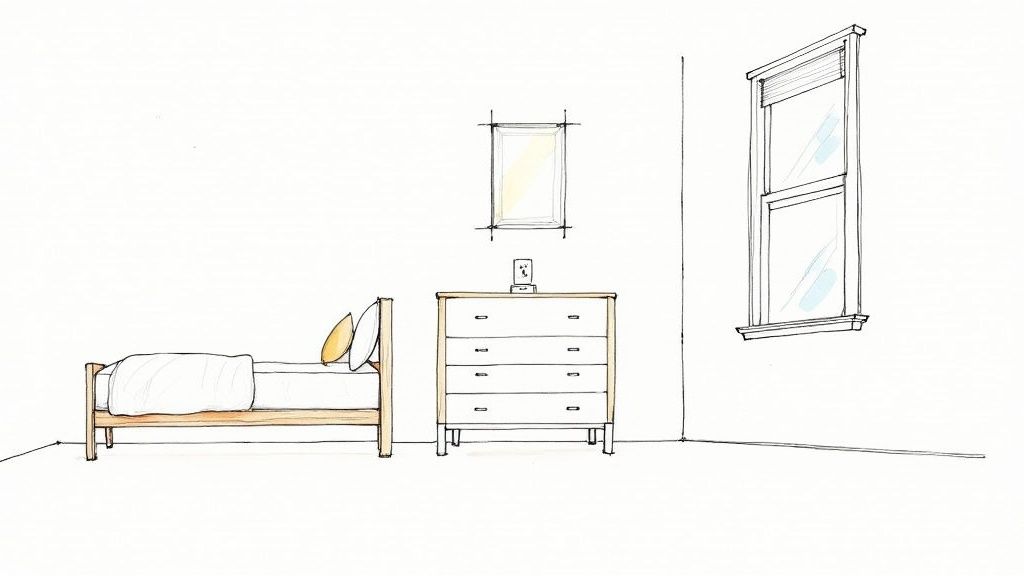
Creating a Safe Sleep Haven
First things first: do a thorough safety sweep of the entire room. The best way to do this is to get right down on their level. Crawl around on your hands and knees to see what potential hazards look tempting from a toddler's perspective. You’ll be surprised at what you find.
Start with the big-ticket items. Any heavy furniture, like dressers, bookshelves, or changing tables, can look like a fantastic climbing gym to a curious toddler. Anchor them securely to the wall to prevent them from tipping over. It’s a simple step that can prevent serious injury.
After that, it's time to zero in on the smaller details that can pose a big risk.
- Cover All Outlets: Don't miss a single one. Every electrical outlet needs a snug, childproof cover.
- Secure Window Cords: Those long, dangling cords from blinds and curtains are a major strangulation hazard. Wrap them up high and tight, or even better, make the switch to cordless window coverings.
- Add Bed Guardrails: A good set of guardrails on their new bed can prevent them from rolling out in their sleep. This is especially helpful during the first few weeks of the transition.
The ultimate goal is to create a "yes" space. You want your child’s room to be a place where they can move around freely and you don't have to worry. That peace of mind is absolutely priceless.
For an even more comprehensive checklist, take a look at our guide on finding the best baby safety products for your home.
Safety is key, but don't forget about comfort! Potty training often happens around the same time as the bed transition, so accidents are bound to happen. Investing in a quality mattress protector will save the new mattress and a lot of headaches.
You can also make the room feel more welcoming by letting your child help pick out new bedding with their favorite characters. A soft nightlight and a lineup of their favorite stuffed animals on the pillow can go a long way in making the new bed feel like a cozy, inviting space they’ll be excited to sleep in.
Your Game Plan for a Smooth Transition
Having a solid game plan can mean the difference between a smooth switch and weeks of sleepless nights. But remember, every child is different. Your strategy for moving from a crib to a bed needs to be flexible—think of it less like a rigid script and more like a toolkit of ideas you can adapt to your little one's unique personality.
For some families, a quick, "rip-the-band-aid-off" approach works best. The crib simply disappears one day, replaced by the cool new bed. This method is direct and avoids a drawn-out process that can sometimes create more anxiety. Of course, a key part of this plan involves the practical stuff, like properly assembling your toddler bed to make sure it's safe and sturdy from night one.
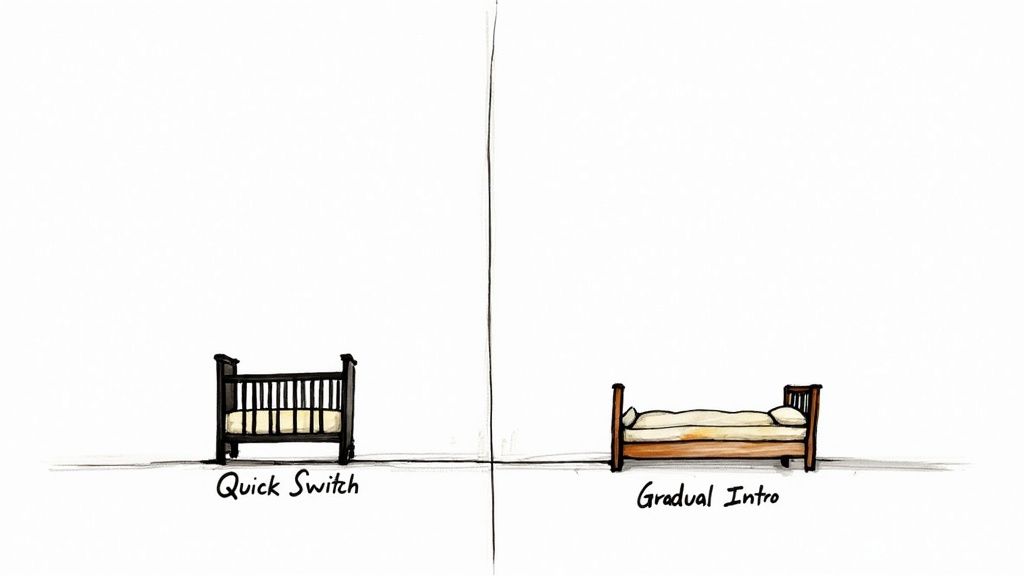
Gradual Introduction vs. Quick Switch
On the other hand, many toddlers respond better to a more gradual transition. This usually involves setting up the new bed in their room while the crib is still there. You can let them get used to it during the day for naps or quiet reading time, making it a familiar, friendly object. After a few days or even a week, the crib can make its quiet exit. This slower pace allows them to warm up to the idea on their own terms.
Whichever path you choose, building positive hype is your secret weapon.
- Talk it up. Chat excitedly about their new "big kid bed" for a few days leading up to the switch.
- Read about it. Find a few fun storybooks about characters moving into their very first bed.
- Let them help. Involving your toddler in picking out new sheets with their favorite character or a special new blanket makes a world of difference. It gives them a sense of ownership.
The most crucial element, no matter your strategy, is consistency. Your established, calming bedtime routine—the bath, the books, the cuddles—is the anchor that provides security during this big change. Keep it exactly the same.
This familiar pattern sends a powerful message to your child: even though their bed is different, the love and safety of their nighttime ritual haven't changed one bit. That predictability is incredibly reassuring.
Managing the Nighttime Wanderer
Ah, the newfound freedom of a big-kid bed. For your toddler, it's exhilarating. For you, it often means hearing the pitter-patter of little feet heading to your room at 2 AM. This is probably the most common challenge parents face when moving from a crib to a bed, and how you handle it really sets the tone for your toddler's sleep habits going forward.
The trick is to be consistent, calm, and, frankly, a little bit boring. You want to avoid accidentally rewarding the behavior with extra snuggles, a fun conversation, or an invitation into your bed. That's where a technique we often recommend, the "silent return," works wonders.
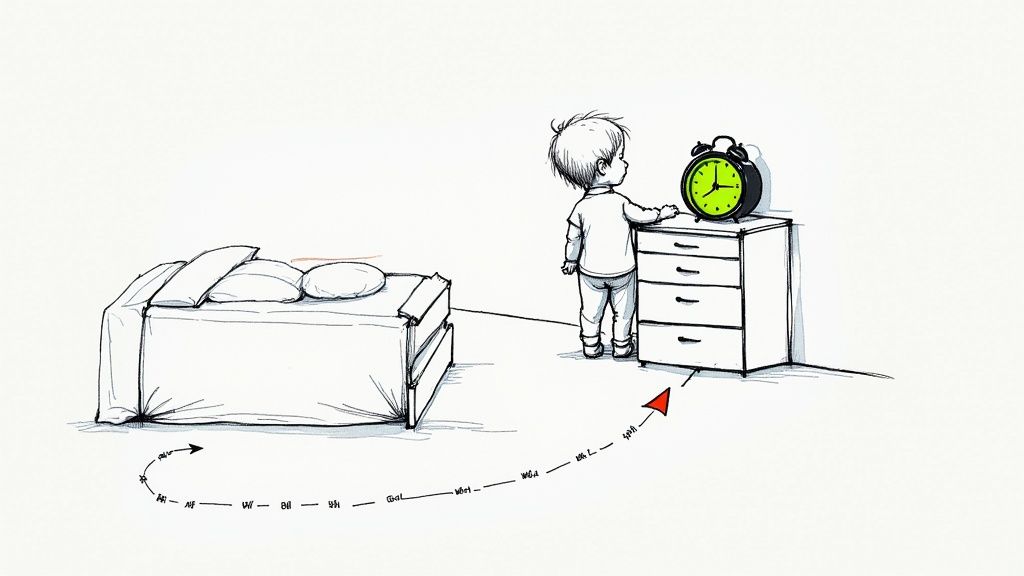
The Silent Return Technique
When your little escape artist appears, gently take their hand and lead them back to their room. The key here is minimal interaction. Don't flip on bright lights, don't start a discussion, and try not to show any frustration (even if you're feeling it!).
Just tuck them back in, give them a quick pat, and whisper a consistent, simple phrase like, "It's nighttime. I love you. Stay in your bed." Then, walk out.
Be prepared: you might have to do this twice, or you might do it twenty times in a single night. Consistency is everything. They are testing a brand-new boundary, and your calm but firm response teaches them the rule without turning it into a dramatic, attention-filled power struggle.
This can be especially tempting for very active sleepers. If that sounds like your child, you might find some helpful tips in our guide on what you need to know about an active toddler sleeper.
A Pro Tip: A toddler-friendly clock that uses colors to show when it’s okay to get up can be a total game-changer. Think red for "stay in bed" and green for "good morning!" It gives them a clear, visual cue they can actually understand when they're groggy.
I know this phase can be exhausting. It’s a big reason many parents delay the transition in the first place. Research actually shows that toddlers who stay in cribs a bit longer often fall asleep faster and get more uninterrupted sleep. But once you've made the switch, a consistent and patient approach is your best tool for navigating this new freedom.
When It's Smart to Wait on the Crib-to-Bed Switch
It's so easy to get caught up in timelines and what other parents are doing. But let us be clear: there's absolutely no award for moving your toddler out of their crib early. In fact, pressing pause on this transition is often the sanest, most successful route. Your intuition about your child is a far better guide than any generic parenting advice.
If your family has a lot going on right now, it's definitely not the time to add another huge change to your toddler's plate.
Too Many Changes at Once
A new baby on the way is probably the most common reason parents rush the crib transition. If you need that crib back, aim to make the switch at least three months before your due date, or wait until a few months after the baby arrives. This timing helps your older child feel like they're getting a cool "big kid" bed, not like they're being kicked out for the new arrival.
The same logic applies to other major life events. Moving to a new home, starting daycare, or even potty training can be overwhelming. A toddler's crib isn't just a place to sleep; it's their safe, familiar space in a world that's constantly changing.
The golden rule here is to avoid piling on major changes. Your toddler’s sense of security is everything, and that cozy, contained crib is a huge piece of their comfort puzzle.
The Real Benefits of Holding Off
Honestly, waiting until your child is closer to three can make the whole process smoother for everyone. Younger toddlers simply don't have the impulse control to grasp the concept of "stay in your bed all night." That's where the endless bedtime battles and middle-of-the-night visits begin.
The data backs this up. There's a wide range of "normal" for when this transition happens globally. One survey analysis revealed that while about 37% of toddlers between 18 and 22 months old are in a bed, that number climbs to 66% for kids between 24 and 29 months. You can dive deeper into the research on the timing of the big transition to a bed at Psychology Today.
Tackling Common "Crib to Bed" Questions
Even with a solid plan, you're going to have questions. This is a huge change for your little one, and it's only natural to wonder if you're doing it right. Let's walk through some of the most common worries parents have during this transition.
What if My Toddler Keeps Falling Out of Bed?
This is probably the #1 fear for most parents, and it’s completely valid! The good news is, there are some simple, effective ways to handle it.
Start by installing a sturdy guardrail or two. Make sure they're designed for toddler or twin beds—they create a nice, soft barrier that keeps them from rolling out but still lets them get in and out on their own.
Another trick we love is to just put the new mattress directly on the floor for the first few weeks. It completely eliminates the drop and takes a ton of anxiety out of the equation for everyone. You can also create a "soft landing" by putting a few pillows, a beanbag, or even a folded-up comforter on the floor beside the bed. Most kids figure out their new spatial awareness pretty quickly, but these little tricks offer some priceless peace of mind.
My Toddler Refuses to Sleep in Their New Bed!
Don't panic—resistance is a totally normal part of the process. You’ve just flipped their entire sleep world upside down!
First things first, take a look at the room itself. Does it still feel safe and cozy? Try spending some extra "happy time" in there during the day, not related to sleep. Read some books or play a quiet game on the new bed to help them build positive feelings about this new piece of furniture.
Then, double down on your calming, predictable bedtime routine. If they start crying or getting out of bed, stick with that "silent return" method we talked about earlier. The absolute key is to be a broken record—calmly and quietly guide them back to their own bed every single time. Whatever you do, try not to let them end up in your bed, as that can kickstart a whole new habit that’s much harder to untangle later.
It's all about consistency. Your calm, predictable response is what teaches them the new rules without turning bedtime into a power struggle. It might take a week or two, but they'll get there.
Should I Use a Toddler Bed or Go Straight to a Twin?
This really comes down to your family's needs—your space, budget, and your child's personality all play a part. There’s no single right answer, but here’s a quick look at the pros and cons.
-
Toddler Bed: These use the same mattress as the crib, so it feels familiar and less intimidating for some kids. They're also low to the ground, which is a huge safety plus. The only real downside? They outgrow them in what feels like the blink of an eye.
-
Twin Bed: This is a much longer-term investment that will last them for years. If you go this route, definitely make sure you have solid guardrails in place, at least for the first several months.
A great middle-ground approach is to buy the twin bed but start with just the mattress on the floor. It gives them the low-to-the-ground safety of a toddler bed and makes the transition feel a little less dramatic before you add the height of a bed frame.
This transition is a big one, but with a bit of planning and a lot of patience, you and your toddler will get through it. Remember to celebrate this exciting step towards independence! What's your biggest worry about making the switch? Share it in the comments below—we'd love to help!
At Hiccapop, we get it. Every milestone in your child's life brings a mix of joy and new challenges. Our products are thoughtfully designed to make these big steps a little smoother and safer for the whole family. You can explore our full range of parent-approved solutions at https://hiccapop.com.