


What Is Gentle Sleep Training? A Compassionate Parent's Guide
Gentle sleep training is all about helping your baby learn healthy sleep skills in a way that feels supportive and loving. It’s a philosophy centered on minimal crying and maximum parental comfort, a stark contrast to traditional "cry-it-out" methods that can feel harsh for many families.
The goal is to teach your little one how to fall asleep independently while making sure they always feel safe, secure, and connected to you.
The Heart Of Gentle Sleep Training
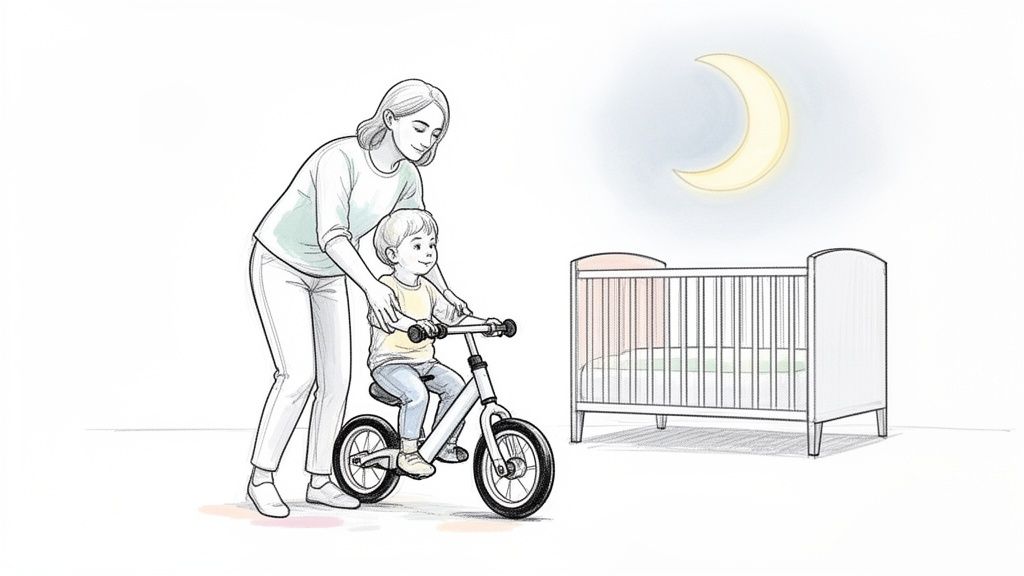
If the words "sleep training" immediately bring to mind a baby crying alone in their crib, let’s reframe that. Gentle methods are the polar opposite of that image. This approach isn't a rigid, one-size-fits-all program but a flexible and compassionate mindset.
Think of it this way: you wouldn't teach your child to ride a bike by just pushing them down a hill and hoping they figure it out. You’d run alongside them, holding the back of the seat, offering encouraging words, and steadying them when they wobble. You stay present, offering support until they find their own balance.
That’s precisely what gentle sleep training is for falling asleep. It’s a gradual release of support as your child builds a new skill.
This approach honors the fact that your baby’s cries are a form of communication, not an attempt to manipulate you. Instead of ignoring those cries, you respond in a way that builds trust while still gently guiding them toward self-soothing.
What Makes It "Gentle"?
At its core, this philosophy is about working with your baby, not against them. Here’s what sets it apart:
- Parental Presence: You are right there in the room, offering physical touch and verbal comfort as your baby learns. You remain their safe space.
- Gradual Adjustments: Changes happen slowly, one small step at a time. This gives your baby the space to adapt without feeling overwhelmed or abandoned.
- Emotional Reassurance: The focus is on teaching a new skill while strengthening your bond. Your baby learns that even when things are different, you are always there for them.
This approach also fosters independence in a way that feels natural. For example, using a Montessori floor bed for toddlers can be a great fit, as it aligns with the child-led, supportive principles of gentle sleep training.
Core Principles Of Gentle Sleep Training At A Glance
To make this clearer, let's break down the foundational ideas. This table shows how each principle translates into your actions and how it benefits your baby's development.
| Principle | What It Means For Parents | How It Helps Your Baby |
|---|---|---|
| Responsive Nurturing | You listen to and acknowledge your baby's cues, responding with comfort when they are genuinely distressed. | Builds a secure attachment, teaching them that their needs will always be met and that you are a reliable source of comfort. |
| Gradual Change | Instead of abrupt changes (like leaving the room suddenly), you make small, incremental shifts over days or weeks. | Prevents overwhelm and reduces stress, allowing your baby to adapt to new sleep routines at their own pace. |
| Parental Presence | You stay with your baby as they learn to fall asleep, offering physical and verbal reassurance. | Creates a sense of security and safety, which is essential for them to relax enough to fall asleep on their own. |
| Empathy & Respect | You see the process from your baby's perspective, respecting their temperament and developmental stage. | Fosters trust and connection, reinforcing that you are their partner in this learning process, not their adversary. |
Ultimately, these principles work together to create an environment where learning to sleep independently is a positive and empowering experience for your child.
At its core, gentle sleep training is about empathy. It respects your baby’s developmental stage and emotional needs, recognizing that learning to sleep independently is a major milestone that requires patience and support, not distress.
The beauty of the "gentle" approach is that you get to define what feels right for your family. There’s a whole spectrum of methods, so you can choose a path that honors your parenting instincts and your baby’s unique personality. It’s all about finding a sustainable solution that leads to better rest for everyone, without ever sacrificing that precious connection.
The Science Behind Gentle Sleep Methods
One of the biggest questions I hear from parents is, "Is this actually safe for my baby?" When it comes to gentle sleep training, the answer is a resounding yes—and the science is there to back it up. This isn't just about what feels right; it's about what we know helps babies thrive.
Understanding the "why" can give you the confidence you need to get started. At its core, gentle sleep training is built on attachment theory. This theory simply says that a child's sense of security is built on consistent, responsive care from their parents.
When you respond to your baby's cries—even if it’s with a gentle, structured check-in—you're sending a powerful message: "I'm here for you. You are safe." This doesn't create a "bad habit"; it builds their confidence. They learn they can tackle new skills, like self-soothing, because you are their secure home base.
Building A Secure Attachment Through Sleep
A secure attachment is the bedrock for healthy emotional and social development. It’s what helps your child grow into a confident, resilient little person. Gentle methods support this crucial bond by making sure you remain a source of comfort, even as their sleep habits are changing.
Think of it this way: you are teaching a new skill within the safety of your relationship. Crying is your baby's way of communicating, and by responding, you teach them that their voice matters. That builds trust, which is infinitely more important than getting a silent night at all costs.
The goal of gentle sleep training isn't just to get more sleep. It's to do it in a way that protects and even strengthens the parent-child bond. It’s about teaching a skill with empathy, not enforcing a rule through distress.
What The Research Says About Safety
Many parents worry that any amount of crying could be harmful. But research helps us draw a clear line between the toxic stress of prolonged, unanswered crying and the manageable protest of a child learning something new with their parent's support.
Gentle sleep training, which includes methods with graduated check-ins, has been shown to dramatically improve infant sleep without causing long-term harm. One landmark study followed families for five years and found these techniques effectively solved infant sleep problems.
More importantly, at the five-year mark, researchers found no differences in emotional, behavioral, or attachment outcomes between the children who were sleep-trained and those who weren't. You can dig into the full findings yourself by exploring these sleep training research studies.
What the evidence really tells us is that you don't have to choose between your child's well-being and a good night's sleep. By using a compassionate, responsive method, you can have both—nurturing a healthy sleeper and a securely attached child at the same time.
Popular Gentle Sleep Training Methods Explained
Now that we've covered the core ideas behind gentle sleep training, let's get into the "how-to." Think of these different methods as trails up the same mountain—they all lead to the summit of better sleep, but you get to pick the path that feels right for you and your little one.
There’s no magic bullet here. The best approach is the one that aligns with your parenting philosophy and your baby’s unique temperament.
The Chair Method
The Chair Method is a favorite for parents who want to stay physically present as their baby learns to fall asleep independently. It’s all about a slow, gradual retreat that provides a steady, reassuring presence.
- How It Works: You’ll start by placing a chair right next to the crib. You sit there, offering quiet verbal comfort, until your baby drifts off. Every few nights, you inch the chair a little further away, moving toward the door, until you’re eventually out of the room.
- Best For: This approach is often a great fit for babies 6 months and older. It works well for little ones who are calmed by knowing you're there but might get too stimulated or playful with a lot of physical touch.
Be prepared—the Chair Method definitely requires patience. But for babies who just need to know you’re close by to feel secure, it can be a game-changer.
The Pick-Up/Put-Down Method
If the thought of listening to your baby cry without offering a cuddle feels impossible, the Pick-Up/Put-Down Method might be the perfect fit. This technique is very hands-on and full of physical comfort.
You start by putting your baby into their crib while they're still awake. If they start to fuss or cry, you pick them up and soothe them until they're calm, then place them right back in their crib. You simply repeat this cycle as many times as it takes for them to finally fall asleep in their own space.
It’s a powerful way to show them that you’ll always answer their call for help, which builds the confidence they need to master falling asleep on their own.
The big takeaway here is that responding consistently to your baby's needs is the foundation for their sense of security and emotional health.
Graduated Check-Ins
This one is often confused with stricter "cry-it-out" methods, but a gentle approach to Graduated Check-Ins is fundamentally different. The focus is on flexible reassurance, not rigid rules. You’re giving your baby a chance to figure things out on their own, while reminding them that you’re always nearby.
After your bedtime routine, you leave the room but promise to return for brief check-ins at increasing intervals (say, after 3 minutes, then 5 minutes, and so on). When you go in, you can offer a gentle pat, a soothing "shhh," or even a quick pick-up to calm them before leaving again.
Every baby is unique, so learning how to teach your baby to self-soothe is all about finding that sweet spot between giving support and allowing them space to learn.
Comparing Gentle Sleep Training Methods
Feeling a bit overwhelmed by the options? That's completely normal. This little table breaks down the key differences to help you see which method might be the best starting point for your family.
| Method | Best For Ages | Parental Involvement | Potential Timeline |
|---|---|---|---|
| Chair Method | 6+ months | High (in-room presence) | 1–3 weeks |
| Pick-Up/Put-Down | 4–8 months | Very High (hands-on) | 1–2 weeks |
| Graduated Check-Ins | 6+ months | Moderate (timed checks) | 1–2 weeks |
Remember, this is just a guide. The "best" method is the one you can stick with consistently and that feels right for your baby's personality. Don't be afraid to adjust your approach as you go.
Your Practical Guide To Getting Started
Taking that first step into gentle sleep training can feel huge, I know. But a little bit of groundwork can make all the difference. Real success isn't about following a rigid, one-size-fits-all plan. It’s about creating a predictable, cozy environment that naturally signals to your little one that it's time to rest.
So, before you even pick a specific method, let's nail the foundation.
It all starts with a rock-solid bedtime routine. Think of it as your baby's daily sleep cue. A sequence of calming activities—a warm bath, a little baby massage, a favorite story, and a final feed—is a powerful signal that sleep is on the horizon. This isn't just about going through the motions; it's a special time for connection that helps you both wind down.
Next up, get the sleep space just right. A cool, dark, and quiet room is your best ally. I'm a huge fan of blackout curtains—they can be a total game-changer, especially for early morning wake-ups. A white noise machine is also great for muffling those sudden household noises that can startle a sleeping baby. Finally, make sure they are well-fed, dressed comfortably for the temperature, and in a fresh diaper.
A Sample Plan For Your First Week
Once you've set the stage, you're ready to start. Let's walk through an example using a gentle version of Graduated Check-Ins. And remember, this is just a template! You know your baby best, so feel free to adjust these timings based on their cues and what feels right to you.
-
Nights 1-2: After your routine, lay your baby in their crib while they're still awake. If they start to fuss, give it 3 minutes before you go in. Your check-in should be brief and reassuring—a gentle pat, a soft shush, and a quiet "I love you." If they're still crying, stretch the next interval to 5 minutes, and then to 10 minutes.
-
Nights 3-4: Your baby is starting to learn the new pattern. You can now extend your first wait time to 5 minutes. Follow that with subsequent checks at 8 and 12 minutes. You're gently showing them they have the skill to fall asleep on their own, while always reminding them that you're nearby.
-
Nights 5-7: Now you can stretch those intervals even more. Try starting with a 10-minute wait, then move to 15 minutes, and then 20 minutes if needed. You’ll probably find that by this point, many babies are settling down much more quickly.
This gradual approach is fantastic because it teaches self-soothing skills without causing a lot of stress for you or your baby. It’s not just a theory; families often see real progress in just a few nights.
Key Tips For A Smooth Start
Consistency is your secret weapon. Make sure every caregiver who helps with bedtime is on board with the same plan. It's also incredibly important that your baby is getting enough sleep during the day. An overtired baby is going to have a much harder time settling at night. Not sure how long they should be awake? Check out our complete guide to wake windows by age.
Stay Patient and Flexible: Progress isn't always a straight line. You'll have amazing nights and some really tough ones. That's completely normal. The key is to stay calm and consistent, trusting that you're giving your child a skill that will last a lifetime.
As your little one grows, their sleep needs will change right along with them. Knowing what's next, like when to move to a big-kid bed, is all part of the journey. You can find some excellent toddler bed transition tips to help you navigate that next exciting milestone.
How To Handle Common Sleep Training Challenges
Even with the most loving and consistent approach, you're going to hit a few bumps in the road. Let’s be real: sleep training is rarely a straight line to success. It’s more like a dance with a few fumbles and missteps, and knowing how to handle the inevitable challenges is what keeps you on track without losing your mind.
If you’re running into hurdles, you’re in good company. Research from global studies shows just how widespread infant sleep issues are. In fact, 25-50% of babies over 6 months have a tough time getting back to sleep on their own after waking at night. But here’s the good news: gentle training methods, which focus on reassurance and connection, have an efficacy rate of over 80%. You can dive into the full research on global infant sleep challenges and training efficacy to see the data for yourself.
Navigating Sleep Regressions
Just when you think you’ve finally cracked the code, a sleep regression can throw a wrench in everything. These are temporary setbacks that are almost always tied to big developmental milestones—think learning to crawl, pulling up to stand, or a burst of new words.
During a regression, your baby's brain is firing on all cylinders, which can make settling down for sleep feel nearly impossible. The best thing you can do is stick with your routine as much as humanly possible. It's okay to offer extra comfort, but try to avoid falling back into old sleep habits you've worked so hard to change. For a clearer picture of what to expect, take a look at our guide to the complete sleep regression timeline.
Teething And Illness Disruptions
Nothing can derail a great sleep plan faster than a sick or teething baby. When your little one is in pain or just feeling miserable, all the rules go out the window. Your top priority instantly shifts from training to comforting.
Don’t be afraid to press pause. If your baby is truly miserable, it's okay to take a few nights off from the plan. Focus on cuddles, pain relief (with your doctor's guidance), and whatever it takes to help them feel better. You can always get back on track once they're healthy again.
Once they’re feeling like themselves again, you can ease back into your gentle method. You might be pleasantly surprised by how quickly they fall back into their familiar rhythm.
When Nap Time Is A Battle
It's a classic scenario: your baby is a nighttime sleep champion but puts up a serious fight when it's time for a nap. Nap resistance is incredibly common, often because the biological drive to sleep simply isn't as strong during the day.
If naps have become a daily struggle, here are a few things to try:
- Watch those wake windows like a hawk. An overtired baby is just as hard to get to sleep as an undertired one. Finding that sweet spot is everything.
- Create a "mini" routine. A super-short version of your bedtime ritual, like one book and a quick song, can be a powerful cue that it’s time for a daytime snooze.
- Don't be afraid to "assist" the nap. If it looks like a nap is about to be skipped altogether, it's far better to step in and help. Rocking, holding, or even a contact nap can save the day. A missed nap often leads to an overtired baby, which only makes bedtime harder.
Have Questions? Let’s Get Them Answered
Even the most well-thought-out plan comes with a few "what ifs." It's completely normal to have questions swirling around as you get ready to start this journey. Let's tackle some of the most common ones parents ask, so you can feel confident and prepared.
When Is the Right Age to Start Gentle Sleep Training?
Most sleep experts point to the 4 to 6-month mark as the sweet spot. Around this time, your baby’s internal clock starts to mature, leading to more predictable sleep patterns. More importantly, they're beginning to develop the ability to self-soothe.
Another key factor is that many babies in this age range no longer need as many calories overnight. Of course, you should always get the green light from your pediatrician first. They can confirm your baby is developmentally ready and rule out any health issues that might be getting in the way of good sleep.
Does "Gentle" Mean My Baby Won't Cry?
This is a big one, so let's be clear: gentle sleep training isn't a "no-cry" method. Think of it more as a "less-cry" or "supported-cry" approach. Crying is how your baby communicates, and changing a long-standing routine is bound to cause some protest. That’s perfectly okay and expected.
The crucial difference here is that you won't be leaving them to figure it out alone. You’ll be right there, offering physical and verbal comfort to reassure them and minimize their distress. You'll find the crying tapers off dramatically once they start to master their new sleep skills.
How Long Until We See Results?
While gentle methods do take a little more time and patience than their cry-it-out counterparts, most families start seeing real, noticeable progress within one to two weeks. The absolute biggest key to success? Consistency.
Every baby is different, so the exact timeline will vary based on their age, temperament, and the method you choose. You'll have amazing nights that feel like a huge win, followed by nights that feel like you've gone backward. Stick with it. Consistency is what cements these new, healthy sleep habits for the long haul.
Remember, progress isn't a straight line. One rough night doesn't erase all your hard work. It's just a bump in the road. Be patient with your baby and yourself—you're teaching an incredible, lifelong skill.
What if It Just Isn’t Working?
If you've been consistent for two weeks or more and feel like you're spinning your wheels, it might be time to take a step back and reassess. Here are a few things to think about:
- Rule Out Discomfort: Before anything else, play detective. Could teething, a sneaky ear infection, or reflux be derailing your efforts? Pain and discomfort will sabotage any sleep plan.
- Is This Method the Right Fit? Observe your baby. Does your presence seem to calm them, or does it agitate them more? Some babies are soothed by frequent check-ins, while others get more worked up.
- It's Okay to Take a Break. Seriously. Sometimes the best thing you can do is hit the pause button for a few days or a week. Easing the pressure can work wonders for both of you.
- Call in for Backup. If you’re truly stuck, don’t hesitate to get personalized advice. A certified pediatric sleep consultant or your trusted pediatrician can offer guidance tailored to your specific situation.
At Hiccapop, we know that every family's path to better sleep is different. We're here to give you the support and tools you need to help everyone get the rest they deserve, in a way that feels right for you. To create a safe and cozy sleep space, explore our collection of thoughtfully designed baby products. Find your next must-have baby item on the Hiccapop website.