


What Is a Moses Basket? Your Go-To Guide for This Cozy Newborn Sleeper
When you're staring down the seemingly endless list of must-have baby gear, it’s easy to feel overwhelmed. But for those precious first few months, sometimes the simplest solution is the best one. Enter the Moses basket: a beautifully simple, lightweight bed woven from natural materials, creating a snug little nest that keeps your newborn close, safe, and comfortable.
Think of it as the ultimate starter apartment for your baby—cozy, portable, and just right for that fleeting newborn phase.
Your Newborn’s First Cozy Nest
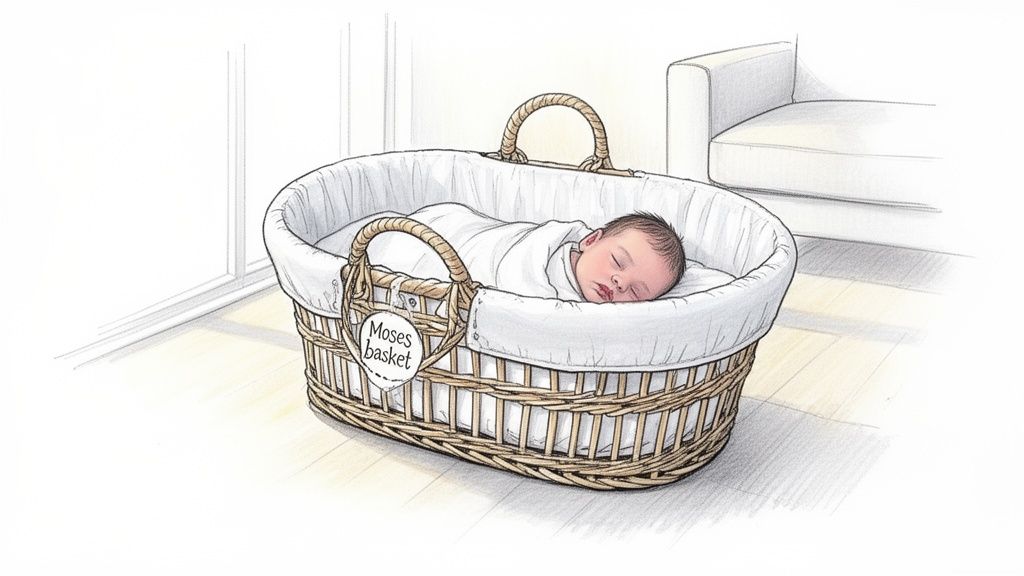
So, what exactly is a Moses basket? In short, it’s your baby’s first little haven. It’s a small, oval-shaped basket, complete with handles, designed specifically for newborns. The compact size is entirely by design; it provides a contained, reassuring space that helps babies transition from the snug feeling of the womb to the wide-open world.
Unlike a big, stationary crib, the Moses basket's superpower is its portability. You can easily carry it from your bedroom for nighttime sleep to the living room for a daytime nap. This means your baby is always right there with you, making those constant check-ins and feeds so much easier, especially while you're recovering. No need to tiptoe into a separate nursery every time you hear a tiny squeak.
Key Features of a Moses Basket
Part of the appeal of a Moses basket is its simple, classic charm. It fits beautifully into almost any home decor, but its real value lies in its practical design. Here’s a quick look at what makes them so special:
- Cozy and Enclosed Design: The high, woven sides create a protected little world for your baby, which can help soothe a fussy newborn and encourage them to sleep more soundly.
- Lightweight and Portable: Most are crafted from materials like palm leaf, maize, or wicker. This makes them light enough to move around the house (always without the baby inside, of course!).
- Natural Materials: Many parents are drawn to the fact that these baskets are often made from breathable, plant-based materials, offering a more natural sleep environment.
- A Short-Term Solution: This is a crucial point. A Moses basket is meant for newborns up to about 3-4 months old, or until they start showing signs of rolling over or pushing up.
The whole idea behind a Moses basket is to provide a safe, secure, and comforting space that mimics the womb, helping your newborn adjust during those crucial first three months.
The fact that it's a temporary bed isn't a drawback—it's the entire point. It perfectly fills the gap for that very specific, fleeting stage of infancy before your little one is ready to graduate to the more open space of a crib.
The Timeless Story of the Moses Basket
There's something deeply comforting about a Moses basket. Its simple, woven design feels both modern and ancient all at once, and for good reason. This humble sleeper carries a story of safety that has spoken to parents for thousands of years, long before it became a stylish nursery staple. Its name alone connects us to one of the oldest stories of a parent's love.
The name “Moses basket” comes directly from the famous biblical story in the Book of Exodus. A Hebrew mother, Jochebed, needed to save her newborn son, Moses, from a terrible decree. She wove a small basket from papyrus reeds, sealed it to make it waterproof, and set him afloat on the Nile River. This powerful image of a baby kept safe in a simple woven vessel is the cultural heart of the modern basket. You can learn more about the history of Moses and the Exodus at Bible Archeology Report.
A Universal Symbol of Safety
While the story of Moses gives the basket its name, the idea of a small, protective baby carrier is a universal one. This concept has appeared in different forms across countless cultures and throughout history, all born from the same instinct: to create a safe, portable nest for a newborn.
This idea has taken many shapes over the centuries:
- Woven Cradles: Many indigenous cultures have long traditions of weaving cradles from local grasses, reeds, and wood.
- Carrying Baskets: In parts of Africa and Asia, sturdy, breathable baskets have been used for generations to carry infants safely while parents work nearby.
- Swinging Hammocks: In other traditions, suspended cloth hammocks served a similar purpose, creating a snug and enclosed space for sleep.
This shared history shows us that the Moses basket isn't just another baby product. It's a modern interpretation of a timeless parenting tool—one that represents care, resourcefulness, and the profound desire to keep a baby close and protected.
From Ancient Reeds to Modern Nurseries
Today’s Moses basket is a direct descendant of this long history. While materials have evolved to include things like palm, maize, and wicker, the fundamental purpose hasn't changed a bit: to provide a secure, comforting, and portable sanctuary for a newborn.
The design philosophy is beautifully simple. The high sides create a protective barrier from the outside world, and the snug interior offers a sense of security that can help a baby transition gently from the womb. When you bring a Moses basket into your home, you're doing more than just buying a piece of baby gear; you're taking part in a tradition of care that connects you to generations of parents who relied on the very same idea—a simple, safe space for their baby to rest.
What Goes Into a Great Moses Basket?
So, we've covered the "why"—now let's get into the "what." To really understand what makes a Moses basket a safe and cozy spot for your baby, you have to look at how it’s put together. Think of it less as a single item and more as a small, thoughtfully designed system where every part plays a role.
At its heart, you have the woven basket itself, which forms the structure. But just as important are the mattress, the soft inner liner, and the handles. When you're choosing one, you want to see that all these components work together perfectly.
Basket Materials and Weaves
The look, feel, and even the breathability of a Moses basket come down to what it's made from. Most are crafted from beautiful, natural woven fibers, and each one has its own personality.
Here’s a quick rundown of what you’ll typically find:
Common Moses Basket Materials at a Glance
| Material | Key Features | Considerations |
|---|---|---|
| Palm Leaf | Lightweight, flexible, and generally the most affordable option. Great for airflow. | Can be slightly less rigid than wicker. |
| Wicker | Very sturdy and durable, with a classic, timeless look. Often made from willow. | Tends to be heavier and the texture can sometimes trap dust. |
| Maize | Woven from corn husks, it's known for being soft, smooth, and more pliable. | Its softness means it may not be as structurally firm as wicker. |
Regardless of the material you prefer, the most important thing is the quality of the craftsmanship. Run your hand along the inside and outside. The weave should be tight, with no sharp pieces or stray strands sticking out that could poke or scratch your baby. A well-made basket feels solid and holds its shape without sagging.
The Non-Negotiables: Safety and Comfort Features
Beyond the basket's frame, there are a few components that are absolutely critical for creating a safe sleep space. These are the things you should never, ever compromise on.
First up is the mattress. This is the big one. Safe sleep experts all agree that a baby’s sleep surface must be firm, thin, and flat. The mattress needs to fit the basket perfectly, with no gaps around the sides where a baby could get stuck. It might be tempting to look for something soft and plush, but a soft mattress is a serious suffocation hazard. Many of the same safety rules for cribs apply here, which you can learn more about in our guide to the best organic crib mattresses.
Next is the liner. This is the soft fabric layer that sits between your baby and the basket's woven material. Look for a breathable fabric like 100% cotton. It should fit snugly without any bunching and be easy to pop off for a quick wash—because you will be washing it.
Finally, give the handles a good look. They need to be securely fastened to the basket's main structure. But here's the golden rule every parent needs to know: the handles are only for moving the basket when it's empty. Never, ever carry your baby in the Moses basket.
Your Guide to Moses Basket Safety
When you bring your newborn home, their safety is the only thing on your mind, especially when they’re sleeping. A Moses basket can be a wonderfully cozy first bed, but its safety isn't automatic—it comes from following a few simple, non-negotiable rules. These guidelines come straight from the experts at the American Academy of Pediatrics (AAP) and are designed to give your baby the safest possible start.
Think of these as the golden rules for using a Moses basket. First and foremost, always, always place your baby to sleep on their back. This one simple act is the most effective thing you can do to reduce the risk of Sudden Infant Death Syndrome (SIDS).
Next, make sure the sleep surface is firm and flat. The little mattress that comes with the basket should fit perfectly snug inside, with zero gaps around the edges where a baby could get trapped. Cover it with a tight-fitting sheet, and that's it. Nothing else.
Keep It Simple and Bare
This brings us to one of the most important rules: the basket must be completely empty. It’s so tempting to add a soft blanket, a plush toy, or a tiny pillow to make it look cozier, but these items are serious suffocation hazards.
The safest sleep space is a bare sleep space. That means no blankets, no bumpers, no pillows, and no toys. Your baby should be dressed in a sleep sack or swaddle for warmth—not covered with loose bedding.
This is the cornerstone of creating a safe sleep environment for your infant. If you want to learn more, we've put together a complete guide on how to set up a safe sleep environment for infants.
Proper Placement Is Key
Where you put the basket is just as important as what's inside. A Moses basket should always sit on a firm, flat, and stable surface. Your best bet is either directly on the floor or on a sturdy, dedicated stand made specifically for that basket model.
You should never place the basket on a soft or high surface, such as:
- A bed or a sofa
- A countertop or table
- Any other piece of wobbly furniture
These spots create a serious risk of the basket tipping over. The growing popularity of these baskets is actually tied to this kind of safety-first thinking. Within the $4.8 billion global baby crib market, Moses baskets are gaining traction precisely because they align so well with AAP guidelines, which can slash the risk of SIDS by up to 50%.
Know When to Transition
Finally, remember that a Moses basket is a temporary solution for the first few months. You have to move your baby into a crib as soon as they show any signs of pushing up on their hands and knees or trying to roll over.
The moment you see that, it’s your signal. The shallow sides of the basket are no longer safe for a baby who is starting to move, as they could potentially roll right out.
Moses Basket vs Bassinet vs Crib
Trying to figure out where your newborn will sleep can feel overwhelming. Suddenly, you're faced with a world of Moses baskets, bassinets, and cribs, and they all seem to do the same thing, right? Well, not exactly. Each one serves a unique purpose, and knowing the real-world differences can help you pick the perfect fit for your family.
Think of it as a progression. The Moses basket is your tiny, temporary nest for the very beginning. The crib is the long-term, permanent bed. And the bassinet? It's the happy medium that sits right in between.
As you can see, it all comes down to your baby's movement. Once they start trying to roll, it’s a clear sign that their time in the basket is up.
Portability and Footprint
This is where the Moses basket truly comes into its own. It’s light as a feather and built to be carried from the living room to your bedroom with zero fuss (just be sure to move the baby separately!). Its tiny footprint is a lifesaver in smaller apartments or for simply keeping your newborn within arm's reach wherever you are.
Bassinets have some get-up-and-go, but they’re bulkier. They usually have legs or wheels, making them more of a semi-permanent fixture you roll around rather than carry. A crib, on the other hand, is a stationary piece of furniture. Once you build it, it’s staying put in the nursery.
Lifespan and Use
A Moses basket is a short-term affair. You'll likely use it from birth up to about 3-4 months. The moment your baby shows signs of rolling over, pushing up on their hands, or hits the weight limit—usually around 15-20 lbs—it's time to graduate.
Bassinets buy you a little more time, often lasting until your baby is 4-6 months old. The transition rules are the same, though, all dictated by your baby's physical development. The crib is the real long-term investment. It will safely see your child through from their first night home until they’re ready for a toddler bed, which could be anywhere from 2-3 years old.
The Moses basket offers unmatched closeness and portability for the "fourth trimester." In contrast, a crib provides a permanent, long-term sleep solution. A bassinet neatly bridges the gap between the two.
Cost and Convenience
When it comes to your budget, a Moses basket is usually the most wallet-friendly option. Bassinets have a much wider price range, from simple, affordable models to high-tech versions with all the bells and whistles.
The crib is easily the biggest upfront expense. But when you think about it, it offers the best value for money because you’ll be using it every single night for years.
To make it even clearer, here’s a side-by-side look at how these three popular sleep spots stack up.
Choosing Your Baby's First Bed: Moses Basket vs Bassinet vs Crib
| Feature | Moses Basket | Bassinet | Crib |
|---|---|---|---|
| Typical Lifespan | 0-4 months | 0-6 months | 0-3 years |
| Portability | Excellent, very lightweight | Good, often on wheels | None, it's stationary |
| Footprint | Smallest | Small to medium | Largest |
| Cost | Low ($) | Low to High ($ - $$$) | Highest ($$$) |
| Best For | Keeping newborn close, naps | Bedside sleeping, small spaces | Long-term nursery sleep |
Ultimately, the right choice really boils down to your living space, lifestyle, and budget. Many parents even find that a combination—like a Moses basket for daytime naps and a bassinet for nighttime—works best for those first few hectic months.
Choosing and Caring for Your Moses Basket
So, you’re ready to find that perfect little nest for your newborn. It’s an exciting decision! While the adorable designs are tempting, your main focus should always be on safety and quality.
When you're comparing options, the first thing to look for is proof that the basket and its mattress have passed current safety standards. This isn't just a nice-to-have; it's the most important factor.
Take a close look at the basket itself. A well-made one will have a tight, smooth weave without any sharp or splintered pieces sticking out. The mattress is just as crucial—it needs to be firm, thin, and fit snugly inside, leaving no gaps around the edges. A soft or ill-fitting mattress is a major safety hazard.
To Buy New or Secondhand
I get it, the temptation to save some money with a secondhand basket is real. But honestly, buying new is almost always the safer bet. A used basket might have hidden wear and tear that you can't see, like a weakened frame or a mattress that’s lost its firmness over time.
If you do go with a pre-loved basket, please, always replace the mattress. Buy a brand-new one that’s made specifically for that model to guarantee you get that safe, snug fit.
Keeping track of all the gear you need can feel overwhelming. If you're putting together your registry, our guide to the essential baby items list is a great way to stay organized.
Simple Steps for Care and Cleaning
Let's face it: babies are messy. Keeping their sleep space clean is non-negotiable, but thankfully, Moses baskets are pretty easy to maintain.
- The Basket: Just wipe down the woven parts with a damp cloth and some mild, baby-safe soap. Steer clear of harsh chemicals, and whatever you do, don't soak the basket. That can damage the natural fibers. Let it air dry completely before using it again.
- The Liner and Sheet: These should go into the wash regularly. Use a gentle, fragrance-free detergent and hot water to get rid of any germs.
- The Mattress: Most mattresses come with a wipeable cover. A quick clean with a damp cloth and mild soap should do the trick. Make sure it's totally dry before you put the sheet back on.
Once your little one has officially moved on to a crib, you might want to pass their basket along. To keep tabs on all the baby items you plan to sell or donate, a tool like this outgrown gear resale and donation tracker can be surprisingly helpful.
Your Top Moses Basket Questions Answered
It's totally normal to have a few more questions rattling around in your head, even after digging into all the details. Let's tackle some of the most common things parents wonder about when they're considering a Moses basket.
How Long Can My Baby Use a Moses Basket?
You can expect your little one to be snug in their Moses basket from the day they're born until they're about 3 to 4 months old. Most baskets also have a weight limit to keep in mind, which is typically around 15 to 20 pounds.
But here's the most important thing to watch for: developmental milestones. The absolute moment you see your baby showing signs of pushing up on their hands and knees or trying to roll over, it’s time to retire the basket. This is a critical safety rule to prevent any chance of a fall.
Can My Baby Sleep in It Overnight?
Yes, absolutely! As long as the Moses basket meets current safety standards, it's a perfectly fine place for your baby to sleep overnight. It's actually a wonderful way to keep them close for room-sharing during those first few precious months.
Just be sure you're sticking to all the safe sleep guidelines we've covered. That means placing the basket on a firm, flat surface (like the floor or its dedicated stand), always putting your baby down on their back, and keeping the sleep space completely clear of blankets or toys.
Is It Safe to Carry My Baby in the Basket?
This is a big one: no, you should never carry your baby while they are inside the Moses basket. Those handles are only there for moving the basket around when it's empty.
Carrying a baby inside is just too wobbly and unstable. The handles could fail or the whole thing could tip, creating a serious risk. Always move your baby first, then move the empty basket.
Do I Really Need a Special Stand?
A stand isn't technically required—a Moses basket is perfectly safe on a firm, level floor away from any hazards. That said, most parents find a stand to be a lifesaver. It brings the basket up to a much more comfortable height, which really saves your back during all those middle-of-the-night check-ins and feedings.
If you opt for a stand, just make sure it’s the one specifically designed to go with your basket. This guarantees a secure, snug fit without any wobbling.
The Moses basket offers a beautiful, practical solution for keeping your newborn safe and snug during those whirlwind first months. It's more than just a bed; it's a cozy, portable nest that lets you keep your little one right by your side. By following safe sleep rules, you can enjoy the convenience and timeless charm it brings to your home.
At Hiccapop, we're parents too, and we're passionate about making smart, reliable gear that makes life with a little one just a bit easier. See our full range of baby essentials, all designed with modern families in mind.
Do you have any experience with Moses baskets? Share your tips or questions in the comments below!