


How to Create a Toddler Bedtime Routine Chart That Works
A toddler bedtime routine chart is a simple visual map of the evening, showing your little one every step that leads to lights out. It uses pictures for things like bath time, brushing teeth, and story time to create a predictable and calming end to the day. The result? Less anxiety and fewer of those classic bedtime battles.
Why a Bedtime Chart Can Transform Toddler Sleep
If bedtime with your toddler feels more like a nightly negotiation—or worse, a wrestling match—you are definitely not alone. For a little person still learning how to manage their world, shifting from a busy day to a quiet night is a huge transition. This is exactly where a toddler bedtime routine chart becomes your secret weapon for peaceful evenings.

This simple visual tool does more than just list a schedule; it speaks directly to how a toddler’s mind works. Toddlers thrive on predictability and crave a sense of control. When they know what’s coming next, that feeling of uncertainty that often leads to stalling and meltdowns just melts away.
Giving Toddlers a Sense of Control
Try looking at it from their point of view. Bedtime can feel like a series of orders barked by grown-ups. A chart completely reframes that experience. Instead of you being the "boss" of bedtime, the chart is.
Your toddler gets to see what’s next, maybe even moving a magnet or checking off a task themselves. This simple act of participation gives them a feeling of independence and ownership. Suddenly, they aren't just being told what to do; they're an active part of their own routine.
This shift in dynamic is powerful. When a child feels a sense of control, they are far less likely to push back. You turn a potential power struggle into a team effort.
This isn't just about making your evenings smoother, though that's a massive win. You're also building crucial life skills. Following a chart introduces sequencing, responsibility, and the satisfaction that comes from finishing a task—lessons that go far beyond the bedroom walls.
Creating Calm Through Predictability
Predictability is like a cozy security blanket for a toddler's brain. When they see the same steps on their chart every night, it sends clear signals that it’s time to start winding down. Every completed step—bath, pajamas, brushing teeth, story time—is another gentle nudge toward sleep.
This consistency helps regulate their internal clock and gets their body ready for rest. By creating a calm, screen-free, and connected end to the day, you're doing so much more than just getting your child to bed. You're setting them up with healthy sleep habits that have a lasting impact on their:
- Mood and Emotional Regulation: A well-rested toddler is a happier toddler, one who is much better equipped to handle big feelings.
- Learning and Development: Quality sleep is absolutely essential for brain development, memory, and absorbing new skills.
- Overall Health: Good sleep is a cornerstone of a strong immune system and healthy physical growth.
Honestly, a toddler bedtime chart is one of the smallest investments of time you can make for one of the biggest returns: your child’s well-being and your family’s sanity. It can truly transform bedtime from a source of daily stress into a cherished moment of connection, empowering your little one and bringing a whole lot of peace to your home.
Understanding the Science Behind a Consistent Bedtime Routine
There's a reason why a predictable bedtime routine feels like magic—it's actually science. More than just a way to wrangle a tired toddler, a consistent routine works directly with your child's internal body clock, also known as their circadian rhythm. Each step in the routine acts as a gentle cue, signaling to their brain and body that sleep is coming.
This isn't just a mind game; it's a real biological process. Calming activities, like a warm bath or a quiet story, trigger the release of sleep-inducing hormones, especially melatonin. As melatonin levels climb, your toddler's body naturally starts to wind down. This makes the transition from high-energy playtime to peaceful slumber much smoother. Your bedtime chart is more than a to-do list; it’s a biological cue card for your little one.
Why Toddler Brains Crave Predictability
Toddlers thrive on patterns. Knowing what comes next gives them a powerful sense of safety and control, which in turn reduces the production of cortisol. That's the "stress hormone," and it's notorious for keeping little bodies and minds buzzing way past their bedtime.
A visual chart makes the abstract idea of "bedtime" concrete. It becomes a map they can follow. This is why study after study shows that toddlers with a set routine tend to:
- Fall asleep faster and with less fuss.
- Wake up less often during the night.
- Log more restorative sleep overall.
These benefits are fundamental for your child's health. The power of patterns isn't just for evenings, either. Learning how to create a morning routine that actually sticks can offer great insights into building positive habits for everyone in the family.
It's a Global Sleep Phenomenon
The benefits of a solid bedtime routine aren't just a local trend; they're seen all over the world, even though the specific rituals can look very different from one culture to another.
One massive global study looked at over 29,000 infants and toddlers across 17 countries and found some fascinating differences. For instance, 80% of families in the UK reported having a consistent routine at least five nights a week, compared to just 40% in India. The most common pre-sleep activity globally was feeding (73%), but bathing was a staple for 81% of UK families while only 6% in Indonesia did the same. Reading was big in New Zealand (59%), and singing lullabies was most popular in Indonesia (36%).
Despite all the cultural differences, one thing was crystal clear: consistency is key. It doesn't matter so much what you do, but that you do it in the same predictable order every night. That's what leads to better sleep.
This scientific backing elevates your bedtime chart from a clever parenting trick to a real, evidence-based tool. You're working with your toddler's biology, not fighting against it. By creating these simple patterns, you are actively supporting their brain development, emotional regulation, and physical well-being.
At the end of the day, a consistent routine helps guarantee your child gets the quality rest they need for their growing body and mind. It's a core part of creating a healthy sleep environment. For more ideas on this, take a look at our guide on safe sleeping tips for toddlers. Giving your child a peaceful, predictable end to their day is one of the best gifts you can give them.
How to Design a Bedtime Routine Chart Your Toddler Will Love
Alright, let's get to the fun part: creating a toddler bedtime routine chart that your little one actually wants to use. The secret here isn’t just making it look cute (though that definitely helps). It’s about making it theirs. This is your guide to building a chart that becomes a treasured part of your nightly wind-down.
Laying the Groundwork: What’s in Your Routine?
Before you bust out the craft supplies, take a minute to map out the non-negotiables. What are the essential steps that happen every single evening in your house?
For most of us, the core list looks something like this:
- One last trip to the potty
- A warm, calming bath
- Getting into cozy pajamas
- Brushing teeth (the right way!)
- Reading a favorite story or two
- A final kiss, a big cuddle, and saying "goodnight"
Sequence these in an order that feels natural for your family. Pajamas obviously come after the bath, and brushing teeth might be the last thing you do before stories. This consistent flow builds a predictable rhythm that a toddler's brain craves.
This whole process is more than just a checklist; it's a powerful signal to your child's body that sleep is coming.
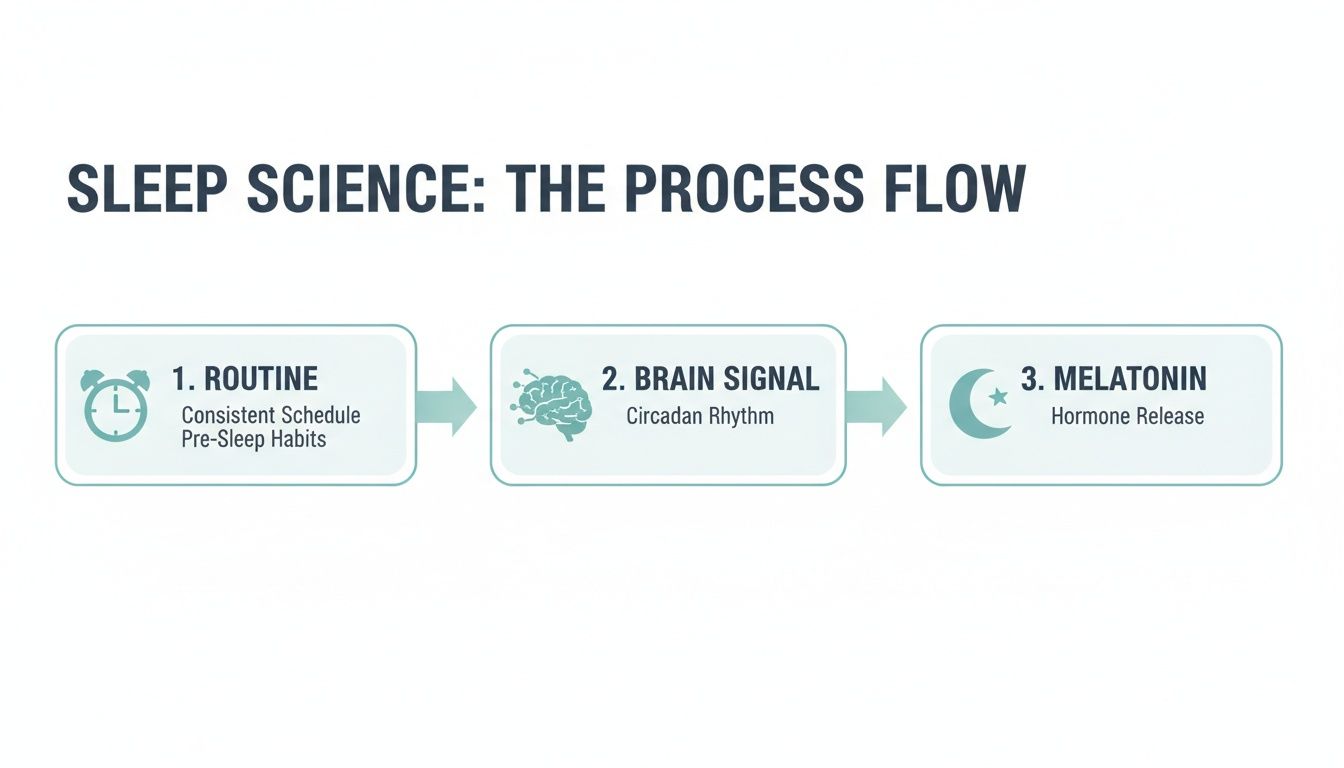
As the diagram shows, a consistent routine helps regulate their internal clock, triggering the natural release of melatonin that helps them drift off peacefully.
Your Secret Weapon: Involve Your Little Co-Designer
Here's the real game-changer: don't create this chart on your own. The absolute best way to get your toddler on board is to make them part of the creation process. When they have a sense of ownership, they are far more likely to use it without a fight.
Sit down with them and chat about the different steps. Let them pick out the pictures or decide what color the chart should be. They can help glue on the images or stick the magnets on the board. You’re not just making a chart; you’re starting a fun, positive family project together.
By turning chart creation into a team activity, you frame the bedtime routine as something you do together, not a list of commands. This simple shift in perspective can put a stop to power struggles before they even start.
Choosing the Right Chart Format for Your Toddler
There's no single "best" type of bedtime chart. The right one for you will depend on your toddler’s personality, your budget, and how much time you want to spend on a DIY project. Some kids get a kick out of the satisfying clink of a magnet, while others are thrilled by a simple sticker.
A hands-on kid might love a chart with velcro pieces they can physically move from a "To Do" column to a "Done" column. An artsy toddler might adore helping you draw the routine on a small whiteboard each week.
To help you find the best fit, here’s a quick look at the most popular options.
Choosing the Right Bedtime Chart Format for Your Toddler
| Chart Type | Best For | Pros | Cons |
|---|---|---|---|
| Printable PDF | Budget-conscious families and anyone needing a quick solution. | Inexpensive (often free), highly customizable, and easy to replace if it gets messy. | Not very durable on its own; might need lamination or frequent reprinting. |
| Magnetic Board | Tactile toddlers who love physically moving things to mark them as "done." | Very durable, reusable, and provides that satisfying "clink" when a task is finished. | Can be more expensive; small magnets might be a choking hazard for younger siblings. |
| Whiteboard Chart | Creative families and older toddlers who can help draw or write. | Super flexible, easy to change up the routine, and can be used for other things too. | Requires redrawing every day or week, and markers can get messy. |
| Velcro Chart | Kids who benefit from a clear visual of "To Do" vs. "Done." | Very interactive and great for fine motor skills. The pictures are securely attached. | The velcro can get worn or fuzzy over time, and making the pieces can be time-consuming. |
Ultimately, the best chart is one that engages your child and fits seamlessly into your life.
Pictures Speak Louder Than Words
For toddlers who aren't reading yet, the images are everything. The visuals on your chart need to be incredibly clear, simple, and easy to recognize at a glance. A simple icon of a toothbrush is way more effective than a busy illustration.
When you're picking out your images, stick to these rules:
- Simplicity: One object per picture. Think: a bathtub, a book, a bed.
- Clarity: Use high-contrast colors and bold, clean outlines.
- Realism: This is a great tip—if you can, use actual photos of your child doing each activity. Seeing their own face brushing their teeth can be surprisingly motivating!
The goal is to create a chart your toddler can "read" all by themselves. The moment they can look at it and confidently tell you what’s next, you'll know you’ve built a tool that truly empowers them. That feeling of independence is what makes these charts so effective.
Bringing Your Bedtime Chart to Life
Alright, you've created the perfect visual roadmap for bedtime—nice work! But now comes the real magic: turning that chart from a cute piece of wall art into a tool that actually brings peace to your evenings. The initial rollout is everything.

Think of it like a grand reveal. Don't just stick it on the wall and point. Make it a big deal! "Look at this awesome new game we get to play tonight!" You want to frame it as their special map to dreamland, a fun adventure you'll go on together every single night.
This initial burst of excitement sets a positive tone, but it's your follow-through that gives the chart its real power. Consistency is what teaches your toddler that this new routine isn't a suggestion—it's just what we do now.
Making It Stick with Positive Reinforcement
Let’s be real: the chart is now the boss, not you. But that doesn't mean it has to be a dictatorship! You can make following the boss's orders feel great with a little positive reinforcement. For toddlers, simple and immediate is always the way to go.
Here's what works in the real world:
- Big, Loud Praise: A booming, "You did it! Teeth are brushed! Let's see what's next on our map!" goes a surprisingly long way.
- High-Fives & Hugs: Physically celebrating each completed step builds a happy, warm connection to the whole process.
- The Power of Stickers: There's a reason stickers are basically toddler currency. Letting them place a sticker on the chart after a good night provides instant, tangible proof of their success. It’s incredibly satisfying for them.
If you find your little one is really motivated by rewards, you can even borrow some ideas from a chore chart reward system that boosts kids' motivation to keep the momentum going. The goal is simple: make cooperation feel good.
Handling Pushback and Negotiations
Even with the most amazing chart, there will be bumps in the road. Your toddler will try to negotiate for one more book or flat-out refuse to get into the tub. This isn't a sign of failure; it's a completely normal part of being a toddler.
The key is to stay calm and point them back to the chart. Instead of engaging in a power struggle, try saying, "Oh, I see that on the chart, but it looks like potty time is first. Let's go get that one checked off!" You’re not the bad guy here—the chart is just showing everyone the way.
Look for progress, not perfection. Teething, a missed nap, or just a classic case of the toddler grumps will throw you off course some nights. That’s okay. Stay patient, be flexible, and just get back to it tomorrow.
This nightly consistency is more than just a parenting hack; it's backed by science. One study on US toddlers found a major gap: while 90% of moms said they had a routine, only 55% actually did it every single night. That consistency made a huge difference. For each night a routine was followed, toddlers got more sleep because they woke up less often—and those wake-ups could steal nearly 40 minutes of rest at a time. It’s powerful stuff.
Creating a Calm Wind-Down Zone
Your chart is the roadmap, but the atmosphere in your home is the vehicle that gets you there. That 30-60 minutes before bed needs to be a dedicated screen-free zone. The blue light from phones, tablets, and TVs messes with melatonin production, making it physically harder for your toddler to feel sleepy.
Instead, let the chart guide you through calm, connecting activities. This is your chance to fill up their emotional tank before they drift off. When you commit to the routine, you’re not just dodging bedtime drama—you’re laying the foundation for healthy sleep habits that will serve them for years to come. This is especially true for toddlers who are moving into their own bed. If that's you, our guide on the toddler bed transition has some extra tips to make it a smooth one.
Troubleshooting Common Bedtime Chart Problems
Even with the most beautifully designed toddler bedtime routine chart, you're going to hit a few bumps in the road. It’s just the nature of toddlerhood. But don’t worry—these hiccups are normal and completely manageable. Think of this as your field guide for when your little one decides to veer off the bedtime path.
The most common issue? Your toddler flat-out ignores the chart. You point to the picture of the bathtub, and they sprint in the opposite direction. It’s frustrating, but it’s usually more about testing boundaries than rejecting the entire system.
Another classic problem is the endless stall tactic. "Just one more story," "I'm thirsty again," or the sudden, desperate need for a specific stuffed animal that's been MIA for six months. These are clever bids for a little more connection and control, and how you handle them makes all the difference.
The Chart Is the Boss, Not You
When your toddler starts to push back or refuse a step, make this your new mantra: "Let's see what the chart says!" This simple phrase is surprisingly powerful because it takes you out of the equation.
Suddenly, you’re not the one making demands. You and your toddler are just a team following the bedtime map together.
Try saying it in a friendly, matter-of-fact tone. If they balk at putting on PJs, you can say, "Oh, look! Pajamas are next on our chart. Let's go get that sticker." By consistently treating the chart as the authority, you sidestep the power struggle and cut down on the drama.
It's all about framing the routine as a non-negotiable but positive part of the day. Your child still has plenty of small choices—which pajamas to wear, which toothbrush to use—that help them feel in control, making them much more likely to follow along.
Navigating Disruptions Like a Pro
Life happens. Illness, teething, a big developmental leap, or just a classic late-afternoon meltdown can throw a wrench into the most solid routine. The key is to bend, not break. Don't ditch the chart completely on tough nights.
Instead, have an abbreviated version in your back pocket. Maybe you skip the bath but still get into pajamas, brush teeth, and read one very short book. The goal is to keep the core signals that tell your child's brain "sleep is coming," even if the routine is shorter. This consistency makes it so much easier to get back on track once they're feeling better.
The most important thing is to avoid creating new habits you'll have to undo later. Comforting your sick child is essential, but try not to introduce new sleep crutches, like rocking them all the way to sleep if that’s not your usual method.
This foundation of consistency is what builds healthy sleep patterns for the long haul. National data from the CDC backs this up, showing that while many older kids have regular bedtimes, the good habits start right here in toddlerhood. A predictable routine is proven to help little ones sleep longer and better. You can see more of the CDC’s findings on children’s sleep consistency for yourself.
When Stalling Turns into a Standoff
Sometimes, no amount of cheerful redirection works, and you find yourself in a genuine bedtime standoff. This is when holding a firm but loving boundary becomes your most important job. If your toddler is having a full-blown meltdown, acknowledge their big feelings without caving to the demands.
You could say, "I know you're sad that story time is over. It's hard to stop when we're having fun. The chart says it's time for bed now."
Stay calm and stay present. Offer a hug or a back rub, but don't extend the routine. This teaches your toddler that while their feelings are always valid, the bedtime boundary is firm. If you're dealing with a little one who just won't stay put, our guide on how to keep your toddler in bed at night has more strategies to help.
Your Top Questions About Bedtime Charts Answered
Even with the best-laid plans, trying something new with a toddler always brings up questions. It's totally normal to wonder if you're on the right track. Here are the clear, simple answers to the questions I hear most often from parents just starting out with a toddler bedtime routine chart.
What Is the Best Age to Start a Bedtime Routine Chart?
You might be surprised to hear you can introduce a simple visual chart as early as 18 to 24 months. This is the age where toddlers are really starting to grasp cause-and-effect and crave predictability. Knowing what’s coming next is a huge comfort to them.
At this stage, keep it super simple. Three or four clear pictures for the big steps—like a bath, pajamas, a book, and then bed—is perfect. As they grow closer to three, you can start adding a few more steps and, crucially, make the chart interactive. Letting them move a magnet or check off a box gives them a real sense of control and makes them an excited participant instead of a passive one.
What If We Miss a Night or Get Off Track?
Life happens. A late dinner, a sick day, or just one of those chaotic afternoons can throw everything off schedule. The goal here is consistency, not perfection. If you have to skip a few steps or miss a night entirely, just pick right back up where you left off the next evening.
The last thing you want is for the chart to become another source of stress. It’s a tool to guide you, not a rigid set of rules to make you feel like you've failed. If you find yourselves consistently struggling to get through the whole routine, it might be a sign that it’s too long or that one particular step is a sticking point. Don't be afraid to tweak it to better fit your family’s reality.
Remember, the chart is meant to serve your family, not the other way around. Flexibility is just as important as consistency, especially in the unpredictable world of toddlers. A calm, forgiving approach makes all the difference.
How Do I Get My Partner on Board with the Chart?
For a bedtime routine to really work its magic, everyone needs to be on the same team. The good news? The chart itself is your best tool for getting your partner, a grandparent, or a babysitter on board. Put it somewhere everyone can see it, like on the fridge or right on your toddler’s bedroom wall.
Take a moment to walk them through it, explaining how following the steps in order makes bedtime predictable for your child and way less stressful for the adult in charge. Honestly, once they see how the chart cuts down on the nightly negotiations and potential meltdowns, they'll be more than happy to stick with the program.
Should I Use Rewards with Our Bedtime Chart?
Positive reinforcement can be a great motivator, but it doesn’t have to mean a new toy every week. For most toddlers, the feeling of accomplishment and the promise of a few extra snuggles is reward enough.
If you do want to use a tangible reward, think small and immediate. There’s a reason stickers are a classic—placing one on the chart right after a great night gives instant positive feedback. The real focus, though, should always be on your praise. Cheering them on for being a great helper builds their confidence and makes the whole routine a positive, connecting time for both of you.
Ready to bring more peace and predictability to your evenings? Explore the full range of parent-approved products from Hiccapop that make life with little ones easier, from travel essentials to nursery must-haves. Check out our collection and discover your next favorite parenting tool.