


8 Essential Toddler Bed Transition Tips for 2025
That moment has arrived: your little one is either scaling the crib walls like a tiny ninja or showing signs they're ready for more sleeping real estate. The transition from a cozy, contained crib to a 'big kid' bed is a major milestone, filled with excitement and, let's be honest, a little parental anxiety. How do you manage this newfound freedom without endless nighttime wanderings and sleep regressions? This comprehensive guide offers a deep dive into actionable, parent-tested toddler bed transition tips.
We've compiled a roundup of practical strategies to help you navigate this significant developmental leap. We'll cover everything from pinpointing the perfect timing and creating a safe, inviting space to establishing routines that stick and managing those inevitable middle-of-the-night visits. Beyond just the basics, you'll find detailed advice on addressing nighttime fears, using positive reinforcement, and handling nap transitions with confidence. Proper setup is foundational to success; a secure and correctly built bed provides peace of mind from night one, so paying attention to details like toddler bed assembly is a crucial first step.
This isn't about vague advice; it's about giving you a clear, step-by-step playbook. You will learn how to make the new bed a celebrated space, not a source of stress, by personalizing the environment and building positive associations. Get ready to turn this daunting change into a smooth, successful, and even celebratory experience for your entire family, ensuring everyone gets a better night's sleep.
1. Start with Familiarization and Positive Association
Before the first night even happens, one of the most effective toddler bed transition tips is to make the new bed a familiar, exciting, and pressure-free zone. A sudden switch from a cozy, contained crib to a big, open bed can feel jarring for a little one. By introducing the bed during low-stakes daytime hours, you transform it from a scary unknown into a personal, happy space that belongs to them.
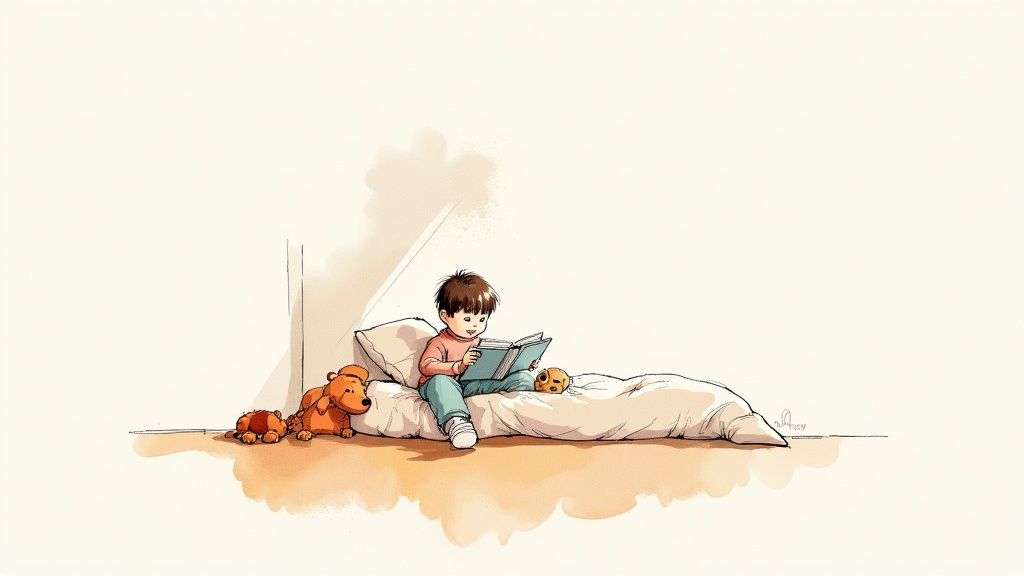
The goal is to build a foundation of positive memories and ownership before asking them to sleep there. This method works by separating the new furniture from the expectation of sleep, which removes the fear factor and helps prevent bedtime battles later on.
How to Build a Positive Connection
Think of the new bed as a fun new piece of playground equipment that just happens to be in their room. Spend a week or two integrating it into your daily routine without mentioning nighttime sleep.
- Make it a Reading Nook: Start a new tradition of reading bedtime stories or daytime books together while snuggled up on the new bed. This creates a calm, cozy association.
- Turn it into a Play Space: Use the bed for quiet, imaginative games. Maybe it’s a pirate ship sailing the seas or a cozy cave for their stuffed animals. This helps them see the bed as a place for fun and comfort.
- Involve Them in the Setup: Let your toddler have a say in their new sleep space. Let them pick out new sheets with their favorite characters or help put special stickers on the headboard. Giving them a sense of control makes the bed theirs.
- Use Enthusiastic Language: Frame the bed as a milestone. Use positive phrases like, “This is your amazing big-kid bed!” or “Look how cozy you are in your special spot!” Take celebratory photos of them enjoying their bed to reinforce the positive experience.
Key Insight: The more your toddler feels the bed is their personal, fun territory during the day, the less intimidating it will feel when the lights go out at night. This proactive approach is a cornerstone of a smooth and tear-free transition.
2. Use Transition Rails and Safety Barriers
One of the biggest anxieties for parents during this milestone is the risk of their child falling out of bed. An excellent way to address this is with one of the most practical toddler bed transition tips: installing safety barriers. Transition rails provide a physical boundary that mimics the enclosed feeling of a crib, offering both physical safety and psychological comfort to a child accustomed to being contained.
The primary goal is to create a safe sleep environment that prevents accidental tumbles while your toddler adjusts to the freedom of a big-kid bed. This simple addition gives parents peace of mind and helps restless sleepers stay put, making the transition smoother and far less stressful for everyone involved.
How to Implement Safety Rails Effectively
Choosing and installing the right bed rail is crucial for safety. According to the U.S. Consumer Product Safety Commission (CPSC), rails should fit snugly against the mattress to prevent any gaps where a child could become trapped.
- Choose the Right Type: Select a rail specifically designed for your type of bed, whether it's a dedicated toddler bed or a converted full-size bed. Some cribs come with their own conversion kits.
- Ensure a Secure Fit: The rail must be installed tightly according to the manufacturer's instructions. Before the first use, give it a firm shake to ensure there is no wiggling or shifting. The gap between the rail and the side of the mattress should be minimal.
- Consider Double Rails: If your child's bed is not against a wall or if they are a particularly active sleeper, installing rails on both sides provides comprehensive protection.
- Teach Your Toddler How to Use It: Show your child the designated spot at the foot of the bed for getting in and out safely. This helps them understand the purpose of the rail and how to navigate their new setup. To learn more about whether your child needs them, check out this guide on when to use bed rails.
Key Insight: A safety rail isn't just a barrier; it's a transitional tool. It bridges the gap between the high walls of a crib and the total openness of a bed, giving your child a sense of security that helps them sleep soundly through the night.
3. Establish a Consistent Bedtime Routine
A predictable bedtime routine is one of the most powerful toddler bed transition tips because it provides an anchor of security during a time of significant change. When the sleeping environment suddenly feels vast and unfamiliar, a consistent sequence of calming activities signals to your toddler’s brain and body that it's time to wind down. This predictability reduces anxiety and creates a sense of control, making them more receptive to falling asleep in their new space.
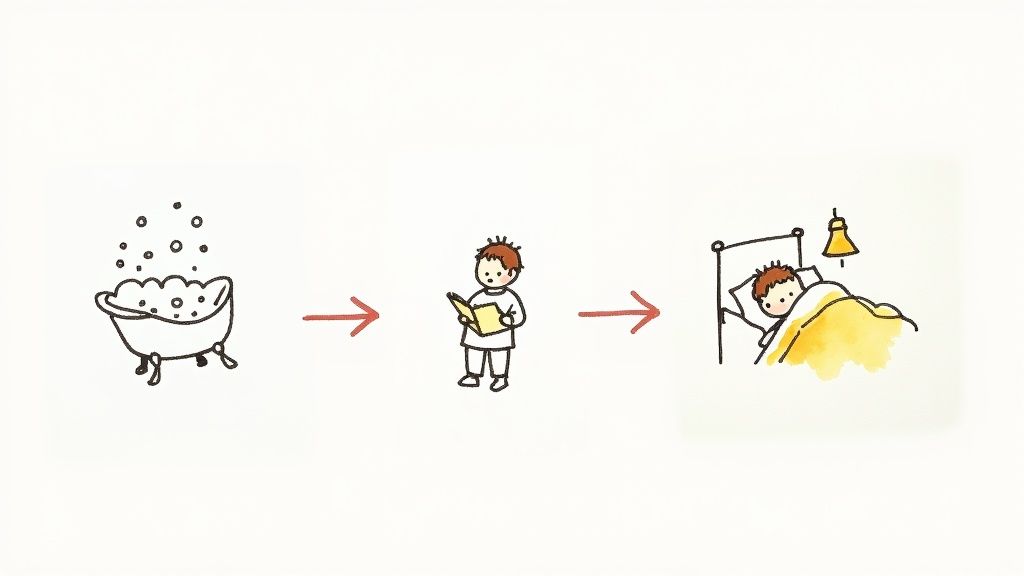
The goal of a strong routine is to build a "sleep runway" that guides your child smoothly from the busyness of the day to the stillness of the night. This approach, widely endorsed by sleep experts, works by creating strong sleep cues that are independent of the sleep surface itself. The familiar steps become the comfort, not just the crib.
How to Build a Transition-Proof Routine
Your bedtime routine should be a 30 to 60-minute sequence of soothing activities that you can perform in the same order every single night. The key is unwavering consistency, which helps regulate their internal clock and manage expectations.
- Create a Calm-Down Sequence: Design a simple, repeatable series of events. A classic example is: warm bath → brush teeth → put on pajamas → read two short books → quiet cuddle time.
- Make the Bed the Final Stop: Ensure the last step of the routine, like the final story or cuddle, happens in the new toddler bed. This reinforces the idea that the bed is the ultimate destination for rest and comfort.
- Dim the Lights Early: Start lowering the lights in the house an hour or two before bedtime. This helps stimulate the production of melatonin, the natural sleep hormone, making the transition to sleep easier.
- Avoid Stimulating Activities: Keep screens off for at least an hour before bed. Exciting games, loud music, or energetic play can make it much harder for a toddler's busy mind to settle down. If you need more guidance on sleep-friendly habits, you can learn more about various toddler sleep training methods on hiccapop.com.
Key Insight: A rock-solid bedtime routine doesn't just prepare a child for sleep; it creates a portable sense of safety. When the routine is the constant, the change in furniture becomes a much smaller, more manageable part of the evening.
4. Choose Age-Appropriate Timing for Transition
Timing is everything, and this is especially true for major developmental milestones. One of the most crucial toddler bed transition tips is to make the switch when your child is developmentally ready, not just when a certain age appears on the calendar. Moving a child too early, before they have the cognitive understanding and self-control for a bed without rails, can lead to endless nighttime wandering, sleep regressions, and unnecessary stress for everyone.
The ideal window for this transition is typically between 18 months and 3 years old. However, this is a wide range because readiness is highly individual. The goal is to align the transition with your child's unique developmental pace and your family’s current circumstances, ensuring the change feels like a natural next step rather than a sudden disruption.
How to Identify the Right Time
Choosing the right moment involves observing your child for specific readiness cues and evaluating your family's overall stability. A calm, predictable environment significantly increases the chances of a smooth transition.
- Watch for the Crib Escape Artist: The most definitive sign it’s time to switch is safety. If your toddler is attempting to climb or has successfully climbed out of their crib, it's no longer a safe space. This is often the primary trigger for making the move.
- Assess Their Understanding: Can your child follow simple instructions like "stay in your bed"? A basic level of comprehension is key to helping them understand the new boundaries of an open bed.
- Consider Other Major Life Changes: Avoid making the switch during other stressful events, such as the arrival of a new sibling, starting potty training, or moving to a new house. Stacking major changes can overwhelm a toddler.
- Look for Signs of Interest: Some toddlers will explicitly ask for a "big kid bed" or show interest in a sibling's bed. This curiosity is a fantastic indicator that they are mentally prepared and even excited for the change.
Key Insight: The success of the transition often hinges less on your child's exact age and more on their developmental readiness and the surrounding family environment. Transitioning during a period of calm and in response to clear cues makes the process feel supportive rather than sudden.
5. Implement Positive Reinforcement and Celebration
For many toddlers, praise and tangible rewards are powerful motivators. One of the most effective toddler bed transition tips is to harness this enthusiasm by creating a system of positive reinforcement around the new bed. This approach reframes the transition not as a scary change, but as an exciting challenge with fun rewards, shifting their focus from anxiety to achievement.
The goal is to associate staying in their new bed with positive outcomes and feelings of accomplishment. Instead of focusing on the negative (like getting out of bed), you celebrate the positive (staying in bed all night). This method works by tapping into a toddler's natural desire for praise and their understanding of cause and effect.
How to Build a System of Celebration
Create a simple, visual, and immediate reward system that your child can easily understand. The key is to celebrate effort and small victories, not just perfect nights, to keep them motivated and prevent discouragement.
- Create a Sticker Chart: This is a classic for a reason. Place a chart near their bed and let them add a special sticker every morning after a successful night. After earning a certain number of stickers (say, three or five), they get a bigger prize, like a small toy, a special outing, or getting to choose Friday’s dinner.
- Offer Immediate Praise: The moment you walk into their room in the morning, offer specific and enthusiastic praise. Instead of a generic "good job," try, "Wow! You stayed in your big-kid bed all night long! I am so proud of your bravery!"
- Plan a "First Night" Celebration: Treat the first successful night in the new bed as a major milestone. A special "big kid breakfast" with their favorite pancakes or a celebratory phone call to a grandparent can make them feel incredibly proud.
- Reward Cooperation, Not Just Perfection: In the beginning, reward the effort. If they only got out of bed once instead of five times, acknowledge the improvement. You could say, "You did such a great job getting back into bed quickly last night! That deserves a high-five!"
Key Insight: Positive reinforcement is about building momentum. By celebrating small wins and focusing on their effort, you create a cycle of encouragement that makes your toddler want to succeed, turning the bed transition into a fun and rewarding family project.
6. Address Nighttime Fears and Anxiety Directly
Moving from a crib to a big-kid bed can uncover a host of new anxieties for a toddler, from fear of the dark to separation anxiety. One of the most critical toddler bed transition tips is to acknowledge, validate, and strategically address these fears head-on. Ignoring their worries or dismissing them as silly can prolong the transition and lead to more significant sleep disruptions down the road.
The goal is to empower your child by giving them tools to cope with their fears, rather than reinforcing them. By addressing their anxiety directly, you teach them that their feelings are valid but also manageable. This approach builds their confidence and helps them see their new bed as a safe and secure space, even when you're not in the room.
How to Proactively Manage Fears
Instead of waiting for a 2 a.m. meltdown, anticipate common anxieties and integrate solutions into your bedtime routine. This proactive stance turns potential obstacles into opportunities for connection and reassurance.
- Soften the Darkness: A dim, warm-colored nightlight can make a huge difference for a child suddenly aware of shadows. This simple tool provides just enough light to be comforting without disrupting their sleep hormones.
- Normalize the Experience with Stories: Find children's books about characters transitioning to a big bed. Reading these together helps your toddler understand that this is a normal, exciting step that other kids take too.
- Validate, then Redirect: Acknowledge their feelings without feeding the fear. Say, "I understand the shadows can look a little spooky, but they're just from your toys. You are safe in your bed." This validates their emotion while gently correcting their interpretation.
- Create a "Safety Check" Routine: Before the final tuck-in, go on a "monster check" together. Look under the bed and in the closet with a flashlight, declaring the room safe and secure. This ritual gives them a sense of control and closure.
- Introduce Comfort Objects: Allow them to bring a special stuffed animal or a favorite blanket to bed. These "guardians" can provide a sense of companionship and security throughout the night.
Key Insight: Directly addressing nighttime fears with empathy and practical tools empowers your toddler to manage their own anxiety. This transforms the bed from a source of worry into a fortress of comfort, accelerating a positive and lasting transition.
7. Maintain Flexibility and Adapt to Setbacks
One of the most important yet often overlooked toddler bed transition tips is to embrace flexibility. The journey from a crib to a bed is rarely a straight line; it's a developmental process filled with progress, unexpected hurdles, and temporary regressions. Viewing setbacks not as failures but as a normal part of your toddler learning a new skill will preserve your sanity and support your child's long-term success.
The goal is to remain a calm, consistent, and patient guide, even when faced with resistance or a sudden return to old habits. This approach works by reducing the pressure on both you and your child, turning potential power struggles into opportunities for connection and reassurance. It acknowledges that your toddler is navigating a major change and may need extra support along the way.
How to Handle Bumps in the Road
Anticipating that you'll need to adapt your strategy is key. A plan that worked beautifully for three nights might suddenly fall apart on the fourth, and that’s okay. Your response is what matters most.
- Understand Regression: It's common for a toddler to sleep well in their new bed for a week, only to suddenly start demanding the crib back. This can be triggered by anything from a growth spurt or teething to a minor change in their daily routine. See it as a request for comfort, not defiance.
- Revisit the Basics: If you hit a rough patch, don't be afraid to go back to square one. Re-engage with familiarization techniques, spend extra time on the bedtime routine, and reinforce positive associations with the bed during the day.
- Keep the Crib as a Backup (Briefly): For some families, temporarily moving the crib back into the room (or keeping it available) can be a useful safety net. If your child is truly distressed, allowing them a night or two in their old safe space can lower anxiety before you try the big bed again. Use this as a short-term reset, not a permanent retreat.
- Stay Calm and Patient: Your toddler feeds off your energy. If you become frustrated, they will become more anxious. When they get out of bed for the tenth time, calmly and quietly guide them back, repeating your gentle-but-firm sleep phrase.
Key Insight: The transition to a toddler bed is a marathon, not a sprint. By building patience and flexibility into your mindset, you can navigate setbacks gracefully without derailing the entire process. Your consistent, loving response is the most powerful tool you have.
8. Create an Engaging Sleep Environment and Personalization
One of the most powerful toddler bed transition tips is to transform your child's room into a sanctuary they genuinely love being in. When a toddler feels ownership and excitement about their personal space, the new bed becomes a desirable centerpiece rather than an intimidating piece of furniture. A thoughtfully designed room promotes comfort, security, and a positive attitude toward bedtime.
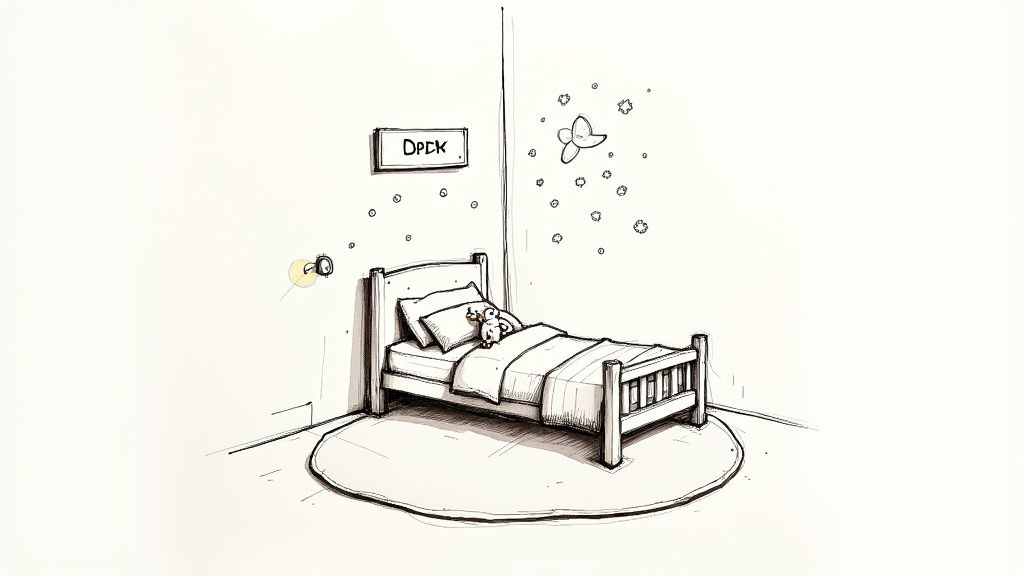
The goal is to leverage their budding independence by making their room a reflection of their personality. This strategy shifts the focus from the loss of the crib to the gain of a "big-kid" room, making them an enthusiastic participant in the process. Creating this engaging sleep environment extends beyond aesthetics; exploring sleep hygiene tips for creating a healthy sleep environment is crucial for your toddler's well-being and a smooth transition.
How to Build an Engaging Sleep Space
Make the room makeover a fun, collaborative project. Involving your toddler gives them a sense of control and pride, which directly translates to feeling more comfortable and secure in their new bed.
- Empower Them with Choices: Let them pick a theme or color scheme. Offer two or three pre-approved options for bedding, such as dinosaurs versus safari animals, to ensure the final look is manageable. This small choice makes them feel powerful.
- Personalize the Walls: Hang their own artwork at their eye level or use removable wall decals of their favorite characters. A custom name sign on the wall or door also makes the space feel uniquely theirs.
- Add Comforting Textures: Introduce soft elements like a plush area rug for them to step onto in the morning, a few soft decorative pillows for the bed, and cozy blackout curtains to keep the room dark and sleep-friendly.
- Organize for Independence: Keep their favorite books and quiet toys in low, accessible bins. An organized space is less overwhelming and more calming. Find inspiration with these simple yet effective nursery organization ideas.
Key Insight: A personalized room that reflects your toddler's interests makes the new bed feel like a special upgrade, not a scary change. When they love their room, they will be more willing and even excited to spend the night there.
Conclusion: Your Roadmap to a Smooth Transition
Transitioning your toddler from the familiar confines of a crib to the wide-open landscape of a big-kid bed is a monumental step. It’s a journey that marks a significant leap in their development and a physical representation of their growing independence. As we've explored, this process is far more than a simple furniture swap; it's a carefully orchestrated dance of timing, preparation, and emotional support.
The path to successful, independent sleep is rarely a straight line. You can expect triumphant nights and the occasional frustrating setback. The key is to remember that success isn't found in a single magic trick but in the consistent application of a few core principles:
- Patience is Your Superpower: There will be nights when your toddler tests every boundary. Responding with calm, consistent patience reinforces a sense of security, which is paramount for peaceful sleep.
- Consistency Creates Comfort: A predictable, soothing bedtime routine is the anchor in your toddler's day. When the sleep environment changes, this unwavering ritual becomes an even more critical source of comfort.
- Safety is Non-Negotiable: A toddler-proofed room is the bedrock upon which successful sleep is built. Bed rails, anchored furniture, and a clear floor path aren't just safety measures; they are silent reassurances to both you and your child.
The true goal isn't just to get your child to stay in their bed. It's to empower them to feel safe, confident, and comfortable in their own space. By using these toddler bed transition tips, you’re teaching them that change can be positive and that they have the capability to navigate new stages of life. This is a gift that extends far beyond the bedroom, laying a foundation for resilience and security that will serve them for years to come.
What's the most surprising challenge you've faced during this transition? Share your stories and tips in the comments below—we can all learn from each other!
Navigating the toddler bed transition is all about creating a safe and secure environment. For an extra layer of protection and peace of mind, explore the range of bed rails and travel sleep solutions from Hiccapop. Our products are designed by parents, for parents, to make milestones like this one as smooth and worry-free as possible. Find the perfect fit for your family’s new adventure at Hiccapop.