


How to Keep Your Toddler in Bed at Night: Gentle, Proven Routines That Work
Welcome to the club you never wanted to join: the league of parents whose toddlers treat bedtime like a starting pistol for a late-night adventure. If you're reading this, chances are you've perfected the art of the silent creep out of their room, only to hear the pitter-patter of little feet behind you moments later. You are not alone, and yes, this is fixable.
The key to keeping your toddler in bed isn't a single magic trick; it's about understanding why they’re getting out in the first place. From there, you can build a consistent plan using predictable routines, a calming sleep environment, and gentle-but-firm methods. It’s a marathon, not a sprint, but you can absolutely win this.
The Nightly Escape: Why Your Toddler Won’t Stay in Bed
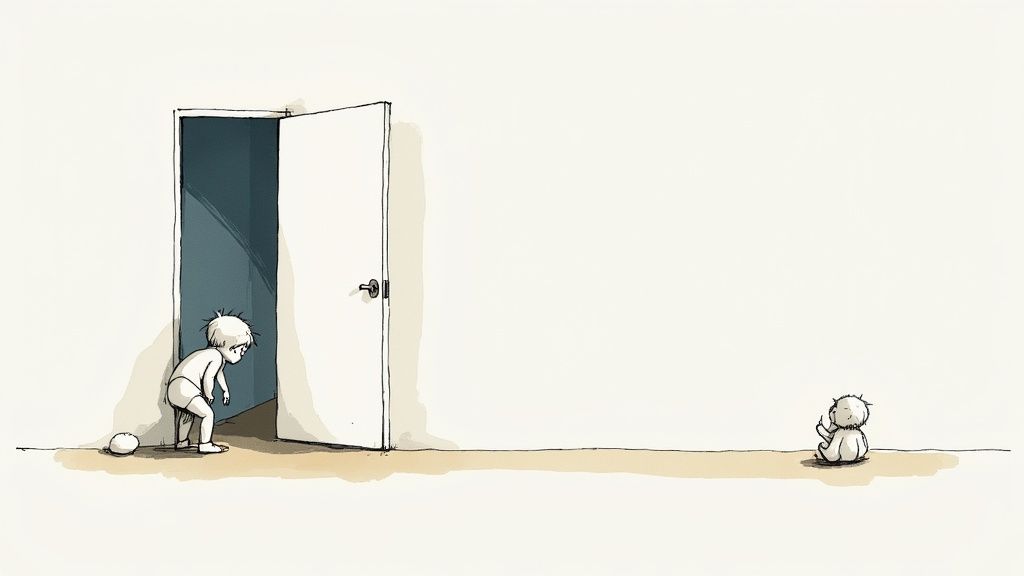
So, your little one has discovered their legs have a new superpower: the ability to leave their room long after you’ve said goodnight. This nightly escape act isn’t just about defiance; it’s a complex mix of developmental milestones, big emotions, and pure toddler curiosity. Understanding the "why" is your first, most important step toward finding a solution that actually sticks.
Unpacking the Reasons for Roaming
Before you can solve the puzzle, you need to identify what’s driving them out of their cozy bed. Is it a genuine need, a new fear, or just classic, age-appropriate boundary-testing?
-
Separation Anxiety: This is a big one. When the lights go out and the house gets quiet, your toddler might suddenly feel very alone. Getting out of bed is their most direct way to seek the comfort and reassurance that you’re still close by.
-
Fear of the Dark (and FOMO): It’s not just about monsters under the bed. Toddlers also suffer from a major Fear Of Missing Out. They can hear the TV, muffled conversations, or the dishwasher running, and their brain tells them the party is still going on without them.
-
Testing Boundaries: Welcome to the toddler years! A huge part of their "job" is figuring out the rules of their world. Getting out of bed is often a simple experiment: "If I do this, what happens next?" Your reaction teaches them everything they need to know.
If you’re feeling worn down by these bedtime battles, know you’re in good company. A comprehensive Child Sleep Survey revealed that a staggering 85% of US parents reported difficulty getting their kids to bed on time. It also found that over half of children argue to stay up later, with many admitting they just don't want to miss out on the fun. You can read the full findings on child sleep habits and see just how common this is.
The Big Picture: Your toddler isn’t trying to make you miserable. They are navigating big feelings, newfound independence, and a world that seems way more exciting than their dark, quiet room.
Building Your Bedtime Action Plan
The good news? You don’t have to resign yourself to endless nights of this pop-up game. This guide will walk you through a practical, multi-layered approach to reclaim your evenings. We’re going to focus on proactive strategies that build positive sleep associations, turning bedtime into a time of connection instead of a power struggle.
When you acknowledge their motivation, a nightly battle transforms into a solvable puzzle. By understanding their needs and, most importantly, staying consistent, you can teach them the skills they need to sleep soundly—and confidently—on their own.
Your Quick-Action Bedtime Plan
This table summarizes the core strategies we'll dive into. Keep it handy as a quick reference when you're in the thick of it.
| Strategy | Key Action | Why It Works |
|---|---|---|
| Consistent Routine | Do the same 3-5 calming activities in the same order every night. | Signals to your toddler's brain and body that sleep is coming, making the transition easier. |
| "Silent Return" Method | Calmly and silently walk your toddler back to bed every single time they get out. | Removes the "reward" of attention (positive or negative), making the act of getting up boring. |
| Sleep-Friendly Room | Use blackout curtains, a white noise machine, and ensure the room is a comfortable temperature. | Minimizes external distractions and creates a soothing environment conducive to sleep. |
| Set Clear Expectations | Use simple language to explain the bedtime rules before you start the routine. | Toddlers thrive on predictability and are more likely to cooperate when they know what's expected. |
| Safety First | Toddler-proof the room and use a baby gate at the door if needed. | Ensures they remain safe if they do get out of bed while you are asleep. |
By layering these tactics, you create a supportive and predictable framework that helps your toddler feel secure enough to stay in bed. Now, let's break down how to put each of these into practice.
Crafting a Bedtime Routine That Actually Works
If you want to know how to keep your toddler in bed, the real work starts long before you ever say goodnight. A predictable, soothing bedtime routine is, hands down, the most powerful tool in your arsenal. It’s the daily ritual that signals to your toddler’s busy little brain and body, "Okay, the adventure is over for today; it’s time to power down."
This isn’t about enforcing a rigid, military-style schedule. It’s about creating a sequence of events that feels safe, loving, and—most importantly—consistent. Let's move beyond the basic "bath, book, bed" and build a routine that actually prevents those midnight escape attempts.
Building the Perfect Wind-Down Sequence
The magic of a good routine is all in its predictability. Your goal is to methodically lower stimulation, not accidentally ramp it up. Kick off this wind-down period about 30 to 60 minutes before you want your toddler to be asleep, and make sure every step flows calmly into the next.
A huge part of a successful bedtime is weaving in good sleep hygiene practices that truly prepare your child for rest. This means dimming the lights, turning off all screens, and shifting the energy in the house from playful to peaceful. Think of it as creating a runway for sleep.
Here’s a sample sequence you can adapt and make your own:
- Get the Last Wiggles Out: If your toddler is still bouncing off the walls, try some gentle, structured movement. Think "animal walks" (bear crawls, frog jumps) followed by big, calming hugs. This gives them deep pressure input that can be incredibly regulating.
- A Warm, Calming Bath: The slight drop in body temperature after a warm bath is a natural sleep inducer. Just keep it low-key—this isn't the time for splashy chaos.
- PJs & Teeth: A simple, non-negotiable step.
- Quiet Connection Time: This is the heart of the whole routine. Spend 10-15 minutes on a quiet activity together in their bedroom. Read a couple of favorite books, do a simple puzzle, or listen to some soft, calming music. The key is that it’s a shared, peaceful activity.
- The Final Tuck-In: After the story, it’s a quick cuddle, a consistent phrase like "I love you, see you in the morning," and then lights out.
The Screen Time Sabotage
It’s so tempting to let your toddler watch a show to wind down, but this is one of the biggest routine-killers out there. The blue light from screens actively suppresses melatonin, the very hormone that tells our bodies it's time to sleep. Roughhousing and wrestling can have a similar effect, getting their adrenaline pumping right when you want it to be dipping.
The link between daily habits and nighttime sleep is undeniable. Research consistently shows a direct connection between increased screen time and delayed bedtimes or disrupted sleep. Think of it this way: swapping the tablet for a book is one of the single most effective changes you can make for your toddler’s sleep.
Common Routine Mistakes to Avoid
Even with the best intentions, it’s easy to make a few missteps that derail the whole effort. Knowing these common pitfalls can help you keep your routine on track.
The biggest mistake is letting the routine drag on for too long. A toddler's brain can only handle so much. If your wind-down stretches past 45 minutes, it stops being calming and can become overstimulating. They might get a second wind, and suddenly your peaceful routine has turned into a whole new playtime.
Another classic error is inconsistency. If Dad’s routine involves three books and a song but Mom’s is just one book and a quick hug, your toddler won't know what to expect. That uncertainty can cause anxiety, which leads directly to stall tactics and those infamous curtain calls. Everyone involved in bedtime has to be on the same page, doing the same steps, in the same order, every single night. That predictability is what builds security and finally makes it easier for your toddler to relax and stay put.
Designing the Perfect Sleep Sanctuary
Your toddler's bedroom environment can make all the difference between a nightly circus act and a peaceful retreat. Think of it as setting the stage for sleep; if the lighting is bright and the props are exciting, you can’t really blame your little performer for wanting to stay on stage. Our goal is to transform their room into a true sleep sanctuary—a calm, boring, and utterly predictable space that cues their brain for rest.
This isn’t just about cute decorations; it’s about sleep science. A few key environmental tweaks can have a massive impact on your toddler's ability to fall asleep and, more importantly, stay asleep. It's one of the most powerful tools in your arsenal for keeping a toddler in bed at night.
Embrace the Darkness
Toddlers are incredibly sensitive to light. Even a sliver of light from a streetlight or a bright hallway can disrupt their natural melatonin production, the hormone that tells their body it's time to sleep. The solution? Make their room as dark as a cave.
Blackout curtains are an absolute game-changer. They effectively block out external light and send a clear signal that when the room is dark, it’s time for sleep. If you feel a little light is necessary, opt for a nightlight with a red or amber bulb. Unlike blue light, which mimics daylight and messes with their internal clock, these warm hues are much less likely to interfere with sleep.
Turn Down the Temperature
Have you ever tried to sleep in a stuffy, warm room? It’s miserable. The same goes for your toddler. Research consistently shows that a cooler room promotes deeper, more restorative sleep.
A room temperature between 65 and 70°F (18 to 21°C) is the sweet spot for sleep. A cool environment helps lower the body's core temperature, which is a natural trigger for sleepiness.
An often-overlooked part of this equation is dressing your child appropriately for sleep. You want to make sure they aren't too hot or too cold. Lightweight, breathable pajamas and sleep sacks are usually a better bet than heavy blankets, which can easily be kicked off or become a safety concern.
Keep It Quiet and Consistent
Sudden household noises—a dropped pan, a dog barking, the TV in the living room—can easily jolt a toddler right out of a deep sleep. A white noise machine is your best friend here. It creates a consistent, soothing soundscape that masks these abrupt noises, helping your child stay asleep through minor disruptions.
- Steady Sounds: Choose a machine that plays a constant sound, like static or a fan, rather than waves or music that have volume fluctuations. Consistency is key.
- Volume Check: Keep the volume at a reasonable level—no louder than a soft shower—to protect your child's delicate hearing.
Make the Bed a Sacred Space for Sleep
This one is a big deal. A toddler’s bed should be for one thing and one thing only: sleeping. When their bed doubles as a playground or, worse, a spot for timeouts, it creates all sorts of confusing associations. The bed should always feel like a safe, comforting, and positive place.
This starts with making the bed itself inviting. Use soft, comfortable bedding and think about adding a special comfort object or "lovey," like a favorite stuffed animal or a small blanket. This object can provide a real sense of security and companionship, making it easier for them to self-soothe when they wake up alone in the middle of the night.
Finally, safety is paramount, especially when you've just transitioned from a crib. A fall can be scary and create a new fear around the bed itself. To learn more about creating a secure sleep setup, check out these essential safe sleeping tips for toddlers. Using toddler bed rails can prevent tumbles and give both you and your child peace of mind, reinforcing that their bed is a secure and protected space, perfect for a long night's rest.
Gentle and Firm Strategies for Staying in Bed
So, you’ve nailed the perfect bedtime routine and turned their bedroom into a cozy sleep haven. Fantastic! But what happens when you hear the pitter-patter of little feet in the hallway just when you’ve finally sat down? This is where your strategy pivots from preparation to in-the-moment response.
The secret to how to keep your toddler in bed at night really boils down to how you handle these little escape attempts. Your goal is to be both gentle and incredibly consistent, making the act of getting out of bed so boring that sleep becomes the more appealing option. The biggest challenge here is managing your own frustration. Take a deep breath. Your job on the fifteenth trip back to their room is to be just as calm and neutral as you were on the first.
The Art of the Silent Return
One of the most effective, battle-tested methods is the Silent Return. It's as straightforward as it sounds: a calm, quiet, and utterly uneventful escort back to their own bed. When your toddler shows up at your bedside, you simply take their hand and walk them back to their room with almost zero interaction.
No lectures. No bargaining. No long-winded explanations about why sleep is important. You just guide them back, tuck them in, say a brief and predictable phrase like, "It's sleepy time now," and leave.
The first few nights, they might be puzzled by this new, very boring game. But by the tenth time in one night, they'll start to realize that their trip out of bed doesn't get them the reward they were seeking—whether that was a cuddle, a reaction, or just some extra attention.
Pro Tip: Keep your face neutral and your body language relaxed. Toddlers are masters at reading our emotions. If they sense you’re getting frustrated, it can actually escalate the situation or, worse, become an interesting new game for them.
Trying the Chair Method
If you suspect separation anxiety is fueling the nightly escapes, the Chair Method is a wonderfully gentle approach. This technique offers reassurance while still holding the all-important boundary of staying in their own bed. It’s a great fit for little ones who get genuinely upset when you leave.
The process is gradual and definitely requires some patience:
- Nights 1-3: Sit in a chair right next to their bed until they fall asleep. You can offer quiet, soothing words but try to avoid picking them up or getting into a conversation.
- Nights 4-6: Inch the chair a few feet away from the bed, moving it toward the middle of the room.
- Nights 7-9: Scoot the chair over to the doorway.
- Subsequent Nights: Finally, move the chair just outside the door, and then remove it entirely once they’re comfortable.
This method can take a week or two, but it’s an amazing way to teach your child that they are safe and you are nearby, even if you aren't within arm's reach. For a closer look at this and other techniques, our guide to toddler sleep training methods can help you find the right fit for your family.
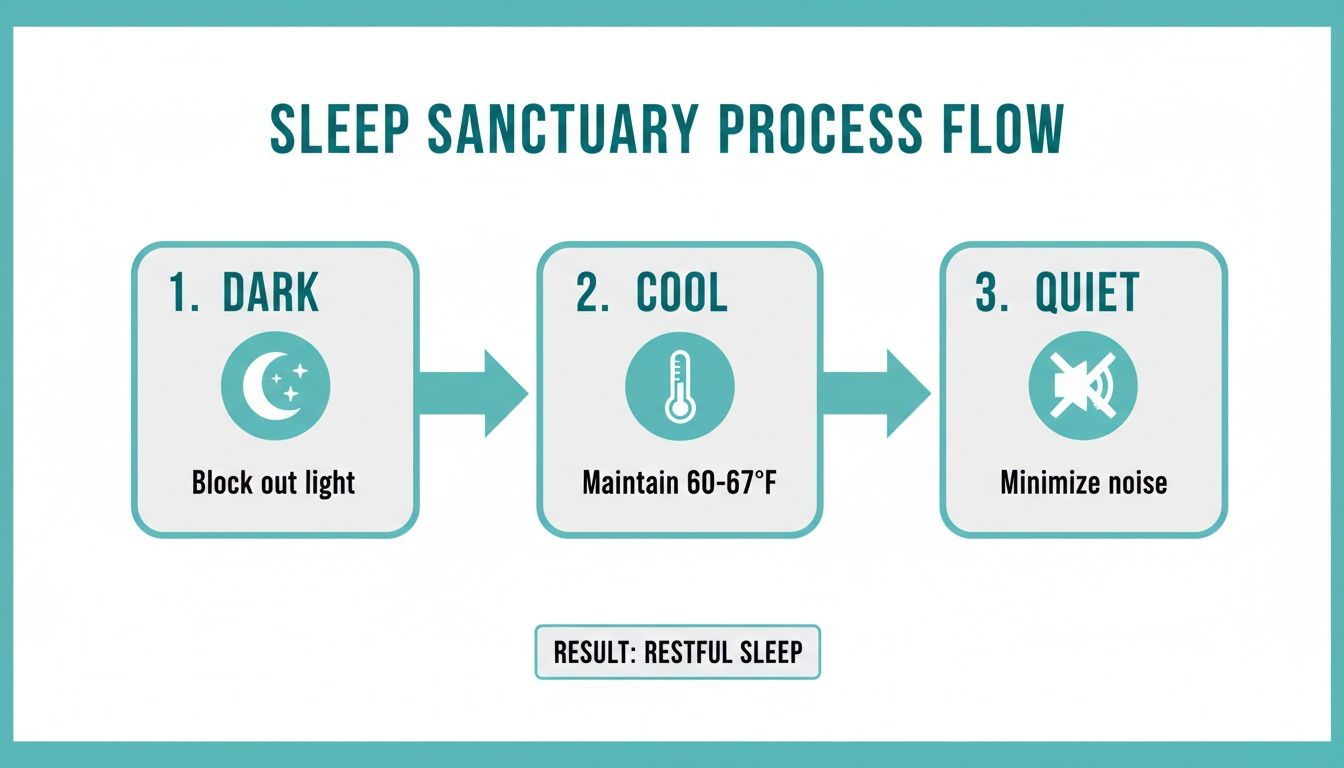
A dark, cool, and quiet room is the foundation that makes behavioral strategies like the Silent Return and Chair Method so much more effective.
Using Positive Reinforcement
While it’s crucial to manage the pop-ups as they happen, you can also set your toddler up for success with some positive motivation. This helps shift the dynamic from a battle of wills to a fun team effort.
Sticker Charts
Never underestimate the power of a sticker chart. For many toddlers, it’s magic. Every morning they stay in their own bed all night, they get to put a sticker on their chart. After they earn a set number of stickers—maybe three or five—they get a small, exciting reward. Think a special trip to the park, a new book from the library, or getting to pick the family movie. The key is to make the reward immediate and something they actually care about.
The Bedtime Pass
Another genius tool is the Bedtime Pass. Each night, you give your child a single, tangible "pass" they can trade in for one request after you’ve tucked them in. This could be for one last hug, one more sip of water, or a quick trip to the potty. Once they use the pass, it’s gone for the night.
This simple trick is incredibly empowering for a toddler. It gives them a sense of control, acknowledging their last-minute needs (or stall tactics!) while putting a firm, clear limit on them. Often, just knowing they have the pass is enough reassurance, and they won't even use it. It’s a brilliant way to finally end that endless cycle of "just one more thing."
Troubleshooting Common Bedtime Hurdles
Even when you’ve created the perfect routine and a cozy sleep sanctuary, you're going to hit some bumps in the road. It’s just part of the deal. Toddlers are endlessly creative, surprisingly persistent, and true masters of the unexpected. Think of this as your field guide for navigating those tricky moments that can throw even the best-laid bedtime plans into chaos.
Knowing how to react when you’re exhausted and caught off guard is everything. The goal is to stay calm, be consistent, and act confidently, reinforcing the loving boundaries you’ve worked so hard to establish.
Decoding Delay Tactics
Is your toddler really that thirsty, or is this the fifth curtain call for a glass of water? Those classic requests—one more hug, another trip to the potty, a sudden desperate need for a specific stuffed animal—are the hallmark delay tactics of a toddler who isn't ready for the party to end.
The secret is to get ahead of these stalls. Build them right into your routine so they lose their power. Make that final potty trip and a last sip of water a non-negotiable part of the process. That way, when the request comes five minutes after you’ve tucked them in, you can confidently say, "We already had our water. It's sleepy time now."
How can you tell the difference between a real need and a stall tactic? Trust your gut. A genuinely scared or uncomfortable child seems truly distressed. A toddler testing the limits often has a little twinkle in their eye, even if they’re putting on a good show.
Nightmares vs. Night Terrors
Waking up to a screaming child is jarring, to say the least. But understanding what you’re dealing with is crucial for responding in the right way. Nightmares and night terrors feel similar in the moment, but they are completely different beasts.
Nightmares:
- What they are: Just bad dreams. They happen during the lighter, REM stage of sleep, which is why they usually crop up in the second half of the night.
- What they look like: Your child will be fully awake and visibly scared. They can often tell you about the dream and will be genuinely comforted by you being there.
- How to respond: Go to them right away. Offer hugs, reassurance, and a calm presence. A quick "monster check" under the bed and a reminder that they are safe is usually all it takes before you can guide them back to sleep.
Night Terrors:
- What they are: These happen during the deepest stage of non-REM sleep, often just a few hours after your toddler has fallen asleep.
- What they look like: This is the truly scary part. Your child might be thrashing, screaming, or sitting up with their eyes wide open, but here's the key: they are not awake. They won't respond to you and will have zero memory of it in the morning.
- How to respond: Your instinct will be to wake them, but don't. It will only make them more agitated and confused. Your only job is to stay close and make sure they don’t hurt themselves until the episode passes, which is typically just a few minutes.
The Great Crib Escape
That moment when you transition from a crib to a toddler bed is huge! But with great freedom comes great responsibility... or in this case, a whole lot of wandering. Suddenly, their room is an open playground, and your living room is the main attraction.
This transition often requires a hard reset on bedtime expectations. You’ll need to be extra committed to your chosen sleep training method, like the "Silent Return," for the first week or two. If you're worried about them tumbling out, which can create a new fear of the bed itself, look into stopping a sleeping toddler from falling out of bed to help them feel safe and secure in their new big-kid space.
Managing Sleep Regressions
Just when you think you’ve finally cracked the code, a sleep regression rears its ugly head. These temporary meltdowns are almost always tied to big developmental leaps, life changes like a new sibling, travel, or illness.
The number one rule for getting through a regression is this: do not ditch your routine. It is so tempting to fall back on old habits (hello, letting them crawl into your bed) when they're sick or you're on vacation. While you should absolutely offer extra comfort, try your best to stick to the established bedtime rules. Maintaining that consistency is the absolute fastest way to get back on track once the disruption has passed.
If siblings share a room, regressions can be doubly challenging. One strategy is to stagger their bedtimes. Put the better sleeper to bed first, giving them time to fall into a deep sleep before their sibling joins them. A good white noise machine can also be a lifesaver for drowning out a restless roommate.
When It’s Time to Call for Backup
You’ve tried everything. The sticker chart is overflowing, you’ve perfected the art of the silent return, and your bedtime routine runs like a Swiss watch. And yet, your little one is still not staying in their bed.
First, take a deep breath. Most of these bedtime battles are a completely normal (and yes, completely exhausting) phase of toddlerhood. But sometimes, the strategies you can manage at home just aren't cutting it. Knowing when to call in a professional isn't admitting defeat; it’s one of the smartest, most loving things you can do for your family's well-being.
If you've been sticking to a solid plan for several weeks with zero progress, it might be time to look for a cause that goes beyond typical toddler boundary-testing.
Red Flags That Signal Something More
Trust your gut. As a parent, you have an intuition about your child that no one else does. If something feels off about their sleep patterns, it’s always worth investigating.
Here are a few things that might point to an underlying issue needing a professional eye:
- Loud, consistent snoring or gasping: This isn't just cute toddler noise. It can be a sign of sleep-disordered breathing or sleep apnea, which definitely needs a doctor's evaluation.
- Frequent and intense night terrors: An occasional night terror is one thing, but if they're happening regularly and are truly disruptive, it’s time to talk to your pediatrician.
- Constant, unusual body movements: Think repetitive leg kicking or jerking motions all night long. This could be a sign of a sleep movement disorder.
- Signs of significant anxiety: If your toddler’s fear of being alone seems extreme, persists throughout the day, and goes beyond typical separation anxiety, it’s worth exploring further.
Who to Turn To for Help
When you decide it’s time for professional guidance, you’ve got a couple of fantastic options, each with a different specialty.
Your pediatrician is always the best first call. They can help rule out any medical conditions that might be sabotaging sleep. Go to the appointment armed with details—notes on your child’s sleep habits, when they wake up, and any of the concerning behaviors you’ve noticed.
If your pediatrician gives the all-clear on the medical front, a certified child sleep consultant can be a game-changer. These experts live and breathe the behavioral side of sleep. They can work with you to create a personalized plan that fits your family’s specific needs and your parenting style.
Their guidance can be especially helpful if you’re struggling to get a solid routine in place. A global analysis actually found that a staggering 22% of parents worldwide didn't have any kind of bedtime routine, a huge factor in sleep problems. You can read the full study on preschool sleep patterns to see just how critical that foundation is.
Got Questions? We’ve Got Answers.
When you're deep in the trenches of toddler sleep training, it feels like a million questions pop up. Let's tackle some of the most common ones I hear from parents who are just trying to get their little one to stay put after lights-out.
How Long Will This Actually Take?
I get it, you want to know when you'll finally be able to sit down and watch a movie without being interrupted. The honest answer? It depends.
With a rock-solid, consistent approach, most families start seeing real, lasting changes in about one to two weeks. The key word here is consistent. Bending the rules "just this once" can feel like hitting the reset button, so try your best to stick with it. You've got this.
What if My Toddler Has a Full-Blown Meltdown When I Leave?
This is so tough, and it’s often a classic sign of separation anxiety. It’s that heart-wrenching, hysterical crying that makes you want to give in immediately.
Instead of rushing back in, try a gradual retreat. The Chair Method is fantastic for this because you’re still present, just slowly creating more distance each night. Offer calm, brief reassurance that you’re just in the other room, but hold the line on them staying in bed. A beloved stuffed animal or special blanket can also be a huge comfort when they’re feeling anxious.
The Great Debate: To Gate or Not to Gate?
Using a gate on a toddler's bedroom door is definitely a controversial topic. While it might seem like a quick fix, especially if you’re worried about safety, most sleep experts recommend against it. It can make a child feel panicky or trapped, which is the last thing you want their bedroom to feel like.
Focus on the positive, behavioral strategies first. If safety is your main concern (think a staircase right outside their door), a much better solution is putting the gate at the top of the stairs. This keeps them safe from a real hazard without making their room feel like a cage.