


8 Sample Newborn Schedules to Bring Calm to Your Chaos
Welcome to parenthood, where the days are long, the nights are longer, and the only predictable thing is unpredictability. If you're feeling overwhelmed by the endless cycle of feeding, changing, and soothing, you're not alone. The idea of a "schedule" for a tiny human who hasn't read the manual can feel rigid and intimidating. But think of it less as a strict timetable and more as a gentle, flexible rhythm—a predictable pattern that helps both you and your baby feel secure and understood.
In this guide, we’ll walk you through various sample newborn schedules, from the hazy early weeks to the more structured routines of older infants. We'll break down the strategy behind each example, offering actionable takeaways to help you customize a flow that brings a little more calm and a lot less chaos to your new life. Our goal isn't to box you in but to empower you with frameworks you can adapt to your unique baby and family.
We will explore eight distinct routines, including the classic 2-3 hour cycle for the earliest days, the popular Eat-Wake-Sleep pattern, and specialized schedules for managing cluster feeding or incorporating a dream feed. By understanding the "why" behind each approach, you'll be better equipped to find a rhythm that works for you. Let's dive into the examples that can help you navigate this beautiful new chapter with more confidence.
1. Newborn Every 2-3 Hours Schedule (0-8 Weeks)
This foundational approach is less of a rigid schedule and more of a responsive rhythm, making it one of the most common and pediatrician-recommended sample newborn schedules for the first two months. The core principle is simple: feed your baby every two to three hours, around the clock. This consistent cycle is crucial because newborns have tiny stomachs (about the size of a cherry at birth) and need constant nourishment for rapid growth and brain development.
This on-demand or parent-led feeding rhythm is championed by major health organizations like the American Academy of Pediatrics (AAP). It ensures newborns receive at least 8-12 feedings in a 24-hour period, which helps prevent issues like dehydration, jaundice, and poor weight gain.
Why It Works
A newborn's primary job is to eat, sleep, and grow. This schedule aligns perfectly with their biological needs. Frequent feedings stabilize their blood sugar, provide essential calories, and help establish a strong milk supply for breastfeeding mothers. This approach is not about watching the clock but about responding to your baby's needs within a consistent window, building a foundation of trust and security.
How to Implement This Schedule
To make this demanding rhythm manageable, preparation and teamwork are key.
- Create a Feeding Station: Whether you're breastfeeding or bottle-feeding, set up a comfortable spot with everything you need: pillows, water, snacks, burp cloths, and your phone. This minimizes stress, especially during late-night sessions.
- Share the Load: Sleep deprivation is real. Work with your partner to split nighttime duties. One parent can handle a feed while the other gets a solid block of sleep.
- Keep Night Feeds Calm: Use dim lighting and minimal interaction during night feeds to help your baby understand the difference between day and night. This is a crucial first step in building a healthy nighttime routine for your newborn.
- Track Everything: Use an app or a simple notebook to log feeding times, duration, and diaper output. This data is invaluable for tracking patterns and discussing your baby's progress with your pediatrician.
2. Eat-Wake-Sleep (EWS) Schedule (6 Weeks - 4 Months)
As you move past the initial newborn haze, the Eat-Wake-Sleep (EWS) cycle offers a more structured yet still responsive routine. Popularized by baby sleep expert Tracy Hogg in "The Baby Whisperer," this approach introduces a predictable pattern: your baby eats upon waking, has a period of wakeful activity, and then goes down for a nap. This sequence intentionally separates feeding from sleeping, which helps prevent your baby from relying on a bottle or breast to fall asleep.
This method is one of the most effective sample newborn schedules for parents seeking predictability without rigid clock-watching. The entire cycle typically lasts between 2.5 to 4 hours, depending on your baby's age and individual needs. It helps babies get full feedings because they are more alert, leading to better naps and more consolidated nighttime sleep over time.
Why It Works
The EWS schedule works by aligning with a baby's natural rhythm while gently structuring their day. By feeding upon waking, you ensure your baby is well-rested and alert enough to take a full, effective feed. The subsequent "wake" period allows for important developmental play and connection. This clear sequence helps your baby learn to self-soothe and fall asleep independently, a foundational skill for healthy sleep habits.
How to Implement This Schedule
Transitioning to an EWS rhythm requires observation and consistency. It's less about the clock and more about the pattern.
- Observe Wake Windows: The key to a successful EWS cycle is putting your baby down for a nap before they become overtired. Pay close attention to their appropriate wake windows by age to catch their sleepy cues like yawning or rubbing their eyes.
- Focus on Full Feedings: When your baby wakes, make feeding the first order of business. Encourage a full feed to ensure they are satisfied and can last until the next cycle. This prevents snacking, which can disrupt the routine.
- Plan Wake Time Activities: Use the "wake" portion for engaging activities like tummy time, singing songs, or reading a book. Keep activities calm as nap time approaches to help your baby wind down.
- Stay Flexible: EWS is a template, not a strict rule. Growth spurts, teething, or developmental leaps may temporarily shorten cycles. The goal is to follow the pattern of eat, then wake, then sleep, even if the timing varies slightly day-to-day.
3. Three-Nap Schedule (3-6 Months)
As your baby moves out of the early newborn haze, you'll notice their sleep patterns begin to consolidate. This predictable three-nap schedule is one of the most common sample newborn schedules for infants between three and six months old. It marks a significant transition where babies can stay awake for longer periods and sleep for more extended stretches at night, bringing a welcome sense of predictability for many families.
This rhythm is built around wake windows, which are typically 2-3 hours long for this age group. Instead of feeding every two hours, feedings are spaced further apart, usually every three to four hours. This structure helps align with your baby's developing circadian rhythm, creating a more organized flow to your day and night. It’s ideal for parents establishing a routine that accommodates work or longer daytime outings.
Why It Works
This schedule respects your baby's growing ability to stay awake and engage with the world while ensuring they get the restorative daytime sleep they need. Three well-timed naps prevent overtiredness, which can paradoxically lead to difficulty falling asleep and more frequent night wakings. By establishing a consistent nap and feeding routine, you provide your baby with a secure and predictable framework, helping them learn to anticipate sleep and feel more settled.
How to Implement This Schedule
Transitioning to a three-nap day requires observation and consistency. The key is to watch your baby's cues, not just the clock.
- Mind the Wake Windows: Focus on how long your baby has been awake (typically 2-3 hours) rather than forcing a nap at a specific time. An overtired baby will struggle to sleep, so watch for early tired signs like yawning or rubbing their eyes.
- Create a Consistent Nap Environment: Signal that it's time for sleep by using a consistent, calming routine. Dim the lights, turn on a white noise machine, and put your baby down in their crib. This helps them associate these cues with sleep.
- Keep a Flexible Buffer: Life with a baby is unpredictable. Allow for a 15-30 minute buffer around nap times. If a nap is cut short, you may need to adjust the next one slightly earlier.
- Protect the Bedtime: Even with three solid naps, maintaining a consistent bedtime is crucial. This helps regulate their internal clock and prevents them from becoming overtired by the end of the day, ensuring a smoother transition to nighttime sleep.
4. Two-Nap Schedule (5-12 Months)
This schedule marks a significant milestone in your baby’s development, transitioning from the frequent, shorter naps of early infancy to a more predictable rhythm. As babies between 5 and 12 months can stay awake for longer periods, consolidating their daytime sleep into two substantial naps becomes possible. This approach supports a consistent bedtime and helps their circadian rhythms mature, making it one of the most structured sample newborn schedules for older infants.
This transition aligns with several key developmental leaps. Babies are often starting solid foods, becoming more mobile, and their sleep cycles are becoming more adult-like. A predictable two-nap schedule provides the stability they need to thrive during this period of rapid growth and learning, ensuring they are well-rested for both playtime and mealtimes.
Why It Works
By this age, babies have longer wake windows (typically 2-3 hours) and can sleep for more extended stretches. Consolidating daytime sleep into two naps, one in the morning and one in the afternoon, prevents them from becoming overtired, which can ironically lead to difficulty sleeping. This rhythm also creates a more predictable daily flow for parents, making it easier to plan outings, activities, and meals, and is often the standard for daycare centers.
How to Implement This Schedule
Transitioning to and maintaining a two-nap schedule requires consistency and attention to your baby’s cues.
- Establish a Consistent Wake-Up Time: Aim to start your day within the same 30-minute window each morning. This consistency helps regulate your baby's internal clock and sets the foundation for the rest of the day's schedule.
- Watch the Wake Windows: The first nap should typically occur about 2-3 hours after your baby wakes up. The second nap follows another wake window. Be flexible, but try to keep these windows consistent.
- Protect Bedtime: Ensure the second nap ends by 3:00 or 4:00 PM at the latest. A late-afternoon nap can interfere with their ability to fall asleep at bedtime, disrupting nighttime sleep.
- Navigate "Nap Strikes": It's common for babies around 8-9 months to resist naps. This is usually a temporary developmental phase, not a sign they are ready for one nap. Stay consistent with the routine.
- Prioritize Milk Feedings: When introducing solids, offer a bottle or breastfeed before the solid meal. This ensures they get their primary source of nutrition from milk first.
5. One-Nap Schedule (12-18+ Months)
This major milestone marks a shift from babyhood to toddlerhood. This approach consolidates daytime sleep into one substantial midday nap, offering a more predictable and streamlined structure for your growing toddler. The core principle is to have a single, longer nap (usually 1.5-3 hours) that allows for longer, more consistent wake windows in the morning and afternoon. This transition is a natural part of your child’s development as their sleep needs evolve.
This one-nap rhythm supports their increasing stamina, cognitive development, and social engagement. It simplifies daily planning, making it easier for families to manage activities, errands, and even work schedules. Many daycare and preschool programs operate on a single-nap schedule, so this transition also prepares toddlers for group care environments.
Why It Works
As toddlers become more active and their sleep cycles mature, they can handle longer periods of wakefulness. Consolidating daytime sleep into one restorative nap helps regulate their circadian rhythm, leading to better nighttime sleep and improved mood. This simplified structure provides the long, uninterrupted block of rest they need to process new skills and information learned during their busy mornings.
How to Implement This Schedule
Patience and consistency are the cornerstones of a successful nap transition. This process can take a few weeks as your toddler adjusts.
- Time it Right: Aim for the nap to start around 12:00 PM or 1:00 PM. This timing aligns with their natural dip in energy post-lunch and prevents them from becoming overtired.
- Boost Morning Activity: To build adequate sleep pressure for a long nap, make sure mornings are active. Plan outings to the park, engaging playtime, or other stimulating activities to tire them out.
- Create a Consistent Routine: A predictable pre-nap routine signals that it's time to wind down. This can be as simple as having lunch, reading a book, dimming the lights, and singing a quiet song.
- Protect the Nap: Treat this one nap as a non-negotiable part of the day. Consistent nap timing, even on weekends, is crucial for your toddler’s behavior, learning, and overall well-being. A travel bed can be invaluable for maintaining this routine during outings or family visits.
6. Cluster Feeding Schedule (2-12 Weeks)
Rather than a structured plan, this "schedule" describes a common and completely normal newborn behavior. Cluster feeding is when a baby has many short feeds close together over a few hours, most often in the late afternoon or evening. This intense feeding period is typically followed by a longer stretch of sleep, which is why it's considered one of the many sample newborn schedules parents encounter. It's often associated with growth spurts, particularly around 3 and 6 weeks, and is a natural way for babies to signal the body to increase milk supply.
Understanding this pattern is crucial, as many parents mistakenly worry it’s a sign of low milk supply. In reality, it is a developmental stage documented in lactation literature. It’s your baby's way of “tanking up” before a longer rest.
Why It Works
Cluster feeding aligns with a baby’s natural instinct to regulate milk supply and prepare for longer sleep. For the baby, it provides comfort and nourishment during fussy evening periods. For a breastfeeding mother, the frequent nipple stimulation signals her body to produce more milk, especially to meet the demands of a growing infant. By accepting and working with this temporary phase, parents can reduce their anxiety and follow their baby's lead, strengthening the parent-child bond.
How to Implement This Schedule
Surviving a cluster feeding phase is about preparation, support, and mindset. The goal is to make yourself as comfortable as possible.
- Set Up a "Cluster Command Center": Create a cozy nest on the couch with pillows, blankets, water, nutritious snacks, your phone, and the TV remote all within arm's reach. You might be there for a while.
- Lean on Your Partner: This is the perfect time for your partner to take over other duties. They can handle dinner, manage older children, and bring you anything you need, allowing you to focus solely on the baby.
- Stay Hydrated and Nourished: Breastfeeding is thirsty work, and cluster feeding is a marathon. Keep a large water bottle nearby and have easy-to-eat snacks on hand to maintain your energy and milk supply.
- Protect Yourself: Frequent nursing can lead to soreness. Ensure a proper latch every time and have a good quality nipple cream accessible to apply between sessions.
7. Dream Feed Schedule (4 Weeks - 4 Months)
The dream feed is a strategic feeding given to a baby while they are mostly asleep, typically between 10 PM and midnight, right before the parents go to bed. This clever addition to various sample newborn schedules is designed to "top off" your baby's tank, helping them sleep for a longer, more restorative stretch overnight. It is most effective for babies between 4 weeks and 4 months, a period when they are capable of longer sleep but may not have fully consolidated it yet.
This technique helps bridge the gap between a baby's last evening feed and their first middle-of-the-night waking. By proactively offering a feed, you can often satisfy their hunger before it fully rouses them, potentially syncing their longest sleep block with your own. It's a popular method for parents looking to gently nudge their baby toward a more predictable nighttime pattern.
Why It Works
This schedule works by resetting your baby's hunger clock just before you turn in for the night. Instead of waking from deep hunger around 1 or 2 AM, the dream feed provides enough calories to push that first waking to a much later time, like 3 or 4 AM, or even later. For sleep-deprived parents, that extra uninterrupted block of sleep can be a game-changer for their own well-being and sanity.
How to Implement This Schedule
Successfully introducing a dream feed is all about timing and a gentle approach. The goal is to feed your baby without fully waking them.
- Time It Right: Aim to offer the dream feed between 10 PM and 11:30 PM, about two to three hours after their last feed. The key is to get to them before they wake on their own.
- Keep It Calm and Dark: Do not turn on bright lights or fully unswaddle your baby. Use minimal stimulation. The environment should signal that it is still nighttime and time for sleep.
- Gently Rouse to Feed: Carefully lift your baby from their crib. You can gently tickle their lips with the nipple of the bottle or breast to encourage them to latch and begin sucking instinctively in their sleep.
- Position for Safety: Always hold your baby in a semi-upright position to feed, just as you would if they were awake. This is crucial for preventing choking.
- Don’t Force It: If your baby refuses the feed or is difficult to rouse, don’t force it. You can try again the next night or accept that this particular strategy may not be the right fit for your little one.
8. Sleep Training-Compatible Schedule (4-6+ Months)
As your baby matures around four to six months, you may consider introducing sleep training to encourage independent sleep skills. This schedule is designed to create a predictable framework that supports various sleep training methods, such as the Ferber method or gentler approaches. Its foundation is built on consistent wake windows, predictable nap times, and a clear bedtime routine, which are crucial prerequisites for helping your baby learn to fall asleep on their own.
This structured approach is one of the most effective sample newborn schedules for families ready to transition away from round-the-clock rocking and feeding to sleep. By establishing a reliable rhythm, you signal to your baby when it's time to be awake and when it's time to rest, making the process of learning self-soothing skills much smoother.
Why It Works
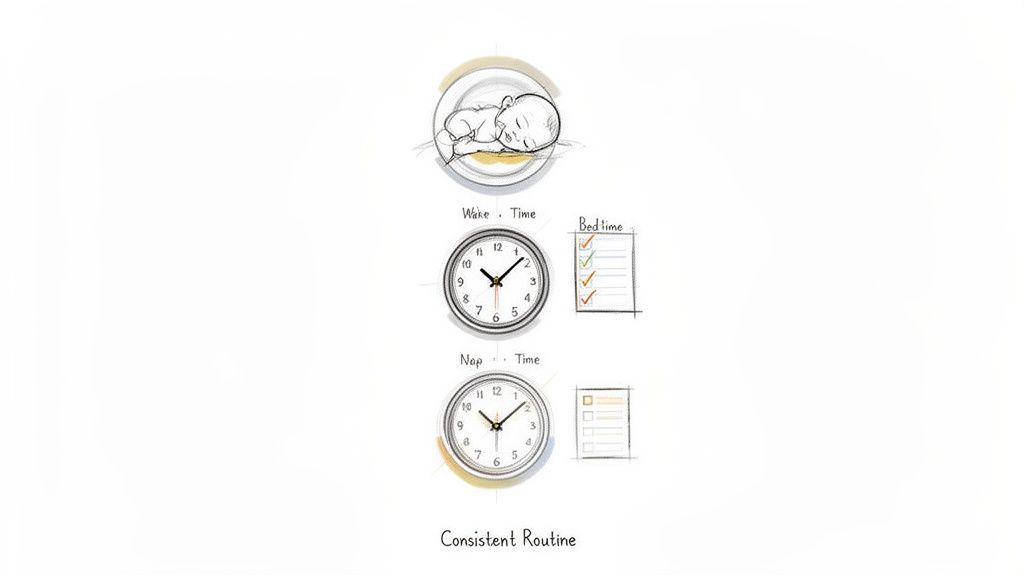
Consistency is the cornerstone of successful sleep training. This schedule provides a predictable daily flow that helps regulate your baby’s internal clock, or circadian rhythm. When naps and bedtime happen at roughly the same time each day, your baby's body learns when to expect sleep, reducing resistance and overtiredness. This predictability builds a secure foundation, empowering your baby to master the skill of falling asleep independently. It transforms sleep from a battle into a routine.
How to Implement This Schedule
Success with this schedule relies on preparation, consistency, and a solid routine before you even begin formal training.
- Establish the Routine First: Before starting any sleep training, follow the schedule consistently for at least one to two weeks. This helps your baby adapt to the new rhythm without the added pressure of learning a new sleep skill.
- Optimize the Sleep Environment: Create a sleep sanctuary that is dark, cool, and quiet. Use blackout curtains and a white noise machine to block out stimulating light and sounds. A comfortable baby is a sleepy baby.
- Create a Consistent Bedtime Routine: A predictable 20-30 minute wind-down routine (like a bath, book, and lullaby) signals that it’s time for sleep. This ritual becomes a powerful sleep cue. For more information on different methods, explore the concepts behind gentle sleep training.
- Watch Wake Windows Carefully: An overtired baby will fight sleep much harder. Pay close attention to age-appropriate wake windows to ensure you are putting your baby down when they are sleepy but not exhausted.
- Ensure Caregiver Alignment: Both parents or all caregivers must be committed to the same plan. Consistency is easily undermined if one person deviates from the schedule.
Your Baby, Your Rhythm: Putting It All Together
Navigating the whirlwind of early parenthood can feel overwhelming, and the quest for the "perfect" routine is often at the top of every new parent's mind. After exploring the various sample newborn schedules throughout this guide, from the constant rhythm of the every 2-3 hour cycle to the more structured Eat-Wake-Sleep pattern, it's crucial to distill these examples into a single, powerful truth: flexibility is your greatest asset.
These schedules are not rigid rulebooks but rather blueprints. They are designed to give you a framework, a starting point from which to build a rhythm that uniquely suits your baby and your family. The true success of any schedule lies in your ability to observe, adapt, and respond to your little one’s individual needs.
Key Insights and Strategic Takeaways
As you move forward, keep these core principles at the forefront of your mind. They are the strategic pillars that support any successful routine.
- Your Baby is the Expert: The most valuable takeaway is to become a student of your baby. Their hunger cues (rooting, lip smacking), sleepy signs (yawning, eye rubbing, staring into space), and wakeful moments are the most accurate data you will ever have. The schedules provide the "what," but your baby provides the "when."
- Embrace Evolution: Just when you think you have it all figured out, your baby will hit a growth spurt, a sleep regression, or a new developmental leap. The schedule that worked wonders for a 6-week-old will likely need adjustments for a 4-month-old. The ability to pivot from a three-nap day to a two-nap day is a sign of responsive parenting, not failure.
- Consistency Over Perfection: Aim for a predictable sequence of events rather than strict adherence to the clock. For instance, maintaining an Eat-Wake-Sleep cycle helps your baby understand what to expect next, building a sense of security. This predictable flow is often more important than ensuring a nap starts at precisely 10:00 AM.
- Routines Beyond Feeding and Sleep: Remember that a daily rhythm encompasses more than just eating and sleeping. Building in other predictable activities, like a calming bath time in the evening, can be a powerful sleep cue. Incorporating simple, soothing elements like gentle baby bath oils can help signal to your baby's senses that it's time to wind down for the night, reinforcing the entire sleep routine.
Ultimately, mastering the concept of a baby schedule is not about controlling your infant's every move. It's about creating a predictable and nurturing environment that fosters security, promotes healthy sleep habits, and, most importantly, preserves your own sanity. The confidence you gain from understanding your baby’s patterns and needs is invaluable. You are the parent, and you know your baby best. Trust that instinct, give yourself an abundance of grace, and know that you are doing a fantastic job. What schedule worked for your family? Share your experience in the comments below!
As you build these essential routines, having the right gear can make all the difference in creating a safe and comfortable environment for sleep. For reliable, parent-approved essentials designed to support you on this journey, explore the collection at Hiccapop®. From portable blackout shades to bed rails for the toddler years ahead, Hiccapop® has thoughtful solutions to help you and your baby get the rest you both deserve.