


A Calmer Night Time Routine for Newborns That Actually Works
When you hear "newborn nighttime routine," it's easy to picture a strict, by-the-clock schedule. But let's be real—life with a newborn is anything but predictable. The secret isn't about watching the clock; it's about creating a simple, soothing sequence of events that gently signals to your baby that it’s time to wind down.
Think of it as a gentle whisper, a predictable pattern of calming cues—like a warm bath, a full belly, and a cozy swaddle—that eases them into dreamland.
Why a Newborn Night Routine Matters
Welcome to parenthood, where the phrase "sleeping like a baby" suddenly feels like the world's most ironic joke. If you're navigating the beautiful, blurry chaos of those first few months, you know that nighttime can feel like a complete mystery. This guide is here to cut through the noise and give you a real-world blueprint for a nighttime routine that actually works.
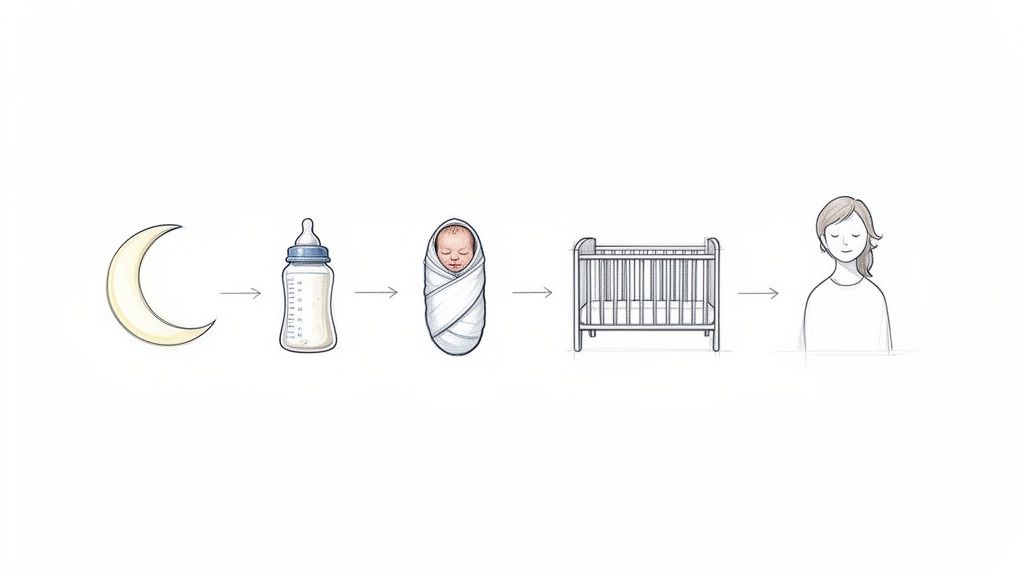
First things first: forget rigid schedules, at least for now. In these early weeks, your baby's internal clock is still a work in progress. They’re running on a very basic program: eat, sleep, poop, repeat. This cycle is driven by the size of their tiny tummy, not by whether it's day or night.
This is exactly why a routine is so much more effective than a strict schedule. A routine is simply a series of events—bath, pajamas, feeding, cuddle—that you do in the same order every single night. It’s this predictability that helps your baby’s developing brain connect the dots and understand that these steps mean it’s time to settle in for a longer sleep.
Setting Realistic Expectations
Newborns sleep a ton—typically 14 to 17 hours a day. But as you’ve probably discovered, it’s not in one long, glorious stretch. Their sleep is broken up into short bursts all around the clock.
The goal isn't to get your two-week-old to sleep through the night. It's about creating a calm, predictable environment that teaches them the difference between bustling days and quiet nights. This makes those inevitable wake-ups quicker and easier for everyone.
Benefits of a Consistent Routine
Starting a bedtime ritual, even a simple one, in the early weeks pays off in big ways.
- It creates a sense of security. In a big, new world, predictability helps your baby feel safe.
- It cues their brain for sleep. The repetition becomes a powerful signal that it's time to wind down.
- It can reduce evening fussiness. A calming routine is the perfect antidote for an overstimulated baby.
- It empowers you! Having a plan brings a much-needed sense of control and confidence to your evenings.
Let's take a quick look at the building blocks of a great routine.
Core Components of a Newborn Nighttime Routine
A quick look at the essential building blocks for a successful and soothing newborn bedtime routine.
| Component | Goal | Example Action |
|---|---|---|
| Dim Lighting & Quiet | Signal to the brain that it's nighttime. | Turn down overhead lights and switch to a soft lamp. Turn off the TV. |
| Warm Bath | Relax muscles and promote sleepiness. | A short, calming bath in a warm room. This doesn't have to be every night. |
| Feeding | Ensure a full and contented tummy. | A calm, focused feeding session in a quiet spot. |
| Swaddling | Recreate the cozy feeling of the womb. | Snugly wrap your baby in a swaddle to prevent the startle reflex. |
| Soothing Sounds | Block out household noise and calm the brain. | Turn on a white noise machine at a low, consistent volume. |
Each element works together to create a powerful, sleep-inducing experience for your little one.
At the end of the day, this isn't about perfection; it’s about consistency. If you want to explore sample timelines, our guide on a schedule for newborns can offer more detailed ideas. For an even deeper look at structured approaches, you might also find this gentle newborn baby sleep routine helpful.
Crafting a Soothing Bedtime Ritual
When it comes to calmer nights, consistency is your best friend. A bedtime ritual is simply a series of calming things you do, in the same order, every single evening. Think of it as creating a set of powerful sleep cues for your newborn’s brain, which is learning new things every second.
This isn't about being a drill sergeant with the clock. It's about building a predictable, comforting experience that signals, "Okay, the busy day is over, and it's time to rest."
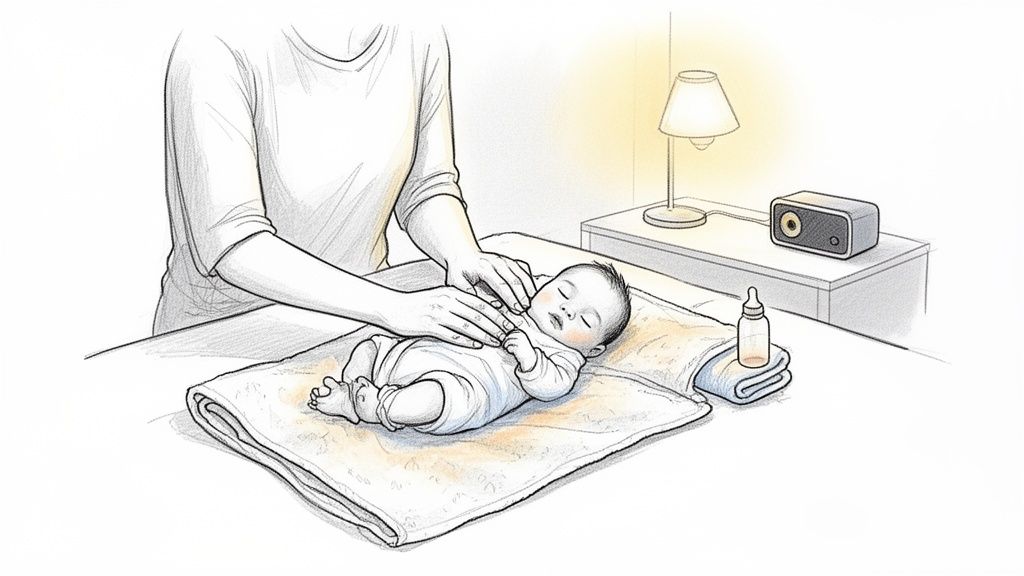
Each step you add layers on another signal for sleep, which can make the transition from a bustling, bright day to a quiet, dark night feel much smoother for everyone involved.
The Calming Power of a Warm Bath
A warm bath can feel like a magic wand in your night time routine for newborn babies, but it doesn't have to happen every single night. A few times a week is perfectly fine.
When you do include a bath, the goal is pure relaxation—not a splash party. Keep the lights dim, the water comfortably warm, and your touch gentle. There’s actually some science to this: a warm bath raises your baby's body temperature, and the slight drop in temperature as they cool down afterward is a natural biological trigger for sleepiness.
The Magic of a Gentle Massage
Right after a bath is the perfect time for a gentle baby massage. It's a beautiful way to connect with your little one and help them release any tension from the day. You don't need any special training—just simple, soft strokes.
A few tips to get started:
- Use a small amount of baby-safe, unscented lotion or oil.
- Gently rub their legs, arms, and tummy in slow, circular motions.
- Talk or sing softly to them while you do it.
This loving touch is incredibly calming and can even help with fussiness or gas. It’s a quiet moment that reinforces their sense of security.
The Final Feed for a Full Tummy
A full tummy is a sleepy tummy. This "last call" feeding is a cornerstone of the bedtime routine, making sure hunger doesn't wake your baby up right after you've put them down. The key is to keep this feeding calm, quiet, and with as little stimulation as possible.
A pro tip I've learned over the years is to offer the final feed before the very last step of your routine. This helps break any strong association between eating and falling asleep, which can become a really tough habit to undo later on.
For example, you might feed your baby, then swaddle them, and then turn on the white noise. That little bit of separation between eating and sleeping is a powerful way to nudge them toward independent sleep skills down the road.
Swaddling for Womb-Like Security
Swaddling is like giving your newborn a gentle, all-night hug. It’s meant to recreate that snug, secure feeling of the womb and helps control the Moro (or startle) reflex—that jerky arm movement that can easily wake them up.
A good, snug wrap helps them feel contained and calm, making it much easier for them to settle. Just remember to always place a swaddled baby on their back to sleep and make sure the swaddle is loose around their hips for healthy development.
White Noise for a Peaceful Soundscape
Finally, white noise creates a constant, soothing soundscape that sounds a lot like the whooshing noises your baby heard 24/7 in the womb. It’s also brilliant at masking disruptive household sounds—the dog barking, a door slamming, or an older sibling having one last burst of energy.
Turn on the sound machine as the very last step before you place your baby in their crib. Keep the volume low (about the level of a running shower) and let it run all night to create a serene backdrop that encourages longer stretches of sleep.
Creating a Safe and Serene Sleep Environment
Once your baby is fed, swaddled, and drowsy, the sleep environment itself becomes the final piece of the puzzle. A beautifully decorated nursery is wonderful, but a safe nursery is the absolute non-negotiable for every nap and every night. This is about creating a space that not only encourages rest but also rigorously follows safe sleep guidelines to protect your little one.
The easiest way to remember the basics is the "ABCs" of safe sleep: a baby should always sleep Alone, on their Back, and in a Crib (or bassinet or play yard). This isn't just a catchy phrase; it's a critical, life-saving practice backed by decades of research.
The Foundation of a Safe Crib
When it comes to your baby’s crib, less is more. A bare crib is the best and safest crib. All you need is a firm, flat mattress with a snug-fitting fitted sheet. That’s it.
It might look a little empty to our eyes, but for a baby, it’s the safest setup possible.
That means keeping the crib clear of these common but hazardous items:
- Pillows and cushions: These are a serious suffocation risk and have no place in a crib.
- Loose blankets: A swaddle or a wearable sleep sack is the only "blanket" your baby needs.
- Crib bumpers: Though they were once popular, bumpers are now considered a major safety risk for suffocation and entrapment.
- Soft toys: Save the stuffed animals and lovies for supervised playtime when your baby is awake and out of the crib.
Any solid night time routine for newborn babies is built around these safety principles. Pediatric guidelines across the globe are united on this: back-sleeping from the very first day dramatically reduces the risk of SIDS. Placing a baby on their side or stomach is dangerous, especially on a soft surface. In fact, soft bedding alone increases the risk, which skyrockets when combined with tummy sleeping.
To effectively create a safe and serene sleep environment, understanding how to decorate a nursery for your baby is a foundational step. Just be sure to keep decorative items well away from the sleep space itself.
Setting the Scene for Sleep
Beyond the crib itself, a few simple tweaks to the room's atmosphere can work wonders. Think of it as creating a calm, cozy cave that signals it's time for rest.
First, get the temperature right—not too hot, not too cold. A good rule of thumb is to dress your baby in one more light layer than what you would be comfortable in. Blackout curtains can also be a game-changer, blocking out stimulating light and helping your baby’s internal clock learn the difference between day and night.
A little organization goes a long way, too, especially for your own sanity during those 3 a.m. wake-up calls. Keep diapers, wipes, and a spare change of clothes right by your changing station so you aren’t scrambling in the dark.
For a more comprehensive look at setting up the ideal space, check out our guide on establishing a safe sleep environment for infants.
How to Handle Night Wakings Like a Pro
Let's be real for a moment: your newborn will wake up at night. It's not a sign you're doing something wrong; it's a biological necessity for them to feed and stay safe. But how you respond to those middle-of-the-night calls can make all the difference in gently shaping their sleep habits.
Think of this as your survival guide for those 2 AM wake-up calls. The core philosophy is simple: keep it calm, keep it dark, keep it boring. Your mission is to meet their needs efficiently without sending the signal that it’s time to play.
The 'Keep It Boring' Philosophy
When you hear that first whimper, your instinct might be to flip on the lights and start cooing. Try to resist that urge! Bright lights, animated chatter, and even direct eye contact are all powerful cues that tell your baby's developing brain it's time to be alert and social.
Instead, operate in stealth mode. A dim nightlight is your best friend—just enough to see for a feeding or a quick diaper change. Keep your voice to a low, soothing whisper or a gentle "shush." The message you're sending is clear and consistent: "Nighttime is for sleeping, and this is just a quick pit stop."
Differentiating Cries from Stirs
Here's a tip that saves many new parents from unnecessary stress: not every sound your baby makes is a call to action. Newborns are incredibly noisy sleepers. They grunt, squirm, groan, and even let out little cries while they're completely asleep. This is called active sleep, and it's totally normal.
Before you leap out of bed, just pause for a minute. Listen. See if they settle back down on their own. Over time, you’ll become an expert at telling the difference between a real "I'm hungry and I mean it" cry and a simple, sleepy stir. Giving them that moment to resettle is the first tiny step toward them learning to connect sleep cycles on their own.
Gentle Soothing Techniques
After a feed and a change, your little one might still be a bit fussy. This is when you pull out your low-key soothing tricks.
- A Comforting Hand: Sometimes, all they need is the reassurance of your touch. Simply placing a firm, steady hand on their chest can work wonders.
- The Power of Shushing: A deep, continuous "shhhhh" sound is incredibly effective because it mimics the constant whooshing they heard in the womb.
- Minimal Movement: If they need a bit more comfort, try a slow, rhythmic pat on the back or a gentle rock while they're still in their crib. Avoid picking them up unless it's necessary.
The goal is to calm them down enough so they can drift back to sleep in their own space. As they get a little older, these skills form the foundation for independent sleep. For a deeper dive, our guide on how to teach baby to self-soothe is a fantastic resource.
Remember, your best tool for navigating night wakings is consistency. You've got this.
Working Through Common Newborn Sleep Challenges
Even with a perfect-on-paper routine, you’re going to hit some bumps. Newborn sleep often feels like two steps forward, one step back. Just when you think you’ve cracked the code, a new challenge pops up. Take a deep breath—this is completely normal.
Let's walk through some of the most common hurdles you'll likely encounter.
One of the biggest struggles is the baby who fights sleep, no matter what you try. This almost always boils down to a classic newborn dilemma: are they overtired or undertired? An overtired baby is often frantic and wired, while an undertired baby might just lie there, perfectly happy but wide awake.
Figuring out which one you're dealing with is the key to getting your night time routine for newborn back on track. Overtiredness happens when a baby misses their natural sleep window. Their little body gets a rush of cortisol, a stress hormone that works like a shot of adrenaline. An undertired baby, on the other hand, just hasn't been awake long enough to feel sleepy yet.
Overtired vs. Undertired: Reading the Signs
Learning your baby's specific signals is like becoming a detective, but you'll get the hang of it. Here are a few common clues to look for:
- Signs of an Overtired Baby: You might see frantic or jerky movements, inconsolable crying that just keeps escalating, back arching, or aggressive eye rubbing.
- Signs of an Undertired Baby: They might be playing or cooing happily in the crib, looking around with bright, alert eyes, or crying on and off without getting truly hysterical.
If you suspect your baby is overtired, the fix is usually an earlier bedtime. I know it sounds backward, but putting them down before they get into that frantic state can change everything.
Try to watch your baby more than you watch the clock. Their sleepy cues—a yawn, a blank stare into the distance, or becoming suddenly still—are far more accurate than any schedule in these early weeks.
When Days and Nights are Mixed Up
Ah, the classic day/night confusion. Your newborn’s internal clock (their circadian rhythm) is still under construction, so they have no concept that 2 p.m. is for playtime and 2 a.m. is for sleep.
The good news is you can gently guide them. The trick is to create a really clear difference between day and night. During daytime hours, keep the house bright and lively. Open the curtains, let them experience normal household sounds (like the vacuum or dishwasher), and interact with them a lot when they're awake.
Once evening rolls around, do the exact opposite. Make the environment dark, quiet, and honestly, a little boring. Use only the dimmest light you need for feedings and diaper changes, keep your voice to a whisper, and try not to make too much eye contact. This strong contrast is what helps their developing brain learn the difference.
Dealing with Gas and Tummy Troubles
A gassy, uncomfortable baby is a wakeful baby. If you see your little one squirming, grunting, or pulling their legs up to their chest, trapped gas is a likely culprit.
A thorough burping after every feed is your first line of defense. You can also try adding some gentle "bicycle legs" or a clockwise tummy massage to your bedtime routine to help get things moving before they even get into the swaddle.
The "But I Only Sleep on You" Phase
And then there's the baby who only sleeps peacefully in your arms. While those newborn snuggles are the best thing in the world, you need and deserve to rest, too.
If you find yourself in this situation, try the "wait and switch" method. Hold your baby for about 20 minutes after they’ve fallen asleep to make sure they’re in a deep sleep cycle. A good test is to gently lift one of their arms—if it drops without any resistance, they're out cold.
Then, carefully make the transfer to their bassinet or crib. Having a white noise machine running in the background can work wonders here, as it helps mask the sudden silence and makes the transition less jarring. This phase feels endless when you're in it, but I promise it's temporary. A little patience and consistency will see you through.
Your Newborn Routine Questions, Answered
Even with the best-laid plans, you're going to have questions. You're learning a whole new person, after all, and it's natural to wonder if you’re getting it right. Let's tackle some of the most common things parents ask when building a night time routine for a newborn.
When Should We Start a Night Time Routine?
You can start introducing gentle, simple routine elements almost right away, usually around 2 to 4 weeks old. At this stage, it’s less about a strict schedule and more about creating a familiar, calming sequence of events that signals bedtime is coming.
It could be as simple as a warm feed, a fresh diaper, a snug swaddle, and a soft lullaby, always in that same order. This repetition is what helps your baby’s brand-new brain start to connect the dots and understand that these activities mean it’s time for sleep. You're laying the groundwork for more solid routines later on.
How Long Should the Bedtime Routine Take?
Keep it short and sweet. For a tiny newborn, the entire bedtime routine should only take about 20 to 30 minutes. The whole point is to soothe your baby, not to run a marathon that leaves you both exhausted.
If you drag it out too long, you risk overstimulating your little one, which can backfire and make it even harder for them to settle. A straightforward flow—like a last feeding, a quick diaper change, jammies and a swaddle, and a final cuddle—is often the perfect recipe for winding down.
The real magic isn't in how long the routine is, but in how predictable it is. A few simple steps, done in the same order every night, will always be more effective than a long, elaborate ritual.
Help! My Newborn Always Falls Asleep While Eating. What Do I Do?
This happens all the time, so don't sweat it. It’s one of the most common challenges for new parents. A great little trick is to shift the feeding to be one of the first steps in the routine, not the absolute last.
Try feeding your baby, then doing the diaper change and swaddling. That little bit of movement and activity is often just enough to gently rouse them so they can be placed in their bassinet drowsy but awake. If they conk out completely? It’s okay. Just put them down safely. The goal here is consistency, not perfection. You'll have plenty of time to work on the "drowsy but awake" skill as they grow.
Is It Okay to Give My Baby a Pacifier at Bedtime?
Absolutely. In fact, the American Academy of Pediatrics (AAP) suggests that offering a pacifier at naptime and bedtime can help lower the risk of SIDS. It can be a fantastic soothing tool for many babies.
If you’re breastfeeding, many experts suggest waiting until your nursing relationship is well-established, usually around the 3-4 week mark, before introducing a pacifier. Once you do, making it the final step of the routine after a feed can create a powerful and positive signal that it's time for sleep.
A great routine is supported by a safe and comfortable environment. At Hiccapop, we focus on creating essentials like our top-rated crib mattresses that help you build the perfect sleep space, so you can worry less and snuggle more. Explore our collection to build your ideal nursery.