


Your Guide to the Best Portable Baby Travel Bed
Traveling with a baby can feel like a full-blown military operation, especially when naptime and bedtime roll around. Let’s be honest, it’s a logistical puzzle worthy of a NASA mission control room. But here’s the secret weapon: a portable baby travel bed. This single piece of gear can genuinely save your sanity, giving your little one a safe, familiar place to sleep no matter where your adventures take you.
Your Key to Stress-Free Adventures With Baby
Think of a portable baby travel bed as more than just another item to Tetris into your car. It's your pop-up nursery, a little slice of home you can set up in minutes flat. It's the key to keeping that sleep routine you worked so hard to establish, whether you're at Grandma's house for the weekend, in a hotel room, or exploring a new city.
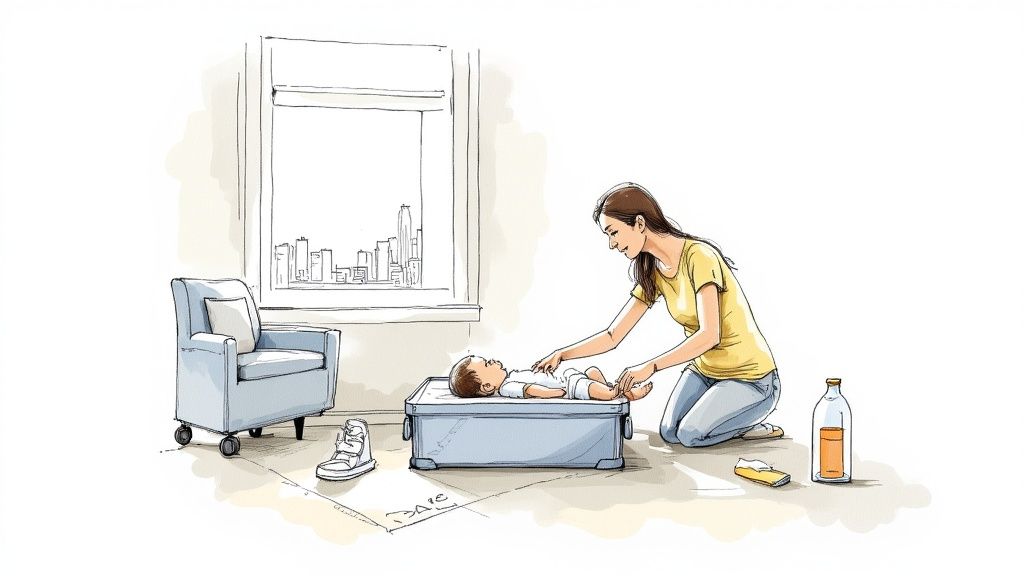
When your baby sleeps well, everyone can actually relax and enjoy the trip. No more tiptoeing around a fussy, overtired baby. This guide is here to walk you through everything you need to know, so you can stop worrying about "how will they ever sleep?" and start looking forward to making memories.
Why a Travel Bed Is a Game Changer
For any family that loves to get out and go, a dedicated travel bed is an absolute must-have. Having that familiar sleep environment can slash bedtime battles in half, helping your baby settle down in a new place with way less fuss.
Instead of gambling on the questionable hotel crib (let's be real, some have seen better days) or trying to create a makeshift—and often unsafe—sleep spot, you’re bringing a controlled, CPSC-compliant space with you. For a baby, that kind of consistency is everything.
A dedicated, familiar sleep space helps signal to your baby that it’s time to wind down, even in an exciting new environment. It’s the foundation of a successful trip.
Of course, a travel bed is just one part of your travel toolkit. For a complete rundown of our favorite gear, be sure to check out our guide to the best baby travel products that make traveling with a little one so much easier.
Picking the right portable baby travel bed isn't just about convenience—it's about creating a secure little nest for your child. After all, a well-rested baby means a happier, more relaxed vacation for everyone. Let's dig into what makes these beds a true non-negotiable for families on the move.
So, What Exactly Is a Portable Baby Travel Bed?
When you’re staring at a mountain of baby sleep gear, it’s easy to get overwhelmed. So what makes a portable baby travel bed different? Think of it as your own little pop-up nursery—a familiar, safe sleep spot you can bring anywhere, from grandma's house to a hotel room across the country.
The whole point is to give your baby a consistent, CPSC-compliant place to sleep that’s also lightweight, compact, and tough enough for travel. It’s not just a shrunken-down crib. It's a smart piece of gear designed to balance safety, portability, and your baby's comfort when you're away from home.
This "go-anywhere" design is precisely why these beds have become a staple for so many parents. They fit perfectly with modern family life, whether that means weekend getaways, navigating a small apartment, or just making a trip to the grandparents less of a logistical nightmare.
This isn't just a niche market, either. In the US, around 2.4 million infant beds are sold every year, and about 12% of those are considered 'mini cribs'—a category that many travel-friendly beds fall into. That's a huge number of families looking for smaller, more portable options. It really shows how much parenting has shifted toward gear that supports an active lifestyle. You can read more about how infant bed standards have evolved on Wikipedia.
The Main Types of Travel Beds
Once you start looking, you’ll notice a few common designs. Each one is built for a different kind of trip or family need, and knowing the difference is key to picking the right one.
-
Classic Travel Cribs (or Playards): These are the sturdy all-rounders. Many come with handy extras like bassinet inserts for newborns or a changing station, and they can double as a safe playpen. They’re perfect for road trips or longer stays where you don't mind a little extra weight for more features.
-
Ultra-Light Pop-Up Tents: If you need something incredibly light and compact, these are for you. They often fold down into a small disc that you can easily toss in a suitcase, making them a fantastic choice for air travel. Plus, the enclosed, tent-like design can be a real lifesaver for babies who get distracted by a new environment.
-
Cozy Travel Bassinets: These are designed specifically for newborns and younger infants who aren't yet rolling or sitting up. They're typically smaller, lower to the ground, and create a snug little cocoon that helps a tiny baby feel secure.
Why They’ve Become So Essential
The growing popularity of portable travel beds isn't just another baby gear fad. It's a direct reflection of how families travel today. We don't want to feel stuck at home, and we need gear that can keep up with our adventures.
But it’s about more than just convenience. Having a familiar sleep space can be a game-changer for a baby in a new place. A little one who recognizes their own bed is much more likely to settle down and sleep well, which means everyone gets more rest. That small piece of home provides a sense of security that a strange hotel crib or a pile of blankets on the floor just can't offer, making it one of the most valuable tools in a traveling parent's arsenal.
Critical Features for Choosing Your Travel Bed
When you're scrolling through what feels like a million options online, it's easy to get lost in the marketing jargon. But picking the right portable baby travel bed really boils down to a few key features that directly impact your baby’s safety and your sanity. Let's cut through the noise and get straight to what matters.
Think of it like buying a car seat. You wouldn't just choose one based on its color, right? You'd look for specific safety ratings and features that give you peace of mind. The same exact logic applies here—you need a bed that's not just convenient, but genuinely safe for your little one.
Unpacking Safety Certifications
First things first: safety is the one area where there's no room for compromise. When you see labels like ASTM and JPMA on a product, they aren't just random acronyms. They’re your proof that the bed meets strict safety standards for baby gear.
-
ASTM International: This organization develops the technical standards for a massive range of products, including cribs and playards. An ASTM-compliant travel bed has been put through its paces, tested for things like structural integrity, stability, and the absence of harmful materials.
-
JPMA (Juvenile Products Manufacturers Association): A JPMA certification takes it a step further. It means the manufacturer voluntarily sent the product to an independent lab to prove it meets or even exceeds those ASTM standards. Think of it as an extra layer of confidence.
Looking for these labels is the fastest way to weed out questionable products. A certified bed shows the company has invested in meeting established safety benchmarks, giving you one less thing to worry about on your trip.
Portability and Weight
The word "portable" can mean very different things to different people. A 20-pound travel crib might feel portable enough for a road trip, but it's a complete non-starter for air travel. The trick is to match the bed's weight and packed-down size to how you actually travel.
For families who fly often, an ultra-lightweight pop-up model that weighs under 10 pounds is a game-changer. If you're mostly doing road trips with plenty of trunk space, a slightly heavier, more traditional playard-style bed might offer more features. Always, always check the folded dimensions to make sure it will fit where you need it to, whether that's in your suitcase or the back of the car.
As you can see, your child's age and your primary mode of transport are the two biggest factors that will help you narrow down the perfect fit.
To help you compare these styles at a glance, we've broken down the key features.
Portable Baby Travel Bed Feature Comparison
| Feature | Standard Travel Crib/Playard | Ultra-Lightweight Pop-Up Bed | Travel Bassinet |
|---|---|---|---|
| Best For Ages | Newborn to 3 years | Newborn to 2 years | Newborn to 6 months |
| Weight Range | 15-25 lbs | 5-10 lbs | 7-15 lbs |
| Setup Time | 2-5 minutes | < 1 minute | 1-3 minutes |
| Air Travel | Challenging; must be checked | Excellent; fits in suitcase | Good; some fit overhead |
| Road Trips | Excellent | Excellent | Good |
| Durability | High | Moderate | Moderate to High |
This table makes it clear that there's a trade-off between features and portability. The most durable options tend to be heavier, while the lightest are often best for short-term or minimalist travel.
Ease of Setup and Use
Picture this: it's 10 PM, your baby is past tired and heading into meltdown territory, and you're in a dimly lit hotel room wrestling with a complicated travel bed. A frustrating setup can derail bedtime in seconds. The best designs are the ones you can get up in just a few minutes, sometimes even with one hand.
Look for models with intuitive locking mechanisms and a simple folding process. Many modern travel cribs use a "lock the sides, then push the center down" system that becomes muscle memory after a couple of tries. Pop-up tents are even easier—they practically assemble themselves the moment you pull them from the bag.
For older kids, inflatable beds strike a great balance between comfort and a speedy setup. If you're considering this style for your toddler, you can dive deeper in our complete guide on all you need to know about inflatable travel beds for toddlers.
Mastering Setup and Safe Sleep Practices
Okay, you've chosen the perfect portable baby travel bed. Now for the most important part: actually using it correctly. A fantastic travel bed is only as good as its setup, and getting it right can save you from a world of frustration—especially when you’re jet-lagged and dealing with a fussy baby.
Even more critical is sticking to safe sleep guidelines, whether you're at home or halfway across the country. Let’s walk through how to get your travel bed set up in a flash and make sure your baby is sleeping as safely as possible, so you can finally relax, too.
Quick Setup Pro-Tips
Ever found yourself wrestling with a travel crib, trying to get the sides to lock into place while the whole thing just keeps collapsing? We've all been there. Most designs have a specific order of operations that makes setup a breeze once you know the secret.
Here's the trick that works almost every time:
Always lock the side rails before pushing down the center hub. If you push the center down first, the rails won't have enough slack to click securely into place. Just pull the center back up, lock each side until they’re rigid, and then push the center down firmly.
This one simple rule can turn a frustrating ten-minute struggle into a 60-second success story. Give it a practice run at home before your first trip, and you’ll look like a seasoned pro when you arrive.
The ABCs of Safe Sleep on the Go
The American Academy of Pediatrics (AAP) has life-saving guidelines for infant sleep that are non-negotiable, no matter where you are. These rules are just as crucial in a portable baby travel bed as they are in a full-size crib. The easiest way to remember the core principle is with the ABCs of safe sleep:
- A - Alone: Your baby should always sleep by themselves in their travel bed, without parents, siblings, or pets sharing the space.
- B - Back: Always place your baby on their back to sleep for every single nap and every night.
- C - Crib: Use a crib, bassinet, or portable playard that meets current safety standards. This space must be kept completely empty.
That last part—an empty sleep space—is the most critical. This means you should only use the firm mattress and fitted sheet that were specifically designed for your travel bed. Never add extra mattresses, pillows, fluffy blankets, bumpers, or soft toys. These items pose a serious risk of suffocation, entrapment, and Sudden Infant Death Syndrome (SIDS).
Building a secure sleep area is your top priority. For a deeper dive, check out our article covering everything you need to know about a safe sleep environment for infants.
Once your travel bed is set up safely, you might also be looking for further guidance on sleep training to help your little one get restful nights away from home. By prioritizing these practices, you can rest easy knowing you've created a secure little haven for your baby, wherever your adventures take you.
Keeping Your Travel Bed Clean and Maintained
Let's be real—babies are messy. Between spit-up, stray snack crumbs, and the dreaded diaper blowout, your portable baby travel bed is going to see some action. Keeping it clean is about more than just looks; it's about making sure your little one has a hygienic place to sleep and that the bed lasts through all your family adventures.
The good news is that most travel beds are designed with easy cleanup in mind. A quick spot-clean can handle most daily messes, while a more thorough cleaning after a big trip will get it fresh and ready for your next getaway.
From Spot Cleans to Deep Scrubs
For those little spills and everyday mishaps, a quick spot clean will be your go-to. Just mix a little gentle, baby-safe soap with some warm water. Use a soft cloth to gently dab the spot—try not to rub it in—then wipe it clean with a fresh damp cloth and let it air dry.
After a long vacation or when faced with a more serious mess, you'll want to give it a deeper clean.
- First, Check the Label: Always start by finding the care tag on the bed. This is your instruction manual, telling you exactly which parts are machine-washable and how to handle them.
- Machine-Washable Parts: Many travel beds come with a convenient zip-off cover or mattress sheet. Pop it in the washing machine on a cold, gentle cycle with a mild, baby-friendly detergent.
- Wipe Down the Frame: For the frame and any other parts that can't go in the wash, a good wipe-down with a baby-safe cleaning spray or soapy cloth does the trick.
When those bigger accidents happen in the portable baby travel bed, it's a lifesaver to know how to effectively remove stubborn urine smells to keep things fresh and hygienic.
Storing Your Bed the Right Way
How you store your travel bed between trips matters just as much as how you clean it. The golden rule? Make sure the bed is 100% dry before you even think about packing it away. This single step is your best defense against mildew and that musty smell.
Tuck it back into its breathable storage bag and find it a home in a cool, dry spot, like the top of a closet or under a bed. Try to avoid places like damp basements or hot attics. Extreme temperatures and humidity can weaken the fabrics and frame over time, which could affect the bed's safety and longevity.
Your Portable Baby Travel Bed Questions, Answered
Even after you've done all the research, a few questions are bound to pop up. It happens to all of us! Let's walk through some of the most common things parents wonder about when it comes to a portable baby travel bed.
Can We Use This as Our Everyday Crib?
This is probably the number one question parents ask. While a few high-end, heavy-duty travel beds are built for more regular use, the vast majority are meant for just that—travel.
Think of it like this: your full-size crib at home is your sturdy, permanent home base. A travel bed is more like a safe, reliable tent for camping trips. For day-in, day-out sleep, a standard crib is really the gold standard. If you find yourself needing to use a travel bed for a longer stretch, make sure you've picked a model with fantastic ventilation and a super-firm mattress.
How Do I Know When My Child is Too Big for It?
It's time to retire the travel bed as soon as your little one hits the height or weight limit set by the manufacturer—and you should stop at whichever comes first.
The most important milestone to watch for, however, is their ability to climb out. This usually happens when they’re around 35 inches tall. The moment you suspect they might be able to hoist a leg over the side, it's officially no longer safe. Using it beyond that point creates a serious risk of falling.
Is a Second-Hand Travel Bed a Good Idea?
I'm going to give you a hard "no" on this one. It might seem like a great way to save money, but buying a used travel bed just isn't worth the risk.
Safety standards for baby gear are always getting better and stricter. An older model simply won't be up to today's code. Worse, it could have hidden damage, like a stressed frame or weakened mesh, that you can't see. Stick with a new product that comes with a warranty—it's the only way to have complete peace of mind.
What About Adding a Softer Mattress for Extra Comfort?
Never, ever do this. You should never add an aftermarket mattress, extra padding, or even a soft blanket underneath the baby.
Adding anything on top of the manufacturer-supplied mattress pad creates a deadly hazard. It can cause dangerous gaps between the mattress and the mesh sides, where a baby can become trapped. This poses a huge risk of suffocation. The thin, firm pad that comes with the bed is designed that way for a reason: it's the safest surface for your baby.
Finding Your Perfect Travel Companion
Choosing the right portable baby travel bed is one of the best investments you can make for your family's peace of mind on the road. It transforms stressful travel days into smooth sailing by giving your child a consistent, safe place to rest their head. From ultra-light pop-up tents for air travel to sturdy playards for road trips, there's a perfect fit out there for every family's adventure style. By focusing on safety, portability, and ease of use, you'll find a travel bed that feels less like another piece of luggage and more like a trusted companion.
Now we'd love to hear from you! What's the one feature you absolutely can't live without in a travel bed? Share your thoughts and experiences in the comments below!
For a travel bed that combines top-tier safety with effortless portability, trust Hiccapop to make your family adventures easier. Explore our full range of innovative baby and toddler gear at https://hiccapop.com.