


A Parent's Guide to Noise Machines for Sleeping
Hey there, tired parents. If you're deep in the trenches of infant and toddler sleep, you've probably heard the buzz about noise machines for sleeping. These handy little gadgets are designed to create a steady, calming soundscape that helps block out all the random noises that can wake a sleeping baby—helping them drift off faster and stay asleep longer.
The Soothing Secret to Peaceful Sleep
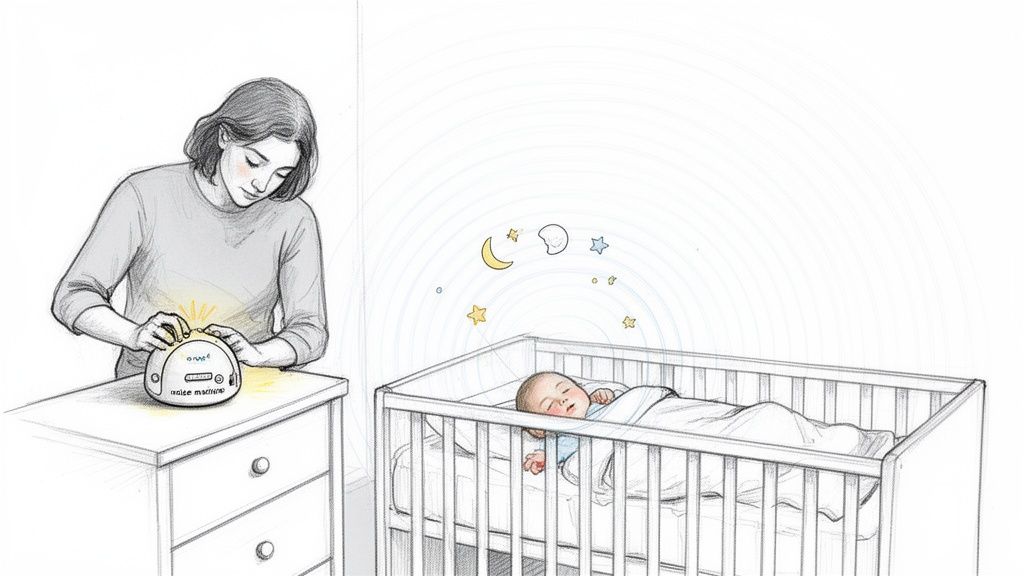
Let's be real—getting your little one to finally fall asleep feels like a massive win. You creep out of the nursery, holding your breath, only to have the dog bark or the doorbell ring, instantly ruining the quiet. It’s a classic, frustrating parenting moment, and it’s exactly why a noise machine can feel like a total lifesaver.
So, what’s the magic behind it? At its heart, a noise machine for sleeping works on a pretty simple concept: sound masking.
Imagine you’re in a library-quiet room. The tiniest floorboard creak can make you jump. Now, picture that same room with the gentle hum of a fan running. Suddenly, that creak is barely noticeable. The noise machine acts like an auditory blanket, smoothing over those sharp, jarring sounds that can easily startle a baby out of a deep sleep.
Why Does This Work So Well for Babies?
For newborns, a constant, gentle hum is incredibly comforting because it’s surprisingly similar to what they heard in the womb. For nine months, they were surrounded by a symphony of whooshing and swishing sounds. The sudden silence of the outside world can actually be unsettling for them. A noise machine helps bring back that familiar sense of security.
This has a powerful effect, helping their little nervous systems relax and ease into a deep, restorative sleep. It’s not about tricking them; it's about giving them a predictable and calming backdrop that supports their natural sleep patterns.
A landmark 1990 study in the Archives of Disease in Childhood revealed that 80% of newborns fell asleep within just five minutes while listening to white noise. In contrast, only 25% of babies in a quiet room fell asleep as quickly. It’s a powerful testament to how effective a consistent sound can be for a fussy baby.
It's More Than Just Static
While "white noise" has become the catch-all term, today's machines offer a whole menu of sounds to choose from. Each one has a slightly different feel, so you can find what your baby responds to best.
- Classic White Noise: This is that familiar "shushing" or static sound that covers all audible frequencies. It's a fantastic all-purpose sound blocker, especially for higher-pitched noises.
- Pink and Brown Noise: These are deeper, more rumbly tones. Think of steady rain (pink noise) or a low, gentle waterfall (brown noise). Many parents (and babies!) find these less harsh and more relaxing than traditional white noise.
- Nature Sounds: From the rhythm of ocean waves to the gentle chirping of crickets, these options create a serene atmosphere that helps everyone in the room unwind.
- Lullabies: Some machines also come with soft, looping melodies that become a wonderful sleep cue, signaling to your baby that it’s time to wind down.
In the end, a sound machine is so much more than another piece of baby gear. It's a tool that helps you build a solid foundation for healthy sleep habits, right from the start. By creating a consistent sleep sanctuary, you're not just helping your baby tune out distractions—you're giving them the quality rest they need to grow and thrive. And maybe, just maybe, getting a little more peace and quiet for yourself, too.
How Sound Machines Create a Sleep Sanctuary
Ever wonder about the magic behind that soothing hum? While it might seem like a miracle worker on a tough night, the science behind how noise machines for sleeping work is actually quite simple—and incredibly effective. It all comes down to a concept called sound masking.
Here’s an easy way to think about it. Imagine you’re in a dead-silent room. If someone whispers across the hall, you hear it clear as day. Now, picture that same room with a gentle fan whirring in the corner. Suddenly, that whisper fades into the background, and you barely notice it. The fan didn't silence the whisper, but it created a consistent sound floor that made the sudden noise far less jarring.
A sound machine does the very same thing for your baby's nursery. It lays down a consistent, predictable "blanket" of sound that helps smooth over the sharp edges of sudden noises—like a dog barking, a sibling's happy shriek, or the garbage truck rumbling down the street.
The Colorful World of Noise
It turns out, not all static is created equal. You'll often hear people talk about different "colors" of noise, and each one has a slightly different feel. Knowing the difference can help you find the perfect sound for your little one.
- White Noise: Think of the classic static from an old, untuned radio. It contains all sound frequencies in equal measure, making it a fantastic all-purpose sound blocker. It's particularly good at masking sharp, high-pitched noises.
- Pink Noise: A little deeper and softer than white noise, pink noise has more oomph in the lower frequencies. To the ear, it sounds less hissy and more like steady rainfall or wind rustling through leaves.
- Brown Noise: This is the deepest of the bunch, with a rumbly, bass-heavy tone. Imagine the powerful, low roar of a waterfall. Many people find this deep hum especially relaxing and grounding.
For newborns, these sounds are more than just a shield against noise. The constant, low-frequency hum is remarkably similar to the loud, whooshing sounds they heard 24/7 in the womb. This familiar audio environment can be incredibly comforting, calming their nervous system and helping them feel safe enough to drift off to sleep.
A consistent sound environment doesn't just help babies fall asleep; it helps them stay asleep. As they transition between their naturally lighter sleep cycles, the gentle hum acts as a familiar anchor, preventing minor household noises from waking them completely.
The Growing Demand for Better Sleep
It’s no surprise that families everywhere are turning to tools like these for better rest. The global market for white noise machines is booming, reflecting a massive shift toward prioritizing sleep quality. In fact, according to a report by Coherent Market Insights, the industry was valued at over $1.48 billion in 2023 and is projected to climb past $2.6 billion by 2031, with portable models becoming a go-to for families on the move.
Of course, a sound machine is just one piece of the puzzle. Creating the perfect sleep sanctuary often means finding the best sleep accessories to complete the environment.
Ultimately, a sound machine works by creating a stable, predictable, and secure auditory world for your baby. It’s a simple tool that builds a powerful buffer against the unpredictable noises of life, letting your little one—and you—get the deep, uninterrupted sleep you both need.
Using Your Noise Machine Safely and Effectively
A sound machine can be a game-changer for your baby's sleep, but it’s all about using it correctly. The real goal isn't just to block out the dog barking or the doorbell ringing; it's to create a soothing, consistent soundscape that signals to your little one that it’s time to rest. And thankfully, getting it right is simple.
The two things you really need to pay attention to are volume and placement. Think of the sound as a gentle blanket filling the whole room, not a laser beam of noise pointed at the crib. When you get these two factors right, you get all of the incredible sleep benefits without any of the worry.
Finding the Right Volume Level
It’s tempting to crank the volume, especially when you’re trying to drown out a noisy older sibling. But when it comes to a baby’s sensitive ears, louder is definitely not better. A volume that seems perfectly normal to an adult can be overwhelming for an infant.
So, what's the magic number? The American Academy of Pediatrics (AAP) recommends keeping the volume in the nursery at or below 50 decibels (dB). That might sound a bit technical, but it’s a level you’re already familiar with.
A 50-decibel level is about the same as a quiet conversation, the gentle patter of rain on the window, or the low hum of your refrigerator. It’s meant to be a soft, background presence—not something that demands attention.
You don't need any special equipment to get this right. Just download a free decibel meter app on your phone, place it in the crib where your baby's head rests, and play with the volume until it lands in that safe zone. It’s a two-minute check that offers complete peace of mind.
Perfect Placement for a Peaceful Nursery
Where you put the sound machine matters just as much as how loud it is. You want the sound to be ambient and diffused, filling the space evenly instead of blasting directly at your baby.
Here’s a quick checklist for ideal placement:
- Distance is Your Friend: Always place the machine at least 7 feet away from your baby's crib or bassinet. This gives the sound waves room to spread out and soften.
- Never Inside the Crib: This is a non-negotiable safety rule. A sound machine should never go inside the crib, on the rail, or anywhere your baby could possibly reach it.
- Think Room-Wide: The best spot is often on a dresser or a shelf on the other side of the room. This helps the white noise become part of the room’s overall environment, rather than a single, concentrated source.
By keeping a safe volume and a proper distance, you’re making sure the machine is a gentle, helpful tool. For more tips on setting up a secure space, take a look at our complete guide on creating a safe sleep environment for infants.
A Simple Safety Checklist
Feeling confident about using your noise machines for sleeping is all about getting into a good routine. Here’s a quick rundown of the essentials to check every single time you put your little one down for a nap or for the night.
- Check the Volume: Use a decibel app on your phone to keep the sound at or below 50 dB from inside the crib.
- Maintain Distance: Make sure the machine is at least 7 feet away from where your baby is sleeping.
- Secure the Cord: For plug-in models, tuck the cord away so it’s completely out of sight and out of reach.
- Listen from the Doorway: When you stand at the nursery door, the sound should be soft and pleasant, not loud or jarring.
Following these simple steps ensures your sound machine is one of the most reliable and safe tools in your parenting toolkit. You can rest easy knowing you've created a sleep sanctuary that's both effective and perfectly safe for your baby.
Choosing the Perfect Noise Machine for Your Family
Walking down the baby aisle, it's easy to get overwhelmed. With so many noise machines for sleeping on the market, picking the right one can feel a bit like spinning a roulette wheel. Do you really need one with a dozen sound options, or is a simple, reliable hum all it takes? Does portability trump power?
Let’s cut through the noise and focus on what truly matters for your family. Think of this as your personal buyer’s guide. We'll break down the key features so you can find a machine that fits your life, whether you’re setting up a permanent sleep sanctuary at home or need a trusty sidekick for naps on the go.
Sound Options and Quality
First things first, let's talk about the sound itself. The quality and variety can make a huge difference in how well the machine works for your little one. Some offer just a straightforward white noise, while others come with a full menu of auditory experiences, from gentle rain to ocean waves.
One of the most critical features to look for is non-looping sound. Cheaper machines often just play a short audio clip over and over. You might not notice it at first, but that tiny, repetitive hiccup where the track restarts can be surprisingly jarring to a sensitive sleeper. A machine that generates continuous, non-repeating sound creates a much smoother, more natural audio blanket.
A seamless, non-looping sound is like a perfectly smooth road for your baby’s brain to travel on as they drift to sleep. A looping sound, on the other hand, is like hitting a tiny, predictable pothole every 30 seconds—just enough to be a nuisance.
As you can see, safe use is all about correct placement and appropriate volume—things you can easily monitor and control.
Noise Machine Feature Checklist for Parents
To make your decision easier, here's a quick-glance table to help you compare essential features when choosing the best noise machine for your baby or toddler.
| Feature | Why It Matters for Babies & Toddlers | What to Look For |
|---|---|---|
| Non-Looping Sound | Prevents jarring sound breaks that can wake sensitive sleepers. Creates a truly consistent audio environment. | A machine that generates continuous sound, not one that plays a short, repetitive audio track. |
| Sound Variety | Some babies prefer deep brown noise, while others calm to shushing or nature sounds. Variety lets you find what works best. | A mix of white, pink, and brown noise, plus gentle nature sounds like rain or waves. |
| Power Source | Determines where and how you can use it. Plug-in is reliable for the nursery; rechargeable is essential for travel. | Look for both plug-in and rechargeable (USB-C) options. A long battery life is a huge plus for portability. |
| Portability | Crucial for maintaining sleep routines on the go—in the car, at grandma's, or on vacation. | A compact, lightweight, and durable design. A clip or strap for attaching to strollers is a game-changer. |
| Timer Function | Lets you automatically turn off the sound after a set time, though all-night use is often recommended. | Adjustable timers (e.g., 30, 60, 90 minutes) and a continuous play option. |
| Night Light | Provides gentle, ambient light for nighttime feedings or diaper changes without overstimulating the baby. | A warm, dimmable light that's soft on the eyes. Avoid bright blue or white lights. |
Having this checklist handy will help you zero in on a machine that not only works well but also fits seamlessly into your family's routine.
Power Source and Portability
Next up, let's talk about power. How you plan to use the machine will really guide your choice here. Is this going to live on the nursery dresser, or will it be your travel companion?
- Plug-In Models: These are the workhorses of the nursery. They offer consistent, reliable power, so you never have to worry about the sound cutting out mid-nap. This makes them the perfect choice for your primary, at-home machine.
- Battery-Operated & Rechargeable Models: If you’re a family on the move, portability is everything. A machine powered by batteries or, even better, a USB-rechargeable battery is a must-have for travel, car seat naps, or just moving from the bassinet to the crib.
Keeping a consistent sleep routine on vacation is so much easier when you can bring your baby’s familiar sleep cues along. A portable noise machine is one of the most valuable things you can pack. When you're building your registry or travel list, be sure to check out our guide to the most essential baby items.
Travel-Friendly Features
So, what makes a sound machine truly travel-friendly? It’s about more than just its power source. When you’re juggling a diaper bag, a car seat, and a fussy toddler, you need gear that’s built for the beautiful chaos of family travel.
Look for a machine that is:
- Compact and Lightweight: It should be small enough to toss in a bag without adding a ton of bulk.
- Durable: You need a sturdy build that can handle being dropped or jostled around in a suitcase.
- Easy to Use: The last thing you want is to be fumbling with complex settings in a dark hotel room. Simple, intuitive buttons are your best friend.
Additional Features to Consider
Beyond the core functions, a few extra bells and whistles can make your life a whole lot easier. A built-in timer is a great feature, allowing you to set the machine to turn off after your baby is sound asleep—though many parents prefer to leave it on all night to mask noises that might disrupt lighter sleep cycles.
Another fantastic add-on is a soft night light. Many sound machines include a gentle, warm glow that’s just right for those 2 a.m. diaper changes or feedings. It's bright enough to see what you're doing but not so bright that it fully wakes up your baby. It’s a small touch that makes a surprisingly big difference.
Weaving a Noise Machine into Your Sleep Routine
So, you’ve unboxed your new sound machine, and it’s sitting on the dresser, ready to work its magic. Now what? The goal is to make it a natural, seamless part of your daily life, turning it into a powerful and reliable sleep cue for your little one.
Think of the sound machine as the opening act for the main event: sleep. Don’t just flick it on as you’re tiptoeing out of the room. Instead, turn it on at the very beginning of your wind-down ritual. When your baby starts to hear that gentle hum during their last feeding, a cozy story, or a final cuddle, their brain builds a powerful association: this sound means it's time to sleep.
Consistency is everything. Using the machine for every single nap and every single night is what truly cements that connection. It becomes a predictable, comforting signal in a world that’s constantly new and stimulating, helping your child’s brain switch off and relax, no matter where they are.
Building a Consistent Sleep Environment
The real beauty of a noise machine is that it creates a portable pocket of familiarity. A huge part of good sleep hygiene is creating an ideal environment for rest, and that environment needs to be consistent—whether you're at home, at grandma's, or on vacation.
To make the machine a true sleep cue, just follow these simple steps:
- Start Early: Flip on the sound machine as the very first step in your bedtime or naptime routine. This gives your baby plenty of time to associate the sound with winding down.
- Use It Everywhere: Whether it’s naptime in the crib, a snooze in the stroller, or bedtime in a hotel room, bring the sound machine with you. This is what gives it its power.
- Find the Sweet Spot: Stick with a sound your baby seems to like. If classic white noise seems a bit sharp, try the deeper tones of pink noise or the gentle rhythm of a rain sound.
This deliberate routine helps your baby feel secure. They learn that even in a brand-new place, their familiar sleep sound is there to tell them it's safe to rest.
To Timer or Not to Timer?
This is one of the most common questions we get: should you leave the noise machines for sleeping on all night or use the timer? While a timer might seem like a good idea, most sleep experts actually recommend letting it run continuously.
Why? A baby’s sleep isn’t one long, deep slumber. They cycle through light and deep sleep stages all night long. An abrupt silence when the timer clicks off can be just as jarring as a dog barking, often waking them up right as they're transitioning between those sleep cycles.
Leaving the sound machine on all night creates a consistent auditory backdrop. It helps smooth over the natural dips and rises in their sleep, preventing minor household noises from startling them awake at 3 a.m.
When your child is older and you want to phase it out, the process is simple. Just gradually lower the volume, a tiny bit each night over a couple of weeks, until it’s completely off.
Troubleshooting Common Scenarios
What if your baby doesn't seem to love the sound machine right away? Don't panic. Just like us, babies have their own preferences. A little experimentation usually solves the problem.
- If your baby seems fussy with the sound: Try a different one! Some babies find the higher frequencies of white noise a little agitating but will happily drift off to the lower, rumbly tones of brown noise or the gentle swoosh of ocean waves. Cycle through the options for a few nights to see what clicks.
- If you’re traveling: Do a test run before you leave. Make sure your portable machine is fully charged and that your baby is used to its specific sounds. The secret to successful travel sleep is recreating their home environment as closely as possible. For a deeper dive, check out our guide on creating a night time routine for your newborn.
By being patient and consistent, you can turn your noise machine from just another gadget into one of the most effective tools in your sleep strategy, helping the whole family get the rest they deserve.
Ready for a Good Night's Sleep?
We've covered a lot of ground, from the science behind how a sound machine works to the nitty-gritty of picking the right one and using it safely. It all boils down to one simple, powerful goal: helping everyone in the family get the deep, restorative sleep they need to thrive.
Think of a noise machine less as a gadget and more as a loyal friend in your parenting toolkit. It’s there to create a consistent, soothing, and secure bubble of sound where your little one can relax and drift off.
It's the tool that helps you smooth out life's little bumps in the night—the neighbor's dog, the late-night traffic—by masking those sudden noises that can jolt a baby awake. More than that, it creates a predictable auditory cue that signals to a developing brain that it's safe to sleep.
A well-used sound machine isn't just a quick fix; it's a building block for healthy sleep habits that can last a lifetime. Your biggest ally here is consistency.
When you create this reliable sleep environment, you're doing more than just solving a temporary problem. You're giving your child a key skill for the future: learning how to transition between sleep cycles on their own.
The Short and Sweet Guide to a Quiet Night
- Safety First, Always: Keep the volume at a gentle 50 decibels (about the level of a quiet conversation) and place the machine at least seven feet from the crib.
- Pick What Works for You: Look for features that actually fit your life. Do you need something portable for travel? Do you want a variety of sounds? A non-looping track is always a great feature to look for.
- Make It a Habit: Use the sound machine for every single sleep session—naps and nighttime. This is how you build that powerful association between the sound and sleep.
Give this simple but incredibly effective tool a try. Here's to more peaceful nights, brighter mornings, and a family that feels truly rested.
What has your experience been with sound machines? We'd love to hear your tips or answer any questions in the comments below!
Your Top Questions About Noise Machines, Answered
Got a few questions still buzzing around in your head? You're in good company. When it comes to our little ones' sleep, we all want to get it just right. We’ve pulled together the most common questions we hear from parents just like you to help you feel totally confident.
Is It Safe to Leave a Noise Machine on All Night for My Baby?
Yes, absolutely. In fact, running it all night is often the best way to go, as long as you stick to the simple safety guidelines we covered for volume and placement.
Think about it this way: if the machine suddenly shuts off in the middle of the night, that abrupt silence can be just as jarring as a loud bang. A continuous, gentle soundscape helps your baby transition smoothly between sleep cycles without being startled awake. It keeps their sleep environment consistent from bedtime to wake-up.
When Is the Best Time to Start Using a Noise Machine?
You can start from day one! Many parents find that noise machines work their magic most effectively in those very early newborn days.
The constant, low hum is incredibly similar to the loud, whooshing sounds your baby was used to hearing 24/7 in the womb. It’s a familiar and deeply comforting sound for them. Introducing it right away helps establish a powerful sleep cue, signaling to your baby’s brain that it's time to wind down and rest.
Will My Child Get Addicted to the Noise Machine?
That's a super common concern, but try to think of it less as an "addiction" and more as a strong, positive "sleep association." It’s really no different than an adult who sleeps better with a fan on or can't fall asleep without their favorite pillow.
A noise machine is a healthy and portable sleep tool that you control. Unlike a pacifier that can fall out or a special lovey that gets misplaced, it's a reliable part of their routine. When you decide the time is right to stop using it, you can simply wean them off gradually by turning the volume down a tiny bit each night over a few weeks until it's off for good. Easy peasy.
What’s the Difference Between White, Pink, and Brown Noise?
Great question. Think of them as different shades of sound, each with its own character. Knowing the difference can help you find the perfect sound for your baby.
- White Noise: This one contains all audible frequencies in equal measure. It sounds a bit like radio static or a "shushing" hiss and is fantastic at blocking out sharp, sudden noises like a dog bark or a door slam.
- Pink Noise: This sound is a bit deeper and more balanced than white noise, with more emphasis on the lower frequencies. It sounds less harsh—more like a steady, gentle rainfall or wind rustling through leaves. Many people find it more soothing.
- Brown Noise: The deepest and most rumbly of the three. Imagine the powerful, low roar of a distant waterfall or strong ocean waves.
For newborns, pink noise is often the gold standard. Its lower-frequency sound is believed to be the closest match to the comforting noises they heard inside the womb.
Ready to build a little sleep sanctuary for your baby? Having the right tools makes all the difference. At Hiccapop, we put your family's safety, comfort, and peace of mind into every product we design.
Discover the Hiccapop difference and find your new favorite parenting tool!