


Your Newborn Must Haves Checklist Smart Parents Trust
Getting ready for a baby is an incredible feeling—a wild mix of excitement and, let’s be honest, a little bit of “where do I even start?” A solid newborn must-haves checklist is your secret weapon for cutting through the noise. My goal here is to help you figure out what you truly need versus what’s just nice to have, so you can feel ready and confident for the big day.
Building Your Baby Toolkit
The shopping list for a new baby can feel a mile long, quickly turning that fun nesting phase into a stressful scramble. I want to give you a clear roadmap, transforming potential chaos into a simple, step-by-step plan for creating a safe and cozy world for your little one.
Think of it like building a toolkit. You wouldn't try to assemble a cabinet without the right screws and a good screwdriver. In the same way, new parents need a core set of gear to handle the day-to-day adventures of caring for a newborn.
Needs vs. Wants: Keeping It Simple
It's so easy to get caught up in all the adorable, high-tech baby gadgets out there. But a smart newborn checklist is all about focusing on what you genuinely need for those first few months. We'll concentrate on the items that make sure your baby is:
- Safe: This covers everything from a secure place to sleep to a correctly installed car seat.
- Fed: Whether you're planning to breastfeed, bottle-feed, or do a little of both.
- Clean: All the essentials for diaper changes and gentle, soothing baths.
- Comfortable: Think soft clothing, cozy swaddles, and a calm environment.
By sticking to these key areas, you'll build a great foundation of essentials without cluttering your home or your budget with things you’ll hardly ever touch.
Don't forget that preparing for a baby is only half the picture—new parents need to plan for their own recovery, too. As you get everything ready for your little one, remember to think about your own postpartum journey. A helpful guide on how to use a sitz bath postpartum for soothing healing is a great place to start. Taking care of yourself is just as important as taking care of your baby during this amazing time.
Creating a Safe and Serene Nursery
Your baby's nursery isn't just another room in the house; it's their first little sanctuary. As a parent-to-be, your top priority is crafting a space that feels calm and is completely safe. The good news? You don't need a massive budget or an interior design degree to create the perfect nest for your newborn.
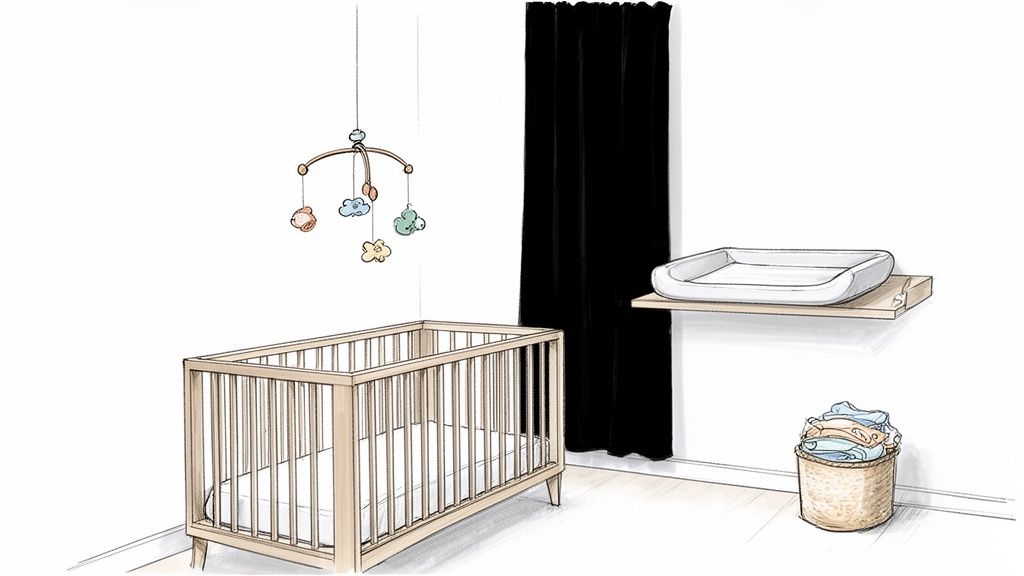
Walking into a baby store can feel pretty overwhelming. The sheer volume of nursery gear is mind-boggling, and it's backed by a global baby care market that hit a staggering USD 255.0 billion in 2026. This huge number just shows how much parents are invested in getting everything from sleep solutions to high-tech monitors just right. You can read more about these trends in the baby care market.
Let's cut through the noise and break down what you really need, focusing on safety, function, and creating that peaceful vibe everyone's after.
The Sleep Sanctuary
Believe me, sleep is about to become the hottest topic in your household. Getting the sleep space right from the start is job number one, since this is where your baby will spend most of their time for the first few months.
A crib or a bassinet is the star of the show here. Whichever you go with, make sure it meets current safety standards. A bassinet is fantastic for the first few months, keeping your baby close by in your room. A crib, on the other hand, is a longer-term investment that will see them through to their toddler years.
Here are the non-negotiables for a safe sleep space:
- A firm, flat mattress: It must fit snugly inside the crib or bassinet frame, leaving no gaps around the edges where a baby could get trapped.
- Fitted sheets only: Use sheets made specifically for your mattress size to ensure a tight fit.
- An empty sleep area: The American Academy of Pediatrics is crystal clear on this: no soft bedding, bumpers, pillows, or toys in the sleep space. This is a critical step in reducing the risk of SIDS.
A simple rule to remember is "Back to Sleep, Tummy to Play." Always place your baby on their back to sleep for naps and at night. Tummy time is essential for development but should only happen when your baby is awake and supervised.
The Diaper Changing Command Center
Get ready, because you're going to be changing a lot of diapers. We're talking thousands in the first year alone. Setting up an efficient, comfortable, and odor-free changing station will make this endless task so much easier.
You don't need a special changing table. A secure changing pad placed on top of a low, stable dresser works perfectly and saves a ton of space. Plus, once you're out of the diaper stage, you're left with a useful piece of furniture.
Your changing station must-haves:
- Changing Pad: Look for a waterproof, wipeable pad with contoured sides and a safety strap. Easy to clean is key.
- Diaper Pail: Trust me on this one—a quality diaper pail that truly seals in odors is a game-changer. Options like the Ubbi Steel Diaper Pail are great because they use standard trash bags, saving you from buying expensive proprietary refills.
- Diaper Caddy: A portable caddy is a lifesaver. It keeps diapers, wipes, and creams organized and right where you need them, whether you’re in the nursery or doing a surprise change on the living room floor.
Smart Storage and Soothing Ambiance
For such tiny people, babies come with a surprising amount of stuff. From endless onesies and socks to burp cloths and swaddles, you’ll need a system to keep it all from taking over. A dresser is a must, but don't forget to think vertically with shelving. For more clever ways to keep everything in its place, check out our guide on baby nursery organization ideas.
Beyond storage, the right atmosphere can make a huge difference when it comes to sleep.
- Blackout Curtains: These are non-negotiable. They are your secret weapon for helping your baby distinguish between day and night, leading to longer, more restful naps.
- White Noise Machine: A good sound machine mimics the comforting, constant sound of the womb and does a brilliant job of masking disruptive household noises. It creates a consistent sleep environment that cues your baby it's time to rest.
- Baby Monitor: A reliable monitor gives you priceless peace of mind, letting you check on your baby without creaking open the door and waking them up. You can find everything from simple audio-only models to high-def video monitors with all the bells and whistles.
Your Guide to Feeding a Newborn
Feeding a newborn is one of the first and most intimate ways you'll bond, but it can also feel a little overwhelming at first. Whether you're planning on breastfeeding, formula feeding, or a combination of both, getting the right gear set up ahead of time makes a huge difference. It helps you find a rhythm and focus on what really matters: connecting with your new baby.
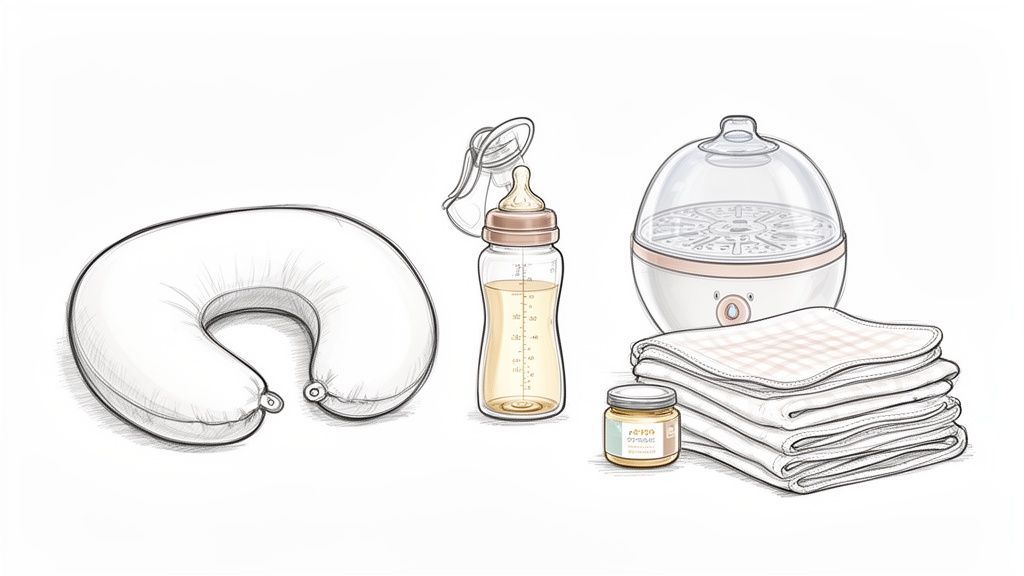
It’s no surprise that parents are zeroing in on this. Spending on infant care, especially baby food, jumped 7.2% in 2023—growing way faster than other retail sectors. This trend is even more pronounced in the organic space, with the global organic baby food market expected to soar to USD 14.8 billion by 2025. Clearly, parents are prioritizing high-quality, healthy options right from the start.
Let's walk through the essentials that will support you, no matter which path you take.
Essentials For Breastfeeding Parents
If you're planning to breastfeed, a few key items can make the experience so much more comfortable and sustainable. Think of these as your personal support crew.
- A Quality Breast Pump: Even if you plan to nurse exclusively, a pump is a game-changer. It's incredibly useful for building up a milk supply, getting relief from engorgement, or simply letting a partner take over a feeding so you can get some rest. A double electric pump is super efficient for regular use, while a simple manual pump is perfect for travel or occasional pumping.
- Nursing Pillow: This is so much more than just a comfy cushion—it's an ergonomic lifesaver. A good nursing pillow positions your baby at the right height, saving your back, neck, and arms from serious strain during those long feeding sessions.
- Soothing Nipple Cream: Let's be honest: the first few weeks of breastfeeding can be tough on your body. A good lanolin-based or organic nipple butter provides instant relief for soreness and helps prevent cracking, making the learning curve a lot more comfortable.
Must Haves For Bottle Feeding
For parents going the formula or pumped breast milk route, the right gear is all about making things simple, safe, and efficient.
A bottle sterilizer will quickly become your best friend. Sure, you can boil everything on the stove, but an electric steam sterilizer or a microwave version gets the job done in minutes. It’s a fast, foolproof way to keep everything hygienic for your baby’s delicate immune system.
When it comes to the bottles themselves, be prepared for a little trial and error.
Don't be surprised if your baby is picky about bottles! It’s smart to buy just one or two from a couple of different brands to see what your little one prefers before you commit to a full set.
Look for bottles with anti-colic features. These are designed with special vents that reduce how much air your baby swallows, which can really help cut down on gas and fussiness. You'll find great options in glass, silicone, and BPA-free plastic.
Universal Feeding Gear Everyone Needs
No matter how you feed your baby, some things are just non-negotiable. These are the workhorses you’ll be reaching for day in and day out.
First up, burp cloths. You can truly never have too many. Newborns spit up—a lot. Having a big stack of soft, absorbent burp cloths within arm's reach will save an untold number of outfits (yours and theirs). Cotton muslin and terry cloth are fantastic choices.
Next, bibs. Even though your baby isn't eating solid foods yet, bibs are perfect for catching all that drool and spit-up. A small, soft bib keeps their neck and chest dry and helps prevent uncomfortable skin irritation.
Finally, think about setting up a dedicated feeding station. This is a lifesaver, especially for those 3 a.m. feedings. Find a comfy chair and keep your nursing pillow, burp cloths, a bottle of water for you, and a few snacks all right there. Feeling prepared and comfortable helps make feeding time a more peaceful experience for everyone. To learn more about navigating your options, check out our guide on understanding your feeding choices.
Getting On The Go With Your Baby
That first trip out of the house with a newborn can feel like you’re preparing for a major expedition. But I promise, what seems like an overwhelming challenge at first quickly becomes second nature. It all comes down to having the right gear to make your adventures safe, simple, and maybe even a little bit fun.
This part of your newborn must haves checklist covers everything you need for mobility. We'll start with the most critical piece of equipment you’ll buy: the car seat. From there, we’ll get into the strollers and carriers that give you the freedom to navigate the world with your new sidekick.
Car Seat: The Ultimate Non-Negotiable
Let's be clear: a properly installed car seat is the single most important purchase you will make for your baby. This isn't just another item on a list; it's the essential safety device that brings your little one home from the hospital.
For a newborn, you're looking for an infant car seat, which is designed to be rear-facing only. These seats are engineered to protect a tiny, fragile body and typically click into a base that stays in your car, making it incredibly easy to get the carrier in and out without waking the baby.
When you’re making your choice, focus on these three things:
- Safety Standards: Double-check that any seat you're considering meets or exceeds all current federal safety standards. This is non-negotiable.
- Ease of Installation: A car seat is only as safe as its installation. Look for models with helpful features like bubble level indicators and straightforward instructions. A seat that’s easy to install correctly is a safer seat.
- Fit for Your Vehicle: Believe it or not, not all car seats fit well in all cars. If you can, try to test-fit a floor model in your vehicle before you buy.
Pro-Tip: Don't put this off! Aim to have your car seat properly installed by the time you’re 36 or 37 weeks pregnant. To be absolutely sure it's perfect, find a certified Child Passenger Safety Technician (CPST) in your area to check your work.
Strollers and Carriers: Your Keys to Freedom
Once the car seat is handled, it’s time to think about getting around on your own two feet. A great stroller or a comfortable baby carrier is your ticket to freedom, allowing you to run errands, get some fresh air, and feel like yourself again.
A stroller is a fantastic long-term investment. Many new parents love "travel systems," which bundle an infant car seat with a stroller it clicks directly into. This is a game-changer for moving a sleeping baby from the car to the stroller without any disruption.
A baby carrier or wrap is an amazing tool for keeping your baby snuggled close while leaving your hands free. It’s perfect for bonding and can be a lifesaver when you have a fussy newborn who just wants to be held. They're also much easier for navigating crowded spaces like farmers' markets or busy stores where a stroller can feel bulky. For more great ideas on travel gear, check out our guide on the best baby travel products.
The Perfectly Packed Diaper Bag
Think of your diaper bag as your mobile command center. Keeping it stocked and ready to go means you're prepared for anything from a sudden diaper blowout to an impromptu feeding session. The best bags have plenty of pockets to keep you organized and are comfortable enough to carry all day.
Here's a quick rundown of what should always be inside:
- Diapering: At least 4-6 diapers, a travel-size pack of wipes, diaper rash cream, and a portable changing pad.
- Feeding: Bottles with pre-measured formula or pumped breast milk, depending on how you're feeding your baby.
- Extras: A full spare outfit for the baby (and trust me, a spare shirt for you isn’t a bad idea either!), a couple of burp cloths, and a pacifier if your baby uses one.
- Cleanliness: A small bottle of hand sanitizer and a wet bag for stashing soiled clothes are absolute musts.
Mastering Baby Health, Safety, and Bathtime
There's no bigger job than keeping your newborn safe and healthy, but having the right tools on hand makes it a whole lot less daunting. Think of this part of your checklist as building your baby's personal wellness and hygiene command center.
We're going to walk through the practical essentials that will give you real confidence as you navigate the day-to-day—from stuffy noses to that very first bath.
Your At-Home First-Aid and Health Kit
You don't need a full-blown paramedic's bag, but you absolutely need a small, well-stocked kit for all the little things. This is your go-to drawer for handling a minor fever, clearing a stuffy nose, or tackling those surprisingly sharp fingernails.
Here’s what you truly need to have ready:
- Digital Thermometer: For infants, a rectal thermometer is still the gold standard for accuracy. It’s the reading your pediatrician will trust most.
- Nasal Aspirator: Fun fact: newborns are "obligate nose breathers," which means they haven't figured out how to breathe through their mouths yet. A simple bulb syringe or a more effective tool like the FridaBaby NoseFrida is a lifesaver when they get congested.
- Baby Nail Clippers or File: Those paper-thin nails are like tiny razors. A pair of clippers with a built-in safety guard or a gentle electric file can make trimming them much less stressful for everyone involved.
- Infant Acetaminophen: Always, always check with your pediatrician first for dosing instructions, but it's smart to have this on hand for fevers or the discomfort that can follow vaccinations.
Making Bathtime Safe and Fun
Bathtime can quickly become a beautiful, calming ritual for you and your baby, but safety has to be the top priority. The golden rule is to have everything you need within arm's reach before the first drop of water is run. You should never, ever leave your baby unattended in the water, not even for a split second.
An infant bathtub is one of the best investments you can make. These tubs are specifically designed to support a tiny, slippery newborn, cradling them securely so you have both hands free for washing. Look for one with a good non-slip surface and a reclined design that keeps your baby’s head safely above the water line.
When it comes to soaps and lotions, less is more. A newborn’s skin is incredibly delicate.
- Tear-Free Baby Wash and Shampoo: Go for gentle, fragrance-free, and hypoallergenic formulas. A tiny dab is all it takes.
- Soft Washcloths: A fresh stack of soft, baby-only washcloths is perfect for gently cleaning all those little rolls and creases.
- Hooded Towels: These aren't just for cute photos! The hood is super practical for keeping your baby’s head warm the second they're out of the bath, which helps prevent them from getting a chill.
To keep things simple, here's a quick rundown of the health and safety essentials we've just covered.
Baby Health and Safety Essentials At a Glance
| Item Category | Essential Items | Why You Need It | Parent Pro-Tip |
|---|---|---|---|
| First-Aid | Digital Thermometer, Nasal Aspirator, Nail Clippers, Infant Acetaminophen | To safely manage common issues like fevers, congestion, and sharp nails. | Keep everything in one designated, easy-to-find drawer or basket. |
| Bathtime | Infant Tub, Tear-Free Wash, Soft Washcloths, Hooded Towels | To create a safe, supportive, and comfortable bathing environment for a newborn. | Lay out your baby's diaper and clothes before starting the bath. |
| Grooming | Soft-bristle Brush, Baby Lotion | To manage cradle cap and keep delicate skin moisturized after baths. | Use a brush to gently loosen flakes on the scalp during the bath. |
This little toolkit covers the essentials for keeping your baby clean, comfortable, and well-cared for from day one.
The Rise of Smart Baby Health Tech
Looking beyond the basics, you'll find a whole new world of infant care technology. This specialized market, which was valued at USD 3.0 billion in 2025 and is projected to hit USD 5.3 billion by 2035, is booming with smart monitors and health trackers. It’s clear that modern parents are looking for more real-time data on their baby’s well-being. If you're curious about this trend, you can discover more insights about the infant care equipment market.
While some of these high-tech gadgets can offer incredible peace of mind, don't forget that the simple things—a reliable thermometer, a safe bathing routine—are the true foundation of your baby's daily care. Mastering these basics is what will truly empower you to handle anything with calm and confidence.
Your Printable Newborn Checklist
Whew. We've talked through everything from nursery furniture to the diaper bag. Now, let’s pull it all together in a way that’s actually useful—a simple, printable newborn must haves checklist you can take with you.
This is your master plan. We’ve organized every single essential by category so you can see exactly what you’ve got and what’s left to get, whether you're building a registry or hitting the stores. No more guesswork, just a clear path forward.
More Than Just a List
We also packed this printable with some hard-won wisdom that goes beyond just a shopping list. It’s got real-world advice on how to prep without losing your mind (or your savings).
- Budgeting Wisely: We'll show you where to spend and where to save, so your money goes toward the things that really count.
- Prioritizing Needs vs. Wants: Let's be honest, it's easy to get swept up in cute gadgets. We'll help you focus on the true essentials for those first few months.
- Second-Hand Savings: Wondering what’s safe to buy used? We've got you covered with a guide to smart second-hand shopping that saves you a ton of cash.
This little graphic sums up what’s truly at the heart of it all: your baby’s health and safety.
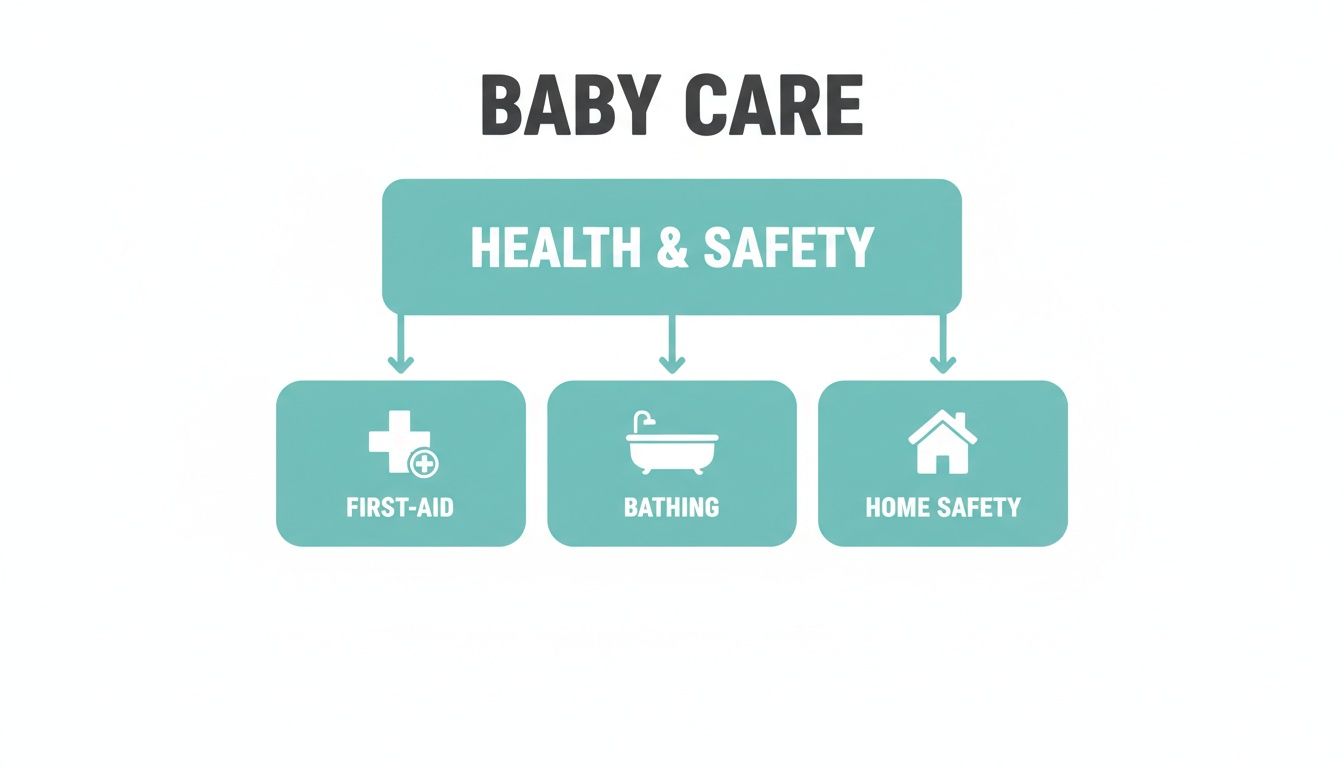
Before anything else, having a solid first-aid kit, a safe bathing setup, and a baby-proofed home creates the secure foundation your little one needs.
Think of this checklist as our gift to you. We built it to take the overwhelming chaos out of getting ready for a baby and turn it into a calm, organized process. So go ahead, download it, and take a deep breath. You’ve got this.
Got Questions About Your Newborn Checklist? Let's Talk.
Even with the best checklist in hand, it's natural to have questions. Stepping into the world of baby gear can feel like learning a whole new language, with endless gadgets and a ton of conflicting advice. Let's clear up a few of the big questions so you can feel genuinely confident as you get ready.
Think of us as that experienced friend who's been there, done that, and is happy to share what really matters.
How Many Clothes Does a Newborn Actually Need?
This is the question on every parent's mind as they wander through aisles of impossibly tiny outfits. It's so easy to go overboard, but trust me, babies grow faster than you can imagine. The key is to think in terms of practical, comfy layers.
Here’s a realistic starting point for those first few weeks:
- Zipper Onesies or Sleepers (7-10): You'll live in these, day and night. Zippers are your best friend during those 3 a.m. diaper changes.
- Bodysuits (7-10): The perfect base layer or a simple outfit for warm days.
- Pants or Leggings (5-7 pairs): Great for pulling on over bodysuits.
- Socks or Booties (7-10 pairs): They have a magical ability to disappear, so it's good to have extras.
- Swaddles (3-5): With spit-up and diaper leaks, you’ll always have one or two in the laundry.
Pro-Tip: Fight the urge to take the tags off everything right away! Your "newborn" might be a 9-pounder who barely fits into that size, or they might hit a growth spurt in a week. Keep some things in their packaging so you can easily exchange them for the next size up.
What Baby Items Can I Skip?
Look, every family is different, but some of those popular baby registry items are more "nice-to-have" than "need-to-have." If you're trying to keep your list (and budget) in check, you can probably pass on these for now.
- Wipe Warmer: It sounds luxurious, but honestly, room-temperature wipes work just fine. Most babies don't even seem to notice the difference.
- Bottle Sterilizer: For the first few months, a big pot of boiling water gets the job done perfectly. Just submerge everything for five minutes. It's simple, effective, and free.
- Specialized "Baby" Laundry Detergent: Unless your little one has super sensitive skin or a condition like eczema, your regular fragrance-free, dye-free detergent is usually completely fine—and a lot cheaper.
Focusing on items that pull double duty and skipping the single-use gadgets will save you space, money, and a little bit of sanity. And remember, you can always buy something later if you find you really need it. Your newborn must haves checklist is a starting point, not a strict rulebook.
At Hiccapop®, we're all about making parenting a little easier with smart, high-quality products you can actually count on. See our full collection of baby essentials at Hiccapop®.