


Nap Routine for 2 Month Old: A Simple, Safe Plan
A nap routine for a 2 month old should follow a simple sequence: feed, burp, offer brief calm interaction, notice tired signs, then settle your baby on their back in a safe sleep space. Naps may happen two to four times daily, and total sleep for infants aged 0–3 months may be 14–17 hours in 24 hours, including naps, but timing can vary widely.
You may be holding a fussy baby who fell asleep during a feed, only to wake the moment you reach the crib. Or perhaps your baby took a short nap, refused the next one, and now seems tired, hungry, and generally unimpressed with your parenting strategy. At two months, that unpredictability is normal.
The practical answer isn't a perfect clock schedule. It's a repeatable rhythm that respects feeding, tired cues, development, and safe sleep.
Disclosure: This article is published by Hiccapop, maker of the Dual-Sided Foam Crib Mattress mentioned below.
Building a Calm Nap Routine for Your Baby
Two-month-old naps can feel like a moving target. One day your baby settles easily, and the next day every nap seems to last only long enough for you to sit down. A responsive routine helps because it gives you a sequence to repeat without pretending your baby's sleep is predictable yet.
Start with a feeding, then burp your baby and allow a brief period of calm interaction. You might talk softly, make eye contact, or change the diaper if needed. As soon as your baby shows tired signs, begin winding down rather than waiting for full-blown crying.
Watch the pattern, not the clock
Useful early cues include staring, yawning, reduced activity, and fussiness. Some babies become quieter before they become upset. Others look away, stop engaging, or seem suddenly difficult to entertain. These cues matter more than enforcing an exact nap time.
Practical rule: Keep the sequence consistent, but let the timing move.
Place your baby on their back in a separate, firm, flat, non-inclined sleep space. A crib, bassinet, portable crib, or play yard that meets CPSC safety standards is appropriate. Loose blankets stay out of the sleep space for babies under 12 months; a fitted sheet is all the crib needs.
Some families also use steady background sound during wind-down. If you're considering one, Hiccapop's guide to a sound machine for sleeping offers another place to review how families use this type of routine cue. Sound should support calming, not replace safe placement or responsive care.
Understanding Two-Month Sleep Patterns
At two months, sleep timing is driven largely by internal needs such as feeding. Sleep often arrives in short episodes, with little separation between day and night, while clearer day-night organization generally develops between three and six months. This developmental pattern explains why a baby may nap soon after waking, wake frequently overnight, or seem unable to follow the same rhythm from one day to the next. A 2025 review of infant sleep over the first six months describes how sleep consolidates during this period in more detail.
The World Health Organization gives a broad target of 14–17 total hours per 24 hours for infants aged 0–3 months, including naps, while Nationwide Children's Hospital reports that two-month-olds commonly take two to four naps daily. These figures are useful reference points, not a pass-or-fail test. A baby who takes several short naps may still be meeting their needs, while another baby may sleep in fewer, longer periods.
Why rigid schedules struggle
A clock-based schedule assumes your baby wakes, feeds, plays, and sleeps at predictable intervals. Hunger, growth, digestion, temperament, and developmental changes can disrupt that pattern quickly. A cue-based approach is more forgiving: offer sleep when tired signs appear, while keeping the order of events familiar.
You can use a wake window guide as general education, but don't treat a precise duration as a rule your baby must meet. At this age, the useful question is, “Is my baby becoming tired?” rather than, “Has the exact amount of time passed?”
Frequent night waking also remains possible. Longer stretches may gradually emerge as day-night organization matures, but a nap routine shouldn't involve withholding feeds or expecting uninterrupted nighttime sleep.
Creating a Simple Step-by-Step Nap Routine
A practical nap routine for a 2 month old can be short and repeatable. The order below gives your baby familiar signals while leaving room for changing hunger and sleep needs.
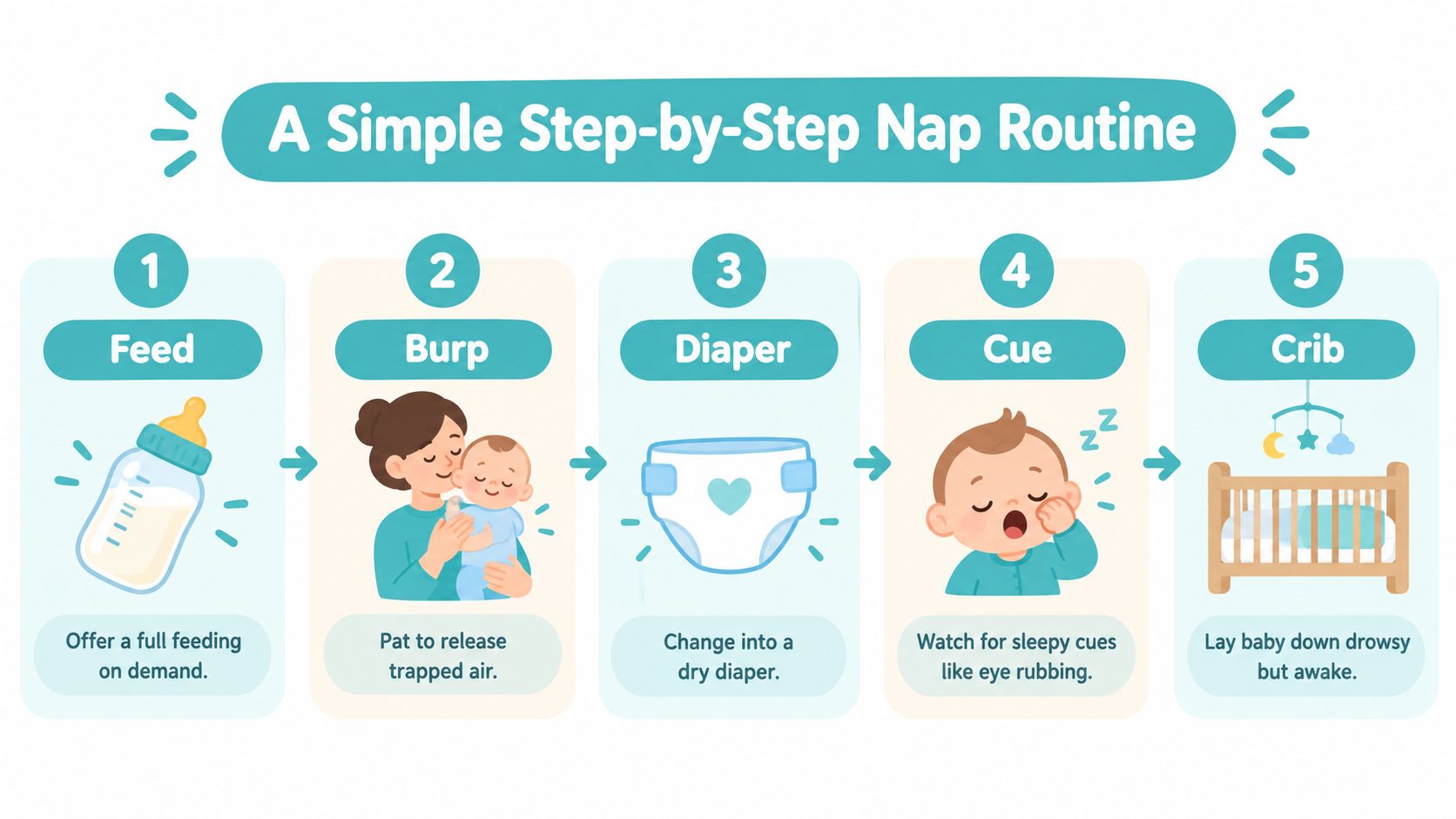
Follow the sequence
- Feed first. Offer a feeding according to your baby's usual hunger cues and any advice from the pediatric clinician. Hunger can be a major reason a baby wakes shortly after settling.
- Burp and check comfort. Burp your baby, then check whether a diaper change is needed. Keep the interaction calm and low-key rather than turning the pre-nap period into a second play session.
- Notice the first tired signs. Look for staring, yawning, reduced movement, or fussiness. Don't wait until your baby is crying intensely if you can begin settling earlier.
- Calm the body. Hold, rock, speak softly, or use another familiar soothing method while your baby is still reasonably calm. The purpose is to reduce stimulation, not to create a complicated ritual.
- Place your baby safely. Put your baby supine, meaning on their back, in a firm, flat, non-inclined crib, bassinet, or play yard with only a fitted sheet. The American Academy of Pediatrics advises keeping pillows, blankets, toys, bumpers, and positioners out of the sleep space, and avoiding car seats, swings, strollers, carriers, and inclined products as routine nap locations. The AAP's safe-sleep guidance provides the full recommendation.
Placing a baby down drowsy but awake can give them opportunities to practice settling, but it's not a demand for independent sleep. At two months, needing help is still normal.
For more newborn sleep tips from pediatricians, here's a short video.
If your baby falls asleep while feeding or being held, move them to their crib, bassinet, or play yard as soon as practical. A contact nap may be soothing while you're awake and actively supervising, but it shouldn't become an unsupervised substitute for a safe sleep surface.
Safe Sleep Guidelines and Travel Adjustments
Convenience and safety often collide at nap time. A baby may fall asleep in a car seat after a trip, doze in a stroller during errands, or nod off on an adult bed during feeding. These situations happen, but they aren't safe places for sleep; move your baby to a crib, bassinet, or play yard as soon as you can.
Compare the options honestly
At home, use a firm, flat, non-inclined surface with your baby placed on their back. Keep the sleep area clear of soft objects, loose bedding, pillows, quilts, comforters, and bumper pads. The American Academy of Pediatrics also recommends room-sharing without bed-sharing, preferably for at least the first six months. The AAP's updated safe-sleep recommendations explain these principles.
Couches, armchairs, and adult beds are especially dangerous places for a baby to sleep, and swings and inclined products aren't designed for sleep. Don't use any of them for naps. A car seat is designed for travel, not ordinary sleep after you arrive.
For travel, pack the same basic plan you use at home: a clear sleep space, fitted sheet, back-sleeping position, and a handoff explanation for every caregiver. If a babysitter knows the sequence, they're less likely to improvise with a couch or adult bed when a nap goes sideways.
If sleep includes persistent noisy breathing, pauses in breathing, or unusual effort, talk with your pediatrician. HealthyChildren.org's guide to sleep apnea in children lists the signs. It also explains that young babies can have periodic breathing: brief pauses followed by quick "catch-up" breathing, then regular breathing again, which is generally considered normal and usually outgrown by about 6 months. The same guide says to call 911 if breathing stops for more than 20 seconds or skin turns pale, bluish, or gray.
For more detail on preparing the room, see Hiccapop's safe sleep environment for infants.
Daily Schedules, Feeding Cues, and Troubleshooting
A useful daily plan is a flexible framework, not a timetable carved in stone. Offer sleep after feeding, burping, and a short period of interaction when tired cues appear. If your baby sleeps unusually long, wake for feeding only when a pediatric clinician has advised it, especially when feeding, growth, or medical history requires a specific plan.
Deliberately shortening naps to improve nighttime sleep can backfire by leaving a young baby overtired. A tired baby may settle poorly, wake quickly, or become harder to soothe. Let the nap end naturally unless you've received clinical advice to wake your baby.
Use clear decision rules
- If your baby seems hungry, feed before focusing on the nap.
- If tired signs appear, begin settling early instead of waiting for intense crying.
- If a nap is short, repeat the sequence at the next tired period rather than forcing a longer sleep.
- If your baby is unusually sleepy, difficult to wake, feeding poorly, or showing concerning changes, contact the pediatric clinician.
Frequent overnight waking doesn't automatically mean the daytime routine has failed. At two months, feeding remains closely connected to sleep, and developmental variability is substantial. Focus on adequate feeding, alert periods, growth, and safe sleep rather than trying to manufacture a flawless schedule.
Putting It All Together with a Practical Checklist
A workable nap routine for a 2 month old looks like this:
- Feed and burp.
- Offer brief, calm interaction.
- Change the diaper if needed.
- Watch for staring, yawning, reduced activity, or fussiness.
- Settle before overtiredness builds.
- Place your baby on their back in a firm, flat, clear sleep space.
- Keep the sequence familiar, even when timing and nap length change.
- Follow clinician advice about waking for feeds.
Progress at this age means gradually clearer day-night organization, not identical naps. If unusual sleepiness, difficulty waking, feeding problems, or growth concerns persist, contact your baby's pediatric clinician.
Whenever it's nap time, place your baby on their back on a firm, flat surface with only a fitted sheet and nothing else in the sleep space. At home, the Hiccapop Dual-Sided Foam Crib Mattress (52" x 27.5" x 6") fits all standard full-size cribs and has a firm infant side; use the infant side for your baby, covered with only a snug fitted sheet. See the Dual-Sided Foam Crib Mattress →
Related Products
-
![]()

- Regular price
- $149.99
- Sale price
- $149.99
- Regular price
-
- Unit price
- per
Sold out


Related Products
-
![]()
- Regular price
- $149.99
- Sale price
- $149.99
- Regular price
-
- Unit price
- per
Sold out