


The Parent's Guide to Using a Sound Machine for Sleeping
Hey there, tired parents. If you’re desperately searching for the key to more peaceful nights for your little one (and, let’s be honest, for you!), you’re in the right place. A sound machine for sleeping isn't just another gadget; for countless families, it's a genuine game-changer. Think of it as a cozy, auditory blanket that wraps your baby's room in a consistent sound, masking all those sudden noises—the dog barking, the doorbell ringing—that can jolt a sleeping baby awake.
This guide is your complete roadmap to unlocking better sleep. We're going to dive into why these simple machines are nursery essentials, helping babies drift off more easily and connect their sleep cycles without being startled awake.
The Secret to Unlocking Better Baby Sleep
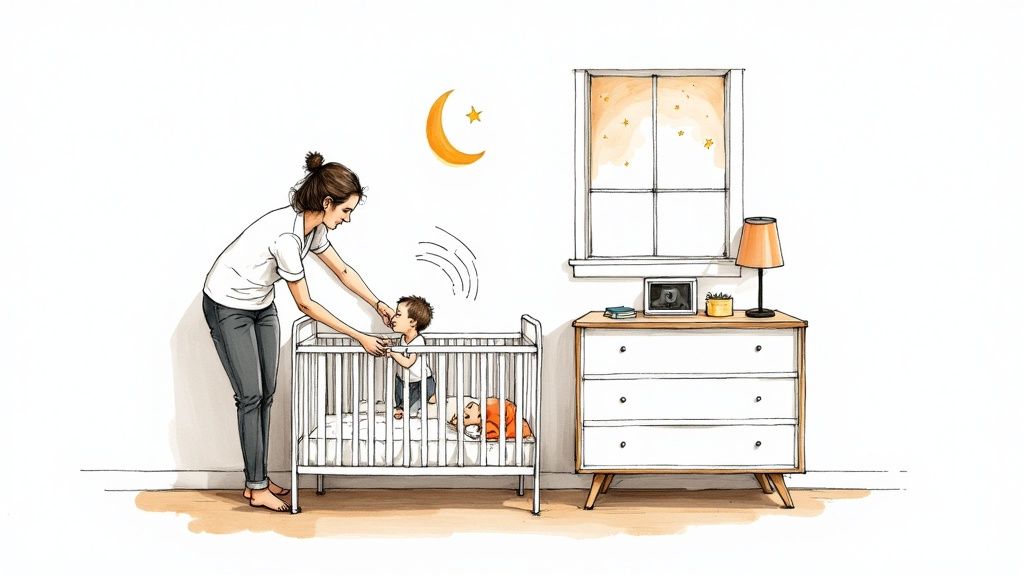
For a newborn, the constant, soothing hum from a sound machine is incredibly familiar. It mimics the comforting sounds of the womb, making the transition to the outside world feel a little less jarring. The result? They settle more easily into longer, deeper sleep.
But how do you choose the right one? And how do you use it safely? Don't worry, we've got you.
What This Guide Will Cover
Our goal is simple: to give you all the practical, real-world information you need to choose and use a sound machine with total confidence. By the time you're done reading, you'll know exactly what to do.
- The "How" and "Why": We'll explain the simple science behind how a consistent sound floor helps your baby sleep more soundly. No jargon, just the basics.
- Decoding the Noises: Ever wondered about the difference between white, pink, and brown noise? We’ll break it down so you can figure out what your baby might prefer.
- Safety First: Peace of mind is everything. We’ll cover clear, actionable tips on volume, placement, and safe usage.
- Choosing Your Perfect Match: We'll walk you through the key features to look for—timers, portability, sound options—to help you find the best fit for your family’s lifestyle.
Fun fact: the womb wasn't a silent retreat. Your baby spent nine months listening to the constant whoosh of blood flow and your heartbeat. A sound machine simply recreates that familiar, comforting environment, which is pure magic for a fussy newborn.
Of course, creating a truly quiet space involves more than just a sound machine. If you live on a noisy street, looking into things like soundproofing windows can make a huge difference, helping your sound machine work even more effectively.
Ultimately, a sound machine becomes a powerful sleep cue, signaling to your baby that it’s time to wind down. Think of this guide as your parent-to-parent playbook for mastering sound-assisted sleep.
How Sound Machines Actually Help Babies Sleep
So, how does a simple little box making a "shushing" sound actually work its magic? It’s not just about making noise; it’s about creating a constant, comforting blanket of sound that tells your baby’s brain, "Everything is okay. You can relax."
For nine months, your baby’s world was anything but quiet. The womb was a noisy place, filled with the constant whoosh of your blood flow and the steady, rhythmic beat of your heart. It was their first home. A sound machine for sleeping brings back that sense of comforting consistency, easing the often-jarring transition to the outside world.
The Power of Sound Masking
One of the biggest jobs a sound machine has is something called sound masking. Imagine trying to whisper in a library—every tiny cough sounds deafening. Now, imagine having that same quiet conversation in a bustling coffee shop. The background hum of chatter and espresso machines smooths everything out, and you barely notice the little sounds.
That's exactly what a sound machine does for your nursery. It lays down a consistent "sound floor" that masks or absorbs all those sudden, jarring noises that can wreck a good nap.
- The neighborhood dog that barks at every squirrel.
- The doorbell ringing with a package right as you laid the baby down.
- A happy shriek from a big brother or sister playing down the hall.
Without that base layer of sound, these abrupt noises can easily startle a baby awake, especially during a light stage of sleep. But with the machine on, those sounds are far less likely to cut through the calming audio shield, letting your baby snooze right through the commotion.
A steady sound floor helps your baby connect their sleep cycles. Instead of waking up fully between light and deep sleep stages, the consistent sound encourages them to drift seamlessly into the next cycle, leading to longer, more restorative sleep.
Why This Is So Important for Sleep Cycles
You’ve probably noticed that babies, especially newborns, are twitchy, active sleepers. They have very short sleep cycles and spend a ton of time in that light, active sleep phase—much more than adults do. This makes them incredibly easy to wake up.
A sound machine acts as a gentle buffer, preventing those little household noises from derailing a much-needed nap. By keeping the soundscape serene and predictable, it helps your little one get the consolidated sleep that’s so crucial for their development (and your sanity).
Creating a Powerful Sleep Cue
Beyond just blocking noise, a sound machine quickly becomes a powerful and predictable cue for sleep. Think of it like a warm bath or a favorite swaddle. The sound itself signals to your baby’s brain that it's time to wind down.
When you consistently turn on the sound machine as part of your naptime or bedtime routine, your baby starts to associate that specific sound with feeling safe, calm, and sleepy. This positive association can make bedtimes so much smoother. Over time, just hearing that familiar hum can be enough to trigger a sleepy response, making it an amazing tool to have, whether you're at home or on the go.
Decoding The Sound Spectrum: White, Pink, And Brown Noise
When you start shopping for a sound machine, you’ll see terms like white noise, pink noise, and brown noise. It might seem a little technical, but understanding these “colors” of sound is your secret weapon for finding the perfect sleep-inducing sound for your baby.
Think of it like different kinds of light. A harsh fluorescent bulb feels completely different from a soft, warm lamp. The same idea applies here—each sound color has its own unique texture and feel based on how it balances different sound frequencies.
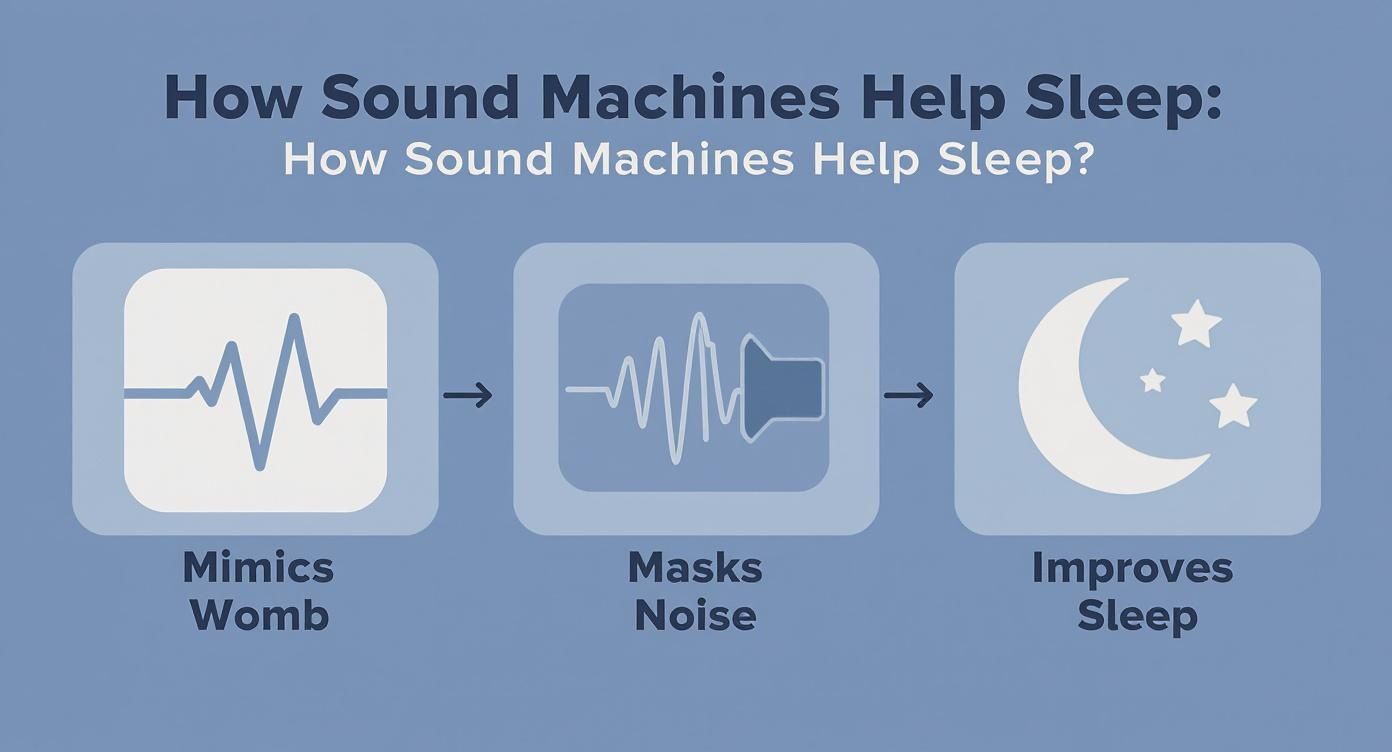
Ultimately, it’s about creating a consistent, familiar sound environment that protects your baby’s sleep from the unpredictable noises of the outside world.
White Noise: The Classic Sound Masker
White noise is the one you’ve probably heard of. In technical terms, it contains all audible frequencies played at an equal intensity. But what does that actually sound like? Think of the steady hiss of an untuned radio or the whir of a fan. It’s bright and a bit shushy, which makes it an absolute pro at sound masking.
- Sounds Like: A hissing radiator, a constant air conditioner hum, or TV static.
- Best For: Blocking a wide range of household noises, especially higher-pitched ones.
It's a fantastic all-purpose choice for drowning out sharp, sudden noises like a dog barking or a pot clattering in the kitchen.
Pink Noise: Deeper And More Balanced
Next up is pink noise, which you can think of as white noise’s calmer, gentler cousin. It still contains all the frequencies, but the higher-pitched sounds are dialed down, giving them less intensity. The result is a sound that’s deeper and feels more balanced, like a steady, gentle rain or leaves rustling in the wind.
Many sleep experts believe pink noise is especially comforting for newborns. Its lower-frequency profile is closer to the deep, rumbly sounds they heard constantly in the womb, like their mother’s heartbeat and blood flow.
This connection makes it an excellent choice for helping a brand-new baby feel safe and settled, particularly during that tricky "fourth trimester."
Brown Noise: The Deepest Rumble
Last, we have brown noise (sometimes called red noise). This is the deepest and most rumbly of the three. It takes the high frequencies down even further than pink noise, really emphasizing the lowest, bass-heavy tones. Picture the sound of a powerful, distant waterfall or the low roar of a thunderstorm.
- Sounds Like: A strong waterfall, rolling thunder, or the deep rush of a river current.
- Best For: Creating a deeply immersive sound blanket that blocks out low-frequency rumbles like traffic.
If you find white noise a bit too sharp or "hissy," brown noise might be the perfect, mellow alternative.
Comparing Sound Colors for Sleep
So, how do you pick? Honestly, every baby has their own preference. A great strategy is to start with pink noise for a newborn, since it closely mimics womb sounds, and see how they react. If that doesn't seem to be helping, switch to classic white noise for its top-notch sound-masking power.
| Sound Color | Sound Characteristics | Sounds Like... | Best For |
|---|---|---|---|
| White Noise | All frequencies at equal intensity. Bright and hissy. | A constant, even "shhhh" or a fan. | Masking a wide variety of sudden noises, from dogs barking to doors closing. |
| Pink Noise | Deeper than white noise, with less intense high frequencies. | A steady, gentle rainfall or rustling leaves. | Soothing newborns by mimicking womb sounds. A great, balanced choice for sleep. |
| Brown Noise | The deepest of all, emphasizing low, rumbling frequencies. | The roar of a distant waterfall or rolling thunder. | Creating an immersive, bass-heavy sound blanket to block out rumbly noises like traffic. |
At the end of the day, the best sound is simply the one your baby sleeps best with. Don't be afraid to experiment for a few nights to see which one helps your little one settle the easiest and sleep the longest.
Choosing the Right Sound Machine for Your Nursery
When you start shopping for a sound machine for sleeping, the sheer number of options can feel overwhelming. The secret is to tune out the marketing hype and zero in on the features that genuinely matter for you and your baby.
Non-Looping Sound Is a Must-Have
Here’s a detail that might seem small but makes a world of difference: non-looping sound. Many digital sound machines simply play a short audio clip on repeat. For sensitive sleepers—and many babies are—the brain can subconsciously pick up on the tiny gap or pattern when the track resets. This subtle repetition can become a distraction. A truly non-looping machine creates a seamless and constant blanket of sound with no breaks to jar a light sleeper awake.
Battery vs. Plug-In Power
This decision really comes down to your family’s lifestyle. Many parents find they need one of each.
-
Battery-Powered Portability: These are the champions of on-the-go naps. Perfect for stroller walks, car rides, or visits to grandma's house, a portable machine means your baby always has their familiar sleep cue. They are also a lifesaver during a power outage.
-
Plug-In Reliability: For the nursery, a plug-in model is your workhorse. You never have to worry about the batteries dying in the middle of the night—a surefire way to get an unwelcome wakeup call. They are built for consistent, all-night performance.
According to market data from Grand View Research, plug-in machines continue to lead the pack because of their dependability and powerful volume range.
Other Key Features to Consider
Beyond the power source and sound quality, a few other features can make or break your experience.
Timer vs. Continuous Play
Some machines come with timers that shut the sound off automatically. This seems like a good idea, but most sleep experts actually recommend continuous play for the entire duration of a nap or night's sleep. An abrupt silence can easily wake a baby as they transition between sleep cycles. A machine that can run all night is almost always the better choice.
Variety of Sound Options
While a solid white, pink, or brown noise is the main event, having a few other sound options is a great bonus. Soothing nature sounds like rain or gentle lullabies can be a wonderful part of your wind-down routine before bed.
Precise Volume Control
Getting the volume just right is critical. It needs to be loud enough to block out household noise but not so loud that it's unsafe for tiny ears. Look for a machine that offers a wide range of volume settings.
Built-In Night Light
A soft, warm-toned night light built into the machine can be a game-changer for those middle-of-the-night feedings and diaper changes. It gives you just enough light to see what you're doing without being overly stimulating.
If you're exploring high-tech sound machines, you can see how they stack up against other best smart home devices to see how they fit into a connected home.
Getting the Most Out of Your Sound Machine (Safely, of Course)
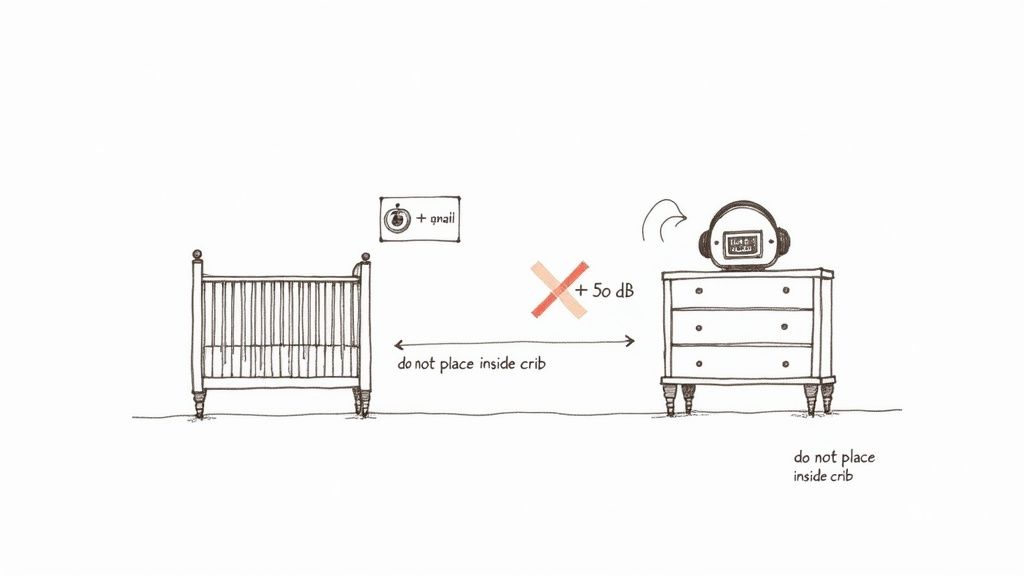
A sound machine for sleeping is an incredible tool, but using it correctly is key. The good news is that the safety guidelines are straightforward and boil down to two simple things: volume and distance.
How Loud Is Too Loud?
This is the number one question parents ask. The guidance from pediatric experts is clear: the sound in your baby’s room should stay below 50 decibels (dB). What does 50 dB sound like? Think of a quiet conversation, a running dishwasher in the next room, or a gentle rain shower. It’s just enough sound to buffer the outside world without being too intense for tiny, developing ears.
You don't need fancy equipment to get this right.
- Grab a Decibel App: Search for a "decibel meter" on your phone's app store. There are tons of free, easy-to-use options.
- Measure from the Crib: With the crib empty, place your phone right where your baby’s head will be.
- Set the Volume: Turn on the sound machine and tweak the volume until your app shows a steady reading at or just under 50 dB.
This quick check takes less than a minute and gives you a concrete, safe number to aim for every night.
The Golden Rule of Placement
Just as critical as the volume is where you actually put the machine. The most important rule to remember is: never place the sound machine inside or hanging on the edge of the crib.
Always position the machine several feet away from where your baby is sleeping. This allows the sound to fill the room more evenly and keeps any power cords well out of your baby's reach—a core tenet of building a safe sleep environment for infants. A good rule of thumb is to place it at least 3-6 feet away.
What About Sound Dependency?
It's a worry we hear all the time: "Will my baby get addicted to white noise?" The reality is that your baby will learn to associate the sound with sleep, but this is a positive sleep cue, not a harmful dependency. Think of it just like a cozy swaddle or a pitch-black room. It’s a powerful signal to their brain that says, "It's time to rest now."
If and when you decide it's time to stop using it, weaning is simple.
- Lower the Volume Gradually: Every couple of nights, just turn the volume down a notch.
- Continue Over a Few Weeks: Keep making these tiny adjustments over one or two weeks until the machine is completely off.
Most parents find the immediate benefit of better sleep far outweighs any future concerns. After all, many adults continue using sound machines for years simply because it helps them sleep more deeply.
Your Sound Machine Questions Answered
Even after all this, you might still have a few questions. That's totally normal! Let's tackle some of the most common ones.
Can't I Just Use a Fan or an App?
You could, but it’s not quite the same. While a box fan creates true, non-looping sound, it can also make a room too chilly or kick up dust and allergens. And phone apps? They seem like a great idea until a text message alert or a low-battery warning jolts your baby awake at 2 AM. A dedicated sound machine is built for one job: providing consistent, reliable, and safe sound all night long.
When Should I Wean My Child Off the Sound Machine?
Here's the thing: you might not ever need to. Plenty of adults (myself included!) sleep better with some sort of ambient sound. A sound machine isn't a "sleep prop" in the same way that rocking to sleep can be. It's simply a tool that makes the sleep environment better. If you do decide you want to stop, just turn the volume down a tiny bit every few nights over a week or two until it's off. Easy peasy.
Will It Prevent My Child From Sleeping Anywhere Else?
Nope! In fact, it's usually the exact opposite. A portable sound machine is a game-changer for getting your child to sleep in new places, whether it's a hotel or Grandma's house. It brings a powerful and familiar piece of their sleep routine with them, signaling that it’s a safe and comfortable place to rest. It's just one small part of a bigger sleep puzzle. If you're tackling other sleep hurdles, our guide on toddler sleep training methods has a ton of other tips.
The white noise machine market is projected to grow to an incredible USD 3.331 billion by 2035, according to insights from Market Research Future. This huge jump shows just how many people are realizing the benefits for both sleep and focus.
A sound machine is more than just a gadget—it’s a tool that can restore peace and quiet to your home. By creating a consistent, comforting, and safe sound environment, you’re giving your baby (and yourself) the gift of longer, more restorative sleep. Sweet dreams!
What’s your experience? Do you have a favorite sound that works wonders for your little one? Let us know in the comments below!
Ready to find the perfect sound machine? The Hiccapop sound machine was designed by parents, for parents. It’s got the non-looping sound, portability, and reliability you need for a better night's sleep. Shop Hiccapop now and give your family the gift of rest.