


A Guide to the Most Needed Baby Items
So, you’re having a baby—congratulations! It’s one of the most exciting times of your life, but that first walk down the baby aisle can be… a lot. Wipe warmers, designer newborn outfits, bottle sanitizers—it’s enough to make your head spin.
The truth is, the most needed baby items really come down to the basics: a safe place for them to sleep, a reliable way to get fed, diapers, a car seat, and some simple clothes. Everything else is just a bonus. Our goal here is to help you cut through the clutter and focus on what you'll actually use, making this whole process a little less overwhelming and a lot more fun.
Building Your Baby Essentials Checklist
Think of this as your master plan for a well-stocked, but not overstuffed, nursery. We’re not just listing products; we’re giving you the inside scoop on what makes an item truly essential. It’s not about collecting stuff, but about building a toolkit of practical, safe, and reliable gear that genuinely makes life with a newborn a little bit easier.
Separating Needs from Wants
Let's be real: the baby product industry is an expert at making you feel like you need everything. But you really don't. The secret is learning to tell the difference between a non-negotiable and a nice-to-have. A safe car seat? That's a need. A high-tech smart bassinet that rocks your baby to sleep? Definitely a want.
By focusing on the essentials first, you ensure your budget and energy go where they matter most: your baby’s safety and comfort. We've broken down the most needed baby items into clear, manageable categories. And if you're putting together a gift list, our guide to baby registry must-haves has even more specific tips.
Here's a pro tip: Try to think beyond the first few weeks. It's so easy to get caught up in the tiny newborn phase, but choosing items that grow with your child—like a convertible crib or an adjustable high chair—will save you a ton of money and hassle down the road.
The instinct to prepare your home for a new baby is often called "nesting." If you're in that mode, you might find this detailed first baby nesting checklist super helpful for making sure every corner of your space is ready.
Now, let's dive into the specifics.
Quick-Glance Baby Essentials Checklist
To get us started, here’s a quick overview of the core categories every new parent should have on their radar. Think of this table as your 30,000-foot view before we zoom in on the details for each item.
| Category | Must-Have Items | Key Consideration |
|---|---|---|
| Nursery & Sleep | Crib/Bassinet, Mattress, Swaddles, Monitor | Safety standards (JPMA certified) and room-sharing plans. |
| Feeding | Bottles, Formula/Breast Pump, Burp Cloths | Your feeding goals (breast, bottle, or combo) will guide you. |
| Diapering | Diapers, Wipes, Diaper Pail, Changing Pad | Will you use disposable or cloth? Location of changing station. |
| Travel & Gear | Infant Car Seat, Stroller, Baby Carrier | Compatibility between car seat and stroller (travel system). |
| Health & Safety | First-Aid Kit, Nasal Aspirator, Thermometer | Have it ready before you need it. |
| Clothing | Onesies, Sleepers, Socks, Hats, Swaddles | Comfort and ease of use (zippers!) over complex outfits. |
| Bathing | Infant Tub, Gentle Soap, Hooded Towels | A non-slip surface is non-negotiable. |
This checklist covers the absolute must-haves. As we go through each category, we'll talk about what to look for, safety features to prioritize, and how to choose products that will last.
Creating a Safe and Serene Nursery
Your baby's nursery is so much more than just a room with a crib. It’s their first little haven, a space you’ll carefully design for peaceful sleep, gentle awakenings, and countless sweet moments. Getting this room right is one of the most rewarding projects for expecting parents, and it all starts with a few key, non-negotiable items. Let's walk through the essentials that blend top-notch safety with comfort and real-world practicality.
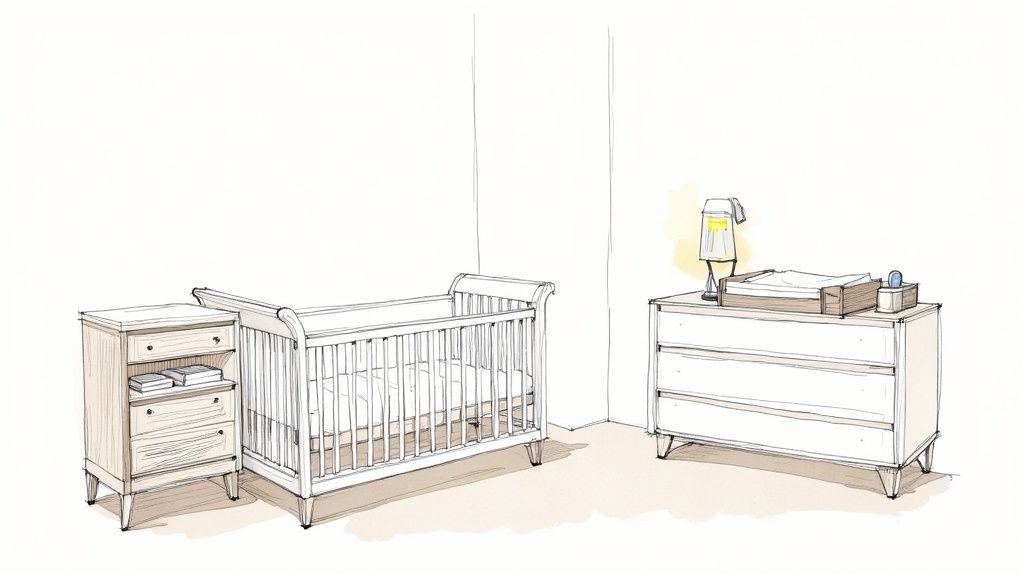
The Foundation of Safe Sleep
The crib is the heart of the nursery and, without a doubt, the most important purchase you’ll make. Today’s safety standards are incredibly strict for good reason, so always opt for a new crib that is JPMA (Juvenile Products Manufacturers Association) certified. This seal of approval means it's been rigorously tested for both safety and durability, giving you one less thing to worry about.
The mattress you choose is just as crucial. While we adults might love a soft, cushy bed, the American Academy of Pediatrics recommends a firm, flat sleep surface for babies to reduce the risk of SIDS. A good test? When you press down on the mattress, it should pop right back up without holding the shape of your hand.
And trust me on this one: a waterproof mattress protector isn't a luxury—it's a lifesaver. Spit-up, drool, and the inevitable diaper blowouts are just part of the new parent experience. A quality protector keeps the mattress fresh and hygienic, stopping moisture from turning into mold or mildew.
The Changing Station Command Center
Having a dedicated spot for diaper changes will streamline one of your most-repeated daily tasks. You don't necessarily need a stand-alone changing table; a sturdy dresser topped with a contoured changing pad works beautifully and gives you a piece of furniture that will last for years.
Just make sure the changing pad has raised sides and a safety strap to keep your little wiggler contained. The real trick is to keep all your supplies—diapers, wipes, and creams—within arm’s reach so you never have to take a hand off your baby, even for a second.
A pro tip for making changes smoother is to use a weighted wipes dispenser. It lets you grab a single wipe with one hand while the other stays safely on your baby. It’s a small detail that makes a world of difference during a messy situation.
For a comprehensive look at securing your home beyond the nursery, The Complete Baby Proofing Checklist offers fantastic step-by-step advice for every room in the house.
Smart Storage and Organization Solutions
It's amazing how much gear one tiny human can accumulate! Smart storage is the secret to keeping the nursery feeling calm and uncluttered instead of chaotic. Think vertically with shelving, and use drawer dividers to bring order to all those tiny clothes, socks, and accessories.
Baskets and bins are your best friends for stashing toys, extra blankets, and books. These are solutions that can easily adapt as your child grows, making them a wise investment from day one. A well-organized room doesn't just look better—it makes finding what you need during a 3 a.m. feeding infinitely less stressful. For more great tips, check out our guide on baby nursery organization ideas.
Nursery Tech for Peace of Mind
Modern technology offers some incredible tools for parents. A reliable baby monitor is high on the list of most needed baby items, giving you that priceless peace of mind when you're in another room. Whether you go for a simple audio-only model or a high-tech video monitor with features like temperature sensors and two-way talk, it’s your essential link to your sleeping baby.
A soft nightlight is another must-have. It casts just enough of a gentle glow for you to check on your little one, find a lost pacifier, or navigate a late-night feeding without flipping on a harsh overhead light that could fully wake everyone up.
Mastering Diapering and Everyday Baby Care
Welcome to the big leagues of parenthood. You're about to become an expert in managing what goes in one end and what comes out the other. Don't worry, diapering will quickly become second nature, and having the right setup is key to making the whole process smoother, cleaner, and a lot less stressful for everyone involved.
Let’s talk about the must-haves for diapering, hygiene, and keeping that famously soft baby skin healthy and happy.
The Great Diaper Debate
One of the very first decisions you’ll face is whether to go with disposable or cloth diapers. Honestly, there's no single right answer here. It really comes down to what fits your family’s lifestyle, budget, and personal philosophy.
- Disposable Diapers: These are the gold standard for convenience. They’re super absorbent, a breeze to use (especially when you're out and about), and easy to toss. The flip side, of course, is the ongoing cost and the environmental footprint.
- Cloth Diapers: Forget the pins and plastic pants of your parents' generation. Modern cloth diapers have come a long way. They’re much more cost-effective in the long run and kinder to the planet, but they do require a bigger upfront investment and a commitment to laundry. Lots of laundry.
A lot of parents I know land somewhere in the middle. They might use cloth at home and keep a stash of disposables for travel, daycare, or overnight. The best advice? Don't feel locked into one system. It's perfectly fine to experiment and see what you actually prefer.
Your Changing Station Arsenal
Think of your changing station as your command center. Having everything you need within arm's reach isn't just about convenience—it's a critical safety rule. You always need to keep one hand on your baby.
Here are the absolute non-negotiables:
- Wipes: You will go through these faster than you can possibly imagine. Stick with gentle, unscented, and hypoallergenic options to avoid irritating that delicate skin.
- Diaper Rash Cream: A solid zinc oxide-based cream is your best friend. It creates a protective barrier against moisture and helps soothe any irritation that pops up.
- Diaper Pail: While you could use a regular trash can, a dedicated diaper pail with a good, tight-sealing lid is a game-changer for containing odors. Trust me on this one.
Diaper rash is one of those things that worries every new parent, but it's often preventable with a few simple habits. Frequent changes, a little air time, and a good barrier cream are your best defenses. We've got more tips in our guide on how to prevent diaper rash.
Gentle Skincare for Delicate Skin
Baby skin is so much thinner and more sensitive than ours, which means a simple, gentle approach is always best. You really don't need a shelf full of complicated products. A few high-quality basics are all it takes to keep your baby’s skin hydrated and protected.
When you're shopping for baby lotions, oils, or washes, keep an eye out for products that are:
- Fragrance-Free: Artificial fragrances are one of the most common culprits behind skin irritation.
- Hypoallergenic: This means they're specially formulated to minimize the chance of allergic reactions.
- Free of Dyes and Parabens: Simpler is better. Look for clean, straightforward ingredient lists.
A light layer of gentle baby lotion after bath time can work wonders for locking in moisture, especially if you live in a dry climate or during the cold winter months. This focus on safe, gentle ingredients is fueling huge growth in the industry, with the global baby personal care market projected to expand significantly over the next decade.
Navigating Feeding and Mealtime Routines
Feeding your baby is about to become your new favorite (and most frequent) pastime. Whether you're planning to breastfeed, formula-feed, or try a combination of both, having the right gear can turn potential chaos into calm, connected moments. Think of this as your feeding command center checklist—the gear that will help ensure your little one is happy, fed, and hopefully, ready for a good long nap.
Essentials for Nursing and Pumping
If you're planning to breastfeed, comfort for both you and your baby is the name of the game. A good nursing pillow can be an absolute back-saver, especially in those early weeks when you're both still figuring out the perfect latch. It wraps around you to provide a firm, supportive surface, taking the strain off your arms, neck, and shoulders during long feeding sessions.
A reliable breast pump is another game-changer for many nursing moms. It’s crucial for building supply, relieving painful engorgement, and giving a partner or caregiver the chance to help with feedings. The best part? Most health insurance plans now cover the cost of a personal-use breast pump, so definitely call your provider to see what you’re eligible for.
To round out your nursing toolkit, you'll want to grab a few other things:
- Milk Storage Bags: For safely stashing away your liquid gold in the freezer. Look for durable, leak-proof bags that are easy to pour into and label.
- Washable Nursing Pads: Leaks happen. Soft, reusable pads are way more comfortable than the disposable kind and are better for the planet (and your laundry pile).
- Nipple Cream: Let's be honest, the first few weeks of nursing can be tough on your skin. A lanolin-free, all-natural cream can provide soothing relief and is safe for the baby.
Must-Haves for Bottle Feeding
For families using formula or pumped milk, finding the right bottle is everything. Not all bottles are created equal, and you'll quickly learn your baby might have some strong opinions on the matter! It's a smart move to buy just a few different types at first to see what your little one prefers before you commit to a full set.
Some brands are famous for their anti-colic venting systems, while others are designed with a soft, silicone body to more closely mimic the feel of breastfeeding. No matter which brand you land on, a good bottle brush and a dedicated drying rack are absolute must-haves for keeping everything clean and organized.
While a dedicated bottle sterilizer is popular, it’s not always necessary. For most healthy, full-term babies, washing bottles thoroughly with hot, soapy water is perfectly fine. That said, a sterilizer can offer extra peace of mind, especially in those very early newborn days.
Gearing Up for Solid Foods
The real fun begins around six months, when your baby is ready to start exploring solid foods. You don’t need a ton of gear right away, but a few key items will make the transition so much smoother.
A high chair is the biggest purchase here. You’ll want one that’s incredibly easy to wipe down (because it will get messy), has a secure five-point harness for safety, and ideally, can grow with your child for years of use. For travel and restaurant visits, a portable option like the OmniBoost Travel Booster Seat is a lifesaver.
You’ll also want a small collection of soft-tipped silicone spoons, which are much gentler on your baby’s sensitive gums than hard plastic or metal. And last but not least, bibs. Lots and lots of bibs. The silicone ones with a built-in pocket are fantastic for catching drips and crumbs, and you can just rinse them off in the sink after each meal.
Choosing Your Essential On-The-Go Gear
Once the nursery is all set, your next adventure is stepping out into the world with your new tiny companion. Let's be real—leaving the house with a baby is a whole new ballgame. It takes a bit more prep than just grabbing your keys, but the right on-the-go gear makes all the difference. This list of the most needed baby items is all about making your life easier, safer, and more mobile.
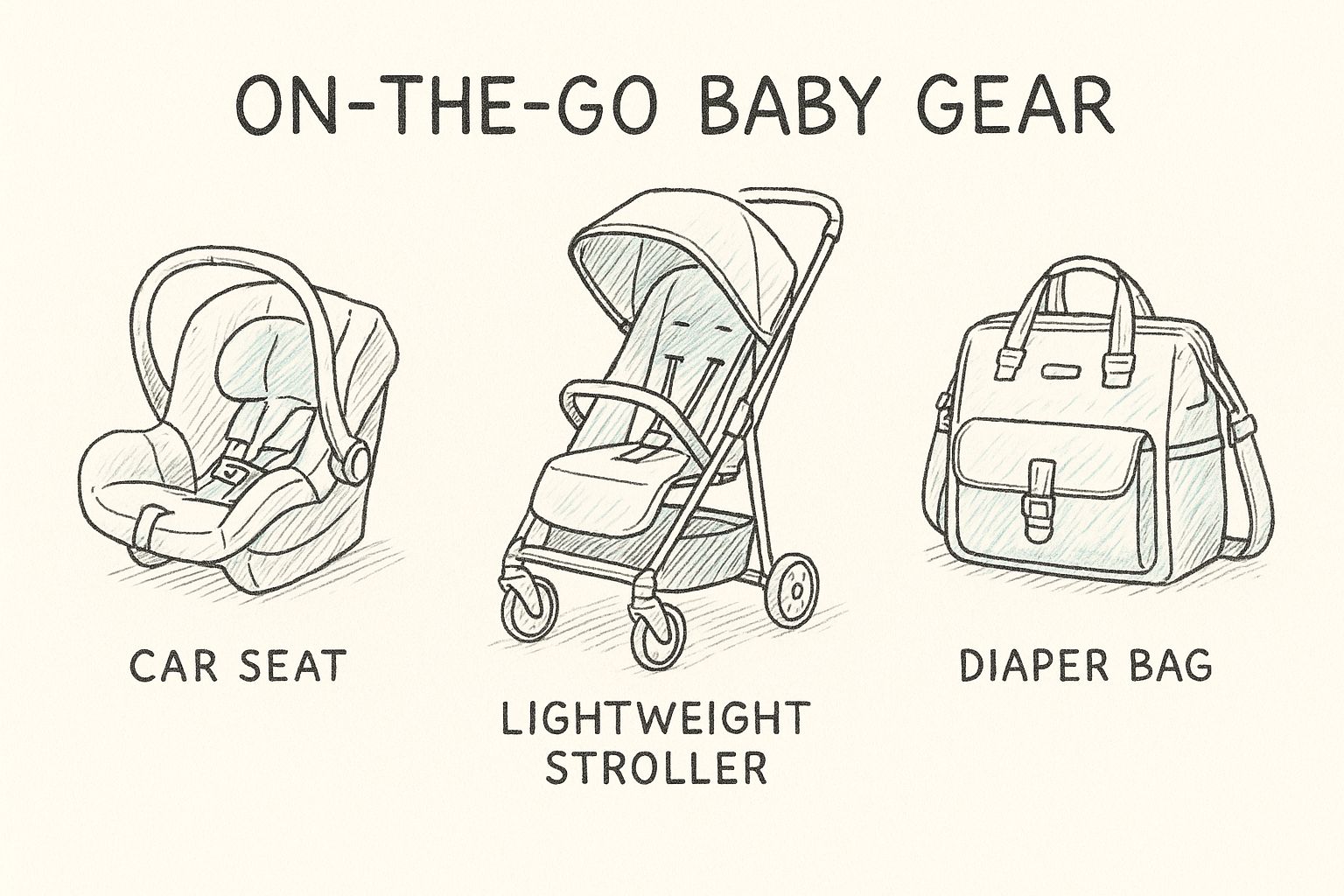
As you can see, it really comes down to three things: a safe car seat, a reliable stroller, and a diaper bag that’s ready for anything. Master these, and you’ll feel like you can conquer the world.
The Non-Negotiable Car Seat
First things first: you literally can't leave the hospital without a properly installed infant car seat. This is, without a doubt, the most critical piece of safety equipment you’ll buy for your baby. Infant car seats are specifically designed to be rear-facing, which provides the absolute best protection for a newborn's delicate head, neck, and spine in a crash.
When you're shopping, look for a five-point harness and check the safety ratings from trusted sources. But here’s the most important tip: the fanciest car seat is useless if it’s not installed correctly. A surprising number of car seats are put in wrong, which severely limits how well they can protect your child.
Many local fire departments or hospitals offer free car seat safety checks. Do it. Seriously. The peace of mind is worth everything.
Strollers: Your Lifestyle Companion
A good stroller is your ticket to freedom. It lets you get out for those much-needed walks, tackle errands, and just explore the neighborhood with your little one. The sheer number of options can feel overwhelming, so the best way to narrow it down is to think about your actual day-to-day life.
- Lightweight Strollers: These are fantastic for quick trips, travel, and keeping in the trunk. They fold up easily and don't weigh a ton.
- Full-Sized Strollers: Think of these as the family SUV. They’re workhorses with bigger wheels for a smoother ride, tons of storage space, and often have cool features like reversible seats.
- Travel Systems: This is a super popular choice for a reason. It's an infant car seat and a compatible stroller sold as a set. You can just click the car seat out of its base in the car and snap it right into the stroller—a lifesaver when the baby is sleeping.
Think hard about where you'll be strolling most often. If you're navigating busy city sidewalks and hopping on public transit, a compact model you can fold with one hand is a game-changer. But if you’re more likely to be on park paths or suburban trails, you'll want something with all-terrain wheels for a much more comfortable ride.
Figuring out the best on-the-go gear really depends on your family's needs. To help you decide, let's break down the most common options.
Baby Carriers for Hands-Free Freedom
Sometimes, you just need your hands back. A baby carrier or wrap is an absolute lifesaver, especially in those early "fourth trimester" days when your baby just wants to be held. Wearing your baby keeps them calm and content while you get to do things like make a sandwich, answer an email, or just walk around the block.
Soft-structured carriers with buckles are super quick to get on and off, which is great when you're in a hurry. Stretchy wraps, on the other hand, offer a snug, womb-like fit that newborns absolutely love.
No matter which style you pick, make sure it supports your baby in a hip-healthy "M" position, where their knees are sitting slightly higher than their bottom. This ergonomic posture is really important for their developing hips.
Bath time Basics and Health Essentials
Splish, splash! Bath time is so much more than just getting your baby clean. For your little one, it's a sensory playground, and for you, it's a precious chance to bond. With just a few key items, you can transform this daily task into a safe, calming, and truly enjoyable ritual for everyone.
Of course, parenting isn't all bubble baths. Being ready for those little health hiccups is just as important. Having a well-stocked health and safety kit means you can handle a sudden fever or a stuffy nose with confidence, not a late-night panic. Let’s walk through the must-haves for both.
Making a Splash Safely
When it comes to baby bath time, safety is everything. A slippery baby in a full-sized tub is a recipe for stress, which is exactly why a dedicated baby bathtub is a non-negotiable for most new parents. Look for one with a non-slip surface and, ideally, an infant sling or a contoured design. This gives your baby the support they need before they can sit up on their own, letting you focus on the fun parts.
Remember, your baby's skin is incredibly delicate, so less is more. Stick with a tear-free, hypoallergenic baby wash and shampoo to avoid irritation. You’ll also want a nice stack of soft washcloths handy. And for the grand finale? A cozy hooded towel is perfect for wrapping them up burrito-style, keeping them warm and snug from head to toe the moment they leave the water.
Quick tip: You only need an inch or two of warm water (test it with your wrist!) for a newborn bath. And the golden rule? Never, ever leave your baby unattended in the water, not even for a second. Get all your supplies within arm's reach before you start.
It’s clear parents are prioritizing gentle, high-quality ingredients for their little ones. The baby bath products market is actually projected to grow significantly over the next few years, which just shows how much thought families are putting into this part of the day. You can read more about what's driving this trend and what it means for product innovation.
Your At-Home Health Toolkit
It's a fact of life: babies get sick, and their fingernails grow at lightning speed. One of the smartest things you can do as a new parent is to assemble a small health and grooming kit before you actually need it. Trust me, you'll be glad you did. It doesn't need to be massive; just a few core items will get you through most common situations.
Here’s a simple checklist to get you started:
- A Reliable Digital Thermometer: For infants, a rectal thermometer is still considered the gold standard for accuracy. Getting a precise temperature is the first thing your pediatrician will ask for when you call.
- Baby Nail Clippers or File: Those tiny nails are surprisingly sharp. Look for clippers with a built-in safety guard or try a gentle electric file to make trimming them far less intimidating for both of you.
- A Nasal Aspirator: Babies primarily breathe through their noses, so a little congestion can make them absolutely miserable. A simple bulb syringe can work wonders, clearing them up so they can eat and sleep peacefully.
- Basic First-Aid Supplies: Keep some infant-safe acetaminophen on hand (always get dosing instructions from your doctor first!), along with sterile gauze and a few adhesive bandages for those inevitable little scrapes when they start exploring.
What Are the Most Needed Baby Items? Let's Recap.
Stepping into the world of baby gear can feel like you’re trying to decipher a secret code. Trust us, we’ve been there, and it’s completely normal to have a million questions. To help you navigate it all with a bit more confidence, we’ve pulled together some straight-talk answers to the questions we hear most often from new parents.
What are the top 5 things I absolutely must have?
If you’re feeling the overwhelm and just want to know the bare-bones, non-negotiable essentials, here you go. Think of these five things as the absolute foundation for bringing your baby home.
- A Safe Car Seat: You literally can’t leave the hospital without one. This is, without a doubt, the single most important safety item you will buy.
- A Safe Place to Sleep: This means a crib, bassinet, or co-sleeper that meets all current safety standards. The key is a firm, flat mattress with absolutely no loose blankets, bumpers, or toys.
- Diapers and Wipes: A lot of them. Whether you go with cloth or disposable, you'll be amazed at how many you go through. Get ready!
- Feeding Supplies: This looks a little different for everyone. It might be bottles and formula, or it could be breastfeeding support like a quality pump, storage bags, and a nursing pillow.
- A Few Simple Outfits: Don't go overboard here. You just need a practical stash of comfortable onesies, zippered sleepers (trust us on the zippers!), and a couple of sleep sacks for warmth.
How can I save money on all this stuff?
Let’s be real—babies can be expensive. But you don't have to break the bank to get everything you need. A little strategic thinking can save you a surprising amount of cash in that first year without ever skimping on safety.
The best place to start is with gear that does double duty, like a convertible crib that later becomes a toddler bed. And don't be afraid to accept hand-me-downs from friends and family you trust! Just make sure to double-check for any recalls on big-ticket items like car seats or strollers. A well-thought-out registry is also your best friend for guiding generous loved ones toward what you actually need, helping you avoid duplicates.
What popular baby items can I just skip?
Knowing what not to buy is just as important as knowing what you need. The baby industry is brilliant at making you feel like you need everything, but many popular gadgets are far from essential.
You can confidently pass on things like wipe warmers (your baby will be perfectly fine with room-temp wipes), fancy diaper stackers (a simple basket or drawer works just as well), and those adorable-but-useless designer baby shoes for a newborn who can't even stand. Keeping your focus on the true must-haves ensures your budget goes where it counts: your baby's safety and comfort.
Building your baby essentials list is a marathon, not a sprint. Start with the basics we've outlined here and remember to trust your instincts. You've got this! What baby item did you find you couldn't live without? Let us know in the comments below