


How to Prevent Diaper Rash: A Parent's Ultimate Guide
The best defense against diaper rash is a good offense. It all comes down to a simple, consistent routine that I like to think of as the three pillars of prevention: keeping the area clean, dry, and protected.
This means changing diapers the moment they're soiled, making sure your baby's skin is completely dry before putting on a fresh one, and using a good barrier cream to shield their sensitive skin from moisture. Easy peasy, right? Let's dive in.
Why Diaper Rash Is a Universal Parenting Challenge
If you're staring at a red, irritated rash on your baby’s bottom, take a deep breath. You are absolutely not alone. This is easily one of the most common skin issues we see in infants, and it’s completely normal to feel distressed when your little one is uncomfortable. The good news is that most cases are mild and, better yet, preventable with the right approach.
Diaper rash, medically known as diaper dermatitis, is incredibly common. Just how common? Research suggests that a staggering 65.4% of children have dealt with it in the last six months alone. Interestingly, despite these numbers, most parents handle it at home without needing a doctor's visit. For a deeper dive into the data, you can check out this study on the prevalence and care-seeking habits for diaper dermatitis on nature.com.
To really get ahead of it, you need to know what you're up against. The main culprits are surprisingly simple:
- Moisture: When skin is constantly damp from urine and stool, its protective outer layer softens and becomes vulnerable to breakdown.
- Friction: The non-stop rubbing of a diaper against delicate baby skin creates chafing and irritation, especially around the leg cuffs and waistband. Nobody likes chafing.
- Irritants: Think of the ammonia in urine and the digestive enzymes in stool—both are major irritants that can damage the skin's natural barrier.
Before we get into the step-by-step routine, here’s a quick overview of the core principles we’ll be covering.
The 3 Pillars of Diaper Rash Prevention
| Pillar | Key Action | Why It Matters |
|---|---|---|
| Cleanliness | Gentle, thorough cleaning at every change. | Removes irritants like urine and stool enzymes before they can cause damage. |
| Dryness | Air-drying the skin completely. | Eliminates the moist environment where rashes thrive and bacteria can grow. |
| Protection | Applying a barrier cream. | Creates a physical shield between the skin and moisture, preventing irritation. |
Think of these three pillars as your foundation. Everything else we'll discuss builds on these simple but powerful actions.
This visual gives you a great snapshot of these core strategies in action.
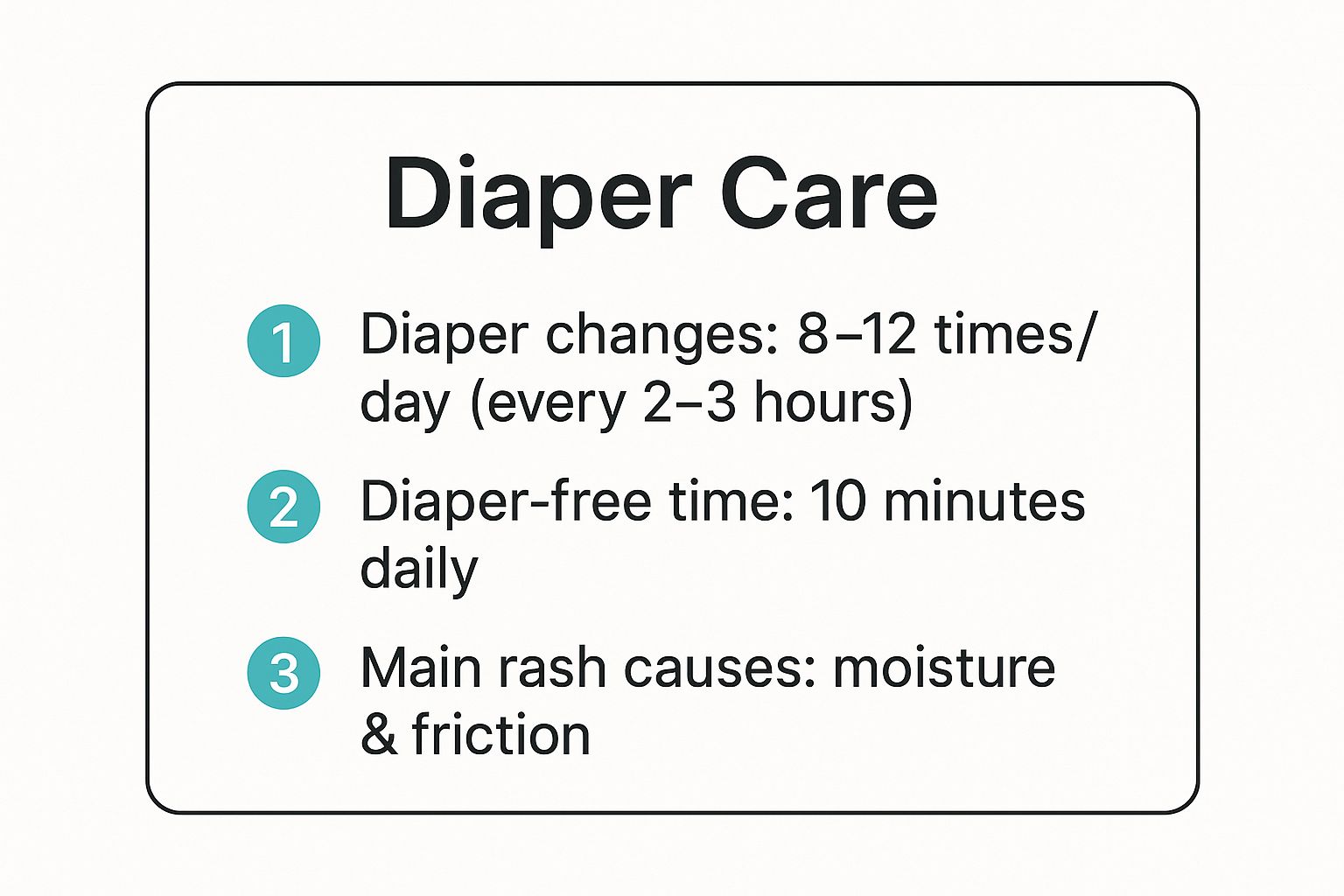
As you can see, consistency is everything. Frequent changes and dedicated diaper-free time are your best tools for fighting the moisture and friction that cause rashes in the first place. Let's get into the specifics of building a rash-proof routine.
Mastering the Art of the Diaper Change
Let's be real—you're going to become a diaper-changing expert, fast. This constant task is your single best weapon in the fight against diaper rash. The secret is to think of each change not just as a swap, but as a quick, skin-saving pit stop.
Frequency is everything. The longer urine and stool sit against that delicate skin, the more irritation they cause. Research underscores how vital this is, showing that infants often need 8 to 10 changes per day. It sounds like a mountain of diapers, and it is, but every single one is a chance to keep your baby’s skin happy and healthy.
Perfecting Your Cleansing Technique
When you’re cleaning your baby’s bottom, gentle is the only way to go. Aggressive rubbing and wiping create friction, a major culprit behind irritation. Your new mantra should be: pat, don't scrub. A soft cloth or a gentle wipe is all you need to pat the area clean.
For those extra messy situations (we've all been there), don't be afraid to head to the sink. A quick rinse with lukewarm water can be far kinder to their skin than going through a whole pack of wipes trying to scrub it clean.
A Quick But Crucial Tip: For baby girls, always wipe from front to back. This simple move helps prevent bacteria from causing a urinary tract infection and is a non-negotiable for her health.
The Great Wipe Debate
Not all baby wipes are created equal—not by a long shot. Many are packed with alcohol, fragrances, and other chemicals that can be incredibly harsh on sensitive newborn skin. The best move is to hunt for wipes that are water-based or hypoallergenic.
Here’s what to look for:
- Water-based wipes: These are often over 99% water, making them one of the mildest options out there.
- Fragrance-free wipes: Perfumes are a common trigger for skin sensitivity and can even cause allergic reactions.
- DIY wipes: It doesn't get simpler than this. A stack of soft cloths and a spray bottle of plain water is a fantastic, chemical-free alternative.
No matter which wipe you land on, the final step is absolutely critical: make sure the skin is completely dry. After cleaning, let your baby have a few minutes of "air time." You can gently fan the area or pat it with a clean, dry cloth before putting on any cream or a fresh diaper. This simple step gets rid of the lingering dampness that allows a rash to thrive.
Choosing Your Diapering Toolkit Wisely
Walking down the baby aisle can feel overwhelming. There are so many products all promising to be the best for your little one, so how do you know what to grab to prevent diaper rash? It really just boils down to a few key choices about the diapers you use, the creams you apply, and the ingredients you avoid.
The first big decision is whether to go with disposable or cloth diapers. Honestly, there's no single "right" answer here. Both have their pros and cons when it comes to keeping your baby's skin healthy.
-
Disposable Diapers: Their main advantage is that super-absorbent core. It's designed to pull moisture away from the skin, which is a massive help in preventing rashes. The catch? Some brands use fragrances or dyes that can be irritating for babies with sensitive skin.
-
Cloth Diapers: Many parents love cloth because it's more breathable, allowing for better airflow. The trade-off is that they aren't as absorbent, so you'll need to be extra diligent about frequent changes to make sure moisture isn't sitting against the skin.
At the end of the day, the best diaper is simply the one that keeps your baby the driest and fits well enough to prevent chafing. Don't be afraid to experiment—you might even find that using a mix of both works best for your family's routine.
Decoding Diaper Creams and Barriers
Next, let's talk about that all-important protective layer: diaper cream. The entire point of a diaper cream is to create a physical barrier that shields delicate skin from wetness. For this, zinc oxide is the undisputed champion. It forms a waterproof seal, giving any underlying irritation a chance to heal peacefully.
For everyday use, look for a cream with 10% to 20% zinc oxide. If you're dealing with an active, angry-looking rash, you'll want to reach for a more heavy-duty paste containing up to 40% zinc oxide.
Of course, sometimes the simplest solutions work wonders. Many parents swear by basic barriers like petroleum jelly to protect skin and block out irritants. A solid barrier cream is one of those non-negotiable items on any essential baby items list.
A Little Tip from Experience: When you apply barrier cream, think "frosting a cake," not "lotion." You want a thick, visible layer. You don’t have to scrub it all off at every change, either. Just gently clean the soiled bits and reapply a fresh layer on top.
Becoming a Label Detective
Knowing what to avoid is just as critical as knowing what to look for. Your baby’s skin is like a little sponge, so you want to be mindful of what you're putting on it.
Get in the habit of scanning product labels for these common irritants:
- Fragrances: The term "fragrance" or "parfum" on a label can hide a mix of chemicals known to cause skin reactions. Always opt for fragrance-free.
- Dyes: Those cute little cartoon characters on diapers? They're made with dyes that can trigger sensitivity in some babies.
- Alcohol: This is a common ingredient in baby wipes, but it's incredibly drying and can really sting already irritated skin.
Making the simple switch to dye-free and fragrance-free products is one of the easiest first steps you can take. By becoming a savvy label-reader, you can build a diapering toolkit that keeps your baby’s skin happy, comfortable, and—most importantly—rash-free.
Everyday Habits That Keep Rashes Away

Keeping diaper rash at bay is about more than just what you do during a diaper change. It's the small, consistent things you build into your daily routine that really make the biggest difference for your baby's comfort.
One of the most powerful (and easiest!) tools in your arsenal is diaper-free time. Seriously, just letting your little one air out for 10–15 minutes a few times a day is a game-changer. It gives their sensitive skin a much-needed break from the warm, moist environment inside a diaper.
Worried about the mess? I get it. Just lay down a waterproof mat or a couple of old, thick towels on the floor in a warm, draft-free spot. It’s a tiny bit of prep for a huge payoff in skin health.
The Diet and Diaper Rash Connection
Ever introduce a new food and suddenly see an angry red rash appear a day later? It’s not a coincidence. What your baby eats can directly affect their skin, often by changing the acidity of their poop, which is a major irritant.
-
Introducing Solids: When you're starting solids, watch out for highly acidic foods. Things like citrus fruits and tomatoes are notorious for causing trouble. If you notice a rash after serving something new, it's a good idea to pull that food from the menu for a while and see if things clear up.
-
Breastfeeding Moms: It’s true—what you eat can sometimes affect your baby through your breast milk. If you're seeing a pattern of flare-ups that seem to correspond with something specific in your diet, it might be worth investigating.
Of course, it’s always best to chat with your pediatrician before making any big changes to your baby’s diet (or your own, if you're breastfeeding). And for a broader look at keeping that skin happy, our guide has some great baby skin care tips to build a solid routine.
Laundry Habits and Hidden Irritants
The last piece of this puzzle often hides right in your laundry room. Standard detergents are packed with perfumes and dyes that can leave irritating residue on fabrics, especially cloth diapers.
Switching to a hypoallergenic, fragrance-free detergent is one of the smartest, simplest moves you can make. This ensures that everything touching your baby’s skin—from their clothes to their crib sheets—is as gentle as possible.
Here's another pro tip: always run an extra rinse cycle for the baby's laundry. It’s a simple step that helps wash away any leftover detergent, leaving fabrics purely clean and irritation-free. It's these small, thoughtful habits that create a protective bubble for your baby’s delicate skin.
When to Call the Pediatrician for a Rash
As a parent, your intuition is one of your best tools. You can be doing everything right to prevent diaper rash, but sometimes a stubborn case just won't clear up on its own. While most mild rashes from simple irritation will get better in a few days with good home care, it's important to know when to call in a professional.
If a rash sticks around for more than two or three days without improving, or seems to be getting worse, it's time to check in with your pediatrician. A big red flag is if your baby seems to be in a lot of pain—crying or screaming during diaper changes is a clear sign that the irritation has become more than just a little discomfort.
Spotting Signs of Infection
What starts as a simple irritant rash can sometimes turn into a secondary infection, like a yeast or bacterial issue. These won't go away with just barrier cream and need specific medical treatment. Knowing the signs can help you get your little one the right help, fast.
Keep an eye out for these tell-tale signs that it's time for a doctor's visit:
- A Beefy, Red Appearance: Is the rash a very bright, "beefy" red, especially deep within your baby's skin folds? This is often a classic sign of a yeast infection (candida).
- "Satellite" Spots: A yeast rash often presents with a main red patch, surrounded by smaller red bumps or pimple-like spots that seem to orbit the main area.
- Pus, Blisters, or Sores: Any rash that develops blisters, pimples filled with yellowish pus, or raw, open sores needs to be seen by a doctor right away. This can signal a bacterial infection.
- The Rash is Spreading: If you notice the rash creeping outside the diaper area and onto your baby's tummy or back, it's a definite sign to make the call.
Trust your gut. If something about the rash just doesn't look right, or if your baby develops a fever along with it, don't hesitate. Your pediatrician is there to help, and getting their expert opinion will give you peace of mind and get your baby feeling better.
Your Go-To Diaper Rash FAQs
Even with the best routine, you're bound to have questions. Here are some of the most common ones we hear from parents trying to keep that delicate skin happy and healthy.
Is baby powder a good idea?
Honestly, most pediatricians have moved away from recommending traditional talc-based powders. The risk of your baby inhaling the fine particles is just too high. While cornstarch powders are a safer alternative, they can sometimes worsen a yeast rash by giving the yeast something to feed on. Your best bet is still a quality barrier cream. If you do choose a cornstarch powder, shake it into your hand first—well away from your baby's face—and then gently pat it on.
Are cloth diapers better for preventing rashes?
This is a classic "it depends" situation. For some babies with super sensitive skin, the breathability of cloth diapers and the absence of certain chemicals found in disposables can make a world of difference. The trade-off? They're not as absorbent. This means you have to be on top of your changing game, as moisture sitting against the skin is a primary cause of rashes. Whether you choose cloth or disposable, the core principle is the same: keep your baby clean and dry.
If I'm breastfeeding, can my diet cause a rash?
Absolutely. What you eat can sometimes affect your baby. Highly acidic foods like tomatoes, citrus fruits, and berries can potentially change the pH of your baby’s poop, making it more irritating to their skin. If your little one gets a rash every time you enjoy a big pasta dinner with tomato sauce, you might be onto something. Try cutting out the suspected food for a week or so and see if the rash improves. Just be sure to chat with your pediatrician before making any big changes to your diet.
How much diaper cream should I actually use?
Think of it in two different ways: prevention versus treatment. For daily prevention, you only need a thin, almost see-through layer. The goal is just to create a light, waterproof seal. But if you're dealing with an active, angry rash, it’s time to get generous. Apply a thick, opaque layer, almost like you're icing a cake. This creates a serious barrier to protect that inflamed skin and give it a chance to heal.
With these tips in your back pocket, you’re ready to tackle diaper rash prevention like a pro. Remember that consistency is your best friend. Sticking to a routine of keeping your baby clean, dry, and protected will make all the difference. What are your can't-live-without diaper rash prevention tips? Share them in the comments below—we’d love to learn from you!
At hiccapop, we're all about creating smart, simple, and safe products that make life with a little one easier. From essentials for travel to must-haves for the nursery, we're here to support your parenting journey. See all our thoughtfully designed baby products at https://hiccapop.com.