


Independent Sleep Training: A Gentle, Step-by-Step Guide
At 3 a.m., your baby is crying, you're standing beside the crib with one eye open, and the phrase “just let them figure it out” feels less like advice and more like a personal attack. Independent sleep training doesn't have to mean abandoning your baby or following one rigid method. Done thoughtfully, it means helping your child practice settling without the exact same help at every sleep, while you remain attentive to hunger, illness, safety, and genuine distress.
Understanding Independent Sleep Training
At bedtime, a baby may settle only while being rocked, fed, bounced, or held. Those soothing habits are not harmful on their own. The difficulty appears when your baby needs the same help after every brief awakening between sleep cycles, leaving you to restart the process throughout the night.
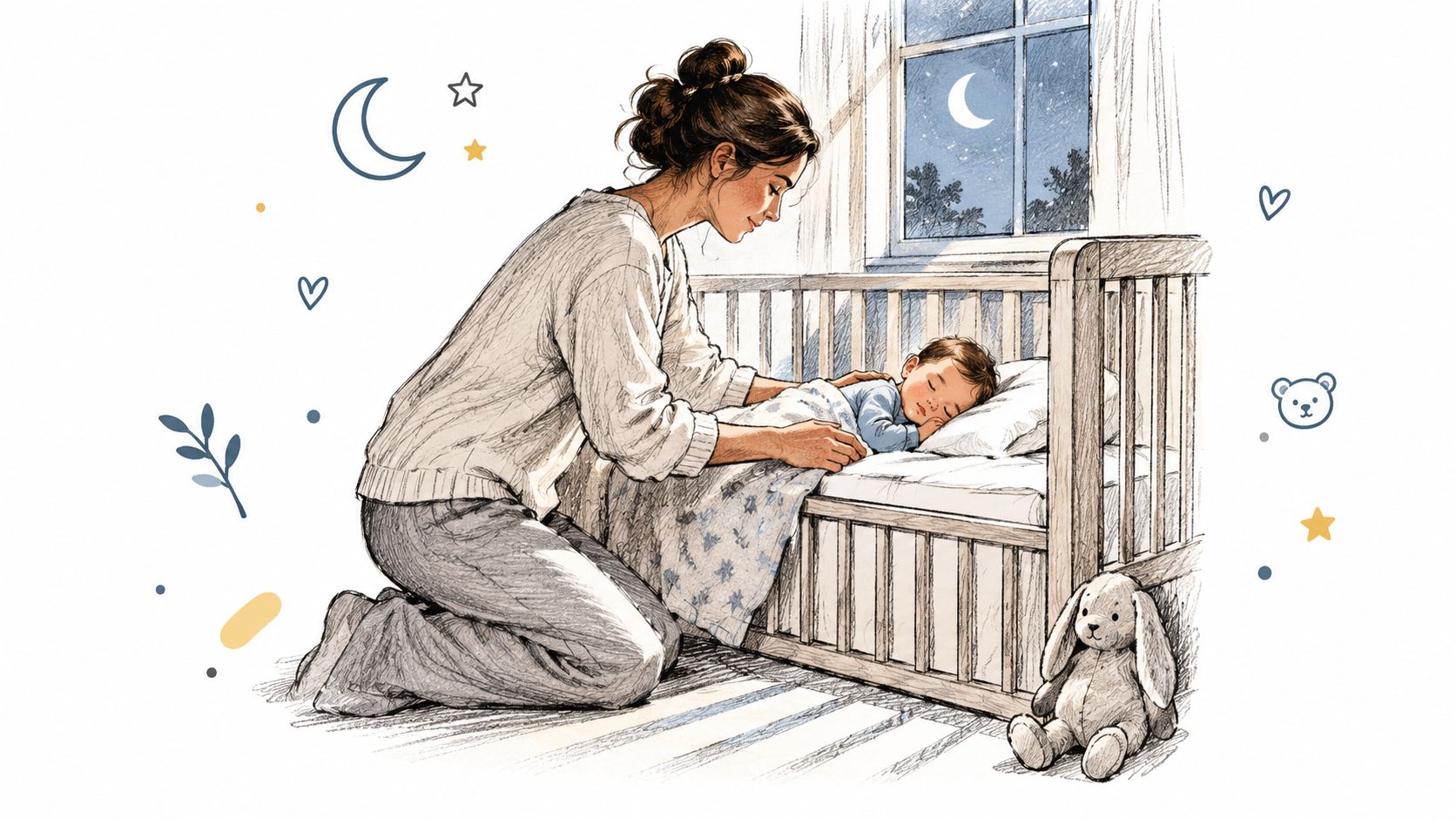
The practical goal is settling skills rather than silence. Your baby gradually learns that the crib is familiar, bedtime follows a predictable pattern, and a short protest can pass without restarting the entire routine. You continue checking for hunger, a wet diaper, discomfort, illness, or a safety concern.
For many families, independent sleep training becomes reasonable around 4 to 6 months, rather than before roughly 4 months. Sleep Foundation's guidance on baby sleep training explains that some clinical recommendations begin around 4 months, while others are closer to 6 months. Development, feeding needs, health, and parental readiness should guide the decision more than a calendar target.
Practical rule: Choose a method you can follow calmly at 3 a.m. A plan that sounds ideal but ends after one night gives your baby little chance to practice.
Expect progress to include protest, uneven nights, and occasional setbacks. Behavioral techniques can reduce short- and medium-term strain, while a randomized trial found no marked long-lasting positive or negative effects on child or parent outcomes at the 5-year follow-up. These outcomes included attachment, emotional behavior, sleep problems, and parent depression, anxiety, or stress. The trial report on PubMed supports a measured conclusion: sleep training does not define your child's personality or your relationship. For responsive ideas that build settling skills, read this guide on how to teach your baby to self-soothe.
Choosing Your Sleep Training Method
There's no universal winner. The right approach depends on your baby's temperament, your tolerance for crying, and whether you can respond consistently at bedtime, during naps, and after night waking.
Common approaches
Graduated extinction, often called the Ferber method, uses planned check-ins. Put your baby down awake, leave the room, and return at fixed or gradually longer intervals. Keep each check-in brief and focused on reassurance rather than fully restarting the bedtime routine, and let the gaps between check-ins grow gradually longer. Exact intervals vary between programs, so choose a schedule you can repeat consistently. For a discussion of extinction-based and more responsive approaches, including a proposal to combine them, see this paper on behavioral sleep interventions in infants.
Sleep fading, sometimes called bedtime fading, starts bedtime close to when your baby naturally falls asleep, then shifts it earlier over time as settling gets easier. The Chair Method is a related gradual approach: you sit near the crib and move a little farther away over successive nights. Both are gradual options that can suit families who want to avoid an abrupt change, though progress may feel slower.
Pick Up/Put Down offers more hands-on reassurance. You pick your baby up when crying, soothe them until calm, then return them to the crib before they're fully asleep. This can feel emotionally manageable, but repeated lifting may overstimulate some babies and make the process lengthy.
| Method | Best For | Typical Timeline | Key Mechanism |
|---|---|---|---|
| Graduated extinction | Parents who want a structured plan | Short-term changes may appear quickly, but consistency is needed | Brief checks at increasing intervals |
| Sleep fading | Babies whose bedtime runs too early for them | Gradual progress over repeated nights | Bedtime matched to sleepiness, then shifted earlier |
| Chair Method | Families who prefer gradual withdrawal | Gradual progress over repeated nights | Parent presence decreases step by step |
| Pick Up/Put Down | Babies who settle with physical reassurance | Often slower and more variable | Calm, return to crib, repeat |
A randomized trial found that graduated extinction and sleep fading reduced sleep latency and night awakenings compared with control (AAFP summary of Gradisar et al.). Separately, an American Academy of Sleep Medicine review reported clinically significant improvement for more than 80% of children in behavioral treatment studies, often maintained for 3 to 6 months (Mindell et al., Sleep 2006). Those results describe structured protocols, not a guarantee for every household. For AAP tips on helping babies 4 months and older learn to fall asleep on their own, see HealthyChildren.org's guide to getting your baby to sleep.
Creating the Perfect Sleep Environment and Routine
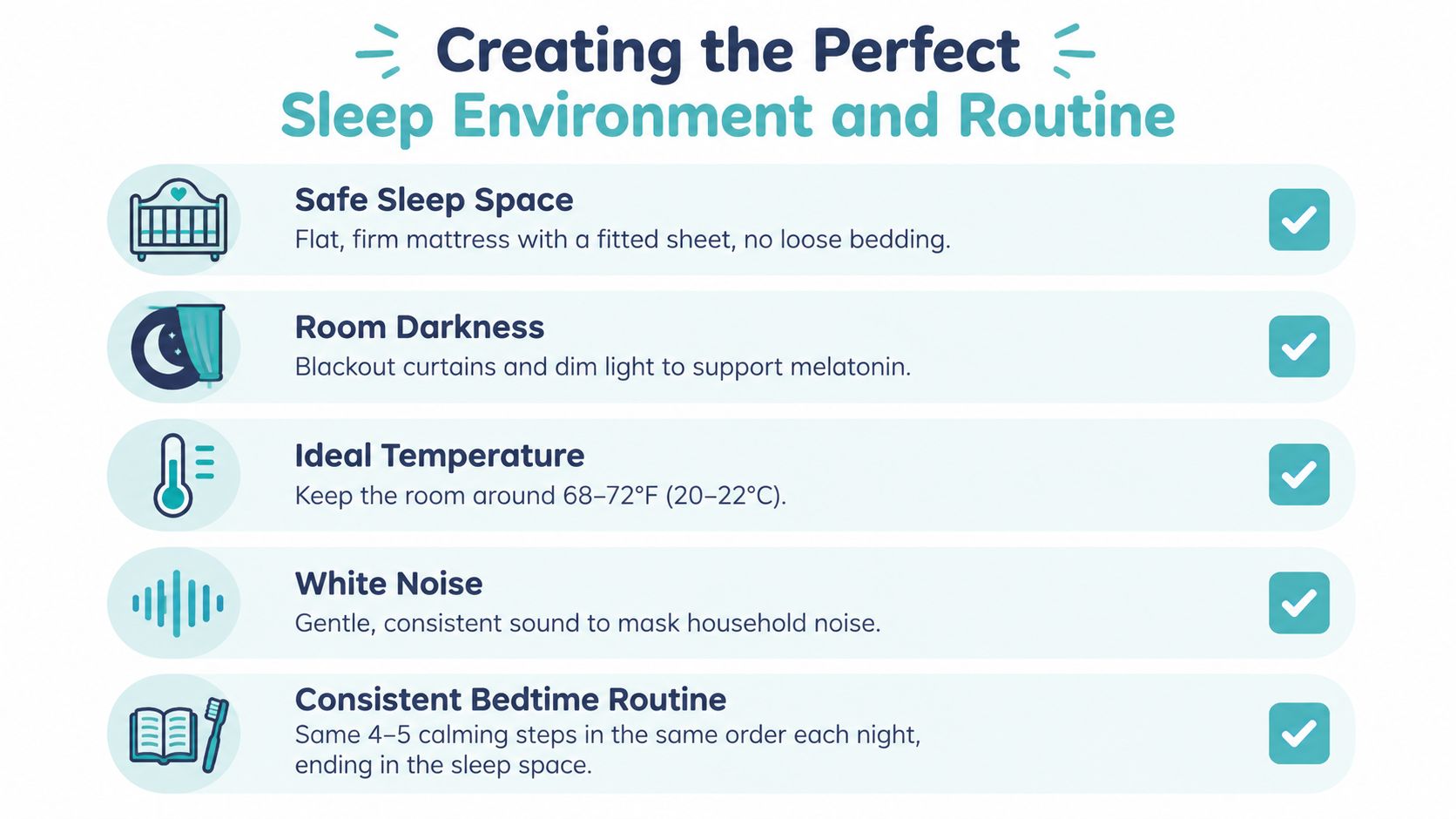
Sleep training works better when the room and schedule aren't fighting you. Start with a flat, firm sleep surface, a fitted sheet, and no loose bedding or soft items in the crib. Keep the space dark, comfortably cool, and predictable. White noise can mask household sounds, but it should remain gentle and placed safely away from the crib.
Build the runway before takeoff
Use the same short sequence each night. For example:
- Feed and change: Finish feeding early enough that feeding isn't the final step every time.
- Wash and dress: A diaper change, sleepwear, and a sleep sack create familiar cues.
- Dim the room: Lower stimulation and keep your voice quiet.
- Read or sing: Choose one brief book or song.
- Into the crib: Place your baby down awake, calm, and comfortable.
The exact routine matters less than the order. A predictable sequence helps your baby recognize what comes next, while an overtired baby may struggle more with any method. Watch wake windows and sleepy cues, then adjust bedtime if your child regularly becomes frantic before the routine ends.
For more on why a consistent, calming bedtime routine matters, see the American Academy of Sleep Medicine's summary of bedtime-routine research. You can also review this practical advice on a safe sleep environment for infants.
The room doesn't need to look like a luxury hotel. It needs to be boring, safe, and consistent. That's the whole sleepy little magic trick.
Navigating Challenges and Setbacks
The first difficult night often arrives just when you think you've made progress. A baby who settled at bedtime may wake during teething, a cold, a developmental burst, or a change of surroundings. That doesn't mean the method failed. It means babies are babies, not tiny sleep robots.
Pause formal training when your child is ill, struggling to breathe, unusually lethargic, or showing signs of pain. Attend to the health problem first. If your baby is hungry, needs a feed recommended by their clinician, or has a soiled diaper, respond to that need. Independent sleep training never replaces ordinary caregiving.
What setbacks look like in real life
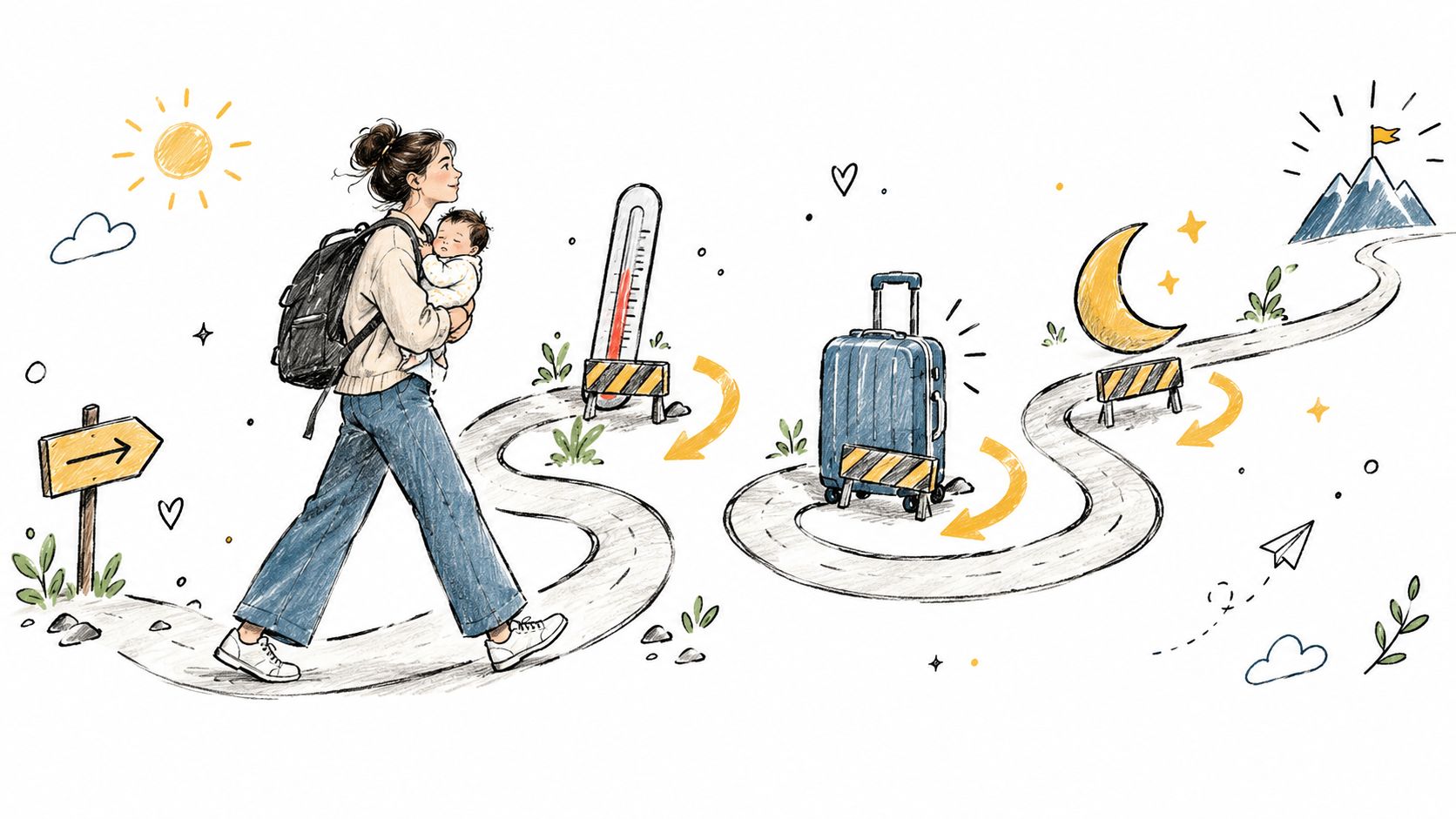
During a sleep regression, keep the bedtime routine and your response pattern as familiar as possible. Avoid changing three variables at once. If you've been using the Chair Method, don't suddenly alternate between extended rocking, timed checks, and bringing your baby into your bed unless that's the safe choice your family has made.
Travel calls for flexibility. Recreate the same sleep cues, bring familiar sleepwear, and expect the first night in a new place to be messy. After returning home, restart the usual routine rather than trying to “make up” for disrupted sleep with a dramatic new plan.
For age-specific context, this sleep regression timeline can help you distinguish a temporary disruption from a broader pattern. The most useful question is not “Did my baby cry?” but “Could I respond consistently while meeting my baby's needs?”
If sleep has suddenly become disrupted, this video from pediatric physiotherapist Emma Hubbard looks at how to identify the reason. Take what fits your family rather than treating any video as a prescription.
Is Sleep Training Safe? Addressing Common Concerns
At 3 a.m., the practical question is rarely whether your baby cried. It is whether the plan helped your baby practice settling while you still responded to genuine needs. Parents often fear that crying during sleep training could harm attachment or emotional development. The longer-term findings discussed earlier are reassuring, but they do not mean every family will experience the same short-term changes.
The more complicated question is whether measured infant sleep changes as much as parents feel it does. In one randomized trial, 96.9% of intervention infants and 97.9% of control infants averaged at least two nightly wakes at 6 weeks, with a risk difference of only -0.2%. Intervention caregivers nevertheless reported better perceptions of infant sleep, mood, sleep quality, sleep-related thinking, and fatigue. The full trial is available through PMC.
That distinction matters: sleep training may reduce parental burden even when actigraphy shows little change in wake frequency, so judge progress by how your nights feel as well as by wake counts. For a short clinical overview, see “Infant sleep training: rest easy?”, an evidence summary for family physicians in Canadian Family Physician.
Safety still depends on reading the child in front of you. Pause and contact your pediatrician if your baby snores loudly, gasps, pauses during breathing, feeds poorly, seems persistently uncomfortable, or has growth or developmental concerns.
Remote coaching and apps may appeal to some parents, but they have generally been studied less than traditional behavioral programs. Use technology as support, not as a substitute for clinical advice or responsive caregiving.
Your Path to Better Sleep Starts Now
Independent sleep training isn't about winning a battle against your baby. It's about giving your child repeated, supported chances to practice settling while protecting your own rest and emotional reserves. Choose one method, prepare the room, keep responses predictable, and judge progress by settling skills and family wellbeing, not by one noisy night.
Start with bedtime, make the plan realistic, and ask for medical guidance when something feels wrong. Small improvements count, including a shorter bedtime, a calmer check-in, or one moment when your baby resettles without your usual sleep prop.
Disclosure
Hiccapop® makes crib mattresses, travel beds, booster seats, and other baby and toddler products mentioned on this website. This article is provided for general informational purposes and is not a substitute for pediatric advice, applicable safety standards, or manufacturer instructions.
Related Products
-
![]()

- Regular price
- $109.99
- Sale price
- $109.99
- Regular price
-
$149.99 - Unit price
- per
Sold out -
![]()

- Regular price
- $149.99
- Sale price
- $149.99
- Regular price
-
- Unit price
- per
Sold out -
![Child sleeping safely in a bed with a white foam Hiccapop bumper installed securely under a gray fitted sheet.]()

- Regular price
- $34.99 - $59.99
- Sale price
- $34.99
- Regular price
-
$39.99 - Unit price
- per
Sold out -
![Grey mesh playard (TravelPod) with a sleeping baby inside, shown next to its compact grey travel bag/backpack.]()

- Regular price
- $139.99
- Sale price
- $139.99
- Regular price
-
$199.99 - Unit price
- per
Sold out -
![Inflatable toddler travel bed featuring a white four-bumper frame, navy blue inflatable mattress, electric air pump, and blue carry bag.]()

- Regular price
- $99.99
- Sale price
- $99.99
- Regular price
-
$99.99 - Unit price
- per
Sold out


Related Products
-
![]()
- Regular price
- $109.99
- Sale price
- $109.99
- Regular price
-
$149.99 - Unit price
- per
Sold out -
![]()
- Regular price
- $149.99
- Sale price
- $149.99
- Regular price
-
- Unit price
- per
Sold out -
![Child sleeping safely in a bed with a white foam Hiccapop bumper installed securely under a gray fitted sheet.]()
- Regular price
- $34.99 - $59.99
- Sale price
- $34.99
- Regular price
-
$39.99 - Unit price
- per
Sold out -
![Grey mesh playard (TravelPod) with a sleeping baby inside, shown next to its compact grey travel bag/backpack.]()
- Regular price
- $139.99
- Sale price
- $139.99
- Regular price
-
$199.99 - Unit price
- per
Sold out -
![Inflatable toddler travel bed featuring a white four-bumper frame, navy blue inflatable mattress, electric air pump, and blue carry bag.]()
- Regular price
- $99.99
- Sale price
- $99.99
- Regular price
-
$99.99 - Unit price
- per
Sold out