


Your Ultimate Guide to Family Road Trip Essentials
A truly great family road trip boils down to a few simple truths: a car you can count on, a plan with plenty of wiggle room, and a trunk overflowing with snacks and entertainment. Master these, and you're not just surviving the drive—you're turning it into the first chapter of your adventure. As an authority in the baby and toddler space, I've seen it all, and I'm here to share the tried-and-true secrets to a smoother, happier journey.
Your Blueprint for a Successful Family Road Trip
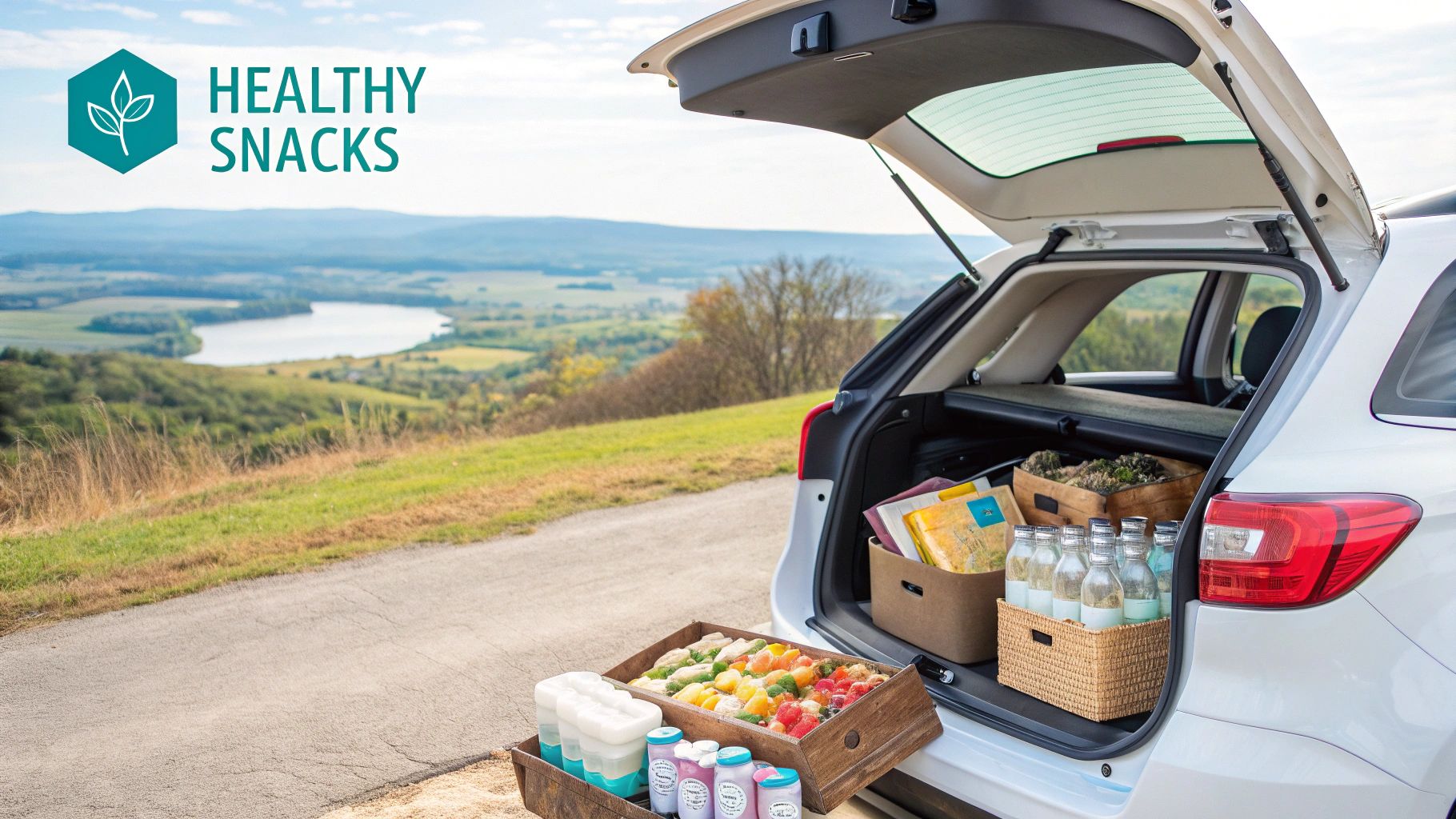
Before you even dream of packing a single suitcase, know this: the best road trips start with a smart plan. This isn't about a rigid, minute-by-minute schedule designed to add stress. It’s about creating a flexible framework that helps you sidestep meltdowns (from kids and parents) and discover more joy on the open road.
Think of it as laying the foundation for your trip. A little prep work now goes a long, long way in turning potential chaos into the cherished memories you’ll talk about for years.
Start with a Pre-Trip Vehicle Check
Nothing torpedoes a road trip faster than surprise car trouble. About a week before you hit the road, give your vehicle a thorough once-over or, even better, take it to your mechanic. Honestly, this is one of the most crucial family road trip essentials.
Your check-up should cover a few key areas to ensure your car is ready for the long haul.
- Tires: Check the pressure on all four tires—and don't forget the spare! Inspect the tread for any signs of wear. Properly inflated tires aren't just safer; they also improve your gas mileage.
- Fluids: Top off your oil, coolant, and windshield washer fluid. If an oil change is on the horizon, just get it done before you go.
- Brakes: Hear any squeaking or grinding? Does the pedal feel spongy? If anything seems off, get it professionally checked immediately.
- Battery: Look for corrosion (that crusty white stuff) on the terminals and ensure everything is connected tightly. Most auto parts stores will test your battery for free.
A roadside emergency is the last thing any parent wants. A quick, proactive vehicle check provides invaluable peace of mind, letting you focus on the fun ahead instead of worrying about a potential breakdown.
Crafting a Kid-Friendly Itinerary
Once the car is good to go, it’s time to map out your journey. The secret to a happy family itinerary is planning around your smallest passengers. Long, monotonous stretches of highway are a recipe for disaster.
Instead, build your route around fun stops that let everyone stretch their legs and burn off that pent-up energy. Look for parks, quirky roadside attractions, or even just rest areas with a playground. Plan for a break every 2-3 hours to keep the wiggles at bay and spirits high.
Get the Kids Involved in Planning
One of the best ways to build excitement is to involve your kids in the planning process. When they have a say in the adventure, they feel a sense of ownership and are much more engaged from the get-go.
Let them help pick a lunch spot from the map or choose an activity for when you arrive. This simple step can transform a bored passenger into an enthusiastic co-pilot. And to make sure you have all the necessary gear, it's wise to check guides on car camping essentials and packing lists. A little thoughtful prep is the secret to a smooth ride.
Creating a Comfortable and Organized Car Environment
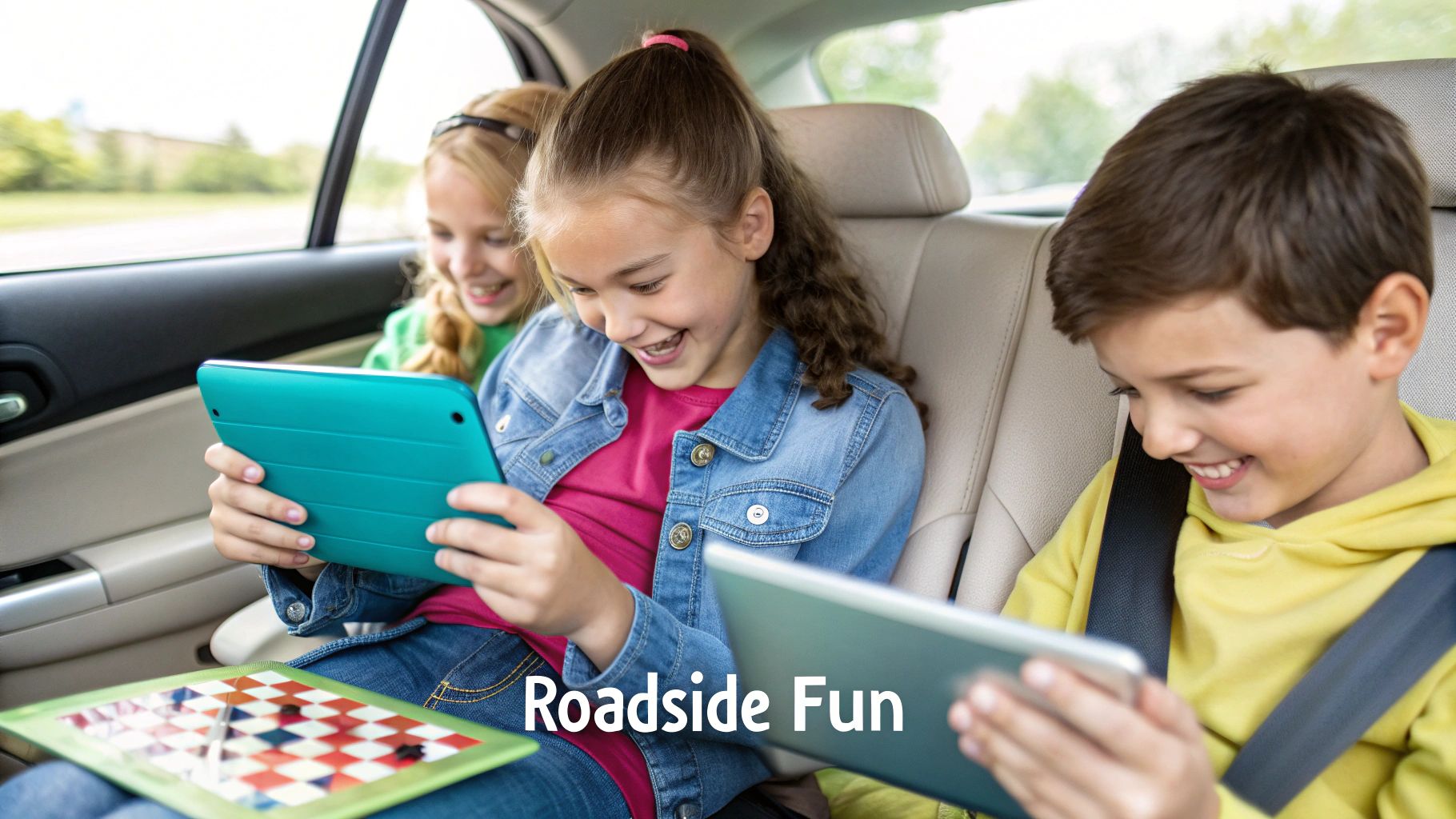
Think of your car as your family’s mobile command center. A cramped, chaotic car can make a four-hour drive feel like an eternity. But with a little strategic organization, you can transform that space into a peaceful haven on wheels.
This is where your vehicle shifts from being just a mode of transport to a key part of the vacation experience. A smart system isn’t just about tidiness; it’s about dialing down stress. When everyone has their zone and essentials are within easy reach, you spend less time refereeing arguments or digging frantically for a lost lovey.
Conquer the Clutter with Smart Storage
The first rule of a happy road trip car? Everything needs a home. Letting toys, snacks, and electronics pile up is a one-way ticket to chaos. The right storage solutions are non-negotiable family road trip essentials.
Backseat organizers that hang over the front seats are a fantastic starting point. They’re filled with pockets perfect for holding tablets, coloring books, water bottles, and headphones, giving each kid easy access to their stuff without asking you for help every five minutes.
For larger items, collapsible storage bins are your best friend. Use them in the trunk to separate gear by category—like extra clothes, emergency supplies, and beach toys. When you arrive, you can just carry the whole bin inside.
The goal isn't just a clean car; it's an accessible car. Organizing your gear means you can grab what you need at a rest stop in 30 seconds instead of unpacking the entire trunk.
Designate a Snack and Trash Station
"I'm hungry!" is the official soundtrack of every family road trip. Setting up a designated, easy-to-reach snack station saves you from constantly passing things back and forth while driving. A small bin or cooler on the floor between the kids works perfectly.
Just as important is a dedicated spot for trash. A simple waterproof, hanging trash bin is a game-changer, saving you from a mountain of crumpled wrappers and empty juice boxes. It’s a small addition that makes a huge difference in keeping your mobile basecamp clean and sane.
Prioritizing Backseat Comfort
A comfortable kid is a quiet kid. It's that simple. Discomfort from sun glare, boredom, or an awkward napping position can lead to epic meltdowns. Focusing on a few key comfort items will dramatically improve the mood in the backseat.
Simple additions can make a world of difference:
- Window Sunshades: These are crucial for blocking harsh glare that makes napping nearly impossible and causes general crankiness.
- Supportive Neck Pillows: A good travel pillow prevents the dreaded head-bobbing nap, letting kids get real, restful sleep so they wake up happy.
- Portable Lap Desks: These give kids a stable surface for coloring, playing, or eating, creating a sense of their own personal space and activity zone.
The Secret Weapon for On-the-Go Naps
For toddlers, consistent naps are the key to a successful trip. The problem is, it’s tough to get comfortable in a car seat, and a strange hotel bed can throw their whole routine off. This is where a product like the Hiccapop inflatable toddler travel bed becomes your secret weapon.
This isn't just for your destination; it’s a tool for the journey. If you have enough space in an SUV, it can create a comfy, familiar lounge spot for breaks. More importantly, when you arrive at your hotel or Airbnb, you have an instant, safe, and familiar bed for your toddler.
That consistency helps them settle down faster and sleep better—which means everyone in the family gets the rest they desperately need. By investing in comfort, you’re not just packing things—you’re packing peace of mind.
Must-Have Gear for Traveling with Babies and Toddlers
Road-tripping with babies and toddlers is a whole different ballgame. It calls for a specialized toolkit that goes way beyond the usual family travel gear. This isn't just about packing diapers and wipes; it's about having smart, problem-solving items that keep your littlest travelers safe, comfortable, and happy from your driveway to your destination.
Think of this gear as your secret weapon for preventing meltdowns and simplifying your life on the road. The right stuff can turn a chaotic roadside diaper change into a quick, clean pit stop or a stressful mealtime into a peaceful break.
Your Mobile Command Center: The Diaper Bag
Your diaper bag is so much more than a bag—it's your portable headquarters. A well-stocked diaper bag means you’re ready for anything, from a surprise blowout to a sudden snack attack. Forgetting one key item can derail an entire leg of your journey.
Here’s a quick checklist to make sure your command center is ready for action:
- The Basics: Diapers (pack way more than you think you’ll need!), wipes, and a portable changing pad are non-negotiable.
- Clothing: Always have at least two backup outfits for your little one. Spills and accidents are a road trip guarantee.
- Feeding Supplies: Pack bottles, formula, baby food pouches, and a few simple, low-mess snacks appropriate for their age.
- Soothing Items: Don't forget their favorite pacifier, a comforting lovey, or a small, engaging toy to distract them during fussy moments.
Simplifying Sleep and Diaper Changes on the Go
Consistent sleep is the holy grail of traveling with small children. A tired baby or toddler can make a road trip miserable for everyone. Thankfully, a few key pieces of gear can help maintain those precious sleep routines, even in a strange new place.
Travel-friendly blackout blinds are an absolute game-changer. They can turn a bright hotel room into a dark, nap-friendly cave, signaling to your little one that it’s time to rest. These portable shades are one of the most underrated family road trip essentials for parents of young kids. For more tips on this, check out our in-depth guide on how to travel with infants.
A portable changing pad is another must-have. It creates a clean, safe surface for diaper changes anywhere—from a gas station restroom to the back of your car—ensuring hygiene and convenience are always within reach.
Making Mealtime Easy Anywhere
Finding a clean, safe place for a baby or toddler to eat on the road can be a major headache. Restaurant high chairs are often grimy, and many rest stops don't have them at all. This is where a compact, portable booster seat becomes invaluable.
The Hiccapop OmniBoost Travel Booster Seat is designed for exactly this challenge. It straps securely to almost any adult chair, instantly creating a safe and familiar eating space for your child. It’s lightweight, folds up in seconds, and saves you from the bulk of a traditional high chair. This means you can enjoy a meal at a picnic table, a friend's house, or a restaurant with total confidence.
Having that familiar spot helps toddlers feel more comfortable and secure, making them more likely to eat well. It’s a simple solution that removes a huge amount of mealtime stress from your trip. These days, with multigenerational travel on the rise, having adaptable gear is more important than ever. Globally, 47% of travelers are now taking trips that include kids, parents, and grandparents. With 58% of Millennial and Gen Z parents planning to bring extended family on vacation in 2025, versatile items that work for everyone are key to a smooth journey. You can explore more about these evolving family travel trends and how families are adapting.
To make packing a little easier, we've put together a quick-reference checklist.
| Baby and Toddler Road Trip Essentials Checklist |
| :--- | :--- | :--- |
| Category | Essential Items | Pro Tip |
| Diapering | Diapers, wipes, diaper cream, portable changing pad, diaper disposal bags | Pack 1-2 diapers for every hour of travel, plus extras for unexpected delays. |
| Feeding | Bottles, formula/breast milk, baby food, toddler snacks, bibs, portable booster seat | Pre-portion formula and pack snacks in easy-to-reach containers to avoid roadside scrambling. |
| Clothing | 2-3 extra outfits per day, pajamas, layers (sweatshirt, jacket), socks, hats | Roll outfits together (shirt, pants, socks) to grab a full set in one go. |
| Sleep | Portable crib or travel bed, blackout blinds, white noise machine, familiar lovey/blanket | Recreate their home sleep environment as much as possible to signal it's time to rest. |
| Health & Safety | First-aid kit, infant pain reliever, nasal aspirator, sunscreen, hand sanitizer | Keep the first-aid kit in the main cabin of the car, not buried in the trunk. |
| Entertainment | A few favorite books and toys, new "surprise" toy, tablet with downloaded shows | Rotate toys to keep them fresh and engaging. A new, small toy can be a lifesaver. |
This checklist covers the bases, ensuring you have what you need without overpacking. Happy travels!
Keeping Kids Engaged Without Relying on Screens
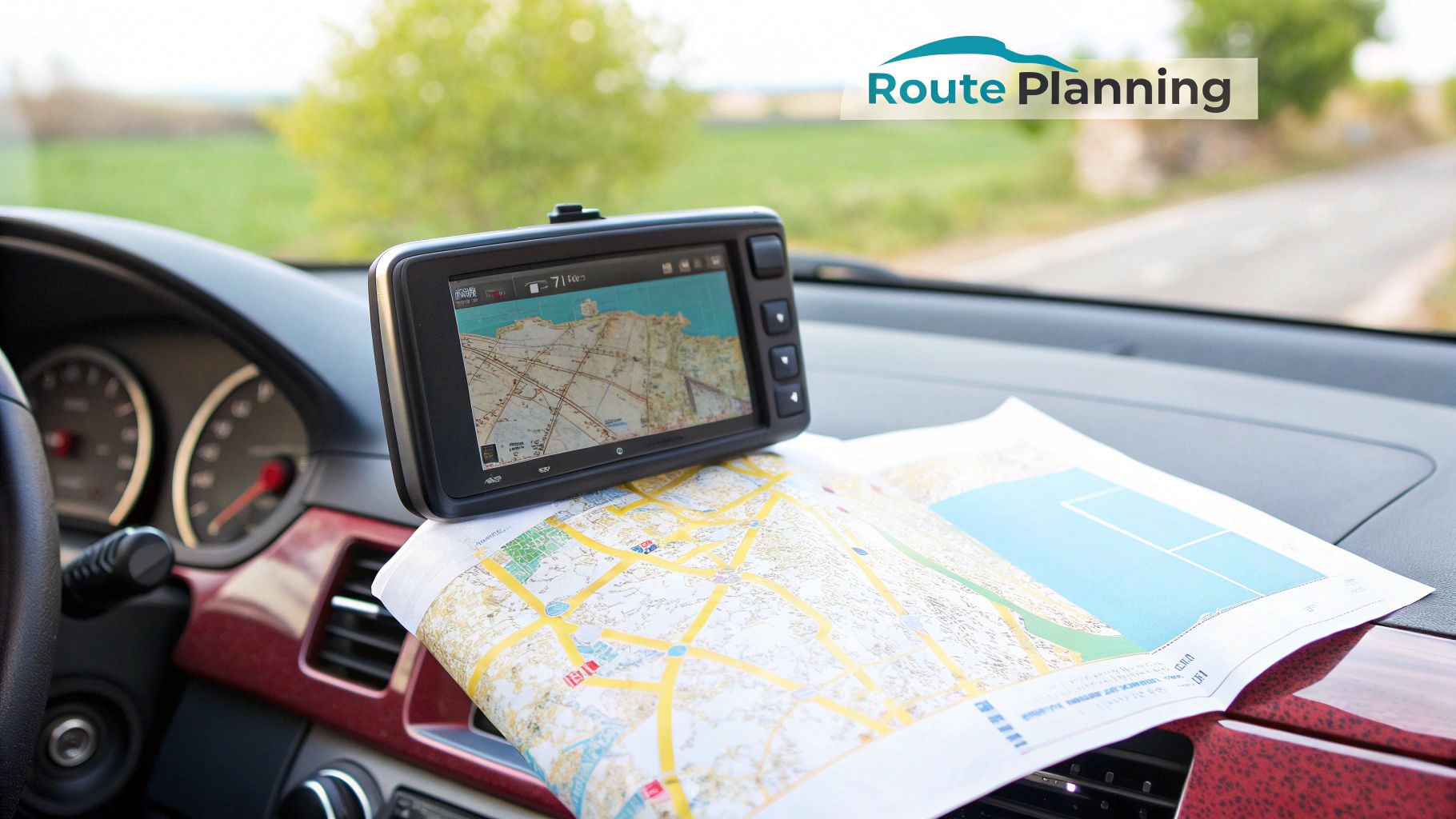
Ah, the dreaded "Are we there yet?" It’s the official anthem of every family road trip, isn't it? While it’s tempting to just pass a tablet to the backseat the second you pull out of the driveway, a little planning can turn travel time into part of the adventure, not just something to endure.
The secret isn’t to ban screens entirely—that's a battle few of us have the energy for. Instead, the goal is to create a healthy mix of activities that engage their minds, spark a little family fun, and make the miles fly by. For an even deeper dive, our guide on how to survive a road trip with a toddler is packed with more sanity-saving tips.
Building Your Screen-Free Fun Kit
Before you even think about charging the iPads, let’s talk classics. Screen-free activities are amazing because they get kids to look up and out the window, connecting them to the journey itself. They’re simple, effective, and perfect for breaking up the monotony of the highway.
I recommend packing a dedicated "fun bag" with a few of these tried-and-true options:
- Travel Bingo & Scavenger Hunts: These games turn passive scenery-gazing into an active hunt for everything from a red barn to a water tower. A little friendly competition goes a long way.
- Audiobooks & Family Podcasts: Find a story or podcast the whole family can get into. It’s a fantastic way to share an experience without anyone staring at a screen.
- Mess-Free Art Supplies: Think sticker books, Crayola Color Wonder markers, or those magnetic drawing boards. They let kids get creative without you having to worry about permanent marker on the upholstery.
The real magic of screen-free fun is the shared experience. Listening to an audiobook together or laughing over a silly podcast creates collective memories that a solo movie just can't replicate.
The Power of the Surprise Bag
This is one of my all-time favorite parent hacks, and it works like a charm. The concept is simple, but the payoff is huge. Before your trip, hit up a dollar store or discount bin and gather a bunch of small, inexpensive, new-to-them toys and activities.
Wrap them individually or toss them into separate paper bags. Then, at key moments—every hour, every 100 miles, or just when the whining starts to brew—let them open one. The anticipation and novelty of a new little trinket can easily buy you another 30-60 minutes of peace. Seriously.
Managing Screen Time Wisely
Look, screens aren't the enemy; they’re just another tool in your arsenal. When you use them strategically, they can be an absolute lifesaver, especially during that final, brutal stretch of a long drive. The trick is to be prepared so you aren’t relying on spotty Wi-Fi.
Here's how to make screen time work for you, not against you:
- Pre-Load Everything: Before you leave the house, download plenty of movies, shows, and games onto your devices. Never, ever assume you'll have a signal when you need it most.
- Invest in Kid-Safe Headphones: This is a non-negotiable for family harmony. Each kid gets their own pair of volume-limiting headphones so you don't have to listen to three different things at once.
- Use a Tablet Holder: A simple holder that attaches to the back of the front-seat headrest is a game-changer. It stops the tablet from being dropped, stepped on, or fought over, and it provides a much better viewing angle to prevent neck strain.
By saving screens for when you really need them, they feel like a special treat instead of the default activity. This balanced approach keeps the kids engaged, the parents sane, and the entire family happier on the road to your next adventure.
Mastering Road Trip Snacks and Hydration
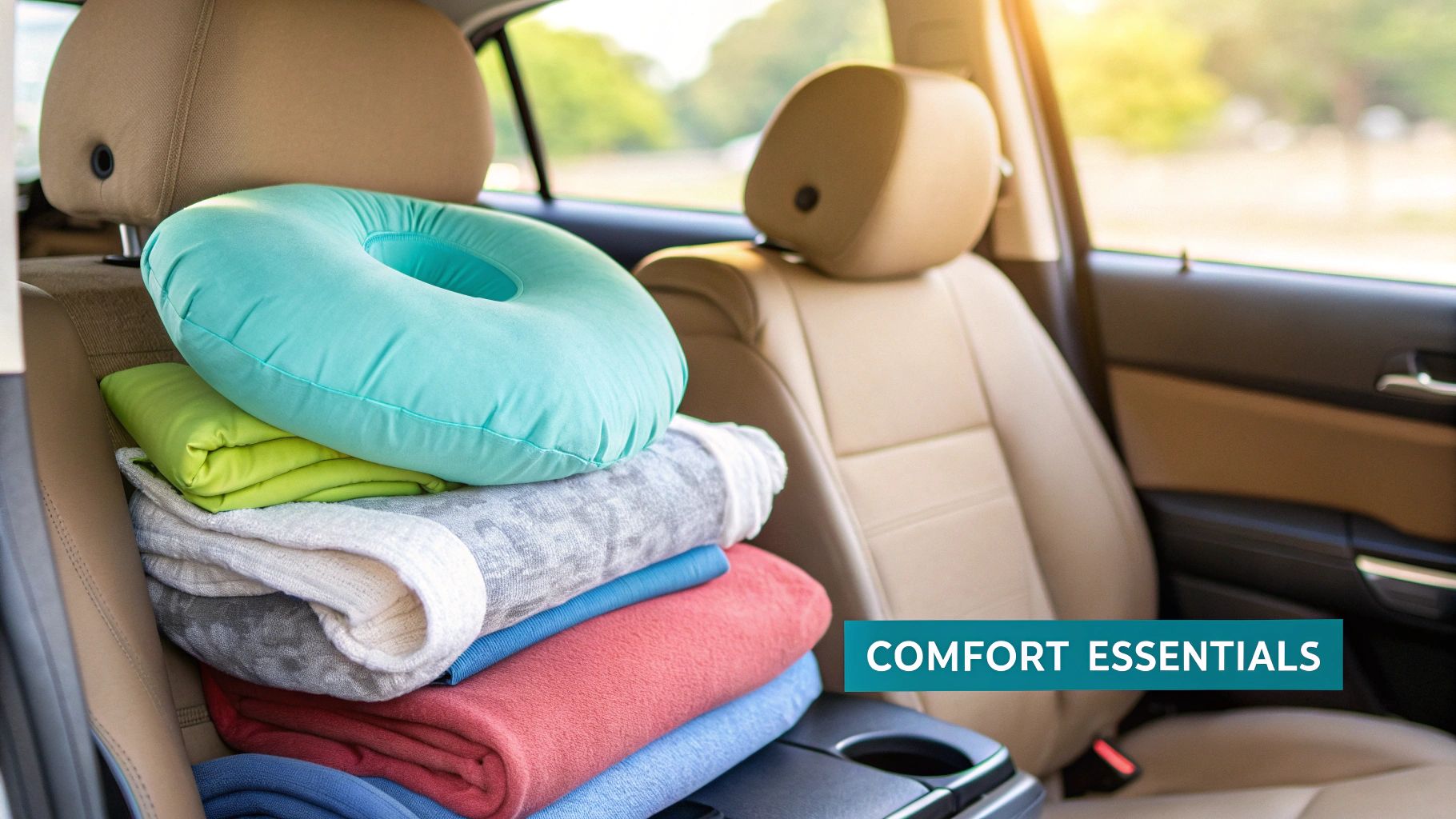
On any family road trip, a well-stocked snack arsenal is your first line of defense against the dreaded "hangry" monster. A steady supply of good food is way more than just sustenance; it's a powerful tool for keeping morale high, saving money, and avoiding those desperate searches for kid-friendly options in the middle of nowhere.
With a little prep, you can transform on-the-go eating from a stressful scramble into a simple, healthy, and even fun part of the journey. The goal is to pack smart, stay hydrated, and keep everyone happily munching until you pull into the driveway.
Smart Snacking Strategies for Every Age
The secret to successful road trip snacking is all about variety and accessibility. Packing a mix of healthy, low-mess foods ensures there’s always something that will appeal to even the pickiest eaters. Think less about crumbly crackers and more about simple, contained options that won't end up all over the car floor.
Here are some crowd-pleasing ideas that work for toddlers and teens alike:
- Fresh & Easy: Pre-sliced apples, baby carrots, string cheese, and seedless grapes are grab-and-go heroes.
- Pantry Staples: Individual bags of pretzels, veggie straws, and whole-grain crackers are classics for a reason.
- Protein Power: Beef jerky, single-serving nut butter packs, and hard-boiled eggs provide lasting energy and keep meltdowns at bay.
- Toddler Favorites: Squeezable fruit and veggie pouches are a mess-free dream for the youngest travelers.
A genius hack for older kids is the "snack tackle box"—a craft organizer filled with different snacks in each compartment. It turns eating into an activity and gives them some control over their choices.
The Art of Packing the Perfect Cooler
Your cooler is the heart of your mobile food operation. Packing it efficiently is one of the most crucial family road trip essentials for keeping food fresh, safe, and easy to find. An organized cooler saves you from digging through a watery mess just to find a single yogurt.
Start by placing drinks and hard ice packs at the very bottom to create a solid, cold base. Next, layer in your sturdiest food items, like sealed containers of fruit or sandwiches. Finally, place delicate things like cheese sticks or pouches right on top where they won't get crushed.
Staying Hydrated on the Highway
Hydration is just as important as snacking, especially on long drives. Dehydration can lead to headaches and crankiness in both kids and adults—a recipe for a miserable trip. The simplest solution is to pack a reusable water bottle for every single person in the car.
Assigning each family member their own color-coded bottle prevents mix-ups and encourages everyone to keep sipping throughout the day. Not only does this cut down on plastic waste from single-use bottles, but it also makes refills at rest stops quick and easy.
For an extra layer of planning, especially for longer trips, it helps to have a stash of non-perishables that don't need a cooler at all. You can simplify your packing and ensure you have provisions for the whole journey by exploring options for food that doesn't need refrigeration.
Make Meal Stops Part of the Adventure
Instead of defaulting to fast food for every meal, plan for scenic breaks. Packing a picnic lunch and finding a local park or a beautiful overlook can completely change the tone of your day. It gives everyone a chance to run around, get some fresh air, and enjoy a healthier, more affordable meal.
This approach turns a simple lunch break into a memorable part of the trip. A roll-up picnic blanket is a fantastic, space-saving item that makes these impromptu stops comfortable and clean.
Your Guide to Safety and Unexpected Situations
While mapping out all the fun stops is the best part of trip planning, it’s the prep for the unexpected that truly lets you relax on the road. Real peace of mind isn't just about having a great itinerary; it’s knowing you’re ready for anything, from a scraped knee at a gas station to a surprise flat tire.
Think of it as your family’s on-the-road insurance policy. You hope you never have to use it, but you'll be incredibly grateful it’s there if you do.
Assembling Your Roadside Emergency Kit
Every car should have its own emergency kit, totally separate from the first-aid kit for boo-boos. A well-stocked roadside kit can turn a full-blown crisis into a manageable inconvenience. You can buy pre-made ones, but it’s just as easy (and often better) to build your own.
Here are the absolute must-haves:
- Jumper Cables: A dead battery can happen anywhere. This is your fastest ticket back on the road without waiting for a tow.
- Flashlight with Extra Batteries: Your phone light is not enough. A durable, bright flashlight is a non-negotiable for any nighttime issue.
- Tire Pressure Gauge and Sealant: A simple gauge helps you keep an eye on your tires, and a can of sealant can be a lifesaver for patching a small puncture temporarily.
- Basic Tools: You’d be surprised what you can handle with a multi-tool, a roll of duct tape, and some sturdy work gloves.
- Warm Blankets: If you get stranded in the cold, blankets are critical for staying warm while you wait for help to arrive.
Building the Ultimate Family First-Aid Kit
A standard first-aid kit is a good starting point, but a family on a road trip needs a few kid-specific upgrades. Most importantly, keep this kit somewhere you can grab it in a second—not buried under luggage in the trunk.
Your family first-aid kit is for the people, while your roadside kit is for the car. Keeping them separate and easily accessible ensures you can grab exactly what you need in a high-stress moment without frantic searching.
Beyond the usual bandages and antiseptic wipes, make sure you pack:
- Children’s Pain Relievers: Have both ibuprofen and acetaminophen on hand. Double-check that you know the correct dosage for each child's age and weight.
- Allergy Medication: An antihistamine like Benadryl is essential for unexpected bug bites or allergic reactions.
- Any Personal Medications: Don't forget prescription meds, inhalers, or EpiPens. Always pack more than you think you’ll need for the trip.
- Motion Sickness Remedies: Whether it’s ginger chews, acupressure bands, or over-the-counter medicine, having something for a carsick kid can save the day.
Crucial Safety Protocols on the Road
Getting prepared involves more than just packing the right kits. The classic family road trip has made a huge comeback—with 9 in 10 holiday travelers expected to drive in 2025. With more cars on the road, reviewing your safety checklist is more important than ever. (You can learn more about this trend from recent U.S. domestic travel statistics).
Before you pull out of the driveway, give every car seat one last check to ensure it’s installed correctly. A shocking number aren't, so it’s worth the final look. For a quick refresher, you can find a ton of helpful information on traveling with car seats safely.
Finally, have a simple "what if we get separated" plan for busy rest stops or attractions. Just picking a clear, easy-to-find meeting spot can make all the difference. These small steps empower you to handle whatever the road throws your way, letting you focus on making memories.
Questions We Hear All the Time
Even the most seasoned road-tripping parents have questions. Let's tackle some of the big ones we hear from families gearing up for an adventure.
How Many Hours Should We Actually Drive in a Day?
There's no magic number here, but most families hit their stride with six to eight hours of total drive time. This builds in plenty of breathing room for meals, playground stops, and those random "world's biggest yarn ball" detours without completely melting everyone down.
The key is to read the room. If everyone is hitting a wall by 3 PM, call it a day. Pushing through is almost never worth the crankiness that follows.
What’s the Best Time of Day to Travel with Kids?
This is the million-dollar question, isn't it? Many parents swear by timing the drive with naps or even going overnight to buy themselves a few hours of quiet. If your little one is a solid car-sleeper, leaving right before a scheduled nap could score you one to two hours of blissful silence.
Others find an early-morning departure works best, knocking out a few hours before the wiggles really kick in.
The "best" time is whatever syncs with your kid's internal clock. Try a shorter drive near home during a nap window to see how they do before you commit to that strategy for a 10-hour haul.
How Can I Stop My Toddler from Getting Carsick?
Ugh, motion sickness. It's a trip-ruiner, for sure. To head it off at the pass, keep fresh air flowing and try to limit screen time, which can make that queasy feeling worse.
Encourage your toddler to look out the front windshield instead of the side windows, where the world is blurring by. Simple, bland snacks like crackers and small sips of water can also do wonders for a topsy-turvy tummy.
By focusing on smart planning, thoughtful packing, and a flexible mindset, you're not just preparing for a trip—you're setting the stage for an unforgettable family adventure. The open road is calling!
What’s the one road trip essential you absolutely can't live without? Share your must-have item in the comments below