


A Parent's Guide to Crib Mattress Safety Standards
When you’re gearing up for a new baby, the shopping list can feel as long as a sleepless night. But if there’s one item that deserves a spot at the very top, it’s the crib mattress. I get it—navigating all the labels and jargon feels like cramming for a final exam. So let me give you the cheat sheet: strict, mandatory federal crib mattress safety standards exist to protect your little one.
These aren’t just friendly suggestions; they're the non-negotiable rules of the road for safe sleep. Every single mattress legally sold in the U.S. has to clear a high bar for safety, which gives you a fantastic head start.
The Foundations of a Safe Sleep Environment
When you're bleary-eyed from a 3 a.m. feeding, the last thing you want to worry about is whether your baby’s mattress is safe. The great news is, you don’t have to start from scratch. Federal regulators have already done the heavy lifting by creating a safety net for parents.
Think of it like building a house. You wouldn't dream of picking out throw pillows before you knew the foundation was solid, right? These federal standards are that foundation, focusing on the core, non-negotiable principles that keep your baby secure while they snooze.
Why These Standards Matter So Much
These rules weren't just pulled out of thin air. They’re the direct result of years of safety data and a serious commitment to preventing tragic, avoidable accidents. The proof is in the pudding—or in this case, the statistics.
After these federal standards took full effect, deaths linked to crib hardware and structural failures dropped by an incredible 73-75% compared to the years before the regulations. That’s a staggering improvement, and it shows just how critical these rules are for keeping babies safe.
The Core Pillars of Mattress Safety
Navigating the world of baby gear can feel like learning a new language. But when it comes to crib mattress safety, it really boils down to just a few key ideas. Nailing these will give you the confidence that you’re making the right choice for your little one.
To make it even simpler, I've broken down the absolute essentials into this quick-reference table.
The Four Pillars of Crib Mattress Safety
| Safety Pillar | What It Means | Why It's Critical |
|---|---|---|
| Unyielding Firmness | The surface must be very firm and flat. It should not sink or sag under your baby’s weight. | A soft surface can conform to a baby's face, creating a dangerous pocket of air and increasing the risk of suffocation. |
| A Snug, Gap-Free Fit | The mattress must fit tightly inside the crib frame, leaving no space around the edges. A good test is the "two-finger rule"—if you can fit more than two fingers between the mattress and the crib side, it's too small. | Gaps create an entrapment hazard, where a baby’s head, limbs, or body could get stuck, leading to serious injury or suffocation. |
| Structural Integrity | The mattress must be well-made, with durable seams, strong edge support, and no loose threads or parts. | Poor construction can lead to premature sagging, which compromises firmness, or create choking hazards from broken components. |
| Material Safety | Materials must meet federal flammability standards, ideally without harmful chemicals. Look for clean, non-toxic components. | This ensures the mattress is safe from fire hazards while also limiting your baby's exposure to potentially toxic chemicals during sleep. |
These pillars are the absolute foundation for creating a safe sleep environment for infants. By focusing on them, you can cut through the marketing noise and zero in on what truly matters.
Understanding the Must-Haves: Federal Safety Rules
Every single crib mattress sold in the United States has to pass a tough set of mandatory safety tests. This isn't optional or a "nice-to-have" feature; it’s the law, overseen by the Consumer Product Safety Commission (CPSC) to establish a non-negotiable safety floor for every baby.
Think of it like the safety rating on a car. Before a vehicle is ever sold, it has to prove it can protect you in a crash. Similarly, a crib mattress must prove it's safe enough for the nursery before it ever reaches a store shelf. This legal framework, known officially as 16 CFR Part 1241, is your first and most important line of defense against a dangerous product.
What the CPSC Rules Actually Test For
So, what’s in this government rulebook? While the official documents are dense and technical, what they test for is actually pretty straightforward. The rules are designed to prevent the most common and dangerous crib-related hazards, turning complex engineering tests into real-world protection for your baby.
These federal standards got a major update in 2022, making them even more comprehensive. Now, manufacturers are required to put their mattresses through a gauntlet of five key tests: firmness, impact durability, corner gap prevention, proper sheet fit, and for innerspring models, coil compression. The focus on firmness is especially critical, as years of research have shown that soft sleeping surfaces are a major risk factor for SIDS and suffocation. You can learn more about how these new mattress safety standards protect your baby.
Firmness: A Non-Negotiable Safety Feature
If there's one test that matters more than any other, it's the firmness test. This isn't about comfort the way adults think of it. For babies, it's about survival. The test makes sure the mattress surface is so firm that if a baby rolls onto their stomach, their face won't sink in and obstruct their breathing.
It's like walking on solid ground versus walking through deep mud. Solid ground supports you completely. A firm mattress does the same for a baby. A soft mattress, on the other hand, can create a dangerous depression around a baby's mouth and nose, making it difficult for them to breathe.
Key Takeaway: The law requires a firm, flat surface for a reason. You should never add soft toppers, thick pads, or any loose bedding to a crib. Doing so completely undermines the built-in safety of a federally compliant mattress.
Durability and a Snug Fit: The Other Key Tests
Beyond firmness, the federal crib mattress safety standards look at the mattress's overall construction and, just as importantly, how it fits inside the crib. These tests are there to make sure the mattress can withstand real-life use from a growing baby and doesn't create new hazards over time.
Here’s a quick rundown of the other mandatory hurdles a mattress must clear:
- Impact Durability: This test basically mimics a toddler using their crib as a trampoline. It ensures that jumping or falling won't cause the mattress's internal structure to break down, tear, or create a dangerous lump or sharp point.
- Corner Gap Prevention: The rules get incredibly specific about how the corners of the mattress must fit into the corners of the crib. This is all about preventing dangerous gaps where a baby’s head, arms, or legs could get trapped.
- Proper Fit: Similar to the corner test, this one makes sure the entire mattress fits tightly against all four sides of the crib. You may have heard of the "two-finger test" for checking the fit at home, but this regulation ensures the mattress is manufactured to the right dimensions from the very beginning.
- Safe Sheet Fit: The government even regulates how a standard fitted sheet must interact with the mattress. A poorly fitting sheet can cause the corners of a mattress to curl inward, creating the very gaps the other tests are meant to prevent. This test ensures sheets fit snugly without compromising safety.
All these mandatory rules work in concert to create a secure sleep space. They represent the absolute minimum safety you should demand, giving you a solid, reliable foundation for your baby's crib.
Going Beyond The Basics With Voluntary Certifications
Think of federal laws as the absolute bare minimum for crib mattress safety. They cover the non-negotiables—firmness, a snug fit in the crib, and basic durability—to ensure every mattress sold in the U.S. provides a fundamentally safe sleep surface. But what about the things you can't see, like the chemicals used to make the mattress or the impact on your nursery's air quality?
That's where voluntary, third-party certifications come in.
Here’s a good way to look at it: federal standards are the seatbelts and airbags in your car. They're required by law and are absolutely critical. Voluntary certifications are like the fancy new driver-assist features—blind-spot monitoring or automatic braking. They aren’t legally required, but they offer another powerful layer of protection and peace of mind.
Manufacturers don't have to get these certifications. They choose to submit their products for tough, independent testing to prove they go above and beyond the baseline legal requirements for material safety.
Why Air Quality In The Nursery Matters
Newborns and infants spend up to 16 hours a day sleeping, which means they're breathing in the air in their nursery for long stretches. The materials in their mattress can release tiny, invisible particles known as Volatile Organic Compounds (VOCs) into that air. You might hear this process called "off-gassing."
While some off-gassing from new products is normal and harmless, certain VOCs found in foam, glues, and chemical flame retardants are a real concern for a baby's developing system. This is precisely why certifications focusing on low chemical emissions are so valuable—they give you confidence that the air your baby is breathing is as pure as possible.
This graphic shows the core physical tests that every single mattress must pass to be sold in the U.S.
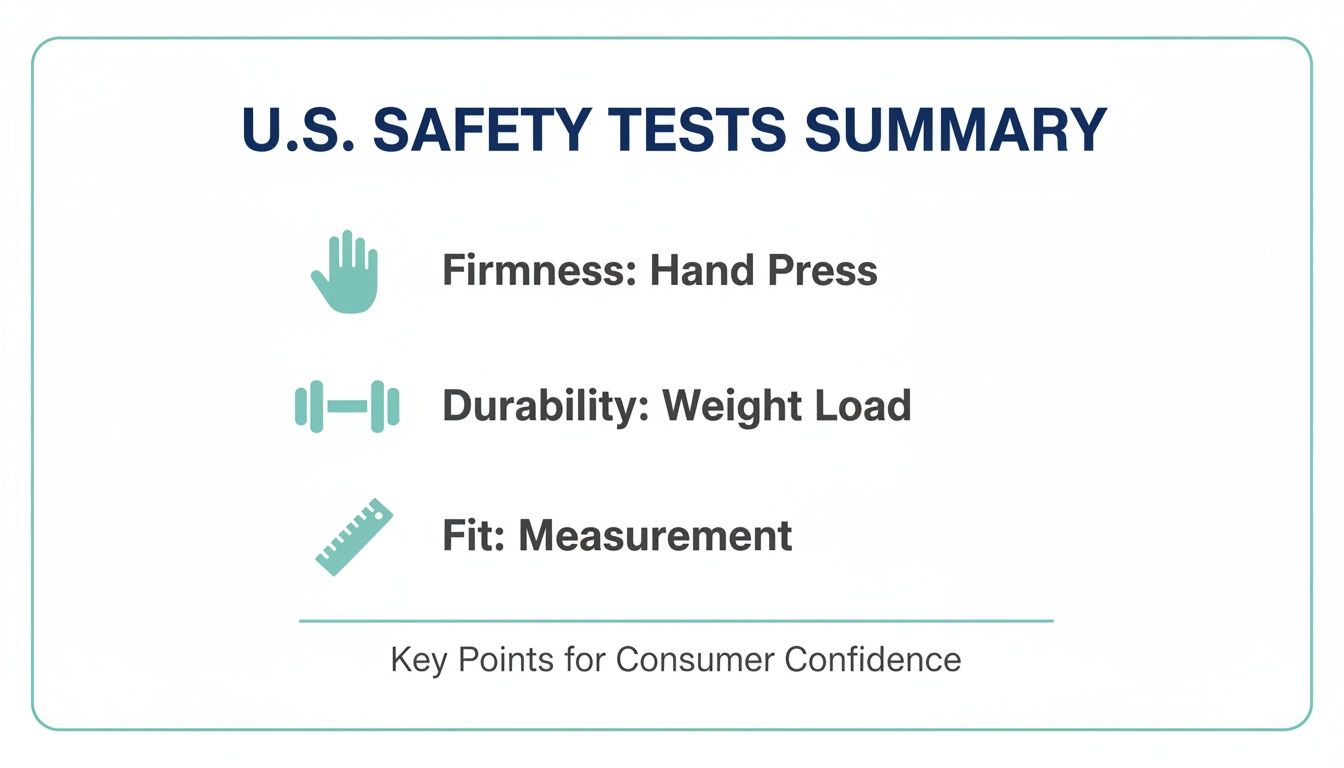
These mandatory checks for firmness, durability, and fit create the safety floor. The voluntary certifications we’re talking about build on top of that foundation, adding a crucial layer of chemical safety.
Decoding The Most Common Certification Labels
When you start shopping, you’ll see a bunch of different logos and acronyms on the packaging. It can feel like alphabet soup at first, but once you know what the main ones mean, you'll feel so much more empowered.
To make it easier, here's a quick guide to some of the most trusted certifications you're likely to see.
Common Crib Mattress Certifications Explained
This table breaks down what each major certification actually looks for, so you can quickly see how they protect your baby.
| Certification | What It Tests For | Primary Benefit for Your Baby |
|---|---|---|
| GREENGUARD Gold | Low emissions of 10,000+ chemicals and VOCs | Cleaner, healthier indoor air quality in the nursery |
| CertiPUR-US® | Content of polyurethane foam | Ensures foam is made without ozone depleters, heavy metals, formaldehyde, and certain phthalates |
| Made Safe | Thousands of known harmful chemicals across the entire product | Verifies the mattress is made without a long list of ingredients suspected of harming human or ecosystem health |
| GOLS | 95% organic content in latex | Guarantees the latex is sourced from organic, sustainable materials |
These labels aren't just marketing fluff; they are objective, science-backed proof from an unbiased third party. They show that a company has gone the extra mile.
So, when you see a GREENGUARD Gold seal, you know the mattress has been scientifically proven to contribute to cleaner air—a huge plus for a sensitive newborn. If a mattress has foam, the CertiPUR-US® logo is your shortcut to knowing it was made without a list of common chemical culprits like formaldehyde, heavy metals, and certain regulated phthalates.
By getting familiar with these labels, you can cut through the noise and find the best non-toxic crib mattress with confidence, knowing you've chosen a product that truly prioritizes your baby's health and well-being.
Your Practical At-Home Safety Checklist
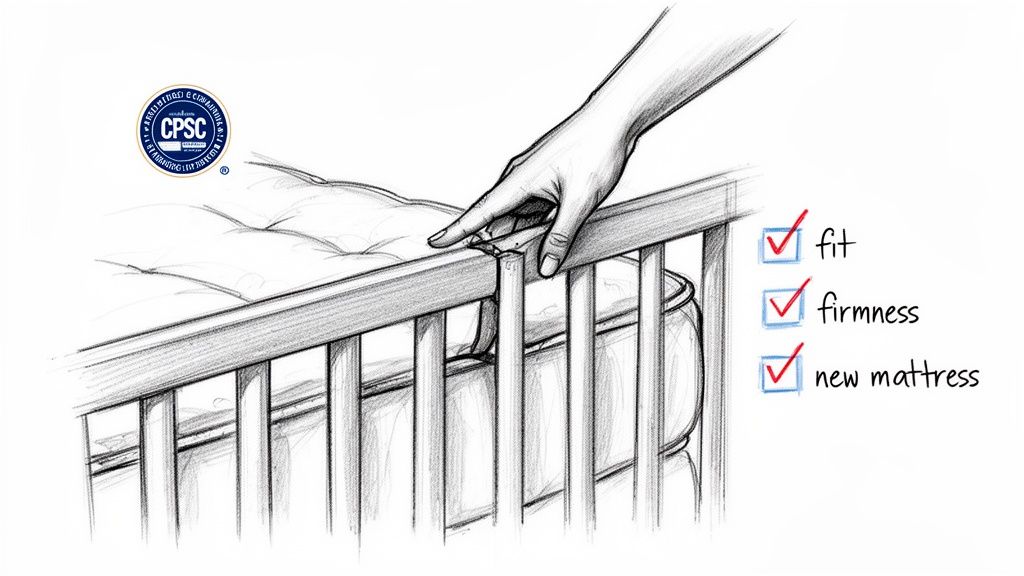
All the information on regulations and standards is great, but how do you put it into action? Ultimately, you are the final inspector of your baby's sleep space. This simple, hands-on checklist will help you confirm that your crib and mattress are truly safe, whether you're standing in a store aisle or setting up the nursery.
Think of it as your own personal safety audit. Each step is quick, easy, and directly addresses the core safety principles we've been talking about.
The Snug Fit Two-Finger Test
This is, without a doubt, the most important at-home check you can do. A mattress that's too small for the crib frame creates dangerous gaps, which are a serious entrapment and suffocation risk. Luckily, checking the fit is incredibly simple.
First, place the mattress inside the empty crib. Shove it all the way into one corner. Now, on the opposite sides, try to slide your fingers into the space between the edge of the mattress and the crib frame.
If you can fit more than two fingers (which is about one inch) into that gap, the mattress is too small and unsafe. A properly sized mattress will be very snug, leaving almost no room to spare.
This test is your best tool for confirming you’re meeting one of the most critical crib mattress safety standards.
Check the Labels for Compliance
You don't need to be an engineer to find a compliant mattress—the manufacturer has to tell you right on the product. Look for a label on the mattress itself or its packaging that clearly states it conforms to federal safety standards, often mentioning the CPSC or specific ASTM rules.
This label is your guarantee that the mattress has passed all the mandatory tests for things like firmness, durability, and construction. It’s a legal declaration of safety, so never buy a mattress that doesn't have this information clearly visible.
The At-Home Firmness Check
While labs use machines for official firmness testing, you can get a very good sense of it yourself. Just press your hand down firmly in the center of the mattress and then again near the edges.
Here’s what you want to feel:
- Strong Resistance: The surface should push back against your hand, not sink down or conform to its shape.
- Quick Snap-Back: When you lift your hand, the surface should pop right back to its original flat shape, leaving no indentation.
- No Sagging: The mattress should feel consistently firm across the entire surface, with no soft spots, especially around the edges where a baby might roll.
This simple press test helps ensure the surface is firm enough to prevent a suffocation risk. A safe baby mattress will feel much firmer than what an adult would find comfortable, and that’s a good thing. If you're comparing options, our guide on the best crib mattresses for newborns offers more detailed insights on firmness.
Inspect for Overall Quality and Cleanliness
Before you put on the first sheet, give the mattress a final once-over. Make sure the waterproof cover is fully intact with no rips or tears, check that the seams are tight, and look for any loose threads. Also, find the small air vents on the sides and confirm they are open and not blocked by leftover plastic from the packaging.
When it comes to cleaning, be sure to use child-safe cleaning products to avoid exposing your baby to harsh chemicals. A clean, well-maintained mattress is a key part of a safe sleep environment. And one last tip: always start fresh with a brand-new mattress for each baby to ensure it hasn't been compromised and meets the very latest safety rules.
How Hiccapop Prioritizes Your Baby's Safety
For us, meeting the mandatory crib mattress safety standards isn't the finish line—it's just the starting block. Every single mattress sold in the U.S. has to meet a legal safety minimum, but we’ve always believed that parents deserve more than the bare basics. Our entire design philosophy is built around a simple mission: to go far beyond those standards and give you genuine, lasting peace of mind.
This isn't just a marketing slogan; it's a commitment woven into every material we choose and every feature we engineer. We don't just build mattresses. We build sleep solutions designed to protect your baby from every conceivable angle, backed by a lifetime guarantee that shows just how much we stand behind our work.
Building a Foundation of Healthier Air
One of the biggest ways we go beyond the mandatory rules is by focusing on something often overlooked: the air your baby breathes. Federal regulations are mostly concerned with physical safety hazards, but we know that chemical safety is just as crucial for a developing child.
That’s why our mattresses are GREENGUARD Gold certified. This is not an easy certification to earn. It means our mattresses have been scientifically tested for over 10,000 chemical emissions and VOCs, proving they contribute to cleaner, healthier air in your nursery. Think of it as an extra layer of protection that addresses the invisible risks of off-gassing, so your baby’s sleep environment is as pure as possible.
Engineering for Long-Term Durability and Support
A mattress might be perfectly safe on day one, but what about day 500? Babies grow into active toddlers who love to stand, bounce, and test the limits of their crib. This is where many mattresses begin to fail, developing dangerous sagging around the edges that can create an entrapment hazard.
We specifically engineered our mattresses with reinforced edge support to combat this. This feature creates a sturdy, stable perimeter that resists compression over time, keeping the entire surface firm and safe, year after year.
It's a bit like this: a basic mattress is like a standard road, but our reinforced edges are the steel guardrails. They provide an extra structural barrier that keeps your little one safely supported, especially as they get more mobile.
This enhanced durability is a core part of our safety promise to you.
Growing with Your Child: The Dual-Sided Design
Another key innovation is our dual-sided firmness. This isn’t just a convenience—it's a critical safety feature designed to support your child correctly as they grow. Our two-in-one design includes:
- An extra-firm infant side: This side provides the unyielding, flat surface recommended by the American Academy of Pediatrics to reduce the risk of SIDS.
- A slightly softer toddler side: Once your baby is over one year old, you can flip the mattress. This side offers more cushioning for comfort while still providing the firm support a growing toddler needs.
This thoughtful design ensures your child has a developmentally appropriate and safe sleep surface from their first night home all the way through their toddler years. It’s a smarter, safer investment that adapts as your child grows, eliminating the need to buy a second mattress and keeping you aligned with safety recommendations at every stage.
Maintaining a Safe Mattress Over Time
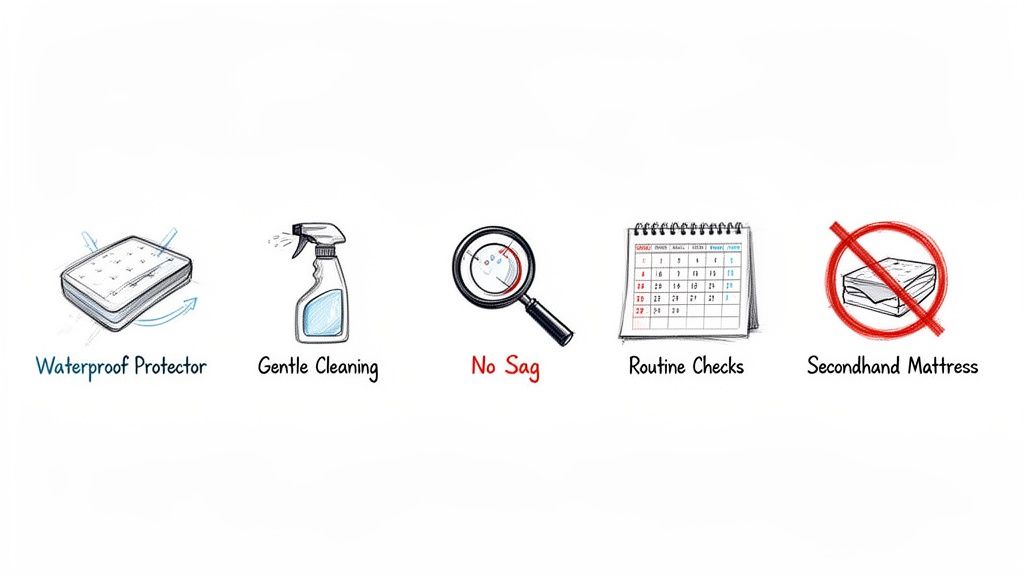
Choosing the right crib mattress is a huge first step, but safety doesn't stop there. It's an ongoing commitment. To keep your baby's sleep space truly safe, the mattress needs consistent care long after you bring it home.
Think of it like car maintenance. You don't just buy a safe car and forget about it; you perform regular checks to keep it running safely. The same principle applies here, ensuring the mattress upholds crucial crib mattress safety standards for as long as your baby uses it.
The Power of a Waterproof Protector
If there's one thing you can do to protect the mattress, this is it. Get a good waterproof cover. Let's be honest—diaper leaks, spit-up, and spills are just part of baby life.
Moisture is the number one enemy of a mattress. Once it seeps into the core, it creates a breeding ground for mold, mildew, and bacteria you can't even see. To avoid this, using a high-quality waterproof mattress protector is non-negotiable. It's the simplest, most effective barrier you have.
Regular Cleaning and Inspection
Beyond the protector, build a simple inspection into your routine. Every time you change the sheets is the perfect opportunity to give the mattress a quick once-over.
- Wipe Down: Grab a damp cloth with a bit of mild, baby-safe soap and wipe the entire surface. Let it air dry completely.
- Check for Wear: Run your hands firmly across the mattress. Feel for any sags, dips, or soft spots, especially in the middle where your baby spends the most time.
- Inspect Seams: Give the edges a quick look. Make sure the seams are still tight and there are no tears or loose threads.
Pro-Tip: Rotate the mattress from head-to-foot every few months. Just like with an adult mattress, this helps it wear more evenly and preserves that firm, flat surface that’s so important for safe sleep.
Why You Should Always Avoid Secondhand Mattresses
It can be really tempting to accept a hand-me-down mattress from a friend or family member, but this is one corner you should never cut. Safety experts are unanimous on this one: don't do it.
A used mattress carries a hidden history. You have no way of knowing if moisture has compromised its inner core or if its firmness has degraded to an unsafe level. Worse, older mattresses might not meet today's much stricter federal safety standards.
For your baby's health and your own sanity, always start fresh with a new mattress. It’s the only way to guarantee you’re getting a clean, structurally sound surface that complies with all current regulations.
Your Crib Mattress Safety Questions, Answered
Stepping into the world of baby gear can feel overwhelming, and it's natural to have a lot of questions. When it's about something as critical as your baby's sleep, you need straightforward answers you can trust. Let's tackle some of the most common questions parents have.
Are All Crib Mattresses Sold In The US Required To Be Firm?
Yes, they absolutely are. Thanks to an important federal update in 2022, every single crib mattress sold in the United States must legally pass the CPSC's official firmness test (ASTM F2933-21). This isn’t a guideline; it's a strict, mandatory rule.
That firm, flat surface is one of the most important factors in reducing the risk of SIDS and suffocation. This is exactly why you should never add soft toppers, thick pads, or any loose bedding into the crib—they completely negate this life-saving feature.
Can I Use A Secondhand Or Hand-Me-Down Crib Mattress?
I know it’s tempting to save money, but safety experts are all in agreement on this one: it's a bad idea. A used mattress carries too many hidden risks you just can't see.
A secondhand mattress might not meet today's strict crib mattress safety standards. It could also harbor invisible mold or bacteria, and worst of all, it's likely lost the essential firmness it once had. It's always best to start fresh with a new mattress for each baby to ensure it's clean, compliant, and safe.
What's The Difference Between 'Non-Toxic' and Certified?
This is a huge point of confusion for parents, so let’s clear it up. The term "non-toxic" is essentially an unregulated marketing buzzword. Any company can print it on their packaging without having to prove it means anything. It sounds reassuring, but it lacks real substance.
On the other hand, a legitimate third-party certification like GREENGUARD Gold or CertiPUR-US® is the real deal. These labels mean the mattress has undergone rigorous scientific testing for thousands of chemicals and VOCs. Seeing one of those seals is objective proof that the product is safer for your home's air quality. Always look for the certification, not just the claim.
How Do I Check For A Safe Fit In The Crib?
A perfectly snug fit is non-negotiable. Any gaps between the mattress and the crib frame create a serious entrapment hazard. The easiest way to check this is with the "two-finger test."
Once the mattress is in the crib, try to slide your fingers into the space between the mattress edge and the crib side. If you can fit more than two fingers (which is about one inch), the gap is too wide and the mattress is not safe. There should be virtually no gap at all.
At Hiccapop, we don’t just aim to meet these standards—we design our mattresses to exceed them. We believe in giving your baby the most secure foundation possible for healthy, restorative sleep. Explore our GREENGUARD Gold certified crib mattresses to see the difference. Learn more at Hiccapop.