


Breathable Crib Mattress Reviews: A Parent’s Guide to Safer Sleep
When you're prepping for a new baby, the word "breathable" pops up everywhere—from onesies to, most importantly, crib mattresses. It’s easy to dismiss it as just another marketing buzzword, but the science behind a truly breathable crib mattress is a game-changer for your peace of mind. It’s designed to allow air to pass freely through its entire structure, from the cover straight through the core.
This innovative design directly tackles the risk of suffocation and CO₂ rebreathing, which can occur if your baby accidentally rolls onto their stomach during sleep. It's not just a feature; it's a fundamental shift in creating a safer sleep environment.
Decoding Breathability: What It Really Means for Your Baby
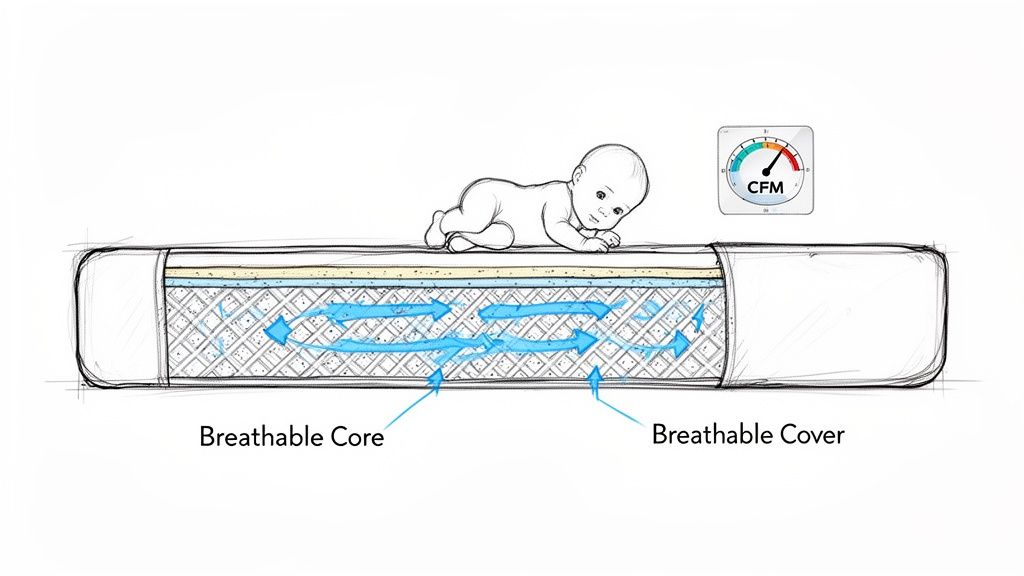
Let’s cut through the noise. "Breathable" is one of the most overused—and misunderstood—terms in the baby gear universe. It’s not about slapping a mesh cover on a mattress or punching a few ventilation holes in some foam. Real breathability is a safety feature that must be engineered into the very heart of the mattress.
Think about what happens when a baby sleeps face-down on a traditional mattress. They can easily rebreathe the carbon dioxide they’ve just exhaled. That CO₂ gets trapped in the small pocket of air right around their face, creating a serious safety risk.
A genuinely breathable mattress solves this problem head-on. It allows that exhaled air to pass through the mattress itself, clearing it away and making room for fresh, oxygenated air. It’s a simple concept with life-saving implications.
Core vs. Cover: The Critical Distinction
When you’re digging into breathable crib mattress reviews, understanding the difference between a breathable cover and a breathable core is everything. Many mattresses on the market claim to be breathable, but all they really offer is a perforated cover stretched over a solid block of foam or innersprings.
- Breathable Cover Only: This setup provides very little practical benefit. The surface might feel a bit airy, but the impermeable core underneath is essentially a wall for air. If a baby presses their face into it, the cover flattens, and the core can still block their breathing.
- Breathable Core and Cover: This is the gold standard. These mattresses are typically constructed from a matrix of food-grade polymer that's about 90% air by volume. Air can move completely through the cover and the core, which drastically reduces the risk of CO₂ rebreathing.
The key takeaway is this: A mattress is only as breathable as its least breathable layer. A mesh cover on a solid foam block doesn't offer the same safety advantage as a mattress that is air-permeable from top to bottom.
How Is Breathability Measured?
So, how can you be sure a mattress is the real deal? Scientists measure this using a standard called air permeability, which is just a fancy way of testing how easily air can pass through a material.
While there isn't an official federal benchmark for what "breathable" means in a crib mattress, independent lab tests clearly show which products are superior. Time and again, these tests confirm that mattresses made with a woven polymer core allow for vastly more airflow than their traditional foam and innerspring counterparts.
This focus on airflow is a huge part of creating a safe sleep space. You can dive deeper into this by reviewing the established crib mattress safety standards. Ultimately, a truly breathable mattress provides an extra layer of protection that helps everyone rest a little easier.
How To Read Breathable Crib Mattress Reviews Like An Expert
Diving into breathable crib mattress reviews can feel like trying to sip from a firehose. You’re bombarded with opinions, star ratings, and testimonials, making it tough to separate genuinely helpful insights from the noise. The trick is to stop reading passively and start reading like a detective, looking for specific clues that really matter for your family.
Genuine, detailed reviews are pure gold, but they're often buried. Your first step is to filter out the fluff. A one-sentence review like "Great mattress!" is nice, but it tells you nothing useful. You’re hunting for the real stories, the ones from parents who have been in the trenches with leaky diapers at 3 a.m.
This kind of parental insight is more valuable than ever. As more parents prioritize creating the safest possible sleep environments, the crib mattress market is booming. In fact, global spending on baby mattresses is projected to hit over $2.2 billion by 2033. You can read more about the baby mattress market growth to see just how much this space is expanding.
Look For Thematic Clues
Instead of just tallying up stars, scan reviews for recurring themes. Parents tend to zero in on the same core issues, and these patterns will give you a much clearer picture of how a mattress performs day-to-day than a simple rating ever could.
So, what are the most important themes to look for?
- The Inevitable Cleanup: Keep an eye out for reviews that mention blowouts, spit-up, or leaky diapers. How easy was it really to clean the cover and the mattress core? Did any stains or smells linger? These are the practical details that will save your sanity.
- Long-Term Durability: Search for comments from parents who've been using the mattress for a year or more. Has it started to sag? Are there permanent body indentations from where their baby sleeps? A mattress must hold its shape and firmness to stay safe.
- Off-Gassing and Initial Smell: Many parents are tuned in to chemical smells. Reviews that mention a strong "off-gassing" odor right out of the box can be a red flag for VOCs (volatile organic compounds). Ideally, you want to see comments that say the mattress had no smell at all.
Filter Reviews For Your Specific Needs
Not all advice applies to everyone. To get the most out of your research, you have to filter the feedback to match your own situation. A glowing review from a parent with a standard-sized crib is useless if you're buying for a mini crib.
The most valuable review isn't the one with the highest rating; it's the one that most closely mirrors your own circumstances. A parent in a humid climate might offer crucial insights on mold prevention that someone in a dry region wouldn't even consider.
Think about what makes your situation unique and actively hunt for reviews that speak to it.
- Crib Size: Use the search bar on review pages to look for terms like "mini crib," "standard," or even the specific crib brand you own to find relevant feedback.
- Baby's Age: A review from a newborn parent will likely focus on firmness, while a parent of a toddler might have more to say about durability.
- Environmental Factors: If you live somewhere hot and humid, search for reviews mentioning mold, mildew, or how well the mattress kept their baby cool at night.
By focusing on these detailed, real-world experiences, you can move beyond simple star ratings and gather practical intelligence that helps you choose a breathable crib mattress with confidence.
The Core Criteria For Comparing Breathable Mattresses
Now that you know how to sort through the noise of online opinions, it's time to dig into what really matters. When you're comparing breathable crib mattresses, you have to look past the marketing claims about airflow. The real story is in how the core materials and construction come together to create a sleep surface that's safe, practical, and built to last.
This isn’t just a niche market anymore; it’s a reflection of a huge shift in what parents are prioritizing. According to 2023 data, the global crib mattress market was already valued at USD 5.2 billion and is on track to hit USD 8.5 billion by 2030. This boom is driven by parents like you who are committed to investing in high-quality, safety-first baby gear. You can see more details on these trends in the crib mattress market.
Core Construction: The Heart Of The Matter
Think of the mattress core as its engine. It’s what dictates not just breathability but also support, longevity, and—crucially—how easy it is to clean. The materials used here make all the difference.
- Woven Polymer Core: This is really the gold standard for true breathability. Mattresses from brands like Hiccapop use a core made of a tangled web of food-grade polymer, which is about 90% air by volume. This unique structure lets air flow freely in every direction, which is a key factor in reducing the risk of CO₂ rebreathing. Plus, they’re a dream to clean—you can literally take the whole thing into the shower and wash it down.
- Innerspring Core: The classic innerspring mattress has gotten a "breathable" makeover, usually with the addition of mesh layers or perforated covers. While the natural space between the coils allows for some air movement, it just doesn't compare to the total air permeability of a polymer core. They also tend to be heavy and much harder to deep clean.
- Perforated Foam Core: Some foam mattresses are designed with vertical holes or channels to encourage airflow. It’s definitely an improvement over a solid block of foam, but it won't give you that same unrestricted air circulation that a woven polymer core does. Another downside is that these channels can become a trap for dust and allergens over time.
To help you visualize the differences, this table breaks down how each mattress type performs across key features.
Feature Comparison Of Breathable Crib Mattress Types
| Feature | Woven Polymer Core (e.g., Hiccapop) | Breathable Innerspring | Perforated Foam Core |
|---|---|---|---|
| Air Permeability | Highest. Core is 90% air, allowing free airflow in all directions. | Moderate. Air can move between coils, but is limited by batting/padding. | Low to Moderate. Airflow is restricted to pre-cut channels. |
| Washability | Excellent. Core is fully washable with soap and water. | Poor. Spot-clean only; core cannot be washed. | Poor. Spot-clean only; moisture can get trapped in foam. |
| Hypoallergenic | Excellent. Non-porous material and washability prevent allergen buildup. | Fair. Coils and padding can trap dust mites and dander. | Fair. Can trap dust and allergens in perforations if not maintained. |
| Firmness for Infants | Excellent. Naturally firm and supportive for infant safety. | Good to Excellent. Coils provide a firm surface. | Good. Must ensure the foam density is high enough for infant safety. |
| Durability | Excellent. Polymer retains shape and support over time without sagging. | Good. Quality of steel coils determines lifespan; can sag over time. | Fair to Good. High-density foam lasts longer; lower density can indent. |
As you can see, the woven polymer core stands out, especially when it comes to the critical combination of top-tier breathability and complete washability.
Safety Certifications: Decoding The Labels
When you're shopping, you’ll see a sea of certification logos. These aren’t just marketing fluff; they’re your proof that the mattress has been independently tested and meets strict standards for health and safety.
Think of certifications as a third-party report card for your baby's mattress. They tell you what’s not in the product, which is often just as important as what is.
Here are the two most important ones to keep an eye out for:
- GREENGUARD Gold: This is one of the toughest certifications a product can earn. It tests for more than 10,000 chemicals and volatile organic compounds (VOCs) that can pollute indoor air. When you see the GREENGUARD Gold seal, you know the mattress promotes cleaner, healthier air for your nursery.
- CertiPUR-US®: This label is specific to foam-based products. It guarantees the foam was made without ozone depleters, heavy metals like mercury and lead, or certain harmful flame retardants. It’s a solid benchmark if you’re considering a mattress with any foam components.
Expert reviews often zero in on a few key features that go beyond labels, like cleaning, durability, and firmness.
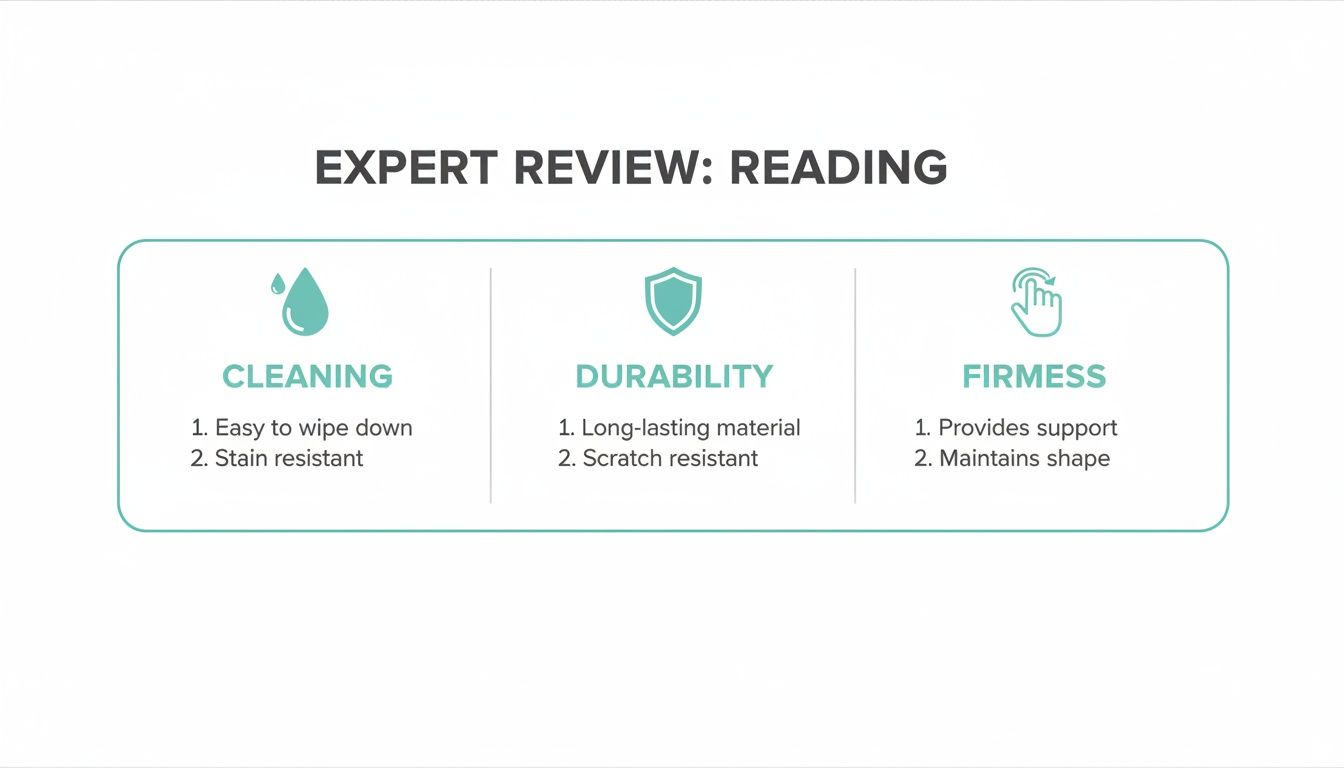
As this shows, a truly great breathable mattress has to deliver on all fronts to give you both safety and long-term value.
Firmness And Support
The American Academy of Pediatrics (AAP) couldn't be clearer on this: babies must sleep on a firm, flat sleep surface. This is an absolute must for reducing the risk of SIDS and supporting healthy skeletal growth. A mattress that's too soft can create an indentation around a baby's head, which increases the risk of suffocation.
As you read reviews, look for phrases like "infant-level firmness." An excellent feature to look for is a dual-sided design. These mattresses are designed with an extra-firm side for infants and a slightly cushier (but still supportive) side for toddlers. This clever design extends the life of the mattress, giving you much more value. For a deeper dive, check out our guide on the best crib mattresses for newborns.
The Ultimate Convenience: Washability
Let’s be honest—babies are messy. Diaper blowouts, spit-up, and other accidents are just part of the package. A mattress that’s a pain to clean will quickly become your nemesis. This is where the different core types truly show their strengths and weaknesses.
- Fully Washable Core (Polymer): This is the undisputed champion of clean. You can take the entire core out, wash it down with soap and water, and let it air dry. It's the only way to be 100% sure you've gotten rid of every last bit of bacteria and odor.
- Spot-Clean Only (Foam/Innerspring): Most traditional mattresses can only be spot-cleaned on the surface. That means moisture can easily soak deep into the core, creating a breeding ground for mold, mildew, and stubborn smells you can't get out.
When it comes to your peace of mind and your baby’s well-being, a fully washable mattress is a game-changer. It turns a potential catastrophe into a minor inconvenience.
An In-Depth Look At The Hiccapop® Crib Mattress
After covering crib mattress safety and design considerations more broadly, it helps to see how those ideas translate into a real product. The Hiccapop® Dual-Sided Crib Mattress offers a useful case study because its features are straightforward, clearly defined, and designed around common parent concerns.
Rather than relying on complex materials or lofty claims, this mattress focuses on practicality: safe materials, ease of cleaning, and long-term usability.
Non-Toxic Foam Construction Parents Can Feel Confident About
The Hiccapop mattress is made with 100% CertiPUR-US® certified foam, which means it’s produced without harmful substances such as lead, phthalates, fiberglass, or chemical flame retardants. This certification also addresses durability and emissions standards, helping reduce exposure to unnecessary chemicals in your child’s sleep environment.Sized to fit all standard cribs, the mattress measures approximately 52 inches by 27.5 inches and 6 inches thick, creating a snug fit that’s essential for safe sleep.
A Dual-Sided Design That Grows With Your Child
One of the most practical features of this mattress is its dual-sided construction, allowing it to transition from infancy to toddlerhood without needing a replacement.
- Infant Side: Designed to be firmer, providing a stable surface for babies.
- Toddler Side: Offers a softer feel for added comfort as children grow.
It’s a simple concept, but it means you won’t have to shop for another mattress in a year or two.
The dual-sided design is a perfect example of smart, long-term value. It extends the mattress's lifespan, saving you the hassle and expense of buying a separate toddler mattress down the line.
Waterproof and Washable for Real-Life Messes
Daily life with a baby isn’t mess-free, and this mattress reflects that reality. The Hiccapop® crib mattress includes a waterproof, stain-resistant cover that helps protect the foam from spills and accidents.
The cover is machine washable and dryable, making cleanup far easier than spot-cleaning a traditional mattress. A chemical-free, non-fiberglass cotton inner cover adds another layer of protection while maintaining a soft sleep surface.
This means you can completely eliminate odors, bacteria, and mold, something that’s nearly impossible with a traditional foam or innerspring mattress. For babies with sensitive skin or allergies, this level of cleanliness is a game-changer. It turns a potential disaster into a minor cleanup task.
Answering Your Top Breathable Mattress Questions
It’s one thing to read about the science behind a breathable mattress, but it's another thing entirely to picture how it will actually fit into your daily life. After all the research, practical questions always come up.
Let's tackle those common concerns head-on. We'll cover everything from firmness and bedding to cost and long-term care so you can feel totally confident in your choice—even when faced with the inevitable spit-up and blowouts.
Are Breathable Mattresses Truly Firm Enough For A Newborn?
This is probably the most critical question parents have, and the answer is a definite yes. Reputable breathable crib mattresses are specifically engineered to meet—and often exceed—the strict firmness guidelines set by the American Academy of Pediatrics (AAP). A firm, flat sleep surface is non-negotiable for infant safety, and these brands know it.
Mattresses built with a woven polymer core, for instance, provide solid, edge-to-edge support without any risk of sagging or creating dangerous indentations. They feel surprisingly resilient and give your baby the safe foundation they need. Many, like the Hiccapop®, even offer a dual-sided design with an extra-firm side just for infants.
Do I Need Special Sheets For A Breathable Mattress?
While you don't technically need them, using breathable sheets is the best way to get the full safety benefit of the mattress. A standard, heavy-weave sheet can counteract the airflow you've invested in. Think of it like putting a thick blanket over a fan—the air just can't get through.
To make the most of your mattress:
- Go for lightweight fabrics: Look for sheets made from materials like muslin or open-weave cotton.
- Make sure the fit is snug: A crib sheet should fit tightly around the mattress with absolutely no loose fabric.
Using a breathable sheet ensures the entire sleep system works together, from the core to the surface, to keep air moving freely around your baby.
Is The Higher Price Tag Actually Worth It?
It's true, a premium breathable crib mattress is an investment. But when you break down what you're really paying for, the value becomes much clearer. You're not just buying a mattress; you're buying advanced safety technology, long-term durability, and incredible convenience.
The real value of a breathable mattress isn't just in its first night of use, but in its ability to provide a safer, cleaner, and more durable sleep environment for years to come.
The breathable mattress market has grown so much precisely because parents are demanding this level of safety and quality. Some brands use patented technology with a core made of 90% air and 10% food-grade polymer, which offers incredible airflow and makes the entire mattress washable. This kind of innovation directly addresses major parental worries about SIDS and sleep-related risks, showing how the industry is finally listening to what parents want.
When you factor in the peace of mind, a dual-sided design that grows with your child, and the ability to literally wash away any mess, the upfront cost often proves to be a very smart long-term decision.
How To Wash A Breathable Mattress Core
This is where woven-core breathable mattresses really stand out. Cleaning them is refreshingly simple and helps you maintain a truly hygienic sleep space.
- Remove the Cover: First, just unzip and take off the outer cover. You can toss it right into the washing machine.
- Take the Core to the Shower: Yep, you read that right. The core is so lightweight that you can easily carry it into your bathtub or shower.
- Wash with Soap and Cool Water: Use a mild soap and a handheld shower head to rinse the entire core from all angles. This will flush out any dust, dirt, or anything else.
- Shake and Air Dry: Give it a good shake to get rid of excess water, then stand it upright in a well-ventilated spot. Since it’s mostly air, it dries remarkably fast.
For more tips on keeping your baby's sleep environment clean, check out our guide on the best non-toxic crib mattress.
Your Final Questions, Answered
Even after you've read all the breathable crib mattress reviews and stared at comparison charts until your eyes glaze over, a few specific questions tend to linger. That's perfectly normal—when it comes to your baby, you want every single detail nailed down.
Let's tackle some of the most common practical concerns parents bring up with straightforward answers.
Is It Safe to Use a Second-Hand Crib Mattress If It's Breathable?
I get it—the thought of saving some money with a second-hand mattress is appealing. But safety experts, including the American Academy of Pediatrics (AAP), strongly advise against it. The risks are often invisible and just aren't worth it.
A used mattress can be a hiding place for bacteria, mold, or mildew from spills you can't see. More critically, its internal structure might be worn down, losing the firmness that's so essential for infant safety. Even a mattress that was breathable won't function correctly if its core is compressed. For your baby's health, a new mattress is always the right call.
How Can I Tell If My Baby's Crib Mattress Is Firm Enough?
You don't need any special equipment for this. A quick, simple test right at home is all it takes to know if the surface is safe.
Press down firmly with your hand in the middle of the mattress and then again near the edges. A safe, firm mattress will rebound immediately, showing no lasting impression of your hand. It shouldn't dip or sag where your baby lies. The goal is a consistently flat, supportive surface that aligns with what pediatricians recommend for safe sleep.
If there's one thing to take away from countless breathable crib mattress reviews, it's this: firmness is not optional. If the mattress molds to the shape of your hand, it's too soft for a baby.
What's The Difference Between A Breathable And An Organic Mattress?
This is a really common question, and it's easy to see why people get them mixed up. "Breathable" and "organic" address different—but equally valid—parental concerns. They aren't mutually exclusive, but they don't mean the same thing.
- Breathable Mattress: This is all about the construction. The mattress is specifically engineered to let air flow freely through its core and cover, which helps reduce the risk of suffocation and keeps your baby from overheating.
- Organic Mattress: This is all about the materials. The mattress is made from natural sources like organic cotton, wool, or latex, and is manufactured without the use of certain pesticides, chemicals, or synthetic flame retardants.
You can definitely find premium mattresses that are both breathable and organic, giving you the best of both worlds. Just be sure to read the product details closely to confirm exactly what features you're getting.
How Long Will A Breathable Crib Mattress Last?
A well-made breathable crib mattress is an investment designed to see your child through both infancy and their toddler years. You can generally expect 3 to 5 years of reliable use out of one. How long it lasts really comes down to the quality of its core and how you care for it.
Many of the best mattresses, like the one from Hiccapop®, are dual-sided to extend their useful life. You get an extra-firm side for infants and a slightly cushier side for toddlers. This clever design means the mattress grows with your child. A manufacturer’s warranty is also a good indicator of durability—a longer warranty often means a better-built product. And, of course, proper care like regular washing will keep it hygienic and in great shape for years to come.
Choosing the right mattress is one of the most important decisions you'll make for your baby’s nursery. It’s about more than just comfort; it’s about creating the safest sleep environment possible. We hope this guide has armed you with the confidence to read reviews, compare features, and find the perfect breathable mattress for your little one.
What’s the most surprising thing you’ve learned about breathable mattresses? Share your thoughts in the comments below!