


The Ultimate Guide to the Best Travel Beds for Infants
When you're hunting for the best travel bed for your infant, it all boils down to three non-negotiables: it needs to be lightweight, meet all current safety standards, and be ridiculously easy to set up. The best ones usually pack neatly into a backpack-style bag, weigh less than 15 pounds, and boast certifications like GREENGUARD Gold, giving you total peace of mind.
Helping Your Baby Sleep Soundly On The Go
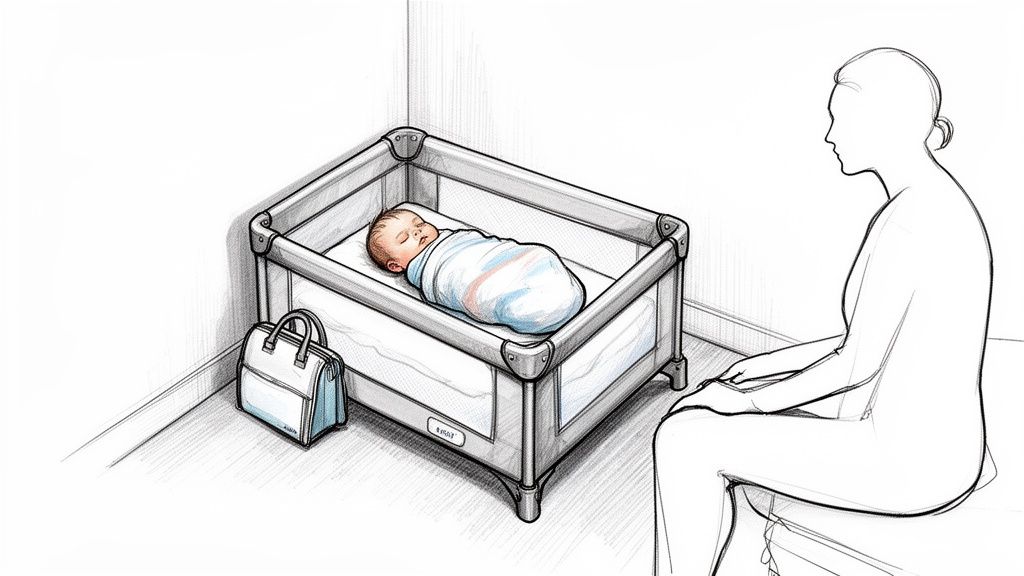
Taking your baby on adventures is one of the top-tier joys of parenthood, but let’s be real—it’s often paired with the giant, flashing question: "Where in the world will my baby sleep?" It’s a completely valid concern that can sprinkle a little stress on an otherwise amazing trip.
The good news? Today’s infant travel beds are designed to solve this exact problem. A high-quality travel bed gives your baby a safe, comfortable, and familiar sleep space, no matter where your travels take you—from a five-star hotel to Grandma’s guest room.
Creating a Home Away From Home
Think of a good travel bed as your baby’s personal sleep sanctuary on the road. It’s more than just gear—it’s a consistent environment that helps signal it’s time to rest, which is a lifesaver for keeping sleep routines intact. This guide will walk you through everything you need to know.
- Decode safety standards: We’ll break down what certifications like CPSC and ASTM actually mean for your baby’s safety.
- Choose the right type: You'll learn the difference between travel cribs, playards, and bassinets so you can find the perfect fit.
- Master travel tricks: We'll share practical tips for packing and caring for your gear to make every trip that much smoother.
Of course, having the right gear is only one part of the equation. It's also helpful to manage your own expectations. For example, understanding newborn sleep schedules can help you anticipate their needs and ease them into a new environment.
Our goal is to help you turn travel anxiety into travel success. By the time you're done reading, you’ll be ready to choose the perfect travel bed for your little one, ensuring everyone gets the rest they need to make amazing memories. For more tips, check out our complete guide on how to travel with infants.
Why a Dedicated Travel Bed Is So Important
When you’re on the road, it’s so tempting to just "make do" with your baby's sleeping arrangement. You might consider co-sleeping in the hotel bed or even building a makeshift nest of pillows on the floor. While those ideas come from a good place, they miss something crucial that babies absolutely thrive on: consistency.
A dedicated travel bed isn't just a portable crib; it's a familiar slice of home. This consistency is a powerful sleep cue. When your little one sees, smells, and feels their own sleep space, it sends a clear signal to their brain that it's time to wind down. This simple act can mean fewer bedtime battles and more peaceful nights for the entire family.
Peace of Mind Is Priceless
Let's be honest—a big part of being a parent is worrying. An infant travel bed is one of the best ways to quiet those middle-of-the-night anxieties when you're away from home.
Relying on a hotel-provided crib is a gamble. You have no idea how old it is, how well it's been cleaned, or if it even meets current safety standards. And building a makeshift bed out of pillows and blankets goes directly against all safe-sleep advice, which stresses the need for a firm, flat surface completely free of soft bedding.
Bringing your own travel bed puts you back in control of the sleep environment. You know its history, you know it's clean, and most importantly, you know it's designed specifically for your baby's safety. That knowledge lets you relax and actually enjoy your trip.
Reinforcing Healthy Sleep Habits on the Road
A good travel bed is also a key tool for maintaining the healthy sleep habits you work so hard to build at home. It provides that essential safe-sleep foundation—a firm mattress in a snug, contained space—that experts always recommend. This familiar setup helps your baby transition from the excitement of a new place to a much-needed rest.
As more families hit the road, the demand for these reliable sleep solutions has skyrocketed. The market for light baby travel cots was recently valued at USD 272 million and is expected to grow as parents continue to seek out safe, compact options. In fact, over 65% of parents now say that travel-friendliness is a top priority when choosing baby gear. You can explore the full market research on light baby travel cots to see just how much this has become a focus for families.
More Than Just a Bed
Ultimately, getting one of the best travel beds for infants is about more than just the product itself. It’s about creating a predictable routine in an unpredictable environment. It gives your baby the security of their own space, which in turn gives you the freedom to explore and make memories without constantly stressing about naptime. It's a simple choice that pays off in a big way with more rest for everyone.
What Really Matters: Infant Sleep Safety Standards
When you're looking for a travel bed for your baby, it's easy to get caught up in features like how small it packs down or what color it is. But let's be honest—nothing, and I mean nothing, is more important than safety.
All the bells and whistles in the world don't matter if the bed isn't a secure place for your little one to sleep. Understanding safety standards might feel a bit like learning a new language, but it's the single best tool you have for making a smart, safe choice. Think of these certifications as a promise from experts who have rigorously tested a product for every potential hazard, from its basic structure to the materials it's made from.
Cracking the Code on Safety Acronyms
You've probably seen a jumble of letters like CPSC and ASTM on product tags and websites. They aren't just there for decoration; they represent the key organizations whose entire job is to keep kids safe. Getting to know them is your first step to buying with confidence.
-
CPSC (Consumer Product Safety Commission): This is the big one. As a U.S. government agency, their rules are the law. Any infant travel bed or play yard sold in the United States must meet the CPSC's strict federal safety standards. It's non-negotiable.
-
ASTM International: This is a global group that creates incredibly detailed technical standards. While their standards are technically "voluntary," you'll find that any brand worth its salt follows them. Why? Because it shows a true commitment to safety, and the CPSC often uses ASTM's work as the foundation for its own mandatory rules.
Seeing these certifications is a huge sigh of relief for parents, and for good reason. Trustworthy brands often talk about testing that goes "beyond federal standards," pointing out things like mattress firmness or the specific materials they use. In major markets, manufacturers have to meet these consumer-safety standards, and brands that are transparent about their compliance and even share lab-testing data tend to earn far more trust. You can learn more about how safety standards influence the market and see just how much this matters to parents.
The Core Rules of Safe Infant Sleep
Beyond the official labels, the American Academy of Pediatrics (AAP) gives us clear, simple guidelines for every sleep situation—and that absolutely includes a travel bed. These aren't just suggestions; they're the foundational principles for keeping your baby safe.
The safest place for a baby to sleep is on their back, on a separate, flat, and firm sleep surface, without any soft bedding, pillows, or bumper pads. This simple rule dramatically reduces the risk of Sudden Unexpected Infant Death (SUID).
When a travel bed is designed with this in mind, you'll see a few key features that you can spot right away:
-
A Firm Mattress: This is the absolute most important safety feature. A mattress that's too soft can create a little dip where a baby's head rests, which poses a serious suffocation risk. A properly firm mattress provides solid support without any dangerous sinking.
-
Breathable Mesh Sides: Look for mesh on all sides. This isn't just for you to peek in on your sleeping baby. More importantly, it ensures constant airflow, so even if your baby wiggles over and presses their face right up against the side, they can still breathe easily.
-
A Snug-Fitting Sheet: You should only ever use the mattress and the fitted sheet that came with the travel bed. They're designed as a system to fit together perfectly, leaving no loose fabric or dangerous gaps where a baby could get trapped. Never try to add a different mattress or use a regular crib sheet.
By focusing on products that meet CPSC and ASTM standards and follow the AAP's safe sleep rules, you can cut through the marketing fluff and choose a travel bed that is genuinely built for your baby’s well-being. For a more detailed look, check out our guide on creating a safe sleep environment for infants. This knowledge gives you the power to make an informed choice that will let everyone sleep a little more soundly on your next adventure.
Finding the Right Type of Travel Bed for Your Family
Choosing the best travel bed for your infant feels a lot like picking out a new car. What works for a solo city driver isn't going to cut it for a family of five heading into the mountains. The perfect choice really boils down to your family's travel style. Are you road-trippers with plenty of trunk space, or minimalist flyers who need to count every single ounce?
Let's walk through the main categories to help you find the perfect match for your next adventure. Each type has its own strengths, designed for different kinds of trips and different stages of your baby’s first few years.
Traditional Travel Cribs (The Reliable Workhorse)
When you picture a portable crib, this is probably what comes to mind. Often called a "playard" or "pack 'n play," the traditional travel crib is the sturdy, dependable option that so many families rely on. They’re built to last, usually with steel frames and durable fabrics.
These models are fantastic for road trips, visits to the grandparents' house, or any situation where you aren't sweating luggage weight limits. They offer a familiar, enclosed space that also doubles as a safe play area, which is a huge bonus. While they aren't the lightest, that robust construction gives a lot of parents peace of mind. To see just how versatile they are, you can learn more about how a pack and play can be used beyond just sleep.
- Pros: Very stable, multi-functional for both sleep and play, and often more affordable.
- Cons: Heavier (18-30 lbs), bulkier when packed, and can be a bit more complex to set up.
- Best For: Car travel, longer stays in one location, and families who also want a dedicated play space.
Ultra-Lightweight Travel Cribs (The Globetrotter)
For families who fly, the ultra-lightweight travel crib is a complete game-changer. These beds are engineered for maximum portability, typically weighing under 15 pounds and packing down into a ridiculously compact backpack or shoulder bag. Many are even small enough to be carried right onto the plane.
They often set up in just seconds—a feature you'll deeply appreciate when you stumble into a hotel room late at night. Most designs feature a mattress that rests directly on the floor, which cleverly eliminates any weight limit concerns. The focus here is pure convenience without sacrificing safety, with must-have features like 360-degree mesh sides and high-quality, non-toxic materials.
An ultra-lightweight crib is an investment in smoother travel. It removes the stress of checking bulky gear and gives you the freedom to move easily through airports and new cities, knowing a safe sleep spot is right on your back.
Infant Travel Bassinets (The Newborn Specialist)
Designed specifically for the youngest travelers, infant travel bassinets are the smallest and most portable option out there. They are perfect for newborns and babies who aren't yet rolling over or pushing up on their hands and knees.
These bassinets offer a cozy, contained sleep space that can often be placed on a bed between parents for safe co-sleeping or used on the floor. They fold down flat and are incredibly light, making them ideal for tucking into a suitcase for any kind of trip. The main trade-off, however, is their short lifespan—most babies will outgrow them within four to six months.
- Pros: Extremely lightweight and compact, super easy to set up, and perfect for the newborn stage.
- Cons: Very short-term use, limited to pre-mobile infants.
- Best For: Newborn travel, short trips, or as a secondary sleeper for naps on the go.
Ultimately, confirming that it has breathable mesh sides, a firm mattress, and a snug-fitting sheet ensures the bed aligns with the fundamentals of safe sleep.
To make comparing these options a bit easier, here’s a quick-glance table.
Infant Travel Bed Comparison Guide
| Bed Type | Best For | Typical Weight | Packed Size | Age Range |
|---|---|---|---|---|
| Traditional Travel Crib | Car trips & longer stays | 18 - 30 lbs | Bulky (Large rectangle) | 0 - 3 years |
| Ultra-Lightweight Crib | Air travel & frequent trips | Under 15 lbs | Compact (Backpack/bag) | 0 - 3+ years |
| Infant Travel Bassinet | Newborns & short trips | Under 10 lbs | Very compact (Folds flat) | 0 - 6 months |
Think of this table as a starting point. Your family's unique needs will guide you to the perfect travel bed that makes every trip a little bit easier and a lot more restful.
Evaluating Key Features for Real-World Convenience
Once you’ve nailed down the essentials—the bed meets all the critical safety standards and you've picked the right type for your family—you can get to the fun part. This is where you look at the thoughtful details that separate a good-enough travel bed from one that actually makes your life easier.
These are the features you’ll be deeply grateful for when you’re exhausted, far from home, and just need things to work.
Think of it as the “3 AM Hotel Arrival” test. You’ve been traveling for hours, the baby is overtired, and all you want is to get everyone settled. The absolute last thing you need is to wrestle with a piece of gear that feels like a 1,000-piece puzzle with missing instructions.
This is exactly why setup and takedown speed is so important. The best travel beds for infants are designed to pop open and lock into place almost instantly. You want intuitive locking mechanisms and legs that snap securely without a struggle. In those tired moments, a bed that assembles in less than a minute can feel like a genuine miracle.
The Little Details That Make a Big Difference
Beyond that initial setup, a handful of other features make a huge difference in your day-to-day experience. A truly great travel bed is built for the messy, unpredictable reality of life with a baby.
Start with the materials. You need fabrics that can withstand being stuffed into a car and dragged through an airport, but are also soft and gentle against your baby’s skin. Look for certifications like GREENGUARD Gold, which is a great sign that the materials are low in chemical emissions and won't compromise your indoor air quality.
Your travel bed is going to get messy—it's not a question of if, but when. Spit-up, diaper leaks, and snack crumbs are all part of the adventure. A bed with easily removable, machine-washable fabrics is a must-have for hygiene and your sanity.
A waterproof mattress pad is another one of those features you’ll wonder how you ever lived without. It’s your first line of defense against accidents, making cleanup a simple wipe-down instead of a deep-clean disaster. Some even come with a zip-off fabric cover, which is a fantastic bonus.
Portability and Mattress Comfort
True portability isn’t just about how much the bed weighs. It’s about the entire experience of carrying it from point A to point B. A super-light crib is no good if it comes in a flimsy, awkward bag that’s a pain to carry.
Take a close look at the carry bag itself. Does it have padded, adjustable backpack straps? That’s a game-changer. It frees up your hands to carry your baby, pull a suitcase, or, most importantly, hold a much-needed coffee. Heavy-duty zippers and tough fabric mean the bag will survive the journey without ripping.
Finally, don’t forget the mattress. While it needs to be firm for safety, it shouldn't feel like sleeping on a piece of plywood. A quality travel bed has a mattress that provides a supportive but comfortable surface. Some even include a soft, plush sheet designed to fit perfectly, adding that extra touch of coziness to help your little one settle down in a new place.
Here’s a quick checklist to help you evaluate these practical features like a seasoned pro:
- Effortless Setup: Can you assemble and disassemble it in under two minutes?
- Washable Components: Are the main fabric and sheet machine-washable for easy cleaning?
- Waterproof Mattress: Does it have a waterproof layer to protect against spills and accidents?
- High-Quality Carry Bag: Is the bag durable with comfortable straps (backpack style is a huge plus)?
- Sturdy Frame: Once set up, does the frame feel solid and stable, with no wobbling?
- Comfortable Mattress Pad: Is the mattress firm for safety, yet comfortable enough for a good night's sleep?
When you choose a travel bed with these conveniences in mind, you’re getting a piece of gear that works for you, not against you. And that’s what makes every trip a little bit smoother.
Packing and Maintaining Your Travel Bed Like a Pro
So you've found the perfect home-away-from-home for your little one—fantastic! Now for the practical part: actually using it. Just like any other essential piece of baby gear, a little know-how on packing, cleaning, and maintaining your travel bed will make every trip smoother and help your investment last for years.
A bit of prep work makes all the difference. With the right care, your travel bed will always be clean, safe, and ready for the next family adventure, whether that’s a flight across the country or just a weekend at grandma’s.
Traveling Smart With Your Infant Bed
Packing for a trip with a baby can feel like a game of high-stakes Tetris. Thankfully, the best travel beds are designed to be incredibly portable. For car trips, a compact travel crib can easily slide right into the trunk with the rest of your luggage.
Flying is a different ball game, but it's totally manageable. Ultra-lightweight travel cribs are often small enough to be gate-checked or even carried on to fit in an overhead bin. If you have a larger model, checking it as luggage is usually straightforward.
Pro Tip: To protect your travel bed from scuffs and dirt during air travel, I highly recommend getting a separate, more durable travel bag. Even a large duffel can work in a pinch. It adds a much-needed layer of protection against rough baggage handling.
To make sure you don't forget a thing, it's always a good idea to consult a comprehensive infant travel packing list—a good travel bed should definitely be on it! And always, always double-check your airline's baggage size and weight policies to avoid any last-minute surprises at the airport.
Keeping Your Travel Bed Fresh and Clean
Let’s be honest: babies are messy. Spit-up, diaper leaks, and snack crumbs are just part of the deal. A clean sleep space is non-negotiable for your baby's health, so regular maintenance is key. The good news is that most high-quality travel beds make this part easy.
Many models now come with fabrics that you can completely zip off and toss in the washing machine. This is an absolute game-changer for getting a deep clean after a long trip. For smaller messes on the go, a quick spot clean with a damp cloth and some gentle, baby-safe soap is usually all it takes.
Here’s a quick guide to keeping your travel bed in top shape:
| Cleaning Task | When to Do It | How to Do It |
|---|---|---|
| Spot Cleaning | As needed | Use a soft cloth with mild soap and water to wipe up spills right away. |
| Machine Washing | After each trip | Take off all washable fabrics and follow the manufacturer's care instructions. |
| Safety Checks | Before every trip | Give all locks, hinges, and legs a quick inspection to be sure they're secure. |
One final tip: before you pack the bed away after a trip, make sure every single part is completely dry. This prevents any musty smells or mildew from setting in. Taking just a few minutes to clean and inspect your gear ensures it stays a safe and hygienic space for your little one, trip after trip.
Answering Your Top Questions About Infant Travel Beds
Even with all the research in the world, you’re bound to have a few questions pop up. It’s totally normal! Choosing the right travel bed is a big deal, and we’ve compiled the answers to the questions we hear most often from parents.
Let's clear up some of the common uncertainties.
Frequently Asked Questions
| Question | Answer |
|---|---|
| Can I take an infant travel bed on an airplane? | Absolutely. Most ultra-lightweight travel cribs are designed to fit in an overhead bin or can be gate-checked. Larger travel cribs can be checked as standard luggage, but always check your airline's specific policies on size and weight limits first. |
| Is it safe for my newborn to sleep in a travel bed? | Yes, provided the travel bed meets current safety standards (like those from CPSC and ASTM), has a firm, flat mattress, and features breathable mesh sides. Always use the mattress and fitted sheet provided by the manufacturer and never add soft bedding, pillows, or bumpers. |
| How can I help my baby adjust to sleeping in a new travel bed? | Consistency is key. Have your baby sleep in the travel bed for a few nights or naps at home before your trip. This helps them build a positive sleep association with it. Bringing familiar items like their sleep sack and a white noise machine can also make the new environment feel more like home. |
Choosing the right travel bed is all about finding that sweet spot between safety, convenience, and your family's unique travel style. With the right gear, you can stress less about sleep and focus more on what really matters—making unforgettable memories with your little one.
What’s the one feature you absolutely can't live without in a travel bed? Let us know in the comments below!
At Hiccapop, our goal is simple: create products that give you peace of mind so you can focus on making memories. We build our travel gear to meet the highest safety standards while keeping real-world convenience in mind. We want to ensure your little one has a safe, comfortable place to rest on every adventure you take together.
You can explore our collection of parent-approved travel solutions on the official Hiccapop website.