


Finding the Best Booster Seats for Toddlers: A Parent's Guide
Welcome to the next big step in your child's car safety journey! Finding the best booster seats for toddlers is all about making sure your car's adult seat belt fits their smaller body correctly. A standard seat belt just won't cut it. The right booster ensures the lap belt sits low across their strong hip bones and the shoulder belt crosses their chest and collarbone, right where it should be.
Why a Booster Seat Is Your Toddler's Next Safety Essential
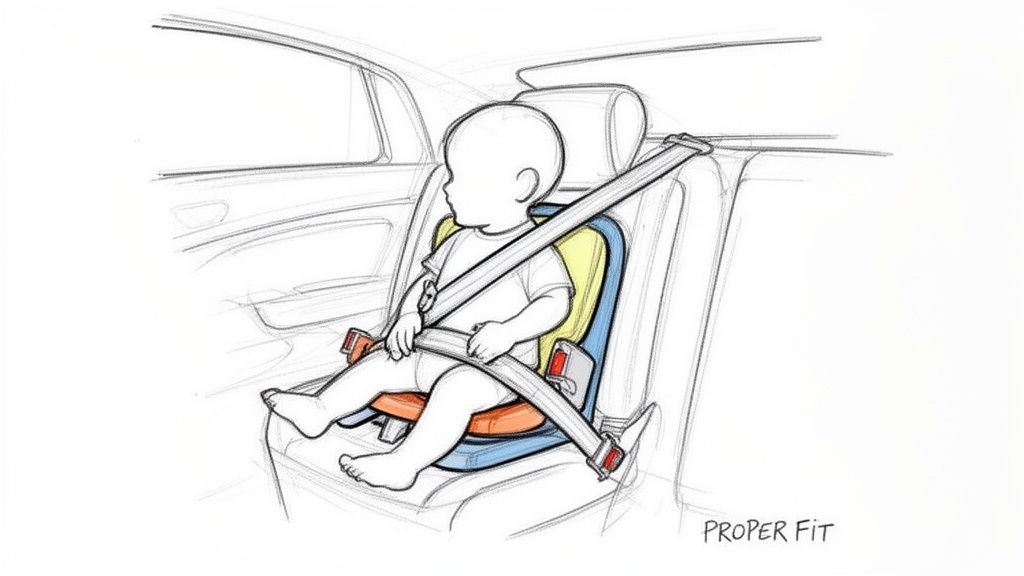
Moving up from a convertible car seat with a five-point harness feels like a huge milestone. It’s tempting to rush this "big kid" step, but a booster seat is far more than an accessory—it’s a critical piece of safety gear with one very important job.
Think of it as a custom step-stool for the car.
Vehicle seat belts are designed for adult bodies, not for little ones. Without a booster, the lap belt can ride up high on a child’s soft belly, risking serious internal injuries in a crash. Even worse, the shoulder belt often cuts uncomfortably across their neck or face. This tempts kids to tuck it behind their back or under their arm—a move that makes the seat belt completely ineffective.
The Core Mission of a Booster Seat
A booster seat fixes this dangerous mismatch by "boosting" your child up, allowing the adult seat belt to fit them properly. Its purpose is beautifully simple and has two parts:
- Proper Lap Belt Fit: It raises your child so the lap belt rests snugly across their strong upper thighs and hip bones—not their vulnerable stomach.
- Correct Shoulder Belt Position: It guides the shoulder belt to cross the middle of their chest and shoulder, keeping it away from their neck and face.
This proper fit is the only way a seat belt can do its job during a sudden stop or collision. This growing awareness among parents is a key reason the global child safety seat market, valued at $2.5 billion in 2023, is projected to more than double by 2033. You can learn more about the growth of the child safety seat market.
What Are My Main Options?
As you start looking, you’ll see three main types of booster seats. Each one is designed for different needs and stages of a child's growth.
A booster seat’s primary job is to make the adult seat belt fit a small child. It’s the bridge between a harnessed car seat and using the vehicle seat belt alone.
We’ll dive into each of these later on, but here’s a quick primer to get you started:
- High-Back Boosters: These provide crucial head and side support, making them a great choice for younger children and for cars that don't have headrests in the back.
- Backless Boosters: Simple and incredibly portable, these are perfect for older, more mature kids who just need that extra height for a safe belt fit.
- Combination Seats: These versatile seats start as a forward-facing seat with a 5-point harness and later convert into a high-back booster, giving you more bang for your buck.
Getting these fundamentals down will empower you to navigate the rest of this guide with confidence and find the perfect, safest fit for your little one.
Knowing When Your Toddler Is Ready for a Booster
It’s the question that pops into every parent’s mind as their toddler starts looking less like a baby and more like a big kid: "Is it time for a booster seat?" It's exciting to watch them grow, but making this switch too early is one of the most common—and dangerous—mistakes a parent can make. The real answer isn’t about age; it’s about a specific set of readiness checks.
Think of it this way: a five-point harness is a complete safety system built just for your child, holding them securely. A booster seat, on the other hand, is simply a tool to help the adult seat belt fit their smaller frame. That’s a massive shift in responsibility, moving from the car seat doing all the work to the child and the vehicle's seat belt sharing the job.
Jumping the gun can put your child at serious risk. If a seat belt doesn't fit properly, it can’t restrain them in a crash and could cause severe abdominal or spinal injuries. That’s why top safety experts, including the American Academy of Pediatrics (AAP) and NHTSA, strongly recommend keeping your child in a forward-facing harness for as long as possible, right up until they hit the seat's maximum height or weight limits.
The Three Pillars of Booster Readiness
So, how can you be sure your little one is truly ready? Forget about their age and focus on these three essential pillars: weight, height, and—the most crucial of all—maturity. Your child needs to meet all three requirements before you even start shopping for a booster.
- Weight: The absolute minimum for most booster seats is 40 pounds. This is a non-negotiable starting line.
- Height: Generally, kids should be at least 38 to 40 inches tall. But remember to always check the specific seat’s manual for its exact guidelines.
- Maturity: This is the secret ingredient, and it's often the last piece of the puzzle to fall into place. A child has to be mature enough to sit still and properly for the entire car ride. No slouching, no leaning over to grab a toy, and definitely no playing with the seat belt.
The gold standard of car seat safety is to max out the height and weight limits of your forward-facing, five-point harness seat before even thinking about a booster. Don't rush this critical milestone.
The All-Important Maturity Check
Maturity is the real litmus test for booster readiness. A fidgety 45-pound child is far less safe in a booster than a lighter child who is still happily secured in a harness. The booster only works if your child does their part. If they slouch, the lap belt can slide up onto their soft tummy. If they lean to the side, the shoulder belt slips off their chest.
To figure out if your child has the maturity for this big step, ask yourself these questions on your next few car trips.
Booster Readiness Checklist:
- Can my child stay seated with their back flat against the vehicle seat for the entire ride, every time?
- Do they understand they can’t tuck the shoulder belt behind their back or under their arm?
- Will they keep the lap belt sitting low across their hips, not up on their stomach?
- Can they fight the temptation to unbuckle themselves while the car is moving?
- Are they able to stay in the correct position even when they doze off?
If you answered "no" or "sometimes" to any of these, it's a clear signal they aren't ready for a booster seat—no matter their age, height, or weight. The five-point harness is still their safest ride. For a deeper look at this, you can explore more about what age is right for a booster seat in our detailed guide.
Choosing the best booster seat for your toddler begins with making sure they are genuinely prepared for this new responsibility. Patience here isn't just a virtue; it's a vital safety practice.
Decoding the Different Types of Booster Seats
Walking into the booster seat aisle can feel a little overwhelming. You're faced with a wall of options, but really, it all comes down to two main players: high-back boosters and backless boosters. The real question isn't which one is "best" overall, but which one is the right fit for your child, your car, and your family's on-the-go lifestyle.
Think of it like choosing the right tool for a job. You wouldn't use a sledgehammer to hang a picture, right? In the same way, the best booster for a younger child just out of a harness is very different from what an older, more responsible kid needs for a quick ride to soccer practice. Getting a handle on these differences is the first big step toward making a safe and confident choice.
The High-Back Booster: A Hug in a Seat
A high-back booster is exactly what its name suggests—a booster with a full back and headrest. It’s designed to give your child a superior level of support, especially when they’re first making the leap from their five-point harness car seat.
The major advantage here is the built-in structure. It provides critical support for their head, neck, and torso, which is a lifesaver for younger kids who still doze off in the car. In fact, if your car's back seat doesn't have headrests, a high-back booster isn't just a good idea—it's an absolute must for providing protection in a collision.
Many high-back models also feature enhanced side-impact protection. Those cushioned "wings" you see around the head and torso aren't just for comfort; they’re engineered to absorb crash forces. Plus, they have built-in belt guides that ensure the shoulder belt sits exactly where it needs to—right across the middle of the collarbone, far away from their neck.
Key benefits include:
- Superior Head and Neck Support: Perfect for sleepy kids and essential for cars without back-seat headrests.
- Enhanced Side-Impact Protection: Adds an extra layer of safety in a side collision.
- Proper Belt Positioning: The guides make sure the seat belt stays snug and safe, every time.
The Backless Booster: Simple and Portable
Once your child is older, taller, and can be trusted to sit still, a backless booster becomes a fantastic and convenient option. All a backless booster does is provide a "boost" to lift your child up so the car's seat belt fits them correctly. That’s it. Simple, lightweight, and super easy to move around.
Their small size makes them perfect for carpooling, shuffling between family cars, or traveling. You can toss one in the trunk for a playdate or even pack it for a flight. If you're looking for travel-friendly options, you might want to learn more about the safety of inflatable booster seats.
But here's the catch: your child has to be ready for this transition. They need to be tall enough for the car's own headrest to protect them from whiplash and mature enough to sit upright for the whole ride without slouching or wiggling out of position.
A backless booster is a great tool for older kids who just need a little lift for a proper seat belt fit. It assumes the child has the maturity and the vehicle has the head support to make it safe.
High-Back vs. Backless Booster Seats: A Quick Comparison
Sometimes seeing it all laid out makes the decision easier. Here’s a simple chart to help you weigh the pros and cons for your family.
| Feature | High-Back Booster | Backless Booster |
|---|---|---|
| Child Readiness | Younger kids just out of a harness. Generally, at least 4 years and 40 lbs. | Older, taller kids who can sit upright for the entire ride. |
| Safety Features | Provides head, neck, and side-impact protection. Includes shoulder belt guides. | Relies entirely on the vehicle's seat belt and headrest for protection. |
| Vehicle Fit | Works in any car, but is required for vehicles that lack rear headrests. | Requires a vehicle seat with a headrest that provides support behind your child's head. |
| Portability | Bulkier and heavier, making it less convenient for frequent car-switching. | Lightweight and compact. Ideal for travel, carpooling, and easy transfers. |
| Ease of Use | Belt path is clearly marked, and guides ensure correct positioning every single time. | Simpler design, but depends on the child staying in the correct position for safety. |
Ultimately, choosing between a high-back and a backless booster comes down to your child's developmental stage and your family's needs. Many families even find it useful to have one of each—a sturdy high-back for the primary car and a portable backless one for travel or a second vehicle.
Key Features That Define the Best Booster Seats
Once you've decided between a high-back or a backless model, the real fun begins. Sifting through all the options can feel like you're just comparing slightly different versions of the same thing, but a few key features truly separate a good booster seat from a great one.
Think of this as your must-have checklist—the non-negotiables that ensure safety, comfort, and your sanity for years to come.
The Perfect Seat Belt Fit Is Everything
This is the number one, most important job of any booster seat. If it doesn't get the vehicle's seat belt positioned correctly on your child, it's failing at its core purpose. A proper fit is a two-part system that keeps your child safe in a crash.
- The Lap Belt: It has to lie low and snug across your child's strong upper thighs and hip bones. It should never, ever ride up onto their soft belly, where it can cause devastating internal injuries in an accident.
- The Shoulder Belt: This part should cross the middle of their chest and collarbone, well away from their neck and face. This positioning is crucial because if the belt touches their neck, kids are notorious for tucking it behind their back, which makes it completely useless.
Many high-back boosters make this almost foolproof with color-coded belt guides that show you exactly where the belt is supposed to go.
Understanding LATCH in a Booster Seat
Lots of parents who are used to installing infant and toddler car seats with the LATCH (Lower Anchors and Tethers for Children) system assume it works the same way for boosters. It's a common point of confusion, but its role here is completely different.
In a booster seat, LATCH connectors are there for convenience and to prevent the booster from becoming a projectile. They are not what restrains your child—the vehicle's seat belt does that.
An empty, unsecured booster seat can fly around the car in a sudden stop or crash, posing a serious danger to everyone else in the vehicle. Using the LATCH anchors keeps the booster locked in place, which is a fantastic feature for both safety and your peace of mind.
Features That Grow With Your Child
Kids grow like weeds, and a good booster seat is designed to keep up. An adjustable headrest is an absolute must-have on any high-back model.
As your child gets taller, you simply raise the headrest to make sure the shoulder belt guide stays in the correct position—at or just above their shoulder. That adaptability means you can use the same seat for several years, making it a much smarter investment in the long run.
Enhanced Side-Impact Protection
While every booster seat sold in the U.S. has to meet federal safety standards, many top-tier models go well beyond the minimum requirements.
Look for high-back boosters that feature deep side wings and multiple layers of energy-absorbing foam around the head and torso. This enhanced side-impact protection provides a critical extra cushion of safety where it matters most. When you're thinking about the perfect booster, it's also smart to consider the car it's going into, especially if you're driving the best electric SUV for families, where safety and interior space are top priorities.
Sanity-Saving Features for Real Life
Let’s be real: life with kids is messy. Goldfish crackers get ground into the fabric, juice boxes spill, and mystery stickiness is just a part of the deal. That’s why practical, everyday features are just as important as the technical safety specs.
- Easy-to-Clean Fabrics: Look for covers that are not only machine washable but also easy to get off and back on. You’ll be thanking yourself after the first stomach bug or melted crayon incident.
- Portability and Smart Design: If you’ll be swapping the booster between cars, or for travel and carpooling, its weight and size really matter. A lightweight, streamlined design makes those transfers so much easier.
- Dual Cup Holders: This might seem like a minor perk, but having a dedicated spot for a drink and a snack can prevent a whole lot of backseat drama and messes.
Take the Hiccapop UberBoost Inflatable Booster Seat, for example. It's a perfect illustration of a smart design that meets a real-world need. It’s incredibly compact when deflated—a total game-changer for travel—yet provides the necessary height for a safe belt fit when you need it. Features like these aren't just frills; they’re what make family life run just a little more smoothly.
How to Install a Booster Seat Correctly Every Time
You’ve done the research, compared the features, and picked out a great booster seat. That’s a huge win! But even the safest, highest-rated booster is only as good as its installation. Getting it right on every single ride is what truly keeps your child protected.
A proper setup isn’t complicated, but it does demand a little attention to detail. Think of it as a quick, non-negotiable safety ritual before you even think about putting the car in drive.
The Essential Steps for a Secure Fit
Thankfully, getting a booster seat ready is much simpler than wrestling with a harnessed car seat. Still, a few key steps are absolutely critical for your child's safety.
Follow this process to lock in a secure fit, every time.
-
Place it Flat: Start by setting the booster directly on the vehicle's back seat. You want its back to be pressed firmly against the car’s seat back—no gaps allowed.
-
Use LATCH (If Available): If your booster has LATCH connectors, clip them into your vehicle's lower anchors. This doesn't actually secure your child. Instead, it anchors the booster itself so it doesn’t become a projectile when unoccupied.
-
Buckle Up: Have your child sit down, making sure their back is flat against the booster. Thread the vehicle's lap and shoulder belt through the correct belt guides and click the buckle.
-
Check the Fit: This is the most important part of the entire process. The lap belt must lie low and snug across your child's upper thighs and hips—never across their soft belly. The shoulder belt should cross the middle of their chest and collarbone, well away from their neck.
When in doubt, always refer to your booster seat manual and your vehicle's owner's manual. They are the ultimate sources of truth for your specific gear and car.
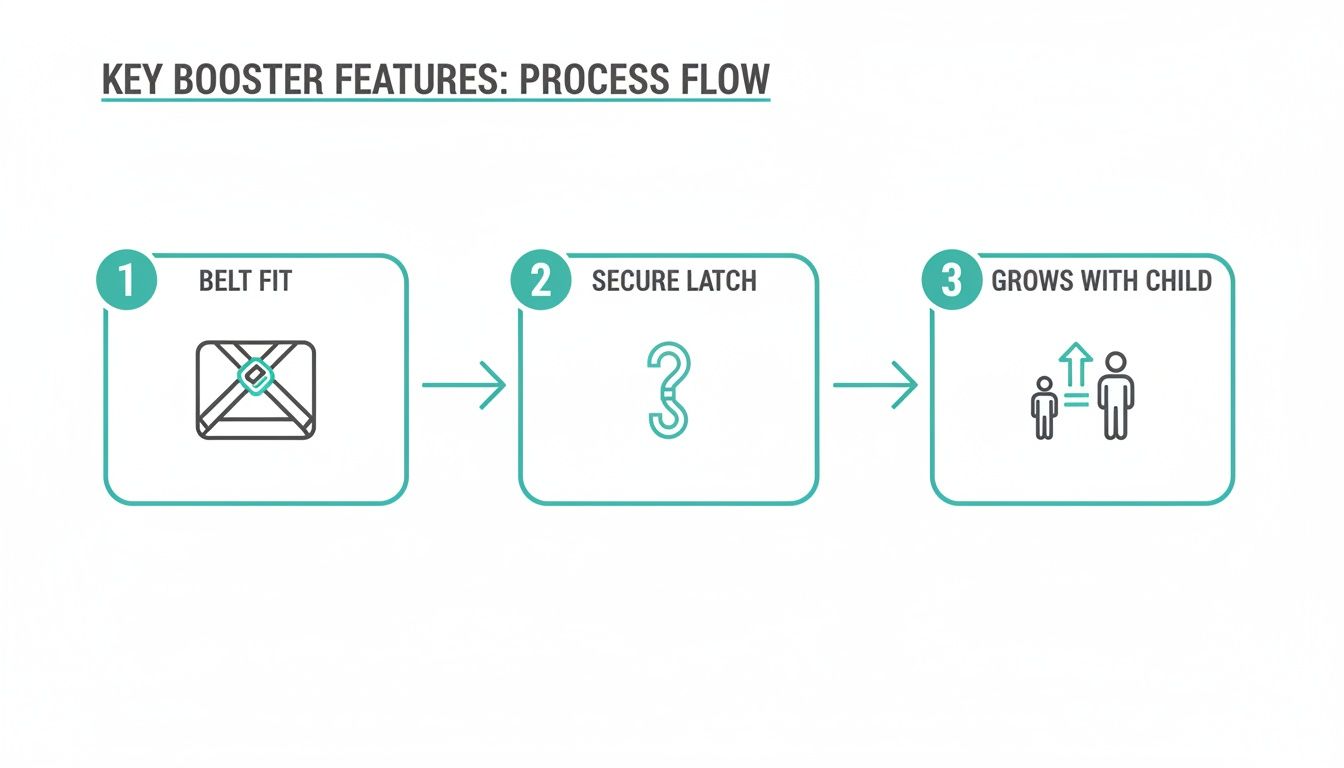
These three elements—proper belt fit, a secure seat, and adjustability—are what create a complete safety system that adapts as your kid grows.
Common Installation Mistakes to Avoid
Even the most careful parents can make small mistakes that might compromise safety. Knowing what common errors to look for will help you build confidence and ensure your child is always protected.
Here are a few of the most frequent missteps we see:
-
Shoulder Belt Tucked Under the Arm: This is a major red flag. Kids often get annoyed by a shoulder belt rubbing their neck and will instinctively tuck it under their arm or behind their back. Doing this completely eliminates all upper body protection in a crash. If this is happening, the shoulder belt guide probably needs an adjustment.
-
Twisted Seat Belts: A twisted seat belt can't distribute crash forces the way it's designed to. Before every trip, run your hand along the belt to make sure it's lying completely flat from the buckle all the way to the top.
-
Skipping the Belt Guides: Those red or colored slots on the booster aren't just for show. They are engineered to position the lap and shoulder belts perfectly on your child’s small frame. Always make sure the belts are routed through them correctly.
A booster seat’s entire job is to make an adult seat belt fit a small child. If the belt is sitting on the stomach or slipping off the shoulder, the booster isn't doing its job. A quick fit-check before you move the car is all it takes.
Achieving a Great Fit in Any Car
Let’s be honest—not all vehicle seats are the same. Some are sloped at weird angles, while others have bulky headrests that interfere with high-back boosters. If you’re struggling to get the booster to sit flat, don't be afraid to try a different seating position in your back seat.
For families who travel a lot or are constantly switching cars, mastering these quick checks is a game-changer. If you have a trip on the horizon, our guide on traveling with car seats has more tips to make it painless. Building that repeatable safety routine will give you total peace of mind, no matter whose car you’re in.
Your Top Booster Seat Questions, Answered
Alright, let’s tackle the big questions. Moving into a booster seat can feel like a huge step, and it's totally normal to have a long list of "what ifs." We hear these concerns from parents all the time, so we've put together some straight-to-the-point answers to help you feel confident about this transition.
Think of this as your personal cheat sheet for all things booster seats. We'll cut through the noise and get right to what matters, so you can be sure you're making the safest choice for your little one.
What Are the Booster Seat Laws in My State?
This is a big one, and honestly, the answer can be a bit confusing since the rules change from state to state. While it's always a good idea to know your local laws, it’s even more important to remember that these are the absolute minimum requirements—not the gold standard for safety.
Most child safety experts will tell you that the legal minimums for age, weight, and height often don't go far enough to keep your child truly protected.
You can look up the specific laws for your area on trusted sites like the Governors Highway Safety Association (GHSA). But our best advice? Always follow the maximum height and weight limits on the booster seat itself. Prioritizing your child's developmental readiness and proper fit over the letter of the law is always the safest bet.
Is It Safe to Use a Secondhand Booster Seat?
We get it—kids are expensive, and saving money is always a plus. When it comes to a booster seat, though, buying used is a risk we strongly advise against. A secondhand seat has a hidden history, and you have no way of knowing what it's been through.
Here’s why it’s such a gamble:
- Unknown Crash History: A booster that’s been in even a moderate crash might have invisible stress fractures that make it unsafe. The previous owner might not even know it needs to be replaced.
- Plastic Breakdown: Car seat plastic degrades over time, especially when it’s been baking in a hot car for years. This makes it brittle and less likely to protect your child in an accident.
- Missing Parts or Labels: Crucial pieces, warning labels, or the instruction manual could be long gone, making it impossible to know if you're installing or using it correctly.
Every car seat has an expiration date printed right on it for these very reasons. Even if you check for recalls and the expiration date, the safest and most responsible choice is to buy a new, affordable seat from a brand you trust. Your child's safety is worth that peace of mind.
A car seat is a one-and-done safety device. If it's been in a crash, its protective structure is compromised. With a used seat, you're gambling with an unknown past.
How Do I Know My Child Has Outgrown Their Booster?
Graduating from a booster seat is another huge milestone! But just like moving into one, the decision should be based on fit, not age. The whole point of a booster is to make the adult seat belt fit your child’s small frame correctly. Once they're big enough for the seat belt to do its job on its own, the booster is no longer needed.
Safety experts use a simple "5-Step Test" to see if a child is ready to ride without a booster. Before you even think about ditching it, make sure your child can do all five of these things every time they get in the car:
- Their back is completely flat against the vehicle's seatback.
- Their knees bend comfortably right at the edge of the vehicle seat.
- The lap belt lies low across their upper thighs and hips (not on their soft belly).
- The shoulder belt crosses the middle of their chest and collarbone (not touching their neck or face).
- They can stay seated like this for the entire trip, without slouching or moving around—even if they fall asleep.
If they can't pass all five steps, they still need their booster seat to stay safe. It's as simple as that.
Where Is the Safest Place for a Booster Seat?
The back seat is always the safest place for any child under the age of 13. End of story. This keeps them far away from the force of an active frontal airbag, which can cause serious injury to a child.
Statistically, the center rear seat is the safest spot in the entire car because it's the furthest away from a potential side impact. However, there's one major catch: you can only use that spot if it has both a lap and a shoulder belt.
A booster seat must always be used with a lap-and-shoulder belt. A lap-only belt is incredibly dangerous for a child in a booster because it provides no protection for their upper body. If your center seat only has a lap belt, you must install the booster in one of the side seats that has a proper lap-and-shoulder belt.
At Hiccapop, we believe that finding the best booster seats for toddlers shouldn't be so complicated. By focusing on safety, readiness, and real-world convenience, you can make the best choice for your family. Explore our collection of thoughtfully designed products that make parenting just a little bit easier.