


Finding the Best Booster Seats for Eating
The very best booster seats for eating nail the fundamentals: a secure 3-point harness, a surface that’s a breeze to wipe down, and a rock-solid attachment to your dining chair using dual straps. Brands like the Hiccapop Omniboost are popular because they hit that sweet spot of safety, on-the-go convenience, and clever designs that make cleanup less of a chore. After all, your goal is to enjoy family meals, not spend an extra 20 minutes excavating dried mac and cheese from a seat crevice.
Welcome to the Grown-Up Table
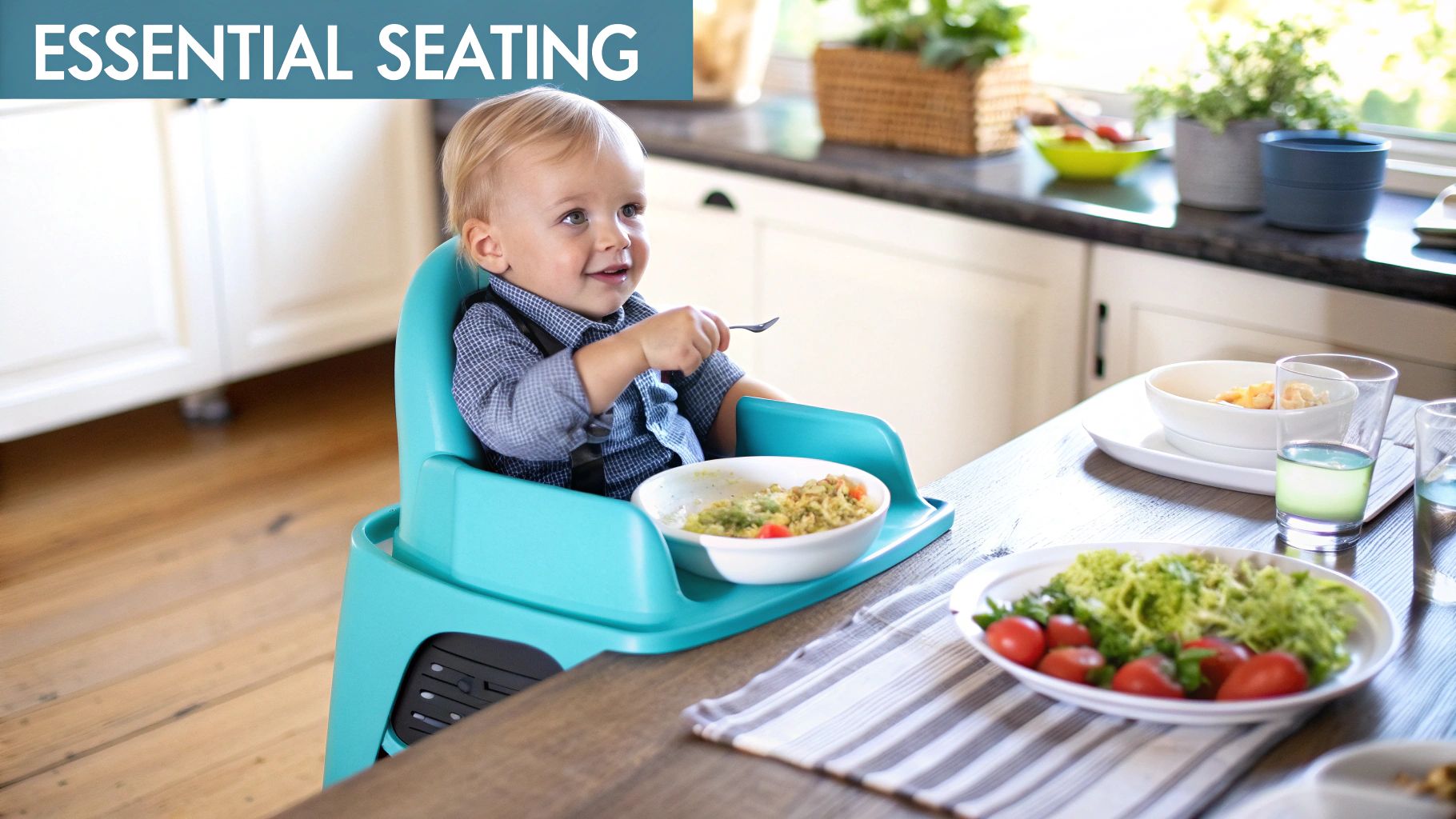
It’s a huge milestone—that moment your toddler suddenly decides they're way too big for their high chair. One day, they’re contentedly banging a spoon on the tray; the next, they’re staging a jailbreak, absolutely convinced their rightful place is at the big table with everyone else. This isn’t just a phase; it's a major leap toward independence.
So, what's the next step? This guide is designed to be your roadmap, helping you navigate the options and find the perfect booster seat to make mealtimes a success instead of a struggle. We’re going to cut through the marketing noise and get straight to what actually counts: non-negotiable safety features, cleanup that won't consume your evening, and smart designs that encourage your child's growing independence. Think of this as getting advice from a friend who’s already been through it. Choosing the right seat is about more than just giving them a boost—it's about building their confidence and making family meals a time you can all enjoy together.
Why the Right Seat Matters
A good booster seat is so much more than just a tiny chair. It’s a critical tool that promotes safer, better eating habits. When a child is sitting at the correct height, with their feet firmly supported and their body properly aligned, they can finally stop wiggling and focus on the food. That ergonomic stability is essential for safe swallowing and for mastering tricky fine motor skills, like actually getting the peas onto the fork.
This growing understanding of safety and ergonomics has created a huge demand. In fact, the global market for baby high chairs and booster seats was valued at around USD 4.5 billion in 2024 and is expected to keep climbing. This isn't just a trend; it shows that parents everywhere are prioritizing well-designed, secure solutions for mealtime.
Of course, boosters aren't the only option. Some families opt for alternatives like Montessori table and chair sets to give their little ones even more independence. No matter which path you take, the end goal is always the same: creating a safe, positive, and inclusive dining experience. Let's dive in and find the perfect seat to welcome your little foodie to the table.
Your Non-Negotiable Safety Checklist
When it comes to picking a booster seat for the dinner table, safety isn't just another feature on a list—it's everything. It's the one area where you simply can't compromise. Let’s break down the absolute must-haves that every parent should look for before making a choice. Think of this as your essential checklist. If a booster doesn't tick these boxes, it's an immediate "no," no matter how stylish or convenient it looks.
Harness Systems Explained
The harness is what keeps your little one securely in place, preventing any unexpected slips or tumbles. You'll typically run into two main types: the 3-point and the 5-point harness.
- 3-Point Harness: This system has two straps for the waist and one that comes up between the legs. For most toddlers who can sit up confidently on their own, a 3-point harness provides all the necessary security to keep them from sliding out.
- 5-Point Harness: This is the same super-secure system you see in car seats, adding two shoulder straps to the mix for maximum restraint. It's fantastic for younger toddlers or the especially wiggly ones, but it can sometimes feel like overkill for older kids who just need a little lift.
For mealtimes, a snug 3-point harness usually hits that perfect sweet spot. It provides all the safety you need without being overly complicated.
A Wobble-Free Fit Is Mandatory
After you've checked the harness, the next critical test is how the booster attaches to your dining chair. You want that thing to feel like it's part of the chair itself. A wobbly booster is an accident waiting to happen.
Look for a seat with two attachment straps—one that secures underneath the chair and another that wraps firmly around the back. Before every single use, give the booster a good, solid shake. It shouldn't budge at all. If you feel any sliding or tilting, pull those straps tighter. A non-slip base is another game-changer. Those grippy rubber pads on the bottom are essential for preventing the booster from sliding around on slick chair surfaces, adding a vital layer of stability.
Check Certifications And Materials
Always keep an eye out for the JPMA (Juvenile Products Manufacturers Association) certification seal. This little seal is a big deal. It means the booster has been put through the wringer by independent testers to ensure it meets strict safety standards. It’s your shortcut to peace of mind.
The materials matter, too. Make sure any plastic is durable and, most importantly, BPA-free, especially since food will inevitably end up on and around it. The logic behind choosing BPA-free food contact items absolutely applies to the seat your child eats in. Safety isn't just about preventing falls; it's also about ensuring the materials your child interacts with daily are non-toxic.
Understanding Booster Materials and Design
It’s easy to get drawn in by cute colors and fun patterns, but let's talk about what really matters: what the booster seat is made of. The materials and the overall design are what determine how long it will last, how safe it is, and—let's be honest—how much of a headache it will be to clean after a messy meal.
While you might see some stylish wooden options or boosters with plush fabric covers, sturdy plastic is the king of the booster seat world for good reason. It’s tough, it’s light, and you can wipe it down in a flash. Plastic is so dominant that it made up nearly half (49.1%) of the entire child safety seat market in 2023. This is because it helps manufacturers hit all the critical federal safety standards while keeping the seats affordable and practical for parents.
Materials That Make Life Easier
When you're looking for the best booster seats for eating, the material is your first defense against the beautiful chaos of toddler meals. Here’s a quick look at what you’ll find out there:
- BPA-Free Plastic: This should be at the very top of your list. Good, food-grade plastic is durable, a breeze to clean, and doesn’t contain harmful chemicals. It can handle everything from dropped forks to abstract spaghetti sauce art for years.
- Wood: Wooden boosters can look fantastic and are often very sturdy. The trade-off? They’re usually heavier, not as portable, and can have little nooks and crannies where food loves to hide, making cleanup a real chore.
- Fabric and Foam Cushions: They definitely add a layer of comfort, but fabric is a magnet for spills and crumbs. If you go for a cushioned model, make absolutely sure the cover is removable and machine-washable. A great compromise is wipeable foam, which offers a bit of softness that you can clean with a single swipe.
Parenting Pro-Tip: A booster seat with a seamless, one-piece design is a true game-changer. Fewer nooks and crannies mean fewer places for rogue peas and hidden crumbs to hide out for weeks.
Why Smart Design Matters for Comfort and Cleanup
Beyond the raw materials, the actual shape and structure of the booster play a huge part in your child’s comfort and your post-meal routine. A well-designed seat isn't just an accessory; it’s a tool that makes your life easier.
For instance, a contoured seat provides better ergonomic support, helping your little one sit up properly without slouching. Good posture isn't just for comfort—it's also really important for safe swallowing. Another small detail with a big impact is smooth, rounded edges, which prevent accidental bumps and make wiping down the seat from any angle a piece of cake.
If you want to dive deeper into different styles, our guide to the best convertible booster seats can give you more insight into designs that grow with your child. The best designs blend safety, comfort, and cleanability so well you hardly even notice them—and that’s exactly the point.
Cleaning and Maintenance: Winning the War on Mealtime Mess
Let's be honest, mealtime with a toddler can feel like you're cleaning up after a food-based tornado. Spaghetti on the ceiling, mashed banana in their hair... it's a daily battle. That’s why one of the most critical, sanity-saving features of any good booster seat is how easy it is to clean.
Your best defense is a seat with a smart, seamless design. Think smooth surfaces and no tiny crevices. The fewer nooks and crannies you have, the fewer places there are for runaway peas and cracker crumbs to hide. A quick wipe-down should handle the daily mess, not a full-on archeological dig with a toothpick. Another game-changer? A detachable, dishwasher-safe tray. This feature is a parent's best friend. Instead of wrestling with a sticky tray at the sink, you can just pop it into the dishwasher and get back to your evening.
Materials Matter
When it comes to the seat itself, the material will make or break your cleanup routine. Cushions add comfort, but they can also be crumb magnets.
- Wipeable Foam: This is a fantastic option. It gives your little one some padding but cleans up in seconds with a damp cloth. It's the perfect middle ground for parents who value speed and efficiency.
- Machine-Washable Fabric: Fabric cushions are often cozier and come in cute patterns, but they soak up spills like a sponge. If you choose this style, make sure the cover is a breeze to get on and off, because you’ll be washing it—a lot.
For the ultimate no-fuss solution, many parents swear by a simple, cushion-free plastic booster. What it lacks in plushness, it more than makes up for in pure convenience. A quick spray and wipe, and you're done.
Booster Seat Cleanability Comparison
To help you decide, here’s a quick look at how different materials and features stack up when it comes to cleanup.
| Feature / Material | Ease of Cleaning (1-5 Scale) | Pros | Cons |
|---|---|---|---|
| Cushion-Free Plastic | 5 | Easiest to clean; no hidden spots for food. | Less comfortable for the child. |
| Wipeable Foam Cushion | 4 | Comfortable yet easy to wipe down quickly. | Can stain over time with certain foods. |
| Machine-Washable Fabric | 3 | Soft and cozy; many design options. | Requires frequent washing; stains can set in. |
| Detachable Tray | 5 | Makes cleaning the eating surface simple. | Can be bulky to store. |
| Crevice-Free Design | 5 | Prevents food from getting trapped. | Can be harder to find in some models. |
Ultimately, a seat that doesn’t add a ton of time to your cleanup routine is a huge win.
A Good Fit Means Less Mess
Believe it or not, getting the right fit at the table isn't just about safety—it also helps contain the chaos. A child who is sitting securely and comfortably at the right height is far less likely to wiggle, squirm, and send their lunch flying across the room. This is where finding the right clearance between the tabletop and the booster seat comes into play.
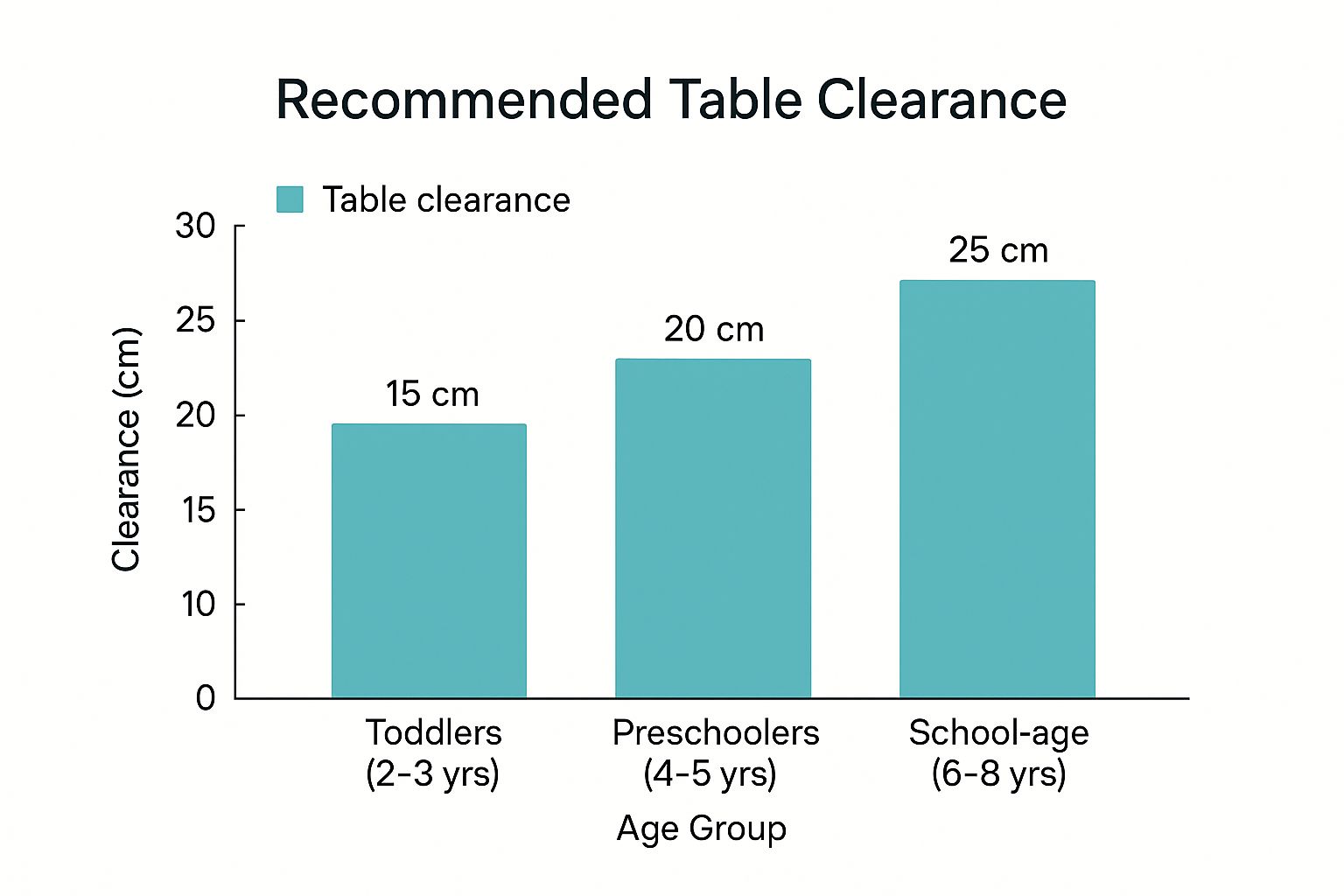
As you can see, the ideal gap grows with your child, keeping their arms at a comfortable height for self-feeding. Finding a booster you don’t dread cleaning is a massive victory. It means less time scraping dried-on food and more time enjoying those chaotic but precious family moments.
Finding a Great Portable Booster Seat
Life with a toddler means life on the move. Whether you're heading to a friend's house for dinner, trying a new cafe, or embarking on a full-blown family vacation, having the right gear can make or break the experience. A reliable portable booster seat is one of those game-changers. But what does "portable" really mean when it comes to a booster? It's not just about size. True portability is the perfect mix of a lightweight build, a compact fold, and a simple, easy-to-carry design. The best ones are the seats you can just grab and go without a second thought.
Different Styles for Different Adventures
As you start your search, you'll see a couple of main styles pop up. Your choice really boils down to what you need most and how much space you're willing to give up.
- Compact Hard-Shell Models: Think of these as the little siblings to your at-home booster. They usually fold down flat, which makes them a breeze to tuck into the trunk or a large tote bag.
- Minimalist Fabric Harnesses: If you're an ultra-light packer, this is your jam. These fabric-only seats can be rolled or folded up small enough to disappear into a diaper bag, offering a secure way to keep your toddler at the table without any of the bulk.
The global baby seat market, which was valued at USD 7.46 billion in 2019, has exploded with innovations that merge top-tier safety with real-world convenience. This boom has directly shaped the design of the best booster seats for eating, leading to features like super-secure harnesses and travel-friendly forms that parents trust.
Finding the Right Balance for Your Family
Here's the thing about portable boosters: you're almost always making a trade-off. That super-light fabric harness, for example, won't give you the height boost or the handy tray that a hard-shell model does. On the flip side, a sturdier folding booster might feel like one-too-many things to carry into a crowded restaurant.
The bottom line: Think hard about where you’ll use the booster most often. If you're constantly eating out, a super-compact model is probably your best bet. For regular trips to the grandparents' house where you can leave it behind, a slightly larger booster with more features might be the perfect fit.
Ultimately, you have to decide what your top priority is. Is it a setup so fast you can do it with one hand? Or is a built-in tray a non-negotiable for keeping those flying peas contained? Answering those questions will point you toward a travel-friendly booster that feels less like a piece of gear to lug around and more like your secret weapon for happy family meals anywhere. If you want to explore more on-the-go solutions, check out our deep dive into portable booster seats for travel.
Your Booster Seat Questions, Answered
Picking out gear for your little one can feel like navigating a maze. When it comes to finding the right booster seat for the dinner table, a ton of questions always come up. We've heard them all from parents just like you, and we're here to give you the straight answers you need to choose with confidence. Think of this as your go-to guide for all things booster seats, clearing up the confusion so you can get back to enjoying family meals.
When Is My Child Ready for a Booster Seat?
This is the big one, and the answer has more to do with your child's development than their age. While most toddlers make the move between 18 months and 3 years old, the real cues are all about physical readiness. Can your child sit up straight on their own, with solid core control? Have they outgrown their high chair, or worse, started treating it like a jungle gym? These are tell-tale signs it's time to make the switch. Just be sure to double-check your child's weight and height against the manufacturer's specs for any booster you're looking at.
Can I Use a Car Booster Seat at the Table?
It's a common thought—you already have one, so why not? But the answer here is a hard no. It might seem like a clever hack, but it’s a serious safety gamble. Car booster seats are engineered and crash-tested for one specific job: working with a car's seatbelt system. They simply don't have the right straps or design to anchor securely to a dining chair. Their bases aren't built for stability on a flat chair surface, either. For mealtimes, you absolutely need a dedicated dining booster seat to keep your child safely secured and properly positioned.
How Do I Know the Booster Is Attached Safely?
A secure fit is everything. First, always start with a sturdy, stable, four-legged dining chair. Avoid using the booster on swivel chairs, folding chairs, or wobbly bar stools—they're just not stable enough.
Here’s a quick safety checklist to run through before every meal:
- Set the booster flat on the chair's seat.
- Buckle the straps tightly—one under the seat bottom, the other around the backrest.
- Cinch them down until there is absolutely no slack.
- Give the booster seat a good, firm wiggle. It shouldn't shift, slide, or tilt one bit.
If you feel any movement, take a moment to re-tighten the straps. Making this a quick, two-second habit is the best way to ensure your little one is safe and sound for every meal.
Is a High-Back or Backless Booster Better for Eating?
For toddlers just moving on from a high chair, a high-back booster is the clear winner for safety and support. It provides that extra stability for their trunk and head, helping them sit with good posture. Good posture isn't just about looking proper—it’s critical for safe swallowing and can cut down on all that mealtime fidgeting.
Backless boosters are really just for adding height. They're a better fit for older kids, usually around 4 years and up, who already have strong core muscles and can sit up straight without any help through an entire meal. To get the best of both worlds—safety and ergonomic support—always start with a high-back model.
At hiccapop, we build our products to solve these exact problems. Our OmniBoost Travel Booster Seat was designed with top-tier safety, ridiculously easy cleaning, and true portability in mind. It's built for real life with a toddler—messy, adventurous, and always on the move. See how we're making mealtimes easier. We hope this guide helps you find the perfect fit for your family. What feature is a non-negotiable for you in a booster seat? Let us know in the comments below