


A Parent's Guide to Portable Booster Seats for Travel
Traveling with kids can feel like you're a military-grade logistics officer, but figuring out the car seat situation doesn't have to be a battle. The right portable booster seat for travel is a game-changing piece of gear that makes everything easier. These seats are specifically designed to be lightweight, compact, and a breeze to pack, giving you peace of mind about safety in rental cars, Ubers, and taxis without having to haul your heavy, at-home car seat through the airport.
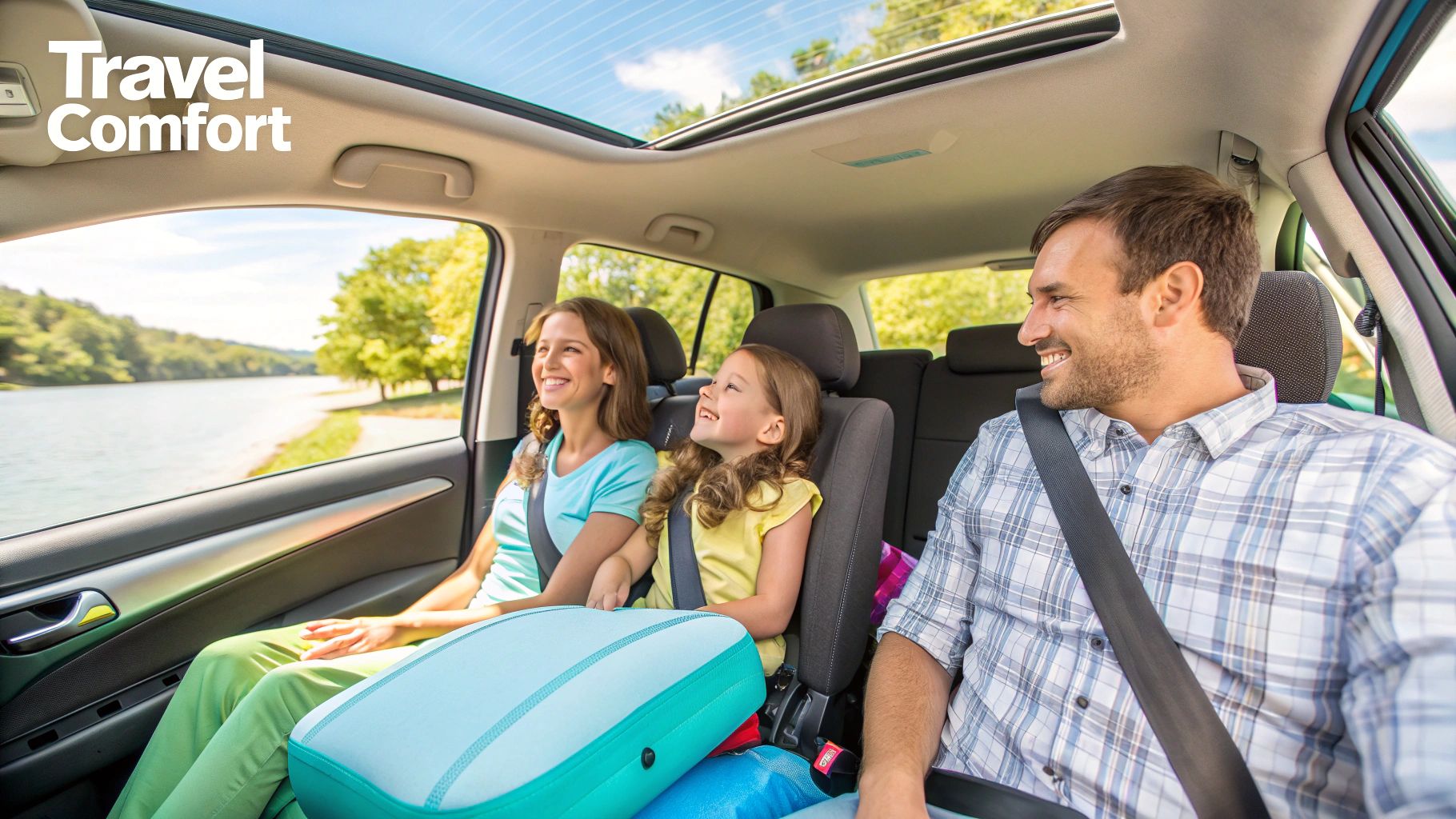
Why a Travel Booster Is Your New Best Friend
Let’s be real. Nobody wants to lug a massive, clunky car seat through an airport terminal while also juggling a kid, carry-ons, and a desperate need for coffee. Standard booster seats are built to stay put in your primary vehicle, not get tossed around on a family vacation. That's precisely where a dedicated travel booster becomes a sanity-saver.
These seats are built from the ground up for families on the move. They're meant to be thrown into a backpack, tucked into an overhead bin, or slipped into a suitcase without adding a ton of weight or hogging all the space. Whether it's an ultralight inflatable model or a clever folding design, there’s a portable solution out there for any kind of trip you can dream up.
The Real-World Benefits of Going Portable
Opting for a portable booster is about more than just convenience—it's about making sure your child is safe no matter where your travels take you. Rolling the dice with a rental car company's car seat supply is a gamble. You have no idea what the seat's history is, what condition it's in, or if they'll even have one when you get there.
Bringing your own travel-friendly booster means you're always prepared. Here’s why that’s such a big deal:
- Guaranteed Safety: You can relax knowing your child is in a seat that you trust and that meets current safety standards.
- Stress-Free Transitions: No more fumbling around in a parking garage. You can install the seat in a taxi, Uber, or rental in minutes and get on your way.
- Cost-Effective: Those daily rental fees for child seats add up fast. Bringing your own can save you a surprising amount of money over a week-long trip.
- Familiar Comfort: Kids do better with what they know. A familiar seat can make a huge difference in keeping them happy and cooperative.
Of course, the booster is just one part of the packing puzzle. To make sure you've got all your bases covered, this comprehensive family vacation packing checklist is a great resource for remembering all the essentials, including other key safety items.
More Than Just a Seat
Today’s portable boosters are smarter than ever, with features designed by people who clearly understand parents. Most come with easy-to-clean fabrics because spills are just a non-negotiable part of life with kids. Their smart, compact designs mean you won't have to play a frustrating game of Tetris every time you pack the car.
The goal is simple: make family travel less about the gear and more about the memories. A great travel booster helps you achieve that by removing a major point of stress from your checklist.
As you get ready for your next adventure, remember that having the right gear is a huge step toward a smooth, fun experience. By the end of this guide, you'll know exactly how to pick the perfect seat for your family's travel style.
Comparing the Different Types of Travel Boosters
Choosing a portable booster seat can feel a bit overwhelming at first. They aren't all built the same, and what works for a week-long road trip might not be the best fit for a flight to Europe. Let's break down the main categories to help you find the perfect travel sidekick for your family.
Inflatable Boosters: The Space Savers
Imagine a full-size booster that squishes down to the size of a water bottle. That’s the magic of an inflatable booster. These seats rely on an internal air bladder to provide the right height and structure, making them unbelievably compact when deflated.
They are the undisputed champions for families who pack light, especially for air travel where every inch of carry-on space is precious. With just a few puffs of air, you have a sturdy, comfortable seat ready to go.
The one thing to remember is that they have to be properly inflated to work. A saggy, underinflated booster won't position the seat belt correctly, so giving it a quick firmness check before each ride is a must.
Rigid Folding Boosters: The Quick-Draw Champions
For parents who value sturdiness and a lightning-fast setup, rigid folding boosters are a top contender. Unlike their inflatable cousins, these seats have a solid internal frame that simply folds down for transport. Think of them like a high-tech camping chair—compact when you need them to be, but robust and reliable when unfolded.
Their main advantage is pure "grab-and-go" convenience. You don't have to inflate anything, so you can have it ready in a rental car or taxi in seconds. This makes them an excellent choice for road trips with multiple stops or any travel involving frequent ins and outs of different vehicles.
While they are a bit bulkier than inflatable models, their durability and quick deployment are a trade-off many families are happy to make. This visual below highlights some of the key things you'll want to compare across different booster models.
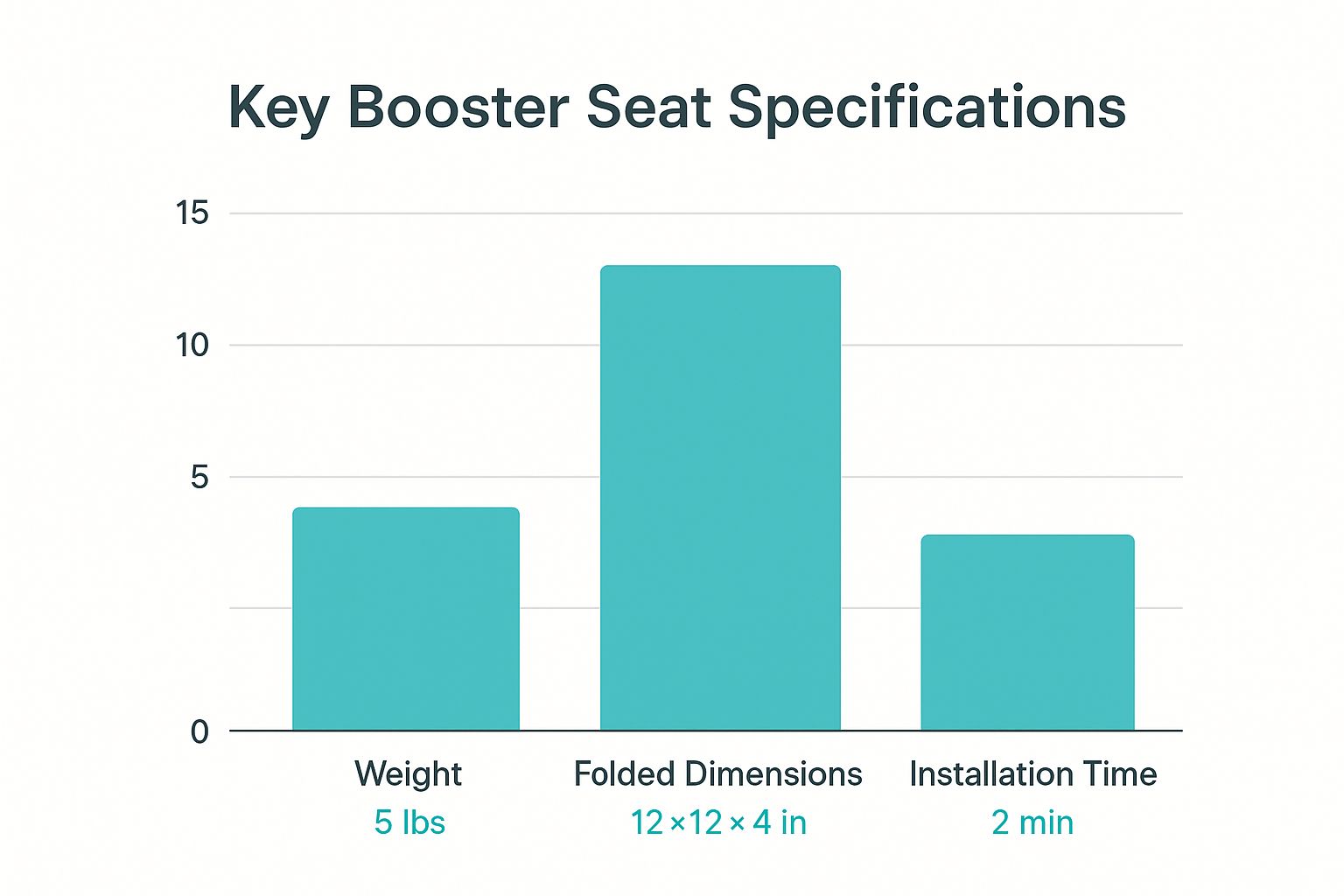
As you can see, the decision really comes down to balancing weight, packed size, and how quickly you need to get it set up.
Fabric and Harness-Style Boosters: The Minimalists
Finally, we have the ultra-minimalist options: fabric-based boosters and harness-style vests. These are the true featherweights of the booster world, designed for maximum portability above all else. A fabric booster might look like a simple reinforced cushion, while a vest actually works by positioning the car's seat belt correctly across your child's body.
Their innovative, lightweight designs challenge the traditional idea of a booster seat, offering a safe alternative that can easily fit into a child's own backpack.
These are incredibly popular for international travel or city trips that rely heavily on ride-sharing services. Their packability is unmatched, though some models can have a bit of a learning curve. It's always a good idea to practice setting them up a few times at home before you hit the road.
This trend toward travel-friendly gear is only getting bigger. The global market for booster seats was valued at around USD 4.5 billion and is projected to climb to USD 6.3 billion by 2033, largely because parents are demanding safer, more convenient solutions for their families on the move. You can explore more about the growing portable baby gear market to see how safety and smart design are evolving.
No matter which type you lean toward, the goal is always the same: making sure your little one is secure so you can focus on the journey ahead.
To make things even clearer, here's a quick comparison of the different types to help you see the pros and cons at a glance.
Travel Booster Seat Feature Comparison
| Booster Type | Best For | Pros | Cons |
|---|---|---|---|
| Inflatable | Air travel, minimalist packing, backpacking | Extremely compact and lightweight | Requires inflation/deflation; risk of punctures |
| Rigid Folding | Road trips, frequent car changes, rental cars | Very sturdy and durable; extremely fast setup | Bulkier and heavier than other options |
| Fabric/Vest | Ride-sharing, international travel, city trips | The most portable and lightweight option available | Can have a learning curve; less structured |
Ultimately, the best choice depends entirely on how you travel. Consider your primary mode of transport and how much space you have to spare, and you’ll find the perfect booster for your next adventure.
Understanding Global Safety Standards
When it comes to your kid, safety is non-negotiable. But trying to decode safety regulations, especially when you're traveling internationally, can feel like you're reading a foreign language. Let’s cut through the confusion and talk about what really matters with safety standards for portable booster seats for travel.
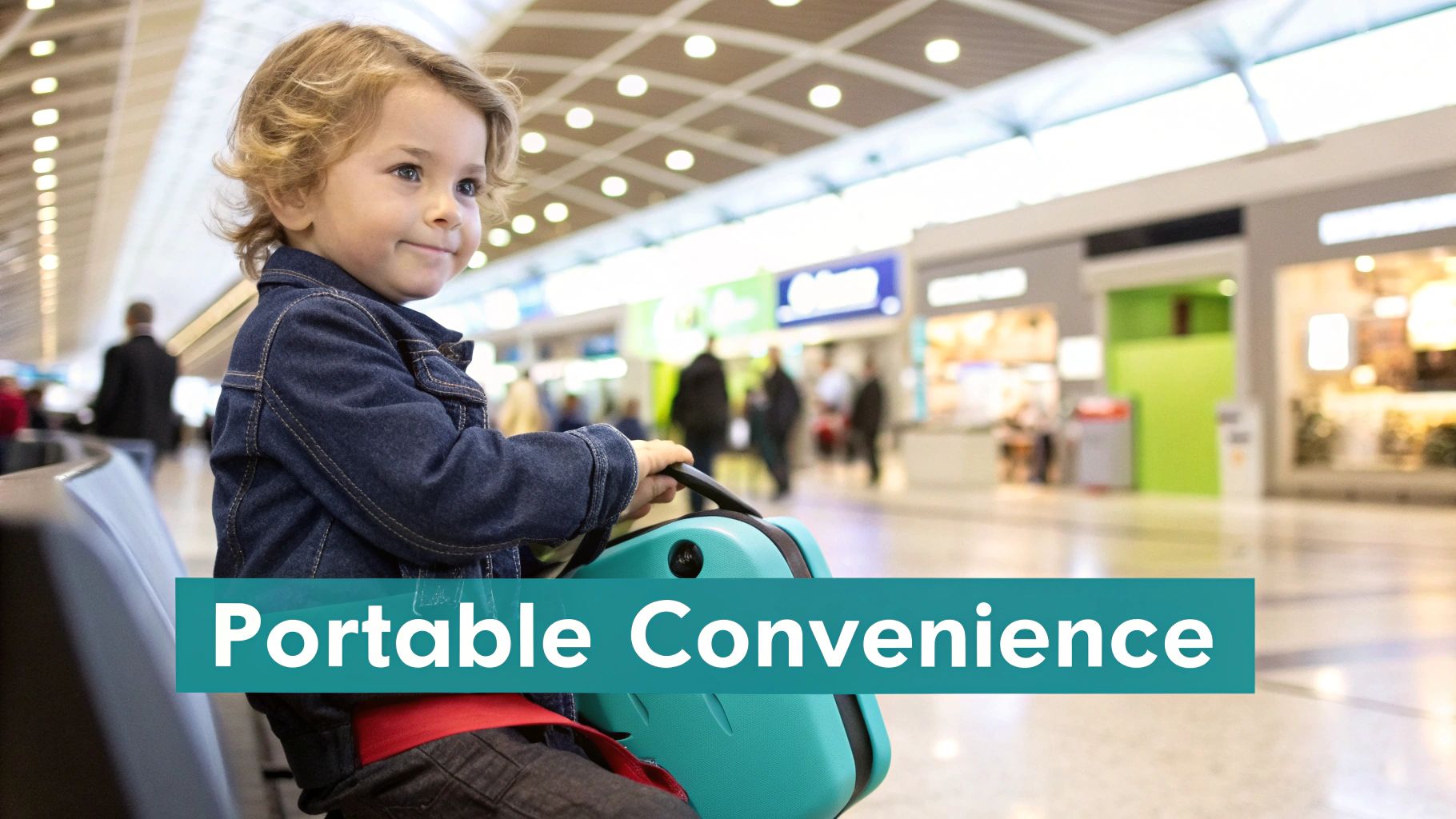
Think of a booster seat's job this way: it doesn’t have its own harness. Its one and only purpose is to "boost" your child up so the car’s actual seat belt fits them correctly. In a crash, a proper fit is everything.
Without a booster, the lap belt rides dangerously high across a child’s stomach, putting them at risk for serious internal injuries. The shoulder belt, meanwhile, usually cuts right across their neck. A booster seat fixes that geometry, guiding the lap belt down low across their sturdy hip bones and positioning the shoulder belt squarely over their collarbone.
Decoding the Safety Acronyms
As you start shopping, you’ll see a bunch of acronyms on the labels and boxes. They aren’t just alphabet soup; they're your proof that the seat has been put through the wringer with rigorous testing.
Here are the main ones you need to know:
- NHTSA (National Highway Traffic Safety Administration): This is the gold standard in the U.S. Any booster sold here must meet or beat Federal Motor Vehicle Safety Standard 213. This sticker means it has passed strict crash tests and meets all labeling rules.
- ECE R44/04: This is the long-standing European safety standard. Seats with this label have been tested for both front and rear impacts and are approved based on a child's weight.
- ECE R129 (i-Size): This is Europe's newer, tougher standard. It adds mandatory side-impact testing to the mix and uses a child's height for fitting instead of just their weight. Boosters meeting this standard have passed more stringent tests.
Here's the key takeaway for travelers: always check which standard is required at your destination. A U.S.-certified booster seat might not be legal to use in Europe, and the same goes for the other way around. A few brands make dual-certified seats, which are a fantastic investment for frequent international flyers.
Car Boosters vs. Dining Boosters
This is a point that absolutely cannot be overstated: a portable booster seat for a car and a portable booster for a dining table are not the same thing. It's like wearing a bicycle helmet to a car race—they are engineered for completely different jobs.
A dining booster just gives a child a lift at the table. It has zero structural integrity to withstand the massive forces of a car crash. Using one in a vehicle offers no protection and is incredibly dangerous.
A car booster seat is a piece of safety engineering. A dining booster is a piece of furniture. Never confuse the two when your child's safety is on the line.
Thankfully, this growing awareness of safety is pushing the industry forward. The global child safety seats market is expected to hit USD 6.79 billion by 2032, driven by stricter government rules and new safety tech. These regulations demand better side-impact protection and easier installation, making today's seats safer than ever before. You can dive deeper into these trends in the global child safety seat market report.
This intense focus on engineering and testing is why you see so many different types of boosters, from rigid to inflatable, all designed to meet these high standards. For a closer look at how different designs achieve this, check out our guide that asks, "are inflatable booster seats safe?"
At the end of the day, reading the label and understanding these standards puts you in the driver’s seat. It lets you see past the marketing and choose a product that’s been proven to protect your child, giving you real peace of mind, no matter where your travels take you.
Must-Have Features for Travel-Friendly Boosters
Once you’ve nailed down the safety certifications, it’s time to look at what really separates a decent travel booster from a great one. We’re talking about the practical, real-world features that can mean the difference between a smooth trip and a day full of travel headaches. These are the details that truly matter when you’re on the move.
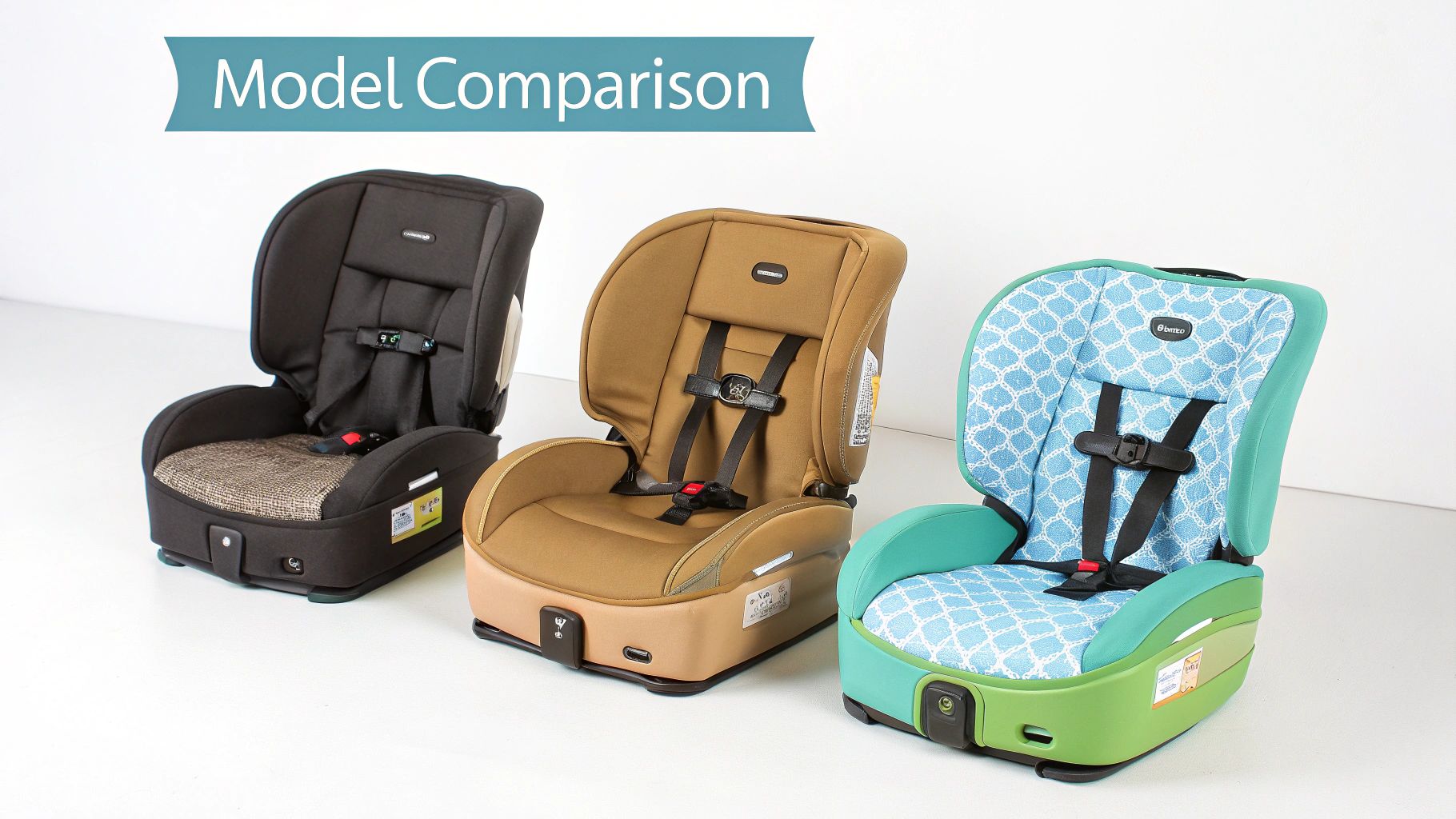
Lightweight and Compact Design
Every pound and inch counts when you're juggling luggage, kids, and carry-ons through an airport. The whole point of a travel booster is to be… well, portable! Look for models engineered to be feather-light and designed to fold, shrink, or pack down into a surprisingly small footprint.
Think of it like this: your everyday booster is your heavy-duty winter coat—warm and protective, but a pain to lug around. A travel booster should be your packable rain jacket. It gives you the protection you need but can be tossed into a backpack without a second thought. The best ones are compact enough to fit right into your carry-on, which is a massive win.
Pro-Tip: Always pack your booster in your carry-on bag. Never check it. This way, you know it won’t get lost or damaged in transit, and it’s ready to go the second you land.
This simple habit ensures you’re never stranded at your destination without a safe way to get your child from point A to point B.
Easy-to-Clean Materials
Let’s be real for a second: travel plus kids equals messes. It's an unavoidable law of nature. Spilled juice, melted granola bars, cracker crumbs in every crevice—your booster is going to see it all.
This is why the material it's made from is so important. Look for boosters with durable, non-porous fabrics you can wipe clean in seconds with a damp cloth. Even better? Removable, machine-washable covers. Trust me, this one feature can save you from spending your vacation staring at a sticky, stained seat.
Quick and Intuitive Installation
Picture this: you've just gotten off a long flight with a cranky kid, and now you’re standing in a dimly lit parking garage trying to figure out a new piece of gear. The last thing you want is a complicated installation process.
A top-tier travel booster should be so simple to install you could practically do it blindfolded. The best designs use obvious, color-coded seat belt paths and simple mechanisms that don't require an advanced degree to operate. The goal is a rock-solid, secure fit in any rental car in under a minute. This not-so-little detail reduces stress and, more importantly, minimizes the risk of installation error, which is key for a safe ride.
At the end of the day, when you're choosing a portable booster seat for travel, these practical features are just as crucial as safety ratings. A seat that’s light, cleanable, and easy to install is one you’ll actually be happy to use, making every family adventure that much better.
Mastering a Safe and Secure Installation
A great booster is only as safe as its installation. Seriously. You could have the most feature-packed, highest-rated portable booster seat on the planet, but if it’s not installed correctly, it simply can’t do its job. Let’s walk through how to get a secure fit every single time, turning you into a car seat installation pro.
At its core, a booster seat has one simple but critical purpose: to position your car's seat belt safely across the strongest parts of your child’s body. A secure installation keeps the booster from sliding around, which is what ensures the belt stays exactly where it needs to be during a sudden stop or, worse, a collision.
Getting the Perfect Fit Every Time
Achieving that snug, secure fit isn't rocket science, but it does demand a little attention to detail. Let's go through the steps, whether you're in your own car, a rental, or a taxi halfway across the world.
First, place the booster flat on the vehicle's back seat. You want it to sit flush against the seat back with no weird gaps. Some cars have deeply sculpted or "bucket" seats, so double-check that the booster isn't rocking or tilting to one side. A stable base is key.
Next, have your child hop in and sit with their back straight against the booster. Route the lap belt low and snug across their upper thighs—never across their soft tummy. Then, guide the shoulder belt so it lies flat across the center of their chest and collarbone, well away from their neck.
The Golden Rule: The end goal is always a perfectly positioned seat belt. The booster should feel stable, and the belt should lie flat without any twists, making solid contact with your child’s body.
Common Installation Mistakes to Avoid
Even with the best intentions, mistakes can happen. Knowing what to look for is half the battle, so let’s cover the most common installation errors.
Here are the top three pitfalls to watch for:
- Incorrect Belt Routing: This is a big one. Always follow the color-coded belt guides on the booster. Routing the belt over an armrest instead of under it, for example, completely changes the physics and can seriously compromise safety.
- A Pesky Headrest: Sometimes, a vehicle’s headrest can push a high-back booster forward, creating a dangerous gap between the booster and the vehicle seat. If the booster can't sit flat, see if you can remove the vehicle's headrest or try a different seating position.
- Loose Lap Belt: The lap portion of the belt needs to be tight. A good trick is to buckle up, then pull up on the shoulder portion of the belt to yank out any slack from the lap belt.
Pro Tips for Air Travel and Maintenance
Your booster seat journey doesn't just happen in the car. Getting through the airport and keeping your gear in good shape are just as important. For a much deeper dive into the logistics of flying with gear, check out our complete guide on traveling with car seats.
When you're flying, my best advice is to pack your booster in your carry-on luggage if you can. This keeps it from getting lost or taking a beating from baggage handlers. You can't use a belt-positioning booster on the plane itself, but having it with you means you’re ready to hit the road safely as soon as you land.
Don't forget about regular maintenance, either. Give your booster a quick once-over now and then, looking for any signs of stress like cracks in the plastic or frayed straps. Most messes are an easy wipe-down, but it’s worth checking if the cover is machine washable for those bigger clean-ups. Take care of your booster, and it'll be ready for your next big adventure.
How to Choose the Right Booster for Your Family
Okay, we've walked through the different types of boosters, the safety standards you need to know, and the features that make a real difference on the road. Now, let's put it all together. Finding the right portable booster seat for travel isn’t about chasing a single "best" model—it's about finding the one that seamlessly fits into your family's life.
Think of it this way: you’re looking for a perfect match across three key areas: your child, your car, and how you travel. Nail those three, and you’ve found your winner. This isn’t just another piece of baby gear; it's an investment in your peace of mind and your family's safety.
Your Personal Booster Checklist
To narrow down the options, take a moment to answer these questions. Your answers will act as a compass, pointing you toward the perfect booster for your next adventure.
-
How are we getting there? If you spend a lot of time in airports, an inflatable or ultra-compact booster that can be tucked into a backpack is a game-changer. But if you’re a family that lives for road trips, a more traditional folding booster that offers a bit more structure might be the better fit.
-
What’s my child’s size? Don't just look at their current height and weight—think about where they'll be in six months or a year. A seat with a higher upper limit for both height and weight means you won't be shopping for another one next travel season.
-
How mature is my kid? Be honest—is your child a master escape artist, or can they sit relatively still? For kids who tend to squirm, a booster with deep side wings or even a travel vest can provide that extra security to keep them safely in place.
Choosing a booster is a personal decision. The goal is to find a seat that makes your life easier and keeps your child secure, so you can focus on what really matters—making unforgettable family memories.
At the end of the day, the best booster seat is the one you’ll actually use correctly, every single time. By thinking through your family's unique needs, you can confidently pick a seat that will support your adventures for years to come.
A Few Lingering Questions About Travel Boosters
Even after doing all your homework, a few questions might still be nagging at you. That's totally normal. When it comes to your child's safety, you want to leave no stone unturned. Let's tackle some of the most common things parents ask about portable booster seats for travel.
When Is My Child Ready for a Portable Booster Seat?
The green light for a booster seat is all about height, weight, and, most importantly, maturity—not just a number on a birthday cake. Most kids hit this stage around age 4 and 40 pounds, but the real sign they're ready is their ability to sit properly for the whole ride.
This means no slouching, no leaning over to poke their sibling, and no fiddling with the seat belt. If they can sit still and keep the belt in the right position, they're likely ready. Always double-check the specific limits on the seat you choose, as every model is a little different.
Can I Use a Portable Dining Booster in a Car?
No. A thousand times, no. This is one of those non-negotiable safety rules. Dining boosters are made to give a toddler a lift at the dinner table; they have zero safety features designed to withstand the forces of a car crash.
A car booster seat is a piece of life-saving equipment. It goes through rigorous crash testing and is engineered to position the car's seat belt over the strongest parts of a child’s skeleton—their hips and collarbone. Using a dining booster in a car is like bringing a spoon to a sword fight; it offers no real protection and is incredibly dangerous.
Think of it this way: you wouldn't use a pool floatie as a life preserver in the ocean. They might look similar, but they are built for entirely different levels of safety. The same logic applies here—never mix up a dining booster and a car booster.
What Should I Know for International Travel?
This is a big one. Safety standards aren't universal, and they can change drastically once you cross a border. A booster that's perfectly legal in the U.S. (certified by the NHTSA) might not be approved for use in Europe, where seats need to meet ECE R44 or the newer R129 (i-Size) standards.
Before you pack your bags, do a quick search on the child seat laws for your destination. Some brands are a globetrotter's dream and offer dual-certified seats, which is a fantastic solution.
The other option is to rent a compliant seat from your car rental company. Just remember that bringing your own familiar booster means you know how to install it, you know its history, and you know it's clean. That peace of mind can be priceless.
At Hiccapop, we build products to make the tough parts of parenting a little easier and a lot safer, so you can focus on the fun. Our travel boosters are designed for on-the-go families, giving you top-tier safety in a lightweight package. See our collection and find the perfect travel companion for your next adventure at https://hiccapop.com.