


The Best Convertible Booster Seats to Keep Your Growing Child Safe
When it comes to your child's car seat, thinking long-term can save you a whole lot of hassle and money. That’s where the best convertible booster seats come into play. These clever seats are designed to grow right alongside your child, starting as a forward-facing harness seat for your toddler and later transforming into a high-back booster for your big kid.
It’s a smart, all-in-one design that means you won’t be shopping for a new seat every couple of years. It's about buying one great seat instead of two or three.
Why a Convertible Booster Seat Might Be Your Next Best Move
I get it—walking into the car seat aisle (or scrolling endlessly online) can feel like you’re trying to crack the Da Vinci code. But you've come to the right place. This guide is here to cut through the noise and make choosing the best convertible booster seat for your family feel a lot more manageable. It helps to think of this as more than just another piece of baby gear; it's a long-term investment in your child's safety and your own peace of mind.
These seats, which you'll often hear called "combination seats," are the next logical step after your child has outgrown their rear-facing infant seat. They're built for the long haul, sticking with your family for years once your little one is ready to face forward. Their incredible versatility is precisely why so many parents are choosing them.
The Beauty of a Two-in-One Design
The biggest draw is easily their longevity. Instead of buying a forward-facing harness seat now and then having to turn around and buy a separate high-back booster later, a convertible booster does both jobs. That's real money back in your pocket and one less round of research and installation you have to worry about down the road.
To really see how they work, it helps to understand their different modes. Convertible booster seats are multi-stage wonders, and knowing how they transition makes it easy to see their value.
Convertible Booster Seat Stages at a Glance
| Stage | Child's Typical Age/Size | Key Feature |
|---|---|---|
| Forward-Facing Harness | Toddler/Preschooler (e.g., 2+ years, 25-65 lbs) | Uses a built-in 5-point harness for maximum security. |
| High-Back Booster | School-Aged Child (e.g., 4+ years, 40-100 lbs) | Uses the vehicle's seat belt, with the seat acting as a "booster" for proper positioning. |
These two stages cover a huge chunk of your child's car-riding years, making this single purchase incredibly practical.
The growing demand for these seats is no surprise. They’re a huge part of the global baby car seat market, which was valued at around USD 7 billion in 2018 and is expected to hit nearly USD 10.87 billion by 2025. It just goes to show how many parents are looking for smarter, more adaptable solutions.
A convertible booster simplifies transitions. As your child grows, you don't have to shop for a new seat—you just adjust the one you already have. It’s about making parenting just a little bit easier.
Ultimately, picking a convertible booster is about buying confidence. You’re getting a reliable, safe seat that adapts as your child grows, covering everything from preschool drop-offs to those epic family road trips. If you're ready to see what's out there, feel free to explore our collection of durable and safe booster seats.
Decoding Modern Car Seat Safety Features
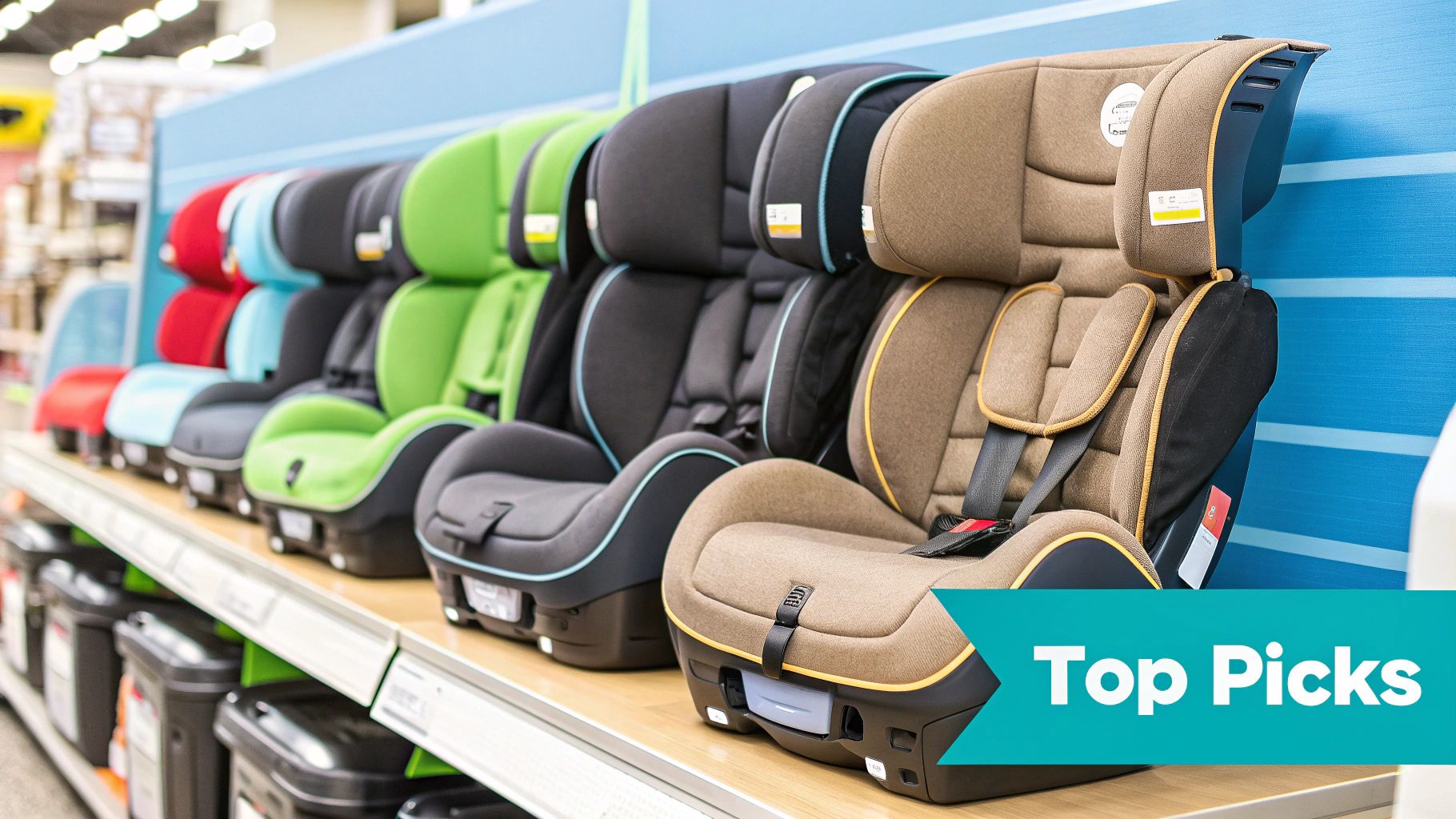
When you're shopping for a convertible booster seat, safety is the one area where there’s simply no room for compromise. But let's be honest, staring at a list of technical specs can feel like trying to read a foreign language. What actually keeps your child safe, and what’s just marketing fluff?
Let’s get one thing straight right away. Every single car seat sold in the U.S. has to meet or exceed the Federal Motor Vehicle Safety Standard 213 (FMVSS 213). This is the absolute baseline—a tough, non-negotiable set of crash-test requirements from the National Highway Traffic Safety Administration (NHTSA). So, any seat you pull off the shelf has already passed these crucial tests.
But think of the federal standard as passing your driver's test. It means you’re qualified to be on the road, but it doesn't mean you have the split-second reflexes of a professional race car driver. The best brands go far beyond these minimums, building in advanced features for even greater protection.
The Anatomy of a Safe Seat
The toughest convertible booster seats are built around a steel-reinforced frame. This is the literal skeleton of the car seat, giving it the structural integrity to prevent twisting or breaking during the immense forces of a collision. It’s the strong foundation that every other safety feature relies on.
Working hand-in-hand with that frame is energy-absorbing foam, usually called EPS foam—it’s the same dense material you find in high-quality bicycle helmets. This foam is placed strategically in the headrest, side wings, and all around the shell of the seat. Its entire job is to absorb and spread out the force of an impact, cushioning your child and slowing down their momentum more gently.
Think of it like this: The steel frame is the castle wall, and the energy-absorbing foam is the moat and soft ground around it. Both work together to shield the precious person inside from outside forces.
These two components are the unsung heroes of car seat safety. They are fundamental to how a seat performs when you need it most.
Why Side-Impact Protection Is a Big Deal
We often picture head-on collisions, but side-impact crashes are especially dangerous for little ones. That’s why you’ll see side-impact protection (SIP) advertised so heavily, and for very good reason.
Unlike the front and back of your car, the sides have a very small crumple zone to absorb impact. Enhanced SIP features—like deep side wings, extra layers of foam, and adjustable headrests—are designed to create a protective cocoon around your child’s most vulnerable areas: their head, neck, and torso.
Some high-end models even have external "pods" or cushions that absorb the initial force before it even reaches the main shell of the seat. When you're comparing seats, look for a substantial headrest and deep, supportive side wings. They aren't just for comfortable naps; they are critical safety components.
The Power of the 5-Point Harness
In its first stage, a convertible booster uses a 5-point harness to secure your child. This system is, without a doubt, the gold standard for keeping young children safe.
It secures them at five key points:
- Both shoulders
- Both hips
- Between the legs
This design is brilliant because it distributes the massive forces of a crash across the strongest parts of a child's body—their shoulders and hips. It keeps them locked in the safest possible position within the seat's protective shell. Every expert will tell you the same thing: keep your child in that 5-point harness for as long as you possibly can, until they hit the maximum height or weight limit for that mode.
Understanding these core features helps you see past the sales pitch and focus on the smart engineering that's truly designed to protect what matters most. While our focus here is on convertible boosters, it’s worth noting that other options have their own safety considerations. If you're curious about different types, you can explore our guide on whether inflatable booster seats are safe.
Mastering Car Seat Installation for a Secure Fit
You can buy the most highly-rated car seat on the market, but its safety features are only as good as its installation. Let’s be honest, getting that seat installed correctly is a huge source of anxiety for most of us. But don't worry—with a little know-how, you can feel confident you’re getting a rock-solid, secure fit every single time.
When you install a convertible booster seat, you have two ways to secure it to your vehicle: the LATCH system or the car's seat belt. One isn't inherently safer than the other. The safest method is simply the one that allows you to get the tightest, most secure installation in your specific car.
LATCH System vs. Seat Belt Installation
The LATCH (Lower Anchors and Tethers for Children) system was created to make car seat installation a bit more foolproof. It uses anchors built right into the frame of your vehicle's back seat that connect to straps on the car seat. For many parents, this click-and-tighten method feels much simpler than fighting with a seat belt.
There's a catch, though. The LATCH system has a combined weight limit, which is typically 65 pounds. This isn't just your child's weight; it's the weight of the child plus the weight of the car seat. Once you hit that limit, you must switch to a seat belt installation. Always double-check your car seat and vehicle manuals for the specific weight limits.
The single most common installation mistake is using both the LATCH system and the seat belt at the same time. Unless your car seat manual specifically says it's okay (which is extremely rare), stick to one method only.
The seat belt is an equally safe and reliable option. You'll have to master it eventually anyway, so it's a great skill to learn. Thankfully, modern car seats have built-in lock-offs and clearly marked belt paths that make the process much less frustrating than it used to be.
Getting a Rock-Solid Fit
The goal is to make the car seat feel like it’s a permanent part of your vehicle. Once it's installed, it should barely budge. A wobbly, loose car seat simply can't do its job in a crash.
Here’s a great visual guide that breaks down the basic steps for a secure installation.
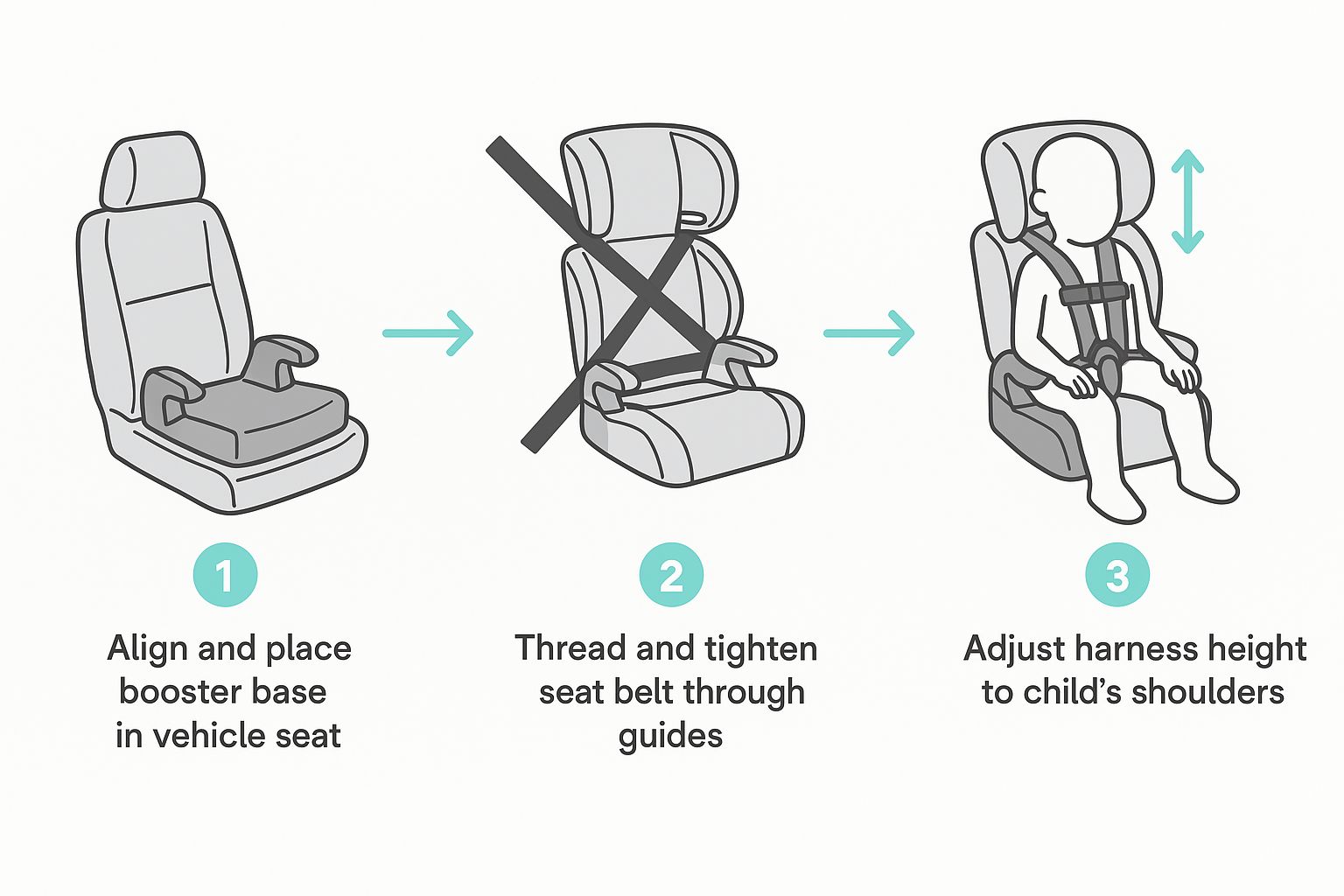
As you can see, it's about correctly placing the seat, threading the belt, and then adjusting the harness for that perfect, snug fit.
The ultimate test for a tight installation is what safety technicians call the "one-inch rule." It’s easy to do:
- Firmly grab the car seat at the belt path (this is where the LATCH strap or seat belt runs through the seat).
- Try to wiggle it side-to-side and pull it front-to-back.
- The seat should not move more than one inch in any direction.
If it’s moving more than an inch, it’s too loose. To fix this, put your knee or hand in the seat to apply pressure, and then pull the LATCH strap or seat belt until it’s completely taut. Don't be afraid to use a little muscle!
The Importance of the Top Tether
For any forward-facing car seat—whether you use LATCH or the seat belt—the top tether is an absolutely non-negotiable safety feature. It's that long strap on the back of the car seat that connects to an anchor point in your vehicle, usually on the back of the seat or the rear shelf.
So, why is this one strap so important? During a collision, the top tether dramatically cuts down on how far your child's head can snap forward. Research from Safe Kids Worldwide has shown it can reduce this forward motion by as much as 4 to 6 inches. That simple step makes a massive difference in preventing serious head and neck injuries.
Always find the tether anchor in your vehicle (it’s often marked with a little anchor symbol) and make sure that strap is pulled tight after the base of the seat is secure. Getting the installation right from the start is what lets all those advanced safety features do their job exactly as they were designed to.
Evaluating Comfort and Convenience for Daily Life
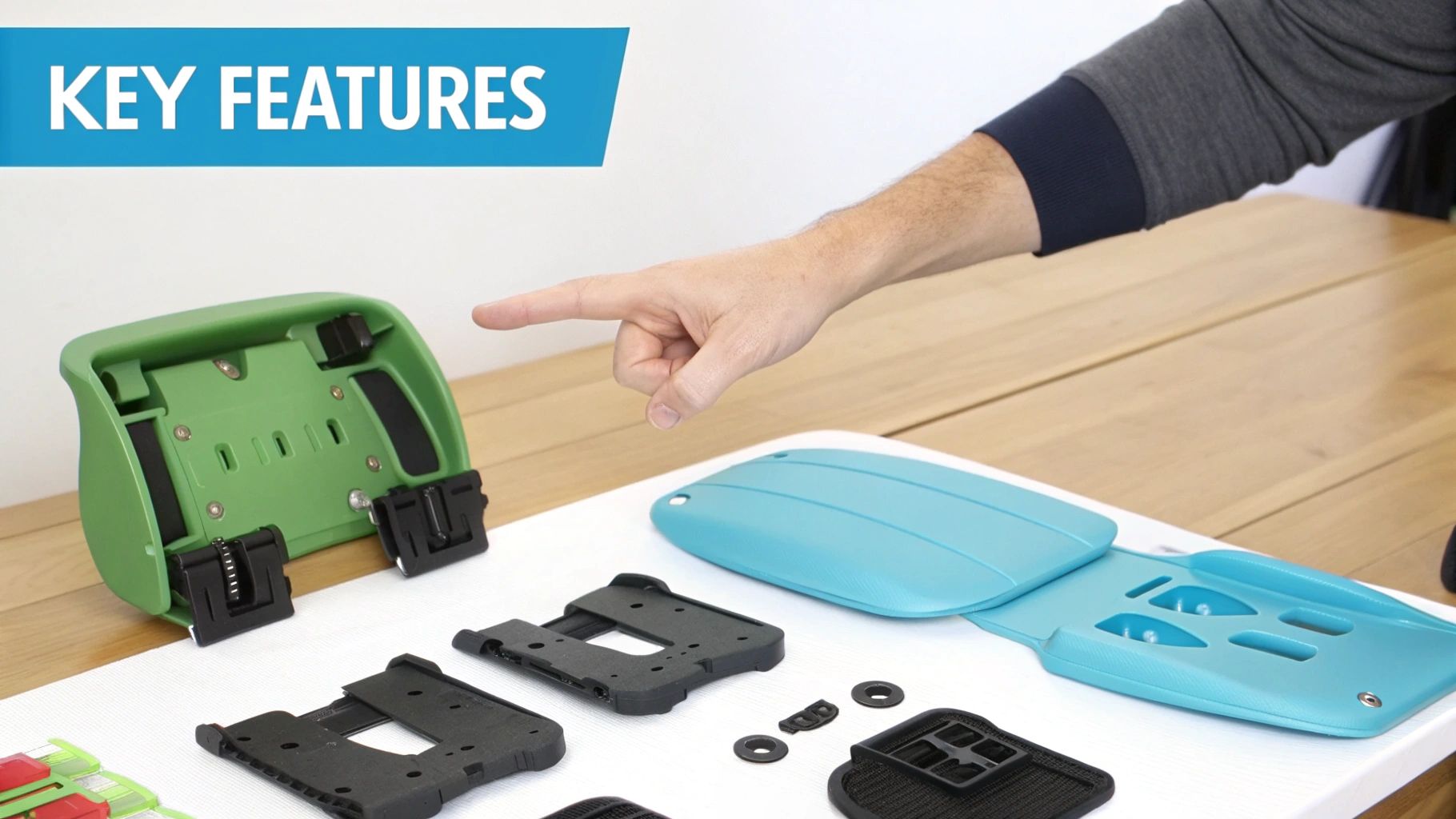
While top-tier safety is the absolute baseline, it’s the little details you deal with every single day that separate a good car seat from a great one. Think about it: a safe but miserable child can turn a quick grocery run into a full-blown meltdown. The best convertible booster seats don't just protect your child; they make your life easier and their ride a whole lot happier.
A peaceful drive almost always starts with a comfortable kid. When they’re settled and content, you can actually focus on the road. This is where thoughtful design really comes into play.
Features That Keep Kids Happy
Look for seats with generous padding and soft, breathable fabrics. These details might seem small, but they make a huge difference in preventing fussiness, especially on long, hot car rides. Another lifesaver for on-the-go naps is a multi-position recline. This lets you tilt the seat back just enough so their head doesn't slump forward the second they doze off.
But perhaps the most beloved feature by parents everywhere is the no-rethread harness. Instead of the painstaking process of unhooking straps and manually feeding them through new slots as your child grows, this system lets you adjust the harness and headrest together with one hand. It's a massive time-saver that guarantees a perfect, secure fit every time.
A comfortable child is a safer child. When kids aren’t squirming to get comfortable, they are less likely to try and wiggle out of their harness straps, keeping them securely positioned in the seat’s protective shell.
These little comforts truly transform the daily grind of car rides into a more pleasant experience for everyone involved.
Conveniences That Keep Parents Sane
Let’s be honest—kids are messy. Juice boxes leak, crackers get crushed into every crevice, and car sickness is always a possibility. This is why machine-washable fabrics aren't just a luxury; they’re a necessity. The ability to strip the cover off and toss it in the wash is a sanity-saver you'll be thankful for over and over again.
Built-in cup holders are another non-negotiable. They give your child an easy-to-reach spot for their drink and snacks, which means fewer spills and less "Mom, I'm thirsty!" from the back. Some models even come with dishwasher-safe inserts, making cleanup a breeze.
Finally, think about the seat’s overall size. If you have other kids or ever need to squeeze an adult in the back, a slim design is a game-changer. The best convertible boosters are now being engineered to be narrow enough to fit three-across in many vehicles, a huge selling point for growing families.
The demand for this kind of adaptability is clear, with forward-facing convertible car seats making up around 52% of the global market share in 2024. Families need products that grow and change with them.
Comparing Top Features Across Popular Models
To see how these features play out in the real world, let's look at a few hypothetical models. Notice how different seats prioritize different things—your job is to find the combination that best fits your family's lifestyle.
| Feature | Model A | Model B | Model C |
|---|---|---|---|
| Harness System | No-Rethread, One-Hand Adjust | Traditional Rethread | No-Rethread, Dual Adjust |
| Recline Positions | 6 | 3 | 4 |
| Padding & Fabric | Premium, Breathable Mesh | Standard Polyester | Plush, Machine-Washable Velour |
| Cup Holders | Two, Dishwasher-Safe | One, Fixed | Two, Removable |
| Seat Width | 17 inches (Slim-Fit) | 19 inches (Standard) | 18 inches (Mid-Size) |
| Ease of Cleaning | Cover is fully machine washable & dryable | Spot-clean only | Cover is machine washable, line dry only |
As you can see, Model A is built for convenience with its slim fit and easy cleaning, while Model C focuses on plush comfort. Model B offers a more basic, budget-friendly approach. There’s no single "best" choice—only what's best for you.
Whether you’re heading out on a family vacation or just tackling the daily school run, these thoughtful features make a world of difference. And for families who travel a lot, you might also want to check out our guide on portable booster seats for travel to explore options designed for ultimate mobility.
Knowing When to Transition and When to Replace
A convertible booster seat can be a parent's best friend for years, but just like that gallon of milk in your fridge, it has an expiration date. This isn't just a clever marketing ploy to sell more seats; it’s a crucial safety feature that guarantees the seat will do its job when it matters most.
Think about what a car seat endures. The plastic shell is baked in the summer sun and frozen in the winter cold, year after year. This constant temperature fluctuation can make the plastic brittle. At the same time, the harness webbing can stretch and lose its strength. You might not see these changes with the naked eye, but they can dramatically reduce the seat's ability to protect your child in a crash.
Finding and Following the Expiration Date
So, where do you find this critical date? Most manufacturers stamp it directly into the plastic on the back or bottom of the seat. You might also find it on a sticker right next to the model number. It will usually say something clear like, "Do Not Use After [Date]."
When you first buy a seat, make finding that date a priority. Then, pull out your phone and set a calendar reminder for a few months before it expires. It’s a simple step that can make all the difference.
And one rule is non-negotiable: you must immediately replace your car seat if it has been in a moderate to severe crash. It might look perfectly fine, but the immense forces of an accident can create hairline fractures and internal damage you can't see.
The Big Move: From Harness to Booster Mode
One of the most common questions I hear from parents is when to switch from the 5-point harness to the booster mode. It's so tempting to move them up to the "big kid" booster seat, but every safety expert will tell you the same thing: keep your child in that 5-point harness for as long as you possibly can. It provides far superior protection by spreading crash forces across the strongest parts of their little bodies.
The decision to switch should never be based on age alone or what a friend did with their child. The only thing that matters is the height and weight limits set by the car seat manufacturer.
Your child has officially outgrown the harness once they hit any of these limits:
- They weigh more than the maximum weight limit for the harness.
- They are taller than the maximum height limit for the harness.
- The tops of their shoulders are above the highest harness slot.
Once just one of those things happens, it’s time to safely store the harness and begin using the seat in booster mode with your car's seat belt.
This growing awareness around safety milestones is a big reason why the global booster seats market is projected to grow at a rate of about 6.6% from 2022 to 2029. As parents become more educated, they're making smarter choices that keep kids from ages 4 to 12 much safer on the road.
Of course, as kids grow, their needs change in every area of life, not just car safety. For more ideas on what they need at different stages, you can check out these age-appropriate products for 2-4 year olds. By paying close attention to your seat’s limits and lifespan, you’re giving your child the best possible protection for every ride.
Wrapping It All Up: Finding Your Perfect Seat
Choosing the right convertible booster seat can feel like a big decision, but it doesn't have to be a stressful one. By focusing on a few key things—a strong safety foundation, a proper installation, and features that fit your family’s life—you can find a seat that gives you total peace of mind.
Remember, the "best" seat isn't about the price tag or having the most features. It's the one that fits your child, fits your car, and that you can use correctly on every single trip. From the first day in a forward-facing harness to the last day in a high-back booster, this one purchase can keep your child safe, comfortable, and secure for years to come.
What features do you find most important when shopping for a car seat? Do you have a favorite tip for making car rides smoother with your little one? Share your thoughts in the comments below—we’d love to hear from you!
At Hiccapop, we believe that confident parenting starts with reliable, thoughtfully designed products. We're committed to creating gear that not only meets the highest safety standards but also makes your day-to-day life a little simpler. Explore our full range of solutions for your growing family at https://hiccapop.com.