


Your Guide to the 4 Month Sleep Schedule
Welcome to one of the most talked-about, and often dreaded, milestones in your baby's first year. If your once-decent sleeper has suddenly started fighting naps and waking up what feels like every hour all night long, you're not going crazy. You've likely hit the infamous 4-month sleep regression.
But here's a little secret: it’s not really a regression at all. It's a permanent and incredible progression in your baby's brain, shifting them toward more adult-like sleep patterns. This guide is here to walk you through it, so you can stop stressing and start creating a flexible rhythm that works for your family.
What a 4 Month Sleep Schedule Really Means
If the word "schedule" makes you break out in a cold sweat, take a deep breath. A 4 month sleep schedule isn't about watching the clock and sticking to a rigid, minute-by-minute plan. Think of it more as a flexible rhythm or a predictable flow to your day. It’s all about learning to meet your baby's needs as their brain makes a massive developmental leap.
Before this point, your newborn’s sleep was pretty simple—they were either asleep or awake. Now, things are getting more complex. Their sleep cycles are maturing to include four distinct stages, just like ours. While this is a fantastic sign of healthy development, it also means they'll start to briefly wake up between each 45-60 minute cycle.
The whole challenge of this phase is that they haven’t yet learned how to connect those sleep cycles and drift back off on their own.
The Great Brain Progression
This fundamental shift in their sleep architecture is exactly why your baby might suddenly start:
- Waking up every hour or two at night. They finish a sleep cycle, find themselves awake, and call out for you to help them get back to sleep.
- Taking frustratingly short 30-45 minute naps. This is the classic "one sleep cycle nap" that can make the days feel impossibly long.
- Fighting bedtime and naps like a tiny, adorable linebacker. They're becoming so much more aware of the world and can have a tough time powering down.
While everyone calls it the 4-month sleep regression, it’s much more helpful to see it as a permanent progression. Understanding this is the key to creating a routine that works with your baby's new biology, not against it. Our comprehensive sleep regression timeline offers a deeper dive into these developmental stages.
This well-documented phase happens because babies now need longer "wake windows"—the time they spend awake between naps—to build up enough sleep pressure for a solid stretch of rest. For a 4-month-old, that sweet spot is usually between 90 to 120 minutes.
Building a Flexible Daily Rhythm for Your Baby
Let's be real: trying to force a 4-month-old onto a strict, by-the-minute schedule is a surefire way to drive yourself crazy. The real goal here isn't rigidity; it's creating a predictable and flexible rhythm. Think of it as a gentle flow to the day that your baby can start to anticipate. This consistency is incredibly reassuring for them and helps cue their brain and body for when it's time to rest.
What you're seeing at this age is a huge developmental leap in how your baby sleeps. Their brain is literally rewiring itself, moving from the simple sleep-wake patterns of a newborn to the more complex, adult-like sleep cycles they'll have for the rest of their life.
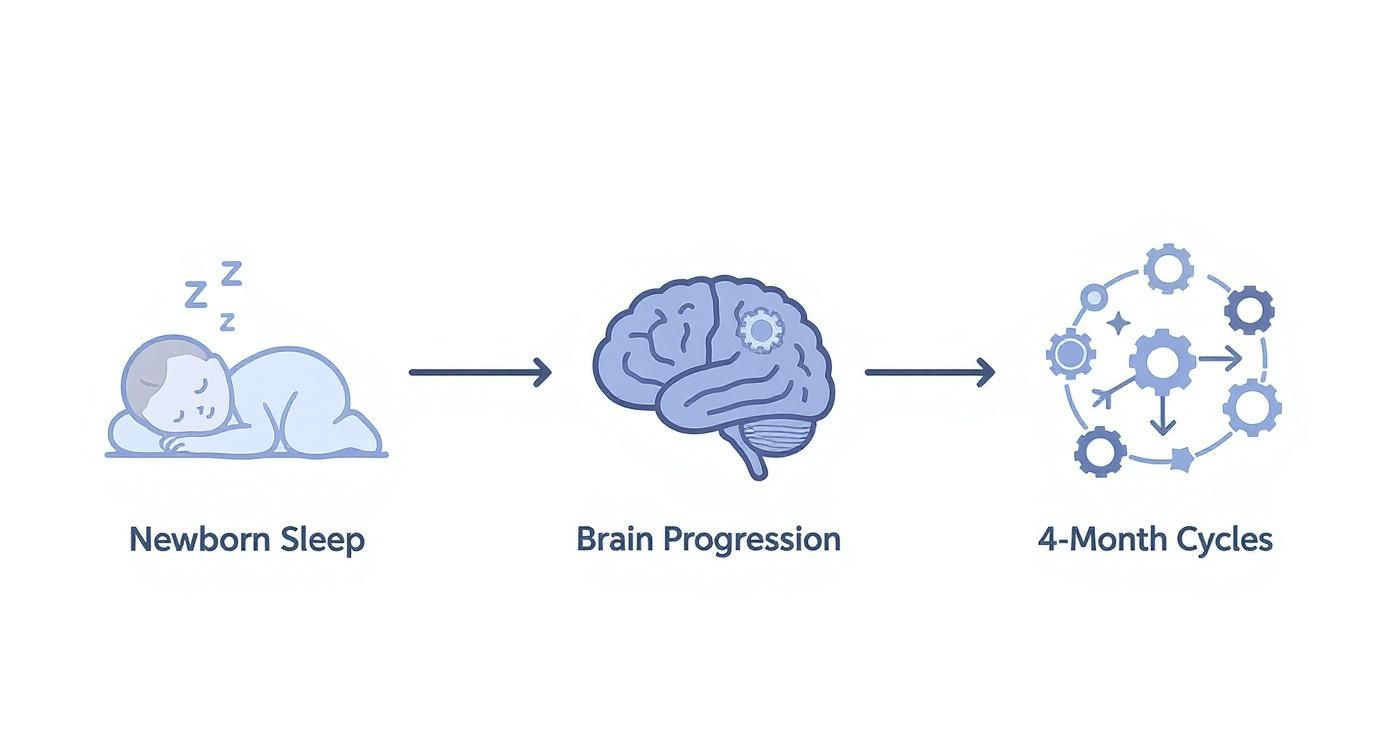
This isn’t just a passing phase or a "regression" in the typical sense. It's a permanent upgrade to their internal sleep software, which is exactly why establishing a consistent daily flow becomes so helpful now.
The Eat-Play-Sleep Cycle
The absolute foundation of a great 4-month-old schedule is the eat-play-sleep cycle. It’s a beautifully simple pattern that brings order to the chaos and, most importantly, helps prevent your baby from needing to be fed to sleep.
Here’s the basic flow:
- Eat: As soon as your baby wakes up (either for the day or from a nap), offer them a full feeding. They're usually alert and hungry, making it the perfect time for an efficient meal.
- Play: After their tummy is full, it's time for some quality awake time. This is their "play" window where you can do tummy time, sing songs, read a crinkly book, or just enjoy some face-to-face cuddles.
- Sleep: Toward the end of their ideal wake window (usually around 90 to 120 minutes at this age), you'll start watching for those tell-tale sleepy cues and get them down for their nap.
Following this cycle is the single best way to break the feed-to-sleep association. When a baby needs the breast or bottle to drift off, they'll often cry out for it every time they transition between sleep cycles overnight—even when they aren't truly hungry.
A Sample Daily Flow
Please, use this as a flexible guide, not a strict rulebook! Your baby’s nap lengths will absolutely vary from day to day, and that is completely normal. Your best bet is to watch the clock for wake windows but use your baby’s sleepy cues as your ultimate guide.
Here's a look at how a day might unfold.
Sample 4 Month Old Daily Schedule
| Time of Day | Activity and Notes |
|---|---|
| 7:00 AM | Wake for the Day & Full Feeding: Good morning! A nice big feed to start the day on the right foot. |
| 7:30 AM | Playtime: Let's get moving. Tummy time on a playmat, reading a soft book, or making funny faces in the mirror. |
| 8:30 AM – 9:45 AM | Nap 1: After about a 90-minute wake window, it's time for the first nap. This one is often the longest and most restorative of the day. |
| 9:45 AM | Wake & Full Feeding: The cycle starts again! Offer another full feeding right after they wake up. |
| 10:15 AM | Playtime: Time for a change of scenery. Maybe a walk outside in the stroller or listening to some music. |
| 11:30 AM – 12:45 PM | Nap 2: Following a slightly longer wake window, it's time for the second nap of the day. |
| 12:45 PM | Wake & Full Feeding: Lunchtime! Another meal to power them through the afternoon. |
| 1:15 PM | Playtime: Gentle activities are great here, like sitting with support in your lap while exploring a safe toy. |
| 2:45 PM – 3:45 PM | Nap 3: This third nap can sometimes be a bit shorter, and that’s perfectly fine. Don't stress if you only get a 45-minute snooze. |
| 3:45 PM | Wake & Full Feeding: You guessed it—another feed to get them through the late afternoon hours. |
| 4:15 PM | Playtime: Quieter, lower-key activities as you start winding down toward the evening. |
| 5:15 PM – 5:45 PM | Nap 4 (The Catnap): This final nap is typically short—just 30-45 minutes or so. It acts as a bridge to bedtime, preventing overtiredness. |
| 7:15 PM | Bedtime Routine & Final Feeding: Begin your calming bedtime ritual, ending with one last top-off feeding for the night. |
| 7:45 PM | Bedtime: Down for the night. Sweet dreams! |
Again, this is just one example. If your baby takes a short nap, you'll simply start the next wake window from the time they woke up. Flexibility is your best friend.
Getting Wake Windows and Nap Transitions Just Right
If there’s one secret to surviving the 4-month sleep schedule, it’s understanding wake windows. Think of them as your baby’s internal battery life. Getting the timing right is probably the most powerful tool in your sleep arsenal. It’s what separates a baby who peacefully drifts off to sleep from one who’s a screaming, overtired mess at naptime.
For most 4-month-olds, the sweet spot for being awake is between 90 and 120 minutes. This isn't just a random number; it's the typical amount of time a baby this age can stay happily engaged before their little brain gets overloaded. When you hit this window, you’ve built up just enough sleep pressure for a good nap without tipping them into meltdown mode. For a deeper dive, check out our complete guide on wake windows by age.
Learning to Spot Sleepy Cues
While the clock is your friend, your baby is the real boss. Learning to read their unique sleepy cues is a game-changer. The goal is to catch the subtle, early signs before they spiral into the frantic, late-stage signals of a baby who is completely overtired.
Early Cues (Time to start winding down for a nap!):
- That classic thousand-yard stare into the distance
- The first little yawn (it’s adorable, but it's also a heads-up!)
- Becoming quieter or showing the first signs of fussiness
- Slightly reddish eyebrows or eyelids
Late Cues (You've missed the window—initiate emergency nap protocol!):
- Frantic, high-pitched crying that’s tough to soothe
- Arching their back and fighting being held or cuddled
- Frantically rubbing their eyes and pulling at their ears
Think of it this way: Early cues are the sleep train pulling into the station. Late cues mean the train has left, and now you’re chasing it down the tracks carrying a tiny, screaming boss.
Navigating the Four-to-Three Nap Transition
Right around four months, you might start seeing some new challenges. Maybe your baby is suddenly fighting that last catnap of the day, or it’s taking them forever to fall asleep for their other naps. These are classic signs that they might be ready to drop from four naps down to three. Don't worry—this is a totally normal and good sign of development!
This transition rarely happens in a single day. You'll likely bounce between three- and four-nap days for a week or two, and that’s completely fine.
The key to a smooth transition is gently stretching their wake windows. Try adding just 10-15 minutes of awake time before each nap. This helps consolidate their daytime sleep into three longer, more restorative naps and builds enough sleep pressure to make it to bedtime without needing that fourth little snooze. The name of the game is to go slowly and follow your baby's lead.
Creating a Bedtime Routine That Actually Works
If wake windows are the science behind your 4-month sleep schedule, a solid bedtime routine is the soul. It’s more than just a sweet way to cap off the day; it's a powerful signal to your baby's brain that it's time to shift gears from playing to sleeping. The magic is all in the repetition—doing the same few calming steps, in the same order, every single night.
This predictable sequence quickly becomes a comforting, grounding ritual. For a baby navigating a world of constant newness, this consistency helps them feel safe and secure, which is crucial for relaxing into sleep. You're essentially giving them a clear, loving heads-up that the day is winding down and a long, restful night is ahead.
Building Your Calming Wind-Down Ritual
A great bedtime routine doesn't need to be elaborate. Honestly, keeping it simple and sustainable is the best approach. Aim for a calm 20-30 minute wind-down period. The goal is to choose activities that are genuinely relaxing, so you’ll want to steer clear of anything that might get them too excited or stimulated.
Here are some tried-and-true ideas you can mix and match to create your own perfect routine:
- A Warm Bath: This is a classic for a good reason. When your baby gets out of the warm water, their body temperature drops slightly, which is a natural trigger for sleepiness.
- Gentle Baby Massage: A few minutes of quiet time applying lotion with soft, gentle strokes is incredibly soothing. It's also a wonderful moment to reconnect and bond.
- Pajamas & a Sleep Sack: Swapping day clothes for cozy PJs and a sleep sack is a very clear signal that the day is officially done and it’s time for bed.
- Reading a Board Book: Your baby might not follow the plot just yet, but the gentle, rhythmic sound of your voice is incredibly calming. Pick one or two familiar books to make part of the nightly ritual.
- A Final Feeding: Offer one last, full feeding for the night in a quiet, dimly lit room. To help break the feed-to-sleep association, try to make this the second-to-last step, not the very last thing before they fall asleep.
- Quiet Cuddles & a Lullaby: A few minutes of quiet snuggling while you hum or sing a soft song is the perfect, loving way to end the routine before placing your baby into their crib awake but drowsy.
The Power of Predictability
The real secret sauce here is consistency. Sticking to the same routine every night is what helps your baby learn what to expect. This isn't just anecdotal—research has shown that babies with predictable bedtime rituals fall asleep faster and wake up less during the night.
To help create a consistently calm atmosphere, some parents find tools like the Glow Sleep Easy system really helpful for managing light and sound cues in the nursery.
Remember to keep the whole environment chill. Dim the lights and turn off all screens at least an hour before you even start the routine. The blue light from TVs and phones can mess with the production of melatonin, the natural hormone that brings on sleepiness. The entire goal is to create a peaceful space that makes drifting off feel safe and easy.
And, of course, the most important part of any sleep plan is safety. Always make sure you are following guidelines for a safe sleep environment for your infant.
Troubleshooting Common 4-Month Sleep Hurdles
Even with a perfectly timed routine and the calmest bedtime ritual, you're bound to hit some sleep snags. Life with a 4-month-old is wonderfully unpredictable, and their sleep is no exception. So, let's get into the nitty-gritty of the most common sleep hurdles that pop up around this age and how to navigate them.
The Dreaded 30-Minute "Disaster Nap"
Can you set a timer by your baby's short naps? If so, you're in good company. This is the absolute hallmark of the 4-month sleep progression. At this age, their sleep cycles are only about 30–45 minutes long, and they just haven't figured out how to connect one cycle to the next on their own yet.
When they start to stir at that 30-minute mark, their brain briefly enters a much lighter stage of sleep. If anything in their environment is different from when they first fell asleep—like no longer being rocked or held—their internal alarm bells go off. They'll likely wake up fully, and boom, the nap is over.
Here are a few strategies I've seen work wonders for stretching those short naps:
- Make the Room a Cave. Seriously. Use blackout curtains to make it as dark as possible and run a white noise machine to muffle any startling household sounds. The goal is to minimize any stimulation when they hit that light sleep phase between cycles.
- Really Nail the Wake Window. This one is crucial. An undertired baby won't have enough sleep pressure to push through to the next cycle, but an overtired baby will be swimming in cortisol and too wired to settle. Play around within that 90–120 minute window to find your baby's unique sweet spot.
- Attempt a "Nap Rescue." If you know they always wake up at the 32-minute mark, try sneaking in around 28 minutes. A gentle, steady hand on their chest or some soft shushing can be just enough to guide them through that brief waking and into the next sleep cycle.
Frequent Night Wakings: Hunger or Habit?
Waking up what feels like a million times a night is another classic challenge. The first question that pops into every parent's head is: "Is my baby actually hungry, or is this just a habit?"
It’s true that many 4-month-olds still need one or two solid feeds overnight. Waking every 60–90 minutes, however, is typically a sign that they're struggling to connect sleep cycles independently.
If they wake up, take a full, proper feeding, and go right back to sleep, they were probably hungry. But if they just nurse or snack for a minute or two before drifting off, it’s more likely a comfort habit they've developed to get back to sleep.
Key Insight: Teaching your baby to fall asleep on their own at the beginning of the night is the foundation for them being able to put themselves back to sleep when they naturally stir between sleep cycles overnight.
The All-Too-Early 5 AM Wake-Up Call
There is almost nothing more painful than that cheerful 5 a.m. wake-up when you know you've still got hours until it's a socially acceptable time to start the day. This frustratingly common issue usually comes down to one of two culprits.
First, your baby might be overtired. It seems completely backward, I know, but a bedtime that's too late can cause a surge of cortisol (the "awake" hormone). This can actually cause them to wake up early and be unable to fall back asleep. Trying to shift bedtime just 15–20 minutes earlier can sometimes solve the entire problem.
The second culprit is the sleep environment. Even a sliver of early morning light is a powerful signal to a baby's brain that it's time to get up. Make sure the room is pitch-black and that your white noise is running continuously so there are no environmental cues telling them the day has begun before you're ready.
You've Got This: Riding the Waves of the 4-Month Mark
Navigating the 4-month sleep progression is a rite of passage for parents. It can be exhausting and confusing, but remember that this huge change is a sign of your baby's amazing development. Focus on creating a flexible, predictable rhythm, lean into the eat-play-sleep cycle, and become a detective of your baby’s unique sleepy cues.
Most importantly, give yourself (and your baby) a ton of grace. Some days will be smoother than others, and that’s perfectly okay. This phase won’t last forever. You're giving your baby the foundational skills for healthy sleep that will last a lifetime.
We’d love to hear how you’re navigating this stage! What’s your go-to trick for calming a fussy baby at bedtime? Share your tips and questions in the comments below—we’re all in this together.
It's helpful to remember that sleep needs are shifting dramatically right now. The World Health Organization points out that while newborns need 14 to 17 hours of sleep, this drops to 12 to 16 hours for babies between 4 and 11 months old. This change is exactly why nighttime sleep starts getting longer while naps can get a bit tricky. You can read more about the WHO's safe sleep guidance on their website.
No matter what sleep hurdles you're facing, having smart gear can make a huge difference. From nursery must-haves to on-the-go essentials, Hiccapop is all about creating thoughtfully designed products that help parents navigate these stages with a little more ease. See how we can help at hiccapop.com.