


Your Guide to the Ultimate 15 Month Old Schedule
A solid 15 month old schedule is built around 12-14 hours of total sleep. This usually means one or two naps adding up to 2-3 hours, with wake windows lasting anywhere from 3-6 hours depending on their nap routine. Having this kind of framework is a game-changer for managing their energy, navigating developmental leaps, and bringing some predictable calm to your day.
What to Expect at 15 Months
Welcome to the wonderfully wild world of your 15-month-old! Let's be real: creating a schedule at this age isn't about rigid timetables. It's about understanding the incredible, and often unpredictable, little person you're wrangling. They are right in the middle of a massive developmental explosion, and your routine needs to support—not stifle—all that amazing growth.
It can feel like everything is changing at once. Your toddler is likely more mobile, intensely curious, and suddenly very, very opinionated. Is your couch now a personal climbing wall? Has "no" become their favorite response to everything? This is all part of the package. Their brains are firing on all cylinders, making new connections every single minute.

Key Developmental Shifts
At this age, a few key changes are driving their daily needs. When you understand the "why" behind their behavior, it becomes so much easier to craft a schedule that actually works.
-
Motor Skills Explosion: Most 15-month-olds are walking, climbing, and exploring with a newfound, sometimes terrifying, confidence. This constant physical activity means they need plenty of chances for active play to burn off all that toddler energy, which is absolutely crucial for good naps and solid nighttime sleep.
-
Cognitive Leaps: They're starting to grasp cause and effect, mimic your every move (get ready for a tiny cleaning helper!), and solve simple problems. This growing independence means they want to do it myself, from fumbling with a spoon to attempting to put on their own shoes.
-
Big Emotions: Toddlers feel everything with an intensity that can be overwhelming, but they don't have the words to explain it all. This gap often leads to frustration, epic meltdowns, and sometimes a sudden spike in separation anxiety. A predictable routine provides the security they crave to help them navigate these huge feelings.
These shifts directly impact how you structure your day—from how long they can happily play independently to when they’ll need to refuel with food and rest.
Foundational Needs: Sleep And Nutrition
Here’s a quick summary of the essential daily targets for a typical 15-month-old, covering sleep, nutrition, and activity.
15 Month Old Daily Needs At A Glance
| Category | Recommended Amount |
|---|---|
| Total Sleep | 12-14 hours per 24-hour period |
| Nighttime Sleep | 10-12 hours |
| Daytime Sleep (Naps) | 2-3 hours total, split between 1 or 2 naps |
| Wake Windows | 3-6 hours (shorter before the first nap, longer before bed) |
| Nutrition | 3 meals + 2 healthy snacks |
| Milk | 16-24 oz of whole milk |
| Active Play | At least 3 hours of physical activity |
These numbers provide a great starting point, but remember to watch your child for their unique cues and adjust as needed.
Sleep is the absolute cornerstone of any successful 15 month old schedule. A toddler this age really needs that 12-14 hours of total sleep in a 24-hour period. This usually breaks down into 10-12 hours overnight and another 2-3 hours during the day from naps. Pediatric sleep experts consistently reinforce these guidelines, and you can find more great insights on toddler sleep needs from the team at Taking Cara Babies.
Your toddler's job is to test boundaries; your job is to hold them lovingly. A predictable schedule is one of the kindest and most effective boundaries you can provide.
Just as critical is their nutrition. Their dietary needs have shifted completely from their first year. They now depend on solid foods for the bulk of their calories and nutrients, with whole milk acting as a supplement rather than the main event. Offering three balanced meals and two healthy snacks helps keep their energy levels stable and prevents them from getting "hangry"—a state every toddler parent knows all too well.
Thinking about these developmental drivers helps you move beyond just surviving the day. It empowers you to create a routine that truly supports this incredible period of growth, setting the stage for a schedule that works for your family, not against it.
Conquering the One-Nap Transition
That moment when your toddler starts fighting their second nap can feel like a major curveball. One day, two naps are absolutely essential; the next, you're locked in a nap-time negotiation that no one is winning. This shift is one of the biggest shake-ups to your 15-month-old’s schedule, and it often feels less like a gentle slide and more like a chaotic jumble.
Don't worry, this isn't a crisis. It's a natural, albeit sometimes bumpy, developmental step. The trick is learning to spot the real signs that your toddler is ready to consolidate their sleep into one long, restorative nap.
Is Your Toddler Really Ready?
It's so easy to mistake a few bad nap days for a permanent change. A temporary nap strike could just be teething, a big developmental leap, or just a random off-week. True readiness for one nap is a consistent pattern you see for more than a couple of weeks.
Keep an eye out for these tell-tale signs:
- Consistently Fighting Naps: The afternoon nap becomes a daily battle, or they just hang out and play in their crib for an hour without ever falling asleep.
- Sudden Bedtime Battles: If your little one was a great sleeper but now takes forever to settle down at night, it might be because they’re getting too much daytime sleep.
- Waking Up Super Early: An unexpected string of 5 a.m. wake-up calls can be a signal that their schedule needs an adjustment.
- Short Naps: You might notice the morning nap getting longer while the afternoon nap turns into a 30-minute catnap that honestly does more harm than good.
If you're nodding along to this list, it’s probably time to start planning the move. This is a common milestone for this age group, with most children making the switch between 13 and 18 months.
Remember, the goal isn't to rush the transition but to respond to your child’s cues. Forcing it too early can lead to an overtired, cranky toddler, and nobody wants that.
Making the Shift to One Nap
Once you're sure they're ready, the goal is to gently stretch their morning wake window until the nap lands squarely in the middle of the day—usually around 12:00 or 12:30 p.m. This won't happen overnight. It’s a process of gradually pushing that nap time later by 15-30 minutes every few days.
During this in-between phase, flexibility is your best friend. Some days might still need two naps, especially if their morning nap was short or they just seem exhausted. Other days, one nap will be perfect. This messy middle period is totally normal. For a deeper dive, our complete guide on how to transition to one nap has more detailed strategies.
Adjusting the Rest of Your Day
Dropping a nap doesn't just impact sleep; it changes the entire flow of your day. You'll likely need to shift mealtimes to accommodate the new rhythm.
A great tip is to move lunch to before the nap, maybe around 11:30 a.m. A full tummy often helps them take a longer, more restful nap. You might also need to offer a more substantial morning snack to help them make it to a later lunch without getting "hangry."
Finally, an earlier bedtime is your secret weapon. On one-nap days, your toddler will have longer periods of awake time, and they will be tired. Bringing bedtime forward by 30-60 minutes (think 6:30 or 7:00 p.m.) can prevent them from becoming overtired, which is a major culprit behind night wakings and early rising. This one tweak can make the whole transition smoother for everyone.
Sample Schedules for Real-Life Families
Knowing the "why" behind your toddler's needs is one thing, but seeing how it all fits together in a real day is what truly helps. A solid 15-month-old schedule isn't about hitting every time mark perfectly; it’s about giving your child a predictable rhythm they can count on. That predictability is what helps them feel safe, secure, and ultimately, happier.
Think of these sample schedules as a starting point—a flexible guide you can tweak to fit your family's unique flow. Your toddler's own wake-up time, how long they nap, and their little hunger quirks will ultimately shape your day. The real magic is in consistency, not rigid perfection.
This big nap transition from two naps down to one is a major milestone around this age. It's often a gradual process, not a clean, overnight switch.
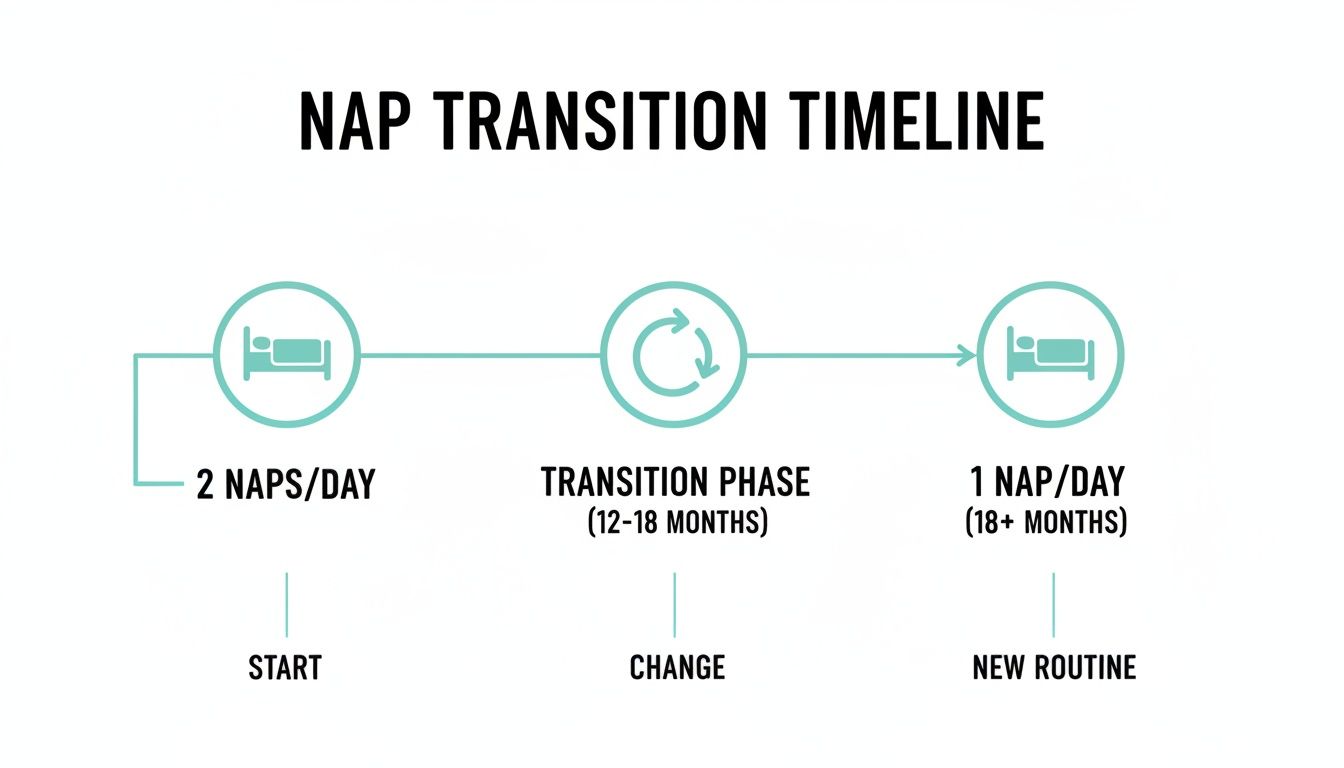
As you can see, there's often a messy middle ground where some days are one-nap days and others are two. That's totally normal!
The Go-To One-Nap Schedule
Once your toddler has officially made the leap to one nap, your days will start to feel a bit more spacious. This schedule is designed around a single, restorative midday nap, which works beautifully for 15-month-olds who can handle longer stretches of being awake.
- 7:00 AM: Wake Up & Milk/Snack
- 8:00 AM: Breakfast
- 8:30 AM - 11:30 AM: Active Playtime (this is the perfect window for a park trip, a long walk, or sensory play)
- 11:30 AM: Lunch
- 12:30 PM - 2:30 PM: Nap (you're aiming for a solid 2-2.5 hours here)
- 2:30 PM: Wake Up & Snack
- 3:00 PM - 5:30 PM: Afternoon Play (usually a bit calmer—think errands, playing at home, reading)
- 5:30 PM: Dinner
- 6:30 PM: Start the Bedtime Routine (bath, books, songs, and cuddles)
- 7:00 PM/7:30 PM: Bedtime
With this flow, the wake window before their big nap is usually around 5-6 hours. The window before bed is a little shorter, about 4-5 hours. That long morning awake time is key—it helps build up enough sleep pressure to take a really great, long nap.
The Reliable Two-Nap Schedule
Hey, if your 15-month-old isn't ready for one nap yet, don't rush it! Many toddlers hang onto two naps a little longer, and that is perfectly okay. A two-nap routine can be a lifesaver, preventing them from getting overtired by breaking up the day with more frequent rests.
- 7:00 AM: Wake Up & Milk/Snack
- 8:00 AM: Breakfast
- 8:30 AM - 10:00 AM: Playtime
- 10:00 AM - 11:15 AM: Nap 1 (typically about 1-1.5 hours)
- 11:15 AM: Wake Up & Lunch
- 12:00 PM - 2:30 PM: Playtime
- 2:30 PM - 3:30 PM: Nap 2 (this one is often just a catnap, maybe 45-60 minutes)
- 3:30 PM: Wake Up & Snack
- 4:00 PM - 5:30 PM: Afternoon Play
- 5:30 PM: Dinner
- 6:45 PM: Start Bedtime Routine
- 7:30 PM: Bedtime
Having a predictable structure helps little ones feel secure because they know what’s coming next, which can make a huge difference in their mood.
One Nap vs Two Nap Daily Schedule Comparison
Sometimes, seeing the two routines side-by-side makes it all click. Here’s a quick glance at how the rhythm of the day changes depending on your nap situation.
| Time of Day | Activity (One-Nap Schedule) | Activity (Two-Nap Schedule) |
|---|---|---|
| 7:00 AM | Wake Up & Morning Cuddles | Wake Up & Morning Cuddles |
| 8:00 AM | Breakfast | Breakfast |
| 10:00 AM | Outing to the Park | Nap 1 |
| 11:30 AM | Lunch | Lunch |
| 12:30 PM | Nap Time | Playtime |
| 2:30 PM | Wake Up & Snack | Nap 2 |
| 5:30 PM | Dinner | Dinner |
| 7:00 PM | Bedtime | Bedtime |
The biggest difference, as you can see, is how that midday block is used—either for one long nap or for a shorter nap and more awake time.
Tips for When Life Gets in the Way
Let's be real: life is rarely as neat and tidy as a chart on a webpage. Toddlers get sick, you travel for the holidays, and some days they just wake up grumpy for no reason at all.
Your schedule is a tool to serve your family, not a rulebook you have to follow. The best thing you can do is learn to be flexible and tune into what your toddler is telling you they need.
Here’s how to handle a few common curveballs:
- For the Early Riser: If your toddler decides 5:30 AM is the new 7:00 AM, try not to jump-start the day. Keep the lights dim and the environment quiet to signal that it's still rest time. The best fix for an early riser is often an earlier bedtime (think 6:30 PM) to combat overtiredness, which is a common culprit.
- For the Daycare Kid: Get on the same page as your child's teachers. Most daycare centers move to a one-nap schedule around this age, and it’s a good idea to know their timing. Keeping your weekend schedule roughly aligned with their daycare routine can make Mondays much smoother for everyone.
- For Travel Days: Honestly? All bets are off. The goal is just to meet their sleep needs whenever and however you can. A nap in the car seat or a snooze in the stroller is far better than a missed nap. Just jump back into your familiar home routine as soon as you're back.
A Practical Guide to Toddler Nutrition
Feeding a 15-month-old can feel like a full-time job with a very demanding, and often confusing, boss. One minute they’re all about broccoli; the next, it’s being flung across the room. Let's cut through the noise and talk about what really works for feeding these little ones.
First, take a deep breath and remember this: your toddler probably needs less food than you think. Their explosive growth from that first year is starting to slow down, and their appetite naturally follows suit. What looks like a bird-sized portion to you is often exactly what their tiny body requires.
What Does a Toddler Really Need to Eat?
At this age, the goal isn't to get them to clean their plate but to offer a variety of nutrient-packed foods throughout the day. Think three small meals and a couple of healthy snacks. This rhythm helps keep their energy steady and their mood on a more even keel—a huge win when you're trying to stick to a 15 month old schedule.
Certain nutrients are doing some heavy lifting right now. Iron is absolutely critical for brain development, and healthy fats are building the foundation for their nervous system. Of course, you also need plenty of calcium and vitamin D to support those rapidly growing bones.
Here are some powerhouse foods to keep in rotation:
- Iron-Rich Foods: Think lean red meat, poultry, beans, lentils, and iron-fortified cereals.
- Healthy Fats: Avocado is a superstar here, as are thinly spread nut butters and a drizzle of olive oil.
- Calcium Sources: Whole milk, yogurt, cheese, and even dark leafy greens like kale are great options.
- Fiber-Filled Carbs: Keep them going with whole-grain bread, oatmeal, sweet potatoes, and all kinds of fruit.
When it comes to milk, the general guideline is about 16 ounces of whole milk per day. A great trick is to serve it with meals. This ensures they get the calcium and fats they need without filling up on liquids between mealtimes and spoiling their appetite for solid food.
The Division of Responsibility
If I could give parents one piece of advice to transform mealtimes, it would be to embrace the "division of responsibility." This concept, developed by feeding expert Ellyn Satter, is brilliantly simple and takes so much stress off the table.
It works like this: Your job as the parent is to decide what, when, and where food is offered. Your toddler’s job is to decide whether to eat and how much to eat from what you’ve provided.
This simple shift in perspective is a game-changer. It gives your child a sense of control, helps them listen to their own hunger cues, and stops you from having to beg for "just one more bite." It’s the key to preventing mealtime power struggles and building a healthy relationship with food for life. For more detailed strategies, check out these age-by-age tips for feeding.
Handling a Picky Eater
Almost overnight, your good eater might suddenly turn into the pickiest critic. Don't panic! This is a completely normal phase. It’s driven by their budding independence and a natural, instinctual caution around new things.
The best thing you can do is stay cool and consistent. Keep offering a variety of healthy foods without any pressure. Put a tiny, non-threatening piece of a new or rejected food on their plate next to foods you know they like. It can take 10-15 exposures before a toddler even considers trying something new, so patience is everything. If you're deep in the trenches of toddler food battles, you can find some fantastic essential nutrition guidance for kids, even picky eaters.
A Sample Meal Plan for Inspiration
So, what does this look like in a typical day? Here’s a simple, balanced plan to get your ideas flowing.
- Breakfast: One scrambled egg with a little cheese, half a slice of whole-wheat toast with a thin smear of avocado, and a few raspberries.
- Morning Snack: A small bowl of plain whole-milk yogurt with some diced peaches.
- Lunch: Shredded chicken, soft-steamed carrot sticks, and a couple of whole-grain crackers.
- Afternoon Snack: A small handful of blueberries alongside a few cubes of cheese.
- Dinner: Flaked baked salmon, roasted sweet potato wedges, and steamed green beans.
At the end of the day, remember your role: provide the healthy options. Then, trust your toddler to do the rest. This pressure-free approach is how you build a happy, healthy eater for the long haul.
Playtime Ideas that Boost Development
An engaged toddler is a happy toddler—and, let's be honest, often a better napper. Keeping those wake windows in your 15 month old schedule full of fun doesn't mean you need a mountain of expensive toys. Actually, some of the best developmental play comes from simple, everyday interactions that feed their insatiable curiosity.
At this age, it's all about exploration. Your toddler is figuring out how their body moves, how to make things work, and the delightful rules of cause and effect. Think of yourself as their guide, creating a safe space for them to experiment and discover on their own terms.
Activities for Gross Motor Skills
Gross motor skills are all about the big muscles in the arms, legs, and torso. At 15 months, your little one is probably perfecting their walk, starting to climb everything, and maybe even attempting a wobbly run. These activities are perfect for building their strength, balance, and coordination.
- Build an Obstacle Course: This sounds more complicated than it is! Use couch cushions to crawl over, a pop-up tunnel to wiggle through, and a sturdy box to climb on. Suddenly, your living room is an adventure zone that challenges their balance and problem-solving skills.
- Dance Party: Crank up some music and just get moving. Dancing is a fantastic way to burn off that toddler energy, learn about rhythm, and practice new moves like spinning and stomping.
- Push and Pull: Give them something to push, like a small toy stroller or a lightweight box filled with a few stuffed animals. This helps stabilize their core and builds major confidence in their walking abilities.
Fun with Fine Motor Skills
Fine motor skills involve those small, precise muscles in their hands and fingers. Working on these now lays the foundation for bigger tasks down the road, like writing, buttoning a shirt, or holding a fork.
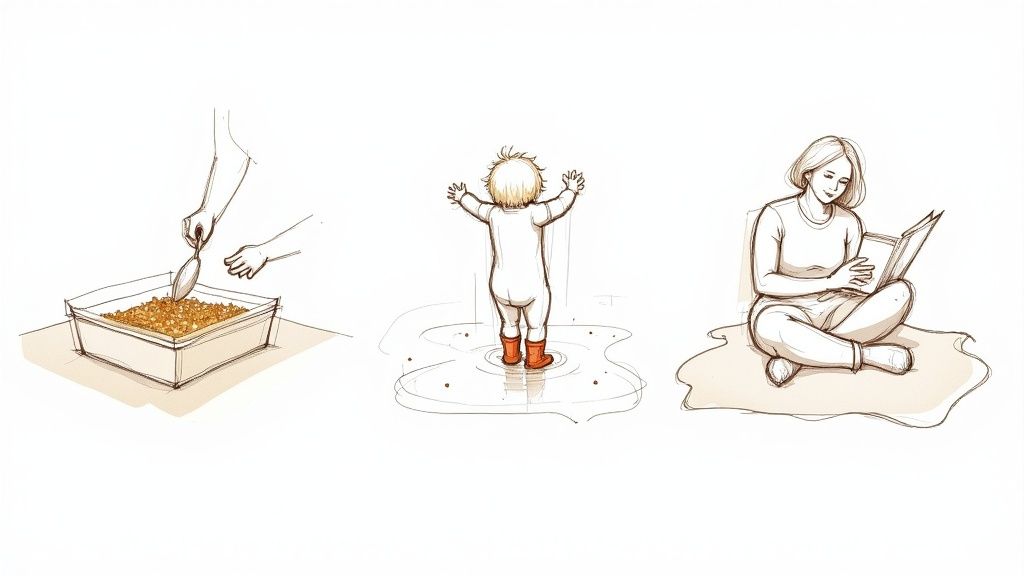
A simple sensory bin is a game-changer here. Just fill a shallow container with a taste-safe base like dry oats, water, or even sand, and add scoops, cups, and small toys. It's an incredible way to engage their senses while they practice scooping and pouring. (Just be sure to supervise closely!)
For more ideas on toys that encourage these delicate movements, we have a great list of our favorite 1-year-old educational toys that are perfect for this age.
Key Takeaway: You don’t have to be a full-time entertainer. Often, the best "activity" is just letting your toddler join in on what you're already doing. Let them "help" you unload the plastic items from the dishwasher or give them their own cloth to wipe down the table.
Boosting Language and Cognitive Growth
Your 15-month-old’s brain is a little sponge, soaking up every word and trying to figure out how the world works. Reading books together every single day is one of the most powerful things you can do. Point to the pictures, name what you see, and don't be afraid to use silly voices to keep them hooked.
Here are a few more easy ideas to try:
- Stacking and Building: Blocks are a classic for a reason. Stacking them builds hand-eye coordination and teaches early physics concepts when they inevitably come crashing down—which, let's face it, is the best part!
- Water Play: A little water in a shallow bin or even just during bath time provides endless learning. Add cups for pouring and sponges for squeezing to introduce concepts like full and empty.
- Get Outside: A simple walk around the block is a sensory feast. Talk about the cars you see, the birds you hear, and the leaves you can crunch under your feet. Nature is the ultimate classroom.
The Importance of Independent Play
As much as they love playing with you, it's also so important to encourage independent play. This isn't about leaving them completely alone. It's about setting them up in a safe space with a few interesting toys and then stepping back to let them explore. This teaches them how to entertain themselves, solve problems, and build focus.
Start small, with just 5-10 minutes at a time. It’s long enough for you to sip your coffee while it's still hot and gives them a wonderful opportunity to build confidence in their own abilities. A great day includes a mix of active play with you, quiet time with books, and these little pockets of independent discovery.
When Your 15-Month-Old's Schedule Goes Off the Rails
Let's be honest: even the most perfect 15-month-old schedule has its off days. Toddlerhood is a masterclass in unpredictability. Just when you think you've finally got it all figured out, they throw you a curveball. Think of this as your troubleshooting guide for staying sane when the routine goes sideways.
The secret is to see consistency as your anchor, but flexibility as your superpower. A temporary disruption doesn't mean you have to scrap all your hard work. When you know what you're up against, you can handle it with confidence and get back on track fast.
The Dreaded Nap Strike
There’s nothing quite as frustrating as a sudden nap strike. Your toddler, who used to be a reliable napper, now either plays in their crib for an hour or starts protesting the second you set them down. Before you panic and assume naps are gone forever (they’re not!), take a breath and play detective.
A nap strike at this age usually points to one of two things: a temporary regression or a sign they're ready to drop a nap. Regressions often pop up due to teething, a little cold, or a big developmental leap they’re working on. If it's only been a few days, your best bet is to just stay the course.
The most effective response to a temporary sleep disruption is to change nothing at all. Maintain your soothing nap routine and provide the opportunity for sleep. Consistency signals security to your toddler.
However, if that nap strike—especially the afternoon one—drags on for more than a week or two, it might be a genuine signal that they're ready to transition to one nap a day.
Frustrating Night Wakings
You thought you were past this, didn't you? Suddenly, your 15-month-old is waking up in the middle of the night again. It’s exhausting and confusing, but it’s almost always solvable. Night wakings at this age often boil down to a handful of common issues.
First, rule out any physical discomfort. An ear infection or those pesky molars can easily ruin a good night's sleep. Once you're sure they're not in pain, it's time to look at their daily schedule.
Here’s a quick troubleshooting checklist:
- Are they overtired? This is the #1 culprit. Dropping a nap too soon or pushing bedtime too late can lead to a restless night. Try putting them down a bit earlier—maybe 6:30 or 7:00 PM—for a few nights and see if that helps.
- Are they under-tired? On the flip side, if they're still on two naps but fighting you at bedtime and waking up at night, they might be getting too much daytime sleep. It could be time to cap that morning nap or gently stretch their wake windows.
- Is it separation anxiety? This peaks right around 15 months. They finally understand that you exist even when you're not in the room... and they miss you! Offer extra cuddles and reassurance before bed and play lots of peek-a-boo during the day to reinforce that you always come back.
The 5 AM Wake-Up Call
There is nothing quite like the unwelcome sound of your toddler starting their day before the sun. An early wake-up call is a classic sign that their schedule needs a little tweak. Ironically, the solution is usually the exact opposite of what you’d think.
Pushing bedtime later in the hopes they'll sleep in almost always backfires, leading to an even earlier morning. The most effective strategy is actually a temporarily earlier bedtime. This helps them catch up on lost sleep and breaks the cycle of overtiredness. Also, make sure their room is pitch black—even a tiny sliver of morning light can tell their brain it's time to get up.
Staying on Track During Travel and Sickness
Life happens. Family vacations and unexpected colds are part of the deal, and they will absolutely throw your routine for a loop. During these times, the goal is survival, not perfection.
When you’re traveling, just focus on honoring their sleep needs whenever you can. A nap in the car or the stroller is so much better than no nap at all. Try to stick to your familiar bedtime routine, even in a hotel room. Reading the same books or singing the same songs can provide a much-needed sense of comfort in a new place.
When your toddler is sick, all bets are off. Offer all the cuddles, comfort, and rest they need. Don't worry for a second about creating "bad habits." Once they're feeling better, you can confidently and quickly get back to your normal schedule. They’ll fall back into their familiar rhythm faster than you think.
At Hiccapop, we design products that make navigating the ups and downs of toddlerhood a little bit easier, giving you the confidence to handle whatever the day brings. Explore our collection of smart solutions for parents at https://hiccapop.com.