


Travel Bed Sheets: A Safe Sleep Guide for Families
The most popular advice about travel bed sheets is also the shortcut I'd avoid: “Just bring the crib sheet from home.” A fitted sheet isn't automatically safe because it has elastic. Travel mattresses vary in length, width, thickness, corner shape, and surface flexibility, so a familiar sheet can become loose bedding the moment your child moves.
For infants and toddlers, the priority is simple: a firm, approved sleep surface with one tightly fitted sheet. Comfort matters, especially after a long journey, but a plush or convenient setup can't compensate for poor fit. Here's how I choose, measure, secure, and wash travel sheets when my own family is sleeping somewhere unfamiliar.
Why Your Home Sheets Fail on the Road
A standard crib sheet may fit beautifully at home and fail completely on a portable crib or travel mattress. The problem isn't usually the fabric. It's the geometry.
A travel bed can be narrower, thinner, shorter, or more rounded than a nursery mattress. If the sheet is too large, excess fabric gathers beneath your child. If it's too small, the elastic can ride up, pop off a corner, or pull the sheet away from the mattress. Both outcomes create loose material where it shouldn't be.
The CPSC crib-sheet safety alert warned that a crib sheet must fit securely and that an adult sheet shouldn't be used on a crib mattress because it can loosen and create an entanglement hazard. The same mechanical principle applies to portable cribs, play yards, and travel sleep products.
My non-negotiable: If you can lift a corner and pull the sheet away from the mattress, it isn't secure enough.
Why portable sleep spaces need extra care
Travel equipment gets folded, compressed, carried, washed, and reassembled. That repeated handling can expose weak elastic or fabric that has stretched during use. A sheet that looked acceptable at bedtime may shift after a restless toddler rolls across it.
The American Academy of Pediatrics recommends a firm sleep surface covered only by a fitted sheet, with loose bedding and unfitted sheets kept out of an infant's sleep area. Its guidance also says that alternative sleep products must comply with applicable federal safety requirements. A sheet can't make an unsuitable travel bed safe.
That's why I treat a purpose-matched travel sheet as safety equipment, not a decorative accessory. Before packing, check the sleep product's mattress dimensions and instructions. The Hiccapop guide to where a baby should sleep when traveling can help you evaluate the entire sleep surface, not just the bedding.
Measuring for a Secure and Taut Fit
Measure the actual mattress you'll use, not the product category. “Travel crib sheet” and “portable crib sheet” aren't reliable dimensions.
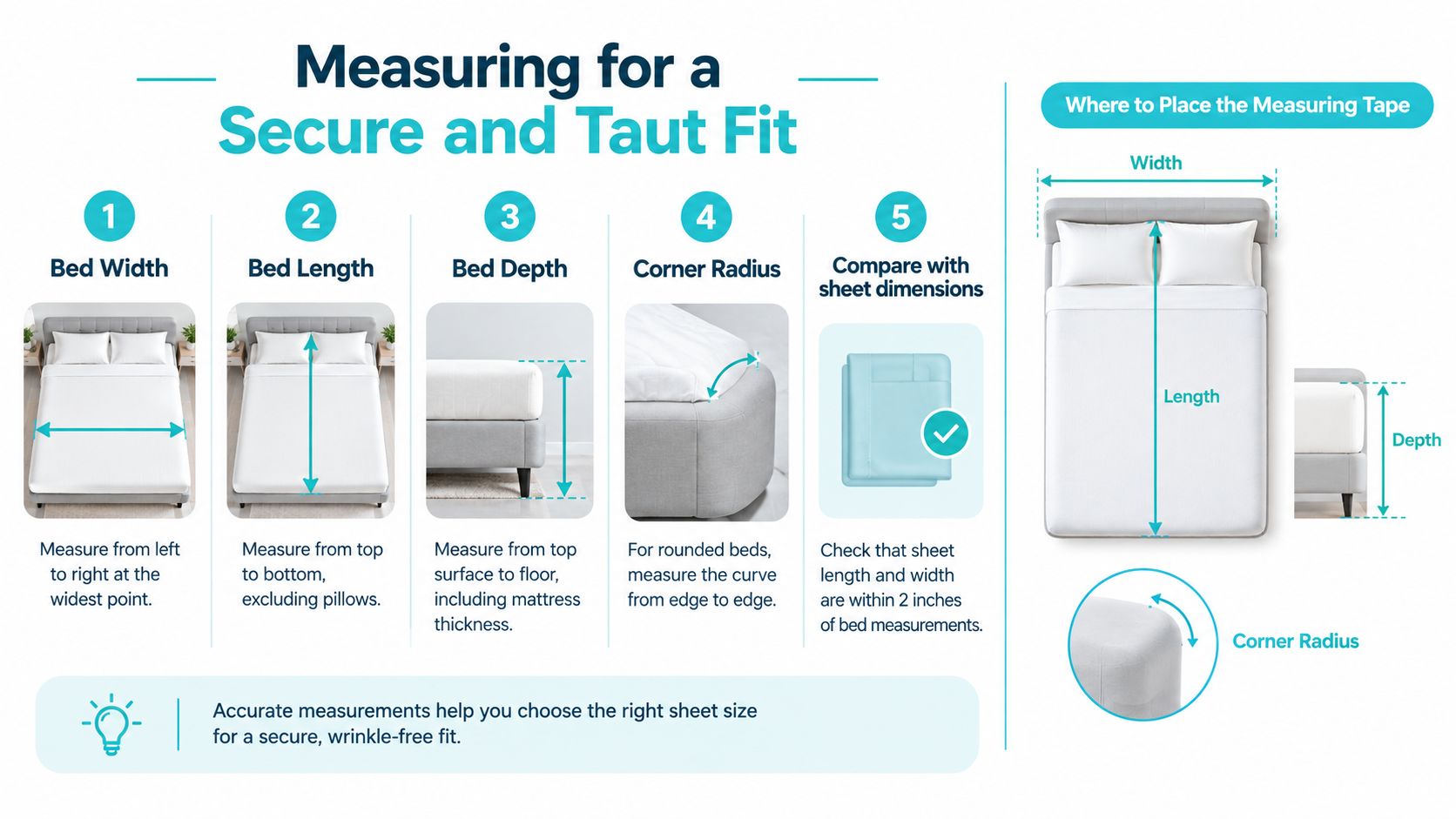
Take these measurements
- Width: Measure across the widest point from one side to the other. Keep the tape flat and don't compress the mattress.
- Length: Measure from top to bottom, excluding pillows, bolsters, or raised bumpers.
- Depth: Measure from the sleeping surface down to the underside or floor, including the mattress thickness. A thin travel mattress needs a different elastic drop from a thick home mattress.
- Corner shape: Note whether the corners are square, rounded, tapered, or interrupted by a frame. For a rounded mattress, measure the curve rather than assuming a rectangular corner.
- Compare dimensions: The infographic's practical checklist recommends checking that the sheet's length and width are within 2 inches of the bed measurements. Confirm the manufacturer's fit instructions too, because elastic construction and mattress thickness still matter.
Test the sheet before departure
Fit the sheet at home while the mattress is inside its travel bed. Tuck every corner fully underneath, then press your palm across the surface. The fabric should remain smooth, taut, and free from ridges.
Pull gently upward at each corner. The CPSC says a crib sheet should overlap the mattress enough that pulling on a corner can't dislodge it, as explained in its crib-sheet safety guidance. If the sheet lifts substantially, bunches in the center, or leaves a gap beside the frame, choose a different size.
For more general guidance on construction and fit, see this crib mattress fitted-sheet guide. Pack only a sheet that passes the home test after it has been washed and dried.
Choosing Fabrics for Real Travel Conditions
Thread count is low on my travel checklist. A sheet that feels luxurious at home is less useful if it stays damp in a hotel bathroom or takes too long to dry after a spill.
I look for a low-profile woven fabric, secure elastic, and predictable behavior after washing. Infant-bedding research found that sheets and waterproof mattresses produced lower maximum airway carbon dioxide in face-down laboratory tests than several higher-loft bedding items, while another airflow study emphasized that bedding materials vary and should be evaluated under standardized conditions. You can review the underlying findings in this infant bedding airflow research.
| Fabric Type | Drying Speed | Breathability | Best For |
|---|---|---|---|
| Cotton | Moderate | Good in a light weave | Familiar feel and regular laundering |
| Bamboo-based rayon | Moderate | Generally comfortable, depending on construction | Families prioritizing softness |
| Synthetic quick-dry fabric | Fast | Varies by weave and finish | Humid trips, frequent washing, and limited drying space |
Cotton is my default for ordinary trips because it's familiar, washable, and available in many fitted styles. Choose a lighter weave rather than a thick, brushed finish. Bamboo-based fabrics can feel soft, but softness alone doesn't tell you how quickly a particular sheet will dry.
Synthetic quick-dry fabric earns its place on multi-stop itineraries. It can be practical after accidents or sink washing, but inspect the actual fabric. A tightly coated or dense textile may feel less breathable than expected.
For hot destinations, a useful companion resource is this cool sleep linen guide from Lewis and Sheron Textiles. Linen may suit some adult bedding situations, but for an infant travel bed, precise fit and the approved product instructions come first. Keep the sleep space clear of quilts, pillows, comforters, and other soft items, consistent with CPSC crib safety tips. More discussion of airflow and weave is available in this guide to breathable crib sheets.
Securing Sheets on Tricky Travel Beds
Rounded, flexible, and inflatable mattresses expose weak sheet design quickly. A traditional fitted sheet can look snug while empty, then spring loose when a child climbs in and shifts the surface.
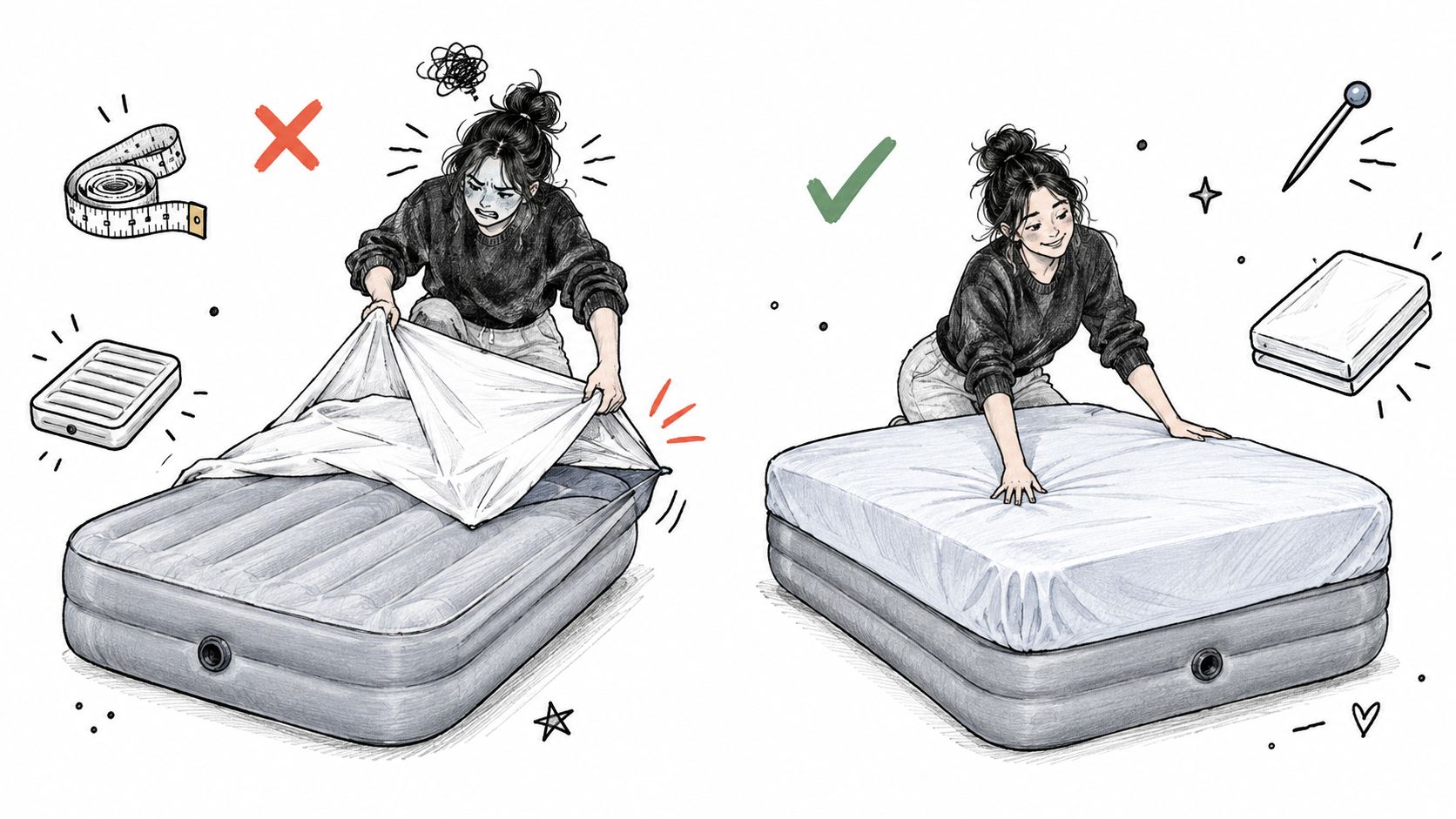
Start with the bed, not the accessory
Inflate the mattress fully according to its instructions before fitting the sheet. Smooth the sheet across the sleeping surface, then work around the perimeter, placing each corner and checking that the elastic sits underneath rather than on top of the mattress edge.
For a flexible or unusually shaped bed, look for:
- Full-perimeter elastic: This usually holds more consistently than elastic placed only at the corners.
- Deep corner pockets: They help the sheet stay underneath a thicker edge.
- Stretch jersey construction: It can accommodate modest shape variation, but it still must match the mattress.
- Manufacturer-approved accessories: Use the bedding style specified for that particular sleep product.
Avoid safety pins, clips, cords, or improvised straps inside the sleep area. Sheet suspenders may be appropriate for some adult beds, but I wouldn't add them to an infant sleep surface unless the product manufacturer specifically approves them. A homemade fix can introduce new loose parts or pressure points.
Hiccapop's Inflatable Toddler Travel Bed with Safety Bumpers is described as fitting standard crib sheets, and its FAQ recommends stretch cotton jersey crib-sized sheets. That's a useful example of why the product's own instructions should outrank generic packing advice.
Here's a visual walkthrough of the setup:
After fitting, run your hand over the entire surface and inspect the edges. If movement causes the sheet to migrate, stop using it and choose a better match rather than tightening it with a DIY attachment.
Managing Hygiene and Care on Multi-Stop Trips
Travel bed sheets need a washing plan before they need a suitcase. Spills, sweat, damp weather, and nighttime accidents are normal parts of traveling with young children. The mistake is packing a wet or even slightly damp sheet and sealing it inside luggage.
I pack at least one spare fitted sheet for trips where laundry access is uncertain. For a short journey, that backup may be enough to keep bedtime moving while the first sheet dries. For a multi-stop trip, I rotate them so one is in use, one is clean, and the used sheet can dry completely before storage.
A practical road-washing routine
Use a small amount of familiar, fragrance-free detergent in a sink or bathtub. Rinse until the water runs clear, press excess water out with a clean towel, and hang the sheet where air can circulate.
- After a visible mess: Wash the sheet before the next sleep period.
- After ordinary use: Follow your child's usual laundering routine, adjusting for sweat, spills, and climate.
- Before packing: Check seams, elastic, and every fold for residual moisture.
- During humid weather: Allow extra drying time and don't rely on touch at one corner. Inspect the thickest seam and elastic channel.
A sheet that smells musty or feels cool and clammy shouldn't go back on the mattress. Rewash and dry it fully. The same rule applies to waterproof or spill-resistant layers, which can hold moisture against the fabric if they're packed too soon.
For broader accommodation-cleaning considerations, this VirusFAQ.com cleaning protocols guide offers a useful reference. Keep the child's sleep surface focused and uncluttered. Hygiene supports safe sleep, but cleaning products, sprays, and extra protective layers should never replace the fitted-sheet requirement.
Building a Reliable Travel Sleep Routine
The best travel sleep setup is boring. That's a compliment.
I keep a dedicated set of travel bed sheets with the travel sleep product instead of borrowing from the nursery drawer. The fabric smell, stretch, and feel become familiar. After a long drive or a late flight, that small cue can help a tired child recognize that the strange room is still bedtime.
The routine matters as much as the sheet. I assemble the bed before the evening rush, check the fit under normal room lighting, and put the same sleepwear and comfort routine in place. I don't add loose blankets, pillows, or soft toys to an infant's sleep area just because a hotel room feels unfamiliar. The AAP safe-sleep guidance for parents supports that firm, approved surface and fitted-sheet approach.
My departure checklist
- Confirm the mattress and travel bed are approved for the child's age and use.
- Measure the actual sleep surface before buying replacement sheets.
- Wash and test-fit every sheet at home.
- Pack a dry spare and a small detergent bottle.
- Inspect the sheet after each setup, especially around corners.
- Never solve a poor fit by adding padding or loose fabric.
A familiar sheet won't eliminate every travel disruption. It does remove one avoidable problem: wrestling with bedding while your child is overtired. Once the sheet fits, stays taut, dries properly, and returns to the same routine each trip, bedtime becomes much more manageable.
Hiccapop offers travel beds and other baby and toddler products designed around practical family use, including an inflatable toddler travel bed that accommodates compatible crib-sized sheets. Visit Hiccapop to explore travel sleep options and choose the bedding setup that matches your child's specific mattress.