


A Parent's Guide to Sleep Regression Ages
Just when you thought you had this whole baby sleep thing figured out, everything suddenly goes haywire. Welcome to the world of sleep regression—that temporary, yet utterly exhausting, phase where a great sleeper abruptly starts waking all night or flat-out refusing to nap.
Here’s the good news: These periods almost always signal that your baby is hitting a major developmental leap. It’s a sign they’re growing and thriving, even if it feels like you’re surviving on coffee and desperation.
What Is a Sleep Regression and Why Is It Happening?
If you’re reading this at 3 AM while bouncing a wide-awake baby, let me reassure you: you’re not alone, and there’s nothing wrong with your child. The term "sleep regression" is actually a bit misleading. It’s more of a sleep progression.
These frustrating phases are signs that your little one’s brain and body are growing in incredible ways.
Think of it like a massive software update running in your baby's brain. While the new features are installing, the whole system can get a little buggy. That’s exactly what’s happening. Their brain is working overtime to master new skills, and unfortunately, sleep is often the first thing to get pushed aside.
The Real Reasons Behind Sleep Setbacks
So, what’s causing this sudden shift from peaceful nights to all-out sleep strikes? While it feels completely random, these regressions are tied to specific, predictable developmental milestones. The culprits usually fall into a few key categories.
- Cognitive Leaps: Your baby's brain is just exploding with new awareness. They’re figuring out object permanence (the realization you still exist even when you leave the room), cause and effect, and their own budding independence. This new consciousness can make it much harder for them to switch off and just relax.
- Physical Milestones: Is your baby learning to roll, sit up, crawl, or pull to a stand? These are monumental achievements! But they often want to practice these exciting new moves at midnight instead of sleeping. Their little body is buzzing with the impulse to get going, which makes staying still and resting a real challenge.
- Separation Anxiety: Around 8 to 10 months, many babies get hit with a serious case of separation anxiety. It’s a totally normal part of their emotional development, but it can turn bedtime into a heartbreaking ordeal every single night. They protest when you leave because they’ve finally grasped that you’re a separate person—and they desperately want you to stay!
A "sleep regression" isn't a step backward; it's the side effect of a huge leap forward. Your baby's brain is upgrading, and their sleep patterns are temporarily disrupted as they process incredible new skills and awareness.
Knowing what’s behind the chaos is the first step to getting through it. This isn’t about a bad habit you created; it’s a biological and developmental process that is both temporary and a sign of healthy growth.
Consistency is your best friend right now. Sticking to your routines provides a sense of security and predictability when their internal world feels so new and overwhelming. By focusing on the why, you can start to see these tough nights not as a failure, but as proof that your baby is thriving.
The Complete Timeline of Common Sleep Regression Ages
Just when you’ve finally gotten into a rhythm and feel like you’ve cracked the code on your baby’s sleep, everything falls apart. One week they're sleeping like a champ, and the next, you’re up every hour, completely baffled. Welcome to the world of sleep regressions.
While it feels chaotic and personal, this experience is remarkably predictable. These tough phases aren't your fault, and they aren’t random. They're directly tied to your baby’s incredible brain development—think of them as system updates that temporarily throw sleep off track. Knowing the "when" and "why" can help you feel prepared instead of panicked.
This flowchart breaks down the core reasons behind these sleep disruptions: cognitive leaps, new physical skills, and emotional shifts like separation anxiety.
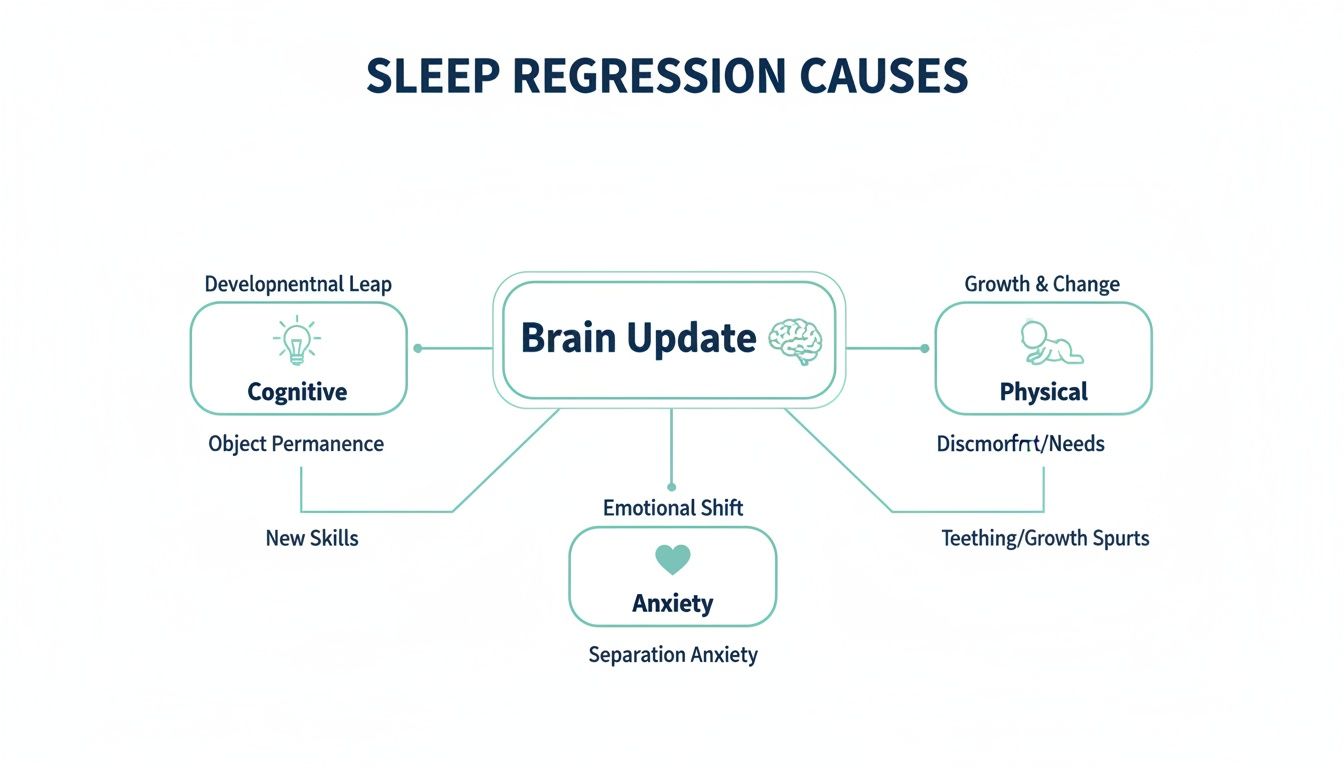
As you can see, each regression is sparked by a huge developmental milestone. Their brain is working so hard on a new skill that sleep, for a little while, takes a back seat.
Here’s a look at what you can expect and when.
The 4 Month Sleep Regression
Often called "The Big One," this first regression isn't really a regression at all—it's a permanent neurological shift. Around 3 to 4 months of age, your baby’s newborn sleep patterns mature into more adult-like sleep cycles, complete with distinct stages of light and deep sleep.
This new structure means they now surface and briefly wake between cycles. If your baby relies on you to get to sleep (through rocking, feeding, or holding), they’ll suddenly need that same help every single time they stir, leading to a frustrating explosion of night wakings.
Common Signs:
- Waking up much more often, sometimes every hour or two.
- Taking a long time to settle down at bedtime.
- Naps become frustratingly short, often lasting just 30-45 minutes.
- General fussiness from being so overtired.
The 8-10 Month Sleep Regression
This phase is all about two things: mobility and object permanence. Your baby is likely mastering huge physical skills like crawling, pulling up to stand, and cruising along furniture. Their brain is on fire with these new abilities, and they'd much rather practice them in the crib at 2 AM than actually sleep.
At the same time, separation anxiety often kicks into high gear. Your baby now fully understands that you can leave the room, and they do not like it one bit. This cognitive leap makes both naps and bedtime a real battle.
Common Signs:
- Fighting sleep with some serious protest.
- Waking up and immediately pulling themselves up to stand in the crib.
- Being extra clingy during the day and crying whenever you're out of sight.
The 12 Month Sleep Regression
Right around their first birthday, another sleep challenge often appears. This one is typically tied to the tricky transition from two daily naps down to one. The problem is, many one-year-olds start resisting a nap before they’re truly ready to drop it.
They might fight their afternoon nap, making you think it's time to make the change. But dropping it too soon almost always backfires, leading to an overtired baby who sleeps even worse at night. It's a frustrating balancing act.
Common Signs:
- Suddenly refusing their afternoon nap.
- Waking up for the day way too early.
- More night wakings due to being chronically overtired.
The 18 Month Sleep Regression
Get ready for a perfect storm of toddler challenges: teething (those pesky canines), a second wave of separation anxiety, and a fierce new drive for independence. The 18-month sleep regression is infamous for being one of the toughest because it’s driven by your toddler’s powerful, budding sense of self.
Their new favorite word is probably "No!" and they use it for everything, especially bedtime. They are testing boundaries and realizing they have some control over their world. This, combined with painful teeth and clinginess, is a recipe for sleep disruption.
This regression is less about physical skills and more about their emotional and cognitive world exploding. Your toddler isn't just fighting sleep; they're asserting their independence and trying to figure out their place in the universe.
Common Signs:
- Intense resistance to bedtime, which can include yelling or throwing things out of the crib.
- Waking up screaming in the middle of the night.
- Suddenly trying to climb out of the crib or developing a new fear of the dark.
The 2 Year Sleep Regression
Just when you thought you were finally in the clear, the two-year regression can pop up. This one is often caused by a mix of factors, including the arrival of two-year molars, a need for a schedule tweak (like longer wake windows), and the emergence of very real fears.
A two-year-old’s imagination is exploding. While it's wonderful during playtime, it can lead to nightmares or fears of monsters under the bed at night. They're also becoming masters of stalling, asking for "one more drink" or "one more story" to delay the inevitable.
Common Signs:
- Suddenly fighting or dropping their one remaining nap.
- Using every stalling tactic in the book at bedtime.
- Waking up from nightmares or saying they're scared to be alone.
To help you quickly pinpoint what’s going on, here’s a simple cheat sheet for the most common sleep regressions.
Quick Guide to Common Sleep Regression Ages
| Age Range | Primary Causes | Common Signs | Typical Duration |
|---|---|---|---|
| 4 Months | Permanent change in sleep cycle architecture; maturing from newborn to adult-like sleep patterns. | Frequent night wakings, short naps (30-45 mins), difficulty settling. | 2 to 6 weeks |
| 8-10 Months | Major physical milestones (crawling, pulling up), peak separation anxiety, nap transition (3 to 2). | Crying when you leave, practicing skills in the crib, fighting naps. | 3 to 6 weeks |
| 12 Months | Increased mobility (walking), nap transition resistance (fighting the second nap). | Nap refusal, early morning wakings, increased fussiness. | 2 to 4 weeks |
| 18 Months | Assertion of independence ("No!"), teething (canines), renewed separation anxiety. | Bedtime battles, night terrors, climbing out of the crib. | 2 to 6 weeks |
| 2 Years | Nap transition (dropping the last nap), developing fears and imagination, verbal stalling tactics. | Nap strikes, elaborate bedtime delays, waking with nightmares. | 2 to 4 weeks |
While each of these sleep regression ages brings a unique flavor of exhaustion, the root cause is always a positive one: your child is learning and growing at an incredible pace. By seeing these phases for what they are—predictable and temporary—you can face them with a lot more confidence and a little less frustration.
Surviving the 4 Month Sleep Regression: The First Big Hurdle
Welcome to what many exhausted parents call "The Big One." The 4-month sleep regression often feels like the most intense of them all because it’s not just a passing phase—it’s a permanent upgrade to your baby's entire sleep system. Before this, your newborn’s sleep was pretty simple: on or off. Now, their brain is installing a much more complex operating system.
This isn't a temporary glitch. Around the four-month mark, your baby’s sleep architecture fundamentally shifts from a simple two-stage newborn pattern to a more mature, multi-stage adult sleep cycle. This means they now cycle through periods of deep sleep and lighter sleep, just like we do.
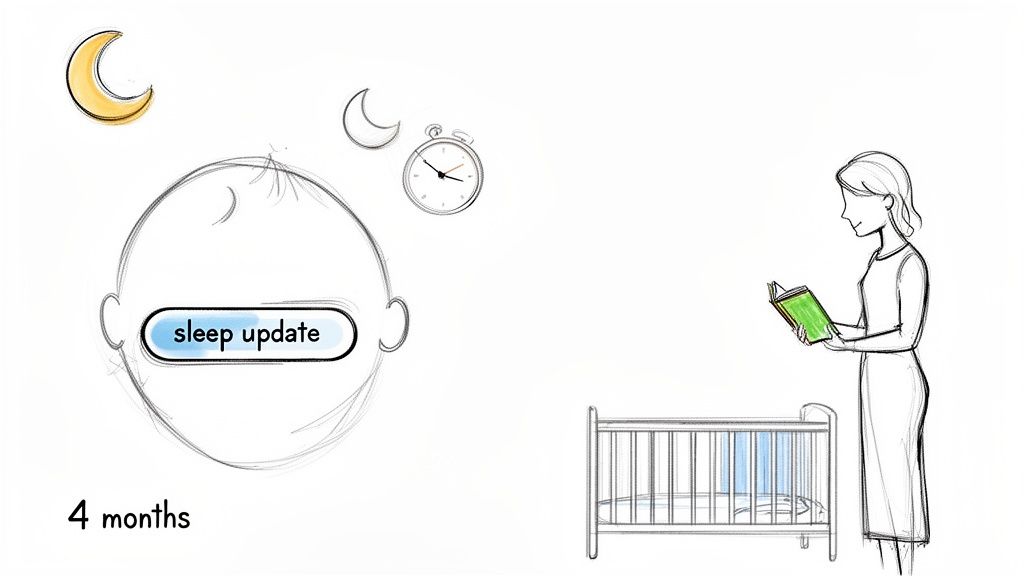
So, what does that mean for you? They'll start to briefly wake up between each 45-60 minute cycle. If your baby doesn’t yet know how to fall asleep on their own—and still relies on rocking, feeding, or a pacifier—they will cry out for that same help every single time they surface from sleep. All. Night. Long.
Why This Phase Is So Disruptive
This neurological leap is incredible for your baby's development, but it can absolutely wreak havoc on your nights. Your previously decent sleeper might suddenly start waking every hour or two, and their naps can shrink to a frustratingly short 30-45 minutes. I promise, you didn't do anything wrong; this is a biological certainty.
You're also in good company. The 4-month sleep regression is a notorious rite of passage. In fact, CDC data from 2016-2018 revealed that a staggering 40.3% of infants aged 4-11 months get less sleep than recommended, the highest of any age group studied.
This is the moment when a safe, comfortable, and consistent sleep environment stops being a nice-to-have and becomes a non-negotiable tool for survival.
Battle-Tested Strategies for the 4 Month Mark
While you can't stop this developmental change, you can absolutely influence how your family gets through it. The real goal here is to gently teach your baby the skill of falling asleep independently, which will empower them to connect those new sleep cycles without your help.
1. Create a Rock-Solid Bedtime Routine A predictable sequence of events is like a secret signal to your baby's brain that sleep is coming. This routine doesn't need to be long or complicated at all.
- A warm bath to relax their little muscles.
- A gentle baby massage with lotion.
- Changing into pajamas and a fresh diaper.
- Reading one or two quiet board books.
- A final feeding in a dimly lit room, ending it before they are completely drowsy.
2. Optimize the Sleep Environment As your baby becomes more aware of their surroundings, a stimulating room can sabotage sleep. Your aim should be a sleep cave: dark, cool, and boring.
- Darkness is key. Use blackout curtains to make the room pitch black for both naps and nighttime. Even a sliver of light can signal to their brain that it's time to be awake.
- Keep it cool. A room temperature between 68-72°F (20-22°C) is the sweet spot for safe and comfortable sleep.
- Use white noise. A continuous, boring sound from a white noise machine is fantastic for blocking out household noises and mimicking the comforting sounds of the womb.
3. Put Your Baby Down Drowsy But Awake This is the single most important skill you can help your baby learn during this regression. After your calming bedtime routine, lay them in their crib while they are still awake, but clearly tired. This gives them the opportunity to practice settling themselves to sleep.
The goal is for the crib to be the place where the magic of falling asleep happens, not your arms. This allows them to recognize their surroundings and drift back off when they naturally wake between sleep cycles.
4. Manage Daytime Naps Fiercely Overtiredness is the sworn enemy of good night sleep. An exhausted baby has a much harder time falling asleep and staying asleep. At this age, a baby should be awake for no more than 90 minutes to 2 hours at a time. Watch the clock and their sleepy cues (like rubbing eyes or yawning) like a hawk. Creating a solid daily schedule is crucial, and you can get more specific guidance in our guide on the ideal 4-month-old sleep schedule.
This first big regression is tough, there’s no sugarcoating it. But it's also your first real opportunity to build a foundation for healthy, independent sleep that will last for years to come. Consistency is your superpower right now.
The 8 to 10 Month Mobility Milestone
Just when you thought you had a handle on things, the 8 to 10-month sleep regression throws a wrench in the works. This one is all about mobility and a major case of FOMO (fear of missing out). Your baby’s world is expanding at a dizzying pace, and their brain is firing on all cylinders.
They’re learning to crawl, pull up to a stand, and maybe even babble a few intentional sounds. And where is the best place to practice these newfound superpowers? Their crib, of course. Usually around midnight.
On top of that, their little minds are grasping a huge concept: object permanence. They now understand that you still exist even when you’re not in the room. While that’s a massive cognitive leap, it often brings a powerful wave of separation anxiety right along with it.
It's the perfect storm for sleep disruption: a body that can’t stop moving and a mind that doesn’t want you to leave.
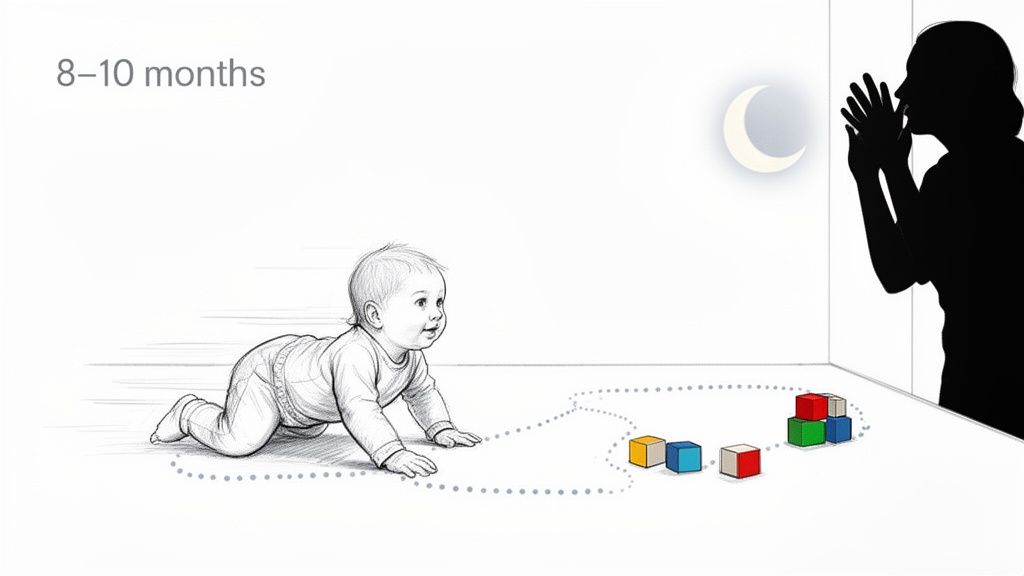
If this stage feels particularly tough, you're not alone. It's completely normal for babies around 8-10 months to suddenly resist naps and wake up more overnight. Their brains are just too busy processing all their new skills.
Strategies for the Mobility-Fueled Regression
The goal here isn't to stop the development—it's to help your baby get their practice in during the day so their crib can go back to being a place for sleep. Your response should be calm, consistent, and reassuring without accidentally creating new habits that are hard to break later on.
1. Maximize Floor Time Let them go wild during their wake windows. The more you let them practice crawling, pulling up, and exploring on the floor during the day, the less exciting it will feel at 2 AM. Create a safe, baby-proofed zone and let them get their wiggles out.
2. Play Games to Ease Separation Anxiety Separation anxiety is a huge driver of this regression, making bedtime feel like a scary separation. You can help ease their fears by playing games that gently reinforce that you always come back.
- Peek-a-boo: It might seem simple, but this classic game is a powerful tool for teaching object permanence in a fun, non-threatening way.
- Quick "hide-and-seek": Duck behind the couch for a second and then pop back out with a big smile. This builds their confidence that separations are temporary and not something to fear.
3. Double Down on Your Bedtime Routine A predictable bedtime routine is your anchor in this storm. It’s a powerful signal to your baby's busy brain that it's time to wind down from the day's excitement. A warm bath, a favorite story, a quiet cuddle—keep it short, sweet, and exactly the same every single night.
What to Do When They Stand Up in the Crib
It’s one of the most common sights of this regression: you check the monitor and see your baby standing at the rail, often wailing because they can’t figure out how to get back down. Your first instinct is to rush in and lay them down, but be careful—this can quickly become a super fun game for them.
Your response should be brief and boring. Go in, gently lay them down without much eye contact or talking, and quietly leave. You might have to repeat this a few times (or more than a few!), but they’ll eventually realize that standing up doesn’t get them a fun social visit.
A great pro-tip is to practice getting down from a standing position during the day. Help them learn how to bend their knees and lower themselves gently to a sitting position. Once they master that skill, they'll be able to get themselves down at night without your help.
For more tailored advice on this tricky age, our guide on 9-month-old wake windows can help you get their schedule just right.
Your Action Plan for Managing Any Sleep Regression
Feeling like you’re just surviving this whole sleep regression thing? Let's turn that around. While every regression feels like its own special brand of chaos, the game plan for getting through them is surprisingly consistent. This is your toolkit—a set of go-to strategies you can pull out for any regression, at any age, to get your family back on track.
Instead of feeling like you're constantly playing defense, these tips will help you feel more in control. You're building a solid foundation that can handle the temporary storm of a developmental leap.
Double Down on Your Bedtime Routine
When your baby's world feels new and a little confusing, a predictable routine is like a cozy, weighted blanket for their brain. Honestly, a solid bedtime routine is the single most powerful signal you can send that it's time to wind down for sleep.
This doesn't have to be some elaborate, hour-long production. The best routines are simple, calming, and something you can do every single night without fail.
- Consistency is key: The real magic is in the predictability. Aim for a 20-30 minute sequence of calming activities, done in the same order, every night.
- Make it about connection: This is your time for quiet connection. A warm bath, a gentle massage with lotion, reading a favorite story, or singing a soft lullaby are all perfect.
- End in the crib: The very last step should always be placing your baby in their crib while they are drowsy but still awake. This is a huge piece of the puzzle in helping them learn how to fall asleep on their own.
Create the Ultimate Sleep Cave
As your baby gets older and more aware of the world, their sensitivity to their surroundings just skyrockets. A room that was perfectly fine for sleep last month might suddenly be way too interesting. Your mission is to make their sleep space as wonderfully boring as possible.
Think of it as a little sleep sanctuary—cool, dark, and quiet.
Your new mantra: "boring is best." An ideal sleep environment gets rid of all the distracting sights and sounds that keep a baby’s busy brain firing. Darkness, especially, is your friend—it cues their body to produce melatonin, the natural sleep hormone.
A huge part of your strategy should be fostering consistent and healthy sleep habits. Get that room pitch black with some blackout curtains, aim for a temperature between 68-72°F (20-22°C), and use a white noise machine to drown out the sudden dog bark or dishwasher clatter.
Protect Daytime Sleep Fiercely
It's one of the cruel ironies of baby sleep: an overtired baby doesn't sleep better, they sleep worse. Much worse. When a baby pushes past their limit, their body releases cortisol, a stress hormone that acts like a shot of adrenaline. It makes it nearly impossible for them to settle down and stay asleep.
Getting daytime sleep and nutrition right is non-negotiable for a good night. Make sure your little one is getting full feedings during the day so they aren't waking up from legitimate hunger overnight. And watch those wake windows like a hawk—put them down for a nap before they turn into a fussy, overtired mess.
Prioritize Your Own Sanity
Let's be real for a minute: sleep regressions are brutal on parents. Your own sleep is a wreck, your patience is worn thin, and it's so easy to feel completely burned out. You simply cannot pour from an empty cup.
Taking care of yourself isn’t a luxury right now; it’s a core part of the survival strategy. I'm not talking about a spa day (though that would be amazing!). It’s about finding small, realistic ways to recharge your own batteries.
- Tag team with your partner: If you have one, divide and conquer. One of you can handle the first half of the night to get a solid block of sleep, and then you switch.
- Lower your standards: The house will be messy. Dinner might be takeout for three nights in a row. It's okay. Give yourself grace. Your only job is to care for your baby and yourself.
- Call in reinforcements: Seriously, don't be afraid to ask for help. Have a family member or trusted friend come over to watch the baby for just an hour so you can nap, take a long shower, or just sit in blessed silence.
By using this framework, you're not just passively waiting for the regression to end—you're actively reinforcing healthy sleep skills that will benefit your child for years to come. For more on this, check out our guide on how to teach your baby to self-soothe.
Answering Your Top Sleep Regression Questions
When you're in the thick of a sleep regression, your brain is foggy and you just need answers. We get it. We've been there. This is our attempt to cut through the noise and tackle the questions that pop up for exhausted parents in the middle of the night.
Is It a Sleep Regression, Teething, or Sickness?
This is the million-dollar question, isn't it? It can feel impossible to tell what's disrupting your baby's sleep, but you can definitely play detective. It’s all about looking for the patterns.
A sleep regression is almost always tied to a new developmental milestone. Is your baby suddenly obsessed with rolling over, trying to crawl, or pulling themselves up to stand in the crib? A true regression usually throws a wrench in both naps and nighttime sleep, and it tends to stick around for a few weeks while their brain is working overtime on that new skill.
Teething pain, on the other hand, is often more random. One night might be awful, and the next could be perfectly fine. You'll also likely see the other classic signs: tons of drool, gnawing on everything in sight, and red, swollen gums.
Sickness is usually the most obvious of the three because it almost always brings friends. Look for a fever, a runny nose, a cough, or noticeable changes in their appetite or daytime mood. A sick baby often just isn't themselves.
Pro-Tip: Always rule out sickness first. If your baby seems unwell or has a fever, a quick call to your pediatrician is the best move. Once you know it’s not an illness, you can look for those tell-tale developmental signs that point to a regression.
Should I Sleep Train During a Regression?
This is a tricky one, and the honest answer is: it really depends on what you mean by "sleep train."
If you’re thinking about starting a brand-new, intensive sleep training method right in the middle of a regression… I'd hold off. You'd probably be setting everyone up for a lot of frustration. It’s like trying to learn a complex new dance during an earthquake—the timing is just all wrong.
However, a regression is the absolute worst time to abandon your routines. Consistency is your lifeline. Your goal should be to stick to your existing bedtime rituals and sleep rules as best you can. It's okay to offer extra comfort and reassurance, but try to avoid starting new habits you can't sustain (like rocking for an hour straight) that you’ll just have to undo later.
Once the developmental storm has passed and things have calmed down for a few days, that's a much better time to jump into a more formal sleep training plan if you feel you need one.
Does Every Baby Experience Every Sleep Regression?
Here’s some good news for you: absolutely not.
While every baby goes through the same incredible developmental leaps, not every baby’s sleep gets completely derailed by them. Some little ones are simply more sensitive to these internal changes than others.
Think of it like this: some adults get incredibly "hangry" and out of sorts when they miss a meal, while others barely notice. Babies are just the same. Their unique temperament, their established sleep habits, and even their environment all play a huge role in how they navigate these phases.
Some babies might sail through the 8-month regression with just a couple of bumpy nights, while for others it feels like a full-blown sleep strike. Your baby’s journey is their own. The most important thing is to avoid the comparison trap and focus on responding to your child’s needs with as much patience and consistency as you can muster.
Creating a consistent, safe, and calming sleep environment is one of the most powerful tools in your arsenal during any regression. The Hiccapop line of sleep essentials, from our top-rated crib mattresses to our blackout nursery solutions, is designed to give you that solid foundation for better sleep. Explore our products today to build your perfect little sleep cave.