


Your Ultimate Guide to 9 Month Old Wake Windows
Welcome to the wild world of 9-month-old sleep! If you’re a parent feeling like you've tried everything and just want a straight answer, here it is: the ideal 9-month-old wake window usually falls somewhere between 2.75 and 3.5 hours. This is the magic timeframe that helps your baby get the restorative sleep they need without becoming an overtired, fussy mess.
Think of this guide as your new best friend for navigating naptime, bedtime, and everything in between. Let’s dive in and make sleep a little less mysterious.
Getting a Handle on Your 9-Month-Old's Sleep Needs
At nine months, your baby is hitting some huge milestones. They’re crawling, pulling up on everything, and their little brain is firing on all cylinders. All this amazing development has a massive impact on sleep, which makes a predictable routine more important than ever. This is where wake windows become your secret weapon.
A wake window is simply the stretch of time your baby is awake between naps or before bedtime. I like to think of it like a "sleep pressure" tank. If you put them down too early, the tank isn't full enough, and you get a short nap or a baby who just babbles in the crib. Wait too long, and the tank overflows, leaving you with a cranky, overtired baby who can’t settle down.
Building Just the Right Amount of Sleep Pressure
The goal is to build up just the right amount of that natural, biological drive to sleep. Nailing the 9-month-old wake windows means your baby is perfectly tired—but not too tired—when you lay them down.
By this age, most babies have dropped the third nap and settled into a solid two-nap schedule. This transition makes timing everything. Many pediatric sleep experts suggest aiming for about three hours of awake time as a good starting point. For a deeper dive into the science behind these recommendations, this a comprehensive guide to infant sleep is a fantastic resource.
At nine months, your baby's internal clock is much more developed. A consistent routine isn't just about control; it gives them the security and predictability they desperately need while their world is changing so fast.
9-Month-Old Wake Windows at a Glance
To make it easier, here’s a quick summary of what you should be aiming for.
| Metric | Recommended Range | Typical Average |
|---|---|---|
| Wake Window | 2.75–3.5 hours | 3 hours |
| Number of Naps | 2 per day | 2 per day |
| Daytime Sleep | 2–3 hours total | 2.5 hours |
| Nighttime Sleep | 11–12 hours | 11 hours |
| Total Sleep | 12–14 hours | 13.5 hours |
Keep in mind that these are just guidelines. Your baby is unique, so paying attention to their individual cues is just as important as watching the clock.
Why Consistency Is Your Best Friend
Consistently aiming for 2.75 to 3.5-hour wake windows helps you fit in those two crucial naps and achieve about 14 hours of total sleep in a 24-hour period. This usually breaks down into 11–12 hours overnight and 2–3 hours of daytime sleep. You can learn more about how wake windows evolve as your baby grows with these wake windows by age charts.
If sleep has suddenly gone completely off the rails, please know you’re not alone. The challenges you're facing are normal and totally solvable. This guide will walk you through everything you need to know about schedules, sleep cues, and how to handle those inevitable tricky spots.
Why Wake Windows Are a Game-Changer at 9 Months
Let's get right into the "why" behind wake windows, especially for a baby at this incredibly busy age. The easiest way to think about it is like a perfect recipe. If you don't let your baby stay awake long enough, they're simply not "cooked" enough for sleep. But if you keep them up for too long, they get overtired and fussy—totally "overcooked."
At nine months old, this timing is more important than ever. Your baby’s internal clock, their circadian rhythm, is really starting to mature and find its groove. This means following consistent wake windows isn't just a helpful trick; it's about working with your baby's natural biology to create a reliable rhythm of sleep and wakefulness.
The Perfect Storm of Development and Sleep
Nine months is an absolute explosion of growth, both for their little bodies and their developing brains. Your baby is likely mastering huge motor skills—crawling like a champ, pulling up on everything in sight, and maybe even cruising along the coffee table.
These new skills are thrilling for them, but they also use a ton of mental and physical energy. A well-structured day, built around appropriate 9-month-old wake windows, gives their brain the essential downtime it needs to process and consolidate all this new information.
On top of that, this is a peak age for major emotional leaps, including:
- Separation Anxiety: Your baby now fully understands that you can leave, which can turn settling down for sleep into a real challenge. A predictable routine built on wake windows provides a deep sense of security, helping them feel safe and understand that naptime is just a normal part of the day.
- Object Permanence: They get it now—things (and people!) still exist even when they can't see them. This is amazing for peek-a-boo but can make bedtime feel like a true separation.
- Increased Awareness: They are more fascinated by their world than ever before, which often leads to them fighting sleep simply because they have a serious case of FOMO (fear of missing out).
By respecting their biological need for rest and following their wake windows, you help ensure they aren't pushed past their limits. This makes navigating these big developmental phases a whole lot smoother for everyone involved.
By providing a predictable rhythm to their day, you’re not just managing their sleep; you’re offering them a secure base from which they can confidently explore their rapidly expanding world. Consistency is comfort.
Building Optimal Sleep Pressure
The secret sauce for great sleep is something called sleep pressure. Think of it as a biological drive for sleep that slowly builds up every single minute your baby is awake. The longer they’re up, the more this pressure accumulates.
The entire goal of a 9-month-old wake window is to hit that sweet spot and build the perfect amount of sleep pressure.
- Too Little Pressure (Undertired): If the wake window is too short, there just isn't enough sleep pressure to help them fall asleep and stay asleep. This is how you end up with a baby who fights a nap for 20 minutes, only to sleep for 30 and wake up grumpy.
- Too Much Pressure (Overtired): Let the wake window stretch too long, and their body goes into overdrive, producing stress hormones like cortisol and adrenaline to keep them going. This "second wind" makes it incredibly difficult for them to wind down, fall asleep, and connect sleep cycles.
At nine months, their sleep is mature enough to handle longer awake periods—usually somewhere between 2.75 to 3.5 hours. This lets them build up enough sleep pressure to take two solid, restorative naps during the day instead of three unpredictable catnaps. Nailing this timing is the key to getting those glorious long naps and, in turn, better sleep at night.
Getting a handle on this concept is the first real step toward becoming a sleep detective for your own child and finally cracking the code to a more predictable, well-rested home.
Learning to Read Your Baby's Unique Sleep Cues
While the clock is a fantastic guide for your 9-month-old's wake windows, your baby is giving you the real-time, up-to-the-minute report. Learning to read their unique sleep cues is like gaining a parenting superpower. It lets you fine-tune those 2.75 to 3.5-hour windows with incredible precision, heading off meltdowns before they even think about starting.
Think of yourself as a sleep detective. Your mission is to spot the subtle clues that say, "I'm getting tired," and act on them before they turn into blaring alarms that scream, "You missed the exit—now we're all stuck in overtired traffic!"
Early Sleep Cues: The Golden Window
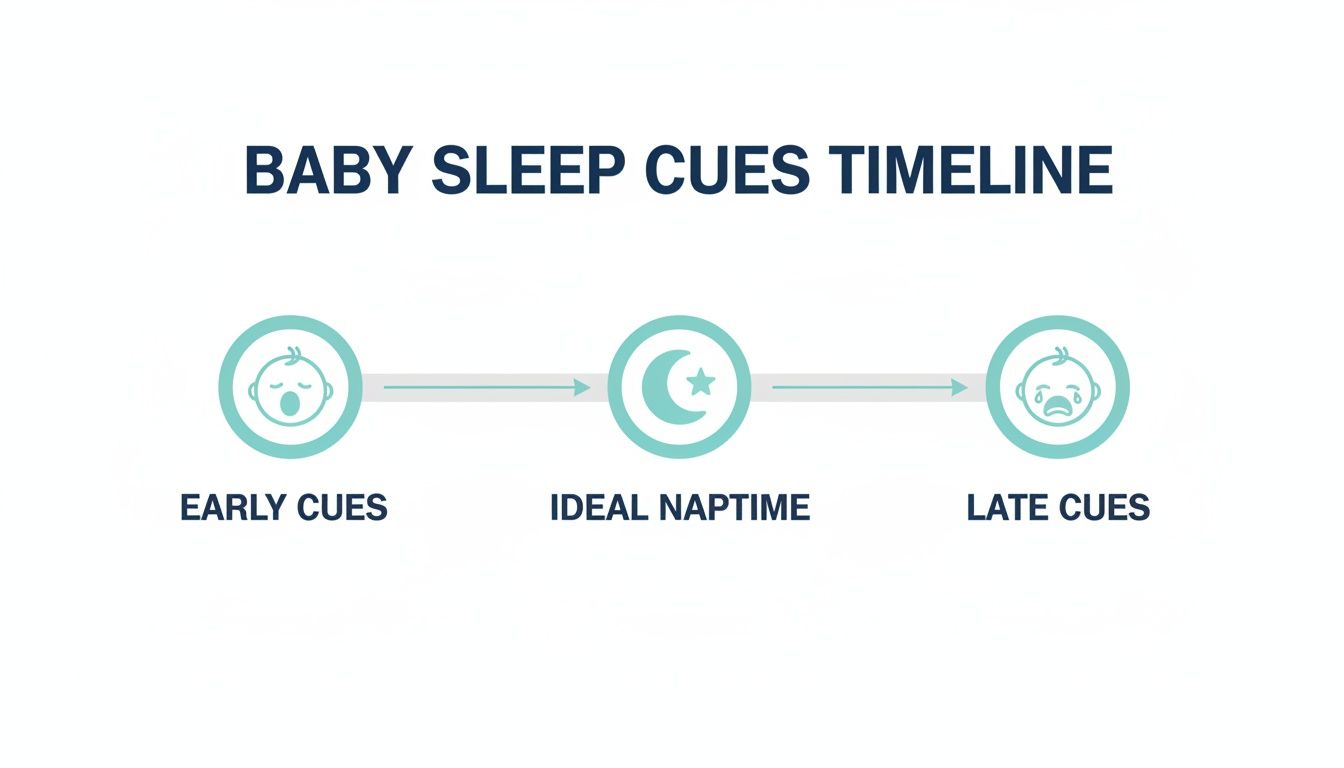
Early sleep cues are your green light. These are the gentle signals that your baby’s biological sleep pressure is building perfectly. When you see these, it’s the ideal moment to start your wind-down routine for a nap or bedtime.
Catching this golden window is everything. It means your baby is tired enough to fall asleep with ease but not so exhausted that their body starts pumping out stress hormones like cortisol. That's what makes settling down feel next to impossible.
Common early cues to watch for:
- Eye Rubbing: This is a classic. It’s a sure sign their eyes are getting heavy and strained from being awake.
- Yawning: It might seem obvious, but a single yawn is a clear signal that sleepiness is creeping in. Don't wait for the third or fourth one!
- A Faraway Look: You might notice them staring off into space with a glazed-over expression, suddenly losing interest in their toys or people around them.
- Slowing Down: They may stop actively playing, becoming quieter and more still. Is your usually busy baby suddenly frustrated with a favorite toy? They might just be saying it's naptime.
Responding to these first whispers of sleepiness is the most effective way to use wake windows. You're working with their body's natural rhythm, turning naptime into a cooperative effort rather than a battle.
Late Sleep Cues: The Overtired Zone
If you miss the early cues, your baby will shift into late cues. These are the louder, more frantic signals that they’ve officially crossed from tired into overtired territory. At this point, their system is flooded with "get-up-and-go" hormones that make sleep a real struggle.
Late cues are a sign that the wake window was just a bit too long. It happens to all of us, so don't beat yourself up! Just make a mental note to shorten the next wake window slightly.
Here’s what you might see:
- Fussiness and Crying: This is the most common late cue, where general crankiness quickly escalates into full-blown tears.
- Hyperactivity: It sounds completely backward, but an overtired baby can suddenly seem wired. They might start frantically crawling, pulling up, or acting goofy in a last-ditch effort to fight off sleep.
- Arching Their Back: This is a physical sign of protest and discomfort, often happening when you try to hold or rock them.
- Fighting Sleep: They may resist being held, struggle against their sleep sack, or start crying the moment you walk into their room.
Learning these cues helps you build that incredible parenting intuition. It's also a critical piece of the puzzle for helping your baby rest independently. If your little one struggles to wind down on their own, our guide on how to teach baby to self-soothe offers gentle, practical strategies. By combining perfect timing with these skills, you're setting your baby up for amazing sleep success.
Sample 9-Month-Old Schedules You Can Actually Use
Knowing the theory behind 9-month-old wake windows is one thing, but seeing how it all plays out in a real day is where things finally click. Think of these schedules as flexible blueprints, not rigid rules set in stone. Every baby is different, and your little one's day will naturally shift based on their sleep cues, nap lengths, and your family's own rhythm.
Use these examples as a starting point. Feel free to nudge times by 15 or 30 minutes to better fit your life and, most importantly, your baby’s unique needs. This is your guide to bringing a little more predictability and calm to your days.
What Does the Clock Look Like?
To help you see how these wake windows translate into a full day, I’ve put together a couple of examples. The first is a typical day at home, and the second shows how you can adapt when life throws errands, appointments, or travel into the mix.
Here's a side-by-side look at how a day might unfold.
| Time | Activity (At-Home Day) | Activity (On-the-Go Day) |
|---|---|---|
| 7:00 AM | Wake up, feeding, cuddles & breakfast | Wake up, feeding & breakfast |
| 10:00 AM | Start nap routine after a 3-hour wake window | Nap 1 on the move (car seat/stroller) |
| 10:15 AM | Nap 1 (aiming for 1.5 hours in the crib) | Short nap ends (maybe 45 minutes) |
| 11:45 AM | Wake up, feeding, lunch & playtime | Feeding & lunch while out and about |
| 2:45 PM | Start nap routine after another 3-hour window | Head home for a much-needed crib nap |
| 3:00 PM | Nap 2 (aiming for about 1.25 hours) | Nap 2 (aiming for 1.5 hours to catch up) |
| 4:15 PM | Wake up, feeding, playtime & dinner | Wake up, feeding & afternoon playtime |
| 6:30 PM | Start bedtime routine (bath, PJs, stories) | Start bedtime routine a bit earlier |
| 7:30 PM | Bedtime after a final 3.25-hour wake window | Bedtime (around 7:00 PM) to prevent overtiredness |
As you can see, the key on an "on-the-go" day is flexibility. A short nap in the car often means you need to shorten the next wake window and offer an earlier bedtime to help your baby catch up on rest.
Tips for Naps and Bedtime
No matter what your day looks like, a few consistent strategies can make a world of difference for naps and nighttime sleep.
- Create a Wind-Down Ritual: You don't need an elaborate routine for naps, but a simple, predictable sequence helps signal that it's time to sleep. Something as easy as closing the curtains, singing a specific song, and a quick cuddle can work wonders.
- Embrace the Darkness: A dark room is your best friend for sleep. Blackout curtains are a game-changer because they block out distracting daylight and help stimulate melatonin production, the hormone that tells our bodies it's time to sleep.
- Stay Flexible, Especially on Busy Days: If a nap gets cut short while you're out, don't panic. Just adjust the next wake window. You might need to put your baby down 20-30 minutes earlier for their next nap or for bedtime to compensate.
- Prioritize at Least One Crib Nap: While on-the-go naps are a lifesaver, they often aren't as restorative. Whenever possible, try to have at least one of the day's naps happen at home in their crib. This solid block of sleep can make the rest of the day go much more smoothly.
Solving Common 9-Month-Old Sleep Problems
Even when you’ve mapped out the perfect schedule, remember one thing: your baby hasn't read the manual. Sleep hiccups are a totally normal part of the journey, especially at this incredibly busy developmental age. So, let’s troubleshoot some of the most common sleep challenges you’ll face around nine months.
We’ll dig into the classic culprits: short naps that throw off your whole day, frustrating night wakings, those crack-of-dawn wake-up calls, and the epic bedtime battles. For each one, we'll trace it back to those 9 month old wake windows and look at other potential factors, from teething to exciting new skills.
The Dreaded 30-Minute Catnap
You put your baby down, they drift off peacefully, and then—like clockwork—their eyes pop open 30-45 minutes later. Sound familiar? This is the infamous single-sleep-cycle nap, and it's a classic sign that your baby was actually undertired when you put them down for their nap.
They had just enough sleep pressure to fall asleep, but not quite enough to connect to that next crucial sleep cycle. It seems completely counterintuitive, but the fix is almost always a longer wake window before the nap.
Here’s your game plan:
- Stretch the Pre-Nap Window: Start by adding just 15 minutes to the wake window right before that short nap. Stick with this new timing for at least three days to give their internal clock a chance to adjust.
- Amp Up the Activity: Use that extra time for engaging, energy-burning fun. Think crawling obstacle courses, pulling up on furniture, or even just a lively dance party in the living room.
- Watch for Cues: Keep a close eye on their sleep cues. You’re looking for those early signs—like a little eye rubbing or a faraway stare—just as you're starting the nap routine.
Frequent Night Wakings
Waking once or twice overnight can be pretty standard, but if your baby is suddenly up every couple of hours, it’s time to play detective. The tricky part? This can be caused by being either overtired or undertired.
An overtired baby has high cortisol levels that lead to restless sleep and frequent jolts awake. On the flip side, an undertired baby simply doesn't have enough sleep pressure to stay asleep for long stretches. Plus, major developmental leaps, like learning to stand, often mean they're practicing their new skills in the crib at 2 AM. This is often a hallmark of the notorious nine-month sleep regression.
Population studies show that a significant number of infants at nine months still wake up multiple times a night. In one study, approximately 20% of infants had more than two night awakenings, and nearly 10% of parents rated their baby's sleep as problematic, showing that perfect sleep isn't always the norm. You can read the full research about these infant sleep findings to learn more.
Frustratingly Early Mornings
Is your little one deciding that 5 AM is the new 7 AM? Waking for the day before 6 AM is what we call an early morning waking, and it’s often tied to that final wake window of the day.
The most common cause is a bedtime that's too late, causing overtiredness. Another possibility is that their last wake window is just a bit too long, or they’re getting too much total daytime sleep, which eats into their nighttime sleep budget.
To get your mornings back, try these steps:
- Check Your Last Wake Window: Make sure the stretch before bed is appropriate—usually the longest of the day at around 3 to 3.5 hours. If it’s creeping past that, your baby may be too wired to stay asleep until morning.
- Consider an Earlier Bedtime: I know, it feels backward. But an overtired baby sleeps more restlessly and often wakes earlier. Try shifting bedtime 15-30 minutes earlier for a few nights and see if it helps them sleep in later.
- Cap the Naps: Ensure total daytime sleep isn't going over 3 hours. A marathon afternoon nap can definitely steal sleep from the night.
Bedtime Battles
If putting your baby to bed has turned into a wrestling match, they're trying to tell you something about their wake window. A baby who fights sleep for 30 minutes or more before finally giving in is usually undertired. They’re simply not ready for sleep yet!
On the other hand, a baby who starts screaming the moment you walk into the bedroom might be wildly overtired, and the bedtime routine itself has become a trigger for their stress.
If you're in the thick of these disruptions, you might find some great tips on navigating the 9-month-sleep-regression. The goal is to find that sweet spot where they are sleepy but still calm. Start by adjusting their last wake window by 15 minutes, either earlier or later, and hold steady for a few nights to see what makes a difference.
Got Questions? We've Got Answers
Even with the perfect schedule on paper, your baby hasn't read the manual. It's completely normal to feel like you're constantly second-guessing things, especially when it comes to 9-month-old wake windows. Don’t worry, you’re in good company!
We've rounded up some of the most common questions we hear from parents who are right there in the trenches with you. Think of this as your quick-reference guide for those moments when you just need a straight, practical answer.
Should the First Wake Window of the Day Be Shorter?
Yes, absolutely. For almost every 9-month-old, that first stretch of awake time in the morning is their shortest one. It’s totally normal for them to be ready for their first nap after just 2.75 or 3 hours, even if they can easily handle 3.5 hours later in the day.
Here’s why: that long night of sleep relieves a lot of their sleep pressure, but it doesn't completely fill their tank for the day ahead. They wake up with a little sleepiness still lingering, so they just can't handle as much awake time right off the bat.
As the day goes on, their "sleep battery" drains more quickly, and that sleep pressure builds up faster. This is what allows them to stay awake for longer periods between naps. You'll almost always see the longest wake window right before bed, which is exactly what you want to ensure they're tired enough for a long, restorative night.
What If My 9-Month-Old Still Takes Three Naps?
If it ain't broke, don't fix it! While most babies drop to two naps by nine months, there's no official rulebook. If your little one is happily taking three good naps, sleeping well at night, and not fighting bedtime, there’s no reason to force a change. Every baby gets there on their own timeline.
However, the two-nap transition is probably just around the corner if you start seeing these classic signs:
- That third nap keeps pushing bedtime later and later (often past 8:00 PM).
- They start flat-out refusing the first or second nap.
- You're suddenly dealing with new or more frequent night wakings.
- They begin taking forever to fall asleep for naps or at bedtime.
When these signs pop up, it’s your cue to start gently encouraging the transition. You can do this by slowly stretching the first two wake windows of the day by about 15 minutes each. This helps consolidate their daytime sleep into two longer, more restorative naps. Just be prepared for a few messy days—an occasional third catnap might be necessary to bridge the gap to bedtime and avoid an overtired meltdown.
How Do I Know When to Extend My Baby's Wake Windows?
Your baby will tell you everything you need to know. When their current 9-month-old wake windows are getting too short, they’ll give you clear signals. If you spot the following patterns for several days in a row, it's time for a tweak.
The most common signs it’s time to add a little more awake time are:
- Nap Fights: Your baby takes a very long time (20+ minutes) to fall asleep for a nap they used to take easily.
- Short Naps: They fall asleep just fine but consistently wake up after 30-45 minutes.
- New Night Wakings: Their once-solid nighttime sleep is now interrupted with wake-ups.
- Early Morning Wakings: They're suddenly starting their day before 6:00 AM, ready to party.
When you see these trends, it's a good sign they need a bit more sleep pressure to take a solid nap or sleep soundly through the night. The key is to make changes gradually. Start by adding just 15 minutes to one wake window at a time. Give their body a few days to adjust before making another change. This slow-and-steady approach is the best way to avoid accidentally pushing them into overtired territory.
My Baby Wakes Up Happy from Short Naps—Should I Care?
Ah, the happy short-napper! This is one of the most confusing things for parents. It’s so easy to think, "Well, they seem happy, so maybe that's all they need." But in reality, a baby who wakes up cheerful from a 30-minute nap is giving you a huge clue: they were undertired when they went down.
Here’s what’s happening: they had just enough sleep pressure to fall asleep and get through one sleep cycle. But because they weren't tired enough, they didn't have the biological drive to connect to the next sleep cycle for a longer, more restorative rest.
Even though their mood is good for a minute, that short nap likely won't be enough to carry them happily through their next full wake window. The fix is almost always to extend the wake window before that specific short nap. Try adding 15 more minutes of awake time for a few days. Building that little bit of extra sleep pressure is often the simple trick needed to help them push past that 30-minute mark and into a glorious nap of an hour or more.
You've Got This!
Navigating your 9-month-old's sleep can feel like a puzzle, but by focusing on their unique wake windows and sleep cues, you have all the pieces you need to solve it. Remember to be patient with your baby (and yourself!), stay consistent, and don't be afraid to adjust things when needed. You're learning your baby's rhythm, and with a little time, you'll find the schedule that makes everyone in the house happier and more well-rested.
What are your biggest challenges with your 9-month-old's sleep? Share your experiences in the comments below—we can all learn from each other!
At Hiccapop, we get it—navigating your baby's sleep can be full of questions. We're dedicated to creating products that make parenting simpler and safer, so you can focus on the moments that matter. Check out our range of innovative baby and toddler essentials designed for modern families like yours at https://hiccapop.com.